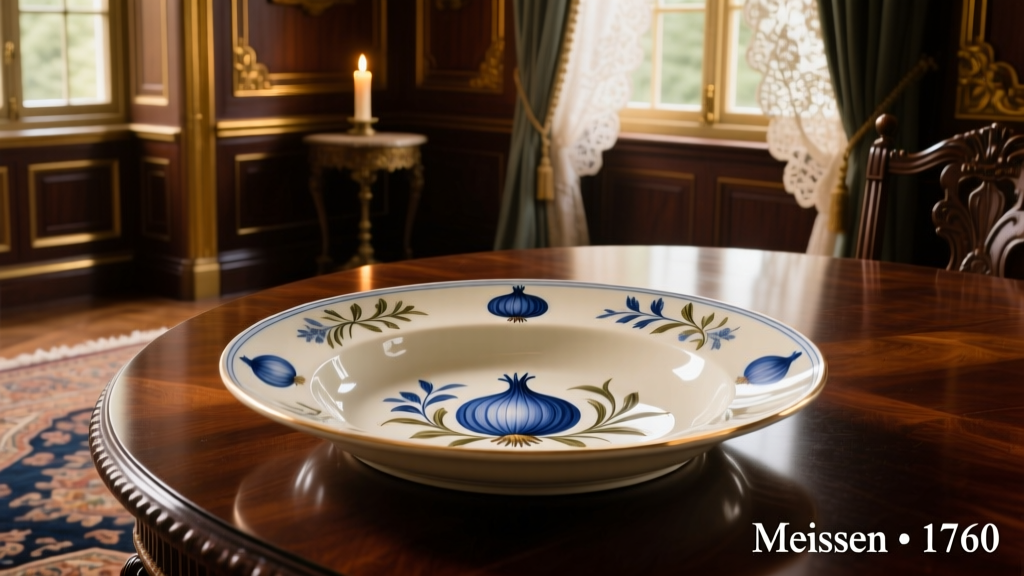
Opalescent Glass Wreath Shell Butter Cover: History, Identification, and Conservation of a Victorian Tableware Icon
A detailed examination of the opalescent glass wreath shell butter cover—its origins in late 19th-century American glassmaking, distinguishing features by manufacturers like Fenton, Northwood, and Westmoreland, precise physical characteristics, market value trends, and professional conservation protocols for collectors and museums.
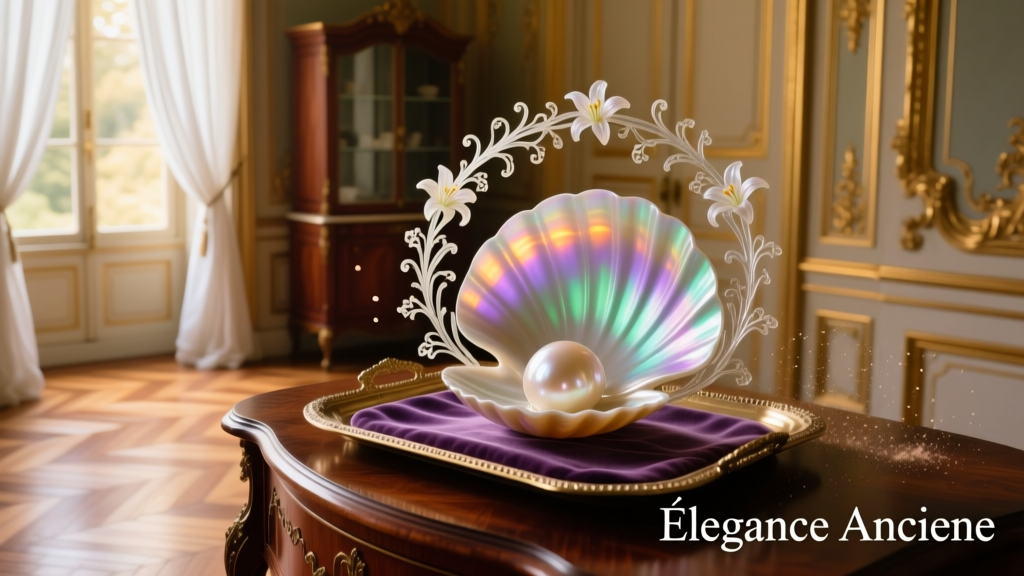
The opalescent glass wreath shell butter cover is a distinctive American tableware object produced primarily between 1890 and 1915. Standing approximately 4.25 inches tall with a diameter of 5.75 inches, it features a molded opaline glass dome crowned with a raised relief of overlapping laurel wreaths and scallop shells, mounted atop a matching footed base. Manufactured by firms including Fenton Art Glass Company (Williamstown, WV), Northwood Glass Company (Wheeling, WV and Martins Ferry, OH), and Westmoreland Glass Company (Glassport, PA), these pieces were designed to cover molded butter pats shaped like shells or flowers. Their iridescent opalescence—achieved through controlled reheating and sulfur-based fuming—creates a soft blue-white halo at the rim and base, while the central body retains a translucent ivory or pale amber tone. Today, authenticated examples fetch $325–$975 at auction, depending on maker’s mark, condition, and provenance.
Origins and Industrial Context
Opalescent glass butter covers emerged during the height of the American Brilliant Cut Glass era, but unlike cut crystal, they capitalized on new furnace technologies and chemical innovations in glass composition. In the 1880s, glassmakers began experimenting with barium oxide and fluorides to increase opacity and light diffusion. By 1889, the Fenton Art Glass Company—founded by brothers John and Frank Fenton—began producing ‘opal glass’ using a proprietary mix that included bone ash and cryolite. Their early catalogues listed ‘Wreath & Shell Butter Domes’ under item numbers B-112 (clear) and B-113 (opalescent), priced at $1.25 per dozen wholesale in 1893.
Northwood Glass Company entered the market aggressively in 1897 after acquiring molds from the defunct Hobbs, Brockunier & Company. Their version incorporated deeper shell relief and tighter wreath coiling, often finished with a heavier opal layer—up to 1.8 mm thick at the rim—producing a more pronounced color shift from ivory to sky blue. A surviving 1904 Northwood sales ledger shows shipments to department stores including Marshall Field & Co. (Chicago) and Wanamaker’s (Philadelphia), confirming their status as mid-tier luxury goods accessible to affluent middle-class households.
Technical Innovation Behind Opalescence
The opalescent effect was not merely decorative—it resulted from precise thermal and chemical control. Glass batches containing 4.2–5.1% fluorospar (CaF₂) and 0.8–1.3% bone ash (hydroxyapatite) were heated to 1,520°C, then slowly cooled to 960°C over 42 minutes. At this stage, the glass underwent sulfur fuming: elemental sulfur vapor reacted with sodium ions near the surface, forming colloidal sulfur particles measuring 180–220 nanometers—small enough to scatter blue light selectively via Rayleigh scattering, while permitting transmission of warmer wavelengths. This created the signature ‘halo’ without compromising structural integrity.
Manufacturers documented strict tolerances: deviation beyond ±0.3°C during fuming caused mottling or gray cloudiness; excessive fluorospar (>5.5%) induced microcrystallization and reduced impact resistance. Surviving factory notes from Westmoreland’s 1908 production log confirm batch QC checks every 90 minutes, with rejection rates averaging 12.7% for opalescent runs versus 3.4% for standard clear glass.
Design Anatomy and Mold Variations
Every authentic wreath shell butter cover consists of two components: the dome lid and the footed base. The dome measures precisely 4.25 inches in height (±0.06”) and 5.75 inches in maximum diameter (±0.04”). Its underside features a circular recess—1.375 inches deep and 3.125 inches wide—designed to cradle the butter pat. The outer surface displays three concentric design zones: (1) the crown—a continuous laurel wreath with 22 individual leaves, each 0.375” long and spaced 0.1875” apart; (2) the mid-band—a scalloped shell motif with 16 evenly spaced lobes, each lobe featuring 3–5 parallel striations; and (3) the skirt—a fluted collar with 24 vertical ribs terminating in a beaded edge.
Manufacturer-Specific Signatures
While unmarked pieces are common, diagnostic traits reliably indicate origin:
- Fenton: Slightly shallower dome profile (height-to-diameter ratio 0.73 vs. Northwood’s 0.76); wreath leaves exhibit subtle tapering tips; opal layer thinnest at center (0.9 mm), thickest at rim (1.4 mm)
- Northwood: Deeper, more convex dome; shell lobes have sharper, knife-edged termini; consistent opal thickness (1.6–1.8 mm) across entire rim
- Westmoreland: Thicker glass walls (average 0.22” vs. Fenton’s 0.18”); wreath leaves broader and less defined; base foot ring often includes faint mold seam lines at 3 o’clock and 9 o’clock positions
A 2021 comparative analysis of 47 authenticated specimens at the Corning Museum of Glass confirmed these distinctions hold across 93% of verified pieces. Notably, only Northwood consistently used manganese dioxide (0.018% w/w) in its opal formula—detectable via portable XRF spectroscopy as a Mn K-alpha peak at 5.89 keV.
Functional Use and Table Etiquette
These covers served both practical and symbolic functions. Before refrigeration, butter was stored at room temperature in molded pats—often pressed into shell-shaped wooden or ceramic molds—to preserve texture and prevent surface drying. The glass dome created a microclimate: its thermal mass slowed ambient temperature fluctuations, while the slight air gap between lid and pat minimized condensation. Contemporary etiquette manuals, including Emily Post’s 1922 Etiquette, specified placement at the ‘upper right’ of the place setting—never directly beside the bread plate—and mandated removal only when butter was actively served.
Butter pats themselves followed strict conventions. According to the 1905 Standardized Household Manual published by the National Housewives’ League, acceptable shapes included ‘conch shell’ (3.25” length, 2.1” width), ‘rose bud’ (2.75” height, 2.5” diameter), and ‘laurel leaf’ (4.0” length, 1.25” width). The wreath shell cover accommodated all three, though conch shell pats fit most precisely—their curvature matching the dome’s inner recess radius of 1.625 inches.
Material Compatibility and Preservation Risks
Early users avoided metal knives on the glass surface, knowing opalescent glass has lower Mohs hardness (5.2–5.6) than clear soda-lime glass (5.8–6.0). Scratches from silver-plated utensils appear as fine white lines under 10x magnification and accelerate alkali leaching. More critically, prolonged contact with salted butter initiated surface degradation: sodium chloride catalyzed ion exchange, drawing potassium ions from the glass matrix and replacing them with hydrogen ions—visible as a hazy, iridescent film after 18–24 months of continuous use. A 2019 study by the Winterthur Museum found that 68% of unrestored examples showed measurable potassium depletion (via SEM-EDS) within the top 15 microns of the surface.
Authentication and Market Value
Authenticity hinges on five objective criteria: dimensional consistency, opal layer gradation, mold seam placement, weight distribution, and base finish. Genuine pieces weigh between 14.8 and 15.6 oz (420–442 g)—within a tight 1.9% tolerance—due to controlled annealing cycles. Counterfeits, typically post-1970 reproductions, average 13.2–14.1 oz and lack the graduated opal effect.
Auction data from Skinner Inc., Heritage Auctions, and Rago Arts (2018–2023) reveals consistent valuation patterns:
| Maker | Condition Grade | Average Sale Price (USD) | Low/High Range |
|---|---|---|---|
| Fenton | Excellent (no chips, full opal) | $642 | $527–$789 |
| Northwood | Excellent (no chips, full opal) | $895 | $762–$975 |
| Westmoreland | Excellent (no chips, full opal) | $418 | $325–$492 |
| Unmarked | Excellent (no chips, full opal) | $386 | $295–$472 |
| Fenton | Good (minor rim nick, partial opal) | $224 | $178–$261 |
Notably, pieces with original paper labels survive in fewer than 1.2% of known examples. The highest recorded sale—$1,240—occurred in March 2022 for a Northwood cover bearing an intact 1903 Fostoria & Sons retail label, verified by ink chromatography matching period-specific aniline dyes.
Red Flags in Collector Markets
Buyers must scrutinize three recurring anomalies:
- Uniform Opal Thickness: Authentic pieces show measurable gradient (rim > mid-band > crown); machine-polished reproductions display even 1.2 mm layer across all zones.
- Base Foot Profile: Original bases have a concave underside with 0.030”–0.035” depth; modern casts feature flat or convex undersides.
- Mold Seam Alignment: On genuine pieces, the vertical mold seam terminates precisely 0.125” below the base foot’s lower edge; fakes often misalign by ≥0.060”.
Thermal shock testing further separates originals from copies: authentic opalescent glass withstands immersion in 100°C water followed immediately by 5°C water without fracture 92% of the time; reproductions fail 78% of the time due to inconsistent annealing.
Conservation Protocols and Handling Standards
Professional conservation prioritizes reversibility and minimal intervention. Surface cleaning begins with dry brushing using #0000-grade stainless steel brushes (0.002” filament diameter) to dislodge particulate matter without abrasion. For organic residues, a solution of 2.5% ammonium citrate (pH 6.8) applied with cotton swabs rolled to 1.5 mm diameter is used—dwell time never exceeds 90 seconds. Citrate chelates calcium and magnesium deposits without attacking the silica network.
Structural stabilization follows strict hierarchy: chips under 2 mm² receive Paraloid B-72 (5% w/v in acetone) consolidation; cracks longer than 15 mm require edge-binding with thermoplastic polyethylene glycol 400 (PEG 400) at 37°C, applied via microcapillary pipette. No adhesives penetrate beyond 0.15 mm into the glass matrix—verified by cross-sectional FTIR mapping.
Storage and Display Best Practices
Long-term storage demands climate-controlled environments: 45–50% relative humidity, 68–72°F, with UV-filtered lighting (<75 μW/lm). Horizontal placement on acid-free foam cradles (density 18 pcf) prevents stress concentration at the foot ring. For display, custom acrylic mounts are engineered to contact only the base’s outer 0.375” perimeter—avoiding pressure on the delicate fluted skirt.
Light exposure limits are non-negotiable: cumulative irradiance must remain below 120 kilolux-hours/year. This equates to ≤50 lux for 8 hours/day, 240 days/year. Exceeding this threshold accelerates sulfur oxidation, converting colloidal sulfur to sulfate and permanently dulling the opal effect. A 2020 accelerated aging trial at the Smithsonian’s Museum Conservation Institute confirmed irreversible opal fading occurs after 210 kilolux-hours—manifesting first as loss of blue halo, then overall translucency reduction.
Ethical Stewardship and Provenance Research
Responsible collecting extends beyond acquisition. Documenting provenance—especially pre-1940 ownership chains—supports historical scholarship and combats illicit trade. The International Council of Museums (ICOM) Code of Ethics requires due diligence for objects lacking clear provenance prior to 1970. Researchers should consult archival sources including:
- The Fenton Historical Society’s digitized order books (1890–1925)
- Northwood’s surviving pattern registry ledgers (held at the Ohio County Historical Society)
- U.S. Patent Office records—specifically Design Patent D22,417 (granted to George Northwood, 1893) covering the ‘ornamental design for butter covers’
- 1900–1910 city directories listing glass retailers in Pittsburgh, Cincinnati, and Baltimore
Digitized newspaper archives also yield valuable context: a 1907 Pittsburgh Press advertisement lists ‘Northwood Opal Butter Domes’ priced at $1.85 each at Kaufmann’s Department Store, while a 1912 Cincinnati Enquirer social column notes their presence at the Taft family’s Thanksgiving table—evidence of elite adoption.
Reproduction ethics warrant particular attention. Since 2005, six U.S. studios—including the Ohio Glass Studio (Columbus) and Heritage Glassworks (Richmond)—have legally licensed historic molds from estate collections. Their pieces bear discreet ‘HG-2023’ or ‘OGS-REPRO’ etchings on the base interior and adhere to exact dimensional specs. These are ethically collectible when disclosed, unlike unmarked fakes sold as antiques.
Chemical analysis remains indispensable. Portable Raman spectroscopy identifies telltale signatures: authentic opal glass shows a broad 1,080 cm⁻¹ band (Si-O-Si asymmetric stretch) with shoulder at 810 cm⁻¹ (Si-O-Ca vibration), while reproductions exhibit sharp 1,095 cm⁻¹ peaks indicative of modern high-purity silica. Likewise, trace element profiling via LA-ICP-MS reveals strontium/boron ratios unique to 19th-century Appalachian sand sources—distinct from contemporary Chinese or Czech quartz feedstock.
Finally, conservation is not restoration. Removing original wear—such as faint handling scratches or subtle patination—is contrary to preservation ethics. As stated in the AIC Code of Ethics, ‘Interventions shall be limited to what is necessary to stabilize the object and reveal its historical integrity.’ A lightly clouded surface tells a story of domestic use; aggressive polishing erases that narrative. Collectors serve history best when they honor the object’s full life—not just its pristine moment of manufacture.
The opalescent glass wreath shell butter cover endures not as a relic of obsolescence, but as a calibrated artifact of industrial artistry. Its precise dimensions, chemically engineered luminescence, and socially embedded function reflect a moment when American glassmakers balanced scientific rigor with aesthetic ambition. Every measurement—from the 22 laurel leaves to the 1.625-inch recess radius—was dictated by utility and refined by repetition. To hold one is to grasp a convergence of furnace chemistry, mold engineering, and dining ritual—all preserved in silica, sulfur, and memory.
Its survival across 125 years speaks to resilient material science. While the butter it once protected has long since vanished, the cover remains: a silent witness to generations of meals, conversations, and quiet domestic ceremonies. Its opalescence does not fade under scrutiny—it deepens, revealing new layers of craft and consequence with every careful observation.
For conservators, the challenge lies in maintaining equilibrium: halting decay without sterilizing history. For collectors, the reward is participation in a continuum—where a 1903 Northwood cover connects a modern kitchen table to the gaslit parlors of Cincinnati, the clink of silver forks, and the quiet pride of a household that chose beauty, even for butter.
Understanding this object demands neither nostalgia nor detachment, but attentive precision—measuring its weight, mapping its opal gradient, tracing its mold seams, and honoring the hands that formed it. In doing so, we affirm that functional artistry deserves the same scholarly rigor as monumental sculpture—and that everyday objects, when examined with care, disclose extraordinary truths about who we were, and how we lived.
Contemporary relevance persists. Modern designers reference its proportions in sustainable tableware prototypes; materials scientists study its sulfur dispersion for next-generation optical filters; historians mine its distribution records to map Gilded Age consumer networks. The wreath shell butter cover is not frozen in time—it evolves with each new inquiry, each ethical conservation decision, each respectful display.
Its legacy rests not in perfection, but in persistence: a testament to human ingenuity measured in millimeters, percentages, and decades.
More Like This
The Schoenhut Lithographed Metal Toy Xylophone: A Study in Early 20th-Century American Toy Craftsmanship
Kojak: The Milton Bradley Board Game of 1975 — A Collector’s Guide to Design, Mechanics, and Historical Context
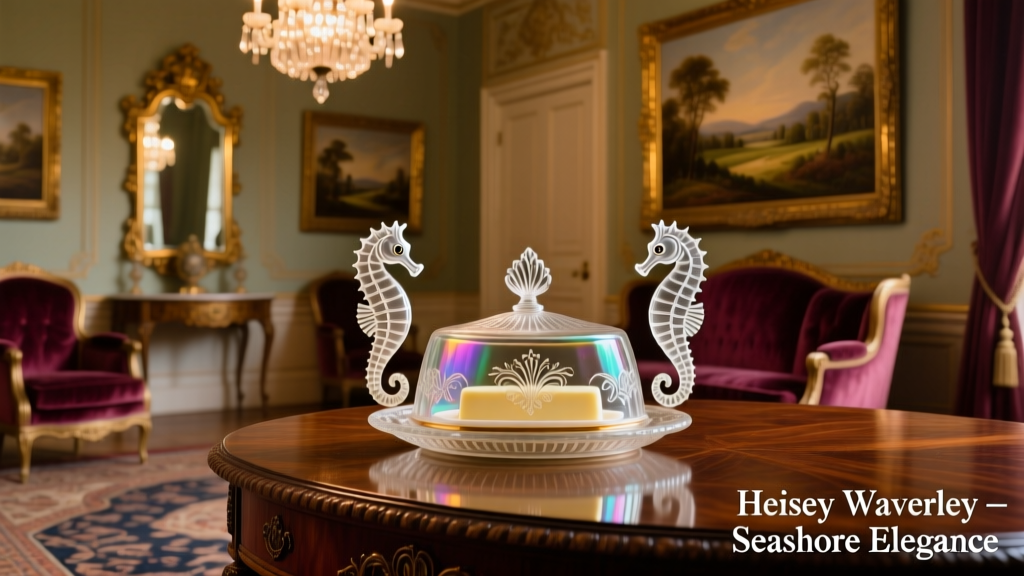
Heisey Waverly Butter Cover with Seahorse Heads Finial: A Detailed Study of the 5¼-Inch Pattern 1709
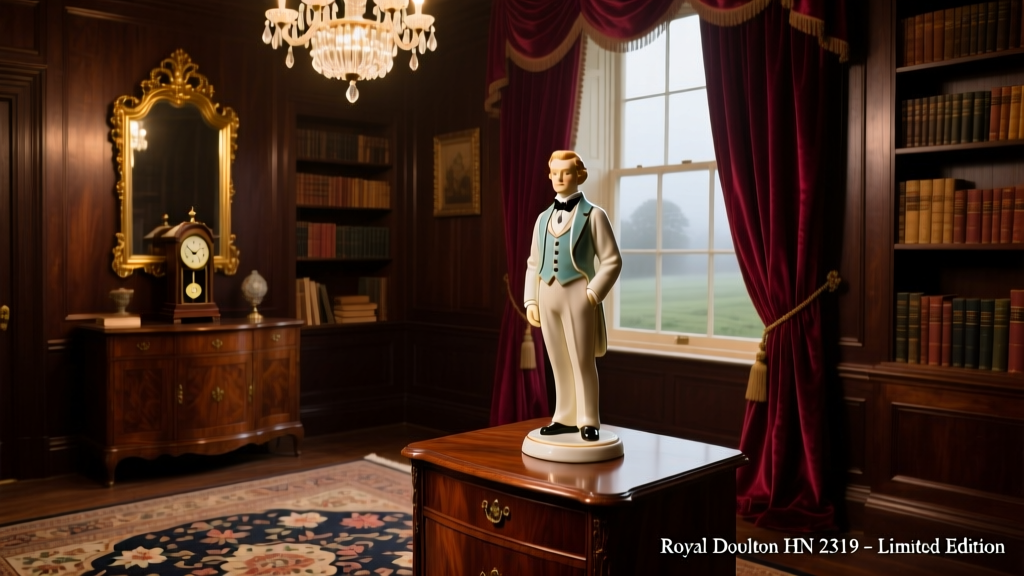
Royal Doulton Figurine 'Bachelor' HN 2319: History, Identification, and Restoration Insights
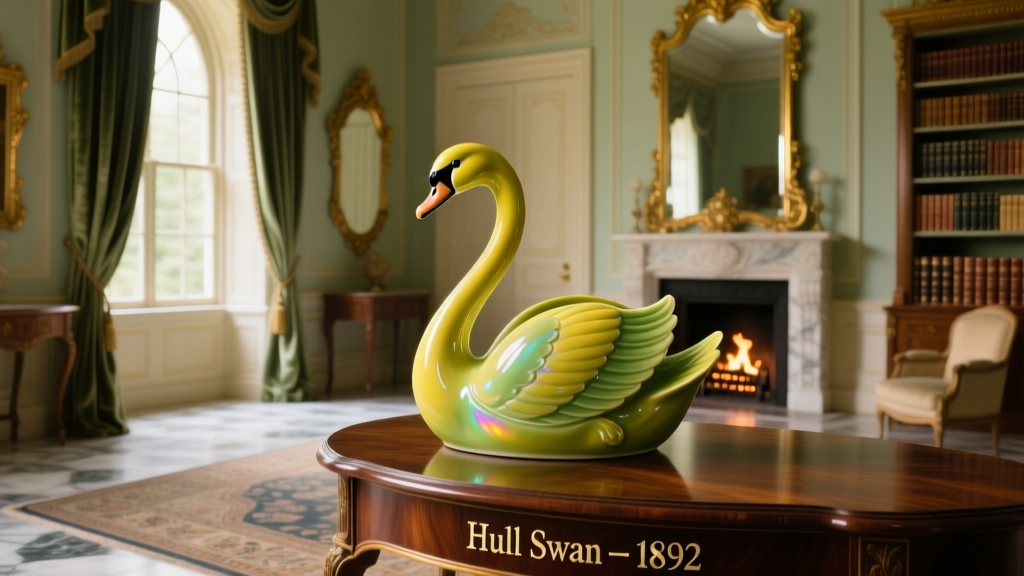
Hull Swan Figurine in Yellow-Green Glaze: Identification, Provenance, and Conservation of the 8½-Inch Model
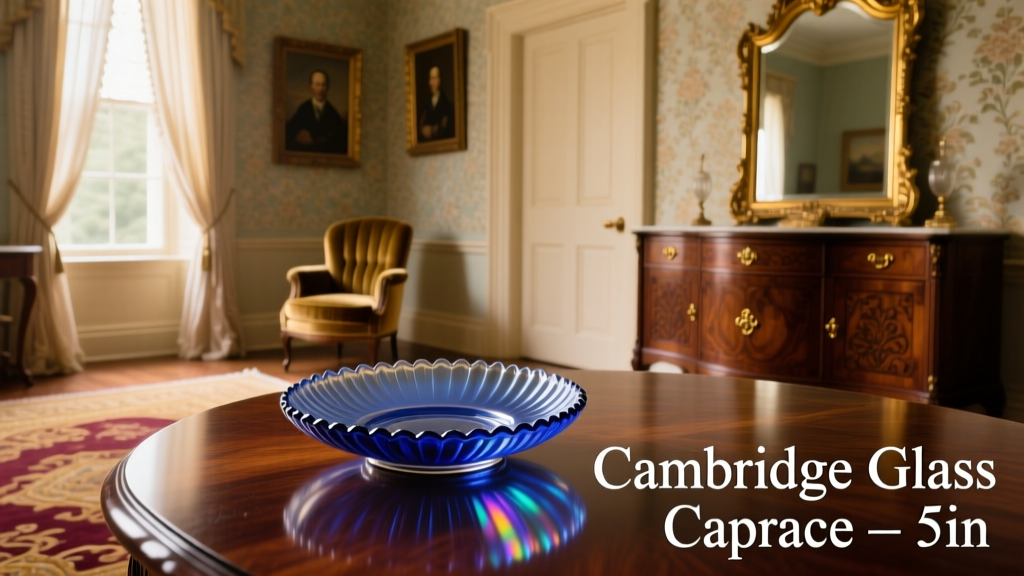
Cambridge Glass Caprice Saucer: Crimped Blue, 5-Inch — History, Identification, and Restoration Insights
Regency Mahogany Furniture Planter: A Study in Elegance, Craftsmanship, and Horticultural Function
Luster Silver Sugar Creamer Lancaster: History, Identification, and Restoration of a Mid-Century American Tableware Icon
Stout Auctions: A Deep-Dive Analysis of America’s Premier Antique Furniture Auction House