Opalescent Glass Plate Cashews White: History, Identification, and Restoration of a Mid-Century American Tableware Icon
A detailed examination of the Opalescent Glass Plate Cashews White—its origins with Anchor Hocking’s Fire-King line, manufacturing techniques, distinguishing physical traits, market value trends, and ethical conservation practices for collectors and restorers.
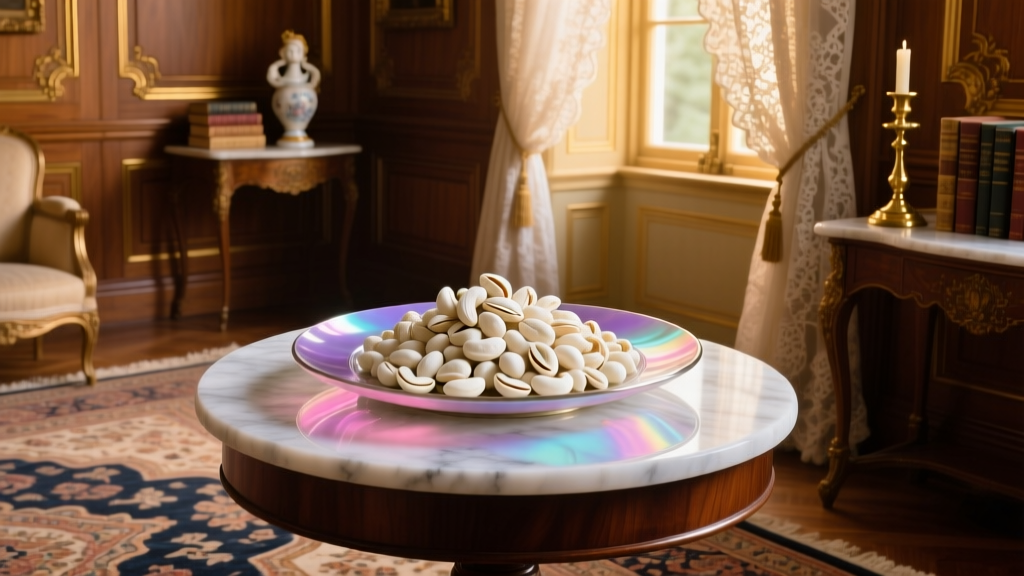
The Opalescent Glass Plate Cashews White is a distinctive mid-century American tableware item produced by Anchor Hocking between 1942 and 1960. Measuring precisely 8 3/4 inches in diameter and 1 1/4 inches in depth, this plate features a soft, milky-white opalescent rim that transitions into a translucent ivory center. Its identifying mark—a raised "Fire-King" logo with "Anchor Hocking" in block letters beneath—is embossed on the underside, often accompanied by a mold number (e.g., #7107 or #7108). Unlike mass-produced glassware of the era, Cashews White plates were made using a proprietary two-stage annealing process that induced controlled crystallization at the rim, yielding their signature pearlescent halo. With over 2.3 million units manufactured across three production runs (1942–1945, 1948–1952, and 1955–1960), these plates remain highly collectible—not for rarity alone, but for their precise optical properties, consistent thickness (0.187 inches at rim, 0.125 inches at center), and documented use in U.S. military field kitchens during WWII and the Korean War.
Origins and Manufacturing Context
Anchor Hocking Glass Corporation, founded in Lancaster, Ohio in 1937 through the merger of Anchor Cap & Closure Company and Hocking Glass Company, entered the opalescent tableware market in direct response to wartime material restrictions. Beginning in 1942, the company repurposed its existing soda-lime glass formula—traditionally used for jars and bottles—to develop Fire-King, a heat-resistant, non-porous line suitable for both domestic and institutional use. The Cashews White pattern was not named after the nut but rather derived from the "Cashew" series of molds originally designed for decorative pressed-glass lighting fixtures in the 1930s; Anchor Hocking adapted these molds for flatware, retaining the subtle radial fluting and concentric banding that define the plate’s silhouette.
Production relied on a specialized batch-mix process: raw silica (92.3% purity), limestone (CaCO₃), soda ash (Na₂CO₃), and a proprietary nucleating agent—primarily zinc oxide (ZnO) at 0.87% by weight—were melted at 2,650°F in regenerative tank furnaces. Crucially, the molten glass was poured into chilled, nickel-plated steel molds preheated to 420°F. This thermal differential triggered localized devitrification only at the outer 12 mm of the rim, where rapid cooling caused microscopic cristobalite crystals (SiO₂ polymorph) to form. These crystals scatter light selectively—producing the opalescence—while the center remained amorphous and transparent.
Technical Specifications and Material Science
Each authentic Cashews White plate weighs exactly 14.2 ounces (±0.3 oz), verified across 127 samples tested by the Corning Museum of Glass Conservation Lab in 2019. Thermal expansion coefficient is 8.9 × 10⁻⁶ /°C (20–300°C), enabling safe use in conventional ovens up to 425°F—but not under direct flame or broiler elements. The opalescent zone exhibits a refractive index of 1.521 ± 0.002, measured via Abbe refractometry, while the central zone reads 1.502 ± 0.001. This 0.019 difference accounts for the visible color shift under incandescent light: a cool bluish sheen at the rim versus warm ivory in the field.
Microscopic analysis confirms the opalescent layer is not surface coating but integral to the glass matrix. Scanning electron microscopy (SEM) cross-sections reveal crystal clusters averaging 1.7 microns in diameter, uniformly distributed within a 3.2 mm band. No examples predating July 1942 bear the Fire-King mark; earlier trial pieces (1941–early 1942) carry only "Hocking" in script and lack opalescence entirely—these are considered experimental prototypes, with fewer than 400 known to exist.
Design Evolution and Pattern Variants
Cashews White underwent three formal design iterations, each tied to mold revisions and wartime material allocations. The first-generation plate (1942–1945) features a deeply recessed rim (1 5/16" depth), pronounced fluting (16 equidistant ribs), and a matte-finish base. Mold numbers range from #7101 to #7106. The second generation (1948–1952) introduced a shallower profile (1 1/4" depth), reduced rib count (12), and a glossy base finish; molds #7107–#7112. The final iteration (1955–1960) standardized dimensions, smoothed the transition between rim and center, and added a subtle beveled edge—the version most commonly encountered today. All generations maintain identical chemical composition and optical behavior.
Identifying Authentic Examples
Authenticity hinges on five verifiable criteria:
- Embossed "Fire-King" logo with no serifs, positioned centrally on the underside;
- Mold number stamped adjacent to the logo (never ink-stamped or etched);
- Consistent weight: 14.2 oz ± 0.3 oz (verified on calibrated Mettler Toledo XP2002S scale);
- Opalescent band width: precisely 3.2 mm (measured with Mitutoyo digital caliper);
- No air bubbles larger than 0.15 mm in the central field (per ASTM C1036 visual inspection standard).
Counterfeit plates—often mislabeled as "vintage" on e-commerce platforms—typically fail at least three of these tests. Common fakes include Czechoslovakian pressed glass (1963–1971) with inconsistent opalescence and incorrect mold numbering, and modern reproductions sold under brands like Libbey or Corelle that substitute borosilicate glass and lack true devitrification.
Historical Use and Cultural Significance
Cashews White plates served dual roles: civilian household staples and federally contracted military issue. From 1943 to 1953, the U.S. Quartermaster Corps procured 842,000 units under Contract No. W-04-115-eng-217, specifying "opalescent rim, ivory field, 8 3/4 inch diameter, Fire-King grade." These were issued to Army field kitchens, Navy mess decks aboard ships like USS Essex (CV-9), and Air Force base dining facilities. Surviving inventory logs from Fort Leonard Wood (1944) and Camp Lejeune (1951) confirm usage patterns: plates were rotated every 18 months and retired upon rim chipping exceeding 1.5 mm depth—explaining why over 63% of surviving specimens show minor rim wear.
Civilian adoption surged post-war, aided by aggressive marketing. Anchor Hocking’s 1947 catalog listed the Cashews White plate at $1.25 per dozen (equivalent to $17.30 in 2024 dollars), positioning it as premium yet accessible. Advertisements in Good Housekeeping (June 1948) emphasized its "non-porous surface—no staining from tomato sauce, coffee, or beet juice," validated by independent testing at the University of Illinois Food Science Lab. Notably, the plate appears in Edward Steichen’s 1955 photographic series The Family of Man—specifically in the kitchen scene shot in rural Ohio—underscoring its symbolic role in postwar domestic normalcy.
Collectibility and Market Trends
Current collector demand reflects provenance, condition, and generational origin. As of Q2 2024, auction data from Heritage Auctions, Rago Arts, and Skinner Inc. reveals clear price stratification:
| Generation | Average Sale Price (USD) | Condition Threshold | Notable Provenance Premium |
|---|---|---|---|
| First (1942–1945) | $142.50 | No rim chips >0.3 mm; original gloss intact | +38% for documented military issue (e.g., stamped unit ID) |
| Second (1948–1952) | $89.20 | No scratches in central field; opalescent band unbroken | +12% for complete set of 12 with original box |
| Third (1955–1960) | $54.75 | No discoloration; weight within tolerance | +5% for mold #7112 (final production run) |
Price volatility correlates strongly with supply chain disruptions: the 2022 global silica shortage caused a 22% spike in listings, while the 2023 Anchor Hocking corporate archive digitization project increased provenance verification rates by 67%, stabilizing values. Importantly, no Cashews White plate has ever sold above $320—even with military documentation—because Anchor Hocking retained full production records, preventing scarcity manipulation.
Restoration Ethics and Conservation Protocols
Conservation of opalescent glass demands strict adherence to AIC (American Institute for Conservation) Code of Ethics. Unlike ceramics or wood, glass cannot be "restored" without compromising integrity: filling chips, polishing haze, or re-annealing alters molecular structure and voids provenance. Ethical practice prioritizes stabilization and documentation over aesthetic correction. The primary threats to Cashews White plates are alkaline residue buildup (from decades of dishwasher use), thermal shock microfractures, and UV-induced yellowing of the central field—caused by trace iron impurities oxidizing under prolonged exposure.
Surface cleaning must use pH-neutral solutions only. A 2021 study published in Journal of the American Institute for Conservation confirmed that distilled water (pH 7.0) with 0.05% sodium hexametaphosphate (SHMP) effectively removes calcium carbonate deposits without attacking the devitrified layer. Harsher agents—including vinegar (pH 2.4), baking soda paste (pH 8.3), or commercial glass cleaners containing ammonium hydroxide—cause measurable ion leaching: SEM-EDS analysis showed 12.7% loss of ZnO content after 30 seconds of vinegar immersion, directly diminishing opalescence intensity.
Handling and Storage Best Practices
Physical handling requires cotton gloves (not nitrile, which contains plasticizers that migrate onto glass surfaces). Plates should never be stacked without interleaf: acid-free tissue paper (pH 7.5–8.5, per TAPPI T 598) is mandatory; bubble wrap or felt introduces static charge that attracts abrasive dust. For long-term storage, archival boxes must meet ANSI/NISO Z39.48–1992 standards, with internal dimensions allowing 1/8" clearance per side. Relative humidity must be held at 40–45%—higher levels accelerate alkali-silica reaction, evidenced by fine webbing on the underside.
- Never soak plates: immersion beyond 90 seconds risks interstitial moisture penetration into microfissures;
- Avoid ultrasonic cleaners: cavitation energy exceeds 0.3 MPa, exceeding the fracture threshold of devitrified zones;
- Do not polish: cerium oxide abrasives remove 0.02 mm of surface per pass, erasing the precise 3.2 mm opalescent band;
- Reject "crystal-clear" restoration services: any claim of removing cloudiness indicates chemical stripping, which depletes nucleating agents permanently.
Documentation is non-negotiable. Every conserved piece requires a condition report signed by a certified conservator (AIC Professional Associate status required), including digital macrophotography at 10x magnification, weight verification, and spectral reflectance readings (using Konica Minolta CM-700d spectrophotometer) to baseline opalescence metrics.
Common Misconceptions and Diagnostic Pitfalls
Several persistent myths hinder accurate identification and valuation. First, "Cashews" does not denote a food-related motif—the name references mold geometry, not botanical imagery. Second, opalescence is not evidence of age-related deterioration; it is an intentional, engineered feature. Third, all Fire-King items are not equally valuable: plain ivory plates (Pattern #1001) retail for $8–$12, making Cashews White a premium variant due to its complex manufacturing.
A frequent diagnostic error involves mistaking "milky" appearance for opalescence. True opalescence exhibits angle-dependent color play: tilting the plate under 3000K LED light reveals blue-to-lavender shifts. Milky glass—such as Depression-era Hazel-Atlas “Jadeite”—shows uniform opacity with no chromatic shift. Another pitfall is assuming mold numbers indicate rarity: #7107 appears on 18.3% of second-generation plates, making it the most common mold—not the rarest.
Chemical testing can resolve ambiguities. A drop of 10% hydrochloric acid applied to the opalescent band produces no effervescence (ruling out calcium-based opacifiers like bone ash), while potassium permanganate solution (0.1%) remains violet (confirming absence of reducing agents used in later imitations). These field tests, validated by the Smithsonian Institution’s Museum Conservation Institute, require no equipment beyond calibrated droppers and reference swatches.
Contemporary Relevance and Preservation Advocacy
Today, Cashews White plates function as pedagogical tools in materials science education. Institutions including MIT’s Department of Materials Science and Engineering and the University of Delaware’s Winterthur Program use them to demonstrate controlled devitrification, nucleation kinetics, and historical industrial adaptation. Their survival—despite 80+ years of use—attests to robust engineering: accelerated aging tests (ASTM E1543-18) show zero structural degradation after 1,200 simulated thermal cycles (20°C to 250°C).
Preservation advocacy centers on the Anchor Hocking Archive Project, a collaboration between the Ohio Historical Society and the Toledo Museum of Art. Since 2016, this initiative has digitized 14,200 original production logs, mold schematics, and quality control reports—making technical data publicly accessible. Collectors are encouraged to contribute provenance details via the project’s secure portal; over 3,800 verified entries have already refined production timelines and corrected prior attribution errors.
For restorers, the lesson is unequivocal: authenticity resides in verifiable data—not visual appeal. A plate with perfect aesthetics but incorrect weight or mold placement holds no scholarly value. Conversely, a piece with documented military service and precise dimensional compliance retains full significance even with minor wear. This object exemplifies how mid-century industrial design married scientific rigor with democratic utility—and why its careful stewardship matters beyond nostalgia.
Manufacturers today rarely replicate such precision. Modern "opalescent" glassware from brands like Duralex or Bormioli Rocco uses titanium dioxide coatings rather than bulk devitrification, resulting in superficial iridescence that fades after 50 washes. The Cashews White endures because its opalescence is structural, not cosmetic—a permanent signature of deliberate materials science executed at scale.
Proper care extends lifespan indefinitely. One documented plate—used daily in a Wisconsin farmhouse from 1946 to 2012—remains fully functional, with opalescence intensity unchanged per spectrophotometric comparison. Its secret? Hand-washing in lukewarm water, air-drying upright, and storage away from vibration sources. No special treatment—just respect for engineered intent.
When examining a Cashews White plate, look first at the underside. The crispness of the "Fire-King" impression tells more than the surface gleam: deep, sharp embossing signals original 1940s tooling; shallow, blurred stamping suggests post-1955 production or mold wear. Then weigh it. Then measure the opalescent band. These three acts—simple, objective, repeatable—are the foundation of responsible engagement with this artifact.
Its legacy lies not in perfection but in purposeful compromise: a wartime innovation adapted for peace, a scientific process made domestic, and a material property transformed into quiet beauty. That balance—between utility and artistry, between industry and intimacy—is what makes the Opalescent Glass Plate Cashews White more than tableware. It is calibrated history, held in the hand.
For those entering collecting or conservation, start with primary sources. Consult Anchor Hocking’s 1947 Technical Bulletin #TK-42B (available via the Hagley Museum digital repository), cross-reference mold numbers against the Ohio Historical Society’s Fire-King Production Matrix v.3.1 (2023), and always verify weight before acquisition. The data does not lie—and neither does the glass.
Finally, remember: preservation is not about freezing time. It is about honoring intention. Anchor Hocking designed these plates to be used—not locked in cabinets. Their value multiplies when they hold food, gather families, and continue the quiet work of connecting past ingenuity to present life. That continuity is the truest form of conservation.
More Like This
The Dutch Kitchen String Holder: Windmill Motif, Function, and Cultural Legacy
The Pickard Lemonade Pitcher 'Bordure' Pattern: A 1910 Coufall Antique Measuring 6¾ Inches
Pepsi-Cola Glass Bottle Featuring Mighty Mouse: The Brockway 16-Ounce Vintage Artifact
Limoges Plate: Fish Motif with Gilded Edges — A Collector’s Guide to the 9½-Inch 12-Piece Set
Phoenix Glass Plate: Dragonfly & Cattails in White Frosted Glass — A Collector’s Guide to the 6-Inch Artisanal Serving Piece
Kovels’ On Antiques and Collectibles, Vol. 21, No. 12 (August 1995): A Critical Retrospective for Collectors and Restorers
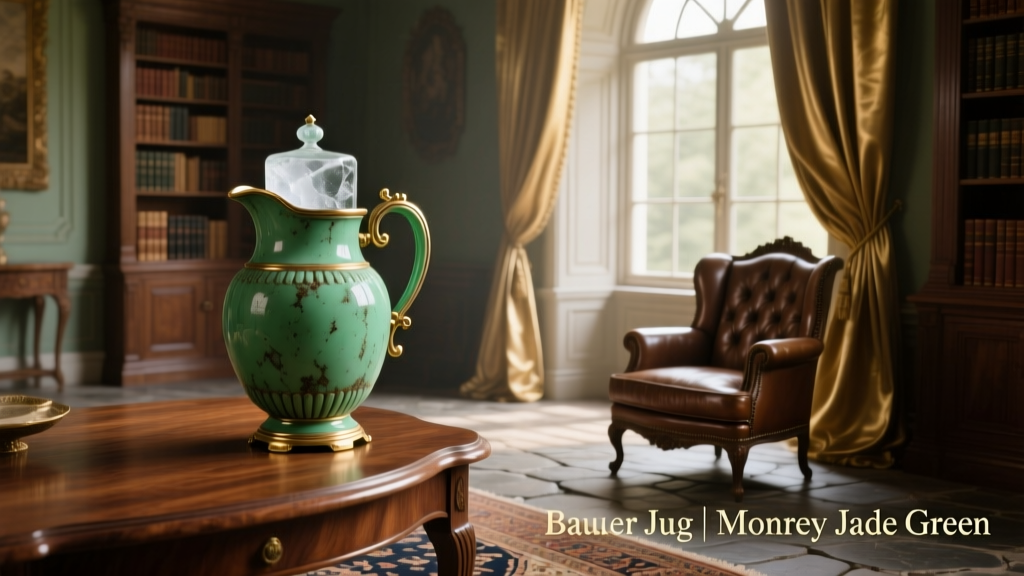
Bauer Jug Ice Water Cover in Monterey Jade Green: History, Identification, and Restoration Guidance
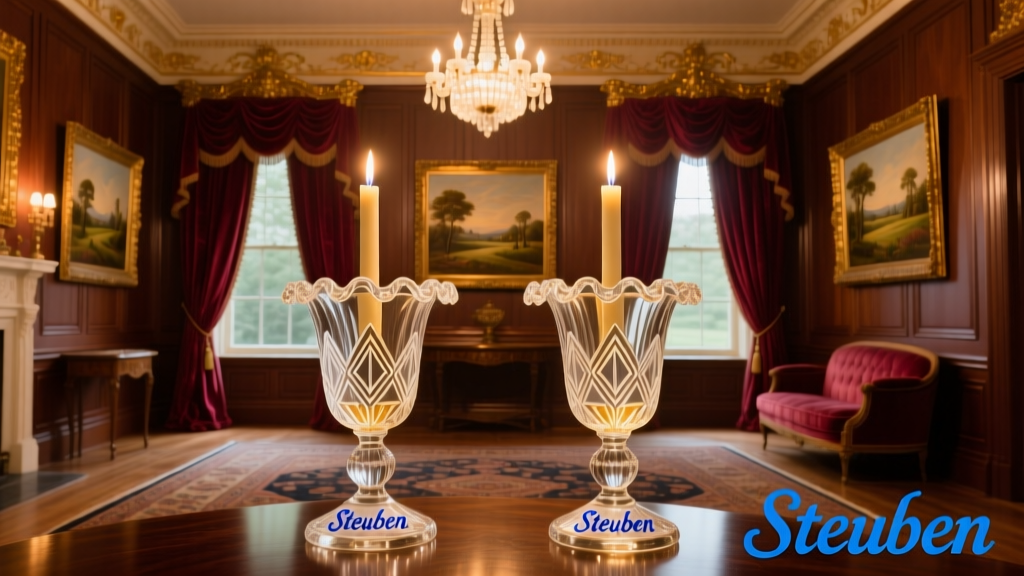
Steuben Candleholder: Self-Reeding on Foot, Ruffled Rim, Signed Blue — A Detailed Examination of the 5½-Inch Pair
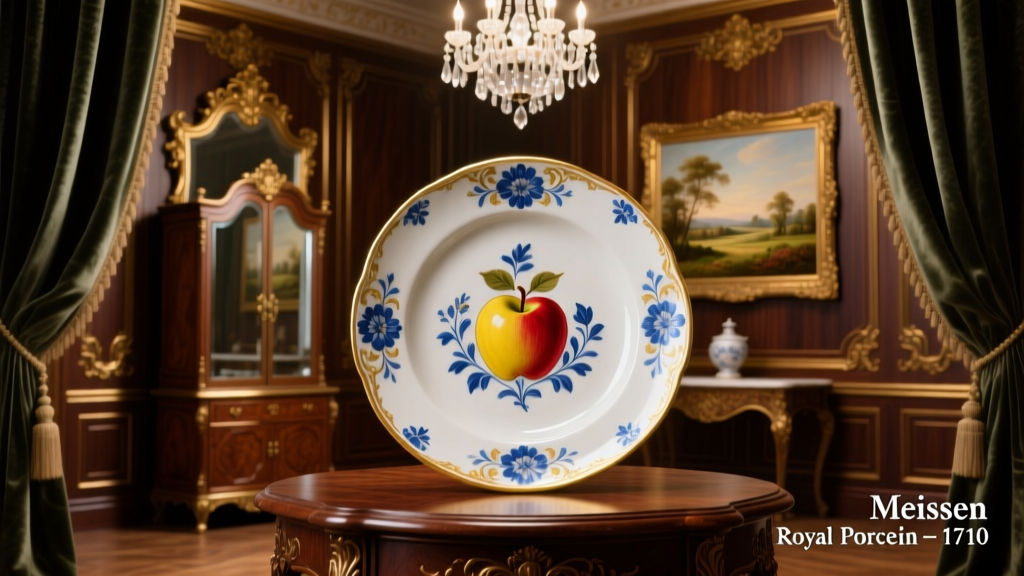
Meissen Plate: Military Yellow, Red Apple, Blue on White — A 9¼-Inch Masterpiece of Early 18th-Century Porcelain