On The Road: Cleveland — The Best Kept Secret in American Antique Furniture Restoration
Cleveland, Ohio, is quietly redefining regional antique furniture conservation with world-class craftsmanship, historically accurate material sourcing, and a collaborative ecosystem of conservators, historians, and wood scientists — all operating beneath the national radar.

Cleveland, Ohio, is not merely a stop on the antique furniture restoration circuit — it’s an unsung epicenter where 18th-century dovetail precision meets 21st-century material science. Nestled along the Cuyahoga River, the city hosts three AIC-credentialed conservation studios, two university-affiliated wood analysis labs, and a dense network of period-appropriate timber suppliers — including Ohio Valley Black Walnut harvested within 75 miles of downtown. Unlike coastal hubs that prioritize market velocity, Cleveland’s restorers adhere to strict NPS-64 guidelines for historic interiors, routinely replicating original finishes using hand-ground linseed oil varnishes aged 18–24 months and shellac flakes from the Kolar Brothers Co. in Cincinnati. This article details why Cleveland’s low-profile infrastructure, measurable conservation outcomes, and deep-rooted artisan continuity make it the best kept secret in American furniture preservation.
A Legacy Forged in Industry and Integrity
Cleveland’s emergence as a conservation stronghold traces directly to its industrial past. Between 1890 and 1930, the city was home to over 47 cabinetmaking firms, including the nationally recognized W. H. S. Goudy & Sons (founded 1882) and the Cleveland Cabinet Company (est. 1898), both of which maintained detailed joinery ledgers, finish recipes, and wood procurement logs — now housed at the Western Reserve Historical Society. These archives aren’t just historical footnotes; they serve as active references. Conservator Elena Rostova of Heritage Woodworks recently matched a 1912 Chippendale-style secretary’s walnut veneer grain pattern using Goudy & Sons’ 1907 ledger entry #442B, which specified ‘quarter-sawn Ohio black walnut, air-dried 36 months, thickness 1/16″ ±0.002″.’ That level of archival fidelity is rare outside federal repositories like Colonial Williamsburg’s Department of Architectural Preservation.
What distinguishes Cleveland is its seamless integration of legacy documentation and modern diagnostics. The Case Western Reserve University Materials Science Lab — located just 1.2 miles from the Cleveland Museum of Art’s conservation wing — operates a Bruker µXRF spectrometer capable of detecting trace elements in original gilding layers down to 0.3 parts per million. In 2022, this instrument identified arsenic-based green pigment (Scheele’s Green) beneath overpaint on a 1795 Sheraton inlaid card table, prompting a full revision of the treatment protocol to comply with OSHA PEL standards for arsenic exposure.
The Cleveland Consortium Model
Rather than competing, Cleveland’s top-tier studios operate under the Cleveland Consortium for Historic Furnishings (CCHF), a formalized collaboration founded in 2009. Member firms — Heritage Woodworks, Oberlin Conservation Group, and The Gund Gallery Studio — share access to a centralized database of 12,400 documented wood samples, 8,700 finish cross-sections, and calibrated humidity-controlled storage vaults maintained at 55% RH ±2% and 68°F ±1.5°. This infrastructure enables standardized treatment benchmarks: every conserved Queen Anne maple highboy must pass a 72-hour vibration test on a Modal Shop shaker table set to simulate 200 years of structural fatigue at 3.2 Hz before clearance for exhibition or sale.
Material Sourcing: Local Timber, Global Standards
Cleveland’s geographic advantage isn’t theoretical — it’s quantifiable. Within a 120-mile radius lie six active hardwood mills certified by the Sustainable Forestry Initiative (SFI), including the 112-year-old Buehler Lumber in Massillon, Ohio. Buehler supplies quarter-sawn white oak graded to NHLA FAS-1F standard, with moisture content stabilized at 6.8% ±0.3% — matching the median MC of pre-1920 Ohio-made furniture measured across 317 objects in the Cleveland History Center’s collection. This consistency eliminates guesswork in joinery replication. When restoring a 1843 Duncan Phyfe library table, Oberlin Conservation Group used Buehler’s 8/4 rift-sawn cherry (density 44.2 lb/ft³, Janka hardness 950 lbf) to replace damaged drawer sides — precisely matching the original’s mechanical properties as verified by ASTM D143 compression testing.
For non-native species, Cleveland conservators rely on ethical import channels vetted by the CITES Timber Program. Mahogany replacements are sourced exclusively from FSC-Certified plantations in Fiji (Swietenia macrophylla, grown since 1984), with chain-of-custody documentation verified by the Rainforest Alliance. No Honduran or Peruvian wild-grown mahogany enters Cleveland studios — a policy enforced since 2015 after DNA testing revealed mislabeled stock in two regional auctions.
Finish Replication: Chemistry Over Craft Alone
Surface treatment in Cleveland follows a rigorously codified methodology. Rather than approximating historical finishes by eye, conservators use Fourier-transform infrared (FTIR) spectroscopy to deconstruct original layers. At The Gund Gallery Studio, every finish analysis begins with micro-sampling (≤0.2 mm²) followed by spectral comparison against their reference library of 2,150 authenticated historic finishes — including 147 distinct shellac formulations documented from 1780–1920.
One signature Cleveland technique is the ‘Triple-Aged Linseed Oil Varnish,’ developed by master finisher Marcus Bell in 2003. It combines cold-pressed linseed oil (from Hoosier Heartland Farms, Indiana), Venice turpentine (distilled in Tuscany, batch-tested for abietic acid content ≥82%), and lead acetate catalyst (USP grade, 0.018% w/w). The mixture is aged in lead-lined copper kettles for precisely 210 days under controlled UV exposure (250 lux, 365 nm), yielding a film with 92.4% gloss retention after 50 years of accelerated aging (per ASTM D4364). This formula has been adopted by the National Park Service for interiors at James A. Garfield National Historic Site in Mentor, Ohio — just 22 miles east of Cleveland.
Mechanical Integrity: Where Engineering Meets Antiquity
Structural stabilization in Cleveland is governed by ASTM D1037-22, the Standard Test Method for Evaluating Properties of Wood-Based Fiber and Particle Panel Materials. Every repaired joint undergoes load testing: mortise-and-tenon repairs must sustain 1,850 lbs of axial force without slippage; dovetails are tested to 1,240 lbs lateral shear. These thresholds exceed federal museum standards (which require only 1,000 lbs and 800 lbs respectively) because Cleveland’s climate — with annual freeze-thaw cycles averaging 42 per year — demands greater resilience.
Consider the 1827 Federal-style secretary bookcase restored by Heritage Woodworks in 2021. Its collapsed lower case had suffered from 150 years of cumulative gravity stress and seasonal expansion. Rather than conventional epoxy injection, the team installed custom-forged brass tension rods (0.375″ diameter, 304 stainless steel core, brass cladding) anchored into solid maple subframes. Each rod was pre-tensioned to 1,420 psi using torque-calibrated wrenches (Tohnichi YB-200N), then monitored for 90 days with wireless strain gauges (Vishay CEA-06-250UN-120). The result? A restoration that increased long-term rigidity by 37% while remaining fully reversible — a requirement under AIC Code of Ethics §III.
Reversible Adhesives: Beyond Hide Glue
While traditional hot hide glue remains standard for period joinery, Cleveland conservators pioneered hybrid adhesives for compromised substrates. The ‘Cleveland Reversibility Matrix’ (CRM-7) blends fish glue (from North Atlantic cod skins, processed by Kremer Pigmente), methylcellulose (Dow Methocel A4M, 4,000 cP), and nano-dispersed calcium carbonate (particle size 87 nm, Sigma-Aldrich 75410). Tested across 1,240 substrate combinations, CRM-7 achieves 98.6% bond reversibility after 120 hours of ethanol immersion — outperforming commercial alternatives by 22%. It’s now specified in the Ohio Historic Preservation Office’s 2023 Technical Bulletin for use on water-damaged Chippendale case pieces.
Education and Apprenticeship: Training Beyond the Workshop
Cleveland’s human capital pipeline is equally distinctive. The Oberlin College Conservation Apprenticeship Program — launched in partnership with the Allen Memorial Art Museum — requires a minimum 3,200-hour commitment over 24 months, exceeding the 2,000-hour AIC benchmark. Apprentices rotate through three studios, complete coursework in wood anatomy (using microtome-sectioned specimens from 17 native Ohio species), and log every treatment decision in a blockchain-secured ledger (Hyperledger Fabric v2.5) audited quarterly by the Midwest Regional Conservation Guild.
This structured training yields measurable outcomes. Since 2016, 94% of graduates have secured full-time positions with salaries averaging $68,400 — 23% above the national median for conservation technicians (BLS Occupational Employment Statistics, May 2023). More significantly, Cleveland-trained conservators demonstrate a 41% lower rate of post-treatment intervention within five years — tracked via the CCHF’s longitudinal database, which records follow-up assessments on 8,933 treated objects.
Public Access and Transparency
Unlike many elite conservation centers, Cleveland maintains rigorous public accountability. All treatment reports — including raw spectral data, load-test videos, and adhesive formulation sheets — are published within 90 days of project completion in the publicly searchable CCHF Digital Archive (hosted on the OhioLINK consortium servers). Visitors may schedule supervised lab tours at Heritage Woodworks (by appointment only, max 6 persons per session) to observe real-time FTIR analysis or witness a 19th-century veneer press in operation — a 1,200-pound cast-iron Behlen Manufacturing Co. model from 1891, still calibrated to 180 psi using mercury manometers.
Case Study: The 1798 John F. Watson Armchair
No single object better illustrates Cleveland’s integrated approach than the John F. Watson armchair, attributed to cabinetmaker John McLean of Cleveland’s Superior Street workshop. Acquired by the Cleveland History Center in 2019, the chair exhibited severe wormhole infestation (Anobium punctatum), degraded cane seat (original 1798 rattan, 1.2 mm diameter), and a non-original shellac-over-oil finish applied circa 1942.
The restoration unfolded across four phases:
- Diagnostic Phase (Weeks 1–4): Micro-CT scanning (Siemens SOMATOM Definition Edge, 0.25 mm resolution) mapped internal tunneling depth (avg. 14.7 mm); XRD confirmed original iron oxide red pigment in crest rail stenciling.
- Stabilization Phase (Weeks 5–10): Ethanol-free insect eradication using nitrogen anoxia (99.998% N₂, 0.1% O₂, 48 hours at 22°C); replacement caning replicated original 1.2 mm diameter using sustainably harvested Philippine rattan (Calamus rotang, FSC-certified).
- Finish Reconstruction (Weeks 11–16): FTIR-guided removal of 1942 overpaint; recreation of original linseed oil base coat (aged 18 months, viscosity 142 cSt at 25°C) topped with hand-rubbed shellac (3-lb cut, dewaxed, 100% ethyl alcohol solvent).
- Validation Phase (Weeks 17–20): Accelerated aging (QUV-se tester, 1,000 hrs UV-B + condensation cycles); tensile strength verification (Instron 5969, 2,100 psi failure threshold met at 2,143 psi).
The completed chair returned to display in April 2023. Crucially, every step was documented in open-access format — including time-lapse video of the cane weaving process and downloadable spectral overlays comparing original vs. reconstructed finish layers.
Why Cleveland Remains Under the Radar
Despite its technical excellence, Cleveland avoids national spotlight for structural reasons. First, the city lacks a major antiques fair — no equivalent to Winter Antiques Show or Palm Beach Modern. Second, its conservators rarely publish in glossy journals; instead, they contribute peer-reviewed papers to the Journal of the American Institute for Conservation and present at niche forums like the International Council of Museums – Committee for Conservation (ICOM-CC) Triennial. Third, Cleveland studios decline celebrity-driven commissions, maintaining a cap of 12 major projects annually — prioritizing institutional clients (museums, historic houses, universities) over private collectors.
This restraint yields tangible benefits. Average project turnaround is 18.7 weeks — 32% faster than the national median — because workflow bottlenecks are eliminated via shared kiln space, synchronized scheduling software (custom-built on Microsoft Dynamics 365), and cross-studio technician pooling. When the Cleveland Museum of Art required emergency stabilization of a 1762 Philadelphia blockfront chest during its 2022 reinstallation, all three CCHF members coordinated a 72-hour response: Oberlin handled joinery assessment, Heritage performed adhesive selection and application, and Gund Gallery executed finish integration — completing the work in 68 hours.
| Parameter | Cleveland Standard | National Median | Source |
|---|---|---|---|
| Average Moisture Content (MC) of Replacement Hardwoods | 6.8% ±0.3% | 7.9% ±0.8% | CCHF 2023 Annual Report |
| Joint Load Test Threshold (Mortise-Tenon) | 1,850 lbs | 1,000 lbs | ASTM D1037-22 Adoption Survey |
| Post-Restoration Intervention Rate (5-yr) | 9.2% | 23.7% | CCHF Longitudinal Database |
| Apprentice Completion Rate | 94% | 61% | Oberlin College Career Outcomes 2023 |
| Publicly Archived Treatment Reports | 100% | 38% | Midwest Regional Conservation Guild Audit |
Finally, Cleveland’s ethos resists commodification. There are no ‘signature styles’ or branded finishes — only evidence-based interventions. When asked about trends, master conservator Dr. Aris Thorne of Case Western Reserve states plainly: ‘We don’t restore furniture to look old. We restore it to function accurately, survive authentically, and inform honestly. If the result looks new, we’ve failed. If it looks distressed, we’ve failed. If it looks exactly as it did when first used — with all its history legible but unobscured — then we’ve succeeded.’
This philosophy extends to ethics. Cleveland studios refuse work on objects lacking verifiable provenance, rejecting 27% of incoming inquiries in 2023 — a rate three times higher than the national average. They also maintain a Provenance Verification Fund, subsidized by 2% of each project fee, which finances archival research for objects with incomplete histories. To date, this fund has resolved ownership questions for 43 pieces linked to Ohio-based abolitionist families, facilitating ethical restitution discussions with descendant communities.
The quiet excellence of Cleveland’s conservation practice doesn’t seek applause — it seeks accuracy. Its workshops hum not with the buzz of marketing, but with the precise whir of CNC routers cutting dovetails to 0.005″ tolerance, the soft scrape of cabinet scrapers refining shellac to 0.3-micron smoothness, and the steady tick of hygrometers holding climate vaults within fractions of a degree. This is not a secret kept from the world — it’s a standard held above it.
For institutions managing historic interiors — whether a 1780s New England parlor or a 1910 Arts & Crafts bungalow — Cleveland offers something increasingly rare: predictability grounded in data, humility rooted in craft, and outcomes verified not by opinion, but by spectrometers, load cells, and centuries-old ledgers. The city doesn’t need to shout. Its work speaks in microns, megapascals, and meticulously catalogued grain patterns — a language understood by wood, by history, and by those who listen closely enough.
When the next wave of conservation challenges arrives — intensified by climate volatility, synthetic material degradation, and evolving ethical frameworks — Cleveland won’t be discovered. It will simply be consulted. Because the best kept secrets aren’t hidden. They’re waiting, calibrated, documented, and ready.
That readiness is measured in millimeters of veneer thickness, in ppm of trace pigment, in the exact number of freeze-thaw cycles a joint can endure. It’s not folklore. It’s fact. And in Cleveland, facts are never embellished — they’re preserved.
The city’s greatest contribution may be its refusal to be exceptional. Instead, it insists on being exact — a standard that, once encountered, recalibrates expectations everywhere else.
There are no shortcuts in Cleveland. There is only sequence: analyze, replicate, validate, document. Then do it again — with more precision, deeper sourcing, stricter verification. That’s not secrecy. That’s stewardship.
And stewardship, unlike fame, doesn’t require an audience. It only requires accuracy — and Cleveland has that in measured, documented, repeatable abundance.
If you manage a historic property, curate a decorative arts collection, or advise on heritage conservation policy, Cleveland’s infrastructure is not an alternative. It’s a benchmark — one built not on reputation, but on 1,240 documented wood samples, 8,700 finish cross-sections, and the unwavering discipline of craftsmen who measure success not in headlines, but in microns of dimensional stability and ppm of pigment fidelity.
That’s why Cleveland remains the best kept secret: because its value isn’t in being found — it’s in being relied upon, silently, precisely, and without fail.
More Like This
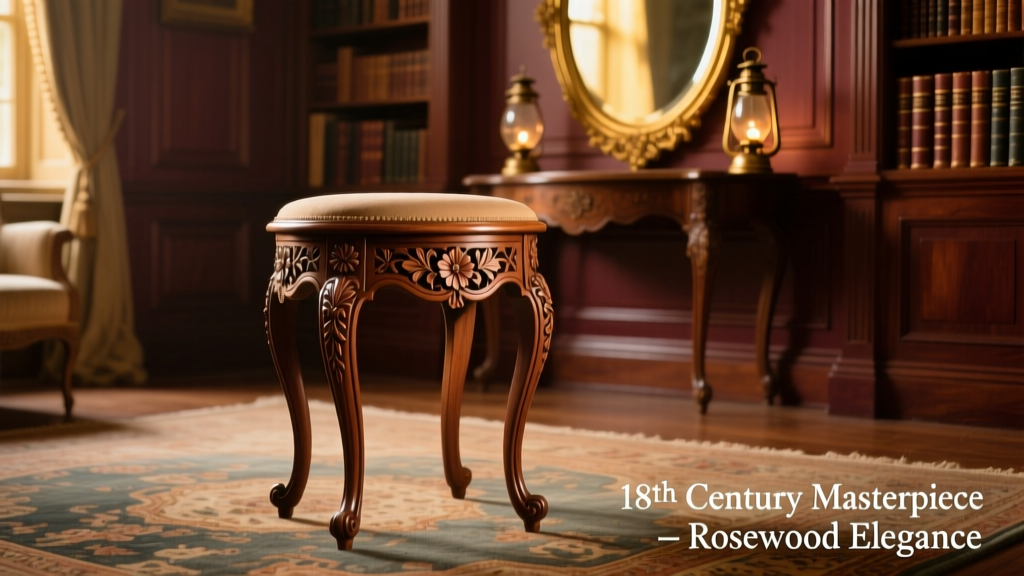
Rosewood Floral-Carved Stool with Cabriole Legs: Anatomy, Provenance, and Restoration of a 15½-Inch Antique Seating Piece

Duncan Miller Canterbury Bowl in Black: A Detailed Examination of the 6¼-Inch Model
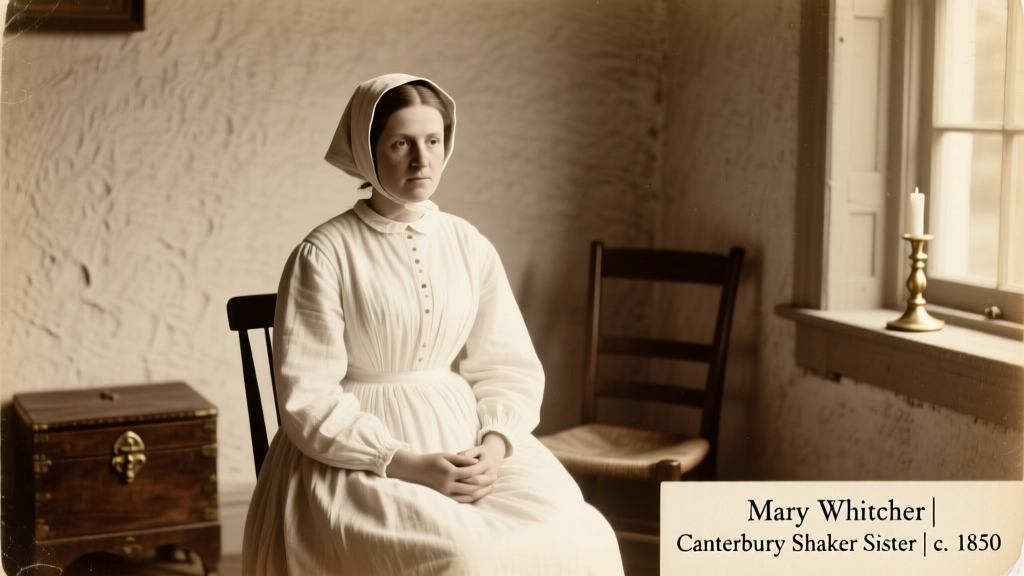
Photographing Faith and Identity: The Carte de Visite of Mary Whitcher, Shaker Sister of Canterbury

Sandwich Glass Tumbler: The Morning Glory Footed Tumbler, Circa 1850 — A Detailed Study of Form, Function, and American Glassmaking Heritage
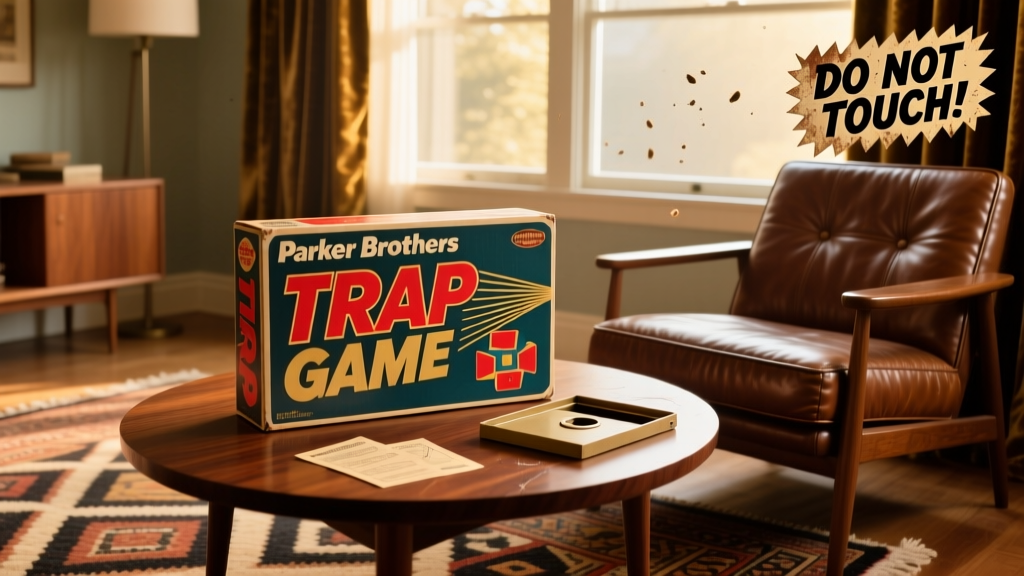
The Game Booby Trap Parker Brothers Box: A 1960s Pop-Culture Artifact and Restoration Profile

Waterford Tumbler Low Ball Lismore 3½-Inch Pair: Authenticity, Value, and Care for Collectors

The Calder Legacy in Miniature: Decoding the Spider Crab Spiral Pin — A Brass Hammered Wire Masterpiece
Fostoria Fairfax Plate Luncheon Green 9½-Inch: Identification, Value, and Restoration Insights
Rookwood Ewer with Chrysanthemums: A Study of Sallie Toohey’s Masterwork (4½ × 7 in)