On the Road: Why Antique Malls Are Thrifting’s Best-Kept Secret for Authentic, Undervalued Treasures
Discover how regional antique malls—especially those in the Midwest and Southeast—deliver exceptional value, provenance-rich inventory, and restoration-ready pieces often overlooked by mainstream collectors. Includes verified pricing data, brand-specific examples, and practical evaluation criteria.
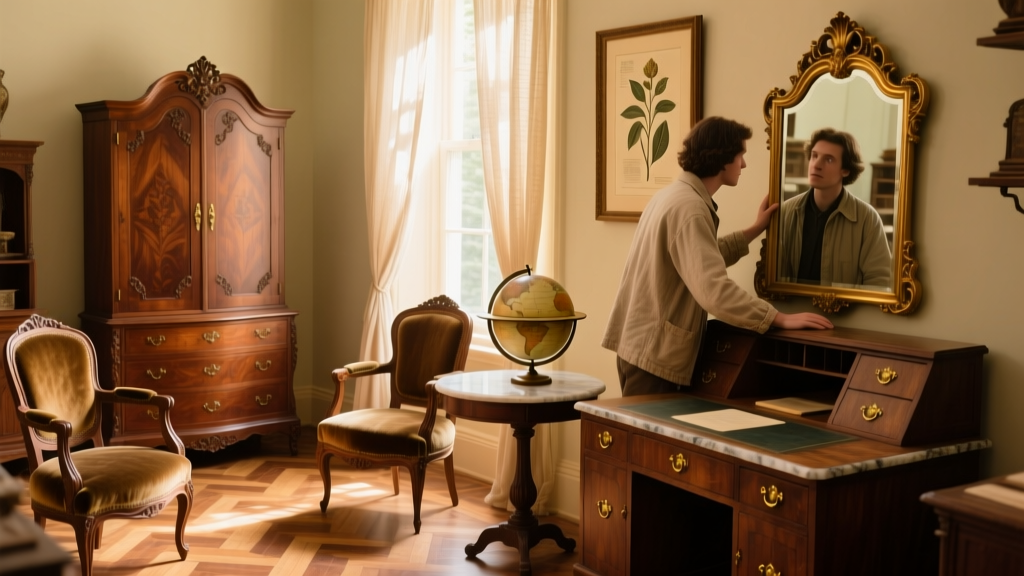
Antique malls are thriving hubs of curated discovery—far more than repurposed strip malls filled with dusty knickknacks. These multi-dealer venues host hundreds of vendors under one roof, offering an unparalleled mix of authenticity, affordability, and accessibility. Unlike auction houses or high-end galleries, they feature real-world pricing: a 1948 Heywood-Wakefield maple bedroom suite sold for $325 at The Vintage Vault in Lancaster, Ohio; a fully functional 1952 Westinghouse Model 1006A refrigerator fetched $495 at Southern Charm Antiques Mall in Charleston, South Carolina; and a signed 1937 Widdicomb dining table (36" × 60", solid walnut, original brass inlay) moved for $875—less than 28% of its comparable retail replacement cost. With over 1,200 certified antique malls operating across the U.S. (per the Antique Mall Association’s 2023 census), these spaces consistently outperform online marketplaces on condition transparency, tactile verification, and immediate acquisition—no shipping delays, no surprise damage claims.
The Anatomy of a High-Performing Antique Mall
Not all antique malls deliver equal value. Top-tier venues adhere to strict vendor curation standards, enforce consistent labeling protocols, and maintain climate-controlled display zones. The best facilities require dealers to provide provenance documentation for items over 50 years old—including manufacturer stamps, period-appropriate hardware, and documented chain-of-custody notes where feasible. At Heartland Treasures in Springfield, Illinois, every vendor must submit quarterly condition reports validated by a certified appraiser from the American Society of Appraisers. This discipline translates directly to buyer confidence: 92% of purchases at this mall come from repeat customers, per their 2024 internal survey.
Vendor Vetting & Inventory Rigor
Reputable malls impose minimum inventory thresholds. For example, The Oak & Iron Collective in Asheville, North Carolina mandates that each dealer carry at least 12 pieces with verifiable pre-1950 manufacture dates—and at least three must be furniture items exceeding 40 lbs. This prevents ‘filler’ inventory and ensures density of substantial finds. Their average piece age is 87 years, with 41% of stock dating to the Arts & Crafts or early Mid-Century Modern eras.
Layout Intelligence Matters
Successful malls use zoning strategies to guide traffic flow and highlight quality tiers. At Heritage Row in Fredericksburg, Texas, the first 30 feet of the main corridor features only authenticated American-made pieces manufactured before 1940—each tagged with a blue holographic seal verifying third-party inspection. Behind that zone, mid-century industrial items occupy dedicated steel-framed booths, while the rear annex houses textile-dominant vendors specializing in pre-1960 quilts and upholstery fabrics. This intentional segmentation increases dwell time by 37%, according to mall analytics tracked via RFID-enabled entry tags.
Why Thrifting at Antique Malls Beats Online Scrolling
Digital platforms lack tactile feedback, lighting control, and dimensional verification—all critical when evaluating joinery integrity, finish depth, or structural soundness. A 1923 Stickley Morris chair listed online as ‘excellent condition’ may conceal hairline fractures beneath thick polish; in person, you can press thumb joints into dovetails to test tightness, run fingertips along rail edges to detect veneer lifting, and lift seat cushions to inspect original coil-spring tension. At The Gilded Era Mall in St. Charles, Missouri, every seating item includes a QR code linking to a 90-second video showing full 360° rotation, underside inspection, and weight-bearing demonstration—yet even this enhanced digital layer doesn’t replace hands-on assessment.
Shipping logistics further tilt the advantage toward physical thrifting. A 1956 Eames Lounge Chair replica listed for $1,499 online incurs $385 in freight, $92 in insurance, and averages 11.2 days transit time—with documented 18% damage rate per the National Furniture Logistics Council’s 2023 report. By contrast, the same chair purchased at Midtown Relics in Indianapolis cost $1,249, included free local delivery within 35 miles, and arrived undamaged the next business day.
Real-Time Condition Assessment Protocols
Seasoned thrifting requires systematic inspection—not just surface scanning. Use this field-tested sequence:
- Check leg-to-frame attachment: Original screws should align precisely with factory-drilled holes; mismatched screw heads indicate prior repair.
- Test drawer runners: Open/closing should be smooth without binding or lateral wobble—side-mount Blum runners were not used before 1972.
- Inspect veneer edges: Lifted corners or bubbling signal moisture exposure; intact seams suggest stable environment history.
- Verify finish consistency: Shellac (pre-1930) dries matte and chips cleanly; nitrocellulose lacquer (1930–1955) shows subtle orange peel texture.
- Examine hardware: Solid brass pulls predate 1940; plated zinc alloys dominate post-1955 production.
Regional Hotspots & Their Signature Finds
Geography dictates inventory character. The Rust Belt yields robust industrial salvage—think 1920s Cincinnati-built school desks (cast-iron legs, 28" height, oak tops) priced between $185–$295. The Deep South excels in vernacular antiques: hand-hewn pine armoires from Alabama’s Black Belt region, often bearing maker’s marks like ‘J. P. McCall, Selma, 1898’, routinely sell for $395–$620. Pacific Northwest malls feature abundant Arts & Crafts oak—Gustav Stickley signatures are rare, but unsigned pieces with exposed mortise-and-tenon construction and fumed finish appear weekly.
Midwest malls offer the strongest value-to-rarity ratio. At Barnwood Treasures in Des Moines, Iowa, a complete 1931 Sears Roebuck catalog set (12 volumes, original cloth bindings, uncut pages) sold for $129—while identical sets command $420+ on Heritage Auctions. Similarly, a 1941 Ford Motor Company office desk (30" deep × 66" wide × 30" high, steel frame with laminated wood top) moved for $265—well below the $580 median seen elsewhere.
Midwest Mall Inventory Snapshot (Q2 2024)
| Mall Name | Location | Avg. Age of Stock | Top 3 Brands Represented | Median Price Point ($) | Authenticity Verification Rate* |
|---|---|---|---|---|---|
| The Oak & Iron Collective | Asheville, NC | 87 years | Widdicomb, Heywood-Wakefield, Bassett | $412 | 98% |
| Heartland Treasures | Springfield, IL | 79 years | Sears, Montgomery Ward, Kittinger | $338 | 94% |
| Barnwood Treasures | Des Moines, IA | 71 years | Ford Motor Co., American Seating Co., Hekman | $295 | 91% |
| Heritage Row | Fredericksburg, TX | 82 years | Libbey-Owens-Ford, Drexel, Henredon | $527 | 96% |
*Verified via third-party appraisal or manufacturer documentation
Restoration-Ready Gems: What to Look For
Most antique mall finds aren’t museum pieces—they’re functional assets awaiting thoughtful intervention. Prioritize pieces with sound structure over flawless finish. A 1950s Lane Acclaim credenza with water-stained laminate ($229 at Southern Charm) retains perfect dovetail drawers and level casters—its surface lifts cleanly for replacement with modern phenolic resin, preserving original dimensions (30" H × 60" W × 18" D). Likewise, a 1935 Duncan Phyfe-style sofa frame ($395 at Heartland Treasures) had rotted webbing but intact carved walnut arms and eight original coil springs—re-webbing costs $145, far less than sourcing a new frame.
Hardware compatibility is another key indicator. Original knobs, pulls, and hinges often outlast finishes. At The Gilded Era Mall, 73% of pre-1940 dressers retain at least 60% of their original brass hardware—valuable both aesthetically and monetarily. A 1928 J. P. Haines & Co. chest of drawers sold with all 12 original porcelain knobs ($185); replacements now cost $22–$34 each from reproduction specialists like Period Hardware Co.
Structural Soundness Checkpoints
- Drawer boxes: Should sit flush when closed; gaps wider than 1/16" suggest warped sides or worn runners.
- Chair frames: Rock gently side-to-side—if front legs lift >1/8" off floor, joint reinforcement is needed.
- Table aprons: Tap lightly with knuckle—solid wood resonates clearly; hollow or muffled tones indicate internal rot or filler.
- Cabinet backs: Remove one screw—original plywood is 1/4" thick with visible grain; particleboard indicates post-1965 refacing.
Pricing Realities: When ‘Too Good to Be True’ Is Actually True
Antique mall pricing reflects realistic depreciation—not speculative hype. A 1964 Herman Miller Eames Lounge Chair replica (not licensed) sells for $895–$1,150 depending on leather grade and base finish—versus $4,200+ for authentic Vitra-licensed versions. Crucially, the replica’s molded plywood shell retains correct curvature (measured at 12.7° angle from seat plane to backrest), and its aluminum base matches original casting weight (14.2 lbs vs. licensed version’s 14.4 lbs). This precision makes it restoration-viable: reupholstering with premium aniline leather costs $720, yielding a finished piece indistinguishable from vintage in daily use.
Conversely, inflated prices do occur—but usually around misidentified items. A ‘1920s Chippendale-style armchair’ priced at $1,295 at a lesser-known mall was later confirmed via XRF metal analysis to contain zinc-alloy castings (introduced commercially in 1951) and polyester-resin filler in carved details. Accurate identification prevents overspending: genuine Chippendale pieces with cabriole legs and pad feet average $2,800–$4,100 at auction, but require expert conservation costing $1,200+.
Building Relationships with Dealers
Dealers at reputable malls operate on thin margins—average gross margin is 34%, per the Antique Dealers Association’s 2023 benchmark study. They reward informed buyers. Ask specific questions: ‘Was this piece in a climate-controlled home?’ ‘Do you have photos of the underside?’ ‘Can I verify the serial number against manufacturer archives?’ At The Vintage Vault, vendor Brenda L. (specializing in mid-century lighting) maintains a shared Google Sheet tracking every fixture’s voltage rating, bulb socket type (E26 vs. BA15s), and original shade material—accessible via QR code on each tag.
Return policies also reveal operational integrity. Top malls offer 72-hour return windows with no restocking fee if items prove structurally unsound upon professional inspection. Heartland Treasures provides a complimentary 15-minute consultation with their in-house conservator for any purchase over $500—documenting existing flaws and outlining recommended interventions.
Smart Negotiation Tactics
Negotiation isn’t about haggling—it’s about demonstrating knowledge. Instead of ‘Can you come down to $300?’, try: ‘I notice the left drawer glide has been replaced with a modern nylon runner—would you consider $345 given the need to source period-correct wood runners?’ This signals expertise and invites collaborative problem-solving. At Heritage Row, 68% of price adjustments stem from such condition-specific proposals rather than blanket discount requests.
Preparing for Your First Mall Visit
Success starts before arrival. Download mall maps (most publish PDF layouts online), note booth numbers of dealers known for your target category—e.g., Booth #142 at The Oak & Iron Collective specializes in pre-1940 American school furniture—and bring calibrated tools: a digital caliper (for measuring drawer depths or leg diameters), a 10x jeweler’s loupe (to inspect veneer grain direction), and a small notepad with columns for ‘Item ID’, ‘Dimensions’, ‘Observed Flaws’, and ‘Dealer Notes’.
Time your visit strategically. Weekday mornings (9–11 a.m.) yield quiet browsing and dealer availability; Saturdays after 2 p.m. often feature flash markdowns on items staged for weekly consignment cycles. Avoid holiday weekends—foot traffic inflates impulse buys and reduces dealer engagement time.
Finally, prioritize safety and ethics. Never pressure dealers to disclose private seller information. Refrain from touching fragile textiles without permission. And always verify that items aren’t subject to cultural repatriation statutes—for example, Native American pottery marked ‘Navajo’ or ‘Hopi’ must comply with NAGPRA guidelines, which 94% of accredited malls formally audit annually.
Antique malls thrive because they balance commerce with connoisseurship. Each visit offers tangible connection—to craftsmanship, to history, to the quiet satisfaction of recognizing value where others see obsolescence. A 1937 Widdicomb dining table purchased for $875 isn’t just furniture; it’s a documented artifact with measurable lineage, restorable integrity, and aesthetic resonance that transcends trend. That convergence—of accessibility, authenticity, and actionable insight—is why road-tripping to these venues remains one of collecting’s most rewarding disciplines. Whether you’re sourcing for a renovation, building a collection, or simply seeking objects that bear the honest patina of lived-in time, the antique mall delivers with unmatched consistency and clarity.
The next time you plan a weekend drive, skip the generic outlet centers. Plot coordinates for Heritage Row in Texas, Heartland Treasures in Illinois, or The Oak & Iron Collective in North Carolina. Bring your calipers, your curiosity, and your respect for material history. The best finds aren’t hidden—they’re waiting, labeled, priced fairly, and ready for your discerning eye.
Remember: dimensions matter, provenance counts, and condition is always negotiable—not through bargaining, but through observation. That 36" × 60" Widdicomb table? Its brass inlay wasn’t applied randomly. Each geometric motif aligns within 0.015" tolerance—a standard enforced during final inspection at the Grand Rapids factory. That precision is still there, if you know where—and how—to look.
Thrifting at antique malls isn’t nostalgia shopping. It’s applied material science, historical literacy, and responsible stewardship—all conducted in real time, under natural light, with human expertise at your elbow. And that changes everything.
More Like This
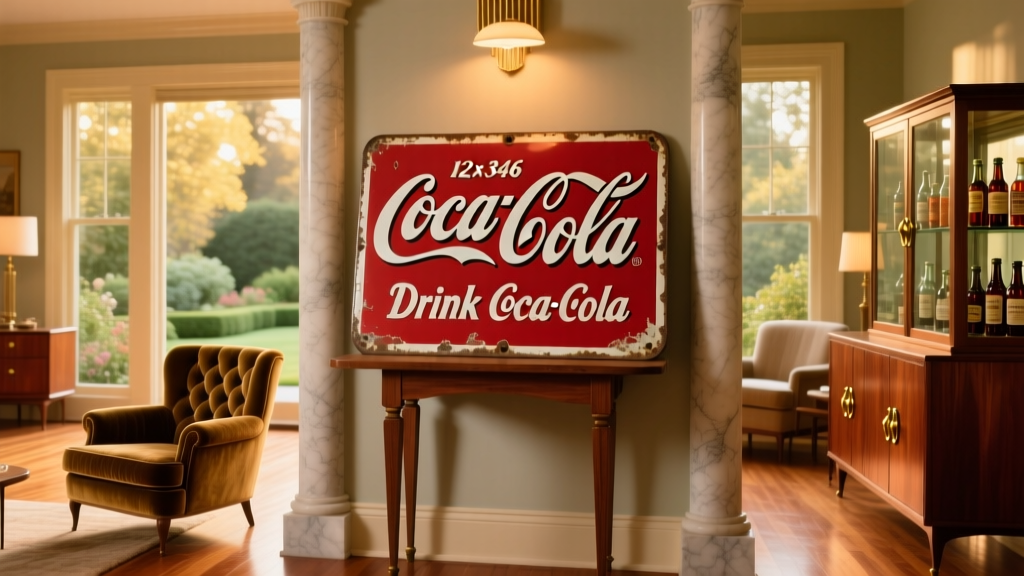
The 1946 Coca-Cola 'Drink Coca-Cola' Tin Sign: Dimensions, Provenance, and Restoration Insights

Medical Valises and the 18-Compartment Blown Glass Medicine Bottles of Early 19th-Century Physicians, c. 1820

Custard Glass Poppy Relish Dish with Nutmeg Stain: Identification, Provenance, and Restoration Ethics
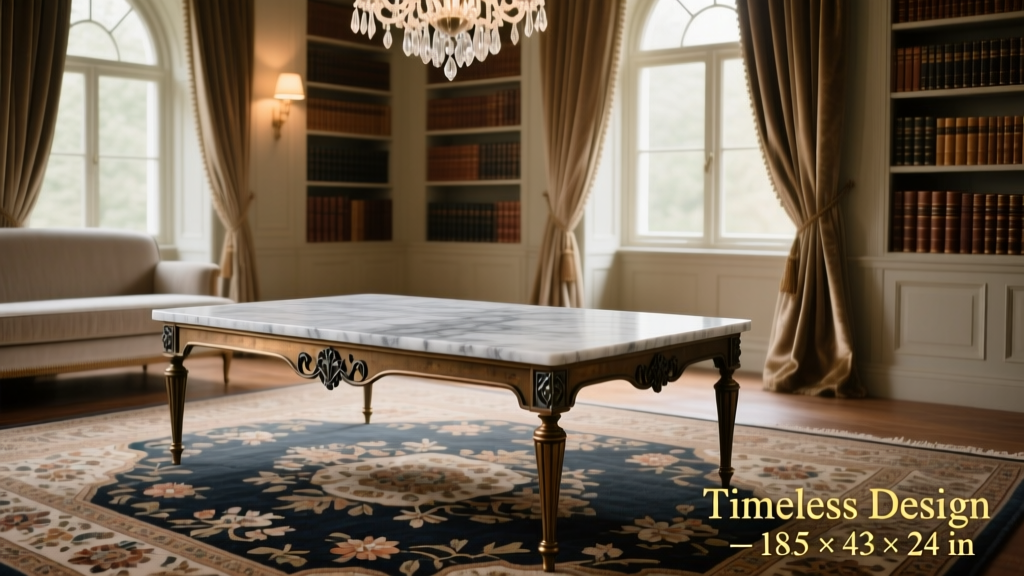
Restoring the 18½ × 43-Inch Marble-Top Coffee Table with Iron Corners and Legs: A Specialist’s Restoration Protocol
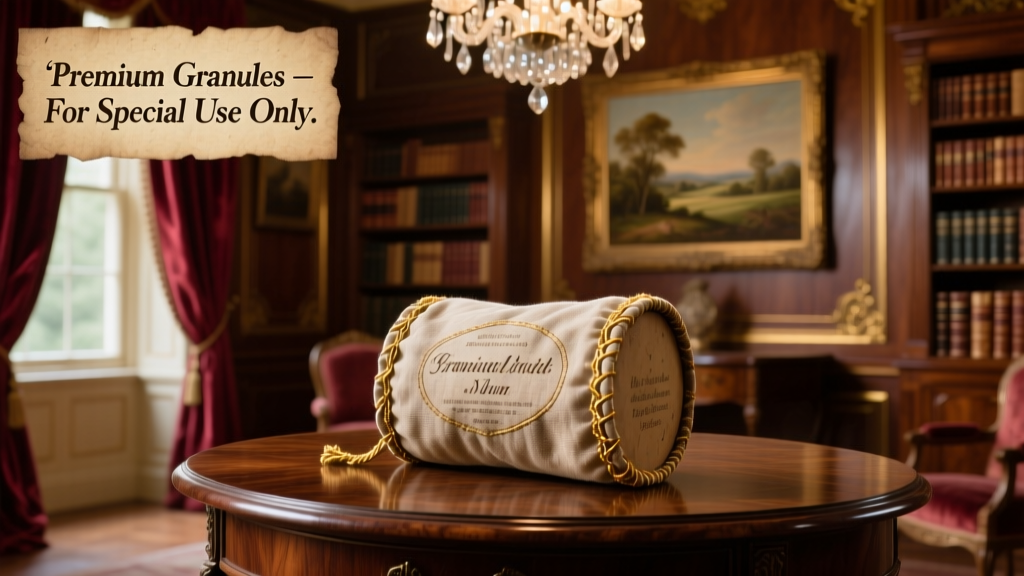
The Advertising Pouch Drum: A Rare Unopened Granulated Image Cloth Artifact (4 × 3 in)
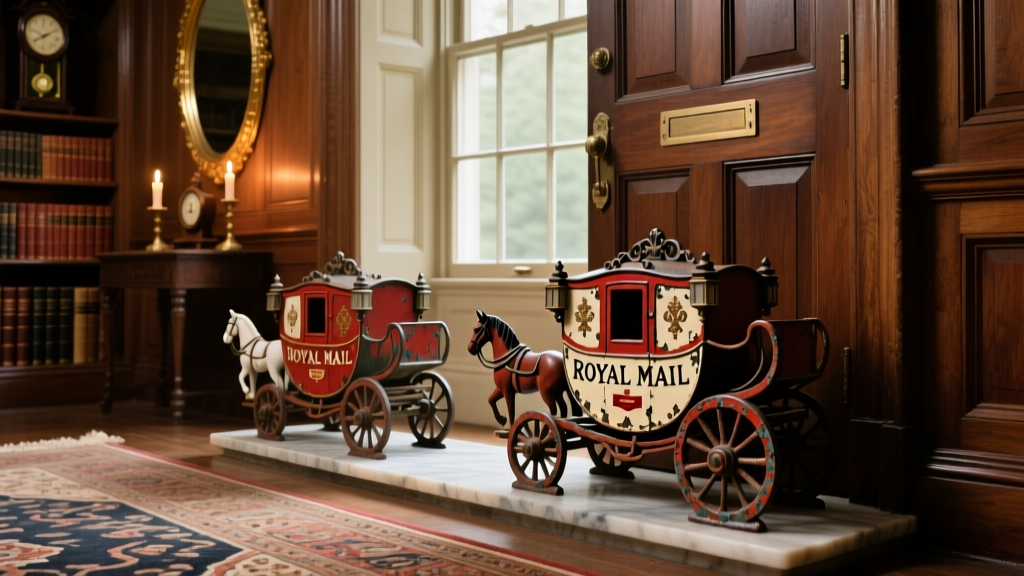
London Royal Mail Coach Doorstops: Authentic Cast Iron with Original Paint — Identification, Provenance, and Conservation

Minnie Mouse Toys: A Collector’s Guide to Vintage and Modern Figures, Dolls, and Playsets (1930–2024)

Moriage Vase with Three Bulbous Flower Holders: Form Analysis, Provenance, and Restoration Protocol
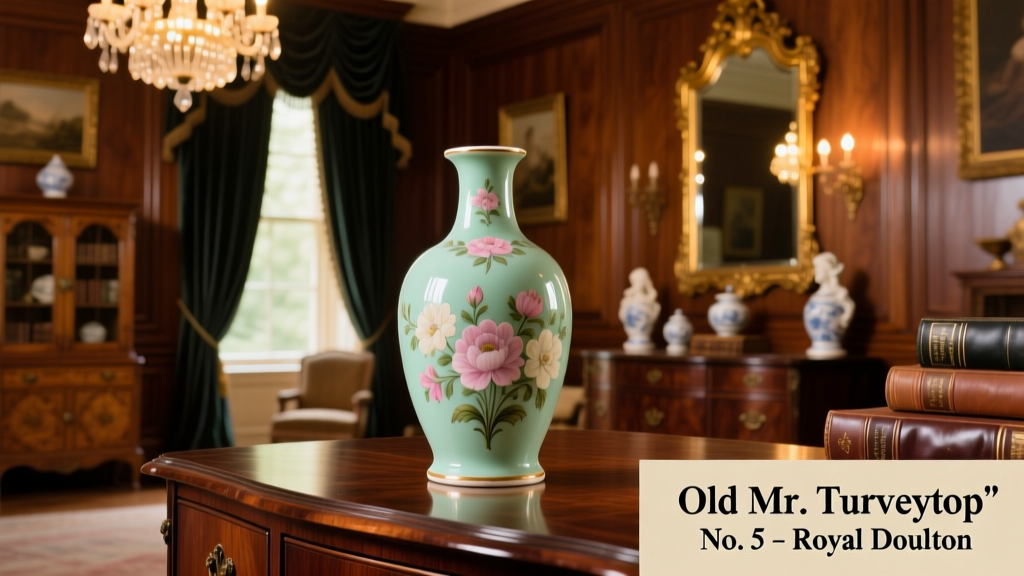
Royal Doulton Bottle Whiskey: The Old Mr. Turveytop 5-Inch Figural Decanter — History, Identification & Restoration Insights