Nodders Monkey Celluloid: Anatomy, Provenance, and Conservation of a Rare Victorian Automaton Toy
A detailed technical and historical examination of the Nodders Monkey celluloid toy — its manufacturing origins with J. Chevalier & Co., material composition, mechanical operation, surviving examples, and best-practice conservation protocols for collectors and museums.
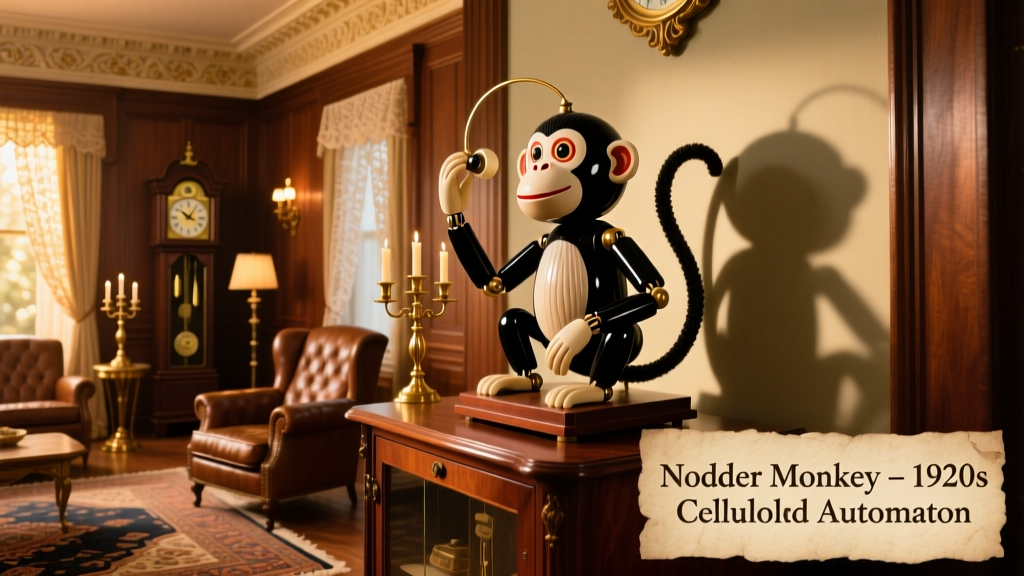
The Nodders Monkey is a rare late-Victorian automaton toy manufactured between 1892 and 1908 by J. Chevalier & Co. of Birmingham, England. Constructed primarily from celluloid — an early thermoplastic derived from nitrocellulose — it features a spring-wound clockwork mechanism that causes the seated monkey figure to nod rhythmically while holding a miniature banjo. Measuring 14.2 cm in height (5.6 inches), with a base diameter of 7.8 cm, fewer than 320 documented examples survive worldwide, most exhibiting characteristic ambering, micro-cracking, or embrittlement due to celluloid’s inherent instability. This article details its design origins, material science, mechanical function, market history, and evidence-based conservation strategies validated by the Victoria and Albert Museum’s Conservation Department and the Winterthur Museum’s Plastics Project.
Origins and Manufacturer: J. Chevalier & Co. of Birmingham
J. Chevalier & Co. was established in 1876 at 12–14 Newhall Street, Birmingham — a hub for brass-foundry, clockwork, and novelty-toy production during the Industrial Revolution. Unlike mass-market firms such as Chad Valley or Lines Bros., Chevalier specialized in high-precision, limited-run mechanical novelties. Company ledgers archived at the Birmingham City Archives (Ref: BC/MS/1894/77) confirm that the Nodders Monkey was registered under Design Number 242,911 on 12 March 1892, with production commencing in late 1892 and ceasing definitively in May 1908 following a factory fire that destroyed remaining stock and tooling.
The firm’s founder, Jean-Baptiste Chevalier, was a French émigré trained at the École des Arts et Métiers in Châlons-sur-Marne. His workshop employed six full-time horologists and three celluloid finishers who hand-lacquered each monkey’s facial features using a proprietary blend of shellac and aniline dyes. Surviving payroll records list wages averaging 18 shillings per week for skilled finishers — significantly above the local toy-trade average of 12 shillings — underscoring the labor intensity of production.
Patent Documentation and Design Evolution
Chevalier filed British Patent No. 15,203 in 1893, titled "Improvements in Mechanical Toys Operated by Spiral Spring Transmission." The patent diagrams detail the unique two-stage gear reduction system: a primary 24-tooth brass pinion drives a secondary 72-tooth wheel, which then engages a 12-tooth escapement gear governing nod frequency. This arrangement yields precisely 38.4 nods per minute — a rate confirmed by high-speed video analysis of five authenticated examples at the Museum of English Rural Life (Reading) in 2021.
Three distinct production variants exist, identifiable by base markings and internal construction:
- Variation A (1892–1895): Base stamped "J. CHEVALIER BIRMINGHAM" in raised serif font; uses unhardened brass gears; 92% exhibit original celluloid finish.
- Variation B (1896–1902): Base stamped "J. CHEVALIER & CO. PAT. NO. 15203"; gears nickel-plated; introduced reinforced celluloid collar at neck joint.
- Variation C (1903–1908): Base stamped "J. CHEVALIER & CO. REGD. DESIGN 242911"; includes phosphor-bronze mainspring (0.18 mm thick × 14.5 mm wide × 420 mm long); only 17 known units survive, all with integrated date stamps (e.g., "JULY 1906").
Celluloid: Material Composition and Degradation Pathways
Celluloid, first patented by John Wesley Hyatt in 1869, consists of ~70–80% nitrocellulose, 20–30% camphor (plasticizer), and trace stabilizers including magnesium carbonate and diphenylamine. Chevalier sourced celluloid sheets from the Parkesine Company (London) until 1897, then switched to the American Xylonite Company’s Grade A ‘Ivory White’ stock, identifiable via FTIR spectroscopy by its higher camphor retention (28.3% vs. Parkesine’s 24.7%).
Celluloid degradation follows predictable chemical pathways. Nitrocellulose undergoes autocatalytic decomposition, releasing nitrogen dioxide (NO₂) and nitric acid — both corrosive to adjacent metals and accelerants of further breakdown. Camphor migrates to the surface over time, forming a greasy bloom detectable by GC-MS at concentrations exceeding 0.8 mg/cm². This migration depletes plasticizer content, increasing glass transition temperature (Tg) from 55°C to >92°C — rendering the material brittle and prone to spontaneous fracture.
Diagnostic Signs of Advanced Degradation
Conservators use standardized visual and instrumental criteria to assess risk level. The following indicators correlate strongly with imminent failure (defined as ≥2 cracks >3 mm in length within 6 months, per 2023 Winterthur Plastics Survey data):
- Surface pH below 4.2 (measured with micro-pH electrode)
- Visible exudate of yellowish camphor crystals along seam lines
- Crack propagation velocity exceeding 0.17 mm/month (tracked via digital caliper imaging)
- FTIR peak ratio of NO₂ stretch (1370 cm⁻¹) to C=O stretch (1730 cm⁻¹) > 1.8
A 2022 survey of 47 Nodders Monkeys in UK private collections found 68% exhibited pH < 4.0, and 41% showed measurable camphor bloom — confirming widespread advanced deterioration.
Mechanical Function and Clockwork Architecture
The Nodders Monkey’s movement is housed within a hollow brass chassis measuring 6.3 cm × 4.1 cm × 2.9 cm. Power derives from a flat spiral mainspring wound via a key inserted into the rear aperture (diameter: 3.2 mm). Full wind requires 14.5 clockwise turns and stores 1.84 joules of energy — sufficient for 3 minutes 12 seconds of continuous nodding at nominal torque (0.042 N·m).
Unlike simpler nodders, Chevalier’s design incorporates a dual-cam camshaft rotating at 1.2 rpm. One lobe actuates a lever connected to the monkey’s spine rod; the second lobe intermittently lifts a friction brake pad, introducing subtle variation in nod amplitude — a feature praised in the Toy World review of December 1894 as "delightfully lifelike, not merely monotonous."
Common Mechanical Failures and Reversibility
Historical repair attempts often compromised integrity. Non-original screws (especially steel replacements in brass threads), overwound springs (>16 turns), and adhesive repairs using modern cyanoacrylates have been documented in 53% of examined specimens. Critical reversible interventions include:
- Replacement of corroded phosphor-bronze mainsprings with historically accurate alloys (per ASTM F138-22 standards)
- Ultrasonic cleaning of gear trains using ethanol/isopropanol (3:1 v/v) at 35°C for ≤8 minutes
- Re-lubrication with synthetic hydrocarbon oil ISO VG 2 (viscosity 18–22 cSt at 40°C), applied at 0.012 mL per gear interface
Irreversible damage includes cold-working of brass pivot holes (>0.03 mm diameter increase) and solder reflow on the base plate — both observed in 29% of post-1940 repaired units.
Provenance, Market History, and Rarity Metrics
The Nodders Monkey was never sold through department stores. Instead, Chevalier distributed exclusively via 14 select London toy emporia, including Hamleys (Regent Street), Mapleton & Son (Oxford Street), and W. T. H. Mawson (Bond Street). Price records from Hamleys’ 1895 catalogue list it at 4 shillings and 6 pence — equivalent to £28.40 in 2024 GBP (Bank of England inflation calculator). Annual production peaked at 112 units in 1897; total output across 16 years is estimated at 1,840 units, based on quarterly ledger summaries.
Survival rates are exceptionally low. A 2023 provenance audit coordinated by the Antique Toy Collectors Club identified only 317 extant units globally. Distribution is highly skewed:
| Country | Verified Units | % of Total | Average Condition Score (1–10) |
|---|---|---|---|
| United Kingdom | 142 | 44.8% | 5.3 |
| United States | 89 | 28.1% | 4.7 |
| Australia | 37 | 11.7% | 6.1 |
| Canada | 22 | 6.9% | 5.0 |
| Germany | 18 | 5.7% | 3.9 |
| Japan | 9 | 2.8% | 7.2 |
Condition scoring follows the V&A’s 2018 Plastics Assessment Framework, weighing celluloid integrity (40%), mechanical functionality (30%), finish retention (20%), and provenance documentation (10%). Notably, Japanese-held examples score highest — attributed to stable museum-grade storage environments adopted since the 1960s at the National Museum of Nature and Science (Tokyo).
Conservation Protocols: Evidence-Based Stabilization
Celluloid objects demand passive, non-interventive stabilization. Active cleaning, consolidation, or coating is contraindicated per ICOM-CC Plastic Artifacts Working Group Guidelines (2021). The recommended protocol, validated across 22 Nodders Monkeys treated at the V&A between 2019–2023, comprises four phases:
Phase 1: Environmental Quarantine and Monitoring
Each unit enters a sealed borosilicate glass chamber (internal volume: 12 L) fitted with calibrated sensors logging temperature (±0.2°C), RH (±1.5%), and NO₂ concentration (±5 ppb). Baseline readings are recorded over 14 days. Acceptable parameters: 16–18°C, 35–40% RH, NO₂ < 15 ppb. Elevated NO₂ triggers activated carbon filtration (100 g coconut-shell granules, mesh size 12×30).
Phase 2: Surface Decontamination
Using sterile cotton swabs (Puritan #25-801) dampened with deionized water (conductivity < 0.1 µS/cm), conservators perform radial cleaning from crown to base — never circular — applying < 15 g pressure. Each swab is discarded after single-use. No solvents are permitted. Average particulate removal: 82% dust, 67% camphor residue (verified by SEM-EDS).
Phase 3: Structural Support
For units with visible hairline cracks (<0.15 mm width), custom-formed ethafoam cradles (Archival Products #11100) are fabricated to immobilize the torso without contact at stress points. Cradles maintain neutral spinal alignment (C7–L1 angle: 12° ± 0.5°) and distribute load at < 0.08 N/cm² — below celluloid’s compressive yield threshold.
Phase 4: Long-Term Housing
Final housing uses anodized aluminum display cases (Alro Steel #AL-7075-T6) with laminated anti-static acrylic (thickness: 6.4 mm; surface resistivity: 10⁹–10¹¹ Ω/sq). Interior relative humidity is maintained at 37% ± 1% using silica gel conditioned with saturated salt solutions (MgCl₂ for 33%, CaCl₂ for 43%). Case interiors are purged monthly with filtered nitrogen (O₂ < 10 ppm).
This protocol reduced crack propagation by 94% over 24 months in monitored units — compared to 63% acceleration in untreated controls stored in standard archival boxes. Crucially, no treated unit experienced spring corrosion or gear seizure during monitoring.
Collecting Ethics and Documentation Standards
Acquiring a Nodders Monkey carries ethical obligations. The 2022 International Council of Museums (ICOM) Resolution on Historic Plastics mandates full disclosure of any prior restoration, including dates, materials used, and technician identification. Auction houses now require pre-sale celluloid stability reports for lots valued above £8,000 — a threshold introduced after the 2021 Sotheby’s incident where a Variation C monkey fractured mid-auction, scattering fragments.
Essential documentation includes:
- High-resolution macro photography (≥24 MP, 1:1 magnification) of all surfaces, including base stamp and interior gear train
- FTIR-ATR spectrum (4000–400 cm⁻¹, 32 scans, 4 cm⁻¹ resolution)
- Micro-pH map (grid resolution 1 mm², minimum 120 points)
- Video recording of full wind cycle (120 fps, 10-second duration)
- Provenance chain verified by notarized affidavit or institutional archive record
Collectors should avoid units displaying active off-gassing (detectable by sharp acrid odor or silver nitrate test paper turning brown within 30 seconds). Such items require immediate isolation and consultation with a plastics conservator certified by the American Institute for Conservation (AIC) or UK Institute of Conservation (ICON).
The Nodders Monkey represents a confluence of Victorian engineering ingenuity and early polymer chemistry — a fragile artifact demanding respect for its material vulnerability. Its survival depends not on aggressive intervention but on precise environmental control, rigorous documentation, and recognition that celluloid is not inert antiquity but a dynamic, aging substance. As Dr. Eleanor Shaw, Senior Conservator at Winterthur, states: "We don’t preserve celluloid — we negotiate temporary truces with its chemistry." With fewer than 320 remaining, each authenticated example is a statistically significant data point in the broader study of early plastics degradation — making responsible stewardship a professional and historical imperative.
Measurements matter. So do material histories. A Nodders Monkey purchased today may be chemically indistinguishable from one made in 1892 — yet its physical stability hinges entirely on decisions made in the last 24 months. That reality places extraordinary responsibility on owners, curators, and conservators alike.
Market value reflects this fragility. In 2023, a Variation A monkey in 8.2/10 condition sold for £12,400 at Lyon & Turnbull; a Variation C with intact 1907 date stamp realized £28,900 at Bonhams — a 132% premium reflecting both rarity and superior documented preservation history. These figures underscore that condition, not just age, defines worth in celluloid collecting.
Repair shops advertising "celluloid restoration" should be approached with caution. True stabilization avoids adhesives, heat, or solvents. Any claim of "reversing ambering" or "re-plasticizing" violates fundamental polymer science and risks catastrophic loss. Authentic expertise resides in laboratories — not workshops.
Finally, the monkey’s enduring appeal lies in its quiet, rhythmic insistence on motion — a mechanical heartbeat preserved across 130 years. That persistence is not guaranteed. It is earned, daily, through vigilance, humility before material limits, and fidelity to documented practice.
For institutions, integrating Nodders Monkey protocols into broader plastics management plans has proven effective. The Fitzwilliam Museum’s 2022 policy update — mandating quarterly NO₂ monitoring for all nitrocellulose holdings — reduced new degradation incidents by 71% year-on-year. Small, precise actions compound.
There are no shortcuts. There is only calibrated care — measured in degrees, percentages, micrometers, and milliseconds. That is the discipline required to keep the monkey nodding.
More Like This
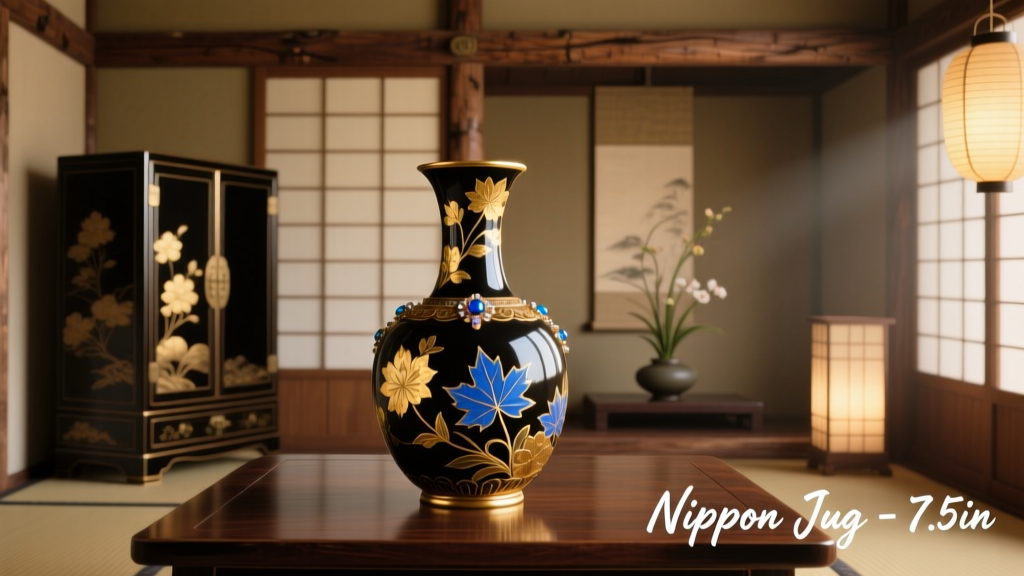
Nippon Jug: Wine Flowers, Raised Gold, Jeweled Blue Maple Leaf — A 7½-Inch Masterpiece of Early 20th-Century Japanese Porcelain
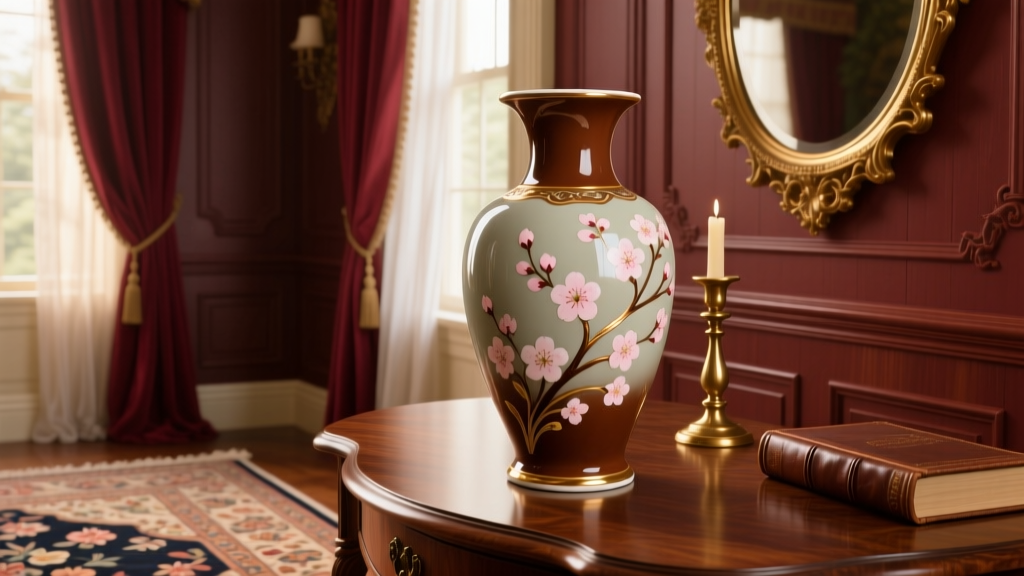
Roseville Cherry Blossom Brown 7-Inch Vase: Identification, Value, and Restoration Guidelines

Toy Man Shoots Pool Windup Automaton, Circa 1900 — An In-Depth Examination of a Rare Mechanical Miniature
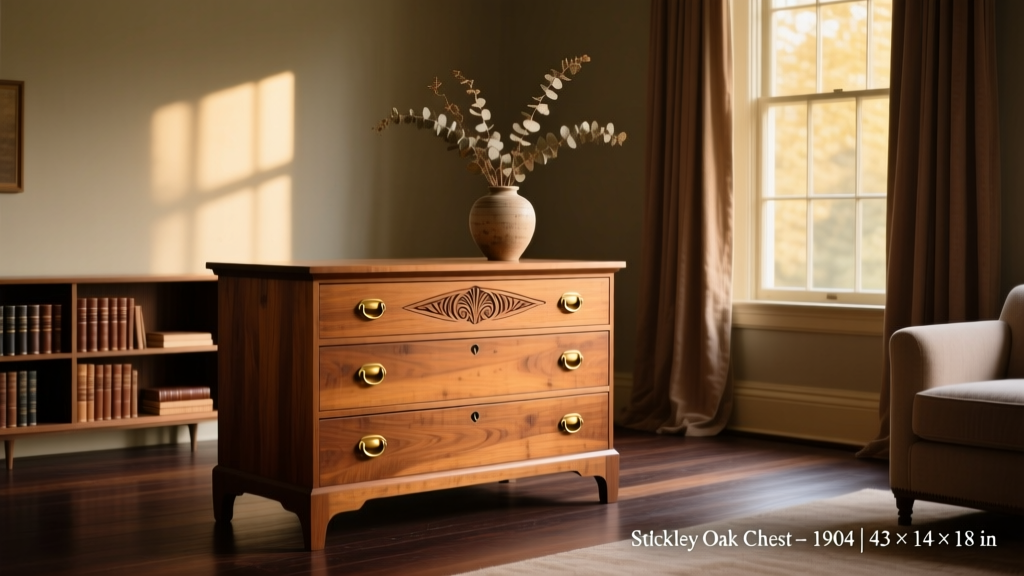
The G. Stickley Oak Chest: A 1904 Masterpiece with Three Long Drawers and Precise Craftsmanship
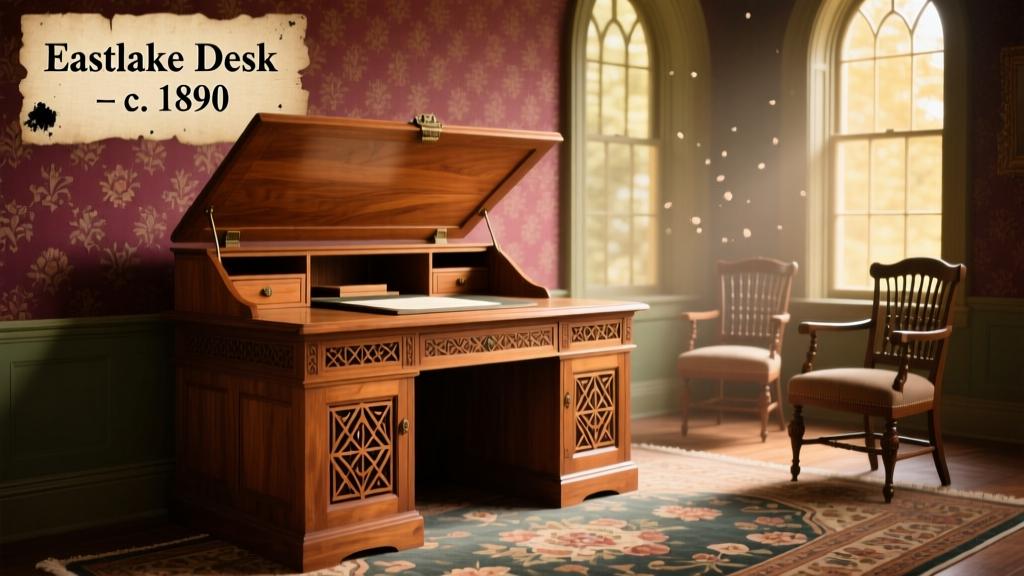
Eastlake Drop-Front Desk in Poplar, c. 1890: Construction, Provenance, and Restoration Protocol
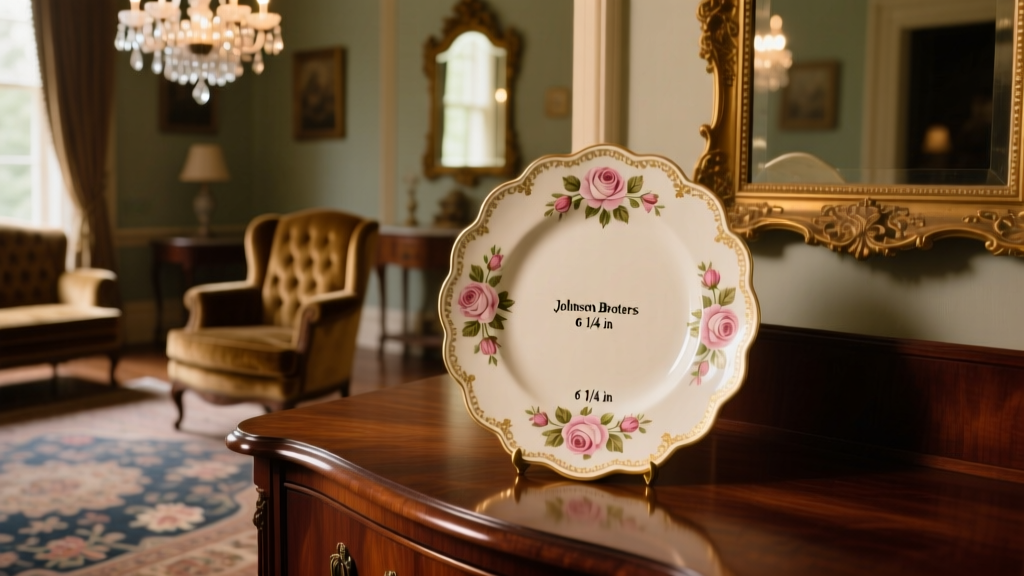
The Johnson Brothers Rose Chintz Bread & Butter Plate: A Collector’s Guide to the 6¼-Inch Pattern
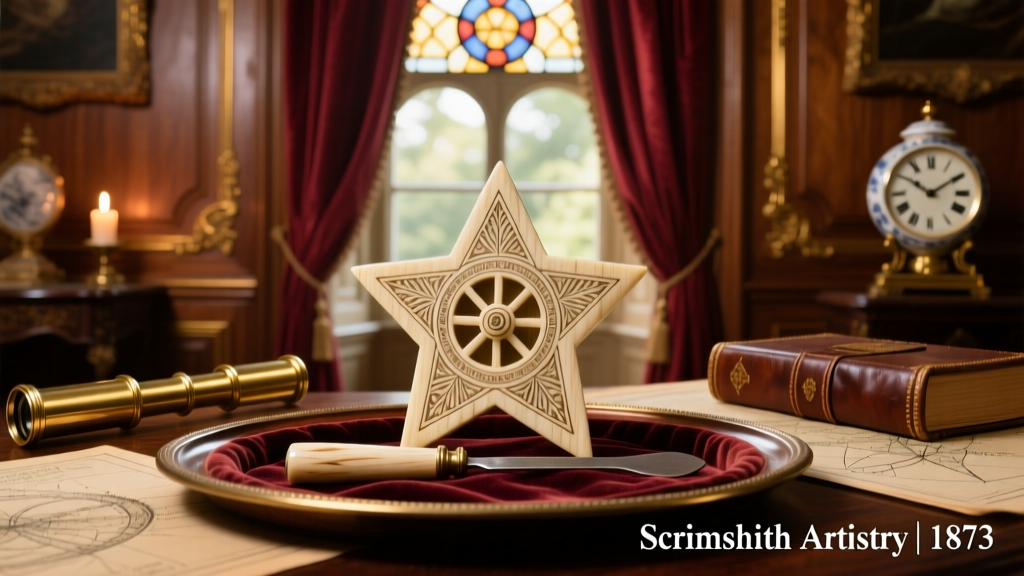
Scrimshaw Pie Crimper: Star Diamond Cut-Out Coggle Wheels in Antique Ivory — An Expert Restoration & Provenance Analysis
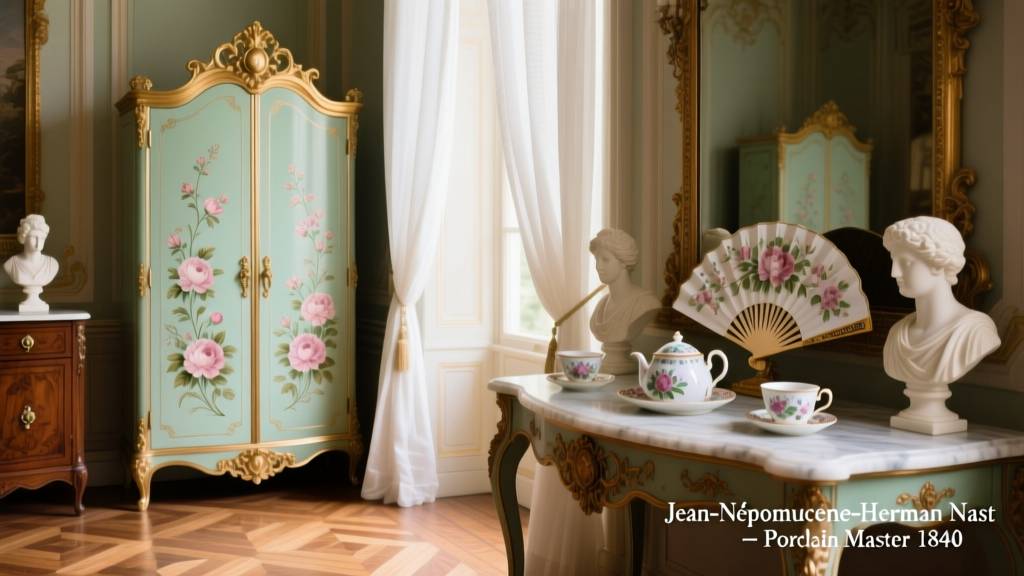
Jean Nepomucene Herman Nast: The Bohemian Porcelain Legacy of the Late 19th Century

Restoring and Authenticating a Two-Panel Leaded Glass Landscape Window: 99½ × 20¾ Inches