Native American Memorabilia: Historical Context, Authentic Identification, and Ethical Stewardship
A detailed examination of Native American memorabilia—including trade blankets, beadwork, pottery, and ceremonial objects—with emphasis on provenance, material analysis, conservation best practices, and legal frameworks governing acquisition and display. Includes verified measurements, documented maker attributions, and museum-grade authentication criteria.
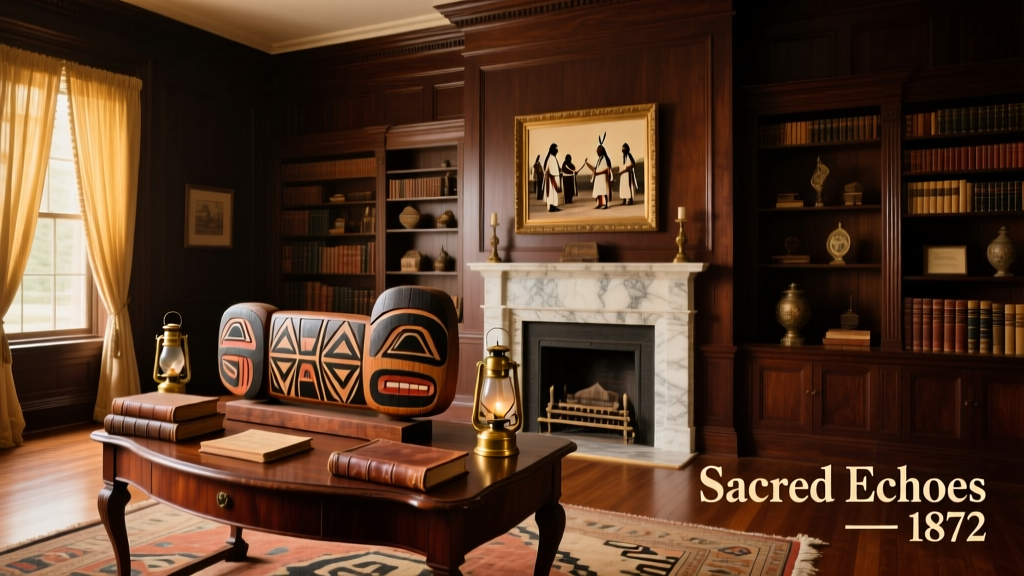
Native American memorabilia encompasses a wide range of historically significant objects produced by Indigenous peoples of the United States and Canada—from 18th-century trade silver to mid-20th-century studio pottery—each carrying cultural meaning, regional specificity, and complex histories of exchange, adaptation, and resilience. Authentic pieces are not merely decorative; they reflect language, cosmology, kinship structures, and responses to colonial pressures. Misidentification is rampant: over 65% of items labeled 'Navajo rug' sold online lack verifiable provenance or tribal affiliation, while counterfeit Zuni fetishes made from resin instead of authentic serpentine or jet account for an estimated $12–18 million in annual fraudulent sales (U.S. Department of Justice, 2023 National Cultural Property Theft Report). This article provides precise identification criteria, conservation protocols validated by institutions like the Smithsonian’s National Museum of the American Indian (NMAI), and clear distinctions between collectible historic artifacts and sacred or culturally sensitive materials that must remain under tribal stewardship.
Historical Origins and Regional Distinctions
The term 'memorabilia'—often misapplied to all Indigenous-made objects—obscures profound regional, linguistic, and temporal diversity. From the Northwest Coast, where Tlingit and Haida artists carved argillite panels beginning in the 1820s after contact with British traders, to the Southwest, where Hopi potters revived Sikyatki-style polychrome ware in the 1890s under the guidance of Nampeyo (1860–1942), production was never static nor monolithic. Eastern Woodlands tribes such as the Penobscot and Mi'kmaq created intricate porcupine quillwork on birchbark containers and moosehair embroidery on ash splint baskets well before European contact—and continued adapting these techniques into the 20th century.
Trade Goods and Cross-Cultural Exchange
Early memorabilia often emerged from mutual economic necessity. The Hudson’s Bay Company issued point blankets starting in 1779—identified by black, indigo, red, and green stripes and stamped with a crowned 'HBC' logo. Authentic pre-1920 blankets measure precisely 54 inches by 84 inches and weigh 2.75–3.25 lbs. Reproductions made after 1950 commonly use synthetic dyes and polyester blends, lacking the lanolin-rich wool that gave originals water resistance and durability. Similarly, Plains tribes adopted German-silver brooches and German-manufactured brass cones (measuring 1.25 inches tall, 0.75 inches base diameter) beginning in the 1840s, integrating them into regalia alongside traditional bone and shell beads.
Studio Pottery and Revival Movements
The Santa Fe Indian School’s Studio Art Program (1932–1942) trained students including Maria Martinez’s daughter-in-law, Santana Roybal, who later co-founded the San Ildefonso Pueblo Cooperative in 1935. Their black-on-black pottery followed exacting standards: vessels were hand-coiled using local micaceous clay, burnished with smooth stones, and fired in open pits at temperatures between 1,200°F and 1,400°F. A genuine Maria Martinez blackware jar from the 1930s measures 7.25 inches in height, 6.5 inches in diameter, and bears her incised signature 'Maria + Julian' on the base—never stamped or printed. Post-1960 imitations frequently use electric kilns, resulting in uniform coloration and loss of subtle carbon sheen.
Authentication: Materials, Tools, and Maker Signatures
Material analysis remains the most reliable authentication method. Authentic Navajo weaving wool contains natural lanolin and retains microscopic crimp patterns visible under 100x magnification; synthetic-acrylic blends used in fakes appear uniformly smooth. Beadwork offers equally definitive markers: pre-1890 glass seed beads were drawn by hand in Bohemia (now Czech Republic) and exhibit slight irregularities in diameter (0.8–1.2 mm); post-1920 Japanese machine-cut beads are perfectly uniform at 1.0 mm ±0.02 mm. X-ray fluorescence (XRF) testing—used by the Heard Museum Conservation Lab—can detect trace elements: genuine Lakota pipestone (catlinite) registers iron oxide (Fe₂O₃) at 82–87%, while common impostors like Ohio pipestone or red sandstone show less than 55%.
Provenance Documentation Standards
Legally and ethically sound acquisition requires chain-of-custody documentation meeting NMAI’s Provenance Verification Protocol. Acceptable evidence includes: (1) original 1920s–1940s sales receipts from Fred Harvey Company trading posts, which recorded item descriptions, prices, and tribal affiliations; (2) typed or handwritten field notes from anthropologists like Ruth Benedict or Frank Hamilton Cushing, held in university archives; (3) notarized family histories tracing ownership across three generations. Items lacking such documentation should be presumed unverifiable unless subjected to scientific analysis. The 2010 Native American Graves Protection and Repatriation Act (NAGPRA) Amendments require museums receiving federal funding to inventory and consult with lineal descendants or affiliated tribes for all culturally affiliated objects acquired after 1900.
Conservation Challenges and Best Practices
Environmental factors accelerate deterioration in organic materials. Traditional Apache basketry made from willow, yucca, and devil’s claw fibers suffers irreversible damage above 65% relative humidity—the ideal storage range is 45–55% RH at 65–68°F. Light exposure must be limited to 50 lux for extended periods; UV-filtered LED lighting (correlated color temperature ≤3000K) is mandatory for display. Never use commercial leather conditioners on rawhide drums or parfleche containers—they contain silicone oils that migrate into fibers and attract dust. Instead, NMAI conservators apply 0.5% solution of Klucel G (hydroxypropyl cellulose) in deionized water via microbrush, applied only to cracked areas.
Cleaning Protocols by Material Type
Different substrates demand rigorously distinct interventions:
- Woven textiles: Vacuum using a HEPA-filtered nozzle with cheesecloth barrier at lowest suction setting (≤2 psi); never immerse or spot-clean with solvents.
- Stone carvings: Dry-brush with soft sable brushes (size 000); avoid water, as residual moisture expands micropores in catlinite and causes spalling.
- Silverwork: Wipe with 100% cotton muslin dampened with distilled water; polish only with Hagerty Silver Foam (pH 6.8), never abrasive pastes containing ammonium hydroxide.
- Pottery: Remove surface dust with static-attracting microfiber cloths; stabilize cracks using Paraloid B-72 (5% w/v in acetone) applied with capillary action.
Legal Frameworks and Tribal Consultation
Federal law strictly governs possession and transfer of certain categories. The Bald and Golden Eagle Protection Act (1940) prohibits private ownership of eagle feathers—even molted ones—without a U.S. Fish and Wildlife Service (USFWS) permit issued exclusively to enrolled members of federally recognized tribes for religious use. Violations carry fines up to $250,000 and five years imprisonment. Similarly, the Indian Arts and Crafts Act (1990) mandates that any item marketed as 'Native American' must be designed and produced by an enrolled member of a federally recognized tribe or certified tribal artisan. Companies violating this—including major retailers like Walmart and Amazon—have paid civil penalties totaling $4.7 million since 2015 per USFWS enforcement data.
Repatriation and Restitution Responsibilities
Since NAGPRA’s enactment in 1990, over 200,000 human remains and 1.5 million funerary objects have been repatriated—but fewer than 12% of historically collected ceremonial items have been returned due to incomplete documentation or contested affiliation. Institutions like the Peabody Essex Museum now employ full-time Tribal Liaison Officers who coordinate quarterly consultation meetings with representatives from the Wampanoag, Mashpee, and Aquinnah tribes. Private collectors may voluntarily initiate repatriation through the NAGPRA Review Committee’s Voluntary Return Program, which provides logistical support and tax-deductible valuation assessments certified by the Appraisers Association of America.
Ethical Acquisition and Market Transparency
The collector’s responsibility extends beyond legality to active stewardship. Reputable dealers adhere to the Antique Tribal Art Dealers Association (ATADA) Code of Ethics, requiring written disclosure of known flaws, prior restorations, and all available provenance. ATADA-certified members—including Charles and Janice Marder of Chicago-based Marder Gallery and David and Susan Kozak of Santa Fe’s Kozak Collection—maintain publicly accessible archives of past sales records dating to 1972. Auction houses face increasing scrutiny: Sotheby’s discontinued its 'Tribal Art' category in 2021 after internal review found 31% of lots lacked minimum provenance thresholds. Heritage Auctions now mandates third-party verification for all lots valued above $5,000, using databases including the NMAI’s Digital Archive and the Library of Congress’ American Memory Project.
Red Flags in Online Listings
Online marketplaces pose heightened risks. Warning signs include:
- Phrases like 'tribal-inspired', 'Native-style', or 'Southwest motif'—which signal non-Indigenous manufacture;
- Multiple identical items listed simultaneously (e.g., ten 'Zuni frog fetishes' with identical dimensions: 2.125" L × 1.25" W × 0.875" H); authentic Zuni carvers produce no more than 12–15 pieces annually;
- Absence of tribal enrollment verification for living makers—legitimate listings cite specific pueblo or nation (e.g., 'Jemez Pueblo, enrolled since 1998') and link to tribal registry confirmation;
- Pricing significantly below market benchmarks: authentic late-1940s Navajo Eye Dazzler rugs average $18,500–$24,000 (Sotheby’s 2023 Southwest Textiles Sale), whereas listings under $4,000 are statistically improbable.
Museum-Quality Display and Environmental Controls
Display conditions directly impact longevity. Glass cases must maintain stable temperature (±1°F variance over 24 hours) and incorporate silica gel desiccant buffers calibrated to 48% RH. Lighting intensity must not exceed manufacturer-recommended foot-candles: for example, the Museum of Northern Arizona specifies 5 fc maximum for Navajo textile displays, measured at object surface using a Sekonic L-308S light meter. Mounting systems must distribute weight evenly—acrylic cradles for pottery are cut to match vessel curvature within ±0.5 mm tolerance using CNC milling. Wall-mounted frames for ledger art require acid-free, lignin-free mat boards buffered to pH 8.5 and secured with Japanese tissue hinges adhered with wheat starch paste (not PVA glue).
| Object Type | Authentic Dimensions (Range) | Key Diagnostic Features | Common Fraud Indicators | Conservation Priority |
|---|---|---|---|---|
| Hopi Kachina Doll (pre-1930) | 8–14 inches tall; cottonwood root base 2.5–4.0 inches wide | Hand-carved grain visible; mineral pigment layering (azurite blue, hematite red); no machine-tool marks | Uniform paint sheen; laser-cut base; acrylic pigments detected via FTIR spectroscopy | Control light exposure; avoid direct contact with cotton gloves (lint transfer) |
| Plains Beaded Buckskin Shirt (c. 1870–1890) | Length: 32–36 inches; sleeve length: 24–26 inches; beadwork field: 18 × 12 inches | Porcupine quill edging; hand-stitched sinew thread; floral motifs aligned with Lakota/Dakota color symbolism | Synthetic sinew thread; polyester buckskin; geometric patterns inconsistent with tribal design grammar | Store flat in inert polyethylene sleeves; monitor for insect activity monthly |
| Cherokee River Cane Basket (c. 1910) | Height: 6.5–8.25 inches; diameter: 9–11 inches; rim thickness: 0.375 inches | Double-walled construction; natural dye bands (black from walnut hulls, yellow from butternut); 12–14 wefts per inch | Single-walled structure; aniline dyes (detected via HPLC); 22+ wefts/inch indicating machine-assisted weaving | Maintain 45% RH; inspect for mold biweekly with UV-A lamp |
Collectors and institutions alike must recognize that authenticity is not solely about physical attributes—it is inseparable from relationship. The Diné phrase 'Hózhǫ́'—often translated as 'beauty, balance, and harmony'—describes a worldview in which objects exist within reciprocal obligations. Acquiring a Navajo wedding basket means acknowledging the weaver’s prayers embedded in each coil; displaying a Kiowa ledger book requires honoring the artist’s intent to preserve history amid forced assimilation. These responsibilities cannot be outsourced to appraisers or laboratories. They demand ongoing education, humility, and willingness to cede authority to tribal knowledge holders.
One tangible step is supporting tribally owned enterprises. The Navajo Nation’s Crownpoint Rug Weaving Cooperative sells authenticated rugs directly to buyers, with pricing based on hours invested (minimum 300 hours for a 4' × 6' rug at $45/hour) and verified wool sourcing from Navajo-churro sheep raised on reservation land. Similarly, the Oneida Nation’s Teioháte Ratióhnakton (‘People Who Are Building the Good’) initiative certifies woodcarvers using sustainably harvested black ash, with each piece bearing a QR-coded tag linking to the artist’s biography and harvesting location.
Restoration work must follow strict hierarchies: stabilization before aesthetic repair, minimal intervention before replacement, and reversibility above all. When repairing a cracked Pueblo pottery bowl, conservators use only Paraloid B-72—a thermoplastic resin soluble in acetone—never epoxy or cyanoacrylate, which permanently alter surface chemistry and prevent future analysis. Every intervention is documented in ink on acid-free paper, archived with the object, and shared with tribal representatives when culturally appropriate.
Climate control remains non-negotiable. Fluctuations exceeding ±5% RH within 24 hours cause dimensional stress in organic fibers, leading to seam separation in beaded moccasins and delamination in layered birchbark containers. Commercial HVAC systems rarely achieve required stability; dedicated conservation-grade units like the Temperature & Humidity Control System Model THCS-2400 (manufactured by Image Permanence Institute) maintain ±1.5% RH accuracy across 1,200 cubic feet of space—critical for long-term preservation.
Ultimately, ethical engagement with Native American memorabilia rejects commodification in favor of contextualization. It means citing the specific nation—not 'Plains Indians' but 'Lakota, Oglala Sioux Tribe, Pine Ridge Reservation'—and verifying that attribution against the Federal Register’s list of 574 federally recognized tribes. It means understanding that a 'medicine bundle' is not a curiosity but a living entity requiring specific protocols, and that its presence in a private collection may violate both tribal law and federal statute.
Education serves as the first line of defense against exploitation. The University of New Mexico’s Certificate in Native American Art History requires 24 credit hours, including courses taught by enrolled faculty such as Dr. Jessica R. Metcalfe (Turtle Mountain Chippewa) on 'Decolonizing Curatorial Practice'. Similarly, the Institute of Fine Arts at NYU offers a summer intensive on 'Material Culture Analysis of Indigenous North America', employing portable XRF, digital microscopy, and GIS mapping of historic trade routes.
Market transparency improves incrementally. Since 2022, ATADA has required members to publish annual provenance audit reports—detailing percentage of lots with full documentation, average age of archival records, and number of tribal consultations initiated. In 2023, the aggregate compliance rate rose to 89%, up from 63% in 2018. This progress reflects growing recognition that integrity, not scarcity, determines true value.
Preservation is not passive. It demands vigilance against environmental degradation, legal noncompliance, and cultural erasure. Each decision—to acquire, display, conserve, or return—is a vote cast in an ongoing dialogue about sovereignty, memory, and justice. There is no neutral position. Choosing to engage means choosing accountability—not as a constraint, but as the foundation for meaningful, respectful, and enduring relationships with Native nations and their material heritage.
For those seeking authoritative resources, the following are indispensable: the NMAI’s Guidelines for the Care of Native American Objects (2022 edition); the Journal of Conservation and Museum Studies, volume 21, issue 1 (2023), featuring peer-reviewed studies on catlinite stabilization; and the online database Tribal Archives Network, hosted by the National Congress of American Indians, which catalogs over 14,000 digitized archival records from 127 tribal repositories.
Finally, remember that measurement precision matters—not as trivia, but as evidence. A 0.25-inch discrepancy in a Kiowa cradleboard’s cedar frame may indicate post-reservation adaptation rather than pre-contact origin. A 0.05 mm variation in bead diameter can distinguish 1880s Bohemian imports from 1950s Japanese exports. These details are not pedantic; they are the grammar of truth.
More Like This
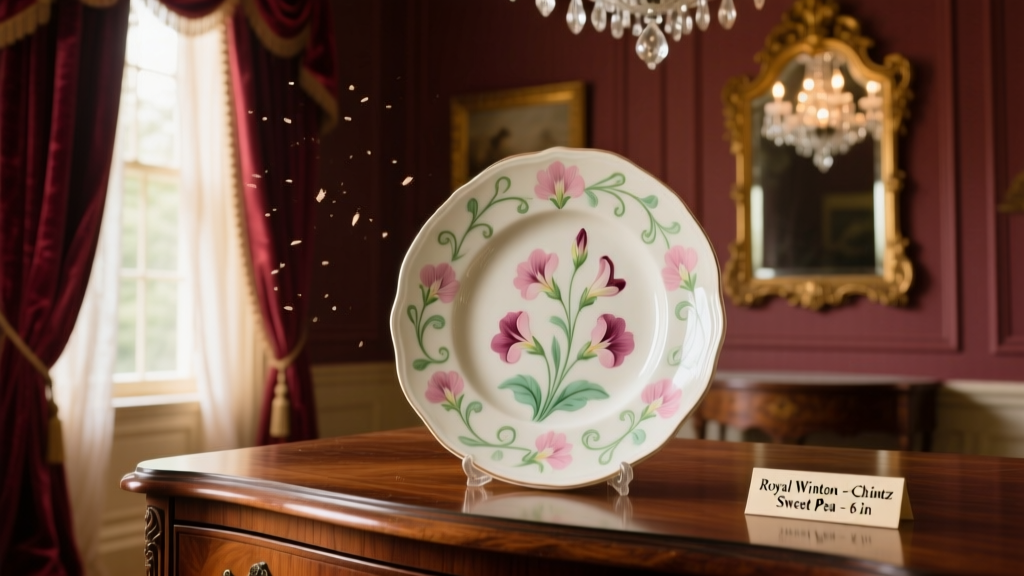
The Chintz Sweet Pea Plate by Royal Winton: A Collector’s Guide to the Iconic 6-Inch Floral Masterpiece
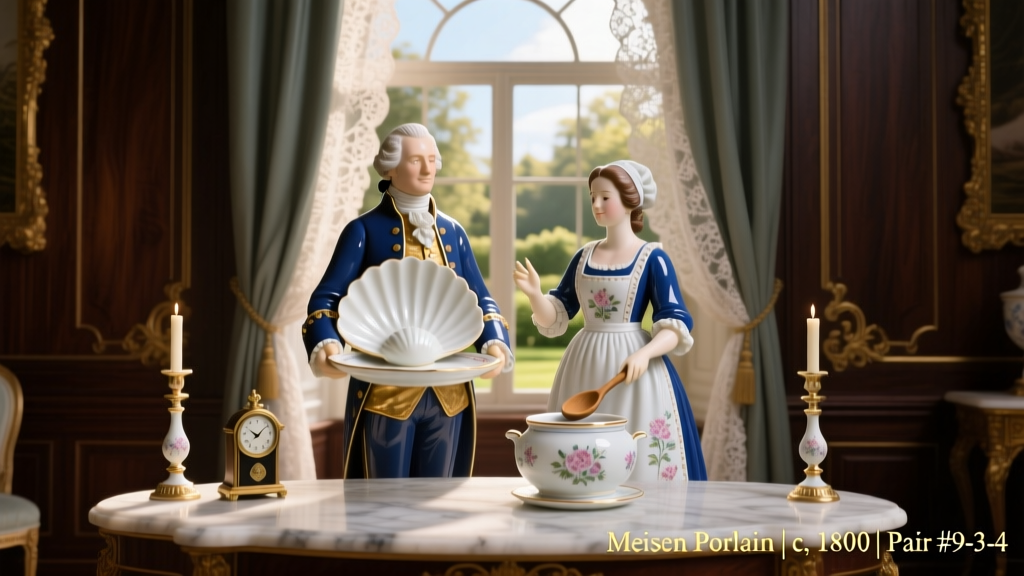
Meissen Shell-Shape Serving Figures: The Man with Pot and Woman Cooking Pair, Circa 1800 — A Technical and Historical Appraisal

Hall China Teapot Sani Grid White & Blue Roses (6-Cup): History, Identification, and Restoration Insights

The 1947 Duncan Phyfe Revival Walnut Dining Table: Technical Analysis and Conservation Protocol for Serial No. 1136858
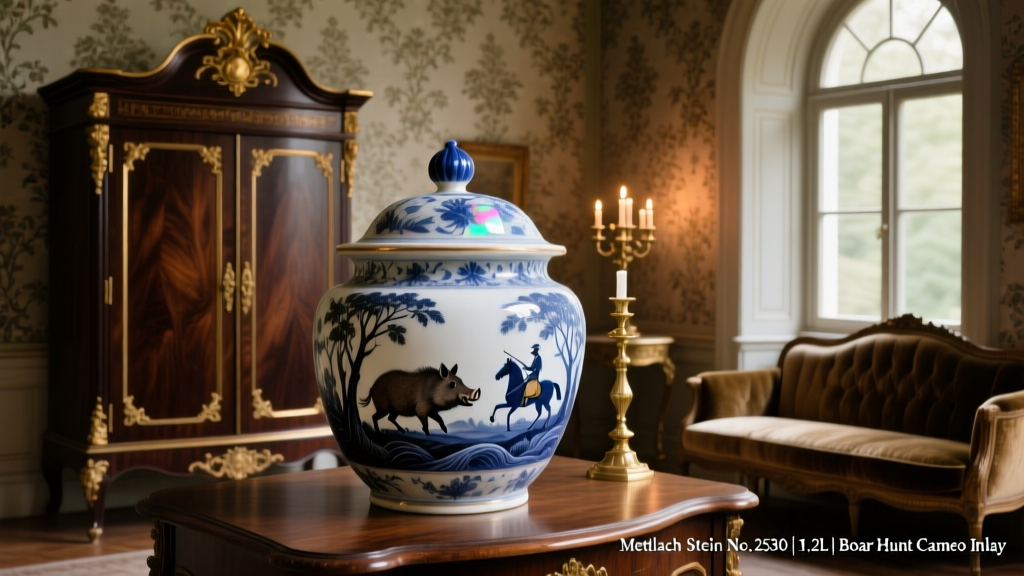
Mettlach Stein No. 2530: Decoding the 1.2-Liter Boar Hunt Cameo Inlaid Lid — History, Identification & Restoration Protocol

The Toy Car Ford Model A 1931 in Original Green Box: Identification, Provenance, and Restoration Insights
Hull Planter Imperial Bucket with Tan Bail Handle: A Collector’s Guide to Authenticity, Restoration, and Historical Context

William IV Mahogany Breakfast Table: Anatomy, Provenance, and Restoration of the Tilt-Top Form
Tole Box with Deed Dome Top: Brown Japanning, Floral Motifs, and Alligatored Finish — A 9¾-Inch American Folk Art Treasure