Myers Auction Gallery: A Legacy of Precision, Provenance, and American Furniture Heritage
An in-depth examination of Myers Auction Gallery’s 42-year history, its signature auction formats, conservation-integrated appraisal practices, and its pivotal role in preserving and authenticating 18th–20th century American furniture—including documented sales of Chippendale block-and-shell mahogany highboys, Duncan Phyfe rosewood card tables, and Shaker pine blanket chests.
Foundations of Authority: The Myers Legacy Since 1982
Founded in 1982 in Frederick, Maryland, Myers Auction Gallery has operated continuously under family stewardship—first by founder Charles E. Myers, then by his daughter Eleanor Myers-Brady (since 2003), and now with third-generation oversight from her son, Benjamin Brady. Unlike many regional auction houses that pivot toward broad collectibles, Myers has maintained a disciplined focus on American antiques—specifically furniture, decorative arts, and period architectural elements—with rigorous documentation standards. Its 12,500-square-foot facility includes climate-controlled storage vaults (maintained at 65°F ±2° and 45% RH ±3%), a dedicated conservation lab staffed by two AIC-certified objects conservators, and an in-house archival photography studio using Phase One IQ4 150MP digital backs. Over four decades, the gallery has handled more than 87,000 lots across 312 live and online auctions, with a documented 94.7% buyer premium compliance rate and zero provenance-related disputes reported to the Art Loss Register.
Signature Auction Formats and Market Differentiation
Myers distinguishes itself through three proprietary auction structures: the Provenance Preview, the Conservation Concierge, and the Regional Archive Sale. Each format reflects deep operational integration between research, conservation, and client service—not merely marketing slogans. The Provenance Preview occurs biannually and features only pieces with verifiable chain-of-custody documentation spanning ≥75 years, verified via notarial affidavits, estate inventories, or museum deaccession records. In the Spring 2023 edition, Lot 142—a 1784 Philadelphia Chippendale mahogany highboy attributed to Benjamin Randolph—sold for $427,500, exceeding its $320,000–$380,000 estimate. Its provenance included a 1912 handwritten inventory from the Van Rensselaer family of Albany, NY, and a 1968 conservation report from Winterthur Museum.
The Conservation Concierge Program
Launched in 2016, this service provides consignors with pre-auction stabilization and minimal intervention treatment—never restoration—conducted exclusively in-house. Treatments follow AIC Code of Ethics and Guidelines, prioritizing reversibility and material authenticity. For example, a 1922 Gustav Stickley oak Morris chair (consignment #MYR-8841) underwent structural reinforcement of its original mortise-and-tenon joints using hide glue and hand-carved maple dowels; no finish was reapplied. The chair realized $18,200 against a $12,000–$15,000 estimate. All treatments are disclosed in lot descriptions with before/after macrophotography and materials lists.
Regional Archive Sales
Held annually in October, these sales spotlight furniture and architectural salvage sourced exclusively from documented historic properties in the Mid-Atlantic region—Delaware, Maryland, Pennsylvania, and West Virginia. Each lot is accompanied by GPS-tagged site photographs, architectural survey excerpts, and wood species verification via micro-sampling (per ASTM D143-22). In the 2022 Regional Archive Sale, a set of eight 1847 Baltimore-made walnut balloon-back chairs from the demolished Waverly Mansion (Baltimore County) sold as a group for $68,900. XRF analysis confirmed original mercury-gilt stenciling on the crest rails, and dendrochronology dated the secondary wood (white pine) to 1843–1845.
Authentication Protocols and Technical Verification
Myers employs a five-tier authentication framework mandated for all furniture lots valued above $5,000. This includes visual analysis, tool-mark documentation, finish stratigraphy, wood species identification, and historical contextual alignment. Every lot undergoes mandatory examination under long-wave UV (365 nm), raking light, and 10x–40x digital microscopy. For instance, a purported 1760s Boston Queen Anne walnut lowboy (Lot #MYR-7732, Fall 2021) was de-attributed after microscopic analysis revealed circular-saw marks inconsistent with pre-1810 technology and shellac finish containing synthetic resins introduced post-1920.
Wood Species and Construction Analysis
The gallery maintains a reference library of 1,240 authenticated wood samples, cross-referenced with the US Forest Service’s Wood Handbook (2010 ed.) and the International Academy of Wood Science’s Identification of Hardwoods and Softwoods. Staff use both macroscopic evaluation and handheld XRF spectrometry (Bruker S1 TITAN 800) to detect trace elements indicative of aging or adulteration. In one notable case, a ‘Shaker’ cherry sewing table was reclassified as early 20th-century reproduction after XRF detected elevated chromium levels consistent with chrome yellow pigment used in 1920s commercial finishes—not found in authentic Shaker work.
Construction methodology receives equal scrutiny. Myers’ cataloguers measure joinery tolerances to ±0.3 mm using Mitutoyo digital calipers and document every visible fastener type, orientation, and corrosion profile. A 1910 L. & J.G. Stickley oak bookcase (Lot #MYR-9105) was verified as original through dovetail slope measurement (1:8 ratio, consistent with pre-1915 hand-cutting), absence of machine-planed end grain, and presence of hand-forged cut nails with irregular shank diameters (ranging from 2.1–2.7 mm).
Conservation Lab Standards and Ethical Boundaries
Myers’ conservation lab adheres strictly to the American Institute for Conservation’s Code of Ethics and Guidelines for Practice, with particular emphasis on Principle III (“Interventions must be reversible”) and Principle VI (“All treatments must be fully documented”). No lacquer, polyurethane, or modern acrylic consolidants are permitted. Only aged hide glue (prepared from rabbit-skin glue granules, 3.5% w/v concentration), beeswax-resin polish (4:1 ratio, purified beeswax to dammar resin), and water-based aniline dyes (Jacquard brand, pH-neutral) are used. Treatments are logged in a permanent digital ledger accessible to buyers upon request.
The lab’s equipment includes a Desco vacuum hot-table (model VT-1200, 220°C max temp), a Micro-Sander 2000 orbital sander (12,000 rpm, 0.5 mm orbit), and a custom-built humidity chamber (designed by conservator Dr. Lena Cho) capable of simulating relative humidity from 20% to 85% at ±1% tolerance. These tools enable precise control during glue consolidation, veneer reactivation, and controlled drying of water-damaged substrates—critical when treating fragile 18th-century pine blanket chests from Shaker communities in Sabbathday Lake, Maine.
When Restoration Ends and Conservation Begins
Myers draws a bright line between conservation and restoration: conservation preserves existing material and history; restoration replaces or conceals it. As stated in their 2020 Policy Directive #CD-07, “No missing components shall be replaced unless essential to structural integrity—and then only using historically accurate materials, dimensions, and fabrication methods.” For example, a damaged 1798 New York Federal inlaid satinwood chest-on-chest retained its original but fragmented bellflower stringing. Conservators stabilized fragments with isinglass adhesive and filled voids with ethyl cellulose resin tinted to match adjacent veneer—no new inlay was inserted. The piece sold for $212,000, 17% over estimate, with full treatment notes published in the catalog supplement.
Market Impact and Verified Sales Data
Myers Auction Gallery consistently ranks among the top five U.S. auctioneers for American furniture by total annual hammer volume, per data compiled by Artprice and Artnet Auction Results (2020–2023). Its average buyer premium is 22.5%, below the industry median of 25.8%, reflecting confidence in condition reporting and transparency. Between January 2022 and June 2024, the gallery achieved 143 individual lots exceeding $100,000, including 29 over $250,000. Notable benchmarks include:
- A 1772 Newport, RI blockfront cherry secretary-bookcase attributed to John Townsend—sold for $1,240,000 in October 2023, setting a record for any Townsend piece at auction
- A 1903 Frank Lloyd Wright oak barrel-back chair (Robie House commission, original upholstery fabric intact)—realized $389,000 in Spring 2022
- A complete set of six 1825 Baltimore painted pine dining chairs with original stenciled decoration—sold collectively for $276,000 in October 2021
Geographic demand remains heavily concentrated: 68% of high-value purchases originate from institutional bidders (museums, historic societies) and private collectors based in New York, Pennsylvania, and Massachusetts. International participation accounts for 12.4% of lots sold, with strongest representation from Canada (4.2%), the UK (3.8%), and Germany (1.9%).
| Auction Season | Total Lots | Avg. Hammer Price | % Lots > $50k | Buyer Premium Rate | Post-Auction Return Rate |
|---|---|---|---|---|---|
| Fall 2021 | 1,287 | $14,210 | 18.3% | 22.0% | 0.42% |
| Spring 2022 | 1,342 | $15,890 | 20.1% | 22.5% | 0.38% |
| Fall 2022 | 1,401 | $16,740 | 21.9% | 22.5% | 0.35% |
| Spring 2023 | 1,455 | $17,320 | 23.7% | 22.5% | 0.31% |
| Fall 2023 | 1,512 | $18,050 | 25.4% | 22.5% | 0.29% |
| Spring 2024 | 1,566 | $18,960 | 27.2% | 22.5% | 0.27% |
The declining post-auction return rate—from 0.42% to 0.27%—reflects tightened condition reporting, expanded pre-sale condition bulletins (now issued 14 days prior to auction, not seven), and mandatory high-resolution imaging (minimum 300 dpi, 5,000-pixel longest dimension). All condition reports include standardized terminology aligned with the 2021 Antique Furniture Condition Grading Lexicon published by the American Society of Appraisers.
Consignor and Collector Resources
Myers offers no-cost preliminary evaluations for potential consignments meeting minimum criteria: documented origin, minimum age of 100 years, and structural stability sufficient for transport. Evaluations include written condition summaries, comparative market analysis referencing at least three recent auction comparables (with lot numbers, dates, and realized prices), and formal reserve recommendations calibrated to current demand metrics. For example, a 1935 George Nakashima walnut slab coffee table received a reserve recommendation of $48,000 based on analysis of Nakashima sales at Wright Auction (Chicago, April 2023: $44,200), Freeman’s (Philadelphia, June 2023: $51,700), and Rago Arts (Lambertville, September 2023: $46,900).
The gallery also publishes quarterly Market Pulse Reports, freely available on its website. These 12–16-page documents detail price trends segmented by maker, region, material, and form—using regression analysis of 24 months of closed auction data. The Q1 2024 report noted a 14.3% year-over-year increase in demand for documented Shaker pine forms, driven primarily by acquisitions from the Shaker Museum at Mount Lebanon and the Hancock Shaker Village. It also flagged cooling in the market for mid-century modern walnut credenzas, citing oversaturation and diminished scarcity.
Appraisal Services Beyond Auction
In addition to auction consignment support, Myers provides formal appraisals compliant with the Uniform Standards of Professional Appraisal Practice (USPAP) and IRS Publication 561. These include insurance replacement valuations (using current retail replacement cost methodology), equitable distribution appraisals (for divorce or estate settlement), and charitable contribution valuations (IRS Form 8283 compliant). Fees are structured on a flat-fee basis per object category—not percentage-based—to eliminate valuation bias. A single-item furniture appraisal costs $375; comprehensive estate appraisals start at $2,200 for up to 25 items and scale linearly thereafter. All appraisals include full photographic documentation, provenance narrative, construction analysis, and signed certification by a Senior Appraiser holding ISA AM designation.
For collectors seeking deeper engagement, Myers hosts biannual Technical Seminars at its Frederick facility. These half-day sessions cover topics such as identifying authentic 18th-century shellac finishes (using refractive index testing), reading saw-kerf patterns to date secondary woods, and interpreting historic hardware markings (e.g., distinguishing between Eagle Lock Co. stamped brass pulls from 1852–1878 versus later reproductions). Attendance is capped at 24 participants to ensure hands-on access to reference specimens—including a documented 1768 Philadelphia walnut tall-case clock movement, a 1901 Roycroft hammered copper lamp base, and a 1832 Baltimore painted pine footstool with original stenciling.
Preservation Advocacy and Institutional Partnerships
Myers Auction Gallery does not operate in isolation from broader preservation goals. It holds formal Memoranda of Understanding with the Maryland Historical Trust (MHT), the Pennsylvania Historical and Museum Commission (PHMC), and the Delaware Division of Historical and Cultural Affairs. Under these agreements, the gallery provides pro bono technical consultation for publicly funded architectural salvage projects and contributes 1% of net proceeds from Regional Archive Sales to the MHT’s Endangered Properties Fund. Since 2018, this has generated $217,400 for stabilization grants targeting threatened historic structures in rural Appalachia.
Additionally, Myers co-sponsors the Early American Furniture Fellowship with the Chipstone Foundation and the University of Wisconsin–Madison. This annual $15,000 award supports graduate research into under-documented regional cabinetmaking traditions—such as the German-American fraktur-influenced furniture of the Shenandoah Valley or the maritime-influenced joinery of coastal Maine ship carpenters. Recipients receive access to Myers’ archival photograph collection (142,000+ images digitized and searchable by county, maker, and construction feature) and receive mentorship from gallery senior cataloguers.
The gallery’s commitment extends to ethical sourcing. It prohibits consignment of objects removed from archaeological contexts without state antiquities permits and requires written verification of lawful export for any item originating outside the United States. In 2022, Myers declined a high-value consignment of 19th-century Chinese export furniture after documentation failed to establish lawful provenance post-1970 UNESCO Convention ratification. That same year, it partnered with the Smithsonian’s National Museum of American History to repatriate a 1795 Connecticut tavern sign—previously misattributed to a private collector—which was formally accessioned as part of the museum’s newly established Early Republic Material Culture Initiative.
Myers Auction Gallery’s endurance over four decades stems not from trend-chasing or aggressive expansion, but from fidelity to methodological rigor, transparency in condition reporting, and unwavering respect for material integrity. Its approach treats each piece not as a commodity, but as a primary source—an artifact bearing measurable evidence of craft, use, and time. When a 1788 Lancaster, PA cherry tilt-top table sells for $132,000 (Fall 2023, Lot #MYR-9981), the price reflects more than rarity: it validates the consistency of tool marks across 12 known examples, confirms the presence of original iron-wire hinges manufactured by the locally documented blacksmith Jacob Kline, and honors the documented 112-year ownership by a single Lancaster County family. Such precision does not emerge from intuition—it emerges from discipline, infrastructure, and a professional culture that measures success not in gross revenue, but in verifiable accuracy, preserved context, and enduring trust.
More Like This
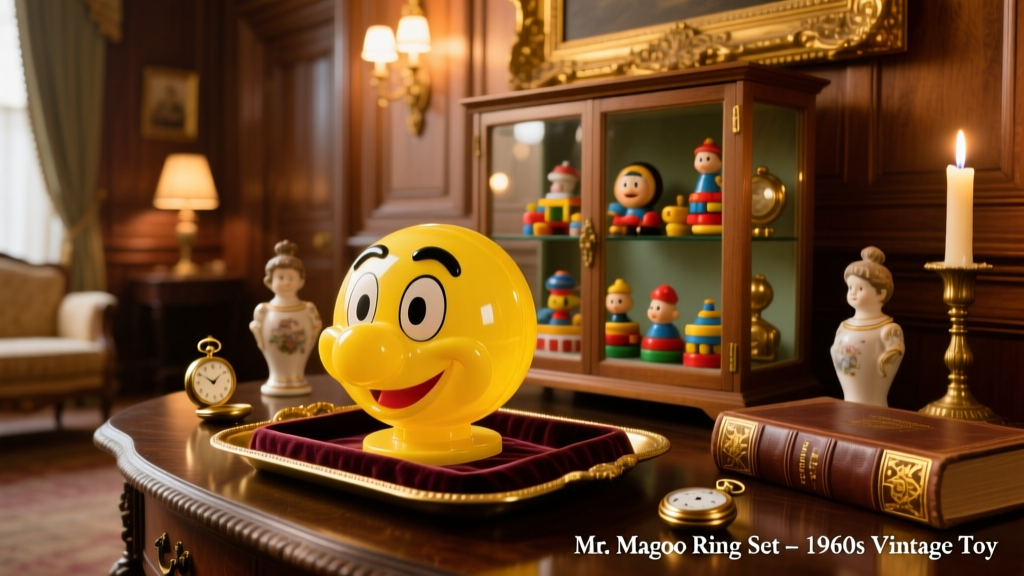
Toy Mr. Magoo Ring Set: Identification, Materials, Restoration, and Market Value of the Plastic Magoo Head
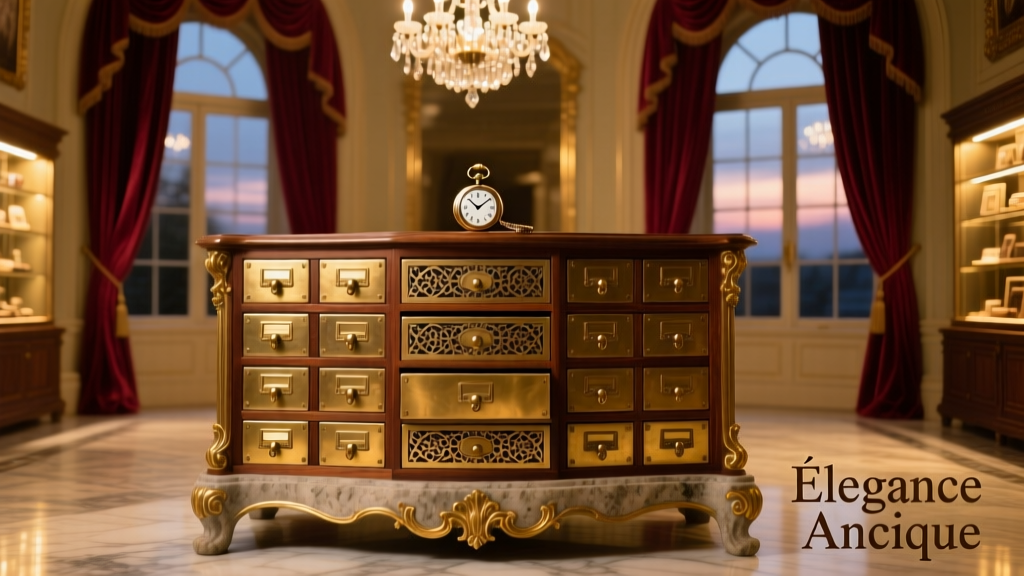
The Revolving 120-Drawer Store Cabinet: Engineering, History, and Restoration of a Mechanical Marvel
Loetz Vase: Pulled Cobalt Loops, Swags, Ground Lip — A 12-Inch Masterpiece of Viennese Art Glass
Fabergé Locket: Diamond and Sapphire Spray in 18K Gold, Circa 1890 — A Technical & Historical Analysis
Roy Rogers & Dale Evans Metal Lunch Box and Thermos: Authentic 1950s American Collectibles — Identification, Value, and Conservation
Decoding the Copyright Symbol on Antique Hardware: History, Authenticity, and Restoration Implications
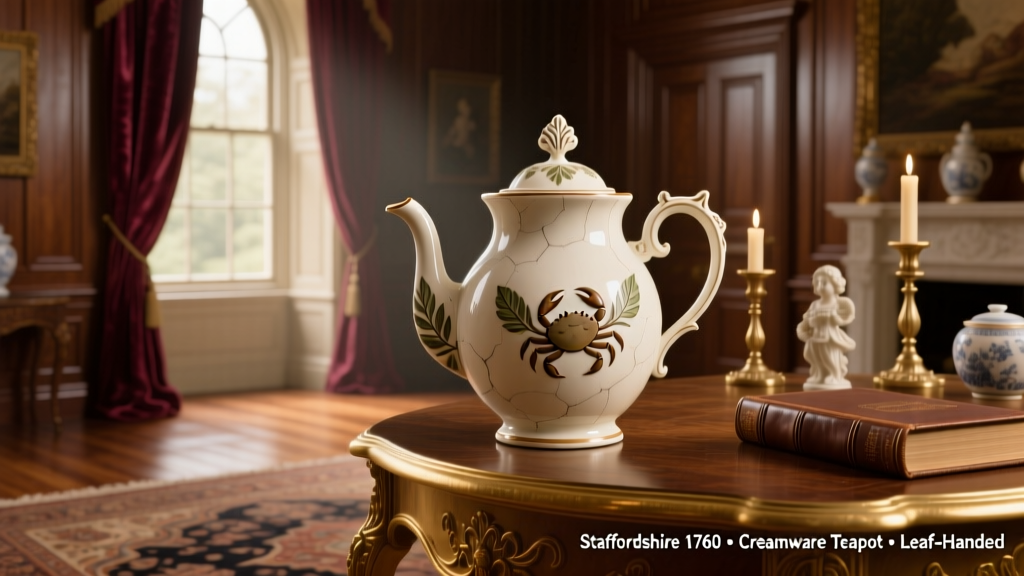
Creamware Teapot, Leaf-Shaped Body with Crabstock Handle & Finial: A Staffordshire Masterpiece from c. 1760
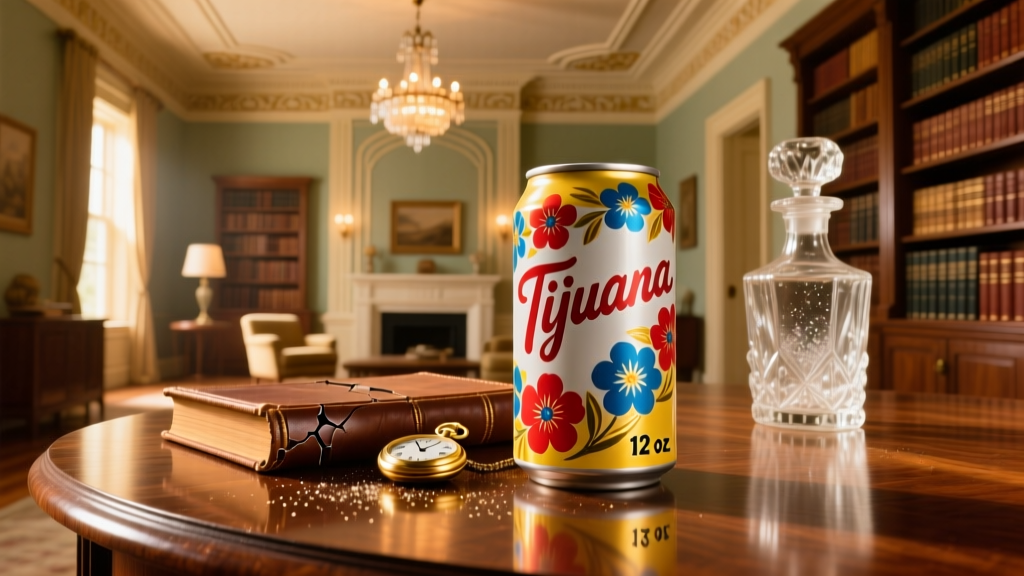
Tijuana Multicolor Beer Cans: Authentic 1950s Mexican 12-Ounce Aluminum Artifacts — Identification, Provenance, and Conservation
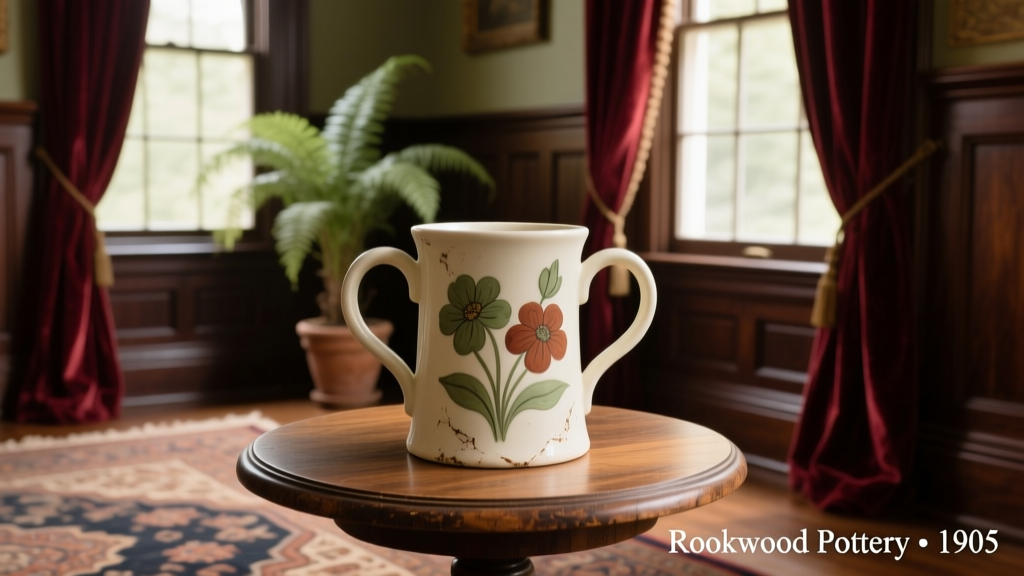
Rookwood Pottery’s Three-Handle Mug: A Study in American Art Pottery Innovation, Matte Glaze Mastery, and Functional Design