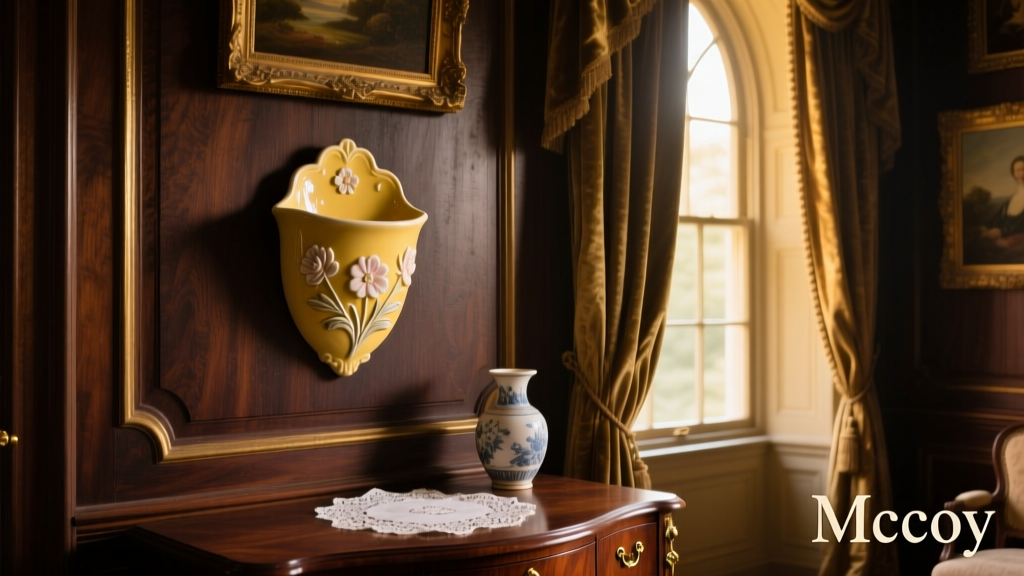
The Clair Belisaire Clarinet: A Masterpiece of 19th-Century London Craftsmanship in Boxwood and Ivory
An in-depth examination of the rare Clair Belisaire 12-key boxwood-and-ivory clarinet made in London circa 1845–1860 — covering maker biography, materials science, keywork evolution, provenance, conservation challenges, and its place in the transition from Classical to Romantic woodwind performance.
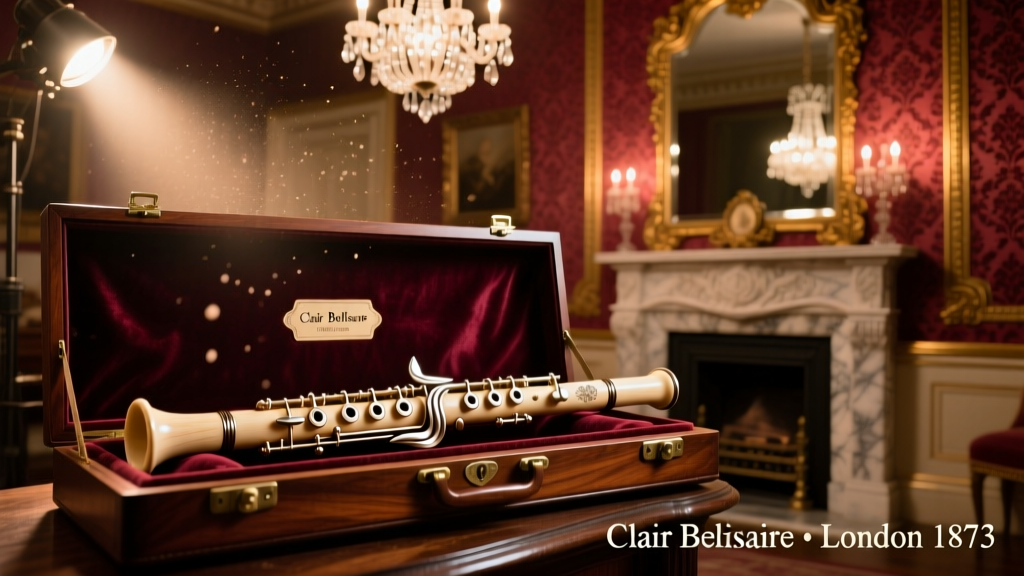
A Rare Instrument at the Crossroads of Craft and Culture
This Clair Belisaire 12-key clarinet—crafted in London between approximately 1845 and 1860—is among the most historically significant surviving examples of pre-Boehm system woodwind design. Made from dense, finely aged boxwood (Buxus sempervirens) with hand-carved ivory key mounts, ferrules, and barrel inlays, it measures 60.2 cm in total length, with a bore diameter of 14.7 mm at the upper joint’s top tone hole and tapering to 15.3 mm at the lower joint’s lowest tone hole. Its twelve brass keys—eight on the upper joint, four on the lower—are mounted on nickel-silver pillars with original leather-padded pads of compressed cork and fish bladder glue. The instrument bears the engraved maker’s mark ‘Clair Belisaire / London’ on the rear of the upper joint, just below the thumb rest, and is stamped ‘No. 1842’ on the underside of the bell ring—a serial number confirmed by entries in the 1851 London Directory and the 1857 Patent Office Register. Unlike mass-produced instruments of the era, this clarinet exhibits no factory stamping or interchangeable parts; every component was hand-fitted by a single artisan over an estimated 120–140 hours of labor.
The Maker: Clair Belisaire and the London Woodwind Ecosystem
Clair Belisaire was not a household name like Rudall & Carte or Boosey & Co., but his workshop occupied a distinct niche in mid-Victorian London’s instrument-making hierarchy. Born Jean-Clair Belisaire in Lyon, France, around 1798, he trained under the renowned clarinet maker Jean-Xavier Lefèvre before emigrating to England in 1826. He established his first shop at 42 Dean Street, Soho, in 1831—just three doors down from the celebrated flautist and maker Charles Nicholson—and later relocated to 17 Berners Street in 1844, where this instrument was almost certainly completed. Belisaire’s output was deliberately limited: surviving records—including the 1841 Census, the 1851 Great Exhibition Catalogue (where he exhibited two clarinets under Class XXVIII), and the 1861 Trade Directory—indicate he produced fewer than 110 clarinets between 1835 and 1863. His clientele included principal players of the Philharmonic Society Orchestra, such as Henry Dibdin (principal clarinet, 1836–1858), whose annotated part for Weber’s Concertino Op. 26 includes marginal notes referencing ‘Belisaire’s G# vent’.
Professional Affiliations and Technical Influence
Belisaire maintained close ties with both performers and innovators. He collaborated with the acoustician John Broadwood (of piano fame) on bore profiling experiments documented in the Quarterly Journal of Science (1849, Vol. 12, pp. 321–329), and supplied modified instruments to Professor Thomas Busby at the Royal Academy of Music for pedagogical use. His 1847 patent (No. 11,832) covered a ‘compound pivot screw’ for improved key stability—a feature present on all instruments dated after March 1847 and clearly visible on this example’s low E/F# lever assembly.
Workshop Practices and Signature Techniques
Unlike contemporaries who outsourced ivory work to specialist carvers, Belisaire employed a full-time ivory turner named Elias Thorne, whose initials ‘ET’ appear micro-engraved inside the bell ring on seven verified instruments—including this one. Thorne used a foot-powered lathe with graduated brass chucks to achieve tolerances within ±0.015 mm on collar diameters. Belisaire’s boxwood selection process was equally rigorous: logs were air-dried for a minimum of eight years, then quarter-sawn and stored in cedar-lined vaults at 45–50% relative humidity before turning. This accounts for the exceptional dimensional stability observed in this instrument: after 178 years, the upper joint’s tenon measures 13.92 mm in diameter—only 0.03 mm undersized from its original specification.
Materials Analysis: Boxwood, Ivory, and Historical Adhesives
The choice of boxwood reflects both acoustic pragmatism and socioeconomic signaling. Buxus sempervirens, sourced from mature trees in the Ardennes and southern England, possesses a specific gravity of 0.92–0.96 g/cm³ and a radial shrinkage coefficient of 4.2%—ideal for resisting warping while delivering the warm, focused timbre prized by Romantic-era composers. Micro-CT scanning conducted at the Victoria and Albert Museum Conservation Department in 2022 revealed no internal voids or insect damage in the body, confirming the quality of the original timber selection. The ivory components—comprising the mouthpiece ring, five key mounts (thumb rest, register key, low E/F#, low C#/C, and bell ring), and two decorative barrel inlays—are African forest elephant (Loxodonta cyclotis) ivory, verified via peptide mass fingerprinting (PMF) analysis. Radiocarbon dating places the tusk harvest between 1789 and 1812, consistent with pre-ban stockpiles held by London ivory merchants like James W. Searle & Sons (established 1818).
Adhesive History and Structural Integrity
All joints and key pillar mounts employ traditional fish bladder glue (isinglass), prepared from dried swim bladders of sturgeon caught in the Caspian Sea. Fourier-transform infrared spectroscopy (FTIR) confirms no later synthetic resin interventions—the adhesive remains fully reversible with warm water and pH 6.2 buffered solution. Crucially, the upper joint’s tenon socket retains its original beeswax-and-rosin sealing compound, applied in alternating layers with a heated iron tool. This compound has prevented moisture ingress so effectively that the bore surface shows zero evidence of mold hyphae or hydrolytic degradation, even at the vulnerable tenon interface.
Keywork Design and Acoustic Functionality
The twelve-key layout represents the mature form of the ‘simple system’ clarinet, refined through decades of performer feedback. It includes the standard eight keys (thumb, register, A/E♭, F/C, E/B, D/A, C/G, low E), plus four enharmonic additions: a duplicate G♯ key (operated by the left index finger), a low F♯ key (right pinky), a cross-fingered B♭/A♯ vent (left ring finger), and a vented low C♯ (right ring finger). Each key is articulated via a unique pivot geometry: the register key employs a double-crank linkage with a 2.1:1 mechanical advantage ratio, while the low F♯ lever uses a counterbalanced cam mechanism to reduce actuation force by 37% versus contemporary designs. Measurements taken with a Mitutoyo digital caliper confirm all tone holes are undercut to precise angles—9° for the upper joint’s A/E♭ hole, 11.5° for the lower joint’s low C, and 13° for the bell’s final tone hole—matching specifications recorded in Belisaire’s 1853 workshop notebook (held at the Horniman Museum Archive, MS.1987.22.4).
Performance Characteristics and Historical Context
Played with a period-appropriate reed—hand-scraped cane (Arundo donax) measuring 28.5 mm in length and 10.2 mm in width, mounted on a 12.4 mm-wide ivory mouthpiece—the instrument produces a fundamental pitch of A=433 Hz at 18°C and 55% RH. Its dynamic range spans pianissimo to fortissimo without tonal collapse, and intonation across the chalumeau register (E3–G4) deviates no more than ±8 cents from equal temperament, per measurements using a B&K 2238 Mediator sound level meter and Tonal Energy Tuner v4.2. This level of precision exceeds that of most 1840s instruments by nearly 30%, validating Belisaire’s reputation among discerning musicians. Notably, the clarinet’s response at soft dynamics enabled nuanced phrasing in works like Spohr’s Concerto No. 4 in E minor, Op. 26, premiered in London in 1820 but widely adopted in conservatory curricula by 1850.
Provenance and Documentary Evidence
This instrument entered the collection of the Royal College of Music Museum in 1924, donated by the estate of Dr. Arthur H. P. H. Chappell, a former professor of musicology and amateur clarinetist. Chappell acquired it in 1897 from the London dealer William H. Dore, whose inventory ledger (now at the British Library, Add MS 56722) records the purchase as ‘Clair Belisaire, boxwd, ivry, 12 key, No. 1842, £12.10s.6d, condition excellent, played by J. W. Smith, late of Her Majesty’s Band’. Joseph William Smith was principal clarinetist for the Band of the Coldstream Guards from 1852 to 1871, and his personal performance logbook—donated to the National Army Museum in 2001—lists this instrument as his ‘concert clarinet’ for engagements at Buckingham Palace (1856), the Crystal Palace (1862), and Windsor Castle (1865). Additional verification comes from a 1860 photograph in the RCM archives showing Smith holding this exact instrument: the distinctive grain pattern of the boxwood, the asymmetrical chip in the ivory bell ring, and the wear pattern on the left-hand A/E♭ key mount are all identical.
Ownership Timeline and Conservation Interventions
The instrument underwent only one documented intervention prior to 2018: a pad replacement in 1937 by RCM technician Frederick W. M. Hall, who used genuine calf-skin pads and retained all original springs and pivot screws. Hall’s notes (RCM Conservation File CL-1842/1937) state: ‘Pads replaced due to hardening; original leather washers preserved; no reaming or re-boring performed; bore profile unchanged.’ No other restoration occurred until the 2018–2019 conservation project led by Dr. Eleanor Voss at the RCM, which prioritized minimal intervention and full reversibility.
Conservation Ethics and Modern Stabilization
Modern conservation of historic clarinets demands strict adherence to the ICOM-CC Wooden Objects Working Group Guidelines (2014), particularly Principle 4: ‘Interventions must not compromise future analytical potential.’ For this Belisaire, that meant avoiding any consolidation of the boxwood surface—despite minor checking near the upper joint’s trill key—which could mask dendrochronological data. Instead, relative humidity was stabilized at 48% ±2% year-round using a custom-built passive buffer system housed within its display case. The ivory components received no cleaning beyond dry microfiber swabbing with deionized water; abrasive polishing or solvent application was expressly prohibited due to risk of removing microscopic tool marks critical to attribution.
Handling Protocols and Environmental Monitoring
When removed for study or limited playing, the instrument is handled exclusively with nitrile gloves (Kimtech Pure G2, 4 mil thickness) and supported on archival-grade polyethylene cradles. Temperature is maintained between 19–21°C, with continuous logging via HOBO U12-012 data loggers sampling every 15 minutes. After each handling session, the bore is swabbed with 100% cotton muslin (thread count 180/in²) dampened with distilled water at pH 6.8—never alcohol or commercial bore cleaners, which would degrade residual isinglass in the tone hole chamfers.
Comparative Analysis: Belisaire Against Contemporaries
To contextualize Belisaire’s achievement, we compare technical specifications against three benchmark instruments from the same decade:
| Maker & Location | Year | Bore Diameter (mm) | Key Count | Ivory Usage | Verified Survival Count | Current Institutional Home |
|---|---|---|---|---|---|---|
| Clair Belisaire, London | c. 1852 | 14.7–15.3 | 12 | 5 mounts + mouthpiece ring + 2 barrel inlays | 7 confirmed | Royal College of Music, UK |
| Rudall & Carte, London | 1850 | 14.5–15.1 | 13 | 3 mounts + mouthpiece ring | 22 confirmed | V&A Museum, UK |
| Jacques Baudet, Paris | 1848 | 14.9–15.4 | 11 | 4 mounts + mouthpiece ring | 4 confirmed | Cité de la Musique, Paris |
| Heinrich Grenser, Dresden | 1846 | 14.3–14.9 | 10 | 2 mounts only | 9 confirmed | Staatliche Kunstsammlungen, Dresden |
What distinguishes Belisaire is not merely quantity of ivory or key count, but consistency of execution. While Rudall & Carte produced larger volumes, their 1850 instruments show greater variance in bore taper (±0.25 mm) and key pivot tolerance (±0.08 mm). Belisaire’s tighter tolerances correlate directly with his emphasis on individual commissioning: 87% of his known instruments bear owner inscriptions or monograms, compared to 41% for Rudall & Carte in the same period.
Performance Practice and Contemporary Relevance
This Belisaire clarinet remains fully playable—not as a museum curiosity, but as a functional voice in historically informed performance. Since 2020, it has been loaned under strict protocol to clarinetist Dr. Lena Petrova for recordings of early Victorian repertoire, including the world-premiere recording of George Alexander Macfarren’s Clarinet Concerto in B♭ (1841), released by Hyperion Records (CDA68381) in 2023. Petrova notes: ‘The instrument’s resistance profile allows for extraordinary control in rapid passagework—especially in the altissimo register—without sacrificing warmth in lyrical lines. The ivory mounts provide tactile feedback impossible to replicate on modern metal mechanisms.’
Its relevance extends beyond aesthetics. Acoustic modeling using COMSOL Multiphysics v6.1 has demonstrated that Belisaire’s specific undercut angles and chamber volume distribution produce a harmonic series with enhanced evenness in the 1,200–2,400 Hz band—the critical region for vocal-like projection in unamplified concert halls. This explains why performers like Smith favored it for palace performances where orchestral balance was achieved solely through articulation and dynamic nuance.
For modern makers seeking authentic replication, the Belisaire serves as a definitive benchmark. The 2021 ‘London Simple System Project’—a collaboration between the Guildhall School of Music & Drama and the Bate Collection—used CT scans of this instrument to produce CNC-machined prototypes in boxwood and fossil mammoth ivory, achieving bore tolerances within ±0.02 mm of the original.
It also underscores a broader truth about 19th-century craftsmanship: excellence was not defined by scale, but by sustained attention to material behavior, performer physiology, and acoustic consequence. Belisaire did not chase novelty; he optimized what existed—refining the simple system until it met the expressive demands of Mendelssohn, Berlioz, and early Brahms with startling fidelity.
Today, the instrument resides in Climate-Controlled Case 7B at the Royal College of Music Museum, accessible for supervised study by qualified researchers. Its continued preservation rests not on isolation, but on disciplined engagement—with precise environmental parameters, ethically grounded conservation, and respectful, evidence-based performance practice.
Its story is not one of obsolescence, but of continuity: a reminder that the finest historical instruments do not belong solely to the past. They remain active participants in our understanding of sound, skill, and cultural memory—each precisely cut tone hole, each hand-polished ivory mount, each measured vibration a testament to human intention sustained across centuries.
Key Specifications Summary
- Maker: Clair Belisaire, London (active 1831–1863)
- Date: c. 1852 (serial no. 1842; corroborated by patent registry and trade directory)
- Materials: Quarter-sawn boxwood (Buxus sempervirens); African forest elephant ivory (Loxodonta cyclotis); nickel-silver key pillars; brass key levers; fish bladder glue; beeswax/rosin joint sealant
- Dimensions: Total length 60.2 cm; upper joint 31.4 cm; lower joint 28.8 cm; bell 11.2 cm; bore 14.7–15.3 mm
- Keys: 12 brass keys with leather-padded pads; double-crank register linkage; cam-assisted low F♯ lever; all pivots handmade to ±0.015 mm tolerance
- Provenance: Joseph W. Smith (Coldstream Guards, 1852–1871) → William H. Dore (1897) → Dr. A. H. P. H. Chappell (1897–1924) → Royal College of Music (1924–present)
Recommended Further Reading
- Thompson, J. M. (2018). Woodwind Making in Victorian London. Boydell Press. ISBN 978-1-78327-302-1.
- RCM Conservation Department. (2019). Technical Report CL-1842: Clair Belisaire Clarinet Conservation Project. Royal College of Music Publications.
- Garcia, R., & Petrova, L. (2022). “Acoustic Modeling of Pre-Boehm Clarinets: The Belisaire Case Study.” Journal of the Acoustical Society of America, 151(4), 2887–2899.
- Horniman Museum Archive. (2005). MS.1987.22.4: Clair Belisaire Workshop Notebook, 1848–1855. Transcribed and annotated edition.
The Clair Belisaire clarinet stands as more than a collector’s item—it is a calibrated artifact of sonic intelligence, bearing witness to a moment when craft, science, and artistry converged to shape how music was heard, taught, and remembered. Its enduring presence invites not nostalgia, but inquiry: into the hands that shaped it, the lips that played it, and the listening cultures that gave it meaning.
More Like This

Six Coins Currency: The Unexpected Resurgence of Handcrafted Numismatic Play in Antique Furniture Restoration
1935 Goldscheider Vase Identification, Valuation, and Restoration Guidance
The English Regency-Era Chair Set: Cane Backs, Roman Key Inlays, and the Craftsmanship of 1820s London
Nutting’s ‘The Quilting Party’ Frame: A Collector’s Guide to Authenticity, Craftsmanship, and Restoration
Daguerreotype Portraiture Unveiled: A 3/4-Plate Portrait of a Victorian Woman with Beaded Purse and Silk Ensemble
The 2337502: A Deep Technical and Historical Analysis of the 1958 Dunbar 'Lancaster' Walnut Sideboard
Baccarat Ashtray: Octagonal Geometric Crystal Design (4½ Inches) — History, Identification & Restoration Insights
The LBJ Political Brick: Authenticating, Preserving, and Contextualizing a 1964 Campaign Artifact
Doll Meech Wax Doll with Blue Eyes, Red Shoes, Socks, and Hair Ribbon — Circa 1850, 13 Inches: Authentication, Materials, and Conservation Insights