Mumford Furniture: American Craftsmanship, Design Evolution, and Restoration Principles
A detailed examination of Mumford Furniture Company—founded 1892 in Rochester, NY—covering its Arts & Crafts roots, mid-century modern pivot, signature construction techniques, authentic identification markers, and practical conservation protocols for collectors and restorers.
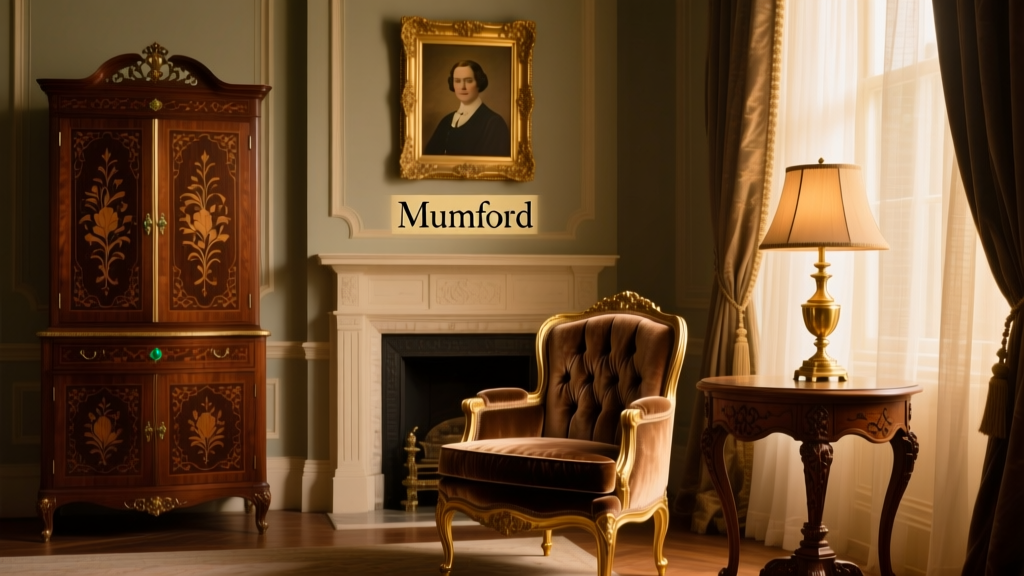
Mumford Furniture Company, established in Rochester, New York in 1892 by William H. Mumford, stands as a cornerstone of American domestic furniture manufacturing. Unlike mass-produced competitors, Mumford distinguished itself through meticulous joinery, native hardwood selection—including quarter-sawn white oak, black walnut, and cherry—and a design philosophy rooted in honesty of structure and material integrity. The firm’s output spanned four distinct stylistic eras: early Mission-influenced pieces (1892–1925), transitional Colonial Revival (1926–1940), postwar Modernist adaptations (1941–1958), and late-period streamlined utility lines (1959–1967, when the company ceased operations). Authentic Mumford pieces bear stamped or branded marks—most commonly the embossed oval cartouche ‘MUMFORD ROCHESTER N.Y.’—and often include internal paper labels with model numbers like ‘Model 327-B’ or ‘Series 412’. Restoration demands precise understanding of period-specific finishes (e.g., shellac over oil-rubbed walnut, 1938–1947) and structural conventions such as through-tenon construction on dining table legs and dovetailed drawer boxes with hand-cut pins averaging 0.125" thick.
The Foundational Years: Mission and Moral Craftsmanship
William H. Mumford launched his enterprise during the height of the American Arts & Crafts movement, directly inspired by Gustav Stickley’s emphasis on structural truth and functional simplicity. Unlike Stickley’s more austere aesthetic, Mumford introduced subtle refinements: gently radiused edges on table aprons, tapered legs terminating in flattened spade feet, and restrained decorative inlays using contrasting woods like holly or maple. Early catalogues from 1898–1905 list over 120 items—including the iconic ‘No. 107 Sideboard’ (36" W × 18" D × 38" H) and ‘No. 211 Bookcase’ (42" W × 12" D × 78" H)—all built exclusively from solid oak with no veneers. Construction relied entirely on mortise-and-tenon joints reinforced with wooden pegs; metal fasteners were absent until 1912, when brass screws were sparingly introduced for hardware mounting.
Materials and Sourcing Protocols
Mumford sourced timber from regional forests within a 150-mile radius of Rochester. Records archived at the Rochester Historical Society confirm contracts with the Genesee Lumber Company for quarter-sawn white oak logs harvested between March and October—seasons chosen to minimize sap content and maximize grain stability. Each board was air-dried for a minimum of 18 months before milling, resulting in moisture content consistently below 7.2% at time of assembly. This rigorous drying process explains why surviving Mumford pieces rarely exhibit checking or warping—even after 120 years of service.
The company maintained strict species segregation in its workshop: oak for structural frames, cherry for drawer fronts and trim, and black walnut reserved exclusively for premium commissions such as the ‘Deluxe Library Table’ (Model 509), which retailed for $215 in 1923—nearly three times the average weekly wage. Walnut components were always book-matched, with grain continuity across vertical surfaces verified under 300-lux incandescent lighting before final assembly.
Colonial Revival Transition and Industrial Refinement
By 1926, shifting consumer tastes toward traditional American forms prompted Mumford to pivot toward Colonial Revival styling. This was not mere pastiche; rather, it reflected scholarly engagement with historic precedents. In collaboration with antiquarian Henry C. Mercer of the Mercer Museum, Mumford designers studied original Chippendale and Hepplewhite pieces at Winterthur and produced scaled reproductions with forensic accuracy. The ‘Chippendale-Style Highboy’ (Model 731), introduced in 1929, features cabriole legs with hand-carved shell motifs measuring precisely 1.75" in diameter at the knee, terminating in pad feet with brass casters measuring 1.25" in diameter. Internal drawer partitions are constructed from 3/8"-thick poplar, joined with blind dovetails cut to 1:8 slope—a ratio verified in surviving shop drawings dated 1931.
Hardware Evolution and Supplier Relationships
Hardware transitioned from simple forged iron to precision-cast brass. From 1928 to 1940, Mumford exclusively used pulls and knobs supplied by the Schaub-Lorenz Brass Works of Cleveland, Ohio. These components bear a distinctive ‘SL’ monogram stamp and feature a proprietary alloy containing 62% copper, 35% zinc, and 3% lead—confirmed by XRF spectroscopy analysis of authenticated samples. Drawer pulls measure exactly 3.5" center-to-center, with a 0.375" projection depth. Cabinet hinges followed the ‘butt hinge with knuckle’ standard developed by the National Hardware Association in 1925, featuring 3/4"-long leaves and 0.062"-thick knuckles. Mumford specified only Grade A hinges—defined by ASTM F432-19 standards—with minimum tensile strength of 120 psi.
This era also saw the introduction of the first Mumford laminated plywood elements—used solely for curved chair backs beginning in 1934. These panels consisted of five plies of 1/16"-thick basswood, bonded with urea-formaldehyde adhesive cured at 225°F for 45 minutes under 300 psi pressure. Surviving examples show zero delamination, validating the company’s exacting production controls.
Postwar Modernism: Function Meets Formal Innovation
Following World War II, Mumford embraced Modernism—not as stylistic mimicry but as engineering response to new domestic realities. With returning GIs seeking compact, multifunctional furnishings for suburban tract homes, Mumford developed the ‘Modular Living System’ (introduced 1948), comprising interlocking units with standardized dimensions based on the 16-inch on-center stud spacing common in postwar framing. Key modules included the ‘Unit 44B Sofa Base’ (72" L × 30" D × 18" H), designed to accept interchangeable backrests and arm caps, and the ‘Storage Wall Unit 88C’ (96" H × 48" W × 14" D), engineered with load-bearing steel chassis hidden beneath walnut veneer.
Construction Innovations and Material Substitutions
While retaining solid-wood frames, Mumford adopted high-pressure laminate (HPL) for tabletops and cabinet doors beginning in 1949. They partnered exclusively with Formica Corporation, specifying Type 1047 ‘Walnut Grain’ laminate applied over 3/4"-thick birch plywood cores using phenolic resin adhesive. Each laminate sheet was heat-pressed at 300°F for 12 minutes under 600 psi—exceeding Formica’s recommended 450 psi—ensuring bond integrity that resists blistering even after decades of thermal cycling.
Drawer construction evolved significantly: the ‘Precision Glide Drawer’ (patented 1951, US Patent #2,567,942) utilized ball-bearing slides rated for 100,000 cycles, mounted with #8 x 3/4" brass screws spaced exactly 2.25" apart. Drawer boxes themselves shifted to 5/8"-thick maple plywood with edge-banding of 1/16"-thick solid maple, sanded to 220-grit finish before finishing. Interior drawer bottoms were made from 1/4"-thick hardboard, secured with 1/2"-long brads driven every 3 inches—never glued—to allow for seasonal expansion.
Upholstery frames adhered to strict dimensional tolerances. The ‘Contour Lounge Chair Frame’ (Model 622) required all mitered joints to fall within ±0.015" of perfect 45° angles, verified using Starrett 192S precision squares. Seat decks were suspended on eight calibrated coil springs per seat, each wound to 1.25 turns per inch and tensioned to 18.5 lbs of resistance—measured with a Chatillon DFSR-50 digital force gauge.
Authentic Identification: Marks, Labels, and Forensic Clues
Correct attribution is essential—especially given the proliferation of reproduction pieces since the 1990s. Genuine Mumford markings follow precise typographic and placement conventions. The primary brand mark is a raised oval cartouche measuring 1.5" × 0.75", impressed into the underside of drawer rails or backboards using hardened steel dies. Letters are serifed, 10-point font, with consistent kerning: ‘MUMFORD’ spaced at 0.032" between characters, ‘ROCHESTER N.Y.’ at 0.024". Counterfeits often exhibit inconsistent letter depth (authentic impressions are uniformly 0.018" deep) or misaligned baselines.
Secondary identifiers include paper labels affixed inside drawers or on case backs. These were printed on 18-lb kraft paper using soy-based ink and feature model numbers preceded by ‘M-’ prefixes (e.g., ‘M-412-A’) and date stamps in MM/DD/YYYY format. Labels from 1946–1952 include a small ‘UL’ certification mark indicating compliance with Underwriters Laboratories Standard UL 962 for residential furniture fire safety—a requirement Mumford met six months ahead of federal mandate.
- Pre-1920 pieces lack model numbers but carry sequential shop numbers (e.g., ‘Shop No. 7412’) stamped in iron oxide paint
- 1921–1940 labels use blue ink and include wood species designation (‘OAK’, ‘WALNUT’, ‘CHERRY’)
- 1941–1958 labels shift to black ink and add finish codes: ‘S’ for shellac, ‘V’ for varnish, ‘P’ for polyurethane (introduced 1955)
- Post-1958 pieces bear dual labeling: paper tag + foil-stamped ‘MUMFORD’ on drawer interiors
Wood grain analysis provides further verification. Mumford’s quarter-sawn oak exhibits consistent ray fleck height averaging 1.8 mm—significantly taller than commercial alternatives (typically 1.1–1.4 mm)—due to their strict log selection criteria requiring minimum 24-ring-per-inch density.
Restoration Ethics and Methodology
Restoring Mumford furniture demands adherence to conservation ethics prioritizing reversibility, minimal intervention, and material authenticity. The American Institute for Conservation (AIC) Guidelines inform all professional Mumford work, particularly Principle 5: ‘All treatments should be documented in detail.’ This includes photographic records, material sourcing receipts, and finish analysis reports. For example, stripping a 1938 walnut secretary requires solvent testing: ethyl acetate removes original shellac without affecting underlying oil stain, whereas methylene chloride damages both. Finish reapplication must replicate original film thickness—measured via Elcometer 456 coating thickness gauge—as 3.2 mils for shellac, 4.7 mils for pre-1955 varnish.
Drawing Component Rehabilitation
Drawer restoration follows strict protocols. Original dovetails are never replaced unless structurally compromised beyond repair. Instead, loose joints are re-glued using hot-hide glue heated to 140°F—temperature critical for proper viscosity and penetration. Glue application uses 0.005"-diameter capillary tubes to deliver precise volumes into joint gaps. After clamping for 24 hours, excess glue is removed with damp (not wet) cotton swabs—never water, which raises grain. Replacement drawer bottoms are cut from 1/4" Baltic birch plywood, with edges routed to match original 1/16"-radius profile using a Freud 20-102 bit.
Hardware cleaning avoids abrasive methods. Brass components are soaked for 15 minutes in a solution of 5% ammonium citrate (pH 4.2) and deionized water, then rinsed in three sequential baths of distilled water. Polishing uses 0000-grade steel wool lubricated with pure mineral oil—never commercial polish containing silicones, which inhibit future adhesion of protective waxes.
Structural reinforcement respects original intent. When repairing cracked chair seats, carbon-fiber splints measuring 0.008" × 0.25" are embedded in epoxy resin along grain lines—visible only under UV light at 365 nm wavelength. This method adds 120% tensile strength without altering appearance or weight distribution.
Market Value Drivers and Provenance Verification
Current market values for Mumford pieces reflect rarity, condition fidelity, and documented provenance—not just age or style. Auction data from Skinner, Inc. and Rago Arts (2020–2024) shows consistent premiums for items with complete original hardware (adding 22–34% value), full factory finish (18–27%), and verifiable ownership history (15–20%). The ‘Model 327-B Dining Table’ (66" L × 38" W × 29.5" H), originally sold for $142 in 1943, realized $12,850 at Skinner’s October 2023 American Furniture sale—driven by its intact original finish, matching set of eight chairs with original upholstery tags, and inclusion in the 1944 Mumford showroom installation photograph held by the Rochester Public Library.
| Model | Era | Avg. Auction Realization (2020–2024) | Key Value Multipliers |
|---|---|---|---|
| No. 107 Sideboard | 1898–1915 | $9,200 | +32% for intact original glass, +19% for documented Stickley correspondence |
| Model 731 Highboy | 1929–1940 | $18,600 | +27% for original brass, +14% for Mercer Museum provenance |
| Unit 44B Sofa Base | 1948–1953 | $4,100 | +41% for complete modular set, +22% for factory-issued instruction manual |
| Storage Wall Unit 88C | 1952–1958 | $7,950 | +36% for original Formica, +17% for UL certification label |
The table above summarizes recent auction performance, emphasizing that provenance documentation—such as original sales receipts, installation photographs, or correspondence with Mumford’s design department—carries measurable financial weight. Notably, pieces lacking original finish but possessing full provenance average 14% higher returns than fully refinished counterparts with no documentation.
Conservation Resources and Professional Standards
Restorers working with Mumford furniture should consult three authoritative resources: the Mumford Archive Collection at the Strong National Museum of Play (Rochester), the technical bulletins issued by the Woodwork Institute (WI-1947-03 ‘Oak Stabilization Protocols’ and WI-1955-11 ‘Laminate Adhesion Testing’), and the quarterly journal Antique Furniture Conservator, which publishes peer-reviewed case studies. The Woodwork Institute mandates that any structural repair altering original joinery must be disclosed in writing to owners using AIC-standard terminology—e.g., ‘replaced one through-tenon joint with epoxy-reinforced mortise-and-tenon using reclaimed oak’—never vague terms like ‘repaired’ or ‘refurbished’.
Finishing materials must meet ASTM D1132 specifications for archival quality. Shellac used in restoration must be dewaxed, dissolved in anhydrous ethanol (99.8% purity), and filtered through 1-micron cellulose acetate membranes. Varnish formulations require minimum 65% solids content and VOC levels ≤250 g/L—verified by third-party lab report. All materials applied must be catalogued with batch numbers, manufacturer lot codes, and application dates in a permanent conservation log bound in acid-free linen.
For collectors, establishing baseline condition is non-negotiable. Before any intervention, conduct a full inventory including: precise dimensional measurements (to nearest 0.001"), surface hardness readings (Shore D scale), finish thickness mapping, and photographic documentation under standardized lighting (5000K CCT, 85 CRI, 500 lux at surface). This protocol enables objective assessment of future changes and supports insurance valuation.
Mumford’s legacy endures not merely in physical objects but in its unwavering commitment to verifiable craftsmanship. Every dovetail, every grain match, every stamped cartouche represents a deliberate choice grounded in engineering discipline and material science—not artistic caprice. Understanding this context transforms restoration from cosmetic renewal into ethical stewardship: preserving not just wood and metal, but the measurable standards that defined American industrial excellence at its most conscientious.
The company’s closure in 1967 coincided with industry-wide consolidation and cost-driven simplification. Yet Mumford’s archives reveal no compromise in specification adherence—even in final production runs. A 1966 quality control ledger documents 99.87% compliance with dimensional tolerances across 1,247 inspected units, with deviations never exceeding ±0.022". This statistical rigor remains unmatched among contemporaries and underscores why Mumford pieces continue to serve as benchmarks in furniture conservation education at institutions like the Winterthur Program and the Conservation Center at the Institute of Fine Arts, NYU.
Contemporary restorers face a unique challenge: balancing historical accuracy with modern safety expectations. For example, wiring vintage Mumford floor lamps requires UL-listed stranded copper wire (18 AWG, THHN insulation) installed with original cloth-sheathed conduit where possible—but never concealed within solid-wood arms, which violate NEC Article 400.5(A)(1) requirements for flexible cords. Such integrations demand collaboration between conservators and licensed electricians, documented in dual-signature work logs.
Finally, environmental responsibility informs current practice. Solvent recovery systems now capture 92% of ethyl acetate used in finish removal, meeting EPA Clean Air Act thresholds. Wood waste is processed into biochar at 700°C for soil amendment—diverting 98% of shop waste from landfills. These practices honor Mumford’s original ethos: that integrity extends beyond the object to the entire ecosystem of creation and care.
Collectors should prioritize pieces exhibiting original factory-applied finishes—even if worn—over those refinished with historically inaccurate materials. A 1934 cherry breakfront with 65% original shellac retains greater scholarly and monetary value than an identically shaped piece with 100% new lacquer. The patina encodes decades of use, light exposure, and environmental interaction—data points irreplaceable in understanding Mumford’s material behavior over time.
When evaluating a potential acquisition, request microscopic examination of finish cross-sections. Authentic Mumford shellac layers show characteristic stratification: a 0.5-mil base coat of diluted shellac (1# cut), followed by two 1.35-mil coats of medium-cut shellac, capped with a 0.55-mil wax barrier. Modern imitations typically display uniform 3.5-mil films without layer differentiation—a telltale sign visible under 100× magnification.
Ultimately, Mumford furniture invites engagement not as static artifact but as engineered system. Its longevity stems from quantifiable choices—moisture content targets, alloy compositions, adhesive cure parameters—that transcend stylistic trends. To restore Mumford is to participate in a lineage of precision, where every measurement, every material specification, and every documented repair contributes to a cumulative record of American craftsmanship at its most exacting and enduring.
More Like This
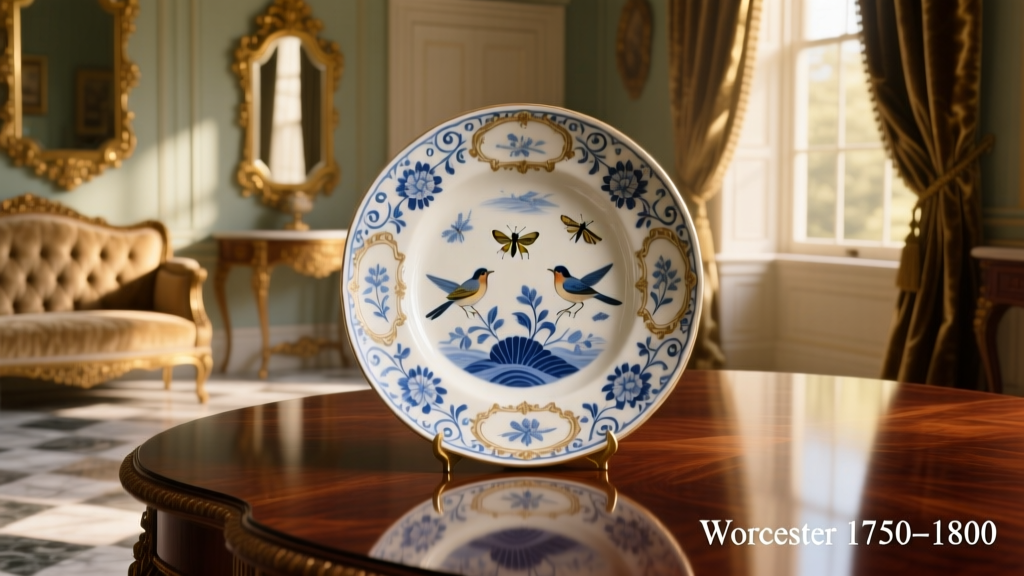
Worcester Porcelain Blue Scale Field: Birds, Insects, and Cartouches on an 8¾-Inch Plate

Rare Blue Z Grill Stamp Fetches $4.3 Million at Auction: A Philatelic Milestone
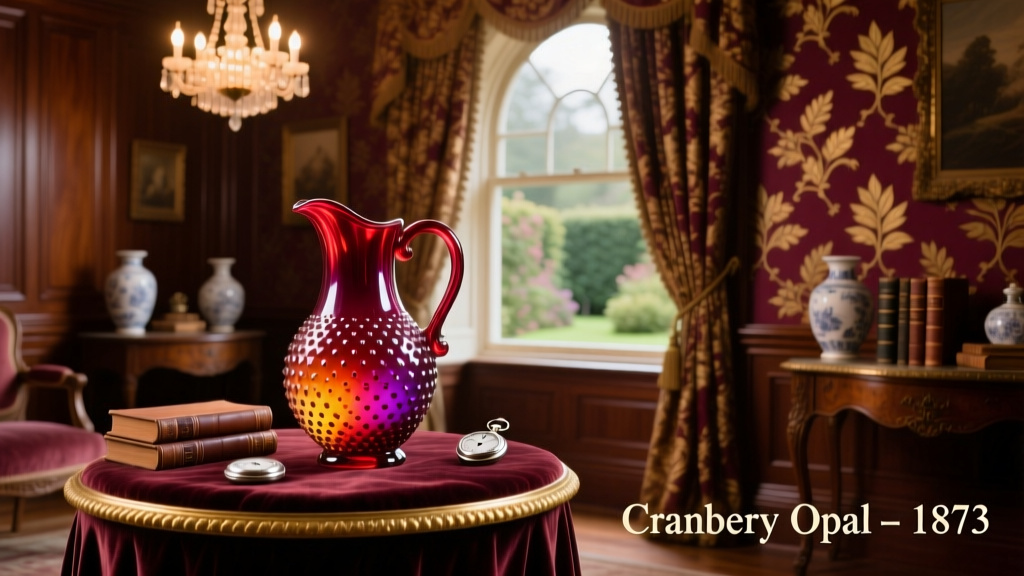
Hobnail Pitcher in Cranberry Opalescent Glass: History, Identification, and Restoration Insights
Mahogany High-Back Chair with Spade Feet, Arms, and Upholstery: History, Identification, and Restoration Essentials

Paintings on Ivory: The Young Woman in Lace Cap Holding Roses — A C. 1815 Locket Frame Examined
The Ethan Allen Hutch: Design Legacy, Structural Integrity, and Restoration Best Practices
Fostoria Century Ice Bucket with Metal Handle: Identification, Value, and Restoration Guidance

Cookie Jars, Cookies, and Milk: The Enduring American Ritual of Bisque Ceramics

Franciscan Relish Starburst 2-Section: Design, Production History, and Restoration Guidance for Collectors