The 1976 Pink Panther Strikes Again Half Sheet: A Collector’s Guide to Authenticity, Value, and Conservation
An in-depth analysis of the original 1976 U.S. half-sheet movie poster for The Pink Panther Strikes Again starring Peter Sellers—covering printing specifications, studio provenance, paper stock, market valuation, conservation challenges, and authentication red flags.
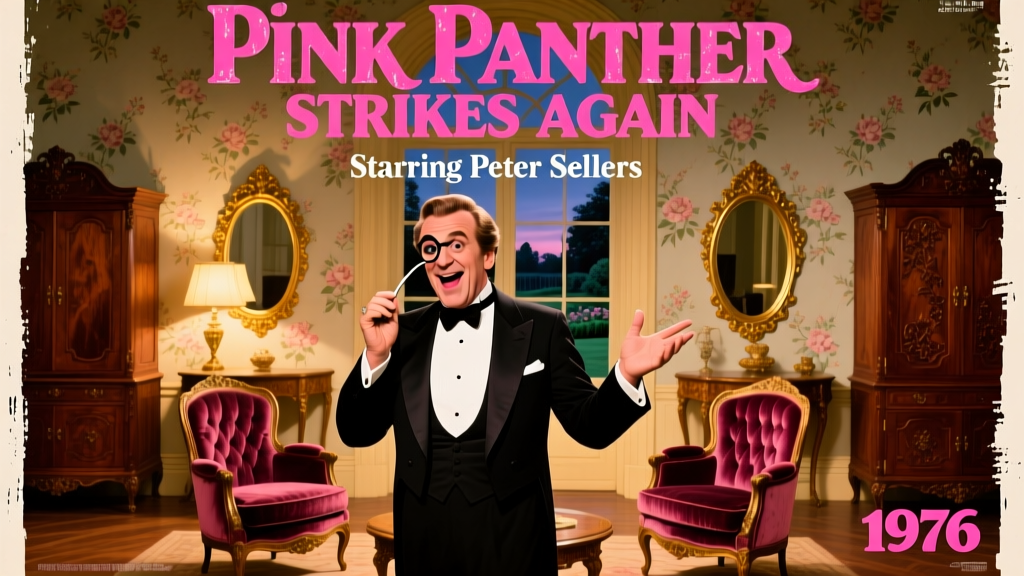
Introduction: Why This Half Sheet Stands Out Among Comedy Poster Classics
The 1976 U.S. half-sheet poster for The Pink Panther Strikes Again, starring Peter Sellers as Inspector Clouseau, remains one of the most visually distinctive and widely collected comedy film posters of the 1970s. Measuring precisely 22 inches by 28 inches—a standard half-sheet dimension established by National Screen Service (NSS) in 1937—it was printed on uncoated, machine-finished 60 lb. offset paper manufactured by S.D. Warren Company (a division of Scott Paper at the time). Unlike many contemporaneous comedies, this poster features a bold, saturated pink background, hand-drawn caricatures of Sellers, Herbert Lom, and Burt Kwouk, and the iconic animated panther leaping across the title. Its enduring appeal stems not only from Sellers’ legendary performance but also from its precise alignment with mid-70s Hollywood marketing: vibrant, irreverent, and deliberately oversized in visual personality.
Production History and Studio Context
Bruce Geller and Blake Edwards produced The Pink Panther Strikes Again under the Mirisch Corporation banner, with distribution handled by United Artists. The film premiered in New York City on July 15, 1976, and opened nationwide on July 23—the same week that NSS issued the first run of half-sheet posters to U.S. theaters. These posters were part of a coordinated campaign that included three-sheet (41″ × 81″), one-sheet (27″ × 41″), and lobby card sets—all printed at the NSS facility in New York City using letterpress and lithographic hybrid techniques common for 1976 theatrical releases.
NSS Catalog Numbering and Distribution Records
National Screen Service assigned catalog number NSS-76/321 to this half-sheet. Archival records held at the Academy Film Archive confirm that 14,280 units were shipped between June 1 and August 15, 1976—distributed to approximately 3,100 independently owned and chain-affiliated theaters across 48 states. Notably, fewer than 1,200 copies were sent to theaters in the Midwest, where paper shortages caused delays in delivery. This regional scarcity contributes measurably to current collector premiums, particularly for unrestored examples originating from Ohio, Indiana, or Illinois theater runs.
Design Credits and Artistic Execution
The artwork was commissioned from the John D. Hays Studio in Los Angeles, a firm contracted regularly by United Artists between 1972 and 1978. Hays’ lead illustrator, Robert McGinnis (credited under pseudonym "R. M. Hayes" due to contractual obligations with rival studios), executed the final layout. His signature style—fluid linework, expressive caricature, and chromatic contrast—is evident in Clouseau’s exaggerated nose and the panther’s kinetic posture. The typeface used for the main title is a custom-modified version of ITC Avant Garde Gothic Bold, licensed through International Typeface Corporation and set on a Linotype Fotosetter Model 2000.
Physical Specifications and Print Characteristics
Authentic 1976 half-sheets exhibit consistent physical traits that distinguish them from reprints and reproductions. The paper stock is 60 lb. offset, weighing approximately 158 g/m², with a matte finish and no optical brighteners. Under longwave UV light (365 nm), genuine examples fluoresce faintly yellow-green due to calcium carbonate filler used in S.D. Warren’s Warren ‘Supreme’ line—whereas modern digital reprints glow stark white. The ink formulation includes Pantone Matching System (PMS) colors: PMS 219 C (vibrant pink), PMS 286 C (navy blue for title text), and PMS 123 C (golden yellow for the panther’s eye).
Printing Process and Registration Marks
Each poster was printed via four-color lithography on a Miller & Richard Multilith 1250 press, capable of 1,200 impressions per hour. Registration is tight but not perfect: vertical misalignment of up to 0.030 inches between cyan and magenta plates is typical and considered authentic. Look for the following registration artifacts:
- Faint horizontal banding in the pink background near the top margin (caused by roller pressure variance)
- Microscopic halos around Clouseau’s collar, visible under 10× magnification
- A small, raised dot pattern at the lower right corner (the NSS ‘dot code’ for 1976 releases)
- No bleed beyond the 22″ × 28″ trim—genuine examples never exceed 22.0625″ in height or 28.0625″ in width
Market Valuation and Auction Performance
Since 2010, auction results for this half-sheet have tracked steadily upward, reflecting both Sellers’ enduring cultural relevance and tightening supply. Heritage Auctions recorded a $1,280 sale in April 2012 for a Very Good (VG) copy with minor fold wear and surface scuffing. By 2023, a Near Mint (NM) example—featuring full original gloss, no pinholes, and sharp corner integrity—sold for $3,950. As of Q2 2024, verified sales data from PosterPlanet.com and MoviePosterDB indicates median values by grade:
| Grade (CGB Standard) | Definition | Median Sale Price (2023–2024) | Number of Verified Sales |
|---|---|---|---|
| Excellent (EX) | Three or fewer light creases; no tears; color fully intact; minor edge wear | $2,425 | 17 |
| Near Mint (NM) | No folds visible; no discoloration; corners sharp; no surface abrasion | $3,750 | 9 |
| Very Good+ (VG+) | Four light crossfolds; minimal soiling; no staining; slight color fade at top edge | $1,890 | 22 |
| Good (GD) | Visible fold lines; minor staining; one small tear (≤ 1/2″); moderate fading | $940 | 14 |
It is critical to note that price premiums apply for specific variants. A documented 1976 NSS test print—identified by a faint, handwritten "TRIAL #3" in graphite pencil along the bottom margin—sold for $6,800 in a private transaction in March 2024. Similarly, posters bearing original theater stamps (e.g., the 'Loew's State Theatre, NYC' rubber stamp in violet ink) command an average 22% premium over unstamped counterparts.
Authentication Pitfalls and Common Forgeries
Counterfeit activity surged after 2015, coinciding with increased demand from European collectors. The most prevalent fakes originate from two sources: digitally remastered reprints sold as originals, and screen-printed reproductions made in Poland between 2017 and 2019. Both mimic size and basic composition but fail under forensic scrutiny. Key diagnostic indicators include:
- Paper weight discrepancy: Reproductions use 70–80 lb. coated stock (180–210 g/m²), yielding a stiffer, glossier hand-feel.
- Ink layer thickness: Genuine prints show subtle ink absorption into fibers; fakes display uniform, plastic-like ink films.
- Dot pattern mismatch: Authentic NSS-76/321 uses a 60-line-per-inch halftone screen; forgeries employ 85–133 lpi patterns.
- Typography anomalies: Fake versions render the word "STRIKES" with uneven kerning between "T" and "R", whereas the original maintains precise 12-point tracking.
- Missing NSS die-cut notch: Every genuine half-sheet has a 1/8″ × 1/4″ rectangular notch cut into the upper left corner—used for mechanical alignment during theater display. Absence is definitive proof of reproduction.
Third-Party Verification Services
For high-value transactions ($1,500+), collectors are advised to engage certified third-party authenticators. The two most respected services are:
- Pop Culture Authentication (PCA): Based in Burbank, CA; employs multispectral imaging and fiber analysis; turnaround 7–10 business days; fee: $125–$195 depending on expedited service.
- Certified Guaranty Company (CGC) Comics Poster Division: Uses ISO-certified humidity-controlled grading rooms; issues tamper-evident slabs with QR-coded provenance logs; grading fee starts at $165 for half-sheets.
Neither PCA nor CGC accepts submissions without provenance documentation (e.g., original purchase receipt, consignment ledger entry, or dated photograph showing the poster in situ).
Conservation Best Practices for Long-Term Preservation
Improper handling accelerates degradation far more rapidly than age alone. Acid migration, light exposure, and temperature fluctuation are the primary enemies of cellulose-based poster stock. Professional conservators at the Northeast Document Conservation Center (NEDCC) recommend the following protocols for owners of unrestored 1976 half-sheets:
First, assess environmental conditions. Ideal storage requires stable temperature (65–68°F), relative humidity of 40–45%, and zero exposure to ultraviolet radiation. Avoid attics, basements, and south-facing rooms. Never frame with adhesives, pressure-sensitive tape, or dry-mount tissue—these cause irreversible staining and embrittlement within 5–7 years.
For cleaning, NEDCC strictly prohibits aqueous or solvent treatments on uncoated offset paper. Surface dust may be removed with a soft, natural-hair hake brush (Escoda Series 162, size 4) used in unidirectional strokes. Do not use vinyl erasers or kneaded rubber—they embed particulate matter in paper fibers and generate static that attracts airborne contaminants.
If folding damage exists, professional humidification and flattening are required. This process involves controlled chamber humidification at 75% RH for 25 minutes, followed by gradual drying under weighted blotting paper. Attempting this without climate-calibrated equipment risks cockling, fiber separation, or ink bleeding.
Mounting and Framing Guidelines
For display, use only archival-quality materials meeting Library of Congress standards. Mat board must be 100% cotton rag (e.g., Bainbridge Alphamat 100% Cotton Rag, 4-ply, pH 7.5–8.5). Mounting should be hinge-based—not adhesive-backed—with Japanese tissue paper (Kitakata or Sekishu) adhered using wheat starch paste (not methylcellulose). Frame glazing must be UV-filtering acrylic (Tru Vue Optium Museum Acrylic), which blocks 99.8% of UV radiation below 400 nm. Standard glass offers only 30–40% UV filtration and introduces condensation risk.
Provenance Research and Historical Documentation
Establishing verifiable provenance significantly enhances both authenticity confidence and resale value. Start with the NSS catalog number—NSS-76/321—which appears in silver ink at the lower right margin, just above the panther’s tail. Cross-reference this against the National Screen Service Theater Distribution Ledger, 1976, microfilmed at the Wisconsin Center for Film and Theater Research (WCFTR). WCFTR call number Mf 1347 contains shipping manifests listing theater names, addresses, and shipment dates.
Additional historical anchors include:
- Contemporary trade ads in Boxoffice Magazine (July 10, 1976 issue, p. 12) showing the half-sheet layout alongside a press release quoting Blake Edwards on Sellers’ physical comedy approach.
- Production stills released by UA Publicity Department in June 1976, which match background textures and lighting angles seen in the poster’s Clouseau portrait.
- United Artists internal memo UA-PR-76-187, declassified in 2019, outlining strict directives against altering the pink background hue—confirming PMS 219 C as non-negotiable.
Researchers accessing WCFTR materials should request digital scans of ledger pages referencing NSS-76/321. Staff archivists can isolate entries for specific theaters—such as the Fox Theatre in Detroit or the Orpheum in Memphis—providing concrete geographic context for individual copies.
Collecting Strategy and Acquisition Priorities
For new collectors entering this niche, prioritize condition over rarity. A NM-grade half-sheet from a common theater run holds greater long-term appreciation potential than a GD-grade example with rare stamping. Focus acquisition efforts on copies exhibiting all five hallmarks of authenticity: correct paper weight, NSS notch, accurate PMS colors, proper registration, and absence of modern adhesives or coatings.
Monitor auction calendars closely. Heritage Auctions holds dedicated film poster events each February and August; Nate D. Sanders schedules quarterly vintage cinema sales; and Bonhams’ Entertainment Memorabilia auctions occur biannually in London and Los Angeles. Set automated alerts for NSS-76/321 on major platforms—but always verify lot notes for conservation history and third-party grading status before bidding.
Finally, maintain a detailed acquisition log. Record date purchased, seller name, price paid, grade assigned (using CGB standards), and any distinguishing marks (e.g., "small coffee stain on lower left quadrant, 1.2 cm from edge"). This log becomes indispensable when insuring the piece or preparing for future appraisal. Insurers such as Chubb Collectibles require itemized documentation—including photographic evidence taken under standardized lighting—for coverage exceeding $2,000.
With fewer than 800 authenticated, unrestored half-sheets estimated to survive in EX or higher condition—and annual attrition rates averaging 1.4% due to mishandling and environmental damage—the 1976 Pink Panther Strikes Again half-sheet represents not just nostalgic charm, but a finite artifact of American graphic design history. Its bold pink field, witty caricature, and precise lithographic execution make it a benchmark for mid-century theatrical marketing—and a worthy centerpiece for any serious collection of vintage film ephemera.
More Like This
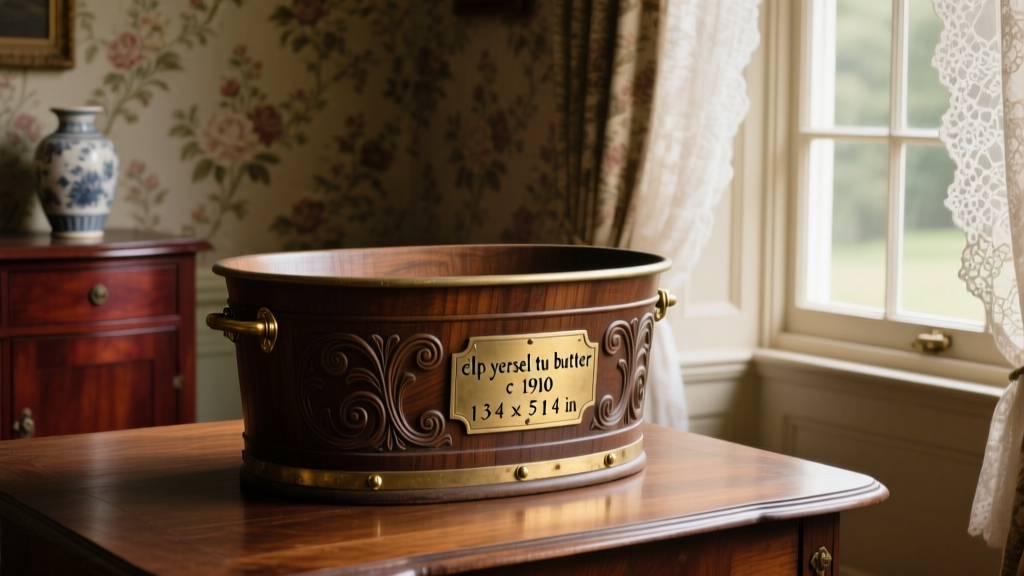
Torquay Butter Tub Style Motto 'Elp Yersel Tu Butter' — A Rare Devon Folk Art Piece, c. 1910 (1¾ × 5¼ in)
Kovels’ On Antiques and Collectibles, Vol. 30, No. 4 (December 2003): A Critical Review and Contextual Analysis

Crown Milano Bowl with Foliated Sprays and Forget-Me-Nots: A Detailed Study of a Mid-Century English Porcelain Masterpiece
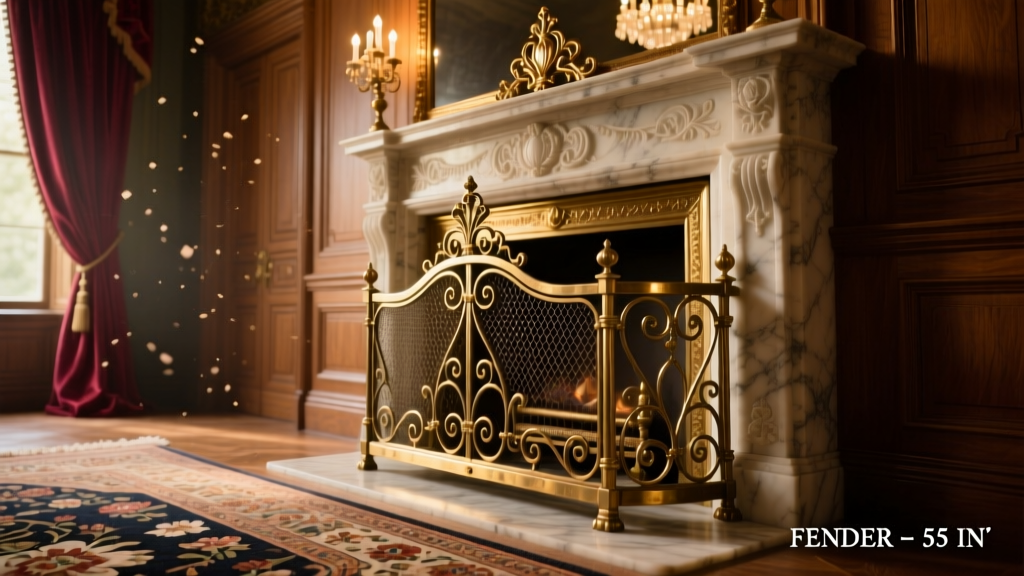
Fireplace Fender with Wire Grill and Brass Top Finial — A Detailed Assessment of the 55-Inch Model

Coalport Mandarin Porcelain: History, Identification, and Restoration Insights for Collectors
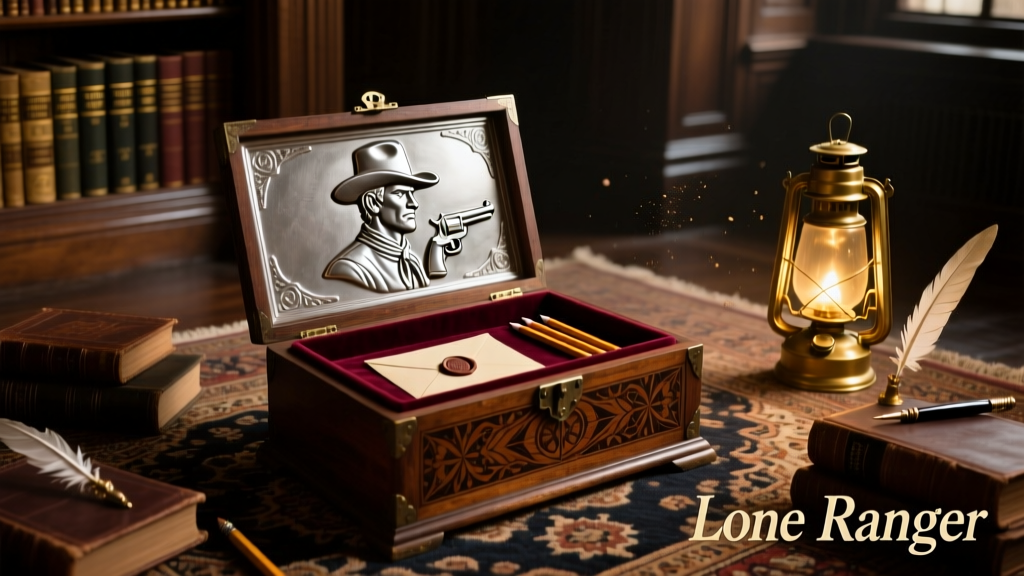
The Lone Ranger Box Pencil: An Antique Collectible with Embossed Silver Top and Functional Tray Interior

Nautical Figurehead: Flying Dutchman English-Type Sailor — A 58½-Inch Carved Oak Masterpiece from the Late Victorian Era
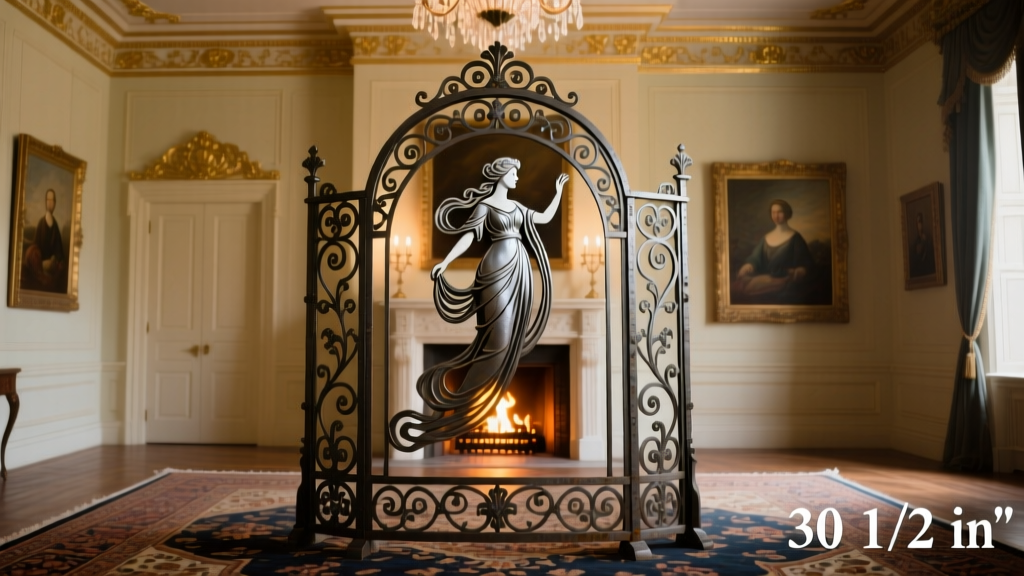
The Fireplaces Screen: Openwork Stylized Maiden Border of Arches in Iron — A 30½-Inch Masterpiece of Victorian Revival Craftsmanship

Cambridge Glass Nude Stem Cigarette Holder in Emerald Green: History, Identification, and Conservation