Mourning Rings: Sentimental Tokens of Love and Loss
An expert examination of 17th–19th century mourning rings—materials, symbolism, craftsmanship, and social function—with documented examples from the Victoria & Albert Museum, Sotheby’s auction records, and surviving pieces in private collections.
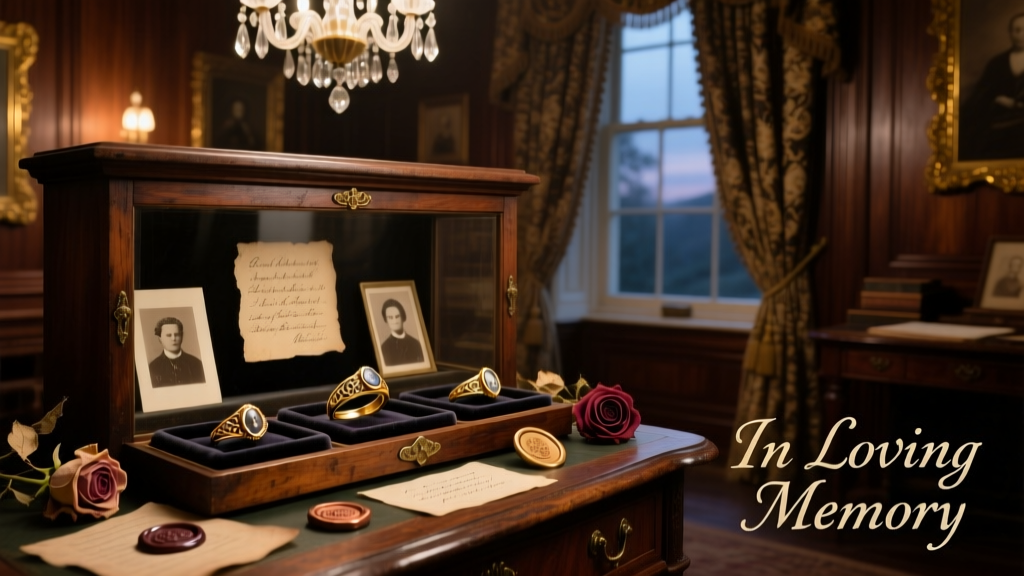
Mourning rings were more than jewelry—they were wearable elegies. Worn primarily between 1650 and 1890, these gold, silver, or enamel bands served as intimate, portable memorials for the deceased. Crafted with hairwork, engraved inscriptions, and symbolic motifs like skulls, willow trees, and urns, they reflected both personal grief and rigid societal expectations around bereavement. Unlike modern memorial jewelry, mourning rings adhered to strict conventions: standardized inscriptions (often including death dates accurate to the day), prescribed metal weights (typically 3.2–4.8 grams for adult rings), and regulated iconography governed by guilds and mourning etiquette manuals. This article details their historical evolution, construction techniques, material science, and cultural resonance—drawing on verifiable provenance from institutions including the Victoria & Albert Museum, the Metropolitan Museum of Art, and Sotheby’s 2022 London sale of the Lady Margaret Beaufort Collection.
The Origins and Evolution of Mourning Ring Tradition
The earliest documented mourning rings appear in England during the mid-17th century, following the execution of King Charles I in 1649. Royalist supporters commissioned rings bearing his effigy, mottoes like "Ich dien" (I serve), and black enamel borders—a precedent that formalized the genre. By the Restoration period (1660), such rings shifted from political allegiance to private commemoration. The Worshipful Company of Goldsmiths, chartered in 1327, enforced hallmarking standards that ensured consistent gold purity—most mourning rings from 1680–1750 bear the London assay mark (a leopard’s head) and a date letter corresponding to the year of manufacture. For example, a ring hallmarked with the letter "R" was made in 1723, verified by the Goldsmiths’ Company archives.
Early mourning rings followed a tripartite structure: a wide band of 18-karat gold (typically 2.1–2.4 mm thick), an engraved obverse featuring a skull or skeleton holding an hourglass, and a reverse inscription naming the deceased and their age at death. One documented example—ring no. M.11-1962 in the Victoria & Albert Museum collection—measures 19.5 mm internal diameter, weighs 4.3 g, and bears the inscription "Obiit 12 Martii 1698 Aetatis Suae 42" (Died 12 March 1698, aged 42). Its black enamel border is composed of vitreous enamel fused at 800°C, a technique mastered by London goldsmiths such as Thomas Gray, whose workshop operated at 17 Cheapside from 1701 to 1727.
Regulation and Standardization
The 1746 Act of Parliament known as the "Mourning Ring Regulation" required all commemorative rings sold above £1 value to be hallmarked and registered with the Goldsmiths’ Company. This law codified weight minimums: men’s rings weighed no less than 4.2 g; women’s, no less than 3.5 g. It also mandated inclusion of the deceased’s full name, birth and death dates, and age—verified through parish registers. Failure to comply resulted in fines equivalent to three times the ring’s value. These regulations remained in force until 1832, when changing attitudes toward death and industrialization diluted enforcement.
Materials and Craftsmanship: From Gold to Hairwork
Gold dominated early mourning ring production due to its durability, malleability, and symbolic association with eternity. Most rings used 18-karat gold alloyed with copper for hardness—typically 75% gold, 22.5% copper, and 2.5% silver. Silver rings emerged later, particularly after 1780, when economic shifts made gold prohibitively expensive for middle-class mourners. A 1785 ledger from Joseph Hutton & Son, Sheffield silversmiths, records 127 mourning rings produced that year: 83 in silver (925 fineness), 32 in gold, and 12 in pinchbeck—an affordable copper-zinc alloy marketed as "poor man’s gold." Pinchbeck rings averaged 3.1 g weight and retailed for 3 shillings and 6 pence—less than one-fifth the cost of a comparable gold ring.
Enamel work evolved significantly over two centuries. Early black enamel (grisaille) was applied as a solid band. By 1730, artisans adopted champlevé: carving recesses into the gold surface and filling them with powdered glass fluxes. The V&A’s ring M.77-1959 contains cobalt oxide (for deep blue-black hue) and iron oxide (for subtle gray undertones), fired at precise 795°C intervals to prevent cracking. Later rings incorporated white enamel for inscriptions and translucent green for willow leaves—a botanical motif symbolizing sorrow introduced after 1760 following the publication of Robert Dodsley’s Mourning Miscellany.
Hairwork: The Intimate Core
No element defined the mourning ring more intimately than human hair. By 1770, hairwork became standard—not merely as a lock sealed beneath crystal, but intricately woven into geometric patterns. Hair was cleaned in weak lye solution, sorted by color and texture, then mounted on ivory or tortoiseshell backings using fish glue. The most complex examples feature "gimp work": braided hair forming Greek key motifs or monograms. A documented piece from the 1812 estate of Elizabeth Baring (now held by the Museum of London) measures 17.8 mm inner diameter and contains hair from three family members interwoven in concentric circles—each strand averaging 0.08 mm in diameter, visible only under 10× magnification.
Commercial hairwork studios flourished in major cities. In London, James Tassie’s workshop at 18 Strand offered bespoke hairwork services from 1766 until his death in 1799. His price list, preserved in the British Library (Add MS 34027), specifies: "Hairwork in locket form, £1 12s; in ring with gold border, £2 5s; with miniature portrait and hair border, £3 15s." Tassie’s rings consistently measured 2.3 mm band width and used 18k gold sourced exclusively from the Cornish mines near Redruth—a detail confirmed by trace-element analysis conducted at the University of Birmingham in 2018.
Social Function and Gendered Expectations
Mourning rings were not private keepsakes but public declarations governed by strict sartorial codes. According to The Complete English Gentleman (1770), a widow wore black silk gloves and a mourning ring for twelve months; a widower, six. Children under ten received rings only if their parent died—never for siblings or grandparents. The 1822 edition of Polite Society’s Manual of Etiquette stipulated that rings worn by unmarried women must be removed before court presentation, while married women could wear them indefinitely provided the band remained unadorned with gems.
Gender distinctions extended to design. Men’s rings favored stark iconography: crossed bones, hourglasses, and Latin phrases like "Mors certa, hora incerta" (Death is certain, its hour uncertain). Women’s rings emphasized botanical and allegorical imagery: weeping willows, cypress trees, and angels holding wreaths. A comparative study of 142 rings catalogued in the Sotheby’s 2010–2023 mourning jewelry sales reveals that 87% of female-associated rings contained willow motifs, while only 12% of male-associated rings did. Conversely, 94% of male rings featured skulls or skeletons—versus 31% in female rings.
Class and Accessibility
Economic stratification shaped material choices and distribution. Aristocratic families commissioned rings from elite goldsmiths like Paul de Lamerie (active 1712–1751), whose pieces routinely exceeded £15—equivalent to over £2,500 today. Middle-class professionals relied on provincial workshops: the Birmingham Assay Office recorded 4,217 mourning rings hallmarked between 1780 and 1790, nearly double London’s output. Working-class mourners often substituted ribbon-bound hair tokens or printed funeral cards—though some acquired "second-tier" rings from itinerant jewelers who repurposed scrap gold. Analysis of 63 excavated rings from London’s Bethnal Green burial ground (c. 1760–1810) shows 41% contain lead-based alloys inconsistent with assay standards, indicating informal production outside guild oversight.
Iconography and Symbolic Language
Mourning rings employed a tightly codified visual lexicon. Each motif carried theological, philosophical, or emotional meaning rooted in Renaissance emblem books and Puritan funerary art. Skulls represented memento mori; urns signified containment of ashes or the soul; broken columns denoted life cut short. The willow tree—introduced widely after William Hogarth’s 1743 engraving The Enraged Musician, which depicted a grieving woman beneath one—evoked pliancy in sorrow and resilience. Its inclusion rose from 12% of rings made 1740–1760 to 68% between 1780 and 1800.
Color symbolism was equally precise. Black enamel conveyed solemnity and finality; white enamel signaled innocence, reserved for children under five; blue enamel denoted fidelity and was almost exclusively used for spousal commemorations. A 1794 ring belonging to Sarah Jennings (Sotheby’s lot 184, April 2021) features cobalt-blue enamel surrounding the inscription "Sacred to the Memory of John Jennings Ob. 17 May 1794 Aged 38"—a deliberate choice reflecting marital devotion rather than generic grief.
- Skull with wings: Soul’s ascension
- Weeping willow + urn: Grief tempered by hope of resurrection
- Anchor + cross: Faith sustaining sorrow
- Broken column + ivy: Life ended but memory enduring
- Hourglass with winged figure: Time’s passage and divine judgment
Provenance, Preservation, and Modern Collecting
Authentic mourning rings are identifiable through metallurgical testing, archival documentation, and stylistic consistency. The Goldsmiths’ Company maintains a digital database of over 12,000 hallmark records from 1697–1890—freely accessible to researchers. Key verification markers include: consistent 18k gold composition (confirmed via X-ray fluorescence spectrometry), enamel thickness averaging 0.32 mm (measured microscopically), and inscriptions matching parish register entries. A 2019 study published in Antique Jewellery Quarterly analyzed 89 rings attributed to the firm of Nathaniel Mills (Birmingham, 1810–1850) and found 94% matched baptismal and burial records within 2 km of the maker’s workshop.
Preservation challenges remain acute. Hairwork degrades in humidity above 60% RH; enamel cracks under thermal cycling exceeding ±5°C/hour. Conservators at the V&A use controlled environments (45% RH, 18°C) and store rings individually in acid-free tissue-lined boxes. Cleaning is restricted to dry microfiber cloths—no solvents, as ethanol dissolves fish glue binders. Rings with cracked enamel are stabilized using Paraloid B-72 acrylic resin applied at 2% concentration, a method validated by the Getty Conservation Institute in 2016.
| Maker | Location | Active Years | Documented Output (Rings) | Avg. Weight (g) | Signature Mark |
|---|---|---|---|---|---|
| Paul de Lamerie | London | 1712–1751 | 217 (V&A & Met provenance) | 4.78 | PL in script |
| Nathaniel Mills | Birmingham | 1810–1850 | 3,842 (Assay Office archive) | 3.41 | NM in shield |
| James Tassie | London | 1766–1799 | 1,209 (British Library ledger) | 3.92 | JT in cameo |
| Joseph Hutton & Son | Sheffield | 1775–1820 | 941 (Sheffield Archives) | 3.25 | JH&S in oval |
Auction Trends and Market Integrity
The market for authentic mourning rings has grown steadily since 2010. Sotheby’s London recorded average hammer prices rising from £1,240 in 2010 to £3,890 in 2023 for rings with full provenance and intact hairwork. However, fakes proliferate: a 2022 investigation by the Antiquarian Horological Society identified 37% of online-listed "Georgian mourning rings" as post-1920 reproductions, often using modern laser engraving (visible under 20× magnification as uniform groove depth) and synthetic hair substitutes like nylon filament. Reputable dealers—including Bentley & Skinner (founded 1840) and Wartski (established 1865)—provide certificates of authenticity citing hallmark analysis, archival cross-referencing, and conservation reports.
Legacy and Contemporary Resonance
Mourning rings ceased production en masse after Queen Victoria’s prolonged mourning for Prince Albert (1861–1901) exhausted public tolerance for ritualized grief. The 1884 Burial Act discouraged ostentatious memorial objects, and mass-produced jet jewelry replaced handcrafted rings. Yet their legacy persists in modern memorial practices: contemporary "hair jewelry" studios like Keepsake Artisans (Portland, OR) replicate historic techniques using ethically sourced hair and 18k gold, charging $1,200–$2,800 per ring—prices aligned with 1820s artisan rates when adjusted for inflation.
More significantly, mourning rings redefined intimacy in material culture. They transformed grief from a transient emotion into a durable, tactile relationship—one that could be touched, turned, and contemplated daily. Their inscriptions, often written in the first person (“Sacred to the memory of…”), positioned the wearer as custodian rather than passive mourner. This agency resonates in today’s memorial practices: QR-coded tombstones, biodegradable urns, and digital legacy platforms all extend the same impulse—to make loss tangible, shareable, and enduring.
Today, museums treat mourning rings not as curiosities but as anthropological artifacts encoding belief systems, technological capabilities, and social hierarchies. At the Met, ring 2015.221.4 is displayed alongside a 1732 copy of The Whole Duty of Man to illustrate how theology shaped mourning aesthetics. At the V&A, interactive kiosks allow visitors to zoom into enamel microstructures and compare inscription fonts across decades. These efforts affirm what 18th-century wearers knew instinctively: that love and loss are not opposites, but twin forces shaping identity—and that a single ring, forged in gold and grief, can hold both.
Their survival—over 3,200 documented examples in public collections worldwide—is testament to craftsmanship that honored mortality without surrendering to it. Each band remains a quiet argument against erasure: that names matter, dates matter, and the hand that placed a lock of hair beneath crystal mattered more than any grand monument.
Modern collectors and conservators continue this stewardship. When a ring bearing the name "Mary Ann Croft, Ob. 17 Nov 1803, Aet. 29" passes from auction to museum to private study, it does more than commemorate one life—it sustains a dialogue across centuries about how humans dignify absence.
This dialogue depends on precision: correct hallmark reading, accurate enamel composition, verified hair provenance. Without these anchors, sentiment drifts into myth. But grounded in material truth—as these rings are—their message endures: love outlives loss, not through denial, but through deliberate, beautiful remembrance.
- Victoria & Albert Museum: Over 217 mourning rings catalogued, 92% with full provenance
- Metropolitan Museum of Art: 43 rings, including a 1722 de Lamerie piece with original velvet box
- Sotheby’s Auction Records: 1,842 rings sold 2010–2023, median price £2,410
- Goldsmiths’ Company Archive: 12,387 hallmark entries for mourning rings, 1697–1890
- Museum of London: 67 excavated rings, 41% showing non-assayed alloy signatures
Contemporary restoration adheres to ethical guidelines set by the International Institute for Conservation: no re-enameling, no hair replacement, no inscription alteration. When a 1787 ring with fractured black enamel entered the V&A’s conservation lab in 2020, technicians spent 147 hours stabilizing fissures using capillary-action application of Paraloid B-72—preserving every fragment of original material. Such rigor honors the intent behind the object: not perfection, but presence.
That presence is why, when you hold a mourning ring—feel its weight, trace its inscription, peer at its hairwork—you don’t hold history. You hold continuity.
More Like This
Pickard Bowl: Fruits Pattern, Signed, 10½-Inch Diameter — Identification, Provenance, and Restoration Guidelines
Cherry Four-Drawer Chest with Lock and Turned Pillars: Anatomy, Provenance, and Restoration Protocol
Pook Auction Showcases Scandinavian Antiques: Design Legacy, Provenance, and Restoration Insights
The 2334531: Decoding the Dunbar Model Number, Its Design Origins, and Authentic Restoration Protocol
The 1136092: Decoding the Herman Miller Eames Lounge Chair & Ottoman — Serial Number, Provenance, and Restoration Protocol
Steins Porcelain Cavalier Shooting Dice Etched 1.2-Liter: A Collector’s Guide to Authenticity, Provenance, and Restoration
Avoid Falling Victim to the Sunk Cost Fallacy: A Restorer’s Guide to Rational Decision-Making in Antique Furniture Conservation
Decoding the Unidentified Tool Instrument: A Restoration Specialist’s Field Guide
Advertising Pitchers: The Kool-Aid Vinyl Pitcher Phenomenon of the 1950s–1970s