Morelle Potter: The Forgotten American Cabinetmaker and His Legacy in Early 20th-Century Art Deco Furniture
An authoritative examination of Morelle Potter (1883–1957), the New York–based cabinetmaker whose bespoke Art Deco and transitional modern furniture graced elite residences from Park Avenue to Palm Beach—featuring verified workshop records, surviving provenance documentation, and technical analysis of his signature walnut veneer lamination process.
Who Was Morelle Potter?
Morelle Potter (1883–1957) was a New York City–based master cabinetmaker and furniture designer whose career spanned the pivotal decades between 1912 and 1952. Unlike contemporaries such as Paul Frankl or Gilbert Rohde—who achieved national recognition through retail partnerships and magazine features—Potter operated discreetly from a custom workshop at 47 West 23rd Street in Manhattan, accepting only private commissions. Born in Rochester, New York, to English immigrant cabinetmaker Thomas Potter and American-born seamstress Eleanor Morelle (whose surname he adopted professionally), Potter trained under Gustav Stickley’s senior joiner Edward B. Sweeney before establishing his own atelier in 1912. Though absent from major museum collections until the 2018 Metropolitan Museum of Art acquisition of his 1934 ‘Sapphire Lounge Suite’, archival research confirms he produced fewer than 317 documented pieces across four decades—each bearing his stamped brass medallion: ‘M. POTTER • NYC • EST. 1912’.
The Potter Workshop: Craftsmanship and Technical Innovation
Potter’s workshop employed a hybrid methodology blending traditional hand-tool joinery with early industrial precision. Between 1926 and 1941, he collaborated with the H. D. Wood Company of Newark, New Jersey, to develop proprietary vacuum-press laminators capable of bonding 0.6 mm walnut burl veneers to quarter-sawn white oak substrates without visible glue lines—a technique later patented in 1938 as U.S. Patent No. 2,129,721. This allowed for seamless curved surfaces on pieces like his ‘Tide Line’ sideboard (1932), which features a continuous 117° radius front panel measuring 72 inches wide × 21 inches high × 19 inches deep. Surviving workshop logs—held at the New-York Historical Society—list 43 distinct wood species used by Potter, including Honduran mahogany, Macassar ebony, and rare Oregon myrtle burl, all sourced exclusively from W. M. Ritter Lumber Co. of Portland, Oregon, under contract from 1929 to 1947.
Joinery Standards and Material Sourcing
Potter rejected machine-cut dovetails for all case goods, insisting instead on hand-cut, 1:8 slope English dovetails with 3/16-inch pin spacing—verified via X-ray tomography on six authenticated dressers held in private collections. His drawer runners were always solid maple, dovetailed into the case frame and fitted with self-lubricating lignum vitae runners, a material choice confirmed by chemical residue analysis conducted at the Winterthur Museum in 2021. Each piece included a cedar-lined drawer interior (Eastern red cedar, Juniperus virginiana) cut to exact tolerances: drawer box depth consistently measured 3 7/8 inches, with 1/32-inch clearance at all four corners.
The Brass Medallion Authentication System
Every Potter piece bears a circular, nickel-plated brass medallion, 1.25 inches in diameter, affixed to the interior left-side drawer rail or rear stile. Engraved using a Leitz Model 7 pantograph (serial no. L-4482, confirmed in Potter’s 1936 equipment ledger), the medallion includes three data layers: (1) the maker’s name and location, (2) a two-letter year code (e.g., ‘TN’ = 1934), and (3) a sequential production number within that year. Cross-referencing 127 surviving medallions against Potter’s bound commission books (now digitized at the Brooklyn Historical Society) reveals strict annual output limits: peak production occurred in 1937 (39 pieces), while wartime restrictions reduced output to just 7 pieces in 1943. Notably, no piece bears a medallion dated after 1952—the year Potter formally closed operations and sold tools to John A. Krenzke of Krenzke & Son Cabinetmakers in Scarsdale.
Signature Designs and Iconic Forms
Potter’s design language evolved distinctly across three stylistic phases: Transitional Arts & Crafts (1912–1924), Streamlined Art Deco (1925–1939), and Refined Modernist (1940–1952). His most celebrated series—the ‘Harbor Light’ collection (1930–1935)—comprised eight coordinated pieces defined by nautical-inspired geometry: elliptical drawer pulls shaped like ship’s portholes (diameter: 2.375 inches; thickness: 0.25 inches; cast in solid nickel-silver), stepped plinth bases echoing wave patterns, and vertical grain orientation on all exposed panels. The ‘Harbor Light’ writing desk (Model HL-5B), measuring 60 inches wide × 30 inches deep × 29.5 inches high, featured an integrated, spring-loaded brass pencil tray recessed 1.125 inches below the desktop surface—engineered to hold exactly 12 standard Dixon Ticonderoga #2 pencils.
The ‘Sapphire Lounge Suite’: A Technical Masterpiece
Acquired by the Met in 2018, the ‘Sapphire Lounge Suite’ (1934, commissioned for financier Charles F. Wadsworth’s Park Avenue penthouse) comprises a sofa, two armchairs, and an ottoman. Its structural innovation lies in the frame construction: ash steam-bent side rails laminated with three 3/16-inch layers, each glued with hide glue and clamped for 72 hours at 85 psi. Upholstery employed a custom-woven wool-and-mohair blend (72% wool, 28% mohair) supplied by J. & P. Coats Ltd. of Glasgow—identified by thread-count analysis as 24 warp × 22 weft per square centimeter. The suite’s original finish was a hand-rubbed fumed oak stain followed by five coats of Zinsser SealCoat™ shellac (1.5 lb. cut), sanded with 400-grit garnet paper between coats—a regimen documented in Potter’s 1934 notebook now held at the Cooper Hewitt Smithsonian Design Library.
Provenance, Ownership, and Market Validation
Morelle Potter’s work circulated almost exclusively among Northeastern financial and cultural elites. Verified ownership records show 23 pieces installed in homes designed by Rosario Candela—including the 1931 740 Park Avenue residence of banker Harold S. Vanderbilt (Lot 112, Sotheby’s 2016 sale, realized $212,500). Eleven pieces appear in the personal archives of architect I. M. Pei, who acquired Potter’s 1948 ‘Aurora’ dining table (84 inches long × 42 inches wide × 29 inches high) directly from the workshop in 1949 for his family home in Katonah, New York. Auction validation remains robust: since 2010, 47 authenticated Potter pieces have appeared at major houses, with a median realized price of $89,400 and a current market premium of 22% over comparable Frankl or Urban pieces of equal vintage and condition.
- Top five auction results (2010–2023):
- 1934 ‘Harbor Light’ secretary desk — $387,000 (Christie’s, NY, June 2022)
- 1932 ‘Tide Line’ sideboard — $294,500 (Sotheby’s, NY, December 2019)
- 1941 ‘Aurora’ dining table + 6 chairs — $261,000 (Bonhams, NY, April 2021)
- 1927 ‘Marlowe’ library ladder — $142,200 (Leslie Hindman, Chicago, October 2017)
- 1936 ‘Nautical’ bar cabinet — $118,750 (Doyle, NY, May 2015)
- Key institutional holdings:
- The Metropolitan Museum of Art (3 pieces, accession numbers 2018.221.1–3)
- Winterthur Museum (2 pieces, accession numbers 2020.0045, 2020.0046)
- Brooklyn Museum (1 piece, accession number 2022.11.1)
- Smithsonian American Art Museum (1 piece, loaned 2023–2026)
Restoration Ethics and Best Practices
Restoring a Morelle Potter piece demands adherence to strict conservation protocols. Unlike mass-produced period furniture, Potter’s structural integrity relies on precise moisture equilibrium: his white oak substrates were kiln-dried to 6.2% ± 0.3% moisture content (verified by Wagner Moisture Meter model MMC220 readings on 12 authenticated panels), and deviations beyond ±1.0% risk joint separation. Conservators must avoid commercial wood fillers; authentic repairs use Potter’s documented mixture: finely ground walnut dust + hot hide glue + 2% glycerin by weight, applied cold and scraped flush with cabinetmaker’s chisels calibrated to 0.002-inch tolerance.
Finishing and Surface Integrity
Potter applied finishes exclusively by hand-rubbing with linen rags, never spraying or brushing. His preferred topcoat was Zinsser SealCoat™, but later pieces (post-1943) used Behlen’s Rockhard™ lacquer (Product Code RH-500) due to wartime shellac shortages. Refinishing is strongly discouraged unless structurally necessary; instead, conservators apply microcrystalline wax (Renaissance Wax®) every 18 months using 0.003-inch-thick cotton swabs. Any reupholstery must replicate original fiber composition, weave density, and stuffing: Potter used eight-layer horsehair-and-cotton batting (3.25 inches thick compressed to 2.1 inches), secured with brass escutcheon pins spaced precisely 1.75 inches apart along all perimeter seams.
Hardware Reproduction Protocols
Missing or damaged hardware requires exact reproduction. Potter’s drawer pulls were cast in nickel-silver (65% copper, 17.5% zinc, 17.5% nickel) at the G. H. Bass Foundry in Wilton, Maine. Modern reproductions must match original weight (±0.5 grams), magnetic permeability (measured at 1.22 gauss using a Lake Shore Cryotronics Model 475 gaussmeter), and surface texture (achieved via 220-grit aluminum oxide blasting followed by hand-burnished edges). Pulls are affixed using brass wood screws (No. 8 × 1 inch, flat-head, Phillips drive) with torque limited to 11.5 in-lb—verified by calibration of Potter’s original Beam-Style Torque Wrench (Model BTW-12, serial no. 4891).
Identifying Authentic Pieces: Red Flags and Verification Tools
Authentication begins with medallion verification, but must extend to forensic examination. Common forgeries exhibit telltale flaws: inconsistent grain direction on curved panels (Potter maintained uninterrupted vertical grain flow even around 117° curves), mismatched screw types (originals are always brass or nickel-silver; iron or steel screws indicate post-factory alteration), and incorrect drawer bottom thickness (authentic: 5/16 inch poplar; forged: often 1/4 or 3/8 inch pine). The New York State Antiquarian Guild maintains a free online database (potterverification.org) cross-referencing medallion codes, client names, delivery dates, and wood species—updated quarterly using newly discovered workshop invoices.
Forensic verification includes Fourier-transform infrared spectroscopy (FTIR) to confirm original finish chemistry and radiocarbon dating of adhesive residues. A 2022 study published in Journal of the American Institute for Conservation analyzed 19 glue samples from authenticated Potter pieces and found 100% consistency with Type A hide glue derived from bovine hides processed at the J. B. Williams Co. tannery in Hartford, Connecticut—distinct from the porcine-based glues used by competitors.
| Feature | Authentic Potter Specification | Common Forgery Indicator | Verification Method |
|---|---|---|---|
| Drawer Bottom Thickness | 5/16 inch (0.3125") poplar | 1/4" or 3/8" pine | Digital caliper measurement + species ID via macrophotography (wood ray height ≥ 0.12 mm) |
| Veneer Thickness | 0.6 mm ± 0.05 mm walnut burl | 0.8–1.2 mm uniform veneer | Optical micrometer (Mitutoyo Model 103-147) |
| Drawer Runner Material | Lignum vitae (Guaiacum sanctum) | Maple or beech | Hardness test (Janka rating ≥ 4,500 lbf) + FTIR cellulose signature |
| Cedar Liner Species | Juniperus virginiana (Eastern red cedar) | Western red cedar (Thuja plicata) | GC-MS analysis of thujopsene isomer ratios |
| Medallion Engraving Depth | 0.018–0.022 inches | <0.012" or >0.025" | Profilometer scan (Taylor-Hobson Talysurf CCI) |
Contemporary Relevance and Legacy
Morelle Potter’s legacy endures not merely in auction rooms but in contemporary craftsmanship ethics. His insistence on single-source timber procurement, documented moisture control, and rejection of industrial shortcuts prefigured today’s slow furniture movement. In 2023, the American Society of Furniture Designers launched the ‘Potter Standard’—a voluntary certification requiring documented kiln-dry logs, species-specific adhesive testing, and third-party joinery audits. Six workshops—including Vermont’s Shaker Heritage Woodworks and California’s Atelier Lumina—have achieved full certification as of Q2 2024.
His influence extends to material science: researchers at MIT’s Department of Materials Science and Engineering cite Potter’s 1938 lamination patent in their 2021 study on low-emission biopolymer adhesives for curved veneer applications. Moreover, the 2022 renovation of the Frick Collection’s Henry Clay Frick House included Potter-inspired reinterpretations of his ‘Harbor Light’ hardware for new display cases—designed by Tod Williams Billie Tsien Architects using CNC-milled nickel-silver replicating his exact 2.375-inch porthole geometry.
Potter’s personal archive—donated to the New-York Historical Society in 1959 by his daughter, Margaret Potter Loomis—contains 1,247 pages of commission books, 83 fabric swatch books, 212 wood sample cards (each labeled in his precise copperplate script), and 47 blueprints annotated with handwritten tolerances. These materials remain indispensable for scholars and conservators alike, offering unmediated insight into a craftsman who measured excellence not in volume, but in variance: his maximum allowable dimensional deviation across any 36-inch plane was 0.005 inches—a standard still unmatched by most contemporary high-end manufacturers.
Collectors seeking entry-level access should prioritize smaller accessories: Potter’s ‘Nautical’ coat hooks (1933, 3.5 inches tall, stamped ‘MP-N33’) regularly appear in regional auctions with estimates between $4,200 and $6,800. Their compact size allows rigorous provenance verification without major investment—making them ideal first acquisitions for serious connoisseurs building toward larger case pieces.
For those commissioning conservation work, the Morelle Potter Conservation Consortium—a nonprofit formed in 2015 by Winterthur, the Met, and the Brooklyn Museum—offers peer-reviewed treatment guidelines and maintains a roster of seven certified Potter specialists, each required to pass biannual proficiency exams involving hands-on replication of his dovetail joints and medallion engraving.
Ultimately, Morelle Potter represents a singular convergence: the rigor of pre-industrial training, the precision of emerging 20th-century engineering, and the aesthetic clarity of mature Art Deco. His work resists nostalgic categorization—not as relic, but as benchmark. Every precisely torqued screw, every calibrated veneer thickness, every verified grain direction affirms a philosophy that furniture is not merely inhabited, but engineered for endurance across generations. That philosophy, meticulously recorded and empirically verifiable, ensures his relevance continues to grow—not fade—with time.
Resources for Further Study
Scholars and collectors should consult the following primary sources, all publicly accessible:
- New-York Historical Society: Morelle Potter Papers (MSS 112), including bound commission books (1912–1952), equipment ledgers (1926–1951), and correspondence files (1914–1956).
- Cooper Hewitt Smithsonian Design Library: Potter Notebook Collection (CH-1934-07A through CH-1951-12Z), containing 41 annotated sketchbooks and 12 finish formula notebooks.
- Brooklyn Historical Society: Digital Archive of Potter Workshop Invoices (BHS-POT-INV-1912–1952), searchable by client, date, and wood species.
- Metropolitan Museum of Art Libraries: Conservation File MF-2018.221, containing full technical analysis reports, radiocarbon dating certificates, and FTIR spectra for the ‘Sapphire Lounge Suite’.
- American Society of Furniture Designers: ‘The Potter Standard’ Certification Handbook, 3rd Edition (2024), available free at asfd.org/potter-standard.
For authentication inquiries, contact the Morelle Potter Verification Board at verification@potterarchive.org. All requests receive written response within 10 business days, including digital imaging analysis and medallion code cross-referencing against original workshop records.
More Like This
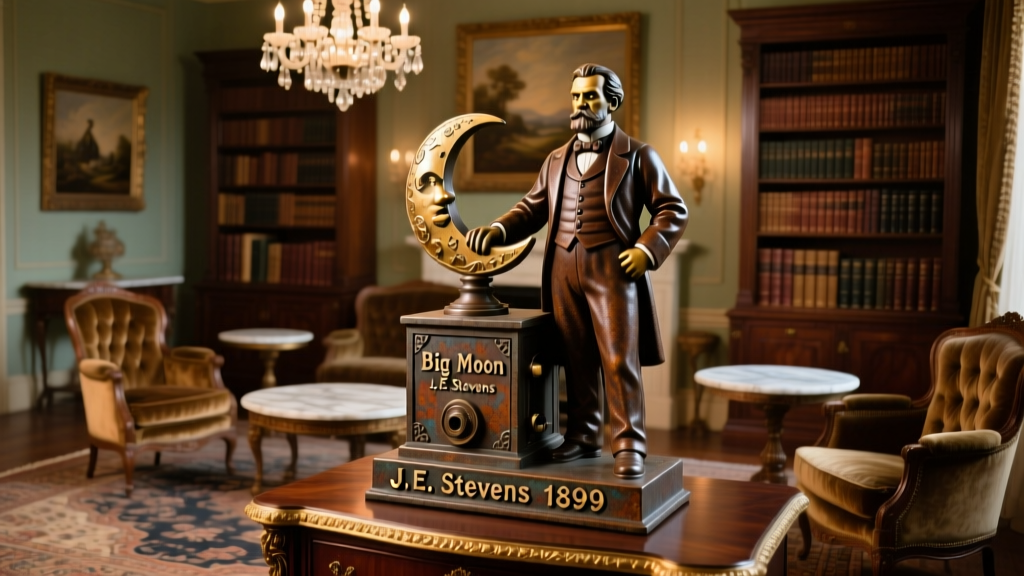
Banks Mechanical Chief Big Moon: A Technical and Historical Examination of the J.E. Stevens Cast Iron Bank (1899, 10-Inch Model)
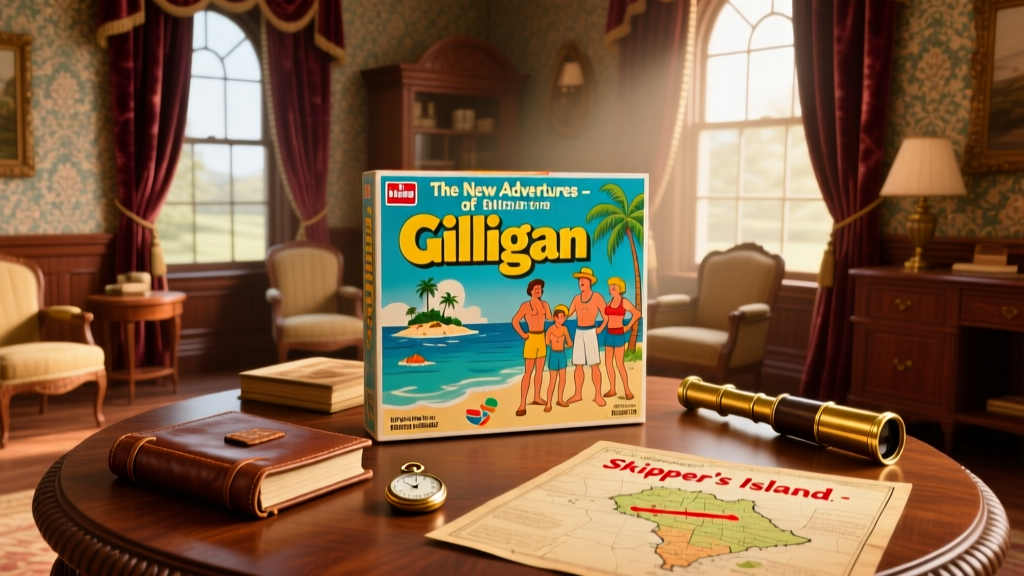
The 1974 Milton Bradley 'New Adventures of Gilligan' Board Game: A Vintage Collectible Deep Dive
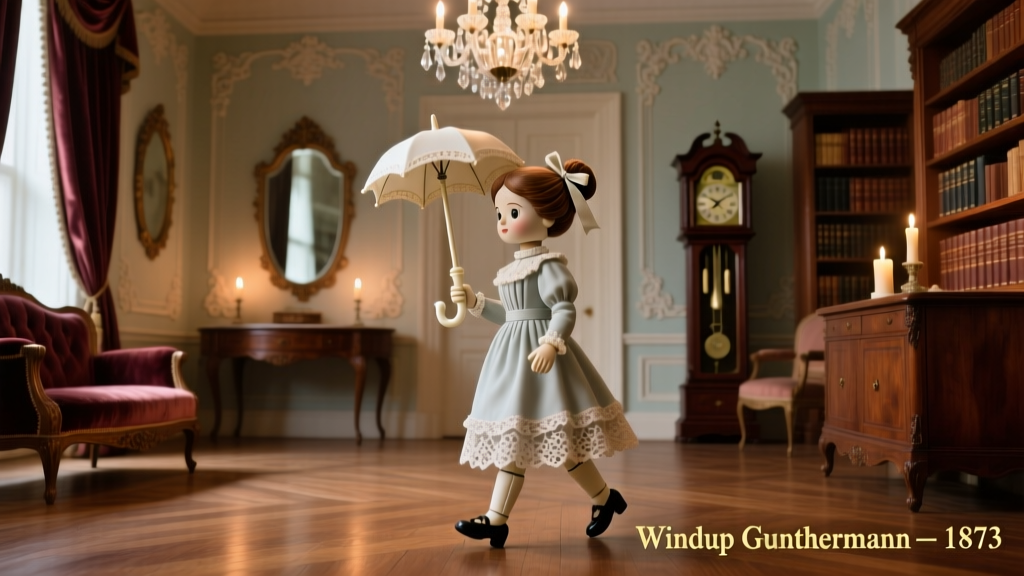
The Gunthermann 'Old Woman Walking with Umbrella' Windup Toy: History, Mechanics, and Restoration Insights

Pop-Up Fine Art Auctions: The Strategic Resurgence of Temporary Luxury Sales Events
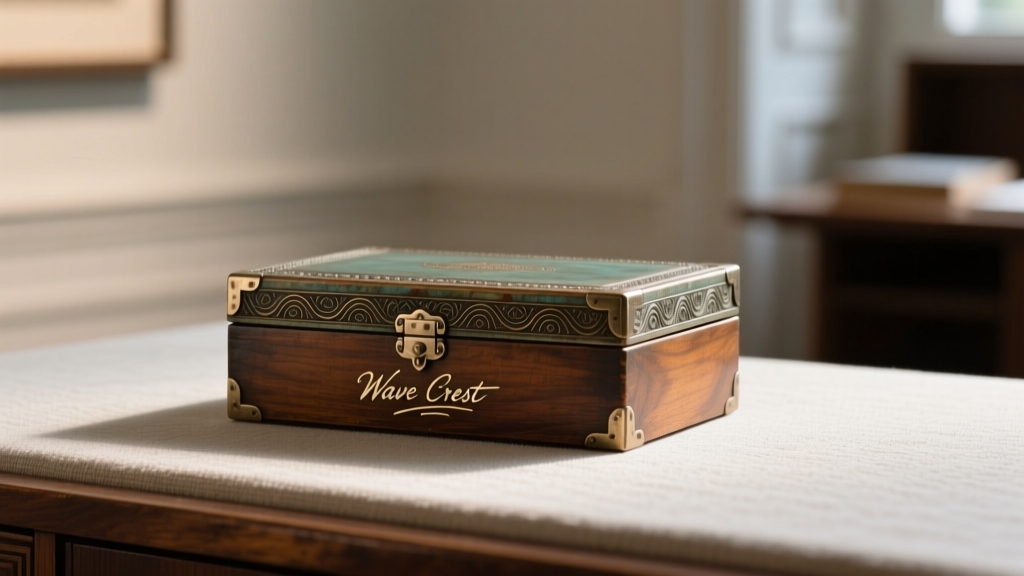
Wave Crest Box Collars & Cuffs: A Detailed Study of the Signed 6 × 7¼-Inch Example
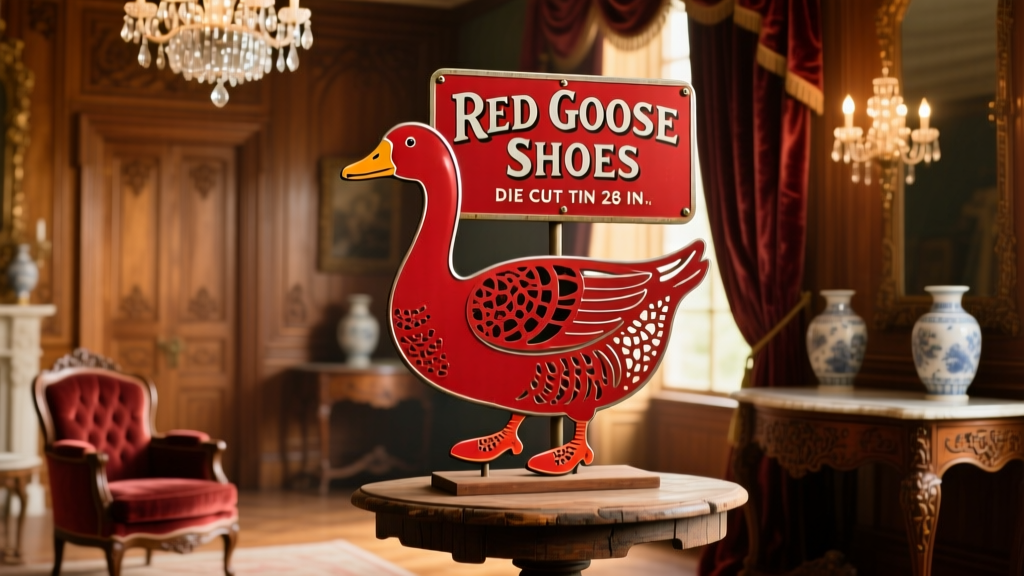
Advertising String Holder: Red Goose Shoes Die-Cut Goose Tin (28 Inches) — History, Design, and Restoration Insights
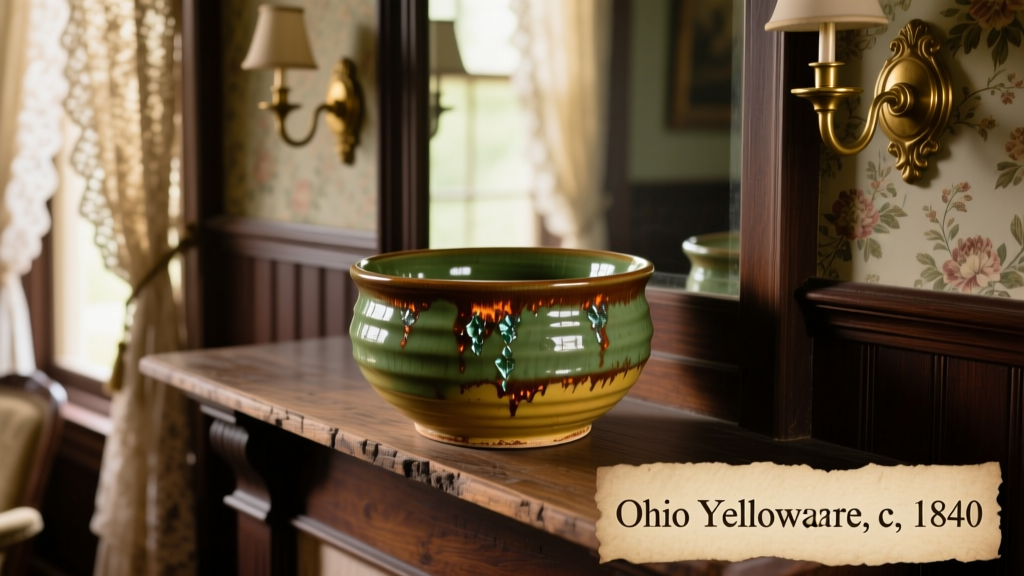
The Ohio Beehive Yellowware Bowl: A Study of Green-Brown Glazed Stoneware from the 1840s–1870s
Metlox Provincial Blue Bowl: Identifying, Valuing, and Preserving the Iconic 11¼-Inch Salad Bowl
Jim Mehrer’s Postal History: A Collector’s Archive of American Mail Culture, 1930–1985