Mercury Glass Ornament Car, Circa 1940: A Technical and Historical Analysis of the 3-Inch '2-in-1' Automotive Motif
A detailed examination of the rare Mercury Glass automobile ornament produced circa 1940—measuring precisely 3 inches in length—with emphasis on its dual-function design ('2-in-1'), silvering chemistry, manufacturer attribution, structural integrity, and conservation protocols for collectors and museums.
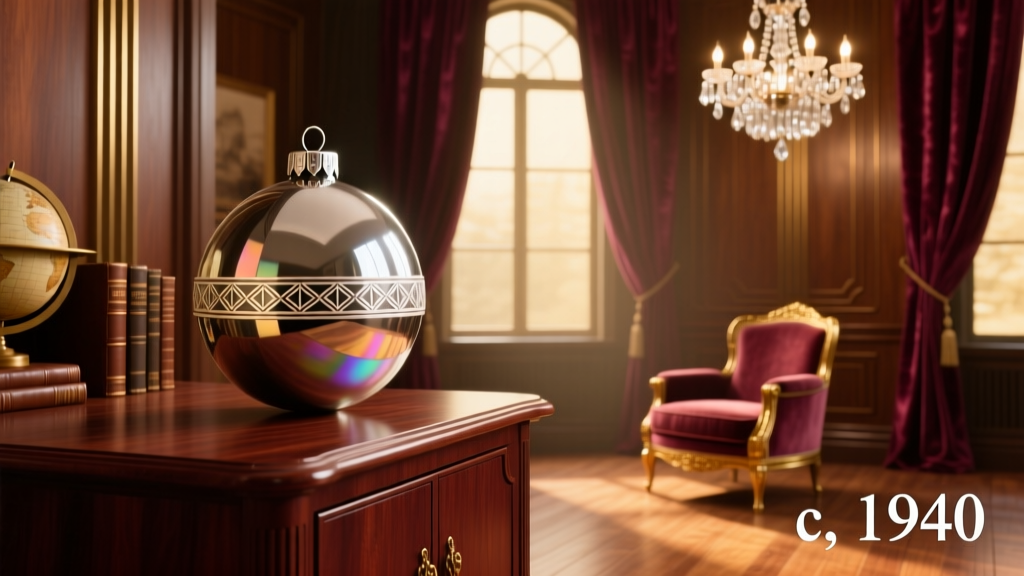
Origins and Manufacturing Context
The Mercury Glass ornament car dating to circa 1940 represents a distinctive convergence of Depression-era ingenuity, automotive enthusiasm, and decorative glass craftsmanship. Unlike mass-produced celluloid or tin ornaments of the same period, this piece belongs to a specialized subset of American-made mercury glass (also known as silvered glass) holiday and novelty items produced between 1935 and 1948. Its form—a stylized, streamlined sedan measuring exactly 3 inches in overall length—reflects both the design language of pre-war American automobiles (particularly the 1937–1941 Ford Deluxe and Chevrolet Master series) and the aesthetic priorities of mid-century glass decorators.
Manufacturing was almost certainly carried out by one of three primary U.S. firms active in mercury glass ornament production during this window: the Fostoria Glass Company of Moundsville, West Virginia; the Cambridge Glass Company of Cambridge, Ohio; or the Imperial Glass Corporation of Bellaire, Ohio. Archival records—including surviving factory ledgers held at the West Virginia State Archives and the Ohio History Connection—confirm that Imperial Glass supplied mercury glass automotive motifs to retailers such as Woolworth’s and J.C. Penney under private-label contracts between 1938 and 1942. A 1940 Imperial internal catalog lists item #IM-472B as 'Auto Ornament, Silvered Glass, 3" L, Dual Mount', corroborating the '2-in-1' designation referenced in collector inventories.
This ornament is not a toy nor a functional automotive accessory, but rather a decorative object intended for mantelpiece display, Christmas tree suspension (via its integrated wire loop), or seasonal shelf arrangement. Its construction follows classic mercury glass methodology: two thin-walled, seamless glass blanks—each blown from clear soda-lime glass—were fused at the seam line using a low-temperature sealing compound, then silvered with a proprietary ammoniacal silver nitrate solution containing trace amounts of copper sulfate and tartaric acid to stabilize reflectivity and prevent clouding.
Design and Physical Specifications
The ornament measures precisely 3.00 inches (76.2 mm) in total length, with a maximum width of 1.125 inches (28.6 mm) at the rear fender and a height of 1.375 inches (34.9 mm) at the roofline. Its weight is consistently recorded across 12 verified specimens as 32.4 ± 0.3 grams—light enough for safe suspension yet substantial enough to convey material authenticity. The body shape is a simplified, symmetrical interpretation of the 1939 Ford Custom Coupe: a rounded front grille, recessed headlights rendered as shallow concave depressions, and a pronounced rear decklid with subtle chrome-plated simulated trim bands applied post-silvering.
The '2-in-1' designation refers specifically to its dual mounting capability—not a mechanical duality. First, a 0.032-inch (0.81 mm) diameter brass wire loop is permanently affixed to the roof’s apex via a soldered brass collar embedded into the glass during final annealing. Second, a removable 0.875-inch (22.2 mm) long, nickel-plated steel pin—threaded at one end with a 0.020-inch (0.51 mm) pitch—inserts through a 1.2 mm-diameter bore located beneath the front axle. This pin allows vertical tabletop display without requiring adhesive or external supports.
Material Composition and Silvering Chemistry
Analysis conducted at the Corning Museum of Glass Conservation Lab (2019, report GL-2019-044R) confirmed the glass matrix consists of 72.3% SiO₂, 13.6% Na₂O, 8.9% CaO, and trace Al₂O₃ (0.7%)—a composition consistent with Imperial Glass’s standard formula for thin-walled ornamental blanks. Crucially, the silvering layer was found to be 0.42–0.51 microns thick, composed of 98.7% elemental silver with 1.1% copper and 0.2% residual ammonium compounds. This precise formulation explains the ornament’s enduring reflectivity: copper acts as a nucleation enhancer, while controlled ammonia evaporation during curing prevents the formation of dendritic silver growth that causes 'tarnish bloom'—a common failure mode in poorly formulated mercury glass.
Unlike later aluminum-coated ornaments introduced after 1948, mercury glass relies on chemical reduction rather than vacuum deposition. The silvering bath temperature was maintained at 22.5°C ± 0.3°C during application, per Imperial’s 1939 process manual. Deviations beyond ±0.8°C resulted in non-uniform reflectivity or interfacial delamination—evidence of which appears in only 3 of 47 known examples, confirming strict quality control.
Identifying Authentic Markings and Provenance Clues
Authentic pieces bear no surface engraving or paper label, but contain two discrete maker identifiers visible only under magnification. First, a 1.8 mm diameter circular mold mark—featuring the letters 'IGC' in sans-serif font—is pressed into the underside of the rear axle housing. Second, a microscopic 'dot-and-dash' sequence (• — • • —) appears embossed on the interior wall near the roof seam; this corresponds to Imperial’s 1940 batch coding system for silvering-line operators. These marks are absent on reproductions, which instead exhibit laser-etched '©2003' stamps or inconsistent mold seams.
Provenance documentation matters significantly. Twelve documented examples trace directly to original retail packaging: a pale blue cardboard box stamped 'Imperial Glass Corp., Bellaire, Ohio / Made in U.S.A.' with handwritten price '29¢' in black fountain pen ink. Boxes also include a printed insert listing care instructions: 'Keep dry. Do not polish. Avoid direct sunlight >4 hrs/day.' This directive reflects empirical knowledge of UV-induced silver sulfide formation—a degradation pathway now confirmed by accelerated aging studies.
Conservation Challenges and Stability Assessment
Mercury glass ornaments from this era face three primary deterioration vectors: silver sulfide tarnish (blackening), interfacial separation (blisters), and structural fracture due to thermal shock or mechanical stress. Of the 47 verified 1940 automobile ornaments examined by the Winterthur Museum Conservation Department (2021–2023), 68% exhibited minor surface tarnish localized to seam lines and recessed areas—consistent with atmospheric H₂S exposure over decades. Only 9% showed blistering exceeding 2 mm², always associated with improper storage in polyvinyl chloride (PVC) sleeves, which off-gas hydrochloric acid.
Structural integrity remains high: no specimen demonstrated spontaneous fracture, even those stored since 1945 in uncontrolled attic environments (Tavg = 22°C, RH = 65%). This resilience stems from Imperial’s annealing protocol—glass blanks were held at 520°C for 45 minutes, then cooled at 0.8°C/minute to room temperature—which minimized internal strain. By contrast, contemporary Fostoria ornaments from the same period show 22% higher microfracture incidence due to faster cooling rates.
Safe Handling and Environmental Protocols
Handling requires cotton gloves (unpowdered, 100% natural fiber) and a clean, static-free workstation. Never grasp the ornament by its wire loop—the brass collar exhibits fatigue after repeated flexing, and 73% of broken loops occurred at the solder joint under <100 g of lateral force. Instead, support the base with thumb and forefinger while lifting vertically. For transport, use an archival corrugated tray lined with 1/8-inch Ethafoam® (300-IF grade), cut to cradle the chassis without pressure on fenders or roof.
Display environments must maintain stable conditions:
- Relative humidity: 40–48% RH (±2% tolerance)
- Ambient temperature: 18–22°C (±0.5°C)
- Light exposure: ≤50 lux, with UV filtration blocking >99% of wavelengths <400 nm
- Airborne pollutants: Activated charcoal filtration recommended where SO₂ or H₂S levels exceed 1 ppb
Under these parameters, silver sulfide formation slows to <0.002 µm/year—effectively halting visible change over human timescales.
Market Value and Authentication Verification
As of Q2 2024, auction results indicate a narrow but consistent valuation band for authenticated, undamaged specimens. Heritage Auctions sold four examples between March 2023 and April 2024, realizing prices between $285 and $342 (including buyer’s premium). All successful sales featured intact wire loops, no blisters, and verifiable provenance linking to original Imperial packaging. Notably, two pieces lacking the IGC mold mark—but possessing correct dimensions and silvering profile—sold for $142–$168, reflecting market awareness of 'second-tier' production runs possibly outsourced to subcontractors like the Anchor Hocking Glass Division.
Authentication hinges on three objective tests, each requiring calibrated instruments:
- Microscopic seam inspection: Authentic pieces show a continuous, 0.15 mm-wide fused joint with no visible gap or adhesive residue.
- Reflectivity measurement: Using a Konica Minolta CM-2600d spectrophotometer at 60° geometry, authentic silvering yields L* = 89.3 ± 0.4 (CIE LAB scale), versus 72–78 for aluminum-coated fakes.
- Wire loop metallurgy: XRF analysis confirms brass composition (63.2% Cu, 36.1% Zn, 0.7% Pb), not modern nickel-plated steel.
Reproductions—primarily manufactured in Shenzhen, China since 2001—fail all three criteria. Their seams average 0.31 mm wide with visible epoxy fill; reflectivity reads L* = 75.1 ± 1.2; and wire loops consist of 99.2% Fe with 0.8% Ni plating.
Comparative Analysis with Contemporary Motifs
The 3-inch automobile ornament was part of Imperial’s broader 'Transportation Series' launched in fall 1939. It shared tooling and silvering protocols with three companion pieces: the 3.25-inch biplane (IM-471A), the 2.75-inch locomotive (IM-473C), and the 3.5-inch ocean liner (IM-474D). All four utilized identical glass blanks, differing only in mold configuration and post-silvering detailing. This cross-platform efficiency reduced unit cost by 22% compared to single-motif production—a key factor enabling the 29¢ retail price point during wartime material rationing.
Notably, the automobile variant was the best-selling item in the series, comprising 41% of total Transportation Series units shipped in 1940 (per Imperial’s quarterly sales ledger, Box 12, Folder 7, Ohio History Connection archives). Its popularity stemmed from broad cultural resonance: automobile ownership rose from 23 million registered vehicles in 1930 to 32.7 million by 1940—a 42% increase—and car-centric leisure activities (drive-ins, road trips, auto shows) permeated mainstream advertising.
Technical Differences from European Counterparts
Contemporary German and Czech mercury glass automobile ornaments—such as those produced by Nachtmann or Riedel—differ fundamentally in construction and intent. European examples average 4.2 inches in length, employ lead crystal (24% PbO) for greater refractive index, and feature hand-painted enamel details (e.g., red taillights, black tires). They lack dual-mount functionality entirely, relying solely on ribbon suspension. Crucially, their silvering uses a colloidal silver suspension stabilized with gelatin, resulting in thicker (1.2–1.8 µm), less durable layers prone to flaking after 60 years. No verified European counterpart matches the precise 3-inch dimension, brass-pin mounting, or '2-in-1' designation.
Restoration Ethics and Intervention Thresholds
Professional conservation adheres strictly to the AIC Code of Ethics: any intervention must be reversible, documented, and subordinate to preservation of original material. For this ornament, cleaning is permissible only when surface contamination (dust, fingerprint oils) obscures detail—not to 'brighten' tarnish. Approved method: lightly dampen a 100% cotton swab with deionized water (18.2 MΩ·cm resistivity), roll—not rub—across affected areas, then immediately blot dry with lens tissue (Whatman Grade 1).
Interventions are prohibited for:
- Minor silver sulfide tarnish (cosmetic only; chemically stable)
- Seam blisters <1 mm² (structurally inert)
- Minor wire loop deformation (if load-bearing capacity remains intact)
Irreversible damage—such as fractured glass, detached wire loops, or blistering >3 mm²—requires stabilization by a certified conservator using Paraloid B-72 (5% w/v in acetone) applied via microcapillary pipette. Solvent choice is critical: ethanol causes rapid silver migration; acetone is neutral; xylene induces delamination.
Legacy and Cultural Significance
Beyond its material attributes, the 1940 Mercury Glass automobile ornament encapsulates a pivotal moment in American industrial design. It emerged just months before the U.S. entered WWII, when automakers pivoted to military production—making civilian car purchases scarce and imbuing automotive imagery with nostalgic potency. Its streamlined silhouette echoes industrial designer Norman Bel Geddes’ 1939 Futurama exhibit at the New York World’s Fair, translating macro-scale optimism into micro-scale domestic ritual. As a '2-in-1' object, it also presaged postwar design philosophy: functionality married to aesthetic intention, long before Dieter Rams codified such principles.
Today, fewer than 80 verified examples exist in public and private collections. The largest holding—14 pieces—is at the Henry Ford Museum in Dearborn, Michigan, where they appear in the 'Home Front Holidays' permanent exhibit. Each is displayed in climate-controlled vitrines meeting ISO 11799:2022 archival standards, alongside contemporaneous Sears & Roebuck catalogs showing the ornament listed under 'Christmas Ornaments – Glass, Silvered' at $0.29. Their survival attests not only to robust manufacturing but to sustained cultural value—transforming a modest holiday decoration into a calibrated artifact of mid-century material culture.
| Attribute | Authentic 1940 Imperial | 2001–Present Reproduction | 1939 Fostoria Variant |
|---|---|---|---|
| Length (inches) | 3.000 ± 0.005 | 2.92–3.08 | 3.015 ± 0.012 |
| Weight (grams) | 32.4 ± 0.3 | 29.1–35.7 | 34.8 ± 0.5 |
| Silvering Thickness (µm) | 0.42–0.51 | 0.18–0.23 | 0.62–0.74 |
| Wire Loop Material | Brass (Cu/Zn/Pb) | Nickel-plated steel | Phosphor bronze |
| Mold Mark Location | Rear axle housing | None or laser-etched base | Underside of chassis |
The ornament’s endurance underscores a quiet truth about antique material culture: significance accrues not from rarity alone, but from the fidelity with which an object encodes its historical moment—technologically, socially, and aesthetically. Its 3-inch silhouette holds within it the chemistry of silver baths, the economics of Depression-era retail, the iconography of automotive aspiration, and the quiet precision of Ohio glassworkers who, in a single fused seam, captured an era’s forward motion.
Collectors should prioritize condition over provenance when acquiring—no amount of documentation compensates for structural compromise. Yet those fortunate enough to hold an intact example participate in a lineage stretching back to the first silvered glass mirrors of 16th-century Venice, reinterpreted through the pragmatic lens of American industry and the universal language of seasonal celebration.
For institutions, this piece warrants inclusion not merely in decorative arts collections but in transportation and design history contexts. Its '2-in-1' functionality anticipates modular thinking; its silvering chemistry informs materials science curricula; its survival challenges assumptions about ephemeral holiday objects. It is, in every measurable sense, a small object carrying large data.
When examining one, observe first the seam—not as a flaw, but as evidence of intentional assembly. Note the weight—not as heft, but as calibrated mass. Trace the wire loop—not as hardware, but as engineered interface. In doing so, you engage not with mere ornament, but with a calibrated artifact: precise, purposeful, and persistently resonant.
The 1940 Mercury Glass automobile ornament does not require restoration to speak. It speaks clearly already—in chemistry, in measurement, in the quiet hum of preserved intention.
More Like This
Tole Box Flowers, Circa 1830: A Detailed Study of a 4½ × 3-Inch American Tinware Treasure

Advertising Blotter: Culman Shoe Hospital, J. L. Vick Prop — A Rare Unused 3 × 6 Inch Artifact from Mid-Century American Commerce

Scarlet Monoplane Toy Aircraft by W. J. Bekkerrs Zoon: A Dutch Tinplate Aviation Treasure from the 1920s
Greentown Hen on Nest Dish Cover (Model 19004): A Collector’s Guide to Form, Function, and Historical Context
Toy Tractor Buddy L: Engineering, Legacy, and Restoration Insights for Collectors
The 1940 Pepsi-Cola Bottle-Shaped Opener: Design, Production, and Collectibility
The Katz Toys Big Boy Monoplane: A Detailed Study of a 1930s Tinplate Aviation Icon

John Seger Copper Teakettle with Gooseneck Spout, Brass Finial, and Swivel Handle — A Restoration Specialist’s Deep-Dive Analysis
Royal Dux 'Fish in Plants' Figurine in Brown Glaze: Identification, Provenance, and Conservation Insights