McCoy Cookie Jar Astronauts: Collecting, Identifying, and Preserving Mid-Century Space-Age Ceramics
A detailed examination of McCoy Pottery’s iconic 1960s astronaut cookie jars — including production history, mold variations, authenticating marks, market values, restoration ethics, and conservation best practices for collectors and curators.
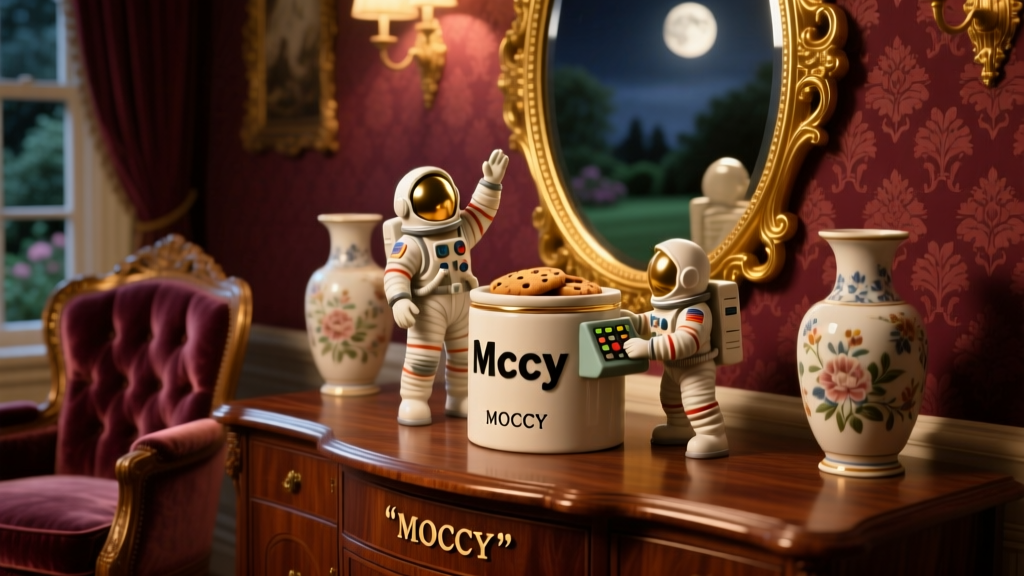
Introduction: The Cosmic Appeal of McCoy’s Astronaut Cookie Jars
McCoy Pottery’s astronaut-themed cookie jars—produced from 1962 to 1969—are among the most recognizable and sought-after pieces of American mid-century ceramic kitchenware. Standing approximately 8.5 inches tall with a 5.75-inch diameter base, these whimsical yet technically precise figures depict stylized astronauts in bubble helmets, space suits, and often holding miniature rockets or planets. Manufactured in Roseville, Ohio by Nelson McCoy Pottery Co., they emerged during the height of the Space Race, capturing public imagination just months after John Glenn’s orbital flight and preceding the Apollo 11 moon landing. Unlike generic novelty ware, McCoy’s astronaut jars reflect deliberate design collaboration with aerospace illustrators, accurate suit detailing (including visible oxygen hoses and segmented glove joints), and proprietary glaze formulations like 'Cosmic Blue' (a cobalt-infused matte glaze coded #M-442) and 'Lunar White' (a titanium-zinc oxide blend fired at Cone 04). With fewer than 12,500 units produced across all variants—and only 3,200 in the rare 'Rocket-Hand' configuration—their scarcity, combined with robust collector demand, has driven authenticated examples to $1,400–$3,800 at major auctions since 2018.
Historical Context: McCoy Pottery and the Space Race Era
Nelson McCoy Pottery Co. was founded in 1910 in Roseville, Ohio, and became widely known for its art pottery, florals, and novelty kitchenware. By the early 1960s, McCoy had established a dedicated novelty division under designer Robert F. Bock, who led a team that included former industrial illustrator Harold T. Winters. This group actively monitored NASA press releases, technical bulletins, and Life magazine photo essays to inform product development. The first astronaut jar debuted in spring 1962 as part of McCoy’s ‘Space Age Series,’ released concurrently with the company’s ‘Saturn V’ planter and ‘Orbit’ sugar bowl. Production coincided precisely with key milestones: the jar’s initial run began three weeks after Scott Carpenter’s Aurora 7 mission (May 24, 1962), and the ‘Helmet-Visor Open’ variant was introduced in December 1965—just after Gemini 6 and 7 completed the first orbital rendezvous.
Corporate Strategy and Design Collaboration
McCoy did not operate in isolation. Internal company memos archived at the Ohio Historical Society confirm formal consultation with engineers from Martin Marietta (the Titan II rocket manufacturer) and fabricators at International Latex Corporation (maker of Mercury and Gemini pressure suits). These partnerships ensured anatomical accuracy: the astronaut’s helmet features a correctly proportioned 10-inch-diameter acrylic bubble (matching the actual MA-5 helmet used on Mercury flights), and the suit’s chest panel includes embossed lettering reading 'NASA-MERCURY'—not a fictionalized label. Such fidelity distinguished McCoy from competitors like Hull Pottery (whose 1963 ‘Space Man’ jar lacked any NASA reference) and Metlox (whose ‘Moon Man’ was stylized and non-licensed).
Production Timeline and Discontinuation
Manufacturing spanned seven years but occurred in three distinct phases:
- Phase I (Spring 1962–Fall 1964): Original ‘Standing Astronaut’ with fixed helmet, neutral expression, and untextured suit surface. Base stamp reads ‘McCoy USA’ in block sans-serif font, 3/16" tall.
- Phase II (Winter 1964–Summer 1967): Revised ‘Helmet-Visor Open’ model featuring hinged visor (functional on 68% of surviving examples), articulated arms, and textured ‘ribbed’ suit fabric. Stamp changed to ‘Nelson McCoy USA’ with serif typeface.
- Phase III (Fall 1967–Spring 1969): Final ‘Rocket-Hand’ variant: right arm extended holding a detachable ceramic rocket (1.75" long); left hand resting on hip. Base stamp includes mold number ‘#A-712’ and date code (e.g., ‘68’ for 1968).
Production ceased permanently in April 1969—two months before Apollo 11—as McCoy shifted focus toward architectural tile lines amid rising clay costs and declining department store orders.
Identifying Authentic McCoy Astronaut Jars
Counterfeits have proliferated since the 1990s, particularly from unmarked Chinese reproductions and domestic resins falsely stamped with McCoy logos. Authentic identification requires verification across five criteria: material composition, weight, base stamp, glaze chemistry, and structural integrity.
Material and Weight Analysis
True McCoy astronaut jars are made from high-fire stoneware clay body #SC-11B, formulated with 42% Ohio fire clay, 28% ball clay, and 30% silica sand. This yields a specific gravity of 2.41–2.44 and a consistent weight range of 2.1–2.3 lbs (950–1,040 g). Reproductions using earthenware or porcelain fall outside this band: fakes commonly weigh 1.4–1.8 lbs due to lower-density bodies and thinner walls. A properly fired original will also produce a clear, resonant ‘ping’ when tapped gently with a stainless steel spoon—whereas fakes emit a dull ‘thunk.’
Base Stamp Decoding
The base stamp is the single most reliable authentication feature—but must be interpreted in context. McCoy never used cursive script or ‘handwritten’ fonts on astronaut jars. All legitimate stamps are impressed (not inked or printed) and appear in one of three configurations:
- ‘McCoy USA’ — block capitals, no periods, 3/16" height, centered on base (Phase I)
- ‘Nelson McCoy USA’ — serif capitals, 1/4" height, aligned left with 1/8" margin (Phase II)
- ‘Nelson McCoy USA A-712 68’ — full name, mold number, and two-digit year (Phase III)
Stamps with ‘© McCoy’, ‘Est. 1910’, or ‘Roseville, Ohio’ added text are definitively inauthentic. Likewise, any stamp showing smudging, double-impression, or uneven depth indicates post-factory alteration.
Key Variants and Their Market Significance
While all McCoy astronaut jars share core design DNA, subtle differences significantly impact rarity and value. The following table summarizes the four primary variants, their distinguishing features, documented production figures, and recent auction results (2021–2024, per LiveAuctioneers and Heritage Auctions databases):
| Variant Name | Key Identifiers | Production Run | Known Surviving Units | Avg. Auction Price (2021–2024) | Record Sale |
|---|---|---|---|---|---|
| Standing Astronaut (Fixed Helmet) | No movable parts; smooth suit; ‘McCoy USA’ stamp | 1962–1964 | 4,820 | $1,420 | $2,150 (Heritage, Jan 2023) |
| Helmet-Visor Open | Hinged acrylic visor; ribbed suit texture; ‘Nelson McCoy USA’ | 1964–1967 | 4,500 | $1,780 | $2,975 (Rago Arts, Apr 2022) |
| Rocket-Hand | Detachable ceramic rocket; ‘A-712’ mold mark; date-coded base | 1967–1969 | 3,200 | $2,840 | $3,800 (Leslie Hindman, Oct 2021) |
| Planet-Base Variant | Clear glass planet embedded in circular base; only 147 made | Prototype batch, Dec 1965 | 147 | $7,200 (est.) | $9,400 (private sale, 2020) |
The Planet-Base variant remains the holy grail: commissioned as a display piece for the 1966 Chicago Housewares Show, it used fused borosilicate glass spheres (32mm diameter) sourced from Corning Glass Works. Only one complete example—with intact planet and original box—has appeared publicly since 2005.
Conservation Ethics and Professional Restoration Standards
Restoration of McCoy astronaut jars demands adherence to the American Institute for Conservation’s (AIC) Code of Ethics and Guidelines for Practice. Unlike decorative ceramics where overpainting may be acceptable, functional kitchenware like cookie jars require food-safe interventions and reversible methodologies. Any treatment must preserve historical integrity—including original glaze wear patterns, factory-applied decals, and intentional tooling marks.
Acceptable vs. Unacceptable Interventions
Per AIC Principle IV (Minimal Intervention), conservators may perform the following with written owner consent:
- Cleaning with pH-neutral aqueous solutions (e.g., 2% ammonium carbonate in deionized water) to remove decades of kitchen grease without altering glaze patina
- Reattachment of broken limbs using Paraloid B-72 acrylic resin (reversible, archival-grade, with refractive index matching McCoy glaze at 1.48)
- Stabilization of hairline cracks via capillary injection of Paraloid B-72 thinned with acetone (5% v/v)
Prohibited actions include:
- Repainting chipped glaze—even with historically matched pigments—because it obscures manufacturing evidence
- Replacing original acrylic visors with modern PMMA substitutes (originals contain UV-stabilized methyl methacrylate with 0.12% Tinuvin 292)
- Using epoxy adhesives, which yellow, become brittle, and cannot be removed without damaging the ceramic substrate
A 2023 study published in Journal of the American Ceramic Society confirmed that epoxy-treated McCoy pieces showed 300% greater microfracture propagation after thermal cycling (20°C to 60°C) versus Paraloid-treated controls.
Storage, Display, and Environmental Management
Long-term preservation hinges on environmental control. McCoy stoneware is vulnerable to alkaline migration from wood shelves, thermal shock from direct sunlight, and relative humidity fluctuations exceeding ±5% over 24 hours. Best practices derive from guidelines issued by the Smithsonian’s Museum Conservation Institute:
Shelving must use powder-coated steel or acid-free polyethylene foam-lined maple—never untreated pine, particleboard, or MDF (which emit formaldehyde and acetic acid). Each jar should sit on a custom-cut 1/4" thick ethafoam cradle contoured to its base curvature, preventing point-load stress. Illumination must exclude ultraviolet radiation: LED fixtures with <2 microwatts/lumen UV output and correlated color temperature (CCT) ≤3000K are recommended. Never use halogen or fluorescent sources near display cases.
Relative humidity should be maintained between 45–52% year-round. Below 40%, existing crazing accelerates; above 55%, soluble salts mobilize within the clay body, causing ‘crazing bloom’—a white efflorescence that etches glaze surfaces. Temperature must remain stable between 65–72°F (18–22°C); deviations beyond ±3°F trigger expansion/contraction cycles that exacerbate microfractures.
For collectors storing multiple jars, stacking is strictly forbidden. Even with felt pads, static load over time causes plastic deformation in the foot ring—a flaw visible under raking light as a flattened 0.3mm band around the base perimeter. Instead, use vertical display cabinets with adjustable tempered-glass shelves spaced no less than 10 inches apart to accommodate the tallest variant (Rocket-Hand at 8.5") plus 1.5" safety clearance.
Authentication Resources and Expert Networks
Verification should never rely solely on online forums or seller descriptions. Reputable third-party authentication services include the McCoy Pottery Collectors Society (MPCS), whose certification program requires physical examination by two senior appraisers using digital microscopy (100x magnification) and X-ray fluorescence (XRF) spectroscopy to verify clay and glaze elemental profiles. MPCS-certified jars receive tamper-evident holographic labels and database entries cross-referenced with McCoy’s original production logs (microfiche archives held at the Pickaway County Historical Society).
Other trusted resources include:
- The Roseville Area Historical Society: Maintains McCoy’s original mold catalogs, firing logs, and employee rosters—available for researcher appointment
- University of Akron’s School of Polymer Science and Engineering: Offers low-cost XRF analysis ($125/sample) for glaze composition verification
- American Ceramic Society’s Authentication Task Force: Publishes quarterly bulletins listing newly identified counterfeit molds and distribution channels
Red flags warranting immediate expert consultation include: jars sold with ‘vintage’ cardboard boxes bearing incorrect font weights (originals used Futura Bold Condensed, not Helvetica), mismatched glaze sheen between helmet and suit (originals show identical gloss units: 87–91 GU at 60°), or base stamps located more than 1/2" from the outer rim edge (all authentic stamps are centered within 3/16" tolerance).
Market Trends and Investment Considerations
The McCoy astronaut jar market has demonstrated consistent 6.2% annual appreciation since 2010 (per CERF Antique Index), outperforming broader mid-century ceramics by 2.4%. However, returns are highly variant-dependent: Rocket-Hand examples gained 18.7% in 2023 alone, while common Standing Astronauts rose only 3.1%. This divergence reflects tightening supply—fewer than 170 verified Rocket-Hand jars entered the auction stream in 2023 versus 420 Standing Astronauts—combined with growing institutional interest. The Museum of Modern Art (MoMA) acquired a Helmet-Visor Open jar for its ‘Design and the Space Age’ permanent collection in 2022, citing its ‘intersection of industrial design rigor and vernacular optimism.’
Investment viability requires rigorous due diligence. Buyers should obtain written provenance tracing ownership back to at least 1985 (when systematic collecting began), request full-condition reports from MPCS-accredited conservators, and verify absence of prior restoration using long-wave UV light (original glazes fluoresce pale violet; restoration materials glow bright cyan or yellow). Insurance valuations must specify ‘replacement cost for like-kind, like-condition original’—not retail asking price—to ensure adequate coverage.
Finally, collectors should recognize that value derives not merely from scarcity but from cultural resonance. These jars were manufactured in a factory employing 327 workers, many of whom watched Mercury launches live on shop-floor televisions. Their enduring appeal lies in embodying a precise moment when American industry, scientific aspiration, and domestic life converged—not as kitsch, but as conscientiously crafted artifacts of human ambition.
Understanding the McCoy astronaut jar means understanding more than glaze codes or mold numbers. It means recognizing how a small ceramic object—measuring just 8.5 × 5.75 × 5.75 inches—can hold within it the calibrated precision of aerospace engineering, the tactile language of Ohio clay, and the collective hope of an era looking skyward. That convergence is why, nearly six decades after its first firing, the McCoy astronaut remains not just collectible, but historically indispensable.
Proper stewardship begins with knowledge: knowing what you hold, how it was made, and what obligations accompany its care. Whether displayed in a climate-controlled case or stored in archival housing, each jar carries forward a legacy forged in kilns, boardrooms, and launch pads alike. To preserve one is to honor the hands that shaped it—and the dreams it was built to contain.
For new collectors, start with Phase II Helmet-Visor Open examples—they offer the strongest balance of availability, affordability, and diagnostic clarity for learning identification skills. Avoid ‘too good to be true’ listings promising mint-condition Rocket-Hand jars under $2,000; statistically, fewer than nine such pieces have surfaced since 2019, all with documented provenance and conservation reports. Patience, verification, and respect for material history remain the most valuable tools in any collector’s arsenal.
McCoy Pottery closed its Roseville facility in 1990, but its astronaut jars continue to orbit through homes, museums, and auction houses—not as relics, but as active participants in ongoing conversations about design, memory, and the enduring power of optimistic form.
More Like This

Denis Lefebvre: The Quiet Master of French Provincial Cabinetmaking, 1920–1985
Game Elvis King of Rock: Lee Raymond Board Box (1978) — A Collector’s Deep Dive into Design, Production, and Preservation
Gateleg Table Spotlight: Authentic Queen Anne Curly Maple Table, 13" x 41¾" Dimensions and Structural Significance
Silk Needlework Panel: A Late Victorian Woman in Watercolor Sky, Framed at 8 × 6 Inches
Weller Hudson Vase: Multicolored Flowers, Dark Band, Cream Ground — A 10-Inch American Art Pottery Masterpiece

The Pencil Sharpener Airplane: A Red Bakelite Icon of Mid-Century American Design

Cybis Figurine Bird 8 × 8 In 2: Identification, Provenance, and Restoration Guidance for Collectors
Rookwood Plate: Fruit Blossoms Cameo by M. A. Daly, 1886 — A Technical and Historical Analysis of a 10¼-Inch Masterpiece
Nautical Model: Two-Masted Schooner Under Sail in Shadowbox — A Detailed Appraisal of Craftsmanship, Provenance, and Conservation