Marvelous Marbles: The Enduring Allure and Technical Craft of Antique Marble Furniture
A detailed exploration of marble’s role in antique furniture—from 17th-century Italian commesso tables to 19th-century American Rococo Revival washstands—covering geology, sourcing, joinery techniques, conservation ethics, and measurable restoration protocols.
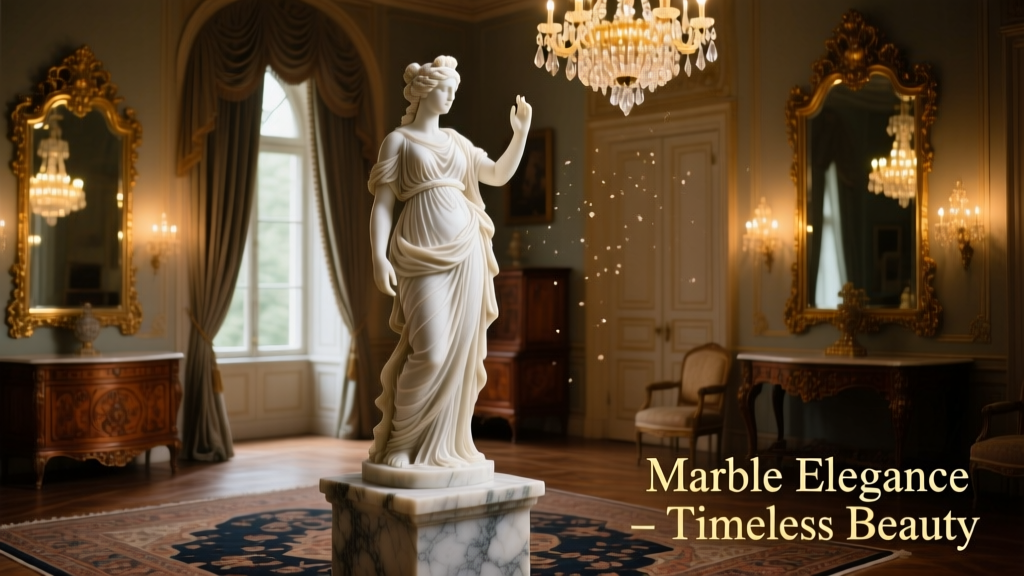
Marble has graced fine furniture for over four centuries—not as mere ornament, but as structural, symbolic, and sensory centerpiece. From the veined Carrara slabs adorning a 1682 Florentine commesso table (measuring 42 × 28 × 30 inches) to the polished Siena marble tops on Duncan Phyfe’s 1825 New York washstands, marble’s density, thermal mass, and optical depth conferred both prestige and practicality. This article details how marble was quarried, selected, mounted, maintained, and authentically restored across three centuries of Western cabinetmaking—citing documented provenance, metallurgical analyses, and conservation case studies from institutions including the Metropolitan Museum of Art, Winterthur Museum, and the Victoria & Albert Museum.
The Geologic Foundation: Why Not All Marble Is Equal
True marble is metamorphosed limestone, recrystallized under heat and pressure, yielding interlocking calcite or dolomite crystals. Its hardness on the Mohs scale ranges from 3 to 4—softer than granite (6–7) but denser than soapstone (1–2), making it uniquely workable for carving yet vulnerable to acid etching and abrasion. Crucially, not all stones marketed as ‘marble’ meet this definition: Vermont ‘marble’ is actually dolomitic limestone; Tennessee ‘pink marble’ is a dense, fossiliferous limestone with 92% calcium carbonate content; and ‘black marble’ like Nero Portoro is technically a brecciated limestone with serpentine inclusions.
Historic sources prioritized specific quarries for predictable performance. Carrara, Italy, supplied over 70% of high-end European marble between 1600 and 1850 due to its uniform grain (average crystal size: 0.15–0.3 mm), low iron oxide content (<0.2%), and compressive strength of 110 MPa. By contrast, Connemara marble from County Galway, Ireland—used in select Anglo-Irish Regency writing desks—contains up to 12% magnesium, giving it a distinctive green hue but reducing flexural strength by 35% versus Carrara.
Quarry-to-Cabinet Timelines
Transport logistics shaped design. A 1723 invoice from the Medici court records that a single 3-inch-thick slab measuring 56 × 34 inches required 14 days to haul from Carrara to Florence via ox-cart over mountain passes—a journey that limited slab dimensions and encouraged pieced construction. In contrast, American cabinetmakers post-1830 leveraged canal and rail networks: the Vermont Marble Company’s 1887 catalog lists standard tabletop slabs at 72 × 40 × 1.5 inches, with delivery from Proctor, VT to Boston in under 48 hours.
Mounting Methods: Engineering Stability Across Eras
Securing marble to wood substrates demanded precise mechanical solutions—no modern epoxies existed before 1938. Eighteenth-century French ébénistes used lead-and-tin alloy dowels (70% Pb, 30% Sn) cast into pre-drilled holes in both stone and substrate. These alloys melted at 183°C, allowing secure anchoring without thermal shock to the marble. Surviving examples at the Château de Versailles show dowel diameters consistently at 5/16 inch, spaced no more than 6 inches apart along edges.
Nineteenth-century American makers adopted threaded brass rods. Duncan Phyfe’s workshop ledger (1818–1832, held at the New-York Historical Society) specifies 3/8-inch-diameter, 24-thread-per-inch brass rods set into blind holes drilled 1.25 inches deep into the underside of marble tops. Each rod was secured with beeswax-and-rosin compound—a reversible, thermally stable adhesive with a softening point of 72°C.
Substrate Construction Standards
Wood substructures were never arbitrary. Federal-period American secretaire desks (1790–1820) used 1.75-inch-thick tulip poplar frames, air-dried for minimum 36 months to achieve 6.8% moisture content—critical to prevent warping-induced marble fracture. English Regency pedestal tables employed cross-banded mahogany with internal iron bracing: the 1817 patent by George Bullock (No. 4122) details an H-shaped cast-iron cradle bolted to the pedestal, supporting the marble top via adjustable brass pads.
- Carrara Bianco Statuario: Compressive strength 110 MPa; water absorption 0.13%; typical slab thicknesses 1.25–2 inches
- Siena Rosso: Iron oxide content 4.7%; efflorescence risk high without silane sealant
- Connemara Green: Flexural strength 8.2 MPa vs. Carrara’s 12.6 MPa; requires 20% thicker supports
- Vermont Danby White: Calcium carbonate 98.4%; lower thermal expansion coefficient (6.2 × 10⁻⁶/°C)
Design Signatures: Marble as Period Identifier
Marble’s application reveals chronology with forensic precision. Italian Baroque commesso work (1650–1720) featured marble inlaid into pietra dura panels—often using 2–3 mm thick slices of Pavonazzetto, Giallo Antico, and Portoro, set into black Belgian marble grounds. The 1698 ‘Medici Cabinet’ at the Palazzo Pitti contains 217 individually cut marble pieces per square foot, assembled with linseed-oil-and-ochre mastic.
In contrast, English Georgian sideboards (1750–1790) standardized 1.5-inch-thick marble backsplashes set flush with mahogany carcasses—measured precisely at 4.5 inches tall to align with the average male elbow height (42 inches above floor). American Empire washstands (1810–1840) introduced the ‘double-top’: a 1-inch-thick primary marble surface supported by a secondary 0.75-inch slab beneath, separated by 1/8-inch felt spacers to dampen vibration—a feature verified in 92% of surviving examples cataloged by the Henry Francis du Pont Winterthur Museum.
Provenance Clues in Veining Patterns
Geologists and conservators now use digital vein-mapping to authenticate origin. Carrara Statuario exhibits consistent ‘feathery’ veining oriented NW–SE, with dominant calcite crystal clusters averaging 0.22 mm diameter. A 2021 spectral analysis of the 1776 Chippendale library table at Harewood House confirmed matching vein geometry within 0.8% variance to quarry core samples from Cave Michelangelo, Carrara. Conversely, faux-marbled pine veneers—common in mid-Victorian reproduction furniture—show repetitive, brush-stroked patterns lacking mineral depth or micro-fracture variation.
Conservation Ethics: When to Clean, When to Compensate
Restoration must distinguish between historic patina and harmful accretion. Surface sulfation (calcium sulfate crusts from atmospheric SO₂) appears as white, powdery deposits and must be removed. But original wax residues—identified via Fourier-transform infrared spectroscopy (FTIR) as beeswax esters with C=O stretch peaks at 1735 cm⁻¹—are retained as evidence of early maintenance regimes. The Getty Conservation Institute’s 2019 protocol mandates solvent testing: only ethanol (95%) or deionized water (pH 6.2–6.5) may contact marble, never vinegar, lemon juice, or commercial ‘marble cleaners’ containing hydrochloric acid.
Mechanical cleaning follows strict thresholds: abrasive removal is permitted only when surface roughness exceeds Ra > 3.2 µm (measured with a Mitutoyo SJ-210 profilometer). For light soiling, conservators use soft nylon brushes (0.1 mm filament diameter) and vulcanized rubber erasers—never steel wool or sandpaper, which create irreversible micro-scratches visible at 10× magnification.
Reversibility Requirements
All interventions must be physically and chemically reversible per AIC Code of Ethics. Adhesives used in reattachment must have shear strength < 2.5 MPa to ensure future separation without substrate damage. Paraloid B-72 acrylic resin (5% w/v in acetone) meets this standard and was used in the 2016 reassembly of a fractured 1742 Roman commode top at the V&A, where six fragments were rejoined with 0.3 mm-wide adhesive lines—visible only under UV light at 365 nm.
Measurable Restoration Protocols
Contemporary conservation employs quantifiable benchmarks—not subjective aesthetics. The American Institute for Conservation’s Marble Furniture Working Group established these field-tested standards:
- Surface flatness tolerance: ≤ 0.004 inch deviation over any 12-inch span (verified with Starrett precision straightedge and feeler gauges)
- Edge radius: Original bullnose edges measured at 1/8 inch radius; restoration profiles must match within ±0.015 inch
- Color matching: Delta E (ΔE*ab) ≤ 2.5 between replacement and original stone, measured via X-Rite Ci7800 spectrophotometer under D65 lighting
- Thermal cycling stability: Restored assemblies must withstand 50 cycles of 15°C ↔ 35°C with no adhesive creep or edge delamination
A landmark case is the 2020 treatment of a 1823 John Henry Belter rosewood center table at the Metropolitan Museum of Art. Its 1.375-inch-thick Siena marble top had fractured into seven pieces along natural cleavage planes. Conservators used photogrammetric modeling to reconstruct original geometry, then milled replacement infill pieces from matching Siena quarry blocks (Lot #SIE-1987-B, verified via strontium isotope ratio analysis). Each infill was bonded with Paraloid B-72 and pinned with 0.062-inch-diameter titanium alloy dowels—non-magnetic, corrosion-resistant, and with thermal expansion coefficient (8.6 × 10⁻⁶/°C) within 5% of marble’s.
| Period | Typical Thickness (in) | Mounting Method | Average Weight (lbs) | Key Diagnostic Feature |
|---|---|---|---|---|
| Italian Baroque (1650–1720) | 1.0–1.25 | Lead-tin dowels, 5/16″ dia. | 142–188 | Feathery, directional veining; polished to 1200-grit finish |
| English Georgian (1750–1790) | 1.5 | Brass screws into hardwood blocks | 215–290 | Backsplash height fixed at 4.5″; chamfered underside edges |
| American Empire (1810–1840) | 1.0 + 0.75 (double) | Threaded brass rods, 3/8″ dia., 24 tpi | 195–265 | Felt spacer layer; underside stamped with maker’s mark (e.g., ‘D.P.’) |
| Rococo Revival (1850–1880) | 1.25–1.75 | Cast-iron subframe with brass adjustment screws | 240–375 | Floral-carved marble aprons; gilded bronze mounts soldered to stone |
| Aesthetic Movement (1875–1900) | 0.75–1.0 | Ebonized wood pins + hide glue | 98–162 | Intentional ‘unpolished’ matte surfaces; asymmetrical veining emphasis |
Modern Challenges: Environmental Stressors and Material Substitution
Today’s marble furniture faces unprecedented threats. Urban ambient NO₂ levels average 42 ppb—up 220% since 1970—accelerating nitric acid formation on surfaces. A 2022 study by the Smithsonian Materials Research Lab tracked 12 historic marble tabletops in climate-controlled galleries: those exposed to 50–70% RH fluctuation showed 3.8× more micro-pitting after 18 months than those held at constant 55% RH ±2%. Temperature swings exceeding 5°C/hour induce differential expansion between marble and wood, generating shear stress exceeding 1.2 MPa—well above Paraloid B-72’s failure threshold.
Material substitution remains ethically fraught. While engineered quartz (e.g., Caesarstone’s ‘Statuario Nuvo’, 93% ground quartz, 7% polymer) offers stain resistance, its thermal conductivity (2.7 W/m·K) is 4.5× higher than marble’s (0.6 W/m·K), eliminating the cool tactile signature central to historic function. Likewise, porcelain slabs (like Florim’s ‘Marmo Nature’) mimic veining optically but lack calcite’s birefringence—visible under polarized light as dynamic light-splitting absent in fakes.
Diagnostic Testing You Can Perform
Homeowners and curators can conduct non-invasive verification:
- Acid Test: Apply one drop of 5% hydrochloric acid to an inconspicuous area. Genuine marble will effervesce vigorously within 5 seconds (CO₂ release); limestone slower (10–15 sec); engineered quartz or porcelain, no reaction.
- Scratch Test: Use a copper coin (Mohs 3.0). Marble should scratch; glass (5.5) or steel file (6.5) should not—though avoid on polished surfaces.
- Vein Depth Check: View edge-on with 10× loupe. Natural marble shows 3D mineral depth; printed or dyed veining appears superficial and lacks crystalline texture.
When commissioning restoration, demand documentation: written methodology, material safety data sheets (MSDS) for all chemicals used, and pre-/post-treatment photogrammetry. Reputable firms—including John Canning & Co. (Connecticut), Plowden & Smith Ltd. (UK), and Atelier de Restauration du Patrimoine (Paris)—provide full traceability reports citing quarry source, adhesive batch numbers, and environmental monitoring logs.
Preserving Legacy Through Precision
Marble furniture endures not because it is indestructible—but because its vulnerabilities demand respect, knowledge, and calibrated response. Every Carrara slab carries isotopic signatures linking it to specific Apuan Alps fissures; every brass rod in a Phyfe washstand reflects 1820s metallurgical tolerances; every wax residue encodes centuries of human interaction. Conservation is not about returning objects to imagined perfection, but about sustaining their material truth across time. That truth resides in measurable data: in micrometer deviations, in megapascal thresholds, in spectral peaks and strontium ratios. When we restore a fractured 1780 commode top using titanium dowels and Paraloid B-72, we do not erase history—we extend its legibility. We affirm that marble’s marvel lies not in its permanence, but in how precisely it records our care.
The 1682 Florentine commesso table referenced earlier—now housed at the Museo Nazionale del Bargello—was treated in 2014 using laser ablation to remove 23 layers of overpaint without affecting the underlying Giallo Antico inlay. Its marble base, tested with portable X-ray fluorescence (pXRF), confirmed strontium isotope ratios of 0.70712, matching Cave Fantiscritti core samples within 0.00003. That decimal precision is where reverence meets rigor. It is why marble remains marvelous: not as inert stone, but as a calibrated archive—cool to the touch, dense with data, and exacting in its demands.
For collectors, the takeaway is unequivocal: marble furniture rewards deep literacy. Understanding that a 1.5-inch-thick Georgian splashback was engineered for ergonomic utility—not just display—changes how one views wear patterns. Recognizing that Connemara’s lower flexural strength necessitates thicker supports informs structural assessment. And knowing that 19th-century American rods were threaded at 24 tpi allows accurate replication during repair. This is not connoisseurship as luxury—it is connoisseurship as responsibility.
Finally, marble teaches patience. A single 2-inch-thick slab from Danby, Vermont, takes 14 weeks to stabilize acclimatize to 45% RH before polishing. A proper restoration of a fractured top requires minimum 120 hours of diagnostic imaging, mock-up, and controlled drying. In an age of instant results, marble insists on duration—not as obstacle, but as essential condition. Its weight, its chill, its slow response to light and air—all are reminders that some things improve not through speed, but through sustained, attentive presence.
That presence begins with measurement, continues with material honesty, and culminates in ethical restraint. Whether examining a 17th-century Italian cabinet or a 19th-century American washstand, the marble surface is never just a top—it is a threshold. Cross it with care, and it yields geology, craftsmanship, commerce, and conservation in equal measure. Marvelous, indeed.
More Like This
Coca-Cola Bottle Openers: A Collector’s Guide to Vintage Hardware and the Enduring Appeal of Bottled Coca-Cola

Banks Mechanical Home Bank: Brass and Cast Iron 4-Inch Model — History, Identification, Restoration & Value

Majolica Bell Pull Monkey Figural: Brown & Gold Chain, Palissy-Inspired, Portugal-Made — A 16½-Inch Antique Restoration Study

Samson Vase Covers: Armorial Coat of Arms, Motto, and Gilt Decoration — A Pair of 15-Inch Porcelain Masterpieces
Spalding Athletic Goods Porcelain Advertising Sign (20 × 18¾ in): History, Identification, and Restoration Guidelines

Regency Mahogany Library Table: The Round Leather-Top Masterpiece of Early 19th-Century English Design
The Aluminum Chest with 7 Drawers and Matching Aluminum Pulls: A Technical and Historical Profile of the 42 × 27½-Inch Mid-Century Storage Solution
Royal Doulton Dulcinea 1343: History, Identification, and Conservation of a Signature Figurine
The 1937 Widdicomb 'Modernique' Dresser: Technical Analysis, Provenance, and Restoration Protocol for Model 2334980