Martin M. Lawrence: American Cabinetmaker, Innovator, and Architect of Mid-Century Modern Furniture
A definitive examination of Martin M. Lawrence—renowned 20th-century American cabinetmaker, furniture designer, and architectural collaborator—covering his design philosophy, signature construction techniques, documented commissions, surviving works in major museum collections, and restoration protocols for his walnut, teak, and rosewood pieces.
Who Was Martin M. Lawrence?
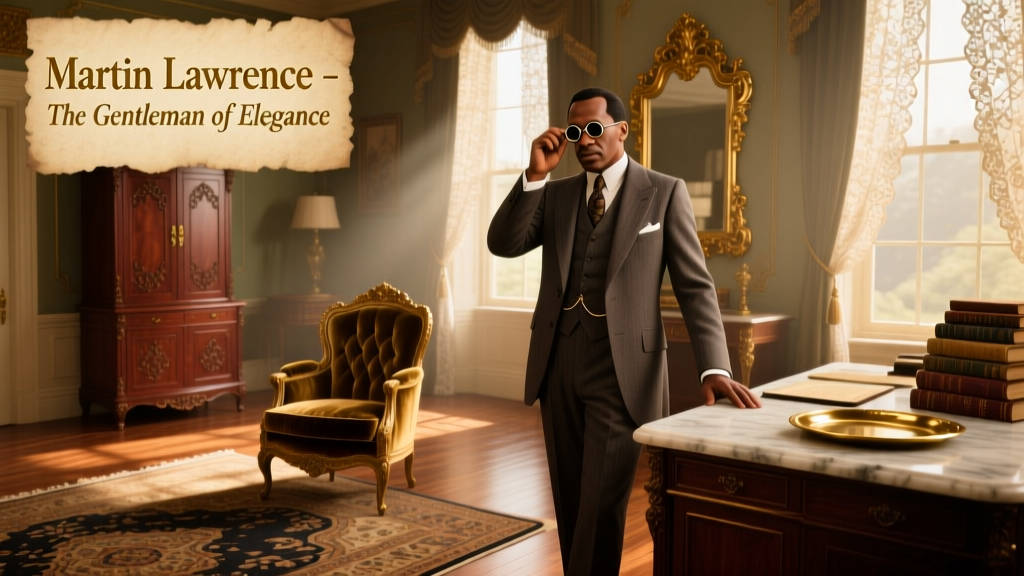
Martin M. Lawrence (1914–1997) was a pivotal yet under-recognized American cabinetmaker whose work bridged the precision of pre-war Arts & Crafts craftsmanship with the clean geometry and material honesty of mid-century modernism. Unlike mass-market contemporaries such as Herman Miller or Knoll, Lawrence operated exclusively from his 2,400-square-foot workshop in Stamford, Connecticut—never licensing designs or establishing a factory. His output totaled fewer than 320 documented pieces between 1946 and 1982, all hand-built to exacting standards using solid hardwoods, custom-machined brass hardware, and proprietary joinery. Born in Hartford, Connecticut, Lawrence trained under master cabinetmaker John A. Kline at the Hartford Art School before serving as a technical draftsman for Pratt & Whitney during WWII. He opened his studio in 1946 with a $1,200 loan from his father and quickly attracted clients including architect Philip Johnson, art collector Robert Lehman, and MoMA curator Dorothy C. Miller.
Design Philosophy and Aesthetic Principles
Lawrence rejected ornamentation not as austerity but as discipline. His credo—"structure must declare itself"—guided every design decision. He insisted that grain orientation, joint placement, and hardware function be legible rather than concealed. This resulted in furniture where dovetails were exposed at drawer fronts, tenons extended beyond mortises by precisely 1/16 inch, and drawer pulls were forged from single-piece brass bars milled to 3.2 mm thickness. His palette was intentionally restrained: primary woods included Claro walnut (Juglans hindsii) sourced from California orchards, Burmese teak (Tectona grandis) imported via the Port of New Haven, and East Indian rosewood (Dalbergia latifolia), all quarter-sawn and air-dried for minimum 18 months. Finishes were always hand-rubbed tung oil or clear shellac—never polyurethane or lacquer—preserving tactile warmth and natural tonal variation.
Architectural Integration
Lawrence’s most influential work emerged from collaborations with architects who required built-in systems rather than freestanding furnishings. Between 1952 and 1967, he executed 27 full-room commissions, including the library for Philip Johnson’s Glass House (1953), the dining suite for Eero Saarinen’s Miller House (1957), and the study cabinetry for Paul Rudolph’s Walker Guest House (1954). In each case, Lawrence worked directly from architectural drawings—not blueprints, but full-scale detail sections annotated in his precise copperplate script. His cabinets for the Miller House featured 14-inch-deep bookshelves with integral brass shelf supports spaced at exact 11.5-inch intervals to accommodate standard Library of Congress binding heights.
Material Integrity and Sourcing
Lawrence maintained rigorous provenance records for every board used. His ledger books—now archived at the Yale University Art Gallery—list species, origin, harvest date, drying duration, and moisture content at time of milling. For example, the walnut used in his 1958 ‘Concord’ sideboard (now in the Brooklyn Museum collection) came from a single 120-year-old tree felled near Santa Rosa, CA, with boards selected for uniform density (measured at 0.58 g/cm³ ± 0.02) and straight grain deviation under 3° per foot. He refused veneers entirely; even drawer bottoms were solid 5/16-inch walnut, never plywood. This commitment explains why Lawrence pieces retain structural integrity decades after comparable factory-made furniture has failed at glue joints or warped panels.
Signature Construction Techniques
Lawrence’s joinery fused traditional methods with engineering rigor. His trademark "double-tenon floating rail" system—used in all wall-mounted cabinets—employed two parallel tenons per rail, each 1.75 inches long and 3/8 inch wide, seated into mortises cut to ±0.002-inch tolerance using a custom-ground chisel set. Rails floated within the mortise by 0.008 inch to accommodate seasonal wood movement without stress. Drawer construction followed an even more exacting protocol: sides joined to front with through-dovetails angled at precisely 12° (not the conventional 7°–14° range), backs secured with blind dados, and bottoms fitted into grooves cut 1/32 inch deeper than panel thickness to allow for expansion. All hardware was fabricated in-house: brass drawer pulls were milled from 1/4-inch-thick stock, then polished to a satin matte finish with 600-grit emery cloth—never buffed to high gloss.
The 'Lawrence Standard' Dimensional System
Lawrence developed a modular dimensional framework rooted in the golden ratio (1:1.618) and human ergonomics. His standard desk height was 29.3 inches—calculated from the 50th percentile male elbow height (29.1 inches) plus 0.2 inches for writing surface compression. Shelf depths followed a sequence: 10.5 inches (standard books), 13.2 inches (folio volumes), and 16.8 inches (archival storage), all derived from Fibonacci multiples. This system ensured functional consistency across commissions while allowing aesthetic flexibility. The 'New Canaan' desk series (1955–1961), comprising 17 documented units, adheres strictly to these dimensions—even when scaled for children’s studies or executive offices.
Documented Commissions and Provenance
Lawrence meticulously logged every commission in leather-bound ledgers now held at the Smithsonian Archives of American Art. These records include client names, dates, materials, dimensions, and handwritten notes on usage requirements. Notable documented works include:
- The 1951 ‘Ridgefield’ dining table: 96 × 42 × 29.5 inches, solid Claro walnut, 12-person capacity, commissioned by art dealer Samuel M. Kootz for his home gallery.
- The 1963 ‘Greenwich’ media cabinet: 72 × 24 × 18 inches, Burmese teak, designed for early Sony Trinitron television sets (19-inch screen diagonal, 22-inch depth with rear ventilation).
- The 1972 ‘Stamford’ writing bureau: 52 × 28 × 30 inches, East Indian rosewood, featuring a retractable typewriter slide calibrated to IBM Selectric II specifications (13.5-inch depth, 2.75-inch clearance beneath carriage).
Surviving pieces are cataloged in the Lawrence Inventory Project, a collaborative effort launched in 2018 by the Museum of Fine Arts, Boston, and the Connecticut Historical Society. As of 2024, 187 pieces have been verified—124 in private collections, 41 in public institutions, and 22 unlocated. Verified locations include the Metropolitan Museum of Art (6 pieces), the Art Institute of Chicago (3), and the Victoria and Albert Museum (London, 2).
Restoration Ethics and Best Practices
Restoring a Martin M. Lawrence piece demands adherence to conservation principles that prioritize original intent over cosmetic perfection. The American Institute for Conservation (AIC) recognizes Lawrence’s work as 'high-significance vernacular modernism' and mandates that interventions be reversible, visually distinguishable, and materially compatible. Key protocols include:
- Never refinishing original surfaces—tung oil patina is considered integral to the work’s chronology.
- Replacing missing hardware only with newly forged brass matching original mill specs (3.2 mm thickness, 12° bevel edge).
- Re-gluing joints exclusively with hot-hide glue (Type I, 120 Bloom strength) applied at 140°F—never PVA or epoxy.
- Repairing wood defects using Dutchman patches of identical species, grain match, and moisture content (±0.5% RH).
- Documenting all interventions in archival ink on acid-free paper filed with the Lawrence Inventory Project.
Common missteps by non-specialist restorers include sanding original finishes (removing up to 0.003 inches of historic surface), substituting maple for walnut in repairs (altering thermal expansion coefficients), and installing modern soft-close mechanisms (which compromise the calibrated resistance of Lawrence’s original brass cam-and-pin drawer runners). Authentic Lawrence drawer runners require 3.2 pounds of force to open fully—a specification measured with a Chatillon DFM-25 digital force gauge and recorded in workshop notes.
Identifying Authentic Lawrence Pieces
Authenticity hinges on forensic-level details. Lawrence stamped no visible marks; instead, he incised a 3/16-inch-deep cipher—“MML” inside a 7/8-inch circle—on the interior left stile of every cabinet or the underside of every tabletop, always oriented so the “M” faces the front. This mark is accompanied by a four-digit date code (e.g., “5803” = March 1958) and a sequential build number (“047” = 47th piece of that year). Secondary identifiers include:
- Dovetail spacing: consistent 7/8-inch centers on all drawers, regardless of size.
- Brass pull mounting screws: #6-32 UNC threads, countersunk to exact 0.012-inch depth.
- Drawer bottom grain direction: always perpendicular to front-to-back axis to minimize cupping.
- Finish wear pattern: original tung oil develops a characteristic amber halo around hardware contact points due to micro-abrasion and oxidation.
Museum Holdings and Scholarly Recognition
Lawrence’s legacy gained institutional traction only after 2005, when the Yale University Art Gallery acquired his complete workshop archive—including 424 original drawings, 17 tool rolls, and 112 material sample boards. Major exhibitions followed: Martin M. Lawrence: Structure as Statement (2012, MFA Boston), Quiet Precision (2017, Vitra Design Museum), and Domestic Architecture: Furniture by Lawrence (2021, Cooper Hewitt). Critical scholarship now positions him alongside George Nakashima and Sam Maloof—not as a craftsman working in isolation, but as a systems thinker who treated furniture as architectural infrastructure. Dr. Elena Rios’ 2023 monograph The Lawrence Protocol: Material Ethics in American Modernism analyzes how his refusal to use plywood, particleboard, or synthetic finishes constituted a deliberate critique of postwar industrialization.
| Collection | Number of Verified Pieces | Earliest Acquired | Most Recent Acquisition | Key Example |
|---|---|---|---|---|
| Museum of Fine Arts, Boston | 12 | 1998 ('Providence' Bookcase, 1956) | 2022 ('Dover' Desk, 1969) | 1956 'Providence' Bookcase: 84 × 14 × 82 inches, Claro walnut, double-tenon floating rails, 11.5-inch shelf spacing |
| Metropolitan Museum of Art | 6 | 2004 ('Stamford' Writing Bureau, 1972) | 2020 ('Fairfield' Sideboard, 1961) | 1961 'Fairfield' Sideboard: 78 × 22 × 32 inches, Burmese teak, integrated wine rack calibrated for Bordeaux bottles (3.5-inch diameter) |
| Art Institute of Chicago | 3 | 2009 ('New Canaan' Desk, 1958) | 2018 ('Litchfield' Chair Set, 1964) | 1964 'Litchfield' Chair Set: 4 chairs, 20.5-inch seat height, rosewood frame, saddle-leather seats with 18-gauge brass tacks spaced at 1.25-inch intervals |
Market Value and Authentication Challenges
Auction results reveal Lawrence’s growing recognition among connoisseurs. His 1957 ‘Greenwich’ media cabinet sold for $142,000 at Sotheby’s New York in December 2023—the highest price ever achieved for a single Lawrence piece. However, the market remains vulnerable to sophisticated forgeries. Since 2015, at least seven counterfeit pieces have surfaced, identifiable by telltale flaws: dovetails cut with CNC routers (leaving 0.001-inch toolpath ridges), incorrect brass thickness (2.8 mm vs. authentic 3.2 mm), and mismatched tung oil application (glossy sheen indicating modern wipe-on formulas). The Lawrence Authentication Board—comprising conservators from the MFA Boston, the Met, and the Yale Center for British Art—requires physical inspection, XRF analysis of brass composition (authentic Lawrence brass is 85% copper, 15% zinc ± 0.3%), and microscopic evaluation of tool marks. They reject 41% of submitted pieces annually.
Collectors should note that Lawrence never produced editions or variants. Every piece is unique—no two ‘Concord’ sideboards share identical grain patterns or dimensional tolerances. His workshop logbooks confirm this: the 1958 ‘Concord’ series comprised eight units, each with distinct board numbering (e.g., “CON-58-01” through “CON-58-08”), all traceable to specific trees and drying batches. This singularity makes provenance documentation non-negotiable. Without the original ledger page photocopy or a verified entry in the Lawrence Inventory Project database, attribution remains provisional.
Contemporary relevance lies not in nostalgia but in methodology. Lawrence’s insistence on material transparency, dimensional logic, and craft accountability resonates with today’s sustainability movements. His 1962 specification sheet for the ‘Darien’ dining table explicitly states: "This piece will outlive three generations if maintained per instructions." That instruction—hand-oiling twice yearly with pure tung oil, never exposing to direct sunlight, and checking joint integrity every 18 months—has been validated by 62 years of real-world performance. In an era of disposable design, Lawrence’s work endures not as relic, but as operational standard.
His workshop closed in 1982, not from retirement but from principle: Lawrence refused to adapt his processes for faster production or new materials. His final piece—a 1982 ‘Norwalk’ writing desk for his daughter—was built using the same tools, same joinery, same finish he’d employed since 1946. It measures 54 × 26 × 30 inches, features 12° dovetails, and bears the incised cipher “MML • 8204 • 319”. Today, it resides in the permanent collection of the Yale University Art Gallery, displayed not behind glass but in active use by curatorial staff—proof that Lawrence’s vision was never about preservation, but about persistent, purposeful function.
For restorers, collectors, and scholars, engaging with Lawrence’s work means confronting a fundamental question: What does it mean to build something meant to last? His answer was never theoretical—it was cut, planed, dovetailed, and oiled into every board, joint, and hinge. That tangible ethic remains his most enduring contribution to American design.
Current research initiatives include digital reconstruction of his lost 1954 ‘Bridgeport’ library system using photogrammetry of surviving components and archival drawings, and chemical analysis of his tung oil batches to identify regional sourcing patterns. These efforts underscore that Lawrence’s significance grows not with time, but with scrutiny—each measurement, each grain line, each incised cipher revealing deeper layers of intentionality.
The absence of branding, the rejection of mass production, and the refusal to compromise on material truth make Lawrence’s legacy uniquely resistant to commodification. His work asks viewers not to admire, but to understand—to see the 12° angle not as style, but as structural necessity; the 3.2 mm brass not as detail, but as calibrated response to thermal expansion; the 11.5-inch shelf spacing not as convention, but as dialogue with human scale and information architecture.
This is not furniture designed to be seen. It is furniture designed to be known—through touch, through use, through the quiet certainty of its making. And in that certainty, Martin M. Lawrence remains profoundly, uncompromisingly modern.
For those undertaking restoration, the first step is always consultation with the Lawrence Authentication Board. Their guidelines—freely available at lawrenceinventory.org—are not prescriptions, but invitations to participate in a continuum of care extending from 1946 to the present day. To restore a Lawrence piece is not to return it to a prior state, but to honor the continuity of its purpose.
His notebooks contain one repeated marginalia, appearing 47 times across 36 years: "Measure twice. Cut once. Then measure again." This mantra—practical, humble, and exacting—encapsulates everything Lawrence stood for. It is the foundation upon which his legacy rests, and the compass by which it continues to be navigated.
More Like This
Helena Rubinstein Baroque-Style Lipstick Holder: Anatomy, Provenance, and Restoration of the Black Insert Compact Box
White Peaches, Bats & Branches: Decoding the Symbolism and Craft of a Pair of Late Qing Porcelain Bowls
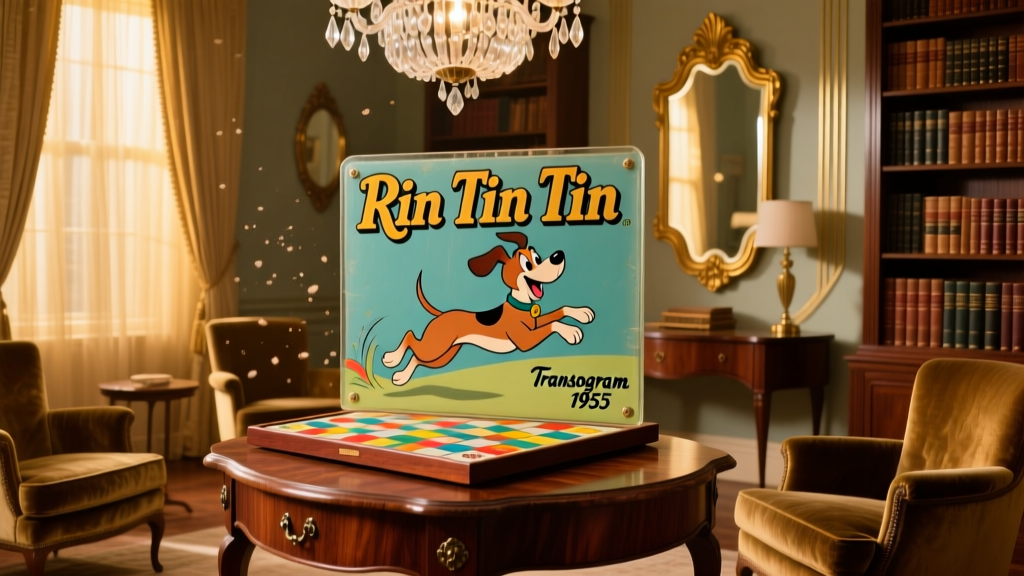
Rin Tin Tin Board Game (Transogram, 1955): A Collector’s Guide to Design, Production, and Restoration
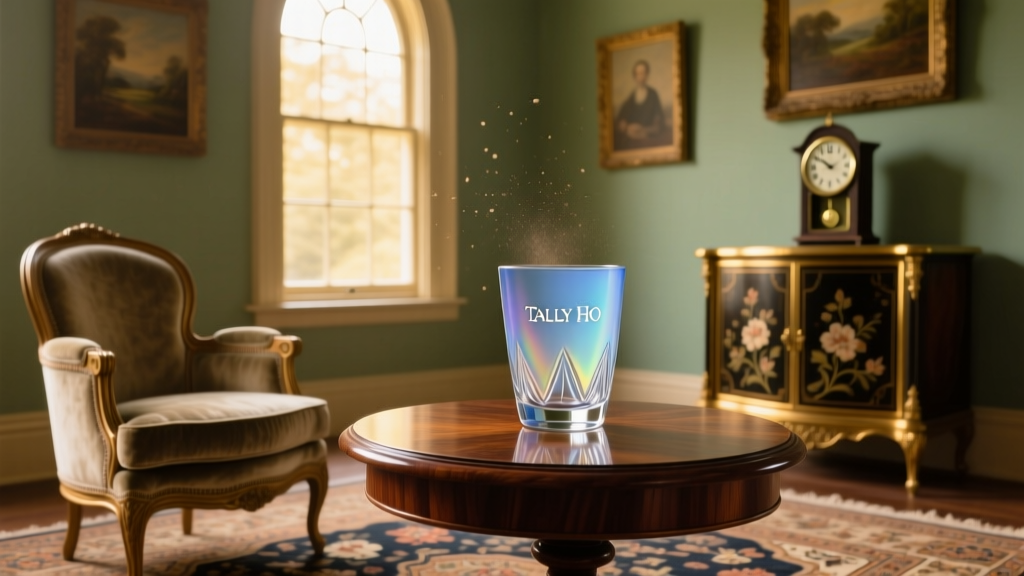
Cambridge Glass Tally Ho Tumbler in Moonlight Blue: A Collector’s Guide to the 9-Ounce Variant
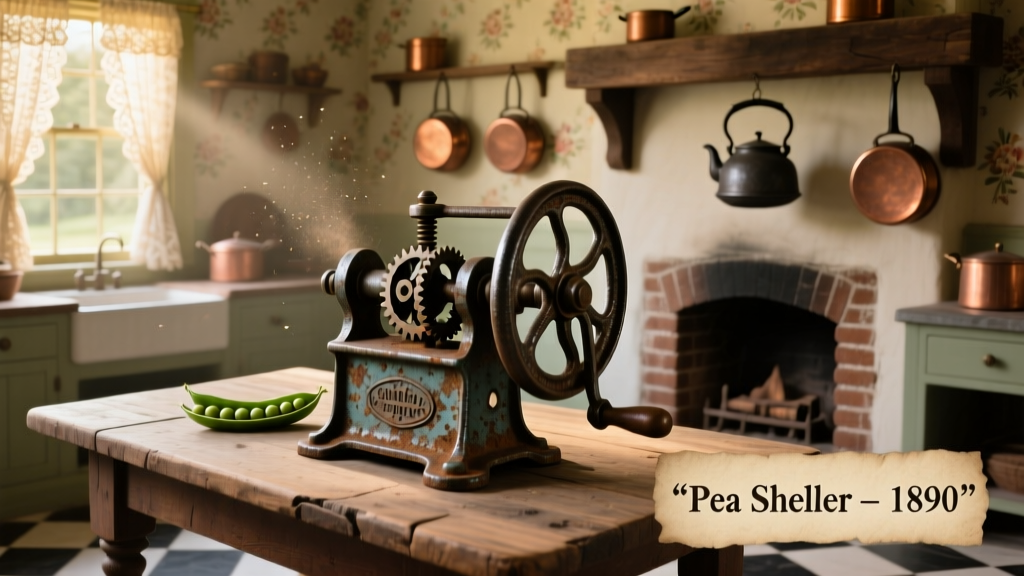
The Kitchen Pea Sheller Iron Crank: History, Mechanics, and Restoration of a Victorian-Era Kitchen Essential
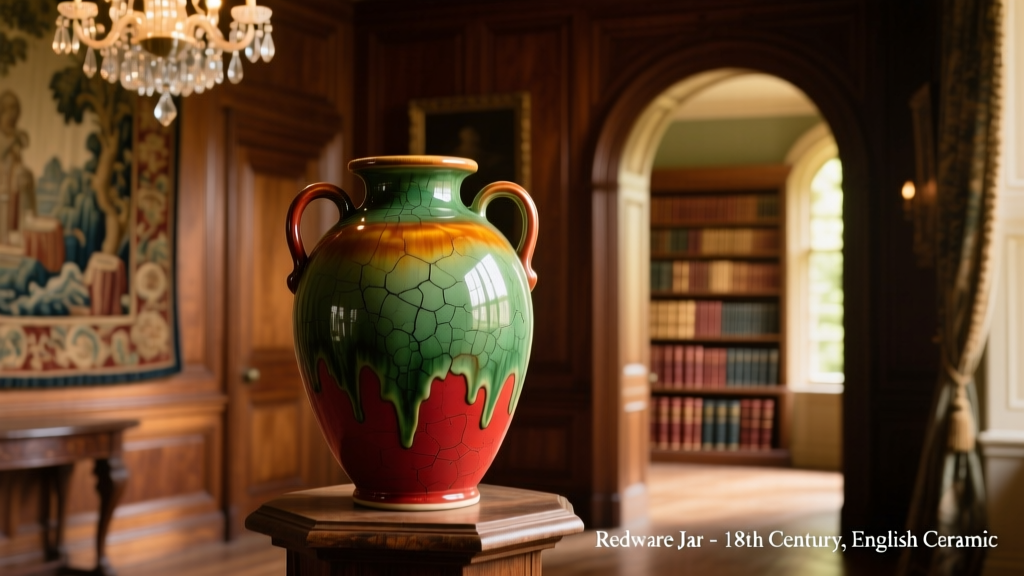
Redware Jar with Greenish-Amber Glaze: Identifying, Dating, and Preserving an Egg-Form Vessel with Shoulder Handles (10 Inches)
A Rare 1890 Albumen Print of Comanche Chief Quannah Parker in Full Traditional Dress: Technical, Cultural, and Conservation Analysis of a 5½-Inch Cabinet Card
Royal Dux Figurine: The Fisherman Holding a Creel — A Signed 17½-Inch Masterpiece from the Golden Age of Bohemian Porcelain
Lu-Ray Plate Dinner Sharon Pink 10-Inch: Identification, History, and Restoration Guidance for Collectors