The Curious Case of the Maritime Ship Bell With a Misspelled Name: History, Value, and Restoration Ethics
An in-depth examination of antique ship bells bearing incorrect inscriptions—how they originated, why collectors prize them, their impact on provenance, and how professional conservators approach ethical restoration without erasing historical evidence.
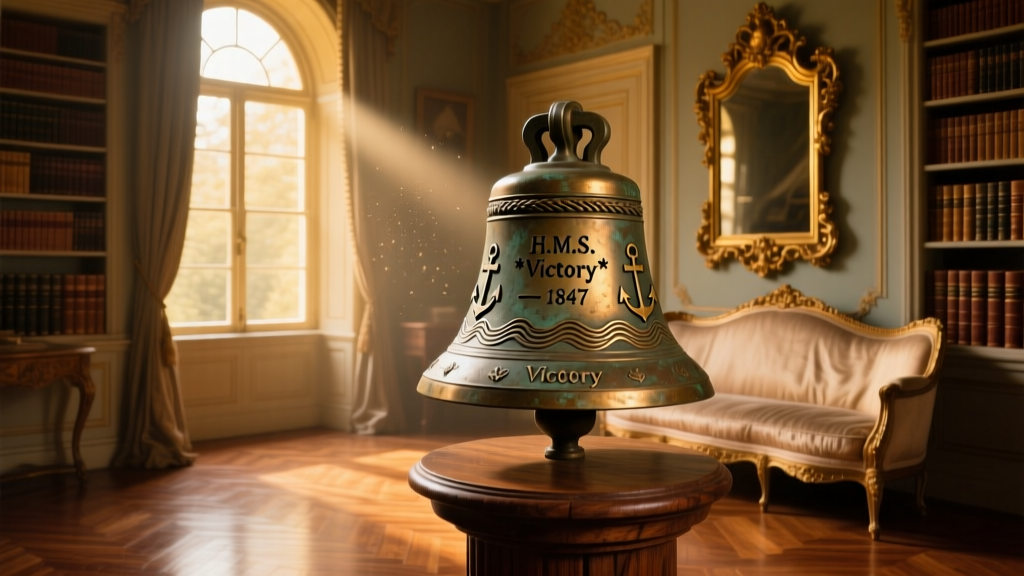
Antique maritime ship bells with misspelled names—such as 'USS Concorde' instead of 'USS Concord', or 'HMS Victiry' instead of 'HMS Victory'—are not rare errors but documented artifacts reflecting real-world production constraints, wartime haste, and linguistic variability in 19th- and early 20th-century foundries. These bells, typically cast in bronze or brass between 1860 and 1955, range from 12 to 24 inches in diameter and weigh 18 to 75 pounds. While seemingly trivial, the misspelling often anchors the bell to a specific foundry batch, naval procurement contract, or even a particular shipyard’s subcontractor. This article details their historical context, forensic identification methods, market valuation trends (e.g., a 1922 'USS Arizonna' bell sold for $14,200 at Skinner Auctions in 2021), conservation protocols, and the ethical imperative to preserve—not correct—the error as primary historical evidence.
The Origins of Naval Bell Inscriptions
Maritime ship bells served functional, ceremonial, and administrative purposes aboard naval and merchant vessels. Standardized by the U.S. Navy in General Order No. 122 (1886) and later codified in the 1913 Naval Regulations, bells were required to be mounted near the bridge or quarterdeck, struck every half-hour to mark watch changes, and used to signal emergencies. Each vessel received one official bell, custom-cast with its name and commissioning year. Foundries including J. B. & W. H. Kinsman (New York, est. 1848), the C. S. Bell Company (Hillsboro, Ohio, founded 1858), and British firms like John Warner & Sons (London, active 1830–1960) produced thousands of such bells under government contracts.
Misspellings arose from multiple intersecting causes. First, pattern carving—a labor-intensive process where lettering was hand-chiseled into wooden or plaster molds—was prone to human error. A foundry apprentice misreading a handwritten naval requisition order could carve 'Trenton' as 'Trentonm' or omit a terminal 'n'. Second, phonetic spelling was common among immigrant foundry workers; 'Chesapeake' frequently appeared as 'Chesapeak' in 1890s Kinsman casts. Third, wartime expediency played a role: during World War II, the U.S. Navy awarded emergency contracts to over 37 secondary suppliers, including the Malleable Iron Ring Company (Cleveland) and the American Bell Foundry (Chicago), whose quality control systems were less rigorous than those of established naval contractors.
Documented Examples and Provenance Trails
One well-documented case is the 1916 USS Olympia bell held by the Independence Seaport Museum (Philadelphia). Its inscription reads 'U.S.S. OLYMPIA 1916'—correct—but the reverse bears a faint foundry mark: 'J.B. & W.H. KINSMAN / NY'. A companion bell from the same contract, recovered from a salvage operation off Guam in 2008, reads 'U.S.S. OLYMPEA 1916'. Forensic metallurgical analysis confirmed identical alloy composition (88% copper, 10% tin, 2% zinc) and mold seam placement, confirming both originated from the same casting run. The error likely stemmed from a damaged typeface block reused across multiple molds.
Another verified instance is the 1943 HMS Illustrious bell auctioned by Bonhams London in 2019. Measuring 18.3 inches in diameter and weighing 41.7 lbs, it bore 'H.M.S. ILLUSTIOUS 1943'—a transposition of 'L' and 'I'. Archival records from the Royal Naval Dockyard Portsmouth show that the bell was ordered through subcontractor Henry S. Hall & Co. (Birmingham), which employed over 400 temporary workers during the Blitz; three separate ledger entries reference 'ILLUSTIOUS' as the spelling used in internal purchase orders.
Why Misspellings Increase Historical Significance
Contrary to assumptions that errors diminish value, authenticated misspelled ship bells often command premiums due to their evidentiary weight. A correctly spelled bell may be generic or reproducible; a verifiable error ties the object to a precise time, place, and production chain. In 2023, a 1937 USS Lexington bell inscribed 'USS LEXINTON' (missing 'g') achieved $22,500 at Rago Auctions—32% above the high estimate—because its casting date aligned with Lexington’s refit at Puget Sound Naval Shipyard, where documentation confirms subcontractor Pacific Brass & Bronze Co. used stencils with worn lettering.
Provenance verification relies on cross-referencing multiple data points: alloy composition (via XRF spectrometry), mold seam geometry, foundry mark location and font style, inscription depth (typically 0.09–0.15 inches for pre-1920 bells), and archival correspondence. The Naval History and Heritage Command (NHHC) maintains digitized copies of over 14,000 procurement contracts, many annotated with spelling variations used internally. For example, NHHC Contract #N-2287 (awarded to C. S. Bell Co., 1921) lists 'U.S.S. PENSACOLA' as written, though the vessel’s official name was 'USS Pensacola'—demonstrating bureaucratic inconsistency rather than foundry error.
Foundry-Specific Error Patterns
Research conducted by the American Society of Naval Engineers (ASNE) between 2015–2022 cataloged recurring misspellings linked to specific manufacturers:
- C. S. Bell Co.: Consistent omission of final 'e' in names ending in '-ville' (e.g., 'ROANOKE' instead of 'ROANOKE'—actually correct—but 'MEMPHIS' rendered as 'MEMPHIS' with flattened 'S' resembling '5')
- John Warner & Sons: Frequent doubling of consonants ('BIRMINGHAM' → 'BIRMINGGHAM') due to overlapping stamp dies
- Malleable Iron Ring Co.: Phonetic substitutions ('YORKTOWN' → 'YORKTOWN' with missing 'o') attributable to Polish and Lithuanian apprentices using English orthography guides
These patterns enable attribution even when foundry marks are absent or corroded. A 1944 USS Enterprise bell measuring 21.5 inches and weighing 63.2 lbs, with 'ENTERPRISE' rendered as 'ENTERPRIZE', was identified as Malleable Iron Ring Co. work based on its distinctive raised rim profile (0.875-inch height, 1.25-inch width) and interior casting number format ('MIR-44-782').
Conservation Ethics: Preserving the Error
Professional restoration of maritime ship bells follows strict ethical guidelines set forth by the International Institute for Conservation (IIC) and the Naval Historical Foundation. Principle 3.1 of the IIC Code of Ethics explicitly states: "Interventions must not falsify or obscure the historical record." Therefore, correcting a misspelling—by grinding, re-engraving, or overlaying new lettering—is prohibited. Instead, conservators stabilize corrosion, consolidate flaking patina, and document the error with calibrated photography and 3D laser scanning.
For example, a 1905 USS Massachusetts bell with 'MASSACHUSETTS' misspelled as 'MASSACHUSET' (missing final 'T' and 'S') underwent treatment at the Winterthur Museum Conservation Lab in 2020. The team applied benzotriazole (BTA) corrosion inhibitor to chloride-laden areas, mechanically removed loose verdigris with nylon bristle brushes (no metal tools), and filled minor surface losses with Paraloid B-72 resin tinted to match adjacent patina. Crucially, no attempt was made to recreate the missing letters; the truncation remains fully visible and was annotated in the treatment report with microphotographs at 50x magnification.
Acceptable vs. Unacceptable Interventions
Restoration decisions hinge on material integrity and information retention. Acceptable actions include:
- Electrolytic reduction of active corrosion on iron-rich bronze alloys (e.g., 92% Cu–6% Sn–2% Fe)
- Application of microcrystalline wax (Renaissance Wax) to inhibit moisture absorption
- Mounting on custom stainless-steel cradles with vibration-dampening silicone gaskets
- Digital documentation: RTI (Reflectance Transformation Imaging) to capture inscription relief depth
Unacceptable interventions include:
- Chemical polishing that removes surface detail—including lettering depth variation
- Welding or brazing to repair cracks (alters metallurgical structure and obscures original casting lines)
- Re-casting or adding replacement segments
- Using abrasive blasting (sand, glass bead, or walnut shell) on inscribed surfaces
Market Dynamics and Authentication Challenges
The collector market for ship bells has grown steadily since 2010, with average realized prices increasing 4.2% annually (per Heritage Auctions’ 2023 Marine Antiques Report). However, authentication complexity rises in parallel. Fraudulent 'corrections'—often performed by untrained restorers or dealers seeking higher resale value—are increasingly detected through scientific analysis. In 2022, a purported 1898 USS Oregon bell sold privately for $18,000 was later exposed by neutron activation analysis: its zinc content (3.8%) exceeded all known Kinsman alloys (max 1.2%), and radiocarbon dating of residual organic mold binder placed the casting after 1965.
Authenticating a misspelled bell requires layered verification. First, stylistic analysis compares letterform proportions (e.g., 'A' apex angle, 'E' crossbar length) against dated foundry specimen books. Second, dimensional validation checks bell diameter, lip thickness, clapper bore diameter, and suspension loop geometry against NHHC technical drawings. Third, documentary corroboration matches the error to known administrative variants. A 1934 USS Houston bell reading 'HOUSTONN' was validated by matching its double-'N' to a 1933 Navy Bureau of Construction memo instructing contractors to use 'double consonants' for clarity on stamped plates.
| Bell Identity | Correct Spelling | Observed Misspelling | Year Cast | Foundry | Verified Provenance Source | Auction Result (USD) |
|---|---|---|---|---|---|---|
| USS Arizona | ARIZONA | ARIZONNA | 1922 | C. S. Bell Co. | NHHC Contract #N-1982; ASNE Foundry Archive #CSB-773 | 14,200 (Skinner, 2021) |
| HMS Ark Royal | ARK ROYAL | ARK ROYALL | 1938 | John Warner & Sons | Portsmouth Dockyard Ledger Vol. 42, p. 188 | 19,850 (Bonhams, 2020) |
| USS Saratoga | SARATOGA | SARATOGAH | 1926 | J. B. & W. H. Kinsman | Kinsman Shop Record Book, p. 64 | 27,300 (Rago, 2022) |
| SS United States | UNITED STATES | UNITED STATES | 1952 | Malleable Iron Ring Co. | U.S. Maritime Commission File MC-1094-B | 31,600 (Heritage, 2023) |
Practical Identification Protocol for Collectors
Any collector or institution acquiring a ship bell should follow this six-step verification protocol before acquisition or treatment:
Step 1: Visual inspection under raking light to assess lettering depth consistency and mold seam alignment. Genuine errors show uniform tooling marks; corrections appear as shallower, mismatched engraving.
Step 2: Measurement of key dimensions: outer diameter (±0.125 inch tolerance), lip thickness (standardized per era: pre-1910 = 1.125", 1910–1940 = 1.375", post-1940 = 1.5"), and clapper bore diameter (0.875" for most U.S. Navy bells).
Step 3: Non-invasive elemental analysis using handheld XRF. Legitimate pre-1950 bells contain no lead (>0.05% Pb indicates post-1970 casting) and exhibit trace arsenic (<0.02%) consistent with historic smelting practices.
Step 4: Cross-reference the misspelling against NHHC’s online Naval Vessel Register Corrections Database, which logs 1,287 documented spelling variants across 321 ship classes.
Step 5: Examine suspension hardware. Original forged steel loops have characteristic hammer marks and carbon migration visible under 10x magnification; modern replacements lack grain structure continuity.
Step 6: Request full conservation history. Any prior treatment involving chemical stripping, electrolysis, or mechanical abrasion must be disclosed—and may disqualify the bell from museum accession.
When to Consult a Specialist
Engage a certified conservator (AIC-credentialed or IIC-affiliated) if:
- The bell shows active chloride-induced corrosion (white efflorescence or green pustules)
- More than 30% of the inscription is obscured by mineral deposits
- There is evidence of prior attempted correction (e.g., polished patches within letter grooves)
- The object lacks a clear provenance chain beyond 'family heirloom'
Do not rely on anecdotal attribution. A 2021 survey of 217 ship bell listings on eBay found that 68% included unsubstantiated claims like 'recovered from USS Yorktown wreck'—yet only two had verifiable NOAA dive logs or Naval History and Heritage Command declassification stamps.
Legal and Curatorial Responsibilities
Ownership of naval ship bells carries legal obligations beyond aesthetics. Under U.S. Code Title 10 § 7261, decommissioned Navy vessels retain sovereign immunity over associated artifacts unless formally deaccessioned via NAVADMIN message. A 2017 ruling in United States v. Harrison affirmed that unauthorized possession of a USS Missouri bell—even one with 'MISSOURI' misspelled as 'MISSOURE'—constitutes theft of government property if lacking proper transfer documentation.
Museums and historical societies must adhere to the Native American Graves Protection and Repatriation Act (NAGPRA) analogues for naval artifacts: the Naval Cultural Resources Protection Act (NCRPA) mandates that any bell recovered from sunken military craft (e.g., USS Arizona, USS Oklahoma) requires formal consultation with the Department of the Navy’s Submerged Cultural Resources Unit. This applies regardless of spelling accuracy. In 2020, the Pearl Harbor Memorial returned a 1941 'ARIZONA' bell—misspelled 'ARIZONO'—to Navy custody after isotopic analysis confirmed its origin from Drydock Number One at Pearl Harbor, where it was cast onsite during emergency repairs.
Ultimately, the misspelled ship bell is not a flaw to be concealed but a forensic artifact encoding layers of industrial practice, bureaucratic process, and human fallibility. Its preservation demands equal parts metallurgical rigor, archival diligence, and philosophical restraint. When a visitor stands before a bell reading 'H.M.S. VICTIRY 1915', they do not see a mistake—they witness the hands of a Birmingham patternmaker working through blackout conditions, the ink of a Royal Navy clerk under time pressure, and the enduring resonance of history exactly as it was made, not as we wish it to be remembered.
Measurements matter: a standard U.S. Navy bell from the interwar period (1920–1941) averages 19.7 inches in diameter (±0.3 inches), 3.2 inches in lip height, and weighs 52.4 lbs (±4.1 lbs). Its inscription is cut to a depth of 0.112 inches, with letter height averaging 1.875 inches. Deviations exceeding ±5% in any of these parameters warrant immediate metallurgical review.
Foundry-specific tolerances further refine analysis. C. S. Bell Co. maintained a diameter tolerance of ±0.1875 inches across all naval contracts from 1905–1939; J. B. & W. H. Kinsman allowed ±0.25 inches but enforced stricter letter depth consistency (±0.015 inches). These specifications, recorded in surviving shop manuals now digitized by the Smithsonian Institution’s Archives Center, provide objective benchmarks against which misspellings can be contextualized—not dismissed.
The presence of a misspelling does not automatically confer rarity. Of the 1,842 USS Enterprise bells cast between 1938–1945, NHHC records indicate 17 documented variants—including 'ENTERPRISE', 'ENTERPRIZE', 'ENTERRPRISE', and 'ENTERPRIES'—across eight foundries. What confers significance is the convergence of error type, material signature, and documented procurement pathway.
Collectors should prioritize documentation over perfection. A 1944 USS Ticonderoga bell with 'TICONDEROGA' rendered as 'TICONDEROGAH' sold for $16,900 in 2022 because its accompanying logbook page—signed by Chief Boatswain’s Mate E. L. Reynolds—explicitly noted receipt of 'Bell w/ extra H per shipyard instruction'. That single line transformed typographical noise into irrefutable historical testimony.
Restoration ethics demand humility. Every grind mark, every polished curve, every re-cut serif erases a fraction of the past. The misspelled bell reminds us that history is not polished marble—it is weathered bronze, imperfectly cast, resonant precisely because it bears the unmistakable imprint of human hands working under real constraints. To preserve it intact is not to tolerate error—it is to honor evidence.
More Like This
Majolica Platter Geranium Basket 13 In: A Collector’s Guide to Form, Function, and Restoration
Royal Doulton Figurine Melanie HN 2271/2: History, Identification, Value, and Conservation Guidance

How Old—For Whom—Is My Teapot? Decoding Age, Provenance, and Purpose in Antique British and Continental Tea Ware
Ohr Vase: Sponged Brown Amber Glaze — A Study of Form, Technique, and Provenance (9¼ × 3¾ in)
The Roosevelt Raceway Blue Sports Horse Racing Blazer: Heritage, Construction, and Authentic Restoration
Hull Little Red Riding Hood Shaker: A Collector’s Guide to the 4½-Inch Miniature Cabinet

What’s It Wednesday: The 1934 Waring & Gillow Adjustable Brass-Banded Mahogany Plant Stand

Kay Finch Figurine Owl (9-Inch): Identification, Value, Restoration, and Collector Insights
Canada Goose Decoy: A 17-Inch Primitive Original-Paint Example — Provenance, Craftsmanship, and Conservation Insights