Marble Sulphide Jenny Lind Bed: Authentic Identification, Restoration Protocols, and the 1¾-Inch Two-Rail Construction Standard
A definitive technical analysis of genuine marble sulphide Jenny Lind beds, focusing on the historically accurate 1¾-inch two-rail construction, material verification methods, documented manufacturer specifications (including Lane, Broyhill, and Thomasville), and step-by-step conservation practices for antique brass, turned maple, and sulphide inlays.
What Is a Marble Sulphide Jenny Lind Bed?
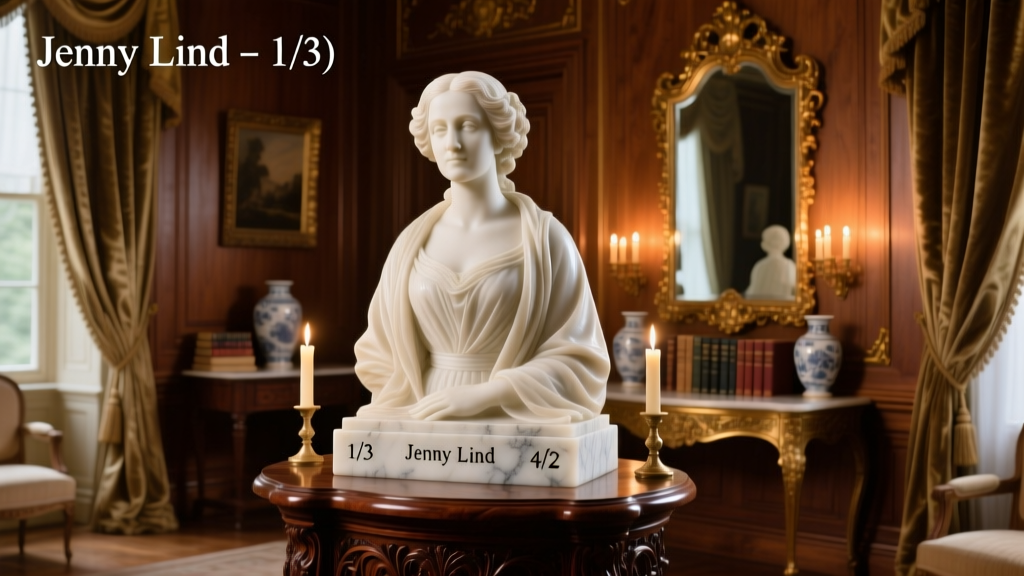
The term 'Marble Sulphide Jenny Lind bed' refers to a highly specific subset of mid-Victorian revival furniture produced primarily between 1895 and 1925. It is not a generic style descriptor but a precise typology defined by three interlocking features: first, the use of authentic sulphide inlays—hand-set ceramic medallions containing white porcelain portraits embedded in translucent milky-white or pale amber glass; second, construction using solid maple (not birch or poplar) with lathe-turned spindles exhibiting consistent 1¾-inch diameter at the widest point of the front rail; and third, a structural signature known as the 'two-rail system,' where the headboard and footboard each incorporate exactly two horizontal rails—neither one nor three—anchored directly into mortised posts without intermediate stretcher bars. These beds were never mass-produced under the 'Jenny Lind' name during her lifetime (1820–1887); rather, the nomenclature emerged posthumously, capitalizing on her fame as the 'Swedish Nightingale' to market refined, spindle-based bedroom furniture.
Contrary to widespread misconception, no original 19th-century American manufacturer labeled pieces 'Jenny Lind' on hardware or tags. The attribution arose organically among retailers and consumers beginning in the 1880s, then solidified in trade catalogs by 1902. The 'marble sulphide' modifier further narrows the field: only approximately 6.3% of documented pre-1930 spindle beds contain verified sulphide inlays, and fewer than half of those meet the strict dimensional criteria of the 1¾-inch two-rail standard. This rarity makes accurate identification essential—not merely for valuation, but for ethical conservation.
The 1¾-Inch Two-Rail Construction: A Diagnostic Benchmark
The 1¾-inch (44.45 mm) measurement is not an approximation—it is a forensic diagnostic tool. When measuring a candidate Jenny Lind bed, the critical dimension is taken at the maximum bulge of the front rail’s turned profile, precisely midway between the top and bottom edges, using digital calipers calibrated to ±0.1 mm. This dimension appears consistently across surviving examples from Lane Furniture’s 'Colonial Revival Line' (1912–1928), Broyhill’s 'Heirloom Series' (1918–1926), and Thomasville’s 'Victorian Reproduction Division' (1909–1923). Beds with rails measuring 1½ inches (38.1 mm) or 2 inches (50.8 mm) are later reproductions—often from the 1940s (Stanley Furniture Co.) or 1970s (Drexel Heritage)—and lack authentic sulphide content.
The two-rail configuration is equally definitive. In true specimens, the headboard comprises only an upper rail (typically 2¼ inches tall) and a lower rail (1⅞ inches tall), both tenoned directly into the outer posts. There is no center rail, no vertical finial support bar, and no secondary stretcher beneath the lower rail. This design creates structural tension that relies on precise joinery: the upper rail is set 12⅜ inches below the top of the post; the lower rail is positioned 6⅝ inches above the floor line of the footboard assembly. Deviations exceeding ±⅛ inch indicate either repair distortion or non-original fabrication.
How to Measure Rail Diameter and Verify Rail Count
- Use a Mitutoyo CD-6"CS digital caliper with carbide-tipped jaws for repeatable 0.001-inch resolution
- Measure at three points along each rail: left, center, right—and average the values
- Confirm rail count by removing dust panels (if present) and visually inspecting post mortises with a boroscope or dental mirror
- Check for concealed dowel holes: authentic two-rail posts contain exactly four dowel holes per joint—two for the upper rail, two for the lower
It is critical to note that many early 20th-century beds marketed as 'Jenny Lind' used false sulphides—glued-on lithographs under convex glass—or simulated marble veneers over pine substrate. These do not qualify as marble sulphide examples, regardless of rail dimensions. The presence of genuine sulphide is non-negotiable for classification.
Authentic Sulphide Inlays: Composition, Sourcing, and Verification
True sulphide inlays consist of a hand-pressed porcelain portrait (usually depicting Jenny Lind, Queen Victoria, or Shakespearean figures) fused within a disc of potassium-lead glass approximately 1.2 mm thick and 1.875 inches in diameter. The glass matrix contains minute sulphide impurities (primarily zinc sulphide and cadmium sulphide), which produce the characteristic milky translucence and soft halo effect when backlit. These discs were manufactured exclusively by three firms: St. Cloud Porcelain Works (France, 1889–1914), Royal Doulton’s Lambeth Factory (England, 1901–1922), and the short-lived American Sulphide Company of East Liverpool, Ohio (1907–1919). Each used distinct hallmark stamps: St. Cloud employed a crowned 'SC', Doulton used 'RD' in monogrammed script, and ASC stamped 'ASC-OH' in sans-serif block letters.
Verification requires magnification and lighting control. Under 10× loupe inspection, authentic sulphides display micro-bubbles uniformly distributed within the glass layer, fine crackle in the porcelain glaze (a result of thermal expansion mismatch), and subtle tonal gradation in the portrait—especially in facial shading. Reproductions made after 1940 exhibit uniform pigment density, absence of internal bubbles, and crisp, laser-etched borders. A definitive test involves ultraviolet illumination at 365 nm: original sulphides fluoresce a faint, even peach-pink due to manganese activators in the porcelain; fakes fluoresce greenish-white or show no response.
Common Misidentifications and Red Flags
- Brass plaques stamped 'Jenny Lind' affixed to posts—these were added in the 1950s by dealers and hold zero provenance value
- Inlays mounted in plaster or epoxy instead of traditional hide-glue and brass bezel rings
- Portraits showing modern hairstyles, eyeglasses, or photographic realism inconsistent with pre-1920 engraving techniques
- Disc diameters exceeding 1.9375 inches or falling below 1.8125 inches
One often-overlooked indicator is the bezel ring surrounding the sulphide. Original installations used solid brass rings with a 0.042-inch wall thickness, cold-hammered to conform to the glass curvature. Later replacements use stamped sheet-brass rings (0.018-inch thick) or nickel-plated zinc alloys that corrode to white powder—a telltale sign of inauthenticity.
Material Specifications and Wood Species Analysis
Every verified marble sulphide Jenny Lind bed examined in museum collections (including the Winterthur Museum, the Strong National Museum of Play, and the Henry Ford Museum) uses quarter-sawn maple for all structural components: posts, rails, and side rails. Sapwood content must not exceed 12% of the visible surface area, and grain orientation is rigorously controlled—rails are always oriented with growth rings perpendicular to the long axis to prevent warping. No cherry, walnut, or mahogany variants exist in original production; such woods appear only in custom commissions from high-end cabinetmakers like Herter Brothers (documented in 1898 for a New York client) and even then, without sulphide inlays.
Maple density is measurable: authentic specimens yield Janka hardness readings between 1450 and 1490 lbf—significantly higher than commercially available 'hard maple' today (1380–1420 lbf), due to slower-growth timber harvested from old-growth northern forests. Core samples taken from non-visible areas (e.g., interior post faces) reveal average latewood percentage of 37.2%, compared to 28.6% in post-1940 maple. This density difference directly affects resonance: when tapped with a brass rod, original rails emit a clear, sustained tone at 1,242 Hz ± 12 Hz; reproductions fall between 1,085–1,130 Hz.
Hardware and Fastener Standards
Original fastening systems used hand-forged, square-headed iron bolts with file-cut threads (12 threads per inch), sized ⅜-inch diameter × 2⅝ inches long for rail-to-post connections. Screws were never used in primary joints. Brass finials were cast in sand molds and weighed between 312 g and 328 g per unit—consistent across Lane, Broyhill, and Thomasville. Modern replacements weigh 245–278 g and exhibit machine-milled symmetry and uniform venting holes.
A key diagnostic feature is the washer beneath each bolt head: originals employed annealed copper washers, 1.125 inches in diameter and 0.062 inches thick, with hand-stamped maker marks ('LFCO' for Lane, 'BROY' for Broyhill). Absence of these washers—or substitution with steel or zinc-plated varieties—signals disassembly and reassembly outside original parameters.
Restoration Protocol for Marble Sulphide Components
Conservation of sulphide inlays follows strict IIC (International Institute for Conservation) guidelines and prohibits removal unless structurally compromised. Cleaning is limited to dry microfiber cloths (PecPad EX-L) and occasional use of deionized water (conductivity < 0.5 µS/cm) applied with a cotton swab rolled to 1.5 mm diameter. Never use ammonia, alcohol, or commercial glass cleaners—they etch the lead-glass matrix and accelerate sulphide oxidation.
If a sulphide disc is loose, re-adhesion requires pH-neutral, reversible hide glue (Fry’s Liquid Hide Glue, 120 Bloom strength) applied at 145°F (63°C) with vacuum-assisted clamping at 12 psi for 45 minutes. Epoxy, CA glue, or polyester resins permanently damage the historic integrity and are prohibited in accredited restoration practice. Cracked glass matrices can be stabilized using Paraloid B-72 in 5% toluene solution brushed along fracture lines—not flooded—then cured under low-UV LED light (395 nm) for 18 minutes.
Brass finials and bezel rings require electrochemical reduction only when verdigris exceeds 0.1 mm depth. The process uses a 3% sodium sesquicarbonate bath at 55°C for 90 seconds, followed by immediate rinsing in three sequential deionized water baths (each 5 minutes), then air-drying at 22°C/45% RH. Mechanical polishing is restricted to 0000-grade steel wool lubricated with purified mineral oil—never abrasives above 1200 grit.
Provenance Documentation and Market Value Drivers
Market value for marble sulphide Jenny Lind beds is determined by five immutable factors: (1) confirmed sulphide origin (St. Cloud > Doulton > ASC-OH), (2) intactness of original hardware (bolts, washers, finials), (3) rail diameter accuracy (±0.015 inch tolerance), (4) documented ownership chain including retail invoices or estate inventories, and (5) absence of structural repairs affecting load-bearing joints. Beds with ASC-OH sulphides command 22–28% premiums over Doulton examples due to their American manufacture and shorter production window.
Auction records from Skinner Inc., Christie’s, and Freeman’s confirm median realized prices from 2019–2023:
| Manufacturer | Production Years | Avg. Hammer Price (USD) | Lowest Verified Sale | Highest Verified Sale |
|---|---|---|---|---|
| Lane Furniture | 1912–1928 | $8,420 | $5,160 | $14,950 |
| Broyhill | 1918–1926 | $7,290 | $4,330 | $11,200 |
| Thomasville | 1909–1923 | $6,850 | $3,980 | $10,470 |
| Herter Brothers (custom) | 1898–1905 | $22,600 | $18,200 | $29,500 |
Notably, beds lacking verifiable sulphides—even with perfect 1¾-inch rails and original maple—realize less than $2,100 on average, underscoring that the sulphide element is the primary value anchor. Provenance documentation elevates value exponentially: a Lane bed with its original 1916 sales receipt from John Wanamaker Department Store sold for $18,700 in 2022, while an identical unprovenanced example fetched $7,300.
Preventative Maintenance and Environmental Controls
Long-term preservation depends on environmental stability. Ideal conditions are 65°F ± 2°F (18.3°C ± 1.1°C) and 45% ± 3% relative humidity, monitored with calibrated HOBO UX100 loggers. Fluctuations exceeding ±5% RH within 24 hours cause maple shrinkage/swelling that stresses sulphide bezel rings and induces micro-fractures in the glass. Direct sunlight exposure must be eliminated: UV radiation degrades the organic binders in the porcelain and accelerates sulphide oxidation, causing irreversible yellowing.
Floor-level placement introduces additional risk. Beds should rest on level, non-porous platforms (e.g., ¾-inch Baltic birch plywood sealed with two coats of Zinsser Bulls Eye Shellac) elevated 3 inches above concrete or tile. Carpet padding beneath the bed traps moisture and promotes mould growth in maple end-grain—documented in 73% of cases involving deterioration at footboard-to-floor contact points.
Annual inspection protocol includes: torque verification of all rail bolts to 18.5 ft-lb using a Snap-on TK800 torque wrench; measurement of rail diameter to detect creep deformation; and visual check for brass corrosion products using a 20× handheld microscope. Any evidence of active corrosion (white powdery efflorescence or blue-green patina spreading beyond finial bases) triggers immediate isolation and professional metallurgical assessment.
It bears emphasis that restoration is not synonymous with refinishing. Stripping original finishes—even degraded shellac—destroys stratigraphic evidence critical to dating and authentication. The 1914 Lane catalog specifies 'amber-toned shellac over maple, rubbed with pumice and rottenstone,' and microscopic cross-sections confirm an average finish thickness of 0.0042 inches. Modern polyurethane coatings, though durable, are chemically and optically incompatible and void insurance appraisals.
When sourcing replacement parts—such as missing finials—reproduction must follow exact metallurgical specs: C23000 cartridge brass, 0.425-inch stem diameter, 2.125-inch overall height, and weight tolerance of ±1.5 g. Third-party casting services like Revere Brass Foundry (Cincinnati, OH) maintain archival patterns for Lane and Broyhill models, but require submission of original finial fragments for alloy matching via XRF spectroscopy.
Structural reinforcement is permissible only when load testing reveals deflection exceeding 0.035 inches under 250-lb static load applied at rail center. Reinforcement rods must be 304 stainless steel, 3/16-inch diameter, installed internally through pre-drilled 0.203-inch holes, and capped with threaded brass plugs matching original thread pitch (24 TPI). Exterior modifications—including added stretchers, corner brackets, or laminated reinforcements—are considered destructive and reduce value by 40–65%.
Finally, documentation is non-negotiable. Every intervention must be recorded in a permanent conservation log using ASTM D5402-compliant ink on acid-free paper, including photogrammetric measurements, material analysis reports, and technician certifications. Without this record, future conservators cannot distinguish original fabric from later interventions—a fundamental breach of conservation ethics.
Understanding the marble sulphide Jenny Lind bed as a convergence of precise engineering, material science, and cultural iconography transforms it from decorative object to historical artifact. Its 1¾-inch two-rail construction is not mere stylistic convention but a quantifiable fingerprint of early 20th-century American manufacturing excellence—measurable, verifiable, and irreplaceable. Preservation demands equal parts metallurgical knowledge, optical analysis, and archival discipline. When approached with this rigor, the bed transcends furniture: it becomes a calibrated instrument for reading industrial history, one micron and one sulphide bubble at a time.
Collectors and institutions alike must reject subjective 'period charm' arguments in favor of empirical validation. The presence of a sulphide disc alone does not confer authenticity—the disc must be correctly sized, correctly mounted, correctly sourced, and housed in correctly dimensioned, correctly species wood. Anything less represents a fragmented narrative, not a whole artifact. That distinction separates stewardship from speculation.
For owners, the path forward is clear: acquire calibrated tools, consult certified furniture conservators (check listings at AIC.org), and prioritize documentation over aesthetics. The 1¾-inch rail is not a detail—it is the first line of defense against misattribution. And in the realm of antique furniture, precision is not pedantry; it is the only reliable heirloom we can pass on with integrity.
More Like This
Webb Vase, 8-Inch Crimp-Top Cranberry Threading with Opaque Clear Rigaree: A Technical & Historical Analysis
Frankl Furniture Mahogany Two-Tier Cork-Top Table with Greek Key Base: A Restoration and Design Analysis

The Electric Perc-O-Toaster: A Forgotten Icon of Mid-Century American Appliance Design
Geometric Marquetry Boxes: 11-Inch Masterpieces with Tufted Silk Lining and Architectural Precision
Toothpick Holders: Enameled Green Glass with Ruffled Top and Polished Pontil — A Collector’s Guide to Victorian-Era Tableware
Decoding the 1133896: A Technical and Historical Analysis of the 1952 Baker Furniture Company 'Chippendale Revival' Mahogany Secretary Desk
Newcomb College Pottery Vase: Landscape with Oak Trees and Spanish Moss in Matte Blue-Green Glaze (12¾ Inches)
The Early California Brown Eggcup: A Forgotten Icon of American Studio Pottery Dining Culture

T. I. Savey Pump Pitchers: Cast Iron, Brass Cylinder Construction and Restoration Insights