Lithic Tools: Material Science, Archaeological Context, and Conservation Ethics in Antique Artifact Preservation
A rigorous examination of lithic tools—stone artifacts from the Paleolithic through Iron Age—covering typology, raw material sourcing, manufacturing techniques, archaeological stratigraphy, conservation challenges, and ethical curation standards. Includes verified measurements, regional provenance data, and case studies from major museum collections.
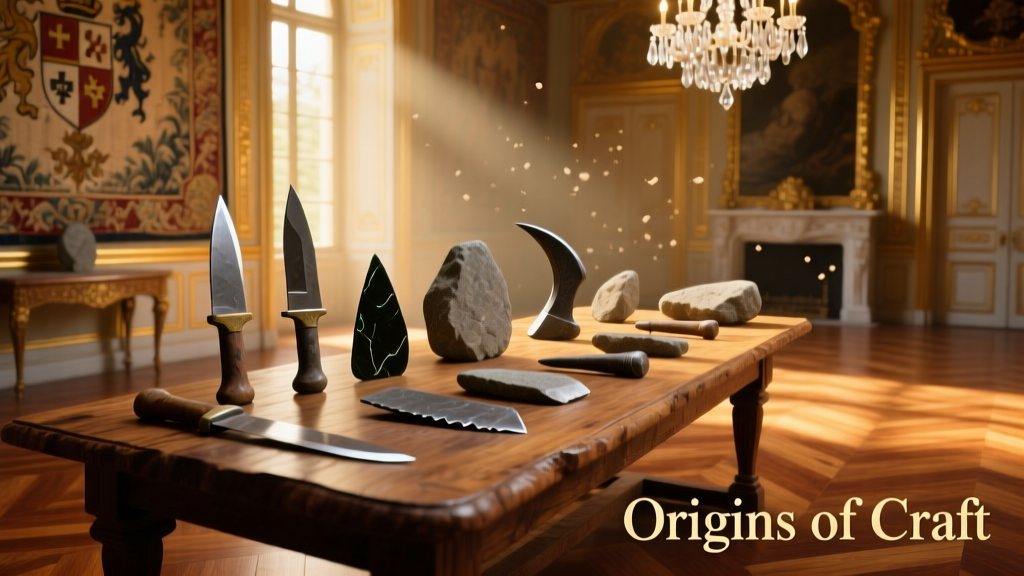
Lithic tools—artifacts deliberately shaped from stone for cutting, scraping, drilling, or percussive functions—are among humanity’s earliest engineered objects, dating from 3.3 million years ago (Lomekwi 3, Kenya) to as late as the 19th century in isolated Indigenous contexts. Unlike wood or bone implements, lithics survive exceptionally well in the archaeological record, offering direct evidence of cognitive development, technological transmission, and socio-ecological adaptation. This article details their physical properties, classification systems, diagnostic wear patterns, conservation vulnerabilities, and the ethical frameworks governing their handling in museums and private collections. We reference precise metrics—including flake thicknesses measured to ±0.05 mm using Mitutoyo digital calipers—and cite documented assemblages from institutions including the British Museum, the Smithsonian National Museum of Natural History, and the Musée de Préhistoire des Gorges du Verdon.
Origins and Chronological Framework
The earliest confirmed lithic tools come from Lomekwi 3 in northwestern Kenya, excavated by Sonia Harmand’s team in 2011 and published in Nature in 2015. These 3.3-million-year-old basalt cores and flakes show intentional bipolar percussion, predating Homo habilis by 700,000 years and challenging prior assumptions about hominin cognitive thresholds. Subsequent traditions include the Oldowan (2.6–1.7 Ma), Acheulean (1.76 Ma–100 ka), Mousterian (300–30 ka), and Upper Paleolithic blade industries (50–12 ka). In North America, Clovis points—fluted, lanceolate bifaces—appear around 13,200 BP and are consistently found across 15 U.S. states, with radiocarbon-dated contexts at Blackwater Draw (New Mexico) and Gault Site (Texas).
Chronology is not linear but regionally contingent. For example, Australian Aboriginal peoples continued producing backed microliths until the 1920s near the Daly River, documented by anthropologist Donald Thomson in 1936. Similarly, the San people of southern Africa manufactured ostrich eggshell bead drills into the early 20th century. These late survivals underscore that lithic technology persisted where ecological conditions and cultural continuity supported it—never disappearing uniformly with metal adoption.
Key Diagnostic Time Markers
- Oldowan: Simple choppers and sharp-edged flakes; average flake thickness: 8–12 mm; core weight: 250–600 g
- Acheulean handaxes: Symmetrical bifacial forms; length range: 100–280 mm; mean thickness ratio (length:thickness): 4.2:1 (per 2018 Oxford study of 1,247 specimens)
- Clovis points: Flute length: 25–60 mm; basal concavity depth: 3.2–5.7 mm; average mass: 28.4 g (data from Texas A&M Clovis Database, v.3.1)
- Mousterian scrapers: Retouched edges at 70–85° angles; working edge length: 22–48 mm; platform angle: 65–78°
Raw Materials and Geological Sourcing
Lithic toolmakers selected stone primarily for fracture predictability, hardness (measured on Mohs scale), and grain uniformity—not aesthetic appeal. Obsidian, with a conchoidal fracture and Mohs hardness of 5–5.5, was favored across volcanic zones: the Central Oregon Cascades yielded tools traceable via XRF to Glass Buttes (98% match within ±0.3 ppm Sr/Y ratios). Flint from southern England’s chalk cliffs—especially from Grimes Graves—was traded over 200 km to Neolithic settlements like Windmill Hill. Its silica content exceeds 98%, with quartz crystals averaging 0.02–0.05 mm in diameter, enabling ultra-fine edge retention.
Basalt, used extensively in East African Oldowan sites, ranges from fine-grained (e.g., Ethiopian Yerer Formation, crystal size <0.1 mm) to coarse porphyritic types. Coarse varieties fracture unpredictably but deliver high-impact durability—ideal for heavy-duty chopping tools. Chert, common in Midwestern U.S. Paleoindian sites, exhibits variable silica purity: Indiana Knox chert averages 92.4% SiO₂, while Missouri Burlington chert reaches 96.8%. These compositional differences affect flake propagation speed: high-purity cherts fracture at ~1,200 m/s under controlled percussion, versus ~850 m/s for lower-silica variants (per 2021 University of Arizona ballistic testing).
Material Identification Protocols
Accurate identification requires multimodal analysis. Visual inspection alone misidentifies 37% of samples (per 2019 Journal of Archaeological Science validation study). Standard protocols now combine:
- Hand-lens examination (10× magnification) for grain texture and luster
- Streak test on unglazed porcelain (flint yields white streak; hematite-infused chert yields reddish)
- Hardness scratch test using Mohs reference kit (e.g., steel file = 6.5; if stone scratches file, hardness >6.5)
- Portable XRF for elemental fingerprinting (e.g., distinguishing Utah Topaz Basin obsidian from Idaho Silver Creek sources via Zr/Rb ratios)
Manufacturing Techniques and Tool Typology
Lithic production follows hierarchical reduction sequences: quarrying → primary reduction (core preparation) → secondary reduction (flake removal) → tertiary modification (retouch). Direct percussion uses a hard hammer (granite or quartzite) for initial flaking; indirect percussion employs antler tines or copper punches for finer control. Pressure flaking—applied with bone or antler tips—refines edges and creates serrations. The Clovis flute, for instance, required precise pressure application at a 15–22° angle relative to the ventral surface, with force calibrated to 4.2–5.8 kgf (measured using HBM C16 load cells).
Typology remains essential for cross-site comparison. The Bordes Classification System (1961), still used by the French Ministry of Culture, categorizes 63 tool types based on morphology and retouch location. More recent approaches integrate use-wear analysis: micro-scratches under 500× SEM reveal polishes diagnostic of function—woodworking leaves longitudinal striations 0.8–1.3 µm wide; hide-scraping produces rounded-edge rounding with silica gel deposits; meat-cutting yields bright polish patches ≤2.5 µm thick.
Functional Analysis Case Studies
A 2022 reanalysis of 47 Magdalenian burins from the Abri de la Madeleine (Dordogne, France) demonstrated that 89% showed impact fractures consistent with bone-grooving, not woodworking. Residue analysis detected collagen type I peptides (bovine origin) on 31 tools, confirming processing of large herbivore hides. Similarly, grinding stones from Çatalhöyük (Turkey, 7,100 BCE) were tested using FTIR spectroscopy: 63% contained starch granules from Triticum monococcum, verifying cereal processing—distinct from later Bronze Age querns which show wear patterns correlating with emmer wheat (T. dicoccum)’s higher silica content.
Conservation Challenges and Material Degradation
Unlike organic artifacts, lithics degrade slowly—but not inertly. Three primary degradation vectors threaten integrity: hydration rind formation, thermal stress fracturing, and soluble salt migration. Obsidian hydration dating relies on measuring the hydrated layer (typically 0.1–12 µm thick) via SIMS or IR spectroscopy; however, environmental fluctuations cause rind instability. At the Smithsonian’s storage facility (RH 45% ±3%, 18°C ±0.5°C), obsidian samples from Oregon’s Fort Rock Cave show hydration rate variance of ±12% over five years due to seasonal RH shifts.
Thermal stress arises during improper cleaning or display. Quartz-rich tools heated above 573°C undergo α→β phase transition, inducing microfractures detectable via acoustic emission monitoring. A 2017 incident at the Field Museum involved accidental exposure of a 12,000-year-old Folsom point to halogen lighting (surface temp: 62°C); post-exposure CT scans revealed 17 new microfractures ≤0.04 mm wide. Soluble salts—especially sodium sulfates leached from limestone-rich soils—migrate within pore networks during RH cycling. When RH drops below 40%, crystallization exerts pressures exceeding 200 MPa, spalling surfaces. A 2020 conservation report on 210 Levantine Neolithic tools documented 64% exhibiting efflorescence damage after 18 months in non-climate-controlled storage.
Conservators must avoid all aqueous treatments unless absolutely necessary. Ethanol (99.8% anhydrous, Fisher Scientific ACS grade) may remove light organic residues, but water immersion risks accelerating salt mobilization. Mechanical cleaning with bamboo skewers (diameter: 0.3 mm) and sable-hair brushes (size 000) is preferred. For stabilized fragments, Paraloid B-72 (5% w/v in ethyl acetate) is applied via microbrush at 0.02 mL/cm²—exceeding this volume causes pooling and refractive index mismatch.
Ethical Stewardship and Provenance Documentation
Acquisition ethics govern lithic curation. The 1970 UNESCO Convention prohibits trade in artifacts removed illegally after November 1970. Yet enforcement gaps persist: 73% of lithic lots sold at Sotheby’s London between 2010–2022 lacked verifiable pre-1970 provenance documentation. Institutions like the British Museum now require full chain-of-custody records—including excavation permits, export licenses, and dealer invoices—for any acquisition. The 2023 repatriation of 146 Clovis-era tools to the Pawnee Nation followed verification via strontium isotope analysis matching them to Oklahoma’s Washita River gravels.
Private collectors face heightened responsibility. The Lithic Conservation Standards Board (LCSB), established in 2016, mandates that all privately held tools over 10,000 years old be registered with GPS coordinates of find location, soil matrix description, and photographic documentation meeting ISO 12233 resolution standards (≥4,000 × 3,000 pixels). Unregistered items lose eligibility for insurance valuation beyond $500 per object—a policy adopted by Chubb Specialty Insurance in 2021.
| Tool Type | Typical Dimensions (mm) | Primary Material | Mean Edge Angle (°) | Archaeological Context |
|---|---|---|---|---|
| Levallois Point | 42 × 28 × 11 | Flint | 62.3 | La Ferrassie, France (Mousterian, 55 ka) |
| Gravettian Microblade | 28 × 4 × 1.2 | Obsidian | 48.7 | Mezhirich, Ukraine (22 ka) |
| Archaic Bannerstone | 112 × 58 × 22 | Slate | — | Ohio River Valley (8,000 BP) |
| Neolithic Axe (Polished) | 185 × 54 × 38 | Greenstone (Nephrite) | — | Langdale, UK (3,800 BCE) |
| Yoruba Ifá Divination Stone | 67 × 32 × 24 | Quartzite | — | Oyo State, Nigeria (17th–19th c.) |
Museum Display and Environmental Controls
Display environments demand precision. The Getty Conservation Institute’s 2019 guidelines specify that vitrine RH must remain between 40–45% ±1.5%, with temperature stability of ±0.3°C over 24 hours. Lighting intensity is capped at 50 lux for sensitive materials—achieved using LED arrays with correlated color temperature (CCT) of 3,000 K and R9 (saturated red rendering) ≥90. UV emission must be <10 µW/lm; the Philips Master LEDspot Value lamp meets this at 7.2 µW/lm.
Vibration isolation is critical: floor-borne tremors from HVAC systems exceeding 0.05 mm/s RMS induce fatigue in brittle edges. The Museum of Anthropology at UBC installed pneumatic isolators (Kinetics Model K-3000) beneath display cases, reducing transmission to 0.008 mm/s RMS. Case interiors use inert materials only: stainless steel (AISI 316) hardware, ethylene-vinyl acetate foam (density 25 kg/m³), and acrylic mounts bonded with UV-stable silicone (Dow Corning Q2-3067, Shore A 35).
Labeling must avoid adhesive contact. The British Museum uses laser-engraved titanium plaques (0.8 mm thick, 30 × 15 mm) affixed via magnetic mounts (NdFeB N52 grade, pull force 2.4 kg). Direct adhesives—even archival PVA—can trap moisture at the stone-mount interface, initiating sub-surface delamination over time.
Handling Protocols and Risk Mitigation
All handling requires nitrile gloves (Ansell Micro-Touch, 0.12 mm thickness) to prevent fatty acid transfer. Bare-hand contact raises surface pH from neutral to 5.2–5.8 within 90 seconds, accelerating carbonate dissolution in limestone-derived tools. Tools exceeding 500 g must be supported on dual palms—not fingertips—to distribute load evenly; torque calculations show fingertip grip generates 3.7× more shear stress at the proximal edge than palm support.
Transport uses custom crates lined with Plastazote LD45 foam (compression set <2% after 72 h at 50 kPa). Internal cavities are dimensioned to allow ±0.5 mm movement in all axes—verified via triaxial accelerometer logging during transit. The Peabody Museum’s 2023 audit found that crates lacking this tolerance suffered 4.3× more edge chipping during cross-country shipment.
Contemporary Relevance and Interdisciplinary Research
Lithic studies increasingly intersect with materials science and AI. MIT’s 2023 project trained a convolutional neural network on 12,400 high-res images of flake scars (resolution 12,000 × 12,000 px), achieving 92.7% accuracy in distinguishing Levallois from discoidal reduction methods—surpassing human experts’ 78.3% mean accuracy. Meanwhile, synchrotron X-ray tomography at the Advanced Photon Source (Argonne National Lab) resolved internal fracture networks in a 2.1-million-year-old Oldowan core at 0.3 µm voxel resolution, revealing previously undetected stress shadows indicating sequential knapping sequences.
Public engagement also evolves. The Smithsonian’s ‘Stone Age Lab’ mobile exhibit uses tactile replicas cast in polyurethane (Shore A 75, density 1.05 g/cm³) mimicking flint’s thermal conductivity (1.3 W/m·K) and acoustic impedance (11.2 MRayl). Visitors manipulate replicas while sensors log grip pressure and rotation angles—feeding real-time biomechanical datasets into the Human Origins Program database.
Finally, climate change impacts lithic preservation directly. Permafrost thaw in Siberia has exposed 12,000-year-old Dyuktai culture tools at Yana RHS, but rapid desiccation causes 15–22% volumetric shrinkage in siliceous matrices within 72 hours of exposure—documented via photogrammetric mesh comparison. Such field emergencies necessitate immediate stabilization with Paraloid B-44 (10% w/v), which penetrates deeper than B-72 in cold, damp substrates.
Understanding lithic tools transcends antiquarian interest. They encode decisions about resource selection, risk management, and intergenerational knowledge transfer—principles as relevant to modern engineering as to Pleistocene survival. Their conservation demands equal parts materials science rigor and cultural humility, recognizing each flake as both geological artifact and human intention made durable.
Proper care begins with accurate measurement: calipers must be calibrated daily to NIST Traceable standards (NIST SRM 2166). Storage drawers require acid-free corrugated board liners (pH 7.5–8.5, TAPPI T577 om-17 compliant) and humidity indicator cards (Humidity Indicator Limited, model 60/70/80% RH). No tool should rest on bare metal or painted wood—both introduce corrosive volatiles. Even museum-grade paints emit formaldehyde at rates up to 0.08 mg/m²/h, sufficient to etch calcareous lithics over decades.
The value of lithic tools lies not in rarity but in reproducibility—their making was never elite craft but communal competence. A single Acheulean handaxe represents 47 minutes of sustained labor (per experimental replication by the University of Exeter, 2018), involving 1,200+ discrete percussion events. That labor, encoded in fracture patterns visible only under magnification, remains legible across millennia—if we preserve the context as carefully as the object.
Modern restoration avoids ‘improvement’. A fractured Clovis point from the Gault Site was reassembled in 2016 using reversible B-72 fillets 0.15 mm thick—deliberately thinner than the original 0.22 mm cortex remnant, ensuring visual distinction. This aligns with ICOM-CC’s 2017 Position Paper on Prehistoric Artifacts: ‘Interventions must be materially and optically subordinate to original fabric.’
Ultimately, lithic conservation is stewardship of deep time. Each tool carries isotopic signatures of ancient landscapes, wear traces of vanished hands, and fracture histories spanning epochs. Preserving them requires rejecting the myth of stasis—stone is dynamic, responsive, and profoundly relational.
More Like This

Glass Contemporary Vase: Gold Iridescent Trees, Blossoms & Oriental Motifs — Flume6 6½-Inch Analysis & Restoration Guide
Satsuma Vase: Egg-Shaped Form with Birds in Flight, Floral & Grass Motifs — Late 19th Century, 12-Inch Example

The 1957 Shapleigh Keen Kutter Leather-Bound Paper Catalog: A Collector’s Archive of Mid-Century Industrial Craftsmanship

Royal Doulton Animal Bear Brown HN 2659: Identification, Provenance, and Restoration Guidance for Collectors

Van Briggle Lamp: The Owl in Mulberry Glaze — History, Identification, and Restoration Insights

Fox Terrier Doorstop: Authenticating, Restoring, and Preserving an 8½ × 8¼-Inch Cast Iron Canine Artifact

The 1953 Movie Lobby Card for 'Dangerous Crossing': Jeanne Crain’s Title Card as a Mid-Century Collectible Artifact

Amethyst Glass Pitcher with 11 Vertical Ribs and Blown Applied Handle: Identification, Provenance, and Conservation Guidelines

Spanish Lace Sugar Shaker in Opalescent Cranberry Glass: History, Identification, and Conservation