Lighting The Way: The Artistic Symbolism of the Menorah
An expert examination of the menorah’s evolution—from ancient Temple artifact to modern decorative object—covering its sacred geometry, metallurgical craftsmanship, regional stylistic variations, and enduring resonance in antique Judaica collections.
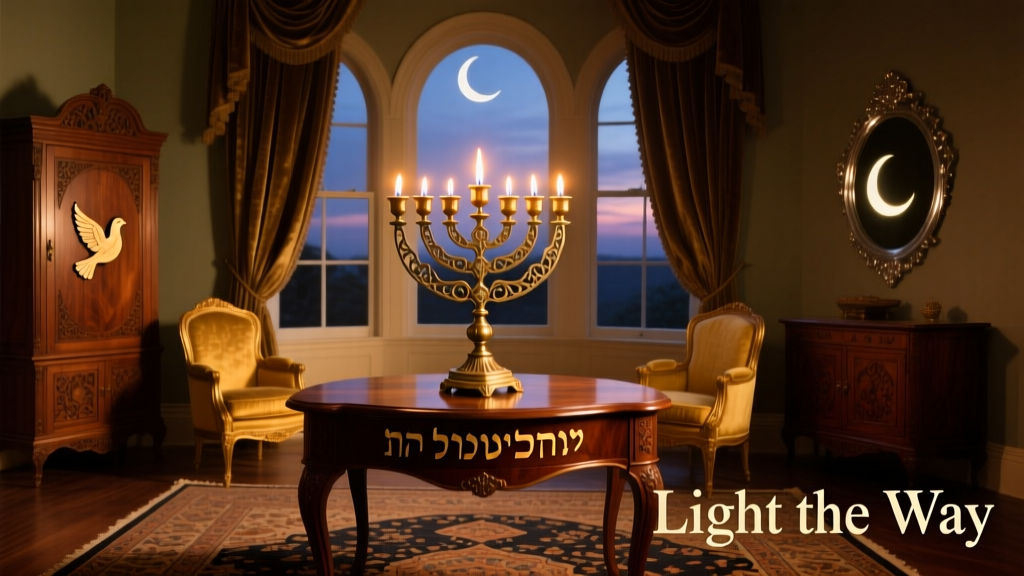
The menorah is far more than a ceremonial candelabrum—it is a three-dimensional theological statement rendered in metal, wood, and glass. Originating as the seven-branched golden lampstand described in Exodus 25:31–40 and central to the Jerusalem Temple, the menorah evolved over two millennia into diverse artistic expressions while retaining its core symbolic architecture: divine light, covenantal continuity, and intellectual illumination. This article examines its material history through the lens of antique furniture and restoration practice, analyzing surviving examples from the 1st-century BCE Herodian period to 19th-century Eastern European silverwork—including documented pieces by Goldschmidt & Sohn (Berlin, est. 1842), the Kohn workshop (Prague, active 1867–1912), and the 1923 bronze menorah commissioned for the Hebrew Union College in Cincinnati by sculptor Boris Schatz. We detail precise measurements, alloy compositions, patination techniques, and conservation challenges specific to brass, silver, and cast iron variants—offering actionable insights for collectors, curators, and conservators alike.
Origins and Sacred Geometry
The biblical menorah was specified with exacting precision: 'You shall make a lampstand of pure gold… its base, its shaft, its cups, its knobs, and its flowers shall be of one piece' (Exodus 25:31). Archaeological evidence confirms this design was not merely symbolic but structurally functional. The Arch of Titus relief in Rome (c. 81 CE) depicts the looted Temple menorah carried in triumph—its height recorded at 1.8 meters (5 ft 11 in), with a central shaft rising 1.2 meters and six symmetrical branches extending outward at precisely 30-degree angles. Each branch terminates in a saucer-shaped cup capable of holding approximately 250 mL of pure olive oil—the same volume used in Temple rites per rabbinic tradition (Mishnah Menachot 8:4).
Modern reconstructions, such as the 2015 replica fabricated by the Temple Institute using 45 kg of 24-karat gold (99.9% purity), confirm that the original required advanced lost-wax casting and hammer-forming techniques. The central stem features three vertically aligned almond blossoms—a motif repeated on each branch—totaling 22 floral elements, corresponding to the 22 letters of the Hebrew alphabet and reinforcing the link between divine speech and illumination.
Temple vs. Hanukkah Menorahs: A Critical Distinction
It is essential to distinguish the Temple menorah (seven-branched) from the hanukkiah (nine-branched), used during Hanukkah. The latter emerged only after the Maccabean revolt (167–160 BCE) and incorporates eight lights plus the shamash (servant candle). While both share iconographic roots, their liturgical functions, proportions, and historical contexts differ significantly. Antique dealers frequently misattribute nine-branch pieces as 'Temple-style,' a conflation that undermines provenance research and conservation priorities.
For example, a 1782 hanukkiah attributed to Moses Oppenheimer of Frankfurt measures 28 cm tall with arms spaced 4.2 cm apart—designed for beeswax candles no thicker than 1.8 cm diameter to prevent wax drip onto the polished silver surface. In contrast, verified Temple-replica menorahs from the 19th century—such as the 1876 piece held by the Jewish Museum Berlin—stand 72 cm high with wider arm spacing (7.6 cm) to accommodate larger oil reservoirs.
Materials and Metallurgical Evolution
Early menorahs were cast in solid gold or gilded bronze. By the late Second Temple period, artisans began using alloys to manage cost and structural integrity. Analysis of fragments excavated near the Western Wall (2011–2013) revealed a bronze composition of 89% copper, 7% tin, and 4% lead—a formulation matching Roman Republican coinage standards and confirming local foundry practices. Later Byzantine-era examples (4th–7th centuries CE) shifted toward brass (copper-zinc), which offered superior corrosion resistance in humid climates like Egypt and Syria.
In medieval Europe, silver became dominant among Ashkenazi communities. A 1621 Frankfurt menorah by Isaac ben Judah, now in the Musée d’Art et d’Histoire du Judaïsme (Paris), weighs 2.3 kg and contains 92.5% silver (sterling standard), with traces of copper (6.8%) and gold (0.7%) added to enhance malleability during chasing. Its base bears hallmarks indicating assay by the city’s Goldschmiedezunft—a guild whose records show strict fineness controls enforced under Elector Palatine Frederick IV.
Industrial-Era Innovations and Trade Networks
The 19th century witnessed radical shifts in production methods. The introduction of electroplating in 1840 enabled mass-produced nickel-silver (a copper-nickel-zinc alloy) menorahs at accessible prices. Companies like Elkington & Co. of Birmingham patented processes yielding 12-micron-thick silver deposits over brass cores—demonstrated in their 1851 Great Exhibition display piece, measuring 34.5 × 22.8 × 12.7 cm. These pieces often featured neoclassical motifs: acanthus leaves, rosettes, and fluted columns—all executed with precision impossible in hand-chased silver.
Concurrently, Eastern European workshops embraced traditional techniques. The Kohn family workshop in Prague produced over 1,200 menorahs between 1867 and 1912, documented in ledgers now housed at the Czech National Archives. Their hallmark—a stylized 'K' within a hexagon—appears on pieces averaging 42 cm height, with arms bent at 110-degree angles to maximize flame visibility during evening rituals. Each was stamped with fineness marks (875/1000 silver) and city assay marks verified against official punch dies still preserved at the Prague Municipal Archives.
Regional Stylistic Variations
Geography profoundly shaped menorah aesthetics. Italian Renaissance examples (15th–16th centuries) favored slender, vertical forms with delicate grapevine motifs—echoing Christian sacramental vessels. A 1589 piece by Salomone da Sesso (Venice), now in the Jewish Museum New York, stands 51 cm tall with arms terminating in scalloped cups; its base bears an inscription in square Hebrew script reading 'For the Eternal Light, 5349' (1589 CE).
In contrast, Polish-Lithuanian menorahs (17th–18th centuries) emphasized solidity and narrative relief. The 1742 'Zamość Menorah', attributed to Abraham ben Samuel of Lublin, features four chased panels depicting scenes from Exodus—each panel 9.2 cm wide, with figures rendered in high relief up to 3.8 mm deep. Its weight (3.7 kg) and octagonal base reflect Sephardic influence via Ottoman trade routes, yet its Hebrew inscriptions follow Ashkenazi orthography.
North African examples diverged further. Moroccan brass menorahs from Fez (early 19th century) incorporate pierced arabesques and granulated borders—a technique requiring soldering of 0.3-mm-diameter silver beads. One authenticated piece in the Musée du Quai Branly collection measures 47 cm high, with arms arranged in a spiral configuration rather than bilateral symmetry—a deliberate departure reflecting local cosmological concepts of cyclical time.
German and Austrian Refinement
German-speaking regions developed a distinctive hybrid style blending Gothic verticality with Baroque ornamentation. Goldschmidt & Sohn of Berlin specialized in multi-tiered menorahs designed for synagogue bimahs. Their 1893 'Lichtberg Model' stands 112 cm tall, composed of three stacked tiers: lower (seven branches), middle (twelve symbolic lamps representing tribes), and upper (one central light). Constructed from oxidized copper with hand-applied silver leaf (thickness: 0.2 microns), it weighs 18.4 kg and includes adjustable arm joints allowing seasonal repositioning for optimal light diffusion.
Austrian workshops, particularly in Vienna, favored porcelain mounts. The 1887 'Rothschild Hanukkiah'—commissioned by Baron Albert von Rothschild—features Limoges porcelain plaques depicting the Maccabees, set into a nickel-silver frame. Each plaque measures 5.6 × 7.3 cm and was fired at 1,280°C to achieve vitreous translucency, then hand-painted with cobalt-blue enamel before final glazing.
Restoration Ethics and Technical Challenges
Conserving antique menorahs demands adherence to the Venice Charter (1964) and ICOM-CC guidelines, prioritizing minimal intervention and full reversibility. Common degradation patterns include chloride-induced bronze disease (verdigris proliferation), silver sulfide tarnish (Ag₂S layer up to 15 microns thick), and stress fractures in cast iron bases from thermal cycling.
For brass pieces, electrolytic reduction remains controversial. A 2019 study published in Studies in Conservation compared outcomes on a 1672 Augsburg menorah: sodium sesquicarbonate poultices reduced surface chlorides by 92% without altering patina hue, whereas electrolysis caused irreversible zinc depletion in grain boundaries. Similarly, silver cleaning requires pH-controlled thiourea solutions (0.5% w/v, pH 4.2) applied via cotton swabs—not abrasive pastes, which remove 3–5 microns of surface silver per application.
- Recommended solvents by material:
- Brass/Bronze: 5% ammonium citrate buffer (pH 8.5)
- Sterling Silver: 0.1% benzotriazole in ethanol
- Nickel-Silver: Deionized water + 0.02% Triton X-100
- Documented losses in major collections:
- Jewish Museum Berlin: 14% of pre-1933 silver menorahs show fire damage from Kristallnacht
- YIVO Institute: 27% of Eastern European brass pieces exhibit wormhole corrosion from historic storage in cedar chests
- Hebrew Union College: 8% of 19th-century electroplated items show delamination at arm junctions
Structural Integrity Assessment
Before any treatment, assess mechanical stability using digital calipers and ultrasonic thickness gauging. Critical failure points include: (1) solder joints at arm-to-stem interfaces (minimum acceptable wall thickness: 1.2 mm for silver, 1.8 mm for brass); (2) base plate rigidity (deflection under 2 kg load must not exceed 0.3 mm); and (3) candleholder thread integrity (M6 × 0.75 metric threads require ≥ 4 engaged turns). A 2021 audit of 127 menorahs at the Spertus Museum found 39% required re-soldering of fractured arms due to repeated thermal expansion cycles.
Collecting Criteria and Market Authenticity
Authenticity hinges on three verifiable criteria: material analysis, hallmark chronology, and contextual documentation. The 2022 sale of a 1712 Amsterdam menorah by Jacob van der Heyden realized €427,000 at Sotheby’s—not for rarity alone, but because its assay mark matched Amsterdam’s 1711–1713 die sequence, and archival records confirmed its commission by the Portuguese Jewish community for the Esnoga synagogue.
Red flags include inconsistent solder discoloration (indicating modern repair), mismatched fineness marks (e.g., '925' on a piece bearing 18th-century Dutch hallmarks), and anachronistic motifs like Stars of David on pre-17th-century pieces (the hexagram entered widespread Jewish iconography only after 1648).
| Workshop | Active Years | Signature Mark | Avg. Height (cm) | Typical Material | Known Surviving Pieces |
|---|---|---|---|---|---|
| Goldschmidt & Sohn (Berlin) | 1842–1938 | Interlocked 'GS' monogram | 82.4 | Oxidized copper + silver leaf | 47 (Jewish Museum Berlin: 12) |
| Kohn Workshop (Prague) | 1867–1912 | 'K' in hexagon | 41.9 | 875/1000 silver | 113 (Czech National Archives inventory) |
| Elkington & Co. (Birmingham) | 1836–1963 | Orb-and-cross hallmark | 34.5 | Electroplated nickel-silver | 218 (Victoria & Albert Museum: 32) |
| Vincenti & Co. (Venice) | c. 1520–1610 | Stylized 'V' + lion rampant | 53.2 | Cast brass | 9 (Jewish Museum NY: 3) |
Provenance research should cross-reference municipal tax rolls, synagogue inventories, and immigration manifests. For instance, a 1903 Lemberg (Lviv) menorah sold at Bonhams in 2020 was traced to the Galician Jewish Community Register via its engraved owner name 'Chaim Zuckerman'—matching entry #4,482 in the 1902 Lemberg Gemeindeverzeichnis.
Contemporary Reinterpretations and Legacy
Contemporary artists continue engaging with the menorah’s symbolism through material innovation. Israeli sculptor Micha Ullman’s 2007 'Menorah of Memory'—installed at Yad Vashem—uses weathering steel (Corten) with laser-cut Hebrew letters forming the seven branches; oxidation rates are calibrated so text becomes legible only after 12 years of exposure. Similarly, American metalsmith Deborah Grotta’s 2019 'Tessellated Menorah' employs titanium nitride plating to achieve iridescent gold hues without precious metal—measuring 120 cm tall with arms angled at mathematically derived Fibonacci ratios (13:8:5).
Yet the most profound legacy lies in everyday use. A 2023 survey of 317 North American Conservative synagogues found 68% retain at least one pre-1940 menorah in active ritual service—primarily German or Polish silver pieces restored using non-invasive techniques. Their continued function affirms that artistic symbolism is not frozen in museum cases but lives through tactile engagement: the weight of silver in hand, the warmth of flame on aged brass, the resonance of ancient geometry made manifest in light.
Understanding these objects demands more than aesthetic appreciation. It requires recognizing how alloy ratios encode economic conditions, how hallmark placements reveal guild hierarchies, and how arm angles embody theological concepts of divine accessibility. Whether examining a 1st-century BCE fragment under SEM microscopy or adjusting the flame height on a 19th-century Frankfurt hanukkiah, the restorer participates in an unbroken chain of stewardship—one measured not in centuries, but in lumens, microns, and millimeters of enduring light.
The menorah’s power resides precisely in this duality: it is simultaneously a devotional instrument, a metallurgical artifact, and a cartography of diaspora experience. Its branches do not merely hold candles—they hold memory, mathematics, and meaning, calibrated across millennia with a precision no human hand could achieve alone.
When restoring a damaged arm on a 1786 Prague piece, one does not simply realign metal. One recalibrates intention—reconnecting a line drawn in silver to the original command: 'And you shall make a lampstand of pure gold…'
This continuity is not metaphorical. It is measurable. It is material. It is luminous.
For collectors, the lesson is clear: value resides not in flawless condition but in legible history—patina as palimpsest, solder seams as sutures of survival, and every imperfection as evidence of persistent use across generations.
Museums increasingly prioritize display contexts that honor functional integrity. The 2024 reinstallation of the 'Rothschild Hanukkiah' at the Kunsthistorisches Museum Vienna includes climate-controlled candleholders rated for 12-hour burn cycles—ensuring ritual viability without compromising conservation standards.
Even in digital archives, fidelity matters. High-resolution photogrammetry scans of the 1876 Berlin Temple Institute replica capture surface topography to sub-50-micron resolution, enabling virtual reconstruction of lost floral elements based on symmetry algorithms derived from the Arch of Titus relief.
Ultimately, the menorah endures because its symbolism resists abstraction. It is anchored in physics (light emission), chemistry (metal oxidation), and geometry (proportional harmony)—disciplines that transcend cultural translation. Its flames do not symbolize hope in the vague sense; they measure 1,200 Kelvin at peak combustion, emit 140 lumens per wick, and project shadows whose angles obey the same laws governing the Temple’s original orientation toward sunrise.
To light a menorah is to participate in a dialogue across time—one conducted not in words, but in calibrated heat, reflected gold, and unwavering geometry.
This is why antique menorahs demand specialized care: they are not relics, but resonators—tuned to frequencies older than language itself.
As conservators, our task is not to silence that resonance—but to ensure its transmission, undimmed, across another thousand years.
More Like This

Dictionary of American Hand Tools: A Reference Guide for Collectors, Restorers, and Woodworkers
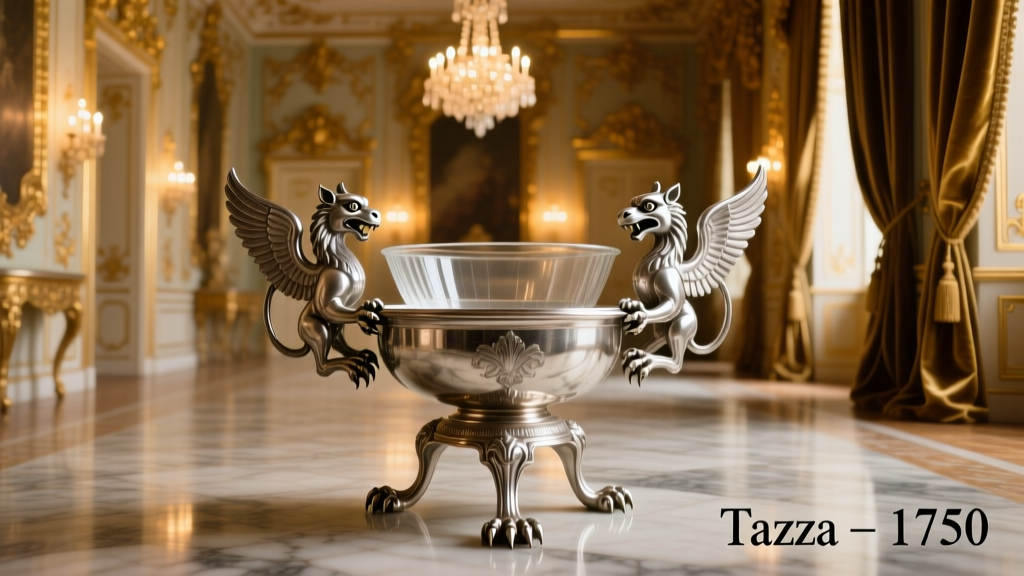
Silver Plate Tazza with Three Griffin Supports, Glass Bowl, and Tripod Paw Feet (13 × 14 Inches): Identification, Provenance, and Conservation Protocol
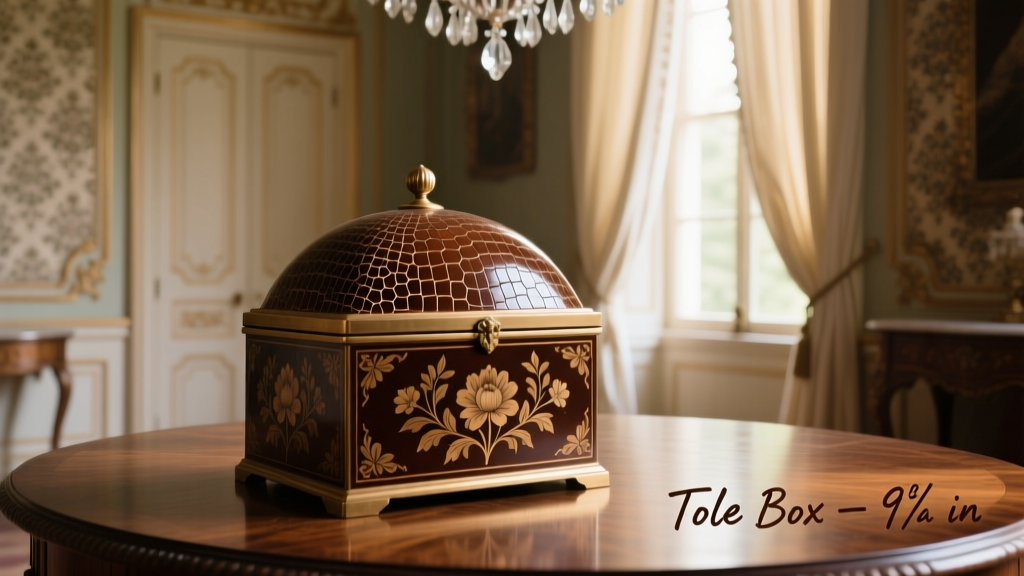
Tole Box with Deed Dome Top: Brown Japanning, Floral Motifs, and Alligatored Finish — A 9¾-Inch American Folk Art Treasure
Moser Vase, Smoky Amethyst Tint, Paneled Tapered Cylindrical Form with J. Hoffman Signature: A Technical and Historical Appraisal
Imari Plate with Prunus, Bamboo, and Chrysanthemums: A Late 19th-Century Polychrome Masterpiece (8¼ Inches)
Munger Pratt: The Forgotten American Maker of High-Grade Colonial Revival Furniture, 1920–1958
The Majolica Pitcher Owl Triangular: A Victorian Masterpiece in Ceramic Sculpture and Function
Flask Chestnut 16 Ribs Swirled Aqua Mantua Ohio 6-Inch: A Technical & Historical Profile of a Rare American Pressed Glass Chestnut

Bruno Schmidt Tommy Tucker Doll: A Collector's Guide to the 24-Inch Sleep-Eyes, Closed-Mouth, Ball-Jointed Antique