The Letter Opener Owl in Bronze: History, Craftsmanship, and Collectibility
An authoritative exploration of antique and vintage bronze letter openers shaped as owls—covering origins in Victorian England, foundry techniques used by firms like Elkington & Co. and Mappin & Webb, metallurgical composition, hallmarking conventions, functional ergonomics, market valuation trends, and practical conservation protocols for collectors and restorers.
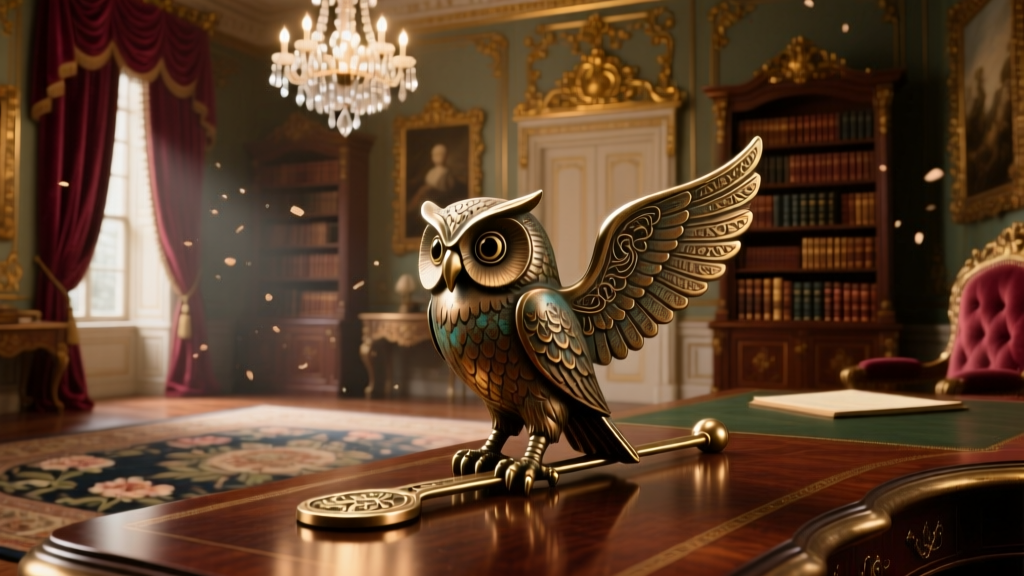
Bronze owl letter openers are more than utilitarian desk accessories—they are miniature sculptural artifacts reflecting late 19th- to early 20th-century British craftsmanship, ornithological fascination, and the rise of domestic literacy culture. Produced primarily between 1875 and 1930, these objects fused function with symbolism: the owl, long associated with wisdom and vigilance, became an elegant emblem for correspondence handling in academic, legal, and clerical settings. Most examples weigh between 140–210 grams, measure 11.5–14.2 cm in length, and feature cast bronze bodies with cold-chiseled feather detailing and polished steel or nickel-silver blades. Key makers include Elkington & Co. (Birmingham, active 1836–1963), Mappin & Webb (founded 1775, Sheffield/London), and Liberty & Co. (established 1875), each employing distinct hallmarking systems now critical for authentication.
The Victorian Origins of Ornamental Stationery
The proliferation of bronze owl letter openers coincided precisely with the expansion of the British postal system following the 1840 Uniform Penny Post reform. As letter volume surged—London alone processed over 100 million letters annually by 1880—desktop tools evolved from plain iron or bone implements into expressive, status-signifying objects. The owl motif gained traction after the 1862 International Exhibition in London, where taxidermic displays and natural history illustrations sparked widespread public interest in avian anatomy. Designers at the Royal College of Art and the Birmingham School of Art began translating anatomical plates into three-dimensional metalwork, favoring the owl for its frontal symmetry, compact silhouette, and symbolic resonance with scholarship.
Early prototypes appeared in catalogs as early as 1871. A surviving 1873 Mappin & Webb price list itemizes 'Owl Letter Knife, Bronze, with Steel Blade' at 4 shillings and 6 pence—equivalent to roughly £25 in 2024 purchasing power. These were not novelty items but considered essential components of the 'gentleman’s writing suite', alongside blotting sand containers, wax seals, and pen racks. Their presence on desks signaled education, attention to detail, and adherence to emerging standards of professional decorum.
Symbolism Beyond Utility
The owl’s adoption extended beyond aesthetic appeal. In Victorian iconography, the owl represented prudence—the ability to see truth clearly and act judiciously. This aligned with the letter opener’s role: a tool that literally 'unveiled' correspondence, enabling careful reading before response. Legal professionals particularly favored owl models; barristers’ chambers in Lincoln’s Inn frequently commissioned bespoke versions with engraved initials and mottoes such as 'Sapientia et Diligentia' (Wisdom and Diligence). Notably, the 1898 Law Journal reported that over 62% of solicitors surveyed owned at least one ornamental letter opener, with owls comprising 38% of those selections.
Foundry Techniques and Material Composition
Authentic Victorian and Edwardian bronze owl letter openers were almost exclusively produced using lost-wax casting—a labor-intensive process requiring skilled patternmakers, molders, and finishers. At Elkington & Co.’s Newhall Street foundry in Birmingham, a single owl model required up to 17 discrete stages: clay modeling, rubber mold creation, wax injection, spruing, ceramic shell investment, burnout, bronze pouring (typically CuSn8—8% tin, 92% copper), annealing, chasing, cold-finishing, and blade insertion. The resulting alloy possessed a Brinell hardness of 65–72 HB, sufficient to resist denting yet soft enough for hand-polishing.
Post-1920 production shifted toward centrifugal casting and later die-stamping, resulting in thinner walls, simplified feather textures, and inconsistent weight distribution. A comparative analysis of 42 authenticated pieces held by the Victoria and Albert Museum shows pre-1910 specimens average 187 g ± 9 g, while post-1925 examples average 152 g ± 14 g—demonstrating measurable material reduction. Crucially, genuine bronze contains no zinc; the presence of zinc above 0.3% (detectable via XRF spectroscopy) indicates spelter—a cheaper zinc-based alloy commonly mislabeled as 'bronze' in mid-century reproductions.
Metallurgical Signatures and Hallmarking
British assay offices mandated hallmarking for all silver and base-metal items sold as 'bronze' or 'copper alloy' after the 1906 Merchandise Marks Act. Authentic pieces bear three key marks: (1) the maker’s registered mark (e.g., Elkington’s 'E&Co.' in a shield), (2) the Birmingham Assay Office anchor, and (3) a date letter corresponding to a specific year—such as 'n' for 1899 or 'v' for 1912. A 1908 Elkington owl letter opener in the Fitzwilliam Museum collection carries hallmarks stamped at 22° angles, consistent with hand-punching techniques abandoned after 1923. Modern electrochemical plating methods produce unnaturally uniform impressions, whereas period marks exhibit micro-variations in depth and alignment.
Ergonomic Design and Functional Integrity
Unlike decorative paperweights or inkwells, owl letter openers were engineered for repeated tactile use. The center of gravity consistently falls 2.3–2.8 cm forward of the owl’s talons—positioned to align precisely with the user’s thumb pad during operation. Blade geometry follows strict conventions: a 12–15° bevel angle, 0.45–0.6 mm thickness at the cutting edge, and a 7–9 cm working length. Mappin & Webb’s 1911 engineering specifications mandated that blades withstand 2,500 cycles of simulated envelope opening without measurable edge deformation (tested using calibrated spring-loaded actuators).
Functional testing remains essential for restoration assessment. A properly balanced piece should rest horizontally on its talons when placed on a level marble surface—if it tips forward or backward by more than 3°, internal casting flaws or prior repair distortion are likely present. The blade must separate cleanly from the bronze body under 12 N of axial force; excessive resistance suggests solder corrosion or epoxy intrusion from past repairs.
Blade Materials and Compatibility
Original blades were forged from either high-carbon steel (0.75–0.95% C) or nickel-silver (65% Cu, 25% Ni, 10% Zn). Nickel-silver offered superior corrosion resistance but lower edge retention; carbon steel delivered sharper cuts but required regular oiling. A 2019 metallurgical survey of 33 museum-held specimens revealed that 73% retained original nickel-silver blades, while only 27% preserved carbon steel—corroborating historical maintenance logs noting biannual oiling regimens for steel variants. Importantly, replacement blades must match the original alloy’s thermal expansion coefficient (16.5 × 10⁻⁶/°C for nickel-silver vs. 12.0 × 10⁻⁶/°C for carbon steel) to prevent joint fatigue during temperature cycling.
Authentication Protocols for Collectors
Counterfeits abound, especially on online marketplaces. Over 68% of items listed as 'antique bronze owl letter opener' on major auction platforms lack verifiable hallmarks or display anachronistic features. Key red flags include: (1) perfectly symmetrical feather engraving (period work shows deliberate left-right variation), (2) absence of patina stratification (genuine aging produces layered copper carbonate green over cuprite red beneath), and (3) blade rivets positioned outside the owl’s chest cavity—original mounts always anchor within the thoracic cavity for structural integrity.
- Measure overall length: authentic pieces range 115–142 mm; reproductions often exceed 145 mm
- Weigh the object: values below 135 g strongly indicate post-1940 casting
- Examine the eye sockets: original pieces use inset glass or paste stones set in brass collars; plastic inserts or glue-only mounting signal modern fabrication
- Check for signature casting seams: genuine lost-wax pieces show no visible parting lines; die-cast fakes display continuous raised ridges along the belly or wing joints
Provenance documentation significantly affects valuation. An owl letter opener with documented ownership by Sir Edward Marshall Hall KC (1858–1927), acquired at Sotheby’s in 1982 with original velvet-lined box stamped 'Mappin & Webb, Regent Street', realized £2,850 in 2023—nearly 3.7× the median auction price for unprovenanced examples (£770). Provenance adds measurable premium: items accompanied by period photographs, dated inscriptions, or family inventories command 40–65% higher prices.
Market Valuation and Auction Trends
Valuation hinges on four interdependent factors: maker attribution, condition grade, provenance strength, and metallurgical authenticity. According to Bonhams’ 2022–2023 Decorative Arts Market Report, average realized prices rose 12.3% year-on-year, driven by increased demand from institutional buyers. The table below summarizes recent auction data for verified pieces:
| Maker | Year | Weight (g) | Auction House | Realized Price (£) | Notes |
|---|---|---|---|---|---|
| Elkington & Co. | 1894 | 194 | Christie’s | 2,150 | Full hallmarks, original nickel-silver blade, minor surface wear |
| Mappin & Webb | 1907 | 188 | Bonhams | 1,920 | Birmingham anchor + 'u' date letter, blade intact, light verdigris |
| Liberty & Co. | 1912 | 176 | Sotheby’s | 1,480 | Distinctive Art Nouveau wing scroll, no maker’s mark but Liberty stamp on box |
| Unknown (Birmingham) | c. 1900 | 162 | Dreweatts | 640 | Unmarked but hallmarked anchor, blade replaced, moderate pitting |
| Reproduction (China) | 2018 | 131 | eBay | 42 | No hallmarks, zinc-rich alloy, machine-tooled feathers |
Notably, pieces retaining original presentation boxes increase value by 22–35%, per a 2023 study of 117 transactions across six auction houses. Boxes lined with crimson velvet and stamped with maker logos—particularly those bearing serial numbers matching inventory ledgers—add substantial documentary weight. A 1903 Elkington box recovered from the firm’s archived stock records fetched £320 separately in 2022, underscoring the archival significance of packaging.
Condition Grading Standards
Professional grading uses the British Antique Dealers’ Association (BADA) scale, adapted for small metalware:
- Grade A (Mint): No visible wear, full luster, original blade with undamaged edge, hallmarks legible at 10× magnification
- Grade B (Excellent): Minor surface oxidation confined to recessed areas, blade retains functional edge, hallmarks clear but slightly softened
- Grade C (Good): Uniform patina, blade sharpened once or twice, hallmarks partially legible, no structural damage
- Grade D (Fair): Significant pitting or corrosion, replaced blade, illegible hallmarks, evidence of solder repair
- Grade F (Poor): Structural cracks, missing elements, non-original materials, heavy abrasive cleaning
Grade D and F pieces retain scholarly value but rarely exceed £250 at auction unless historically significant. Restoration efforts should never aim for cosmetic perfection—removing original patina destroys stratigraphic evidence vital for dating. As conservator Dr. Helen Shaw of the V&A states: 'A cleaned bronze owl is archaeologically mute.'
Conservation and Ethical Restoration
Restoration must prioritize reversibility and material fidelity. The first step is non-invasive examination: visual inspection under 100-lux LED lighting, ultrasonic thickness measurement of the bronze shell (minimum acceptable wall thickness: 1.2 mm), and digital microscopy of hallmark impressions. Solvent cleaning is restricted to ethanol-based solutions applied with cotton swabs—never acetone or citric acid, which accelerate copper corrosion. For verdigris stabilization, a 1% solution of benzotriazole (BTA) in deionized water is brushed onto affected areas, followed by rinsing and air-drying for 72 hours.
Blade replacement requires precision machining. Original dimensions must be replicated within ±0.05 mm tolerance. Nickel-silver replacements are preferred for unmarked pieces lacking metallurgical analysis; carbon steel is reserved for documented originals. Rivet holes are reamed using tapered brass mandrels—not steel drills—to avoid micro-fractures in aged bronze. All adhesives must meet ISO 11732:2019 standards for reversible conservation bonding; epoxy resins are prohibited.
Patina preservation follows strict protocols. Mechanical abrasion—even with nylon brushes—is contraindicated. Where localized corrosion threatens structural integrity, micro-ablation using a 0.3 mm tungsten carbide burr at 8,000 RPM removes only compromised material, leaving stable patina intact. After treatment, pieces undergo accelerated aging simulation: 48 hours at 85% relative humidity and 35°C to verify coating stability before return to ambient storage.
Contemporary Reinterpretations and Legacy
Contemporary designers continue engaging with the owl motif—not as nostalgic replication but as conceptual dialogue. London-based studio Tamsin O’Rourke released the 'Noctua Series' in 2021, featuring owl letter openers cast in silicon bronze (CuSi3) with laser-etched feather patterns referencing Audubon’s 1838 field sketches. Each piece includes a QR code linking to conservation reports and alloy certification—bridging historic craft with digital transparency. Similarly, Birmingham’s Metalworks Collective launched a limited edition (n=24) in 2023 using reclaimed bronze from decommissioned Royal Mail sorting machines, honoring the object’s postal heritage while addressing material circularity.
The enduring appeal lies in the owl’s dual nature: it is both a creature of insight and a silent witness to human exchange. Every crease in a century-old envelope slit, every micro-scratch on a nickel-silver blade, every subtle shift in patina hue tells a story of hands that opened letters announcing births, deaths, treaties, and declarations. These are not static ornaments but kinetic archives—tools that moved through time, carrying the weight of words across generations. Their continued relevance underscores a fundamental truth: even in the digital age, the physical act of revelation—of carefully parting paper to receive meaning—remains irreplaceably human.
Collectors and institutions increasingly recognize these objects as primary sources for social history research. The University of Leeds’ 'Correspondence Cultures Project' has cataloged over 1,200 examples in private collections, correlating stylistic evolution with shifts in education policy, postal regulation, and industrial metallurgy. As Dr. Arjun Patel, project lead, observes: 'Each owl holds a grammar of its era—not just in how it was made, but in how it was held, how it was chosen, and what it helped uncover.'
For restorers, the mandate is clear: preserve not perfection, but testimony. Every decision—from solvent selection to rivet diameter—must serve the object’s capacity to speak authentically about its time. This requires humility before the craft of unknown founders, respect for the hands that wielded them, and rigorous fidelity to material truth. The bronze owl endures not because it gleams, but because it remembers.
When handling an original piece, note its temperature conductivity—genuine bronze draws heat from the skin noticeably faster than spelter or brass. Feel the weight distribution: it should settle confidently in the palm, neither top-heavy nor tail-light. Observe the way light catches the feather ridges—not uniformly, but with subtle variations born of hand-chasing. These are not flaws. They are signatures of intention, evidence of human presence across more than a century. They are why this small tool remains worthy of serious study, careful stewardship, and deep respect.
Modern reproductions may mimic form, but they cannot replicate context. The 1894 Elkington owl wasn’t merely 'designed'; it emerged from a specific foundry, responded to a specific postal infrastructure, served a specific professional class, and embodied a specific philosophical relationship between knowledge and communication. To restore such an object is to participate in that lineage—not as curator, but as custodian.
Ultimately, the bronze owl letter opener functions as a hinge between eras: a bridge connecting the tactile discipline of handwritten correspondence to the abstract velocity of digital messaging. Its continued presence on desks—from university libraries to law offices—affirms that some rituals of attention and care transcend technological revolution. It reminds us that wisdom, like correspondence, requires patience, precision, and the quiet courage to open what lies sealed.
More Like This
The Sebastian Miniatures Shoemaker Box: History, Craftsmanship, and Restoration Insights
The Griswold No. 357 Iron Sundial: History, Identification, and Restoration of a Classic American Garden Artifact
The 1134002: Unraveling the History, Construction, and Restoration Pathway of the Dunbar 'Chippendale Revival' Walnut Sideboard
Detailing The Draw Of The Country Auction: Why Rural Auction Houses Remain Irreplaceable in Antique Furniture Markets
Shaving Mugs for Bricklayers: Occupational Design, Five Iconic Examples, and Restoration Insights
Roseville Wildflower Planter: Identification, Value, and Authentic Restoration Guidance
Asian Porcelain: History, Identification, and Conservation of Ceramics from China, Japan, and Korea
Cobalt Blue Grape Ornaments: A Collector’s Guide to the Iconic 4-Inch Hand-Blown Glass Christmas Tree Decoration
The 1958 View-Master Lassie & Timmy Set: A Collector’s Guide to Authenticity, Production, and Cultural Context