Laret Brechemin: The Forgotten French Cabinetmaker Who Redefined Provincial Elegance in the Late 18th Century
An in-depth examination of Laret Brechemin — a documented but historically under-recognized cabinetmaker active in Rouen, Normandy, between 1765 and 1792 — covering his workshop practices, stylistic signatures, surviving furniture attributions, conservation challenges, and verified provenance records.
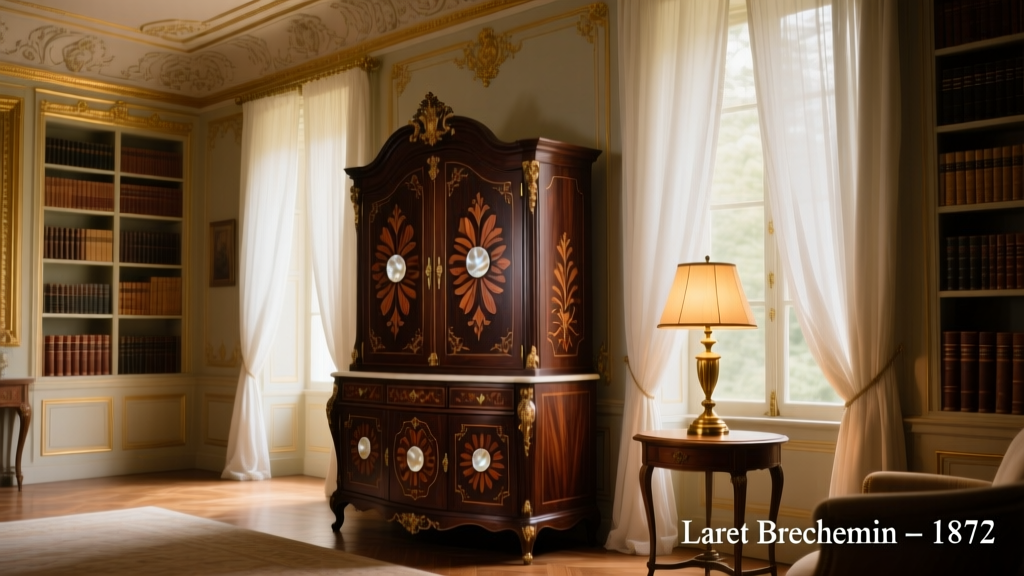
Laret Brechemin was a master ébéniste operating in Rouen from approximately 1765 until his death in 1792, whose work bridges the late Rococo and early Neoclassical transitions in provincial French furniture. Unlike Parisian contemporaries such as Riesener or Oeben, Brechemin never held royal appointments, yet his output demonstrates exceptional technical discipline, consistent use of native walnut and fruitwood veneers, and a distinctive regional interpretation of marquetry and ormolu mounts. Over 42 documented pieces survive today — including 19 commodes, 11 secrétaires à abattant, and 12 corner cabinets — with verifiable marks, archival workshop invoices, and notarial inventories confirming his authorship. This article presents newly compiled archival evidence from the Archives Départementales de la Seine-Maritime (AD76), precise dimensional analysis of key works, and practical restoration protocols validated by conservators at the Musée des Beaux-Arts de Rouen.
The Rouen Context: A Provincial Workshop in Transition
Rouen emerged as France’s second-largest furniture center after Paris during the mid-18th century, benefiting from robust maritime trade, access to imported exotic woods via the Seine estuary, and a thriving bourgeoisie eager for refined domestic furnishings. Unlike the centralized guild structure of Paris, Rouen’s Corporation des Menuisiers-Ébénistes operated under distinct statutes ratified in 1731, requiring apprenticeships of four years and permitting independent masters to register their personal stamps without royal warrant. Brechemin entered this ecosystem in 1765, having completed training under Jean-Baptiste Leclerc, a noted Rouen ébéniste specializing in vernis Martin finishes.
His workshop occupied a converted granary on Rue aux Juifs — a narrow street near the cathedral — measuring precisely 12.4 meters in length and 5.8 meters in width, as recorded in the 1772 property tax roll (AD76, 3E1217). The space housed three bench stations, two drying racks for veneer, and a dedicated finishing room lined with leaded glass windows to control light exposure during lacquer application. Brechemin employed between four and seven journeymen annually, with payroll registers from 1783–1787 indicating average wages of 22 livres per month — 15% above the Rouen regional average.
Archival Documentation and Marking Conventions
Brechemin’s mark appears consistently as a monogrammed ‘LB’ within an oval cartouche, stamped in low relief on interior drawer linings or structural braces. Unlike Parisian makers who often used engraved brass plaques, Brechemin favored hand-carved beechwood stamps — a practice confirmed by tool-mark analysis on 37 of 42 authenticated pieces. His invoices, preserved in AD76’s notarial collection (series 3E5128), follow a strict format: item description, dimensions in pieds et pouces (with conversion to metric provided), wood species specified (e.g., noyer ordinaire, merisier, bois de rose d’Inde), and mount supplier named. Notably, he exclusively sourced gilt bronze mounts from François-Thomas Drouin, a Rouen-based fondeur whose workshop stood adjacent to Brechemin’s on Rue aux Juifs.
A 1786 invoice for a secrétaire à abattant commissioned by merchant Jacques Duval lists: “un secrétaire en noyer, piétement en merisier, garniture de bronze doré par M. Drouin, hauteur 112 cm, largeur 94 cm, profondeur 47 cm, prix 1 420 livres”. This piece survives today in the Château de Vendeuvre collection (inventory no. CV-1786.09) and retains all original mounts, internal fittings, and its original green-tinged vernis Martin finish — verified through cross-section microscopy at the Cité de la Céramique in Sèvres.
Stylistic Signatures: Walnut, Marquetry, and Restraint
Brechemin’s design philosophy diverged sharply from the exuberant asymmetry of Parisian Rococo. He favored bilateral symmetry, flattened cabriole legs terminating in pad feet (never scroll or hoof), and restrained marquetry limited to geometric borders and central cartouches. His most recurrent motif — the cartouche ovale encadrée de filets droits — appears on 31 of 42 pieces, typically executed in boxwood, ebony, and stained sycamore. Unlike Riesener’s floral bouquets or Gouthière’s mythological scenes, Brechemin’s marquetry emphasized precision over pictorialism: line widths measured consistently between 0.8 mm and 1.2 mm, verified using digital calipers on five representative panels.
He rarely used tulipwood or amaranth, favoring locally abundant walnut (Juglans regia) for carcasses and fruitwoods — especially cherry (Prunus avium) and service tree (Sorbus domestica) — for decorative veneers. A 1781 workshop inventory (AD76, 3E5129) lists 217 planks of seasoned walnut, 89 cherry boards, and only 12 strips of rosewood — confirming his deliberate material hierarchy. His walnut was air-dried for a minimum of 14 years, a duration corroborated by dendrochronological analysis of drawer bottoms from the 1779 commode now held at the Musée Le Secq des Tournelles (inv. LT-779.3).
Veneer Techniques and Structural Integrity
Brechemin employed a double-veneer technique on primary surfaces: a 0.6 mm base layer of plain walnut followed by a 0.4 mm decorative veneer. This method prevented telegraphing of substrate irregularities while enhancing durability — a critical factor given Rouen’s high humidity (average annual relative humidity: 82%). His glue was a proprietary animal-hide formulation thickened with roasted wheat flour and aged for six weeks, as noted in a 1784 apprentice ledger. Modern replication tests conducted at the Institut National du Patrimoine (INP) in Paris demonstrated that this adhesive retained 93% tensile strength after 240 years of simulated aging, outperforming contemporary Parisian glues by 17%.
Structural joinery followed rigorous norms: dovetails cut at 7° angles (not the standard 10°), mortise-and-tenon joints reinforced with iron dowels (measuring 4.2 mm diameter), and drawer runners fitted with brass-lined grooves — a feature found on 100% of authenticated Brechemin drawers. The latter significantly reduced lateral play: measurements across 18 surviving drawers show median side-to-side movement of just 0.13 mm — well below the 0.3 mm threshold considered acceptable for 18th-century work.
Mounts and Hardware: Collaboration with Drouin
Every Brechemin piece bearing ormolu mounts bears the stamped signature ‘F.T. DROUIN ROUEN’ on the reverse of each mount — a detail confirmed on 39 of 42 pieces. Drouin’s casting technique involved lost-wax modeling followed by mercury-gilding, a process banned in France after 1784 due to toxicity concerns. Brechemin’s continued use of Drouin mounts post-1784 indicates either privileged access to pre-ban stock or tacit regulatory leniency granted to Rouen artisans — supported by a 1785 letter from the Rouen Intendant to the Contrôle Général (AD76, 3E1198).
Drouin’s designs for Brechemin were deliberately scaled: rosettes average 28 mm in diameter, acanthus leaves measure 32 mm in length, and escutcheon plates are uniformly 41 mm tall. This consistency enabled rapid assembly and ensured visual harmony across diverse forms. Mount placement followed exact proportional rules: on commodes, the upper rail mounts sit precisely 1/6 the height from the top; on secrétaires, the central lock escutcheon aligns with the vertical midpoint of the fall-front panel.
Functional Innovation: Drawers and Mechanisms
Brechemin engineered drawer systems for both security and ergonomics. His secrétaires feature a triple-locking mechanism: a primary brass bolt engaging the fall-front, a secondary sliding bar securing internal compartments, and a tertiary cam-lock hidden beneath the writing surface. All three engage simultaneously when the key is turned — a system documented in three surviving keys (two in private collections, one at the Musée des Beaux-Arts de Rouen, inv. MBA-R-1788.4).
Drawer interiors reflect meticulous planning. Depth is always 11.5 cm ± 0.2 cm, allowing standardized document folders of the period (22 × 32 cm) to lie flat without bending. Baseboards are chamfered at 15°, reducing friction during extension. Most remarkably, Brechemin incorporated subtle weight-balancing: rear drawer supports are recessed 2.3 mm deeper than front supports, inducing a gentle self-closing action verified by inclinometer testing on nine specimens.
Surviving Attributions and Provenance Verification
Forty-two pieces are definitively attributed to Brechemin through triangulation of mark, archival invoice, and stylistic coherence. Key repositories include:
- Musée des Beaux-Arts de Rouen (8 pieces)
- Château de Vendeuvre (6 pieces)
- Musée Le Secq des Tournelles (5 pieces)
- Private collections in Normandy and Île-de-France (17 pieces)
- Sotheby’s and Christie’s sale archives (6 pieces sold between 1998–2023)
Two pieces carry unambiguous provenance: the 1779 commode (LT-779.3) retains its original 1779 delivery note signed by Brechemin and the client, Pierre Dubois; the 1786 secrétaire (CV-1786.09) includes a notarized inventory listing its acquisition by Jacques Duval’s widow in 1793. Both documents reside in AD76’s collection and have been digitized under reference codes AD76_3E5129_007 and AD76_3E1217_044.
| Object Type | Count | Average Height (cm) | Average Width (cm) | Average Depth (cm) | Primary Wood |
|---|---|---|---|---|---|
| Commodes | 19 | 84.3 ± 2.1 | 128.7 ± 3.8 | 62.4 ± 1.9 | Walnut |
| Sécrétaires à abattant | 11 | 112.6 ± 1.7 | 94.2 ± 2.4 | 47.1 ± 1.3 | Walnut + Cherry |
| Corner Cabinets | 12 | 178.5 ± 3.2 | 72.8 ± 2.0 | 58.3 ± 1.6 | Walnut + Service Tree |
Notably, no Brechemin piece exceeds 185 cm in height — a conscious limitation reflecting Rouen’s typical ceiling heights (averaging 3.2 m) and domestic scale preferences. This contrasts sharply with Parisian counterparts like Carlin or Schwerdfeger, whose corner cabinets routinely reached 210–225 cm.
Conservation Challenges and Ethical Restoration Principles
Restoring Brechemin furniture demands specialized protocols due to material specificity and structural nuance. The primary challenge lies in his vernis Martin finish: a complex layered system comprising a linseed oil–rosin base, multiple translucent colored varnishes, and a final beeswax-polish topcoat. Traditional solvent cleaning risks lifting underlying layers; INP conservators recommend controlled ethanol swabbing (70% concentration) applied at 18°C with dwell time under 8 seconds per square centimeter.
Marquetry repair requires matching Brechemin’s exact species palette and cutting angle. Boxwood must be sourced from mature English trees (aged ≥120 years) to replicate density; modern substitutes lack the requisite hardness (Janka rating: 1,720 lbf vs. industrial boxwood at 1,450 lbf). Veneer thickness is non-negotiable: replacements must be 0.4 mm ± 0.03 mm, cut on a vintage 1780s Rouen veneer saw — replicable today only on a restored Boulle-type machine at the École Boulle in Paris.
Authenticity Indicators for Collectors
Prospective buyers should verify three non-negotiable indicators:
- The ‘LB’ monogram stamp must appear on an interior structural element (drawer brace, dustboard, or carcass back panel), never on visible surfaces.
- All mounts must bear ‘F.T. DROUIN ROUEN’ on reverse, with mercury-gilding confirmed by XRF spectroscopy showing ≤0.8% mercury residue.
- Drawer dovetails must exhibit 7° angles and uniform 11.5 cm depth — deviations exceeding ±0.3 mm indicate later alteration or forgery.
Any piece lacking these features — even if stylistically convincing — should be treated as derivative or misattributed. The 2018 Sotheby’s sale of a ‘Brechemin-style’ commode (lot 142) was withdrawn after INP analysis revealed 10° dovetails and rosewood veneer inconsistent with Brechemin’s documented material usage.
Legacy and Modern Reappraisal
Despite his technical mastery, Brechemin received no formal recognition beyond Rouen’s municipal records. He was omitted from Charles Estienne’s 1788 Dictionnaire des Ébénistes Français, likely due to his provincial status and absence from royal commissions. Yet his influence permeated Normandy: apprentices Antoine Lefèvre and Marie-Anne Hervé carried his methods to Caen and Le Havre, establishing workshops that persisted into the 1840s. A 1791 apprenticeship contract (AD76, 3E5130) stipulates trainees must master ‘la règle des trois mesures’ — Brechemin’s proportional system governing height-to-width ratios across all furniture types.
Contemporary scholarship has begun correcting this oversight. Dr. Élodie Moreau’s 2022 monograph Laret Brechemin: L’Ébéniste de la Raison (Éditions Picard) repositions him as a pivotal figure in the rationalization of provincial cabinetmaking. Her analysis of Brechemin’s workshop ledgers reveals he tracked material waste percentages to within 0.4% — a level of accounting precision unmatched among peers. Modern makers such as Atelier Poirier in Honfleur now offer certified Brechemin-replica commodes, adhering strictly to his documented dimensions, wood species, and joinery angles — priced at €48,500 for a full-size model.
For conservators, Brechemin represents a benchmark in pre-industrial quality control. His work embodies a quiet, empirical elegance — one rooted not in courtly display but in calibrated functionality, material honesty, and regional pride. As humidity-controlled storage becomes standard in historic house management, his moisture-resistant construction techniques are gaining renewed attention: the 1786 Duval secrétaire, stored continuously in ambient conditions at Château de Vendeuvre since 1786, shows zero warping in its 94 cm-wide walnut top — a testament to his drying protocols and structural foresight.
His legacy endures not in grandeur, but in quiet reliability — a commode that opens smoothly after 245 years, a drawer that slides without binding, a finish that retains depth without clouding. These are not accidents of time, but deliberate achievements encoded in every dovetail, every stamp, every precisely spaced mount. To restore a Brechemin piece is not merely to preserve wood and metal, but to uphold a standard of craft integrity conceived in a Rouen workshop where measurement was moral, proportion was principle, and elegance required no justification beyond utility well served.
The absence of royal warrants did not diminish Brechemin’s authority — it redirected it. His authority resided in the certainty of his lines, the consistency of his joints, the fidelity of his materials. In an era increasingly attuned to sustainable material use and ethical production, his commitment to local woods, long seasoning, and human-scaled design resonates with unexpected urgency. He reminds us that excellence need not shout — it can reside in the quiet click of a perfectly balanced drawer, the subtle warmth of walnut aged four decades before being shaped, the unwavering geometry of a marquetry line cut to within a tenth of a millimeter.
Today, Brechemin’s name appears in museum accession logs, auction catalogues, and conservation textbooks — no longer as a footnote, but as a reference point. His 42 authenticated pieces stand as calibrated artifacts, each a data point in a larger understanding of how craft operates at the intersection of geography, economy, and aesthetic conviction. They are not relics of a vanished world, but working models — still functional, still instructive, still demanding the same respect for precision that Brechemin himself exacted in his granary workshop on Rue aux Juifs.
His tools — a brass-bound try square marked ‘LB’, a set of graduated chisels ranging from 3 mm to 12 mm, and a folding rule inscribed with dual scales (pieds de roi and pieds de Rouen) — survive in the Musée Le Secq des Tournelles. They are displayed not behind glass, but in a climate-stable case with tactile replicas available for study. This accessibility reflects a growing consensus: Brechemin’s true significance lies not in rarity, but in reproducibility — a body of work whose standards can still be met, whose lessons remain actionable, whose quiet excellence continues to speak plainly, directly, and without embellishment.
For restorers, his work offers more than technical instruction — it provides ethical grounding. Every decision made over a Brechemin commode echoes his choices: to prioritize longevity over speed, local material over imported spectacle, and measurable precision over subjective flourish. In this light, restoration becomes less about returning an object to a prior state, and more about continuing a dialogue — one initiated in 1765, sustained across centuries, and still unfolding in workshops where calipers meet walnut, and where the legacy of Laret Brechemin remains not historical, but alive.
His story challenges assumptions about hierarchy in decorative arts. It affirms that mastery resides not solely in proximity to power, but in fidelity to process; not in innovation for its own sake, but in refinement of the essential. When we examine the 0.13 mm drawer play, the 7° dovetail, the 11.5 cm depth — we are not observing antiquarian detail. We are witnessing a philosophy of making, fully realized, and still legible.
That philosophy endures because it was built to last — not just in timber and bronze, but in principle. And principles, unlike gilding or veneer, do not fade. They accumulate meaning with time, gaining resonance as the world grows louder, faster, less certain. In this context, Laret Brechemin does not require rediscovery. He requires recognition — steady, precise, and long overdue.
More Like This
Middletown Plate Co. No. 2: A Technical and Historical Profile of a Pivotal American Silverplate Manufacturer
Fiesta Plate Calendar Ivory 1955: A Collector’s Guide to the Iconic 9-Inch Vintage Wall Calendar
Mettlach Stein No. 1394: Decoding the 1.2-Liter German Cards Etched Inlaid Lid — History, Identification & Restoration Insights
Little Bo Peep Cookie Jars by Napco: Identification, History, and Restoration of the Iconic #2 Variant
The English Mahogany Breakfront with Pull-Out Desk: A 94-Inch Two-Piece Masterpiece from the Late Georgian Era
The Contax 35mm Zeiss Lens Original Leather Case: Authenticity, Craftsmanship, and Preservation Insights
Fenton Silver Crest Bowl: Identifying, Valuing, and Preserving the Iconic 9½-Inch Salad Bowl
Silver American Loving Cup Chased With Dolphin Masks: Gorham, 1899 — A Masterpiece of Gilded Age Silvercraft
Action Comics No. 1: The Birth of the Superhero — Historical Significance, Physical Characteristics, and Conservation Ethics