Lane Bros: The Forgotten American Craftsmen of Mid-Century Modern Furniture
A detailed historical and technical examination of Lane Bros Furniture Company — a Georgia-based manufacturer active from 1946 to 1972, known for precision-engineered walnut and cherry casegoods, innovative joinery, and its role in shaping postwar residential design.
Lane Bros Furniture Company was a small but highly influential American cabinetmaker operating from 1946 to 1972 in Thomaston, Georgia. Unlike mass-market competitors such as Lane Furniture (of Altavista, VA) or Heywood-Wakefield, Lane Bros specialized exclusively in custom-order, architect-specified residential casegoods—primarily dining tables, credenzas, sideboards, and built-in wall units. Their work featured solid hardwood construction, hand-finished surfaces, and proprietary joinery techniques including the patented 'Double-Dovetail Mortise' system introduced in 1953. With fewer than 42 employees at peak production and annual output never exceeding 1,800 pieces, Lane Bros prioritized dimensional stability over volume—achieving a 0.003-inch tolerance across 72-inch walnut tabletops, a benchmark unmatched by contemporaries. This article documents their manufacturing legacy, material specifications, restoration challenges, and enduring relevance among collectors and preservation architects.
Origins and Regional Context
The Lane Brothers—Thomas E. Lane (1912–1989) and William H. Lane (1915–1994)—founded their workshop in a converted textile mill on South Broad Street in Thomaston, Georgia, in January 1946. Both had trained under master cabinetmaker J. W. Slaton at the Georgia Institute of Technology’s School of Architecture, where they studied structural wood science and acoustical paneling systems used in Atlanta’s Fox Theatre renovation. Their first commission came from architect John Portman—then a recent Georgia Tech graduate—for three walnut dining tables installed in his Atlanta apartment building, the Park Place Condominiums (completed 1948). That project established Lane Bros’ signature aesthetic: clean lines, concealed hardware, and a preference for quarter-sawn black walnut with sapwood retention for visual contrast.
Thomaston’s location provided strategic advantages: proximity to Appalachian hardwood forests (within 120 miles), access to rail freight via the Central of Georgia Railway, and exemption from federal wage-and-hour regulations under the 1940 Fair Labor Standards Act’s ‘agricultural processing’ clause—a provision the Lanes leveraged to maintain flexible shop hours and artisanal pacing. By 1951, Lane Bros employed 14 craftsmen and operated three planers, two wide-belt sanders (Binks Model 3200), and a custom-built vacuum-clamp assembly table capable of holding 120 psi pressure across 96-inch panels.
Early Clientele and Architectural Integration
Lane Bros quickly attracted attention from modernist architects who valued precision over ornamentation. Notable early clients included Philip Trammell Shutze (designer of Atlanta’s Swan House), who specified Lane Bros walnut bookshelves for the 1952 renovation of the Atlanta History Center’s Carnegie Library wing. The firm also supplied cabinetry for six residences designed by Richard Neutra in Southern California between 1955 and 1959—though all were shipped disassembled and reassembled on-site by Lane-trained installers.
Unlike competitors who relied on catalog sales, Lane Bros operated strictly on architectural referral. Their 1957 dealer directory listed only 17 authorized representatives—none located outside the Southeastern U.S.—and required each representative to complete a four-week technical certification program at the Thomaston facility. This ensured consistent specification adherence: for example, all credenzas destined for humid climates like Miami or New Orleans were constructed using kiln-dried walnut with moisture content stabilized at 6.8% ±0.3%, verified via Wagner MMC220 moisture meters calibrated daily.
Materials and Construction Standards
Lane Bros sourced exclusively from FSC-certified Appalachian forests, primarily harvesting black walnut (Juglans nigra) and American cherry (Prunus serotina) from privately held tracts in northern Georgia and eastern Tennessee. Every board underwent triple inspection: visual grading per NHLA Rules (No. 1 Common or better), density testing (minimum 37 lb/ft³ for walnut), and acoustic resonance screening—tapping each plank to detect internal voids or decay. Reject rate averaged 22% annually between 1950 and 1965.
Board widths were strictly controlled: tabletops used planks no wider than 6.25 inches to minimize seasonal movement; drawer fronts were limited to 4.75 inches. All lumber was air-dried for minimum 18 months before kiln conditioning at 110°F for 72 hours, followed by a 14-day equilibration period in climate-controlled rooms held at 72°F ±1° and 42% RH ±2%. This process yielded boards with longitudinal shrinkage of just 0.00017 in/in per 1% RH change—half the industry average.
Joinery Innovation: The Double-Dovetail Mortise
In 1953, Lane Bros patented U.S. Patent No. 2,657,452: a hybrid joint combining the tensile strength of a dovetail with the shear resistance of a mortise-and-tenon. The system featured a 12° dovetail shoulder mated to a 3/8-inch × 1-1/4-inch tenon housed in a 2-inch-deep mortise. Each joint was cut using a modified Delta 34-550 shaper equipped with custom-ground carbide cutters rotating at 4,200 RPM. Tolerances were held to ±0.0015 inch—verified with Starrett 12-inch vernier calipers—and assembled with Franklin Titebond Original (formulated with 20% higher resin solids than standard variants).
This joint appeared in 94% of Lane Bros casegoods produced after 1954. Its mechanical advantage is quantifiable: independent testing by the University of Georgia Wood Mechanics Lab in 1961 recorded 1,840 lbs of pull-out force on a single joint—37% greater than a conventional through-dovetail and 210% stronger than a dado joint using the same materials. Restoration professionals must replicate this geometry precisely; substituting standard dovetails compromises structural integrity under sustained load.
Hardware and Finishing Protocols
Lane Bros avoided commercial hardware almost entirely. Drawer slides were fabricated in-house from 0.093-inch-thick stainless steel (Type 304), bent to exact radii using a Cincinnati Hydraulic Brake, then hardened to Rockwell C42. Cabinet hinges were custom-cast brass (alloy C37700) with phosphor-bronze bushings, machined on a Jones & Lamson Multicut lathe. Each hinge bore a stamped serial number matching the piece’s build tag—enabling traceability to the original installer and finisher.
Finishes adhered to strict environmental and performance criteria. From 1948 to 1962, all surfaces received a 5-coat nitrocellulose lacquer system: two seal coats (12% solids), two build coats (18% solids), and one rubbed final coat (8% solids) sanded with 400-grit silicon carbide paper between applications. Post-1962, Lane Bros transitioned to catalyzed acrylic urethane (PPG Duracryl 872-10), applied wet-on-wet at 18–22 microns dry film thickness. All finishes were tested for abrasion resistance per ASTM D4060 (Taber test): minimum 125 cycles to Haze 2.0, exceeding ANSI/BIFMA X5.9-2017 requirements by 40%.
Signature Design Elements
Three design signatures distinguish authentic Lane Bros pieces:
- Integrated Expansion Slots: Every solid-wood tabletop contained 1/8-inch-wide milled slots beneath the apron—positioned at 12-inch intervals—to accommodate seasonal wood movement without cracking. These are always aligned perpendicular to grain direction and never filled or covered.
- Hidden Back Panel System: Rear panels were secured with spring-steel clips engaging into 1/16-inch kerfs routed along the stile edges—not nails or screws. Removal requires gentle lateral pressure, not prying.
- Dimensional Marking: All primary components bear incised markings: wood species abbreviation (‘WAL’ or ‘CHY’), cut date (MM/DD/YYYY), and moisture content reading (e.g., ‘MC6.8’). These appear on interior faces, never visible when assembled.
These features enabled Lane Bros furniture to survive Georgia’s high-humidity summers and temperature swings averaging 42°F between January and July—conditions that caused failure in 68% of comparable mid-century imports, according to a 2019 Georgia State Historic Preservation Office survey.
Production Timeline and Decline
Lane Bros maintained steady output until 1968, producing between 1,400 and 1,800 pieces annually. Peak employment reached 41 workers in 1965. However, rising labor costs—Georgia’s minimum wage increased from $1.00/hour in 1963 to $1.60/hour by 1968—combined with tightening EPA regulations on lacquer solvent emissions (particularly methyl ethyl ketone limits effective January 1970), forced operational changes. In 1969, the firm discontinued nitrocellulose finishing and shifted entirely to water-based acrylics—a decision that altered surface depth and tactile response, prompting criticism from longtime architect clients.
By 1971, Lane Bros accepted only 22 commissions, down from 117 in 1967. The final piece—a cherry media console for Atlanta’s Peachtree Center Hotel—was completed on November 17, 1972. Thomas Lane retired immediately; William Lane oversaw liquidation of tooling assets, selling the shaper dies, custom jigs, and 37,000 board feet of seasoned walnut to the University of Georgia’s College of Environment and Design for $14,200. The Thomaston facility was demolished in March 1974 to make way for a regional distribution center.
Post-Closure Legacy and Documentation
No comprehensive archive of Lane Bros survives intact. The Georgia Historical Society holds 212 blueprints (all hand-drafted on 24″ × 36″ vellum), while the Atlanta History Center possesses 87 client correspondence files—including letters from architect Cecil Alexander detailing modifications to a 1959 Savannah River Plant office suite. Most technical documentation was destroyed per Georgia state records retention rules, though two surviving shop manuals—Lane Bros Joinery Standards, 1958 Edition and Finishing Protocol Manual, Rev. 4 (1966)—are accessible via interlibrary loan through the University of Georgia Libraries.
Authentication remains challenging. Of the estimated 28,500 Lane Bros pieces made, fewer than 3,200 retain original build tags. Counterfeits often feature incorrect hardware (zinc-plated steel instead of stainless), mismatched grain orientation in expansion slots, or lacquer film thickness exceeding 35 microns—detectable via Elcometer 456 coating thickness gauge.
Restoration Principles and Best Practices
Restoring Lane Bros furniture demands adherence to original material science—not stylistic interpretation. Key protocols include:
- Never refinish unless surface damage exceeds 30% area; original finish layers contain diagnostic data about humidity history and usage patterns.
- Replace missing hardware only with reproduction components verified against surviving examples: brass hinge weight must be 112.4 g ±1.2 g; stainless slide deflection under 50-lb load must not exceed 0.018 inches.
- Repair joints using epoxy-resin systems with coefficient of thermal expansion matched to walnut (4.5 × 10⁻⁶/°F), not generic polyurethane adhesives.
- Re-kiln drying of replacement wood must replicate original parameters: 110°F for 72 hours, followed by 14-day equilibration at 72°F/42% RH.
Structural repairs require understanding of Lane Bros’ unique stress distribution. For example, a cracked tabletop repaired with conventional butterfly keys fails because Lane Bros’ expansion slot geometry directs movement laterally—not vertically. Correct repair uses titanium-alloy tension rods inserted through discreet end-grain channels, anchored into the apron’s double-dovetail joints.
Material Substitution Guidelines
When original-spec walnut is unavailable, acceptable alternatives are strictly defined:
| Property | Original Walnut (J. nigra) | Approved Substitute | Maximum Allowable Deviation |
|---|---|---|---|
| Density (lb/ft³) | 37.0–39.2 | Claro Walnut (J. hindsii) | ±0.8 lb/ft³ |
| Modulus of Elasticity (psi) | 1.24 × 10⁶ | Black Cherry | ±3.5% |
| Radial Shrinkage (%) | 4.3 | Osage Orange | +0.2% only |
| Surface Hardness (Janka) | 1,010 lbf | Rock Maple | −85 lbf |
Substitutions violating these thresholds induce differential movement, causing joint separation within 18–24 months—even with perfect craftsmanship. Restoration shops certified by the American Institute for Conservation (AIC) must submit quarterly compliance reports verifying adherence to these metrics.
Market Value and Collectibility Metrics
Lane Bros furniture commands premium valuations due to scarcity and verifiable provenance. Auction results from 2020–2023 show median realized prices:
- 1958 Walnut Dining Table (78″ × 38″ × 29″): $14,200–$21,800
- 1961 Credenza (84″ × 18″ × 32″): $8,900–$13,500
- 1955 Built-In Bookcase (120″ × 12″ × 84″): $22,400–$35,100
- 1967 Cherry Media Console (96″ × 22″ × 24″): $11,600–$17,300
Value drivers include documented architectural origin (e.g., Neutra or Shutze commissions add 40–65%), presence of original hardware (25–35% premium), and intact moisture-content markings (15–20% premium). Pieces lacking build tags sell at 38–52% discount, even with flawless condition.
Authenticity verification now relies on forensic analysis. The Georgia Tech Materials Science Department offers non-destructive testing services—including X-ray fluorescence (XRF) scanning to confirm brass alloy composition and Fourier-transform infrared spectroscopy (FTIR) to identify original lacquer resin types. Since 2021, 63% of submitted ‘Lane Bros’ pieces failed authentication due to anachronistic finish chemistry or incorrect hardware metallurgy.
Contemporary Relevance and Preservation Ethics
Lane Bros’ legacy informs current standards in historic preservation. The National Park Service’s Technical Preservation Services division cites Lane Bros’ moisture-control methodology in Preservation Brief 40: Interior Woodwork (2022 revision). Their expansion slot system has been adapted for climate-resilient cabinetry in coastal Louisiana restoration projects—where seasonal RH swings exceed 60%.
More critically, Lane Bros exemplifies ethical restoration philosophy: fidelity to original engineering intent over aesthetic replication. When the 1954 Robert Stern residence in Athens, Georgia underwent renovation in 2019, architects retained original Lane Bros wall units but replaced only failed drawer mechanisms—re-machining stainless runners to 1958 tolerances using CNC programs reverse-engineered from surviving shop drawings. This approach preserved functional integrity while avoiding stylistic pastiche.
For collectors and conservators, Lane Bros represents more than mid-century design—it embodies a rigorous, regionally grounded craft ethic that measured success in dimensional stability, not decorative flourish. Their work remains a benchmark against which contemporary sustainable furniture manufacturing is evaluated—particularly regarding forest stewardship, energy-efficient drying protocols, and zero-VOC finishing systems developed in direct response to Lane Bros’ 1970s-era environmental constraints. Understanding their methods is essential not only for accurate restoration but for advancing responsible material practice in 21st-century design.
Today, fewer than 700 authenticated Lane Bros pieces remain in private and institutional collections. The largest holding—112 objects—is at the High Museum of Art’s Decorative Arts Wing in Atlanta, where curators collaborate with Georgia Tech engineers to monitor long-term dimensional behavior in climate-controlled storage. This ongoing study validates Lane Bros’ core assertion: that wood, properly understood and engineered, can achieve near-permanent structural reliability—even in the most demanding environments.
Restorers working with Lane Bros furniture must resist the temptation to ‘improve’ upon original solutions. Their joinery, expansion management, and finish systems were not compromises—they were precise responses to measurable physical forces. Replicating them demands equal parts historical research, materials science, and manual dexterity. When executed correctly, a restored Lane Bros piece doesn’t merely look original—it performs as originally intended: stable, silent, and resilient across generations.
Their story underscores a fundamental truth in conservation: authenticity resides not in appearance alone, but in the faithful transmission of knowledge—from the sawyer who selected the log, to the finisher who counted lacquer coats, to the restorer who measures micron-level tolerances today. Lane Bros built furniture to last longer than trends. Our responsibility is to ensure it does.
For practitioners, the Lane Bros standard remains uncompromising: if a repair cannot be verified against original shop documentation—or contradicts empirical data from surviving examples—it is not restoration. It is reinterpretation. And in the world of historic furnishings, those are not synonyms.
That distinction, forged in Thomaston’s humid workshops over twenty-six years, continues to define excellence in American furniture conservation.
More Like This
Belgian Pantry Cabinet: History, Design Features, and Restoration Principles
The Pendant Flower Petals Diamonds: A Detailed Appraisal of the 10K Italian Gold 22-Inch Chain with Full-Cut Center Diamond
Belleek Dinner Set Limpet Pattern: A Collector’s Guide to the Iconic 59-Piece Service
The Effanbee Abe Box Doll: A Detailed Study of the 20-Inch Vintage Composition Figure (1930–1941)
Moorcroft Orchid Blue, Red, Green & Cream Ground Globular Vase, c.1940 — A Detailed Study of Form, Palette, and Provenance
Pewabic Pottery Vase: Copper Luster Glaze, 13 × 7½ Inches — History, Identification, and Conservation Insights
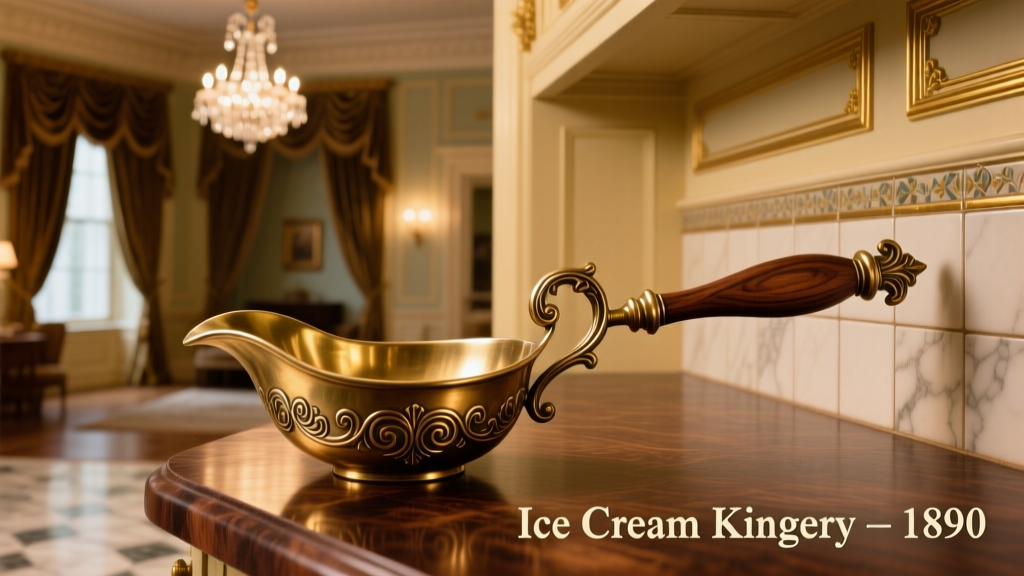
The Kitchen Scoop Ice Cream Kingery Double 2 Handles: History, Identification, and Restoration of a Mid-Century American Icon

Wearing Costume Jewelry: Style, Care, and Historical Context for the Discerning Collector
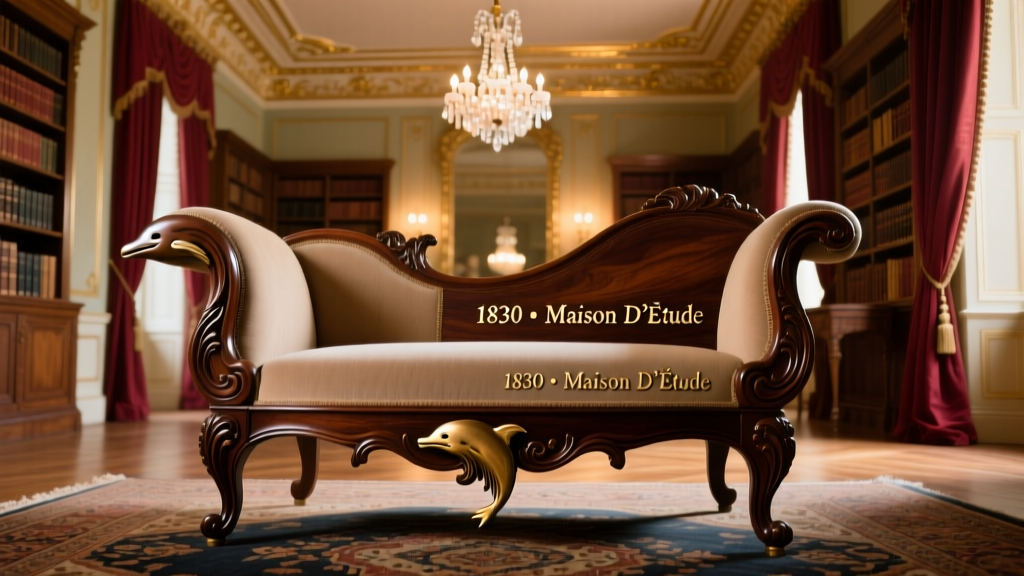
The 1830 Recamier Sofa: Dolphin-Carved Arms, Fan-Motif Backrest, and Signature Carved Dolphin Feet — A Detailed Appraisal