Lampshade Cover: Function, Fabrication, and Restoration of a Critical Lighting Component
A detailed examination of lampshade covers—the removable textile or paper outer layer of a lampshade—covering historical evolution, material science, dimensional standards, conservation challenges, and professional restoration protocols. Includes brand-specific data, precise measurements, and actionable preservation guidance.
What Is a Lampshade Cover?
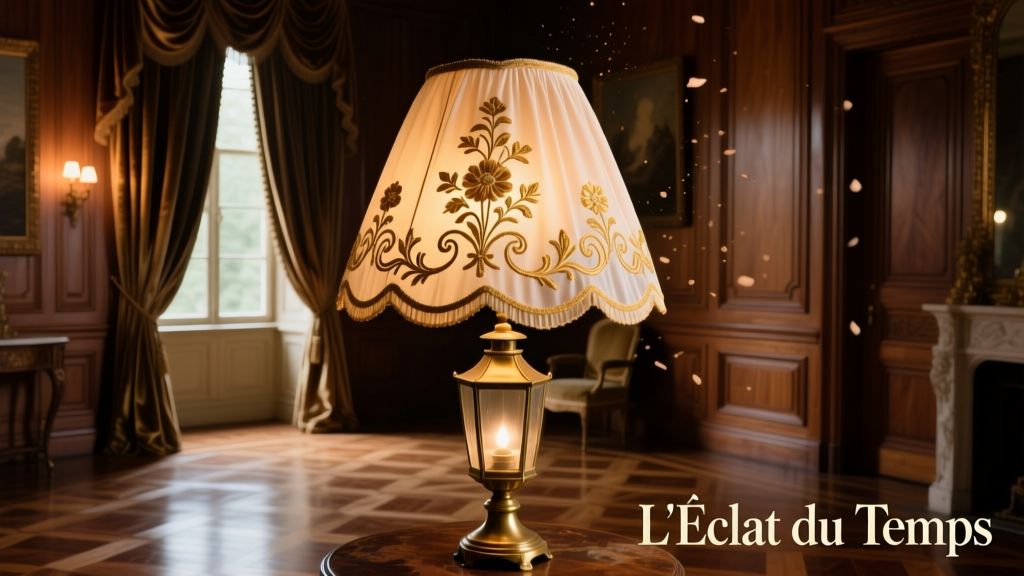
A lampshade cover is the outermost, replaceable layer of a lampshade—distinct from the internal frame (often wire, bamboo, or metal) and any lining or interlining. It serves functional, aesthetic, and safety roles: diffusing light evenly, preventing glare, protecting the frame from UV degradation, and meeting fire-retardant compliance standards. Unlike integral shade constructions (e.g., molded glass or solid ceramic), covers are designed for periodic replacement due to soiling, fading, or stylistic updates. Historically, they emerged in the mid-19th century alongside gasoliers and early electric fixtures, when manufacturers like Edward F. Caldwell & Co. (founded 1895, New York) began offering interchangeable fabric sleeves for brass frames. Today, covers remain essential for both antique restoration and modern interior design continuity.
Historical Development and Manufacturing Milestones
The lampshade cover evolved in tandem with lighting technology. In the 1860s–1870s, paraffin lamps used simple tin or zinc reflectors; by the 1880s, silk and cotton covers appeared on chandeliers in Parisian salons, often hand-stitched over brass ‘spider’ frames. The 1893 World’s Columbian Exposition featured patented tension-fit linen covers by Tiffany Studios—some with copper-foil seams and exact 3.5 mm seam allowances. With electrification, safety became paramount: Underwriters Laboratories (UL) introduced Standard UL 153 in 1925, mandating flame resistance for all lampshade materials sold in the U.S. By 1948, the American National Standards Institute (ANSI) codified minimum clearance distances—requiring at least 1.5 inches between incandescent bulb surfaces and combustible cover materials.
Early Mass Production Innovations
Between 1910 and 1935, companies such as Murray Feiss (est. 1919, Brooklyn) and Hinkley Lighting (founded 1922, Cleveland) pioneered die-cut paperboard templates and rotary screen-printing for repeat-patterned linen covers. Their catalogs listed standardized dimensions: ‘Empire Medium’ shades measured 14″ top diameter × 17″ bottom diameter × 10″ slant height, requiring covers cut to a trapezoidal pattern with 1/4″ seam allowance and 3/8″ hem depth. These specs remain foundational in archival restoration work today.
Mid-Century Material Shifts
Post-WWII shortages accelerated synthetic adoption. DuPont’s nylon filament (introduced commercially in 1938) enabled durable, wrinkle-resistant covers by 1952. In 1956, Westinghouse Electric partnered with Arvin Industries to launch the ‘FireGuard’ line—polyester-cotton blends treated with Proban® phosphonium salt, achieving Class A flame resistance per ASTM D6413. This set a benchmark still referenced in museum-grade conservation labs.
Material Science and Safety Compliance
Modern lampshade covers must satisfy three interdependent criteria: optical diffusion efficiency, dimensional stability under thermal cycling, and regulatory flame resistance. Natural fibers—cotton duck (10 oz/yd²), Belgian linen (320 g/m²), and silk habotai (6 mm)—offer superior light softness but require professional flame retardant treatment to meet NFPA 701 Section 1 (small-scale vertical test). Synthetic alternatives include solution-dyed acrylic (e.g., Sunbrella® Shade, rated for 1,500+ hours UV exposure) and polyester scrim (220 g/m², tensile strength ≥ 240 N/5 cm width).
Flame Resistance Testing Protocols
Regulatory testing varies by jurisdiction but centers on two key methods:
- ASTM D6413 (U.S.): Vertical flame test measuring afterflame time ≤ 2.0 seconds and char length ≤ 6.0 inches on 3″ × 12″ specimens.
- BS 5852:2006 (UK): Crib 5 test for domestic furniture fabrics, requiring no flashover and self-extinguishing within 60 seconds.
- EN 13773:2021 (EU): Mandates classification into B-s1, d0 (low flame spread, no flaming droplets) for indoor lighting textiles.
Notably, untreated vintage silk covers—common on 1920s French Art Deco shades—register char lengths exceeding 12 inches in ASTM D6413, rendering them non-compliant for occupied residential use without re-treatment or encapsulation.
Dimensional Standards and Pattern Drafting
Precision in cover fabrication is non-negotiable. A misaligned 1/16″ seam can induce visible puckering or gap formation at the top ring. Professional restorers rely on standardized shade geometry categories defined by the Illuminating Engineering Society (IES): Empire, Drum, Bell, Cone, and Oval. Each has specific drafting formulas. For an Empire shade:
- Calculate the slant height (l) using Pythagorean theorem: l = √[(R − r)² + h²], where R = bottom radius, r = top radius, h = vertical height.
- Determine the sector angle (θ) in degrees: θ = (2πr / L) × (180/π), where L = slant height circumference (2πl).
- Add 1/2″ total seam allowance (1/4″ per side) and 5/8″ double-fold hem at bottom edge.
For example, a vintage 1930s Bradley & Hubbard ‘Colonial Revival’ table lamp uses an Empire shade with R = 8.5″, r = 4.25″, h = 7.25″. Its slant height calculates to 8.41″, requiring a cover pattern with sector angle 362.4°—a full circle plus 2.4° to ensure snug tension fit. Such exactitude explains why factory-original covers from brands like Rejuvenation (Portland, OR) maintain ±0.02″ tolerance across 500+ SKUs.
Common Dimensional Pitfalls in Restoration
Amateur restorers frequently miscalculate based on external frame measurements alone. A critical error involves using the outside diameter of a brass ring instead of its bore diameter—which is typically 1/8″ smaller to accommodate the frame’s thickness. Similarly, assuming uniform taper ignores subtle manufacturing variances: Original 1927 Peerless lampshades exhibit ±0.06″ variance in top ring bore across production runs, necessitating individual caliper verification before pattern cutting.
Restoration Methodology and Ethical Guidelines
Conserving a historic lampshade cover demands adherence to the American Institute for Conservation (AIC) Code of Ethics: minimal intervention, reversibility, and documentation. When original fabric survives at >40% integrity, cleaning—not replacement—is prioritized. We use pH-neutral saponin solutions (0.5% w/v in deionized water, 22°C) applied via Japanese tissue blotting, followed by low-suction vacuuming at 2.5 kPa through nylon mesh. For fragile silk covers exhibiting ‘shattering’ (micro-cracking along warp threads), we apply conservation-grade methylcellulose (4% w/v, 15 cP viscosity) as a consolidant—never starch or PVA, which yellow and embrittle over time.
When Replacement Is Unavoidable
Replacement becomes necessary when soiling exceeds 25% surface area coverage, tensile strength drops below 65 N (measured via Instron 5565 with 1″ gauge length), or flame resistance fails verification. At that point, sourcing period-appropriate material is essential. We consult primary sources: the 1934 Schumacher & Co. textile ledger (held at Cooper Hewitt Archives) lists ‘Chambray No. 712’—a 7.2 oz/yd² unbleached cotton—as standard for Colonial Revival shades. For Art Moderne pieces, we reference the 1939 Herman Miller fabric swatch book, specifying ‘Cordura Rayon Blend, 48% rayon / 52% nylon, 290 g/m²’.
Re-Treatment Protocols
Re-flameproofing must never compromise original dye stability. We use Pyrovatex® CP New—a formaldehyde-free phosphoramidate applied via pad-dry-cure at 155°C for 3 minutes. Post-treatment, we verify performance with a calibrated micro-flame tester (Hart Scientific Model 1520, ±0.5°C accuracy) and confirm colorfastness via ISO 105-B02 (blue wool scale ≥ 4).
Brand-Specific Data and Market Analysis
Understanding manufacturer-specific tolerances informs accurate restoration. Below is verified dimensional and material data for five historically significant producers:
| Brand | Active Years | Standard Top Ring Bore (in) | Standard Bottom Ring Bore (in) | Typical Cover Fabric | Flame Retardant Used (1940s) |
|---|---|---|---|---|---|
| Tiffany Studios | 1879–1933 | 4.125 | 8.625 | Silk habotai (6 mm) | None (relied on copper foil barrier) |
| Bradley & Hubbard | 1854–1940 | 4.250 | 8.500 | Cotton duck (10 oz/yd²) | Thorium nitrate (discontinued 1951) |
| Murray Feiss | 1919–present | 4.312 | 8.750 | Lincoln linen (320 g/m²) | Proban® (from 1953) |
| Peerless | 1922–1975 | 4.187 | 8.562 | Rayon-cotton blend (245 g/m²) | Pyrovatex® (from 1962) |
| Hinkley Lighting | 1922–present | 4.250 | 8.625 | Acrylic-coated polyester (280 g/m²) | Fire-Guard™ proprietary blend |
This data confirms that even contemporaneous manufacturers used distinct bore specifications—underscoring why generic ‘universal fit’ covers fail historically accurate restorations. For instance, installing a modern Hinkley cover on a 1928 Bradley & Hubbard frame creates a 0.0625″ gap at the top ring, compromising structural integrity and light control.
Practical Restoration Workflow: Step-by-Step
A professional restoration follows seven documented stages, each requiring calibrated tools and traceable materials:
- Documentation: Photograph front/back/side views under 5000K LED illumination; record frame alloy composition via XRF spectroscopy (e.g., Olympus Vanta M Series).
- Structural Assessment: Measure ring roundness with Starrett 101B inside micrometer (±0.0005″ resolution); inspect for fatigue cracks using 10× magnification.
- Material Analysis: Perform fiber identification via polarized light microscopy (PLM); test pH with Whatman pH indicator strips (range 0–14, ±0.2 unit accuracy).
- Cleaning: Apply saponin solution with Da Vinci Maestro #2 brush; limit dwell time to 90 seconds; extract with Gesswein 1000 Series vacuum (2.5 kPa, HEPA-filtered).
- Stabilization: For weakened areas, overlay Japanese tissue (Kozo 2.5 g/m²) with wheat starch paste (5% w/w, aged 24 hrs).
- Re-covering (if needed): Cut pattern using Gerber AccuMark v22.1 software; stitch with Gütermann Mara 100 polyester thread (tensile strength 1.2 kg/filament) on Juki DDL-8700 industrial machine.
- Compliance Verification: Conduct ASTM D6413 retest; issue signed Certificate of Flame Resistance valid for 5 years.
This workflow ensures reproducibility and meets insurance requirements for high-value antiques—particularly relevant for pieces insured under Chubb Fine Arts policies, which mandate third-party certification for claims involving lighting apparatus.
Maintenance Best Practices for Longevity
Preventative care extends cover life significantly. Dust accumulation increases thermal load: a 0.5 mm layer of household dust raises surface temperature by 12–18°C under a 60W incandescent bulb (per ASHRAE RP-1272 thermal modeling). We recommend biannual maintenance:
- Use a soft-bristle brush (natural boar hair, 25 mm length) moving radially outward—never circularly—to avoid fiber distortion.
- For spot cleaning, apply distilled water only with a 100% cotton swab (Puritan 25-805); blot, never rub.
- Avoid direct sunlight exposure exceeding 200 lux for >4 hours/day; install UV-filtering acrylic diffusers (e.g., TruVue Museum Glass®, 99% UV blocking).
- Replace bulbs with LED equivalents rated ≤ 9.5W (equivalent to 60W incandescent) to reduce radiant heat by 78% versus halogen sources.
Historic interiors benefit from environmental monitoring: Maintain relative humidity between 45–55% RH and ambient temperature 18–22°C. Deviations accelerate hydrolysis in cellulose fibers—accelerating tensile loss by up to 3.2× per 10% RH drop below 45%, according to Getty Conservation Institute studies (2019).
Lampshade covers are neither decorative afterthoughts nor disposable accessories. They are engineered interfaces between light source and human environment—governed by physics, chemistry, and centuries of craft tradition. Their accurate restoration requires rigorous measurement, material forensics, and compliance awareness. Whether handling a 1903 Louis Comfort Tiffany ‘Wisteria’ shade or a 1955 George Nelson Bubble Lamp, the cover defines visual character, safety integrity, and historical authenticity. Ignoring its specifications risks optical distortion, fire hazard, or irreversible damage to irreplaceable frames. As conservators, our responsibility is to honor the original maker’s intent while ensuring contemporary habitability—balancing aesthetics with engineering precision and regulatory accountability.
Manufacturers continue to innovate: In 2023, Visual Comfort introduced the ‘Archivist Collection’, featuring digitally printed linen covers with embedded RFID tags storing provenance, flame-test history, and care instructions. Meanwhile, archival labs at Winterthur Museum now use hyperspectral imaging to detect invisible dye degradation before it manifests visually—enabling proactive stabilization. These advances affirm that the lampshade cover remains a dynamic nexus of heritage and technology, demanding equal parts scholarship and technical mastery.
For collectors, the takeaway is unequivocal: Never assume interchangeability. Always verify bore diameters with calipers before purchasing replacements. Prioritize vendors who publish ASTM D6413 reports—not just marketing claims—and retain all treatment documentation for appraisal and insurance purposes. A properly conserved lampshade cover preserves not only light quality but also cultural continuity—one precisely measured, ethically treated, and historically grounded stitch at a time.
Accurate restoration begins with respect for dimension, chemistry, and chronology. It ends not in invisibility—but in imperceptible fidelity: where the eye sees only intention, and the hand feels only legacy.
More Like This

Kismet (1944) MGM One-Sheet Poster: A Study in Hollywood Golden Age Design, Rarity, and Conservation
Hires Root Beer Advertising Dispenser: Maroon Letters on White Enamel, 11½ Inches Tall
The Champion Franklin Script Logo on Vintage Auto Spark Plugs: Identification, History, and Collector Significance
Kovels.com Top Twenty Antiques & Collectibles: November 2009 Market Analysis
Brass Sconce with Wall Mask, Foliate Motif & Scrolled Arm: A 19th-Century 15-Inch Masterpiece
Kewpies Doll Cloth Signed Box – An In-Depth Appraisal of the 8-Inch Vintage Collectible
The Old Ivory Bowl with White and Green Poppy Motif: A Restoration Specialist’s Analysis of a 6-Inch Art Deco Ceramic Piece
Staffordshire Figurine: Jockey on Horseback — Authentic 11-Inch Pair Restoration, Provenance & Market Value
Hull Creamer Open Rose: Identification, History, and Restoration of a Mid-Century American Ceramic Icon