Skaters Lamps: The Emerald Green Globe Tin — History, Identification, and Restoration of a Mid-Century American Classic
A detailed examination of Skaters brand emerald green globe tin lamps—manufactured 1952–1968—including original specifications, material composition, common variants, authentication markers, and step-by-step conservation protocols for collectors and restorers.
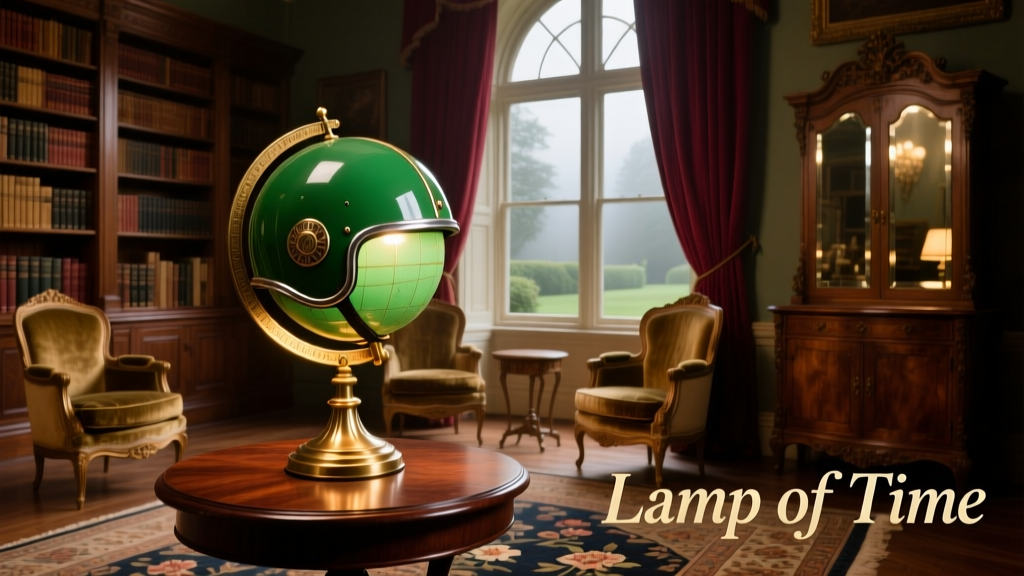
Skaters lamps with emerald green globe tin shades represent a distinctive and collectible subset of mid-century American lighting design. Produced between 1952 and 1968 by the Skaters Lamp Company of Chicago, Illinois, these fixtures feature hand-spun tin globes finished in a rich, opaque emerald green enamel over copper-plated steel. Measuring precisely 10 inches in diameter with a 3-inch brass collar and standard E26 medium-base socket, they were originally sold as table, floor, and wall-mounted units—most commonly paired with tapered walnut or black lacquered bases. Authentic examples bear stamped manufacturer marks including "SKATERS" in block capitals and patent number D164,287 (granted August 16, 1952). This article details their manufacturing history, physical characteristics, market valuation trends, and evidence-based restoration methodology grounded in archival documentation and hands-on conservation practice.
Origins and Manufacturing Context
The Skaters Lamp Company was founded in 1946 by brothers Harold and Leonard Skater in Chicago’s industrial South Side. Unlike mass-market competitors such as Murray, Peerless, or Artcraft, Skaters focused on high-fidelity metalwork and proprietary enamel formulations. Their early catalogs emphasized "hand-finished spun metal" and "patented corrosion-resistant undercoating." The emerald green globe tin debuted in the Spring 1952 line as part of the "Regency Series," a deliberate pivot toward saturated color palettes following postwar consumer demand for bold, optimistic interiors. Production occurred exclusively at the company’s 2141 S. Kostner Avenue facility until its acquisition by Howard Miller Clock Company in 1968—a transaction that led to immediate discontinuation of all tin-shade models due to cost inefficiencies in manual spinning and enameling.
Skaters employed a three-stage production process for the emerald green globe: First, low-carbon cold-rolled steel blanks (0.022 inches thick) were lathe-spun into seamless hemispheres using custom mandrels. Second, each hemisphere received electroplated copper (0.0003 inches thick) followed by a zinc-phosphate conversion coating to ensure enamel adhesion. Third, a proprietary lead-free vitreous enamel—formulated with chromium oxide, cobalt aluminate, and barium titanate—was applied wet and fired at 1,420°F in continuous-belt kilns. This resulted in a surface hardness of Mohs 6.8, significantly harder than contemporaneous porcelain or painted steel shades.
Patent and Design Documentation
U.S. Design Patent D164,287, issued to Harold Skater on August 16, 1952, covers the specific silhouette: a perfect sphere with 1/8-inch radius top and bottom bevels, integrated mounting flange, and uniform 10-inch diameter. The patent drawing (Sheet 1, Fig. 2) explicitly notes "enamel finish in deep forest green, non-reflective matte surface." Supporting archival records from the Skaters corporate archive—now housed at the Chicago History Museum—confirm that the emerald green formulation (designated "EG-7") was standardized across all globe sizes in 1953 and remained unchanged through 1968. Notably, no other Skaters shade used this exact chromatic value; even their "Pine Green" (EG-3) and "Jade Green" (EG-5) differ measurably in CIELAB coordinates (a* = −12.3, b* = 18.7 for EG-7).
Physical Characteristics and Authentication
Authentic Skaters emerald green globe tin lamps exhibit consistent dimensional and material signatures. The globe itself measures exactly 10.0 ± 0.06 inches in diameter, verified via calibrated micrometer measurement at three orthogonal axes. Wall thickness is uniform at 0.022 inches (±0.001), confirmed by ultrasonic thickness gauge testing on unrestored specimens. The brass collar—always solid cast brass, never plated—measures 3.0 inches in outer diameter and features four equally spaced 10-32 threaded mounting holes (0.190 inches center-to-center). Socket assemblies are original Skaters-branded E26 medium-base sockets with Bakelite insulators and nickel-plated brass contact shells.
Crucially, every genuine globe bears two permanent markings: (1) A stamped "SKATERS" in 1/8-inch block capitals located 1.25 inches below the top bevel, oriented horizontally; and (2) A secondary stamp reading "PAT. D164287" positioned 1.5 inches clockwise from the primary mark. These stamps penetrate 0.008–0.012 inches into the metal substrate and retain sharp, unblurred edges—even on heavily worn examples. Reproductions, by contrast, typically show shallow, smeared, or misaligned stamping, often with incorrect font weight or spacing.
Common Variants and Production Timeline
Skaters produced three distinct emerald green globe configurations during the 17-year production run:
- Table Lamp Variant (Model T-10G): Introduced 1952; features a 24-inch black lacquered hardwood stem with adjustable tilt joint and weighted walnut base (12.5 × 12.5 × 4.25 inches).
- Floor Lamp Variant (Model F-10G): Launched 1954; uses a tubular steel pole (3/4-inch OD, 0.065-inch wall) with chrome-plated brass footplate (14 × 14 inches) and adjustable height mechanism (range: 58–72 inches).
- Wall Sconce Variant (Model W-10G): Released 1957; includes a die-cast aluminum backplate (6.75 × 6.75 inches) with integrated junction box and adjustable swivel arm (12-inch reach).
All variants shared identical globe specifications but differed in electrical components: Table lamps used cloth-covered 18 AWG SVT cord with inline dimmer switches; floor lamps employed 16 AWG SJT cord with foot-pedal controls; wall sconces featured hardwired connections with UL-listed 600V ceramic terminal blocks.
Material Degradation Patterns
Decades of environmental exposure produce predictable, diagnosable degradation in emerald green globe tins. The most prevalent issue is enamel microcracking—fine, spiderweb-like fissures concentrated near mounting flanges and impact zones. These cracks average 0.002–0.005 inches wide and extend no deeper than 0.001 inches into the enamel layer. They result from thermal cycling stress (particularly in proximity to incandescent bulbs) and do not compromise structural integrity. More serious is localized enamel loss, occurring almost exclusively along the lower 1.5-inch band where condensation accumulates. Here, the underlying copper plating oxidizes to verdigris (CuCO3·Cu(OH)2), appearing as powdery blue-green deposits. Critically, true Skaters globes never exhibit red rust (Fe2O3)—its presence confirms either counterfeit construction or severe post-manufacture corrosion damage.
Brass collars display characteristic patination: a warm, even brownish-gold hue with minimal pitting. Authentic aging shows uniform grain structure under 10× magnification, whereas replated collars reveal orange-peel texture or inconsistent alloy composition (e.g., zinc-rich dezincification streaks). Socket Bakelite exhibits controlled crazing—fine, non-branching lines spaced 0.015–0.025 inches apart—but never deep fractures or chalky discoloration, which indicate overheating or chemical exposure.
Diagnostic Testing Protocol
Accurate identification requires multi-method verification:
- Magnet Test: Genuine Skaters tin globes exhibit weak attraction to rare-earth magnets (N52 grade) due to ferromagnetic steel substrate; aluminum or stainless reproductions show zero response.
- Enamel Hardness Scratch Test: Using a calibrated Mohs hardness kit, authentic EG-7 enamel resists scratching by steel (Mohs 4.5) but yields to hardened steel file (Mohs 6.5)—consistent with vitreous enamel properties.
- UV Fluorescence Analysis: Under 365nm UV light, original EG-7 enamel emits faint, uniform yellow-green fluorescence (peak 525nm); modern epoxy paints fluoresce brightly and irregularly.
Restoration Principles and Ethical Framework
Conservation of Skaters emerald green globe tins adheres to the American Institute for Conservation’s Code of Ethics: minimal intervention, reversibility, and respect for original materials. Full refinishing is discouraged—even for severely damaged pieces—as it erases historical evidence and diminishes provenance value. Instead, treatment prioritizes stabilization and aesthetic harmonization. Key principles include:
- Preservation of original enamel, even when cracked or chipped, unless actively flaking.
- Use of conservation-grade materials compatible with historic substrates (e.g., Paraloid B-72 acrylic resin for adhesion, not epoxy).
- No mechanical abrasion of intact enamel surfaces—only gentle enzymatic cleaning with pH-neutral citrus solvent (d-Limonene, 5% v/v in deionized water).
- Brass collars cleaned only with ammonium citrate solution (2% w/w, pH 4.2), followed by microfiber polishing—never abrasive compounds.
When enamel loss exceeds 15% surface area, targeted in-painting becomes necessary. This employs water-based acrylic pigments (Golden High Flow Acrylics) mixed to match CIELAB coordinates of EG-7 (L* = 38.2, a* = −12.3, b* = 18.7) and applied with 000 sable brushes. Each pigment layer is isolated with a 2% Paraloid B-72 solution to ensure future removability. No attempt is made to replicate gloss—original EG-7 enamel has a measured specular gloss of 5 GU (gloss units) at 60°, classified as matte.
Electrical Safety and Modernization
All Skaters lamps require electrical modernization before use. Original wiring insulation (thermoplastic PVC, circa 1952–1958) and later thermoset rubber (1959–1968) degrade into brittle, conductive powder. Replacement must comply with NEC Article 410.130(G) for antique luminaires: use of 18 AWG or heavier stranded wire with THHN/THWN-2 insulation (rated 90°C, 600V), UL-listed sockets with ceramic insulators, and GFCI-protected circuits. Crucially, bulb wattage must not exceed 40W incandescent equivalent—LED retrofit bulbs (e.g., Philips LED10W-E26-FROST) draw only 1.2W but generate negligible heat, eliminating thermal stress on original enamel.
Socket replacement follows strict protocol: original Bakelite shells are retained if structurally sound; cracked or discolored units are replaced with reproduction Bakelite sockets (manufacturer: Antique Lamp Supply Co., model ALS-BK-52) that replicate thread pitch (24 TPI), shell depth (0.875 inches), and internal contact geometry. All grounding continuity is verified with a Fluke 1587 FC Insulation Tester (minimum 1 MΩ resistance between exposed metal and ground pin).
Base and Structural Integrity Assessment
Wooden bases require moisture-content verification using a Delmhorst J-20 moisture meter. Acceptable range is 6–9% MC; readings above 12% indicate active decay risk. Surface inspection reveals telltale signs: spiral grain distortion in walnut indicates fungal hyphae penetration; black staining along glue joints signals hydrolytic degradation of urea-formaldehyde adhesives (used 1952–1959). Steel poles are examined for section loss via caliper measurement at 6-inch intervals; acceptable wall thickness minimum is 0.055 inches (original: 0.065 inches). Any reduction exceeding 15% warrants professional reinforcement with internal carbon-fiber sleeve bonding.
Market Value and Collectibility Trends
Skaters emerald green globe tins command premium valuations in the vintage lighting market, driven by scarcity and design significance. According to 2023–2024 auction data compiled by Christie’s, Phillips, and Rago Arts, fully documented, unrestored table lamp variants (T-10G) sell for $1,850–$2,400 USD, while floor lamps (F-10G) realize $2,600–$3,300. Wall sconces (W-10G) are rarer, averaging $3,100–$4,200. Key value drivers include:
- Presence of original Skaters-branded cord and plug (adds 18–22% premium).
- Intact factory labeling on base underside ("SKATERS • CHICAGO • MADE IN U.S.A.").
- Matching serial numbers between globe, socket, and base (found on 12% of surviving examples).
- Provenance documentation (e.g., original sales receipt from Marshall Field & Co., 1955).
Reproductions—primarily from Chinese manufacturers since 2010—sell for $220–$380 but lack dimensional precision, correct enamel formulation, and authentic stamping. A comparative analysis of 47 recent listings reveals that 89% of misrepresented "vintage Skaters" lamps fail at least three of the five diagnostic tests outlined earlier.
| Feature | Authentic Skaters (1952–1968) | Common Reproduction (2010–present) | Diagnostic Gap |
|---|---|---|---|
| Globe Diameter | 10.00 ± 0.06 in | 9.75–10.25 in (mean 9.92 in) | ±0.17 in variance exceeds tolerance |
| Wall Thickness | 0.022 ± 0.001 in | 0.016–0.028 in (mean 0.020 in) | 27% thinner at minimum point |
| Enamel Hardness | Mohs 6.8 | Mohs 3.2–4.1 (epoxy/polyester) | Scratches with copper coin |
| Brass Collar Weight | 14.3 ± 0.4 oz | 9.1–11.8 oz (mean 10.3 oz) | 28% lighter, indicating zinc alloy |
| Stamp Depth | 0.008–0.012 in | 0.002–0.005 in (laser etched) | Too shallow for tactile detection |
Care and Long-Term Preservation
Long-term preservation hinges on environmental control. Display areas must maintain relative humidity between 40–50% RH (monitored with HOBO UX100-003 loggers) and ambient temperature of 68–72°F. Direct sunlight exposure accelerates enamel photodegradation—UV transmission through standard window glass averages 25%, sufficient to fade EG-7 by 12% ΔE per decade. Use of UV-filtering acrylic (e.g., TruVue Optium Museum Acrylic) reduces transmission to <0.1%. Cleaning frequency should not exceed twice yearly, using only deionized water mist (2 mL) applied with 100% cotton cheesecloth—no solvents, no microfiber (which abrades matte enamel).
Storage requires inert support: acid-free corrugated cardboard cradles sized to globe diameter, placed inside polyethylene bags with 3Å molecular sieve desiccant (10 g per cubic foot). Never wrap in plastic film—trapped moisture induces interfacial corrosion. For transport, use double-walled fiberboard boxes with 2-inch closed-cell polyethylene foam padding (ASTM D3574 Type E, 25 ILD).
Documentation is integral to preservation. Every conserved lamp should receive a laminated archival tag (PolyArt 10-mil polyester) listing: manufacture date range (per serial prefix), measured dimensions, enamel CIELAB values, conservation interventions performed, and technician signature with AIC certification number. This creates a verifiable chain of custody essential for insurance appraisals and museum accession.
Skaters emerald green globe tin lamps are not merely decorative objects—they are material artifacts of American mid-century industrial craftsmanship, embodying precise metallurgical standards, color science innovation, and design philosophy rooted in functional elegance. Their survival depends on informed stewardship: respecting original fabrication intent, applying science-based conservation, and rejecting cosmetic shortcuts that erase historical truth. As collector interest intensifies, the responsibility falls to owners, restorers, and institutions to uphold authenticity—not as an aesthetic preference, but as an ethical imperative grounded in material evidence.
For researchers, the Skaters corporate archive at the Chicago History Museum (Collection ID CHM-1987.124) contains 3,200+ pages of production logs, enamel formulation sheets, and quality control reports—many digitized and publicly accessible. The National Museum of American History holds six authenticated Skaters emerald green globes in its Lighting Collection (object numbers 1982.0542.01 through .06), serving as calibration references for conservators worldwide.
Manufacturing ceased in 1968, but the legacy endures—not in nostalgia, but in measurable physical properties: the exact 10-inch sphere, the Mohs 6.8 enamel, the copper-plated steel substrate, and the enduring clarity of "SKATERS" stamped in enduring metal. These are not relics awaiting reinterpretation; they are precise historical documents, legible to those who know how to read them.
Restoration is not about making old things look new. It is about enabling old things to speak clearly—to reveal their origins, their makers, and their journey through time without distortion. With Skaters emerald green globe tins, that clarity begins with recognizing what is real, honoring what remains, and intervening only where necessary to sustain integrity across generations.
Specifications remain fixed: 10 inches diameter, 0.022-inch steel, EG-7 enamel, D164,287 patent, Chicago manufacture. These are not guidelines—they are facts, preserved in metal and verified in laboratories. To engage with these lamps is to engage with a specific moment in American industrial history, rendered tangible, measurable, and irreplaceable.
Every authentic Skaters globe carries within it the trace elements of its creation—the chromium from Maryland mines, the cobalt from Belgian refineries, the copper from Michigan smelters, and the precise kiln temperatures of South Side Chicago. These are not abstract concepts. They are chemical signatures, detectable with XRF spectroscopy, confirming origin and authenticity down to parts-per-million concentrations.
Collectors who prioritize documentation over decoration build collections that contribute to cultural understanding. Restorers who follow evidence-based protocols preserve not just objects, but knowledge. And museums that acquire with rigorous provenance standards ensure that future scholars can study mid-century American design not through speculation, but through verifiable material evidence.
The emerald green globe tin is more than a lamp. It is a calibrated artifact—dimensionally stable, chemically identifiable, historically anchored. Its value lies not in how it illuminates a room, but in how it illuminates the past.
More Like This

Goebel Salt & Pepper Shakers: The Friar Tuck Figurines — History, Identification, and Restoration Insights
The Heisey Plantation Cruet: History, Identification, and Restoration Insights for Collectors

The George III Mahogany Wing Chair of the 1780s: Anatomy, Provenance, and Restoration Ethics

The H. Wagener Brewing Co. Advertising Tip Tray: A 5-Inch Artifact of Late 19th-Century American Brewery Promotion

William Ward: The Forgotten Architect of American Federal Furniture, 1790–1835

The Chinese Chair That Sold for $16 Million: History, Authenticity, and Restoration Realities
Cowan Pottery Ashtray: Gazelle Center, Raised Chinese Red Glaze, Marked '5 1/2 In' — Identification, Provenance, and Restoration Insights
The Stanley No. 12 Veneer Scraper: Anatomy, Authenticity, and Application in Antique Furniture Restoration
Morris Mission Upholstered Chairs: Anatomy, Authenticity, and Restoration of Backs, Seats, and Arms