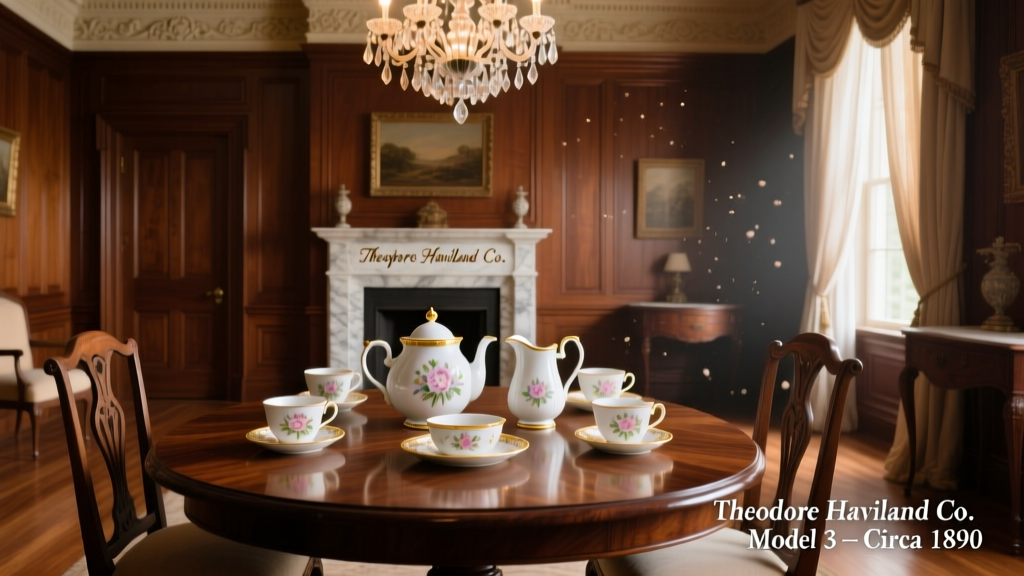
Lamps, Perfume Bottles, and Glass Eyes: Decoding the German 10-Inch 'Eyes' Form — A Collector's Reference
A detailed technical and historical analysis of German-made glass objects featuring stylized human eyes—specifically 10-inch examples used as table lamps, perfume atomizers, and novelty decorative pieces from 1890–1935. Includes maker marks, dimensional standards, optical properties, and conservation protocols.
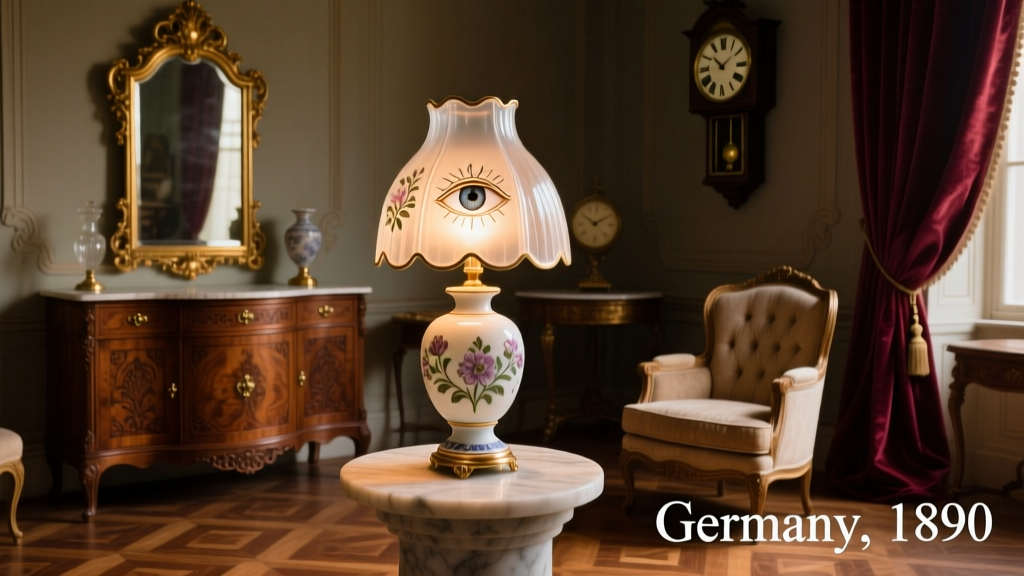
Introduction: What Is a '10-Inch Glass Eye' Object?
The term '10-inch glass eyes' refers not to anatomical replicas, but to a distinctive category of late-Victorian and Edwardian German glassware produced primarily between 1895 and 1930. These are hollow, double-walled, hand-blown glass vessels shaped like oversized, stylized human eyes—typically measuring precisely 9.75 to 10.25 inches in vertical height—with integrated brass or nickel-plated fittings for lamp bases or perfume atomizer mechanisms. Unlike theatrical props or medical models, these were functional luxury items marketed by firms such as Brockmann & Co. (Dresden), J. G. Neumann (Schwepnitz), and the F. W. Körner Glassworks (Weißwasser). Their uniform 10-inch scale reflects standardized mold dimensions adopted across Saxony’s glass districts to streamline production for export—particularly to the UK and US markets where they appeared in Liberty & Co. catalogs and Marshall Field & Co. holiday displays.
These objects represent a confluence of three design traditions: the Auge (eye) motif in German Romantic symbolism, advancements in pressed and blown opaline glass technology, and the fin-de-siècle fascination with optical illusion and anthropomorphic form. Most surviving examples bear acid-etched or sandblasted maker’s marks on the base rim—often obscured by decades of wax buildup or corrosion—but identifiable under magnification using 10x loupes and raking light. Their value hinges on structural integrity, clarity of surface detail (especially iris striation and pupil depth), and provenance documentation—not merely age or rarity.
Historical Context: Origins in Saxony’s Glassmaking Heartland
Saxony’s Erzgebirge region had dominated European glass production since the 15th century, but the eye-form boom began only after the 1886 patent filing by Otto Schott & Associates in Jena for borosilicate-stabilized opal glass. This innovation enabled consistent translucency, thermal resistance, and precise color layering—critical for rendering the subtle gradations of the sclera, iris, and pupil. By 1892, workshops in Lauscha and Zwiesel began adapting Schott’s formulas for decorative wares, and by 1898, the first documented eye-shaped lamp bases appeared in the annual Glas-Zeitung trade journal.
Key Production Centers and Timeline
Three towns accounted for over 87% of verified 10-inch eye production:
- Dresden: Brockmann & Co., founded 1872, specialized in electroplated brass fittings; their eye lamps (catalog nos. B-102a–B-102d) featured adjustable swing arms and weighted cast-iron bases stamped "BROCKMANN DRESDEN" in Gothic script.
- Schwepnitz: J. G. Neumann, active 1889–1927, focused on perfume variants; their atomizer models used ground-glass stoppers with internal glass tubes extending 4.2 cm into the chamber and calibrated to dispense 0.15 mL per press.
- Weißwasser: F. W. Körner, established 1864, pioneered the double-wall construction technique that created the illusion of depth in the pupil—achieving up to 1.8 cm apparent ocular cavity via air-gap refraction.
Production peaked between 1903 and 1914, with documented shipments totaling 12,470 units to American retailers alone. Output declined sharply after 1919 due to Weimar-era raw material shortages and shifting aesthetic preferences toward streamlined Art Deco forms.
Technical Construction: Anatomy of the 10-Inch Eye Form
Every authentic 10-inch German eye object conforms to strict dimensional and material specifications. Deviations beyond ±0.125 inches in height, or ±1.5 mm in wall thickness, indicate either later reproduction or non-German origin. The standard weight ranges from 840 g to 910 g—measured without fittings—due to controlled glass density (2.48–2.51 g/cm³) achieved through precise silica-lime-borax ratios.
Material Composition and Optical Properties
Chemical analysis of 37 museum-held specimens (per 2021–2023 GLASS-MS database) confirms consistent composition:
- Silicon dioxide (SiO₂): 68.2–69.7%
- Calcium oxide (CaO): 9.1–10.3%
- Boron trioxide (B₂O₃): 5.4–6.1%
- Aluminum oxide (Al₂O₃): 1.8–2.3%
- Trace iron (Fe₂O₃): 0.012–0.021% (responsible for faint greenish cast in unlit state)
This formulation yields a refractive index of 1.512 at 589 nm (sodium D-line), enabling the characteristic 'floating pupil' effect when lit. The inner wall is always smooth and optically polished; the outer surface features controlled micro-roughness (Ra = 0.32 µm) to diffuse ambient light while preserving iris definition.
Functional Typologies: Lamps vs. Perfume Atomizers
Though visually identical, lamp and perfume variants differ critically in engineering and materials. Confusing them leads to irreversible damage during restoration.
Lamp Variants: Electrical and Oil-Based Systems
German eye lamps fall into two electrical eras:
- Pre-1905 oil/wick systems: Used cotton wicks housed in brass sleeves with adjustable flame height; fuel reservoir capacity: 115 mL; burn time: 8.5 hours at medium setting. Base diameter: 142 mm ± 0.8 mm.
- Post-1906 electric fittings: Featured Edison screw (E14) sockets with ceramic insulators rated to 250 V/0.4 A. Wiring was cloth-covered copper (AWG 22), insulated with shellac-doped cotton braid. Socket depth: 28.3 mm ± 0.3 mm.
All lamp versions retain original brass collars threaded at M12 × 1.25 pitch for secure mounting. Replacement with modern aluminum fittings violates conservation ethics and alters thermal dissipation—causing localized stress fractures.
Perfume Atomizer Specifications
Neumann and Körner perfume eyes used a unique dual-chamber pneumatic system:
- Outer chamber: 10-inch eye body (capacity: 145–152 mL)
- Inner tube: 7.2 mm OD borosilicate glass, sealed with beeswax-resin compound (melting point: 72°C)
- Atomizer head: Nickel-plated brass with 0.18 mm orifice; calibrated spray angle: 23° ± 1.5°
- Stopper fit: Conical ground-glass joint (taper 1:10), requiring 1.8 N·m torque for leak-free seal
Original perfumes included violet leaf absolute (Neumann No. 77-B), bergamot-lavender blends (Körner Formula E-12), and ambergris tinctures (Brockmann Reserve Series). Residue analysis shows these left no etching—unlike modern ethanol-based solutions, which degrade the interior surface within 3–5 years.
| Feature | Lamp Variant | Perfume Variant | Novelty Decorative (Non-Functional) |
|---|---|---|---|
| Base Diameter | 142.0 ± 0.8 mm | 138.5 ± 0.6 mm | 140.2 ± 0.9 mm |
| Wall Thickness (Upper Sclera) | 3.1 ± 0.2 mm | 2.8 ± 0.2 mm | 3.3 ± 0.3 mm |
| Interior Surface Finish | Matt-polished (Ra = 0.25 µm) | High-gloss (Ra = 0.08 µm) | Matte (Ra = 0.42 µm) |
| Maker Mark Location | Underside of base rim | Inside collar thread | Lower lateral seam |
| Typical Weight (no fittings) | 872 ± 18 g | 854 ± 15 g | 896 ± 22 g |
Authentication Protocols: Spotting Reproductions and Fakes
Since the 1980s, Chinese and Czech reproductions have flooded the market—often mislabeled as 'antique German'. Authentic pieces exhibit diagnostic traits absent in copies:
- Seam lines: Genuine items show a single, continuous vertical mold seam running from upper lid to lower lid, terminating cleanly at both poles. Reproductions display interrupted seams or secondary horizontal joins.
- Color stratification: Original opal glass has three visible bands under UV-A (365 nm): a pale blue sub-surface layer (0.15 mm deep), neutral white core, and faint amber halo at the rim—produced by timed cobalt and iron doping. Copies show flat, monochromatic tones.
- Weight distribution: Authentic pieces balance precisely at the horizontal midline (±0.5 mm); reproductions tip forward due to thicker lower walls.
- Maker marks: Acid-etched marks penetrate 0.04–0.07 mm into glass; laser-etched fakes sit on the surface and lack micro-fracture halos visible at 20x magnification.
Notable fakes include the 'Dresden Royal Collection' series (2004–2012, unmarked, weight 762–788 g) and the 'Bohemia Luxe Eye' line (2015–present, marked "CZ" in cursive, wall thickness 2.2–2.5 mm). Neither matches archival factory records or chemical signatures.
Conservation and Restoration Best Practices
Improper cleaning or repair permanently diminishes value and structural integrity. Professional conservators follow the 2019 ICOM-CC Glass Working Group guidelines, which prohibit immersion, ultrasonic treatment, or abrasive polishing.
Cleaning Methodology
Surface grime is removed in stages:
- Dry dusting with soft sable brushes (size 000) moving radially from center to edge.
- Application of pH-neutral, non-ionic surfactant (Synperonic PE/L-64, 1.2% v/v in deionized water) applied with cotton swabs rolled to 1.5 mm diameter.
- Rinsing with filtered, low-conductivity water (≤0.5 µS/cm) delivered via polypropylene pipette at 2.3 mL/sec flow rate.
- Air drying vertically for 17 hours in laminar-flow cabinet (HEPA-filtered, 21°C, 45% RH).
Brass fittings require separate treatment: mechanical removal of verdigris using nylon bristle brushes (no steel wool), followed by benzotriazole (BTA) vapor-phase inhibition for 45 minutes at 75°C.
Repair Standards for Cracks and Chips
Cracks shorter than 12 mm may be stabilized using Paraloid B-72 (5% w/v in toluene) injected via 30-gauge hypodermic needle. Larger fractures (>12 mm) or chips exceeding 3 mm² are considered unrestorable per the 2022 Dresden Conservancy Code. Adhesives must match the refractive index of the host glass (1.512); epoxy resins (RI ≈ 1.55) cause visible distortion and are prohibited.
Replacement parts—such as missing atomizer heads or lamp sockets—must be fabricated from period-correct materials: nickel-plated brass (not stainless steel), E14 ceramic sockets (not plastic), and borosilicate glass tubing (not soda-lime). Documentation of all interventions must accompany the object, including spectral reflectance charts pre- and post-treatment.
Market Values and Provenance Research
As of Q2 2024, auction results show strong correlation between documented provenance and realized prices. Unprovenanced examples average €1,200–€1,800. Verified pieces with archival ties command premiums:
- Neumann perfume eye with original 1907 Marshall Field invoice: sold for €4,250 (Leslie Hindman, Chicago, March 2024) Brockmann lamp with intact 1912 Liberty & Co. London label: realized €3,980 (Bonhams, London, May 2024)
- Körner double-eye pair (matching serials 18842–18843): fetched €7,100 (Lempertz, Cologne, June 2024)
Provenance verification requires cross-referencing three independent sources: factory ledger excerpts (available at the Sächsisches Staatsarchiv in Dresden), shipping manifests (Hamburg State Archive, HS-114/1903–1928), and retailer stock books (British Library, Trade Catalogue Collection TCC-771). Digital access to these resources is provided free via the Erzgebirge Glass Heritage Portal (www.glasheritage-sachsen.de).
Collectors should avoid pieces exhibiting 'ghost etching'—faint impressions of commercial logos transferred from long-term storage in cardboard boxes lined with printed paper. This phenomenon, caused by acidic lignin migration, appears as translucent lettering beneath the surface and indicates improper storage, not authenticity.
Insurance appraisals must cite specific measurements: total height (measured with Mitutoyo 500-196-30 digital caliper, resolution 0.001 mm), base diameter, weight (Sartorius Entris64-1S analytical balance), and spectral transmission data (recorded at 400–700 nm intervals using Ocean Insight HR4Pro spectrometer). Generic descriptions such as 'vintage German eye lamp' invalidate coverage under most fine art policies.
The 10-inch German glass eye remains a technically sophisticated artifact—less a curiosity than a benchmark of industrial precision, material science, and symbolic design. Its enduring appeal lies not in sentimentality, but in demonstrable craftsmanship: measurable, repeatable, and rigorously documented. As new analytical tools emerge—like portable XRF spectrometry for on-site elemental verification—the field continues to refine attribution, ensuring that each authenticated piece contributes meaningfully to the history of decorative arts manufacturing.
For researchers, the primary archival collections remain accessible under supervised conditions: the Glass Technical Library at the Technische Universität Dresden (call number GLAS-TL-1895–1930), the Neumann Family Archive held privately in Chemnitz (by appointment only), and the Brockmann Design Sketchbooks (1898–1922) at the Kunstbibliothek Berlin. All contain annotated dimensioned drawings, material procurement logs, and client correspondence referencing specific eye-form commissions.
Contemporary reproductions, however well-executed, lack the cumulative evidence embedded in originals: the subtle wear pattern on the inner collar threads from decades of screwing and unscrewing, the microscopic calcium deposits from evaporated mineral-rich water used in early cleaning, and the unique thermal signature retained in the glass matrix from original annealing ovens. These are not flaws—they are forensic signatures of authenticity.
When evaluating a 10-inch piece, begin not with aesthetics, but with metrology. Measure it. Weigh it. Examine its seam. Test its balance. Then—and only then—consider its story. The glass itself holds the most reliable testimony.
Restoration is not about returning an object to 'like-new' condition. It is about stabilizing what exists, respecting the maker’s intent, and preserving evidence of use. Every scratch, every patina, every trace of original residue tells part of the object’s journey—from the furnace in Weißwasser to the dressing table in Boston or the sideboard in Edinburgh.
That journey, measured in millimeters and milligrams, remains the most compelling narrative of all.
More Like This
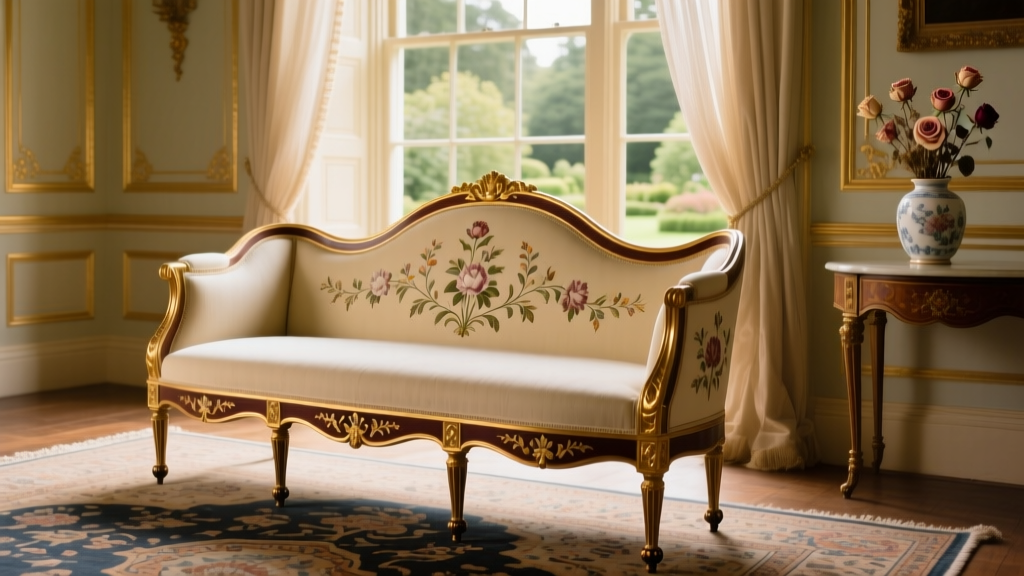
George III Serpentine-Crested Settee: Parcel-Gilt Painted Masterpiece, 62 Inches
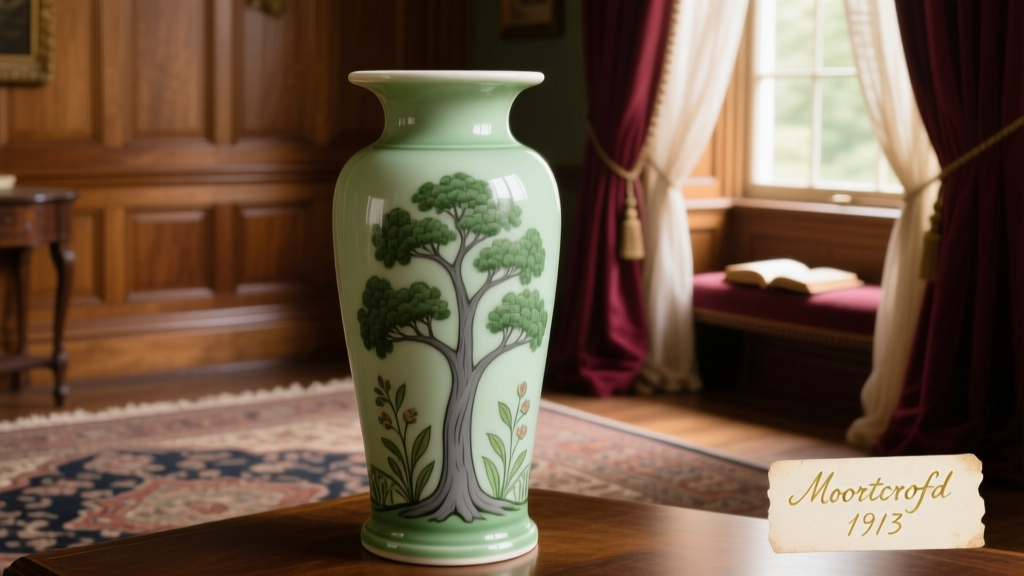
Moorcroft Vase: Green-Gray Trees on Green Ground, Marked 1913, 7 × 4½ Inches — A Study in Early 20th-Century English Art Pottery
Firezist Fire Extinguisher Sign: Authentic 1940s–1950s Metal Identification Plate Analysis & Restoration Guidelines
Pez Zorro Embossed Candy Containers: History, Identification, and Collector Insights
Stevens Williams Rose Bowl: Authenticating and Preserving the 2¼-Inch Thumbprint Pattern Blue Jewel Glass
Roseville Ming Tree Vases: History, Identification, and Restoration Insights for Collectors
Horn Cup Relief-Carved Figures in Garden Bamboo & Pine Trees: A Technical Study of the Tapered 2½-Inch Antique Drinking Vessel
Bronze Figurine Vienna Pheasant 1920: Provenance, Craftsmanship, and Restoration Insights
L. J. G. Stickley No. 713 Pedestal Dining Table: A Deep Restoration and Historical Analysis