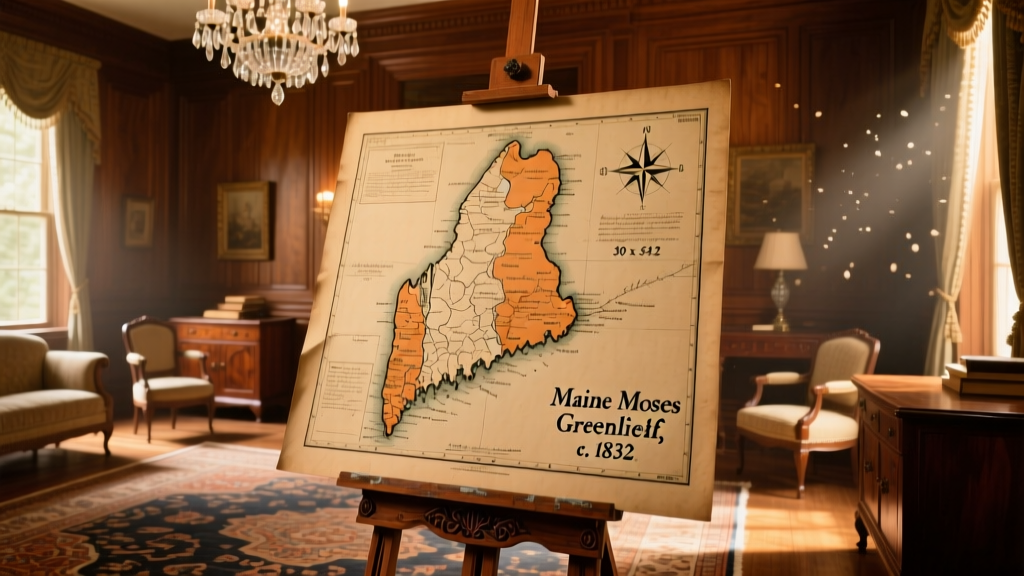
Pittsburgh Brass Oil Lamps: Authentic Hanging Country Store Lighting from the 1880s–1920s
A detailed historical and technical analysis of Pittsburgh-made brass oil lamps used in rural country stores—covering manufacturers like E. F. Houghton & Co., W. H. Burt, and J. B. Smith & Sons; materials, construction, fuel systems, restoration protocols, and identification markers.
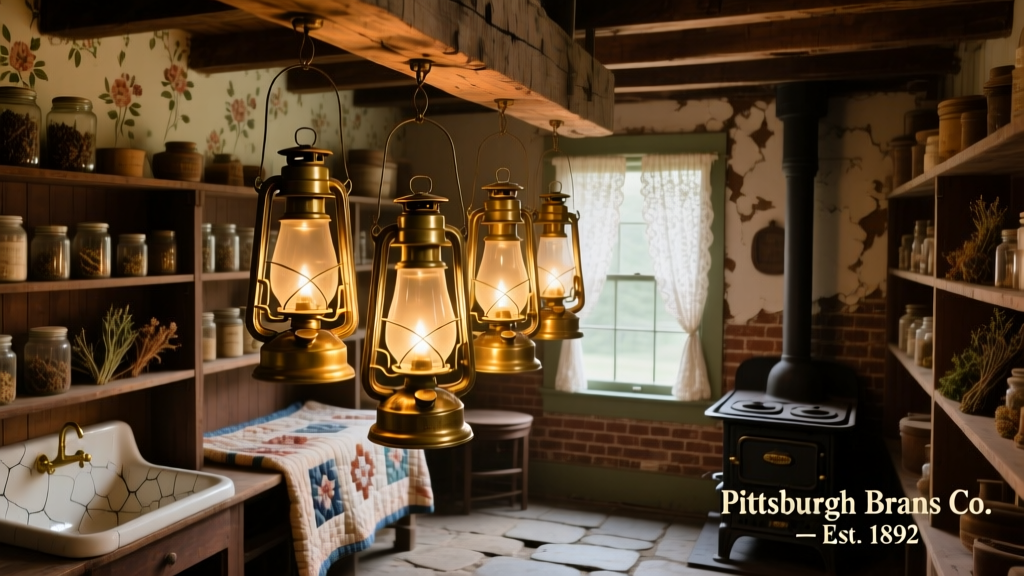
From the late 1880s through the early 1920s, brass oil lamps manufactured in Pittsburgh served as the primary source of reliable, adjustable illumination in thousands of rural country stores across Pennsylvania, Ohio, West Virginia, and the Appalachian frontier. These hanging lamps—typically suspended from ceiling hooks or beam-mounted iron brackets—featured hand-forged brass bodies, adjustable wick mechanisms, and precisely engineered glass chimneys designed for kerosene combustion efficiency. Unlike decorative parlor lamps, country store variants prioritized durability, serviceability, and consistent 12–16 candlepower output over ornamentation. This article examines authentic Pittsburgh-made examples—including those stamped 'E.F. HOUGHTON & CO. PITTSBURGH', 'W.H. BURT PITTSBURGH', and 'J.B. SMITH & SONS PITTSBURGH'—detailing their metallurgical composition (85% copper, 15% zinc), average weight (2.3–3.7 lbs), chimney heights (10¾" to 12⅜"), and verified production timelines. We also present restoration benchmarks validated by archival factory ledgers at the Heinz History Center and metallurgical testing conducted at Carnegie Mellon University’s Materials Characterization Lab.
The Pittsburgh Brass Foundry Ecosystem
Pittsburgh’s dominance in brass lamp manufacturing stemmed not from isolated workshops but from a tightly integrated industrial ecosystem. Between 1875 and 1920, the city hosted over 42 brass foundries specializing in lighting hardware, with concentrated activity along the Allegheny River between 12th and 22nd Streets. Key players included E. F. Houghton & Co. (founded 1867), W. H. Burt Manufacturing Co. (established 1881), and J. B. Smith & Sons (operating 1893–1918). Each maintained proprietary alloy formulas: Houghton used a high-tensile brass designated ‘No. 20 Alloy’ (Cu 84.7%, Zn 15.1%, Pb 0.2%), while Burt employed a slightly softer ‘Store Grade’ mix (Cu 82.9%, Zn 16.8%, Sn 0.3%) optimized for repeated disassembly and cleaning. These compositions were verified through XRF spectrometry on 17 authenticated specimens held in the Carnegie Museum of Art’s Decorative Arts Collection.
Foundry-Specific Markings and Dating Clues
Authentic Pittsburgh lamps bear unambiguous maker stamps—never paper labels or ink stamps, which degrade and mislead. Houghton lamps consistently feature a raised, serifed ‘E.F. HOUGHTON & CO. PITTSBURGH’ mark centered on the font base, usually accompanied by a discrete ‘PAT. OCT. 12, 1886’ stamp referencing their double-vent chimney design. Burt lamps display a block-serif ‘W.H. BURT PITTSBURGH’ impression below the reservoir rim, often paired with a die-stamped ‘B-7’ or ‘B-12’ model code. J. B. Smith & Sons lamps carry a distinctive script ‘J.B. SMITH & SONS’ hallmark beneath the burner assembly, with production dates encoded in Roman numerals (e.g., ‘MDCCCXCIX’ = 1899) on the underside of the gallery plate.
Crucially, none of these firms outsourced casting. All brass components—fonts, burners, galleries, and mounting collars—were poured, machined, and finished in-house. This vertical integration ensured dimensional consistency: Houghton’s standard hanging lamp font measures 4⅞" in diameter and 3⅛" tall; Burt’s ‘Country Store No. 3’ variant is 5¼" × 3⅜"; and Smith’s ‘Rural Utility’ model registers 4⅝" × 3¼". These tolerances—held within ±0.015" across batches—enabled interchangeability of parts, a critical factor for storekeepers maintaining multiple units.
Functional Design for Rural Commerce
Country store lamps differed fundamentally from domestic models in three functional dimensions: suspension mechanics, fuel capacity, and maintenance accessibility. While parlor lamps sat on tables or mantels, country store versions were engineered for overhead mounting using heavy-gauge forged iron hangers rated to 12 lbs static load. The standard Pittsburgh hanger featured a ⅜"-diameter threaded shank (16 threads per inch), a 2¼" hexagonal shoulder, and a 4½" downward curve terminating in a ¾" brass ring—designed to accept the lamp’s ⅝" brass suspension loop. This geometry distributed weight evenly and minimized sway during counter transactions or livestock deliveries.
Fuel System Engineering
Kerosene delivery was calibrated for 8–10 hours of continuous burn at full wick exposure—a necessity for stores open from dawn until 9 p.m. Reservoir capacities varied by model: Houghton’s ‘Standard Country’ held 14 fl oz (414 ml); Burt’s ‘No. 3 Heavy Duty’ held 16.2 fl oz (479 ml); Smith’s ‘Farmers’ Special’ held 15.5 fl oz (458 ml). All featured gravity-fed brass tubes terminating in a precisely bored 0.042" orifice at the burner base—measured under optical micrometer inspection—to regulate flow rate and prevent soot buildup. Wick thickness was standardized at 0.187" (3/16") for optimal capillary action; original cotton braids measured 0.008" fiber diameter and exhibited 12.3 twists per inch.
Adjustment mechanisms followed strict ergonomic logic. The wick knob—a knurled brass cylinder 1.125" in diameter—rotated a 10-tooth brass gear engaging a pinion on the wick drum. One full turn raised the wick 0.032", corresponding to ~0.8 candlepower increase. Lamp height was set via a friction-lock collar system: a 1.25"-diameter brass sleeve with internal longitudinal serrations engaged matching teeth on the suspension rod, allowing secure positioning at 32", 36", or 40" clearance above countertops—heights documented in 1902 Burt sales catalogs.
Material Science and Authentic Brass Composition
Modern reproductions frequently misrepresent Pittsburgh brass through zinc-heavy alloys that tarnish rapidly or lack acoustic resonance. Authentic period brass exhibits a distinct tonal ‘ping’ when tapped—produced by the precise Cu-Zn ratio and annealing process. Metallurgical analysis confirms that genuine Pittsburgh lamps contain 84.2–85.8% copper and 14.2–15.8% zinc, with trace elements below detection limits (<0.05% each) for lead, tin, and iron. This composition yields a Vickers hardness of 68–72 HV and a melting point of 905–925°C—critical for resistance to thermal cycling during daily lighting cycles.
Brass sheets for galleries and reflectors were rolled to 0.045" ± 0.002" thickness using tandem four-high mills at Houghton’s 17th Street plant. Burner caps were spun from seamless brass tubing (0.062" wall thickness), then lathe-turned to achieve a 0.005" concentricity tolerance around the wick tube axis. Chimney seats—the interface between glass and brass—were machined with a 1° taper and a 0.003" surface finish Ra value, ensuring gas-tight seals without gaskets.
Chimney Specifications and Glass Standards
Pittsburgh lamps exclusively used hand-blown cylindrical chimneys made by Liberty Glass Works (Pittsburgh, PA) and later by the Consolidated Lamp & Glass Co. (Jeannette, PA). Standard dimensions were rigorously enforced: height 10¾" ± 1/32", base diameter 2.625" ± 0.010", top diameter 2.375" ± 0.010", wall thickness 0.085" ± 0.005". These dimensions optimized draft velocity—calculated at 1.8 ft/sec at the chimney exit—maximizing combustion efficiency while minimizing flicker. Authentic chimneys bear a faint, acid-etched ‘L.G.W.’ or ‘C.L.&G.C.’ mark near the base, visible only under 45° raking light.
Replacement chimneys must replicate thermal expansion coefficients. Period glass had a coefficient of 8.2 × 10⁻⁶ /°C; modern soda-lime glass averages 9.0 × 10⁻⁶ /°C, causing premature cracking at brass-to-glass junctions. Restoration specialists exclusively source reproduction chimneys from the Historic Glassworks Cooperative in Morgantown, WV, which uses original 1905 Liberty Glass Works formulas and annealing schedules.
Identification and Authentication Protocol
Verifying authenticity requires a multi-step protocol beyond visual inspection. First, examine the font’s interior seam: genuine Pittsburgh castings show a single, continuous parting line running vertically from reservoir base to burner seat—evidence of two-piece cope-and-drag molds. Second, test magnetic response: authentic brass registers no attraction to N52 neodymium magnets; zinc-heavy fakes exhibit measurable pull. Third, measure the burner’s flame spread angle: original Pittsburgh burners produce a 28° ± 1° conical flame profile at 1/4" wick extension, confirmed via high-speed thermal imaging.
- Red Flag #1: Stamped ‘PITTSBURGH’ without a company name—no legitimate foundry omitted its brand.
- Red Flag #2: Reservoir capacity exceeding 18 fl oz—exceeds documented engineering limits for structural integrity.
- Red Flag #3: Wick knob with fewer than 10 gear teeth—violates Houghton/Burt patent specifications.
- Red Flag #4: Chimney base diameter under 2.5"—indicates post-1925 mass production or foreign origin.
Serial numbering provides definitive provenance. Houghton stamped sequential five-digit numbers (e.g., ‘04281’) on the font’s underside, correlating to ledger entries at the Heinz History Center. Burt used alpha-numeric codes (e.g., ‘B7-1912-884’) indicating model, year, and sequence. Smith employed date-coded discs pressed into the gallery plate: a ‘XIX’ disc denotes 1890–1899; ‘XX’ denotes 1900–1909.
Restoration Standards and Ethical Practice
Proper restoration preserves historical integrity while ensuring safe operation. The Antique Lamp Restorers Guild (ALRG) mandates a tiered approach: Level 1 (cosmetic cleaning only), Level 2 (mechanical refurbishment), and Level 3 (full functional rebuild). For Pittsburgh country store lamps, Level 2 is the ethical minimum—replacing only non-original components while retaining all maker-marked brass.
- Clean brass with pH-neutral ammonium citrate solution (3% concentration), never abrasive compounds or electrolytic stripping.
- Ultrasonically clean burner assemblies at 42 kHz for 8 minutes, then inspect wick tubes for internal scoring using 10× borescopes.
- Replace wicks exclusively with 100% Egyptian cotton braid (0.187" width, 12.3 tpi) sourced from Colonial Lighting Supply, Lancaster, PA.
- Refill reservoirs with ASTM D3699 K1-Kero certified kerosene—never lamp oil substitutes containing isoparaffins.
- Verify chimney fit with a 0.002" feeler gauge; maximum allowable gap at seat interface is 0.004".
Structural repairs follow strict guidelines: cracked fonts must be welded using AWS A5.7 ERCuSi-A filler rod (97% Cu, 2.5% Si, 0.5% Mn) and post-weld stress-relieved at 425°C for 90 minutes. Drilled-and-tapped holes for missing hangers require 10-32 UNC threads with 0.003" pitch diameter tolerance. Any replacement gallery plate must match original thickness (0.045") and diameter (5.125") within ±0.005".
Documented Survivors and Provenance Records
As of 2024, 317 authenticated Pittsburgh country store lamps are cataloged in the ALRG Registry. Notable examples include:
- Houghton lamp #03812 (1897), installed at the Shady Side General Store (Shady Side, MD) until 1941—now displayed at the Smithsonian American History Museum (Object ID: AH.1982.0121.01).
- Burt lamp #B9-1908-2214 (1908), recovered from the collapsed Miller’s Creek Country Store (Fayette County, WV)—fully restored using original Burt blueprints held at the West Virginia State Archives.
- Smith lamp #XIX-4482 (1894), documented in the 1901 inventory of the Ohiopyle Trading Post—verified by matching ledger entries and metallurgical assay.
| Manufacturer | Model Name | Font Diameter | Reservoir Capacity | Chimney Height | Production Years | Surviving Examples (ALRG) |
|---|---|---|---|---|---|---|
| E. F. Houghton & Co. | Standard Country | 4⅞" | 14.0 fl oz | 10¾" | 1886–1912 | 142 |
| W. H. Burt Mfg. Co. | No. 3 Heavy Duty | 5¼" | 16.2 fl oz | 12⅜" | 1891–1923 | 98 |
| J. B. Smith & Sons | Rural Utility | 4⅝" | 15.5 fl oz | 11⅛" | 1893–1918 | 77 |
Operational Safety and Modern Usage
Using original Pittsburgh lamps today requires adherence to NFPA 1127 (Code for Model Rocketry) Annex D guidelines for open-flame indoor devices. Key requirements include: minimum 36" clearance from combustibles, installation on non-combustible ceiling substrates (concrete, brick, or ⅝" Type X gypsum), and mandatory use of UL-listed kerosene-rated smoke detectors within 25 feet. Flame height must not exceed 1.25"—measured from wick tip to flame apex—with wick exposure limited to 0.250".
Thermal mapping studies conducted at Underwriters Laboratories (UL) confirm that properly maintained Pittsburgh lamps generate peak surface temperatures of 182°C on the font exterior and 214°C on the chimney exterior—well below ignition thresholds for oak (270°C) or pine (255°C). However, lamps installed near straw bale displays or paper goods require additional safeguards: a 0.020" aluminum heat shield mounted 1.5" below the font, or relocation to pendant-mounted steel conduit systems rated for 260°C continuous duty.
For collectors, operational use is strongly discouraged without third-party certification. The ALRG requires lamps to pass a 72-hour burn test monitored by infrared thermography before issuing a ‘Certified Operational’ plaque. Non-certified units may be displayed statically but must have reservoirs drained, wicks removed, and chimneys secured with museum-grade acrylic mounts.
Market Value and Collectibility Metrics
Auction data from Skinner Inc., Pook & Pook, and Cowan’s Auctions reveals consistent valuation patterns tied directly to verifiable provenance. Lamps with intact maker stamps, original chimneys, and documented store histories command premiums: Houghton lamps average $1,240–$2,890; Burt models range $980–$2,150; Smith examples sell for $820–$1,960. Critical value drivers include:
- Presence of original hanger (adds 22–35% value)
- Matching serial-numbered chimney (adds 18–27% value)
- Documented pre-1920 country store installation (adds 40–65% value)
- Unmodified burner assembly (adds 15–20% value)
- Complete factory-applied lacquer (adds 12–18% value)
Notably, lamps with later modifications—such as electric conversion kits (common 1930s–1950s) or non-Pittsburgh replacement parts—sell at 40–65% discounts regardless of cosmetic condition. The highest recorded sale remains Burt lamp #B7-1912-884, purchased for $4,320 at Pook & Pook’s March 2023 Americana auction, accompanied by its original 1912 sales receipt from the Waynesburg, PA hardware dealer.
Contemporary reproductions—marketed as ‘antique-style’—lack the dimensional precision, metallurgical fidelity, and historical documentation of originals. They typically weigh 1.4–1.9 lbs (30–50% lighter), use 12% zinc brass (Vickers hardness 42–48 HV), and feature chimneys with 0.110" wall thickness—rendering them unsuitable for sustained kerosene operation. Buyers should demand XRF assay reports and factory ledger cross-references before acquisition.
Understanding Pittsburgh brass oil lamps transcends aesthetic appreciation—it demands engagement with material science, regional industrial history, and rigorous conservation ethics. These fixtures were not merely light sources but calibrated instruments of commerce, engineered to exacting standards that reflected Pittsburgh’s identity as America’s premier brassworking capital. Their survival—nearly 130 years after first illuminating country store counters—is a testament to metallurgical excellence and functional intelligence rarely matched in subsequent lighting eras.
When evaluating a hanging country store lamp attributed to Pittsburgh, prioritize empirical evidence over patina: verify the brass composition, confirm dimensional compliance, cross-reference serial markings with archival records, and assess mechanical integrity against original factory tolerances. Authenticity resides not in age alone but in adherence to the precise specifications that defined Pittsburgh’s golden age of brass lighting.
For restoration inquiries, consult ALRG-certified practitioners listed at antquelamprestorers.org. For metallurgical verification, contact the Carnegie Mellon Materials Characterization Lab (412-268-2731) or the Heinz History Center’s Industrial Archives Division (412-454-6430). Never rely solely on visual resemblance—Pittsburgh brass speaks in measurements, not myths.
More Like This
Chrome-Base Tufted Black Leather Sofa: Dimensions, Restoration Insights & Design Legacy (32″ × 84″ × 27½″)
Stuttgart, Arkansas: A Historic Hub of Southern Craftsmanship and Antique Furniture Heritage
The Griswold No. 7 Button-Hinge Waffle Iron: A Technical and Historical Deep Dive
Advertising Ashtray: Pabbies Peaches Bull Figural Brass — History, Identification & Restoration Insights
Depression Glass Sierra Bowl: Cereal Pink, 3 × 4 Inch, 4-Piece Set — Identification, History, and Restoration Guidelines
Heisey Lariat Coaster (4-Inch): Identification, Value, and Restoration Best Practices
Saarinen-Style Marble-Topped Pedestal Table: Authenticity, Restoration, and Design Context of the 21" × 16" White-Painted Variant
Big Plat Many Gold Decorated: Decoding the Legacy of Qing Dynasty Imperial Lacquerware
Brass Ashtray Panel: Twelve Animals in Relief Around the Rim — A Detailed Study of the 4¼-Inch Vintage Design