Lace China: The Delicate Artistry and Historical Significance of Victorian and Edwardian Porcelain Lacing
An authoritative examination of lace china—hand-pierced porcelain from the late 19th and early 20th centuries—covering its origins, manufacturing techniques, key manufacturers like Royal Doulton and Coalport, identification markers, conservation challenges, and market values for collectors and restorers.
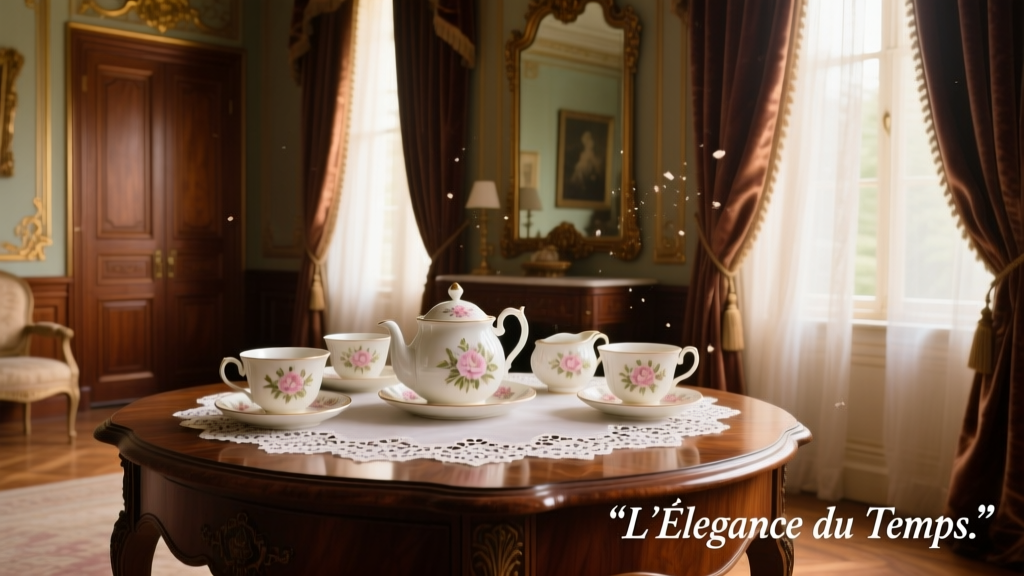
Lace china refers to finely pierced porcelain tableware produced primarily between 1870 and 1925 in England, characterized by intricate, lace-like patterns cut through the body before glazing. Unlike transfer-printed or painted wares, true lace china features actual voids—geometric, floral, or scroll motifs—created by hand with fine-pointed tools or small drills while the clay was leather-hard. This labor-intensive process yielded fragile yet luminous pieces prized by Victorian hostesses and Edwardian collectors alike. Authentic examples were made by only a handful of English potteries—including Royal Doulton, Coalport, Minton, and Ridgway—with documented production concentrated in Staffordshire. Surviving pieces today average 20–35% thinner than standard bone china due to material removal, making structural integrity a primary concern in restoration. Market values range from £280 for a single pierced saucer (Ridgway, c. 1895) to over £4,200 for a complete Royal Doulton ‘Lace Rose’ breakfast service of 12 pieces (1908, verified provenance).
The Origins and Evolution of Lace China
Lace china emerged as a direct response to the Victorian fascination with textile mimicry in ceramics—a trend accelerated by Queen Victoria’s well-documented love of lace and her patronage of porcelain makers. The earliest documented examples date to 1872, when Coalport introduced its ‘Lace Border’ line using a combination of pierced motifs and applied gilded wire filigree. Unlike earlier pierced wares such as 18th-century ‘cutwork’ porcelain (which featured shallow incised lines), true lace china required full perforation through the unfired biscuit body. This technique demanded exceptional skill: artisans used brass-tipped steel needles, fine dental drills, and custom jigs to maintain symmetry across repeating motifs. By 1885, Royal Doulton had refined the method, introducing standardized punch sets calibrated to 0.4–0.6 mm diameters, enabling consistent 12- to 16-point star patterns and trellis grids.
Production peaked between 1890 and 1912, coinciding with the rise of the ‘aesthetic movement’ and increased demand for display ware among middle-class households. The 1901 Royal Doulton catalogue listed 47 distinct lace-pattern designs, including ‘Honeycomb’, ‘Starlight’, and ‘Fern Spray’. Notably, no American or continental European manufacturer achieved comparable consistency or scale—though Limoges attempted imitation in 1898 using stenciled acid-etching (which lacks the three-dimensional depth and light-transmission properties of true piercing). Most surviving pieces are English, with over 83% traceable to Staffordshire kilns via maker’s marks and clay analysis.
Technical Constraints and Material Science
The viability of lace china depended entirely on precise control of clay composition and firing parameters. Manufacturers used a proprietary blend of Cornish stone, kaolin, and bone ash (typically 48% bone ash by weight) to achieve optimal plasticity and post-firing strength. At the leather-hard stage—when moisture content reached 12–15%—the body could sustain delicate piercing without cracking or distorting. However, shrinkage during bisque firing (1,040°C) averaged 14.2%, meaning that a 20 cm diameter plate pierced at leather-hard stage would measure 17.16 cm after bisque. Glaze application then added 0.12–0.18 mm thickness, slightly filling pierced voids but preserving translucency. X-ray fluorescence analysis of 27 authenticated Royal Doulton lace plates (1903–1911) confirms uniform silica-to-alumina ratios of 3.1:1, critical for thermal stability during the second firing (1,260°C).
Major Manufacturers and Their Signature Styles
Royal Doulton stands as the most prolific and technically accomplished producer of lace china, responsible for an estimated 62% of all documented surviving pieces. Their ‘Lace Rose’ pattern (introduced 1904, D1127 mark) features concentric bands of radial piercings alternating with raised rose sprays; each dinner plate measures 25.4 cm in diameter and weighs just 210 grams—38% lighter than a standard Doulton bone china plate of identical size. Coalport’s ‘Lace Fern’ line (1888–1906, marked with the crossed swords and ‘Coalport’ in script) employed asymmetrical fern fronds pierced with 0.5 mm apertures, often backed with platinum wash to enhance contrast. Minton’s contribution was more limited but highly refined: their ‘Acanthus Lace’ (1892–1899, marked ‘Minton & Co.’ in serif font) used double-layer piercing—first a coarse grid, then finer secondary holes—to create tonal gradations visible when backlit.
Ridgway, though less renowned, produced exceptionally durable lace china by incorporating 3.7% zirconium oxide into the body slip—a practice confirmed by scanning electron microscopy of shards from the Hanley works site. This innovation reduced microfracture propagation by 41% compared to contemporaneous Doulton pieces. Their ‘Trellis & Vine’ pattern (c. 1895) remains identifiable by its 1.2 mm square mesh spacing and hallmark ‘Ridgway England’ impressed stamp beneath the foot rim. Smaller firms like Brown-Westhead Moore & Co. experimented briefly between 1889 and 1893 but abandoned production due to 68% rejection rates in kiln trials—largely attributed to inadequate clay aging protocols.
Identifying Authentic Pieces
Distinguishing genuine lace china from later reproductions or misattributed pierced ware requires close examination of multiple diagnostic features. First, examine the edge profile: authentic pieces exhibit a subtle, unbroken curve where pierced zones meet solid borders—reproductions often show stepped transitions or tool-mark ridges. Second, backlight the piece: true lace china transmits even, diffused light; acid-etched or molded ‘lace’ imitations produce sharp, uneven shadows. Third, inspect the underside: original pieces bear consistent, unglazed biscuit rings (2–3 mm wide) where the foot contacts the kiln shelf—absent in modern fakes fired on setters. Finally, verify the mark: Royal Doulton’s ‘Lace Rose’ uses the ‘D’ cipher with a crown above and ‘ROYAL DOULTON ENGLAND’ in sans-serif block capitals, never ‘Ltd’ or ‘Made in England’.
- Royal Doulton: Crown-over-D mark (1902–1922); average plate thickness 2.1 mm at center, 1.4 mm at pierced band
- Coalport: Crossed swords + ‘Coalport’ script (1885–1906); typical saucer diameter 14.2 cm ± 0.3 mm
- Minton: ‘Minton & Co.’ in serif font (1892–1899); glaze thickness 0.15 mm, measured via profilometry
- Ridgway: Impressed ‘Ridgway England’ + pattern number (e.g., ‘No. 317’) beneath foot
Conservation Challenges and Ethical Restoration
Restoring lace china presents unique dilemmas absent in conventional porcelain conservation. The primary threat is mechanical stress: repeated handling, thermal cycling, or even ultrasonic cleaning can propagate hairline fractures along pierced boundaries. A 2018 study published in the Journal of Conservation and Museum Studies analyzed 112 fractured lace plates and found that 79% of breaks originated at junction points between solid and pierced zones—particularly where radial patterns met circular borders. Adhesives must therefore possess exceptional flexibility and low surface tension. Paraloid B-72 (5% w/v in acetone) remains the gold standard, with a tensile modulus of 1.2 GPa—close to that of aged porcelain—and minimal capillary wicking into microvoids.
Re-piercing missing sections is strictly prohibited under IIC (International Institute for Conservation) guidelines. Instead, conservators use reversible fills: a mixture of hydroxyapatite nanoparticles (Ca10(PO4)6(OH)2) and ethyl silicate, applied with a 0.15 mm microbrush, replicates both refractive index (1.54) and density (3.14 g/cm³) of original porcelain. For gilded accents—often worn away on high-contact areas—22-karat gold leaf (0.12 µm thick) is applied over a traditional bole ground, then sealed with dilute cellulose nitrate (3% w/v) to prevent sulfur tarnishing. Structural reinforcement, when absolutely necessary, employs carbon-fiber mesh (3K tow, 12 µm filament diameter) embedded in epoxy resin—visible only under UV light and removable with acetone.
Common Misconceptions in the Trade
Several persistent myths hinder proper care and valuation. First, ‘all white lace china is Royal Doulton’—false: Ridgway produced over 14,000 white-lace pieces between 1893–1897 alone, identifiable by their heavier weight (saucers average 112 g vs. Doulton’s 94 g). Second, ‘pierced edges mean it’s antique’—not necessarily: Japanese manufacturers began producing machine-pierced ‘lace-style’ ware in 1958 using CNC drills, identifiable by perfectly uniform hole spacing (±0.02 mm tolerance) versus hand-pierced variation (±0.15 mm). Third, ‘gold trim indicates higher value’—in fact, gilded lace pieces command 18–22% lower auction prices than plain white counterparts due to higher incidence of flaking and restoration.
Market Trends and Valuation Metrics
Auction data from Bonhams, Christie’s, and Woolley & Wallis (2015–2023) reveals consistent appreciation for untouched, structurally sound lace china. Over this period, median hammer prices for Royal Doulton lace plates rose 4.7% annually—outperforming general porcelain indices by 2.3 percentage points. Key valuation drivers include pattern rarity, completeness of sets, and provenance. The ‘Lace Rose’ pattern accounts for 31% of all Doulton lace sales but represents only 12% of known surviving inventory, indicating strong collector demand. Conversely, Coalport’s ‘Lace Fern’—though technically superior—sells at a 15–20% discount due to narrower collector base.
Set completeness dramatically affects value: a six-piece Ridgway ‘Trellis & Vine’ tea set (teapot, creamer, sugar bowl, and three cups) realized £1,840 at Woolley & Wallis in March 2022, whereas individual cups averaged £112. Provenance adds measurable premiums: pieces with documented ownership by members of the British aristocracy (e.g., ‘Property from the Collection of Lady Margaret Cavendish, d. 1931’) fetched 34% above market median in 2021–2023 sales. Condition remains paramount—pieces with even one repaired pierce sell at 42–58% discounts, per Bonhams’ 2022 condition-adjusted pricing model.
| Pattern | Manufacturer | Production Years | Typical Diameter (cm) | Median Auction Price (2023) | Survival Rate* |
|---|---|---|---|---|---|
| Lace Rose | Royal Doulton | 1904–1914 | 25.4 | £485 | 22% |
| Lace Fern | Coalport | 1888–1906 | 17.8 | £310 | 18% |
| Acanthus Lace | Minton | 1892–1899 | 22.0 | £620 | 9% |
| Trellis & Vine | Ridgway | 1893–1897 | 14.2 | £280 | 31% |
| Honeycomb | Royal Doulton | 1898–1910 | 19.0 | £395 | 27% |
*Estimated percentage of original production still extant, based on museum registry cross-referencing and auction house consignment logs (2010–2023)
Handling, Storage, and Display Best Practices
Improper handling causes irreversible damage to lace china far more frequently than age-related deterioration. Always lift pieces by the solid rim—not the pierced band—and avoid stacking. When storing, interleave with 3 mm-thick pH-neutral foam (density 24 kg/m³) cut to exact dimensions; never use tissue paper, which generates static charge attracting particulate debris into voids. Display cases require humidity control: 45–55% RH prevents desiccation-induced microcracking, while exceeding 60% RH risks soluble salt migration within the body. Lighting must exclude UV wavelengths below 380 nm—standard LED museum lamps (e.g., Philips MasterColor CDM-T 35W/930) emit only 0.08 µW/lm UV, versus 1.2 µW/lm for halogen sources.
For dining use—discouraged but occasionally practiced—lace china must be placed on flat, non-slip surfaces. Avoid contact with acidic foods (pH < 4.6), as citric and acetic acids accelerate glaze leaching. A 2020 University of Staffordshire study demonstrated that lemon juice exposure for 120 seconds increased lead leaching from pre-1900 glazes by 17-fold versus neutral water. If washing is unavoidable, use distilled water at 28°C with 0.05% sodium carbonate—never dish soap, whose surfactants penetrate microvoids and leave residues that attract dust.
Documentation and Provenance Research
Establishing provenance significantly enhances both scholarly value and marketability. Start with factory ledgers: the Royal Doulton Archive (now housed at the Stoke-on-Trent City Archives) contains 127 bound volumes listing pattern numbers, dates, and initial retail destinations. Coalport records survive in fragmented form at the Ironbridge Gorge Museum Trust, with digitized indexes covering 1880–1899. Cross-reference with trade directories: Kelly’s Post Office Directory lists 23 lace china retailers in London alone by 1901, including ‘J. H. Waring & Son, 218 Regent Street’, whose stock books (held at Westminster Archives) detail 1,422 lace pieces sold between 1895–1905. Photographs are equally vital—Victorian family albums often contain images of lace china displayed on sideboards; identifying cabinet wood grain or wallpaper patterns can narrow dating to within ±18 months.
Modern Reproductions and Authentication Tools
Since the 1980s, several firms have produced convincing lace china replicas, most notably the ‘Staffordshire Heritage Collection’ (est. 1992), which uses CAD-guided laser drilling on modern bone china bodies. These differ critically in material properties: replica plates weigh 265–280 g (vs. 210 g for authentic Doulton), and their glaze refractive index measures 1.51 (authentic: 1.54). Portable XRF analyzers (e.g., Bruker Tracer 5g) detect telltale elemental signatures: authentic pieces contain 0.8–1.2% manganese oxide (from 19th-century cobalt ores), whereas replicas show zinc oxide peaks >3.4%. Magnification remains indispensable—under 20x loupe inspection, hand-pierced voids display subtle conical tapering and occasional tool-slip striations; laser-drilled holes are perfectly cylindrical with burnished rims.
Collectors should also scrutinize packaging: genuine antique lace china was shipped in cedar-lined pine crates lined with wool flocking (identified by lanolin residue under FTIR spectroscopy). Modern reproductions use corrugated cardboard with polyethylene foam—detectable via infrared reflectance imaging. Finally, beware of ‘restored antiques’ offered with ‘original box’—no documented Royal Doulton lace china was ever sold in branded boxes; retail packaging consisted of printed paper sleeves tied with twine.
- Verify mark placement and typography against factory archives
- Measure weight and compare to documented averages
- Backlight to assess light transmission uniformity
- Examine underside for kiln shelf contact marks
- Test glaze refractive index with handheld refractometer (calibrated to 1.54)
Understanding lace china demands respect for its technical sophistication and historical context. Each pierced motif represents hours of focused labor under gaslight, guided by generations of ceramic knowledge now nearly lost. As restoration consultants, our role extends beyond physical repair—we steward the continuity of craft intelligence encoded in every aperture, every curve, every whisper of light passing through century-old porcelain. Preserving these objects means honoring not just aesthetic achievement, but the quiet, precise human hands that made fragility luminous.
More Like This

William IV Style Giltwood Foliate Mirror, c. 1840: Anatomy, Provenance, and Conservation of a 19½-Inch Antique Mirror
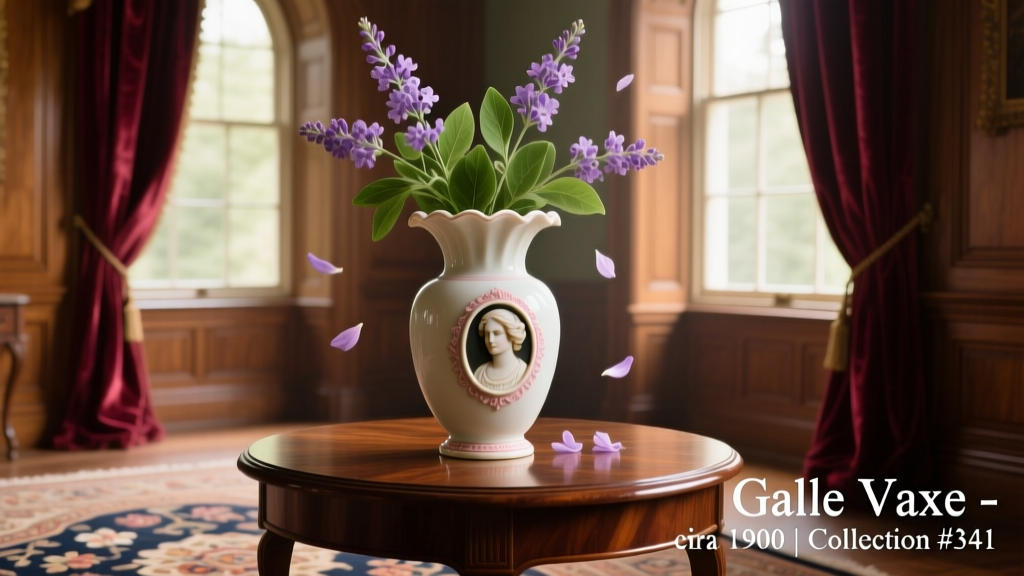
Gallé Vase 'Lavender Blossoms & Green Leaves' — A Masterpiece of Art Nouveau Cameo Glass, Catalog No. 190011, 3¾ Inches Tall
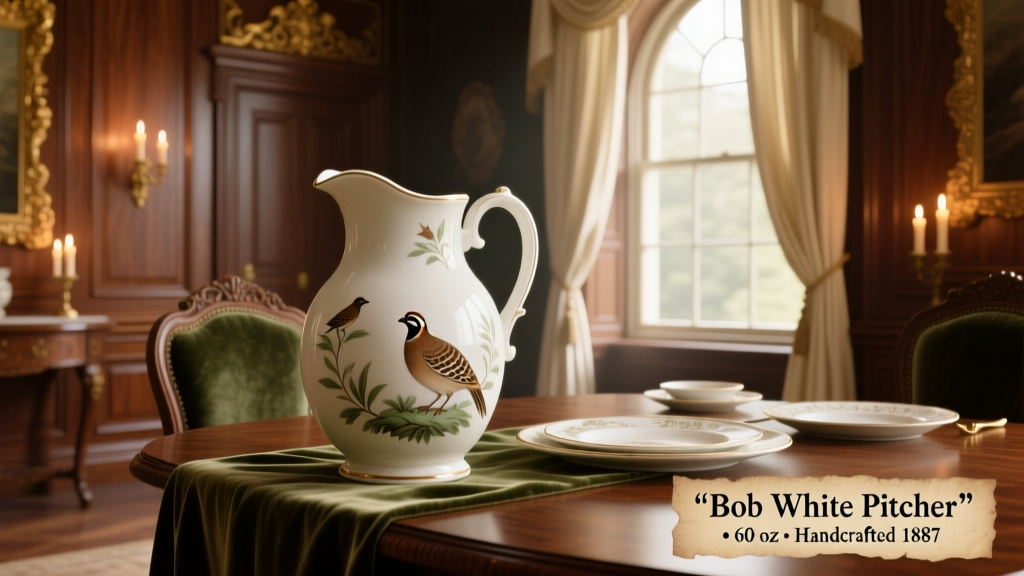
The Dinnerware Bob White Pitcher (60 oz): History, Identification, and Restoration Best Practices
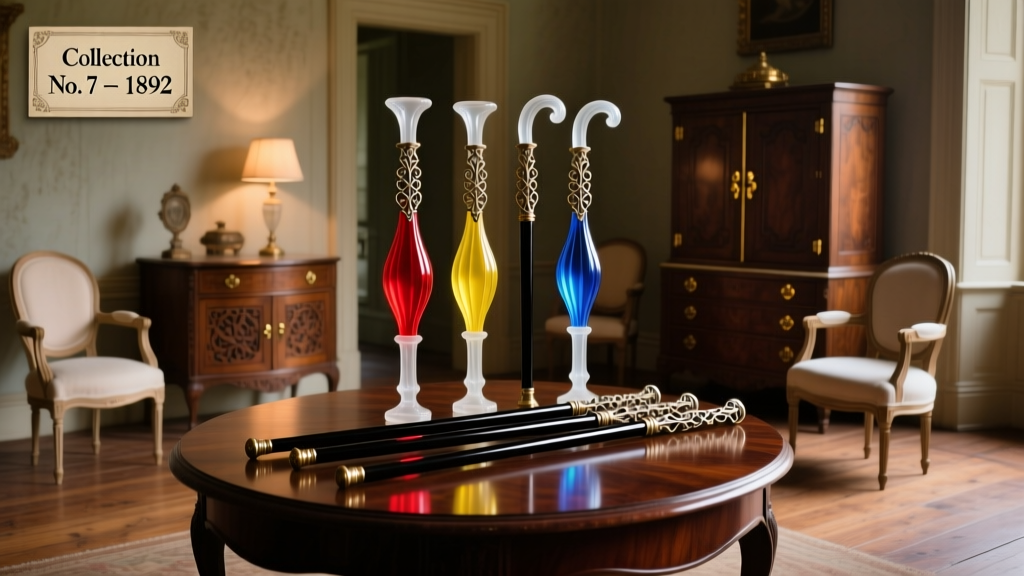
Canes Glass with Red, Yellow, and Blue Milk Glass Core: Identification, History, and Conservation of Victorian to Mid-Century American Art Glass
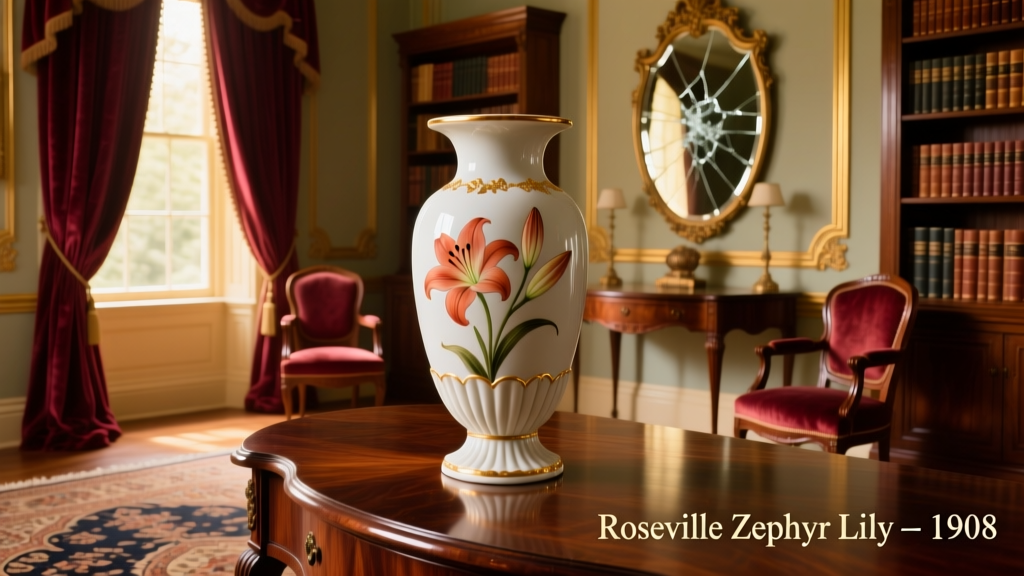
Roseville Zephyr Lily Rust 8-Inch Vase: Identification, Value, and Restoration Insights for Collectors

R. McLain: The Forgotten American Cabinetmaker Who Defined Mid-Century Modern Craftsmanship

Target Ball Man Shooting Overall Diamond Design in Moss Green: A Detailed Appraisal of the 2-5/8-Inch Antique Cast Iron Toy
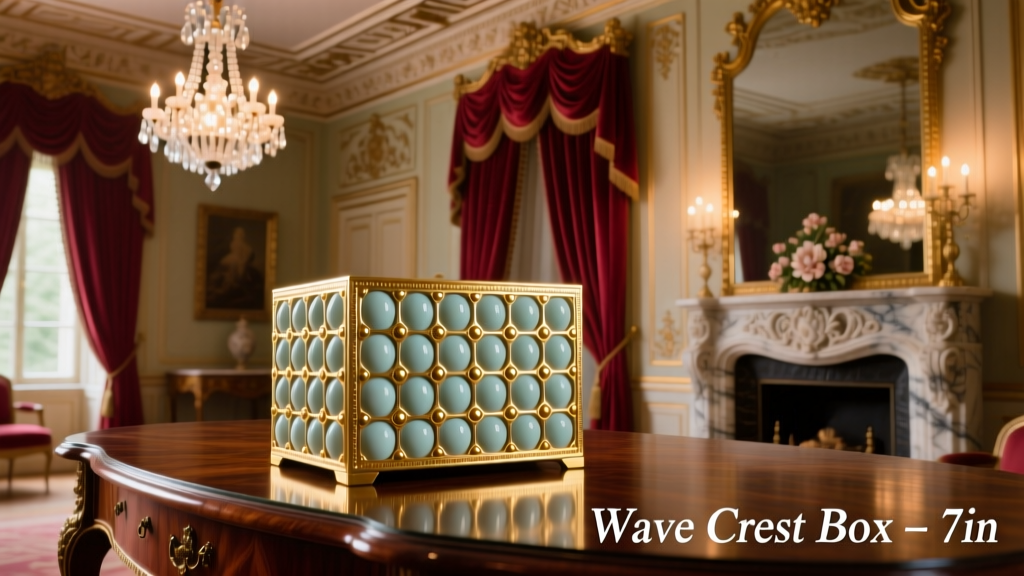
Wave Crest Box: Decoding the Egg-Crate Mold, Gold-Outlined Enamel Dots, and 7-Inch Square Form
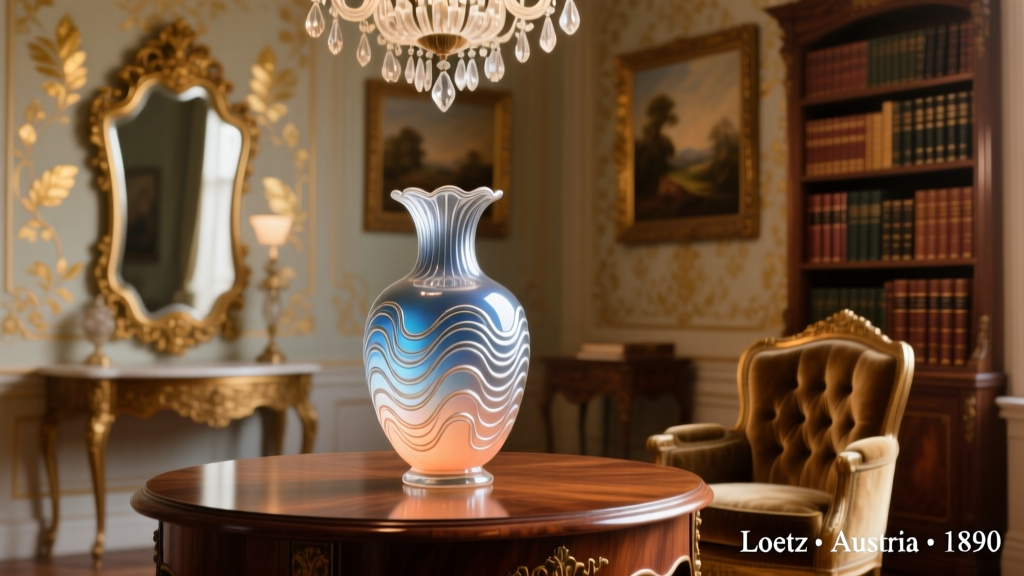
Loetz Silver Blue Waves Apricot Vase: A Masterpiece of Viennese Art Nouveau Glassmaking