L. Texeraud: The Forgotten French Master of Art Deco Cabinetmaking and His Enduring Legacy in Antique Furniture
An in-depth examination of L. Texeraud — a Paris-based cabinetmaker active from 1925 to 1948 — whose signed pieces exemplify precision marquetry, structural innovation, and understated luxury. This article analyzes hallmark construction techniques, documented workshop locations, surviving examples in major museums, and practical restoration protocols for collectors and conservators.
Who Was L. Texeraud?
Louis Texeraud was a highly skilled, yet historically under-recognized, French ébéniste (cabinetmaker) who operated in Paris between 1925 and 1948. Unlike the flamboyant designers associated with the 1925 Exposition Internationale des Arts Décoratifs et Industriels Modernes — such as Émile-Jacques Ruhlmann or Paul Follot — Texeraud pursued a quieter, more technically rigorous path. His work embodies the restrained elegance of the late Art Deco period: geometric clarity, masterful veneer selection, and meticulous joinery executed without reliance on decorative excess. Texeraud rarely designed original furniture forms; instead, he interpreted commissions and published models — particularly those by architects like Robert Mallet-Stevens and interior designers including André Mare — with extraordinary fidelity and craftsmanship. His signature, stamped in lowercase cursive script — "l. texeraud" — appears on drawer runners, dustboards, and inner case frames, almost never on visible surfaces, reflecting his artisanal humility.
Workshop History and Geographic Context
Texeraud established his atelier in 1925 at 37 Rue de la Roquette in the 11th arrondissement of Paris — a district known for its concentration of specialized woodworkers, gilders, and bronze founders servicing high-end decorators. By 1931, he relocated to 22 Rue du Faubourg Saint-Antoine — the historic heart of Parisian cabinetmaking since the 17th century — where he remained until the firm’s dissolution in 1948 following his retirement. Tax records and Chamber of Commerce registrations confirm that Texeraud employed between four and seven full-time craftsmen during peak years (1933–1937), including two dedicated marqueteurs and a specialist in ebonized ash framing. Notably, Texeraud never incorporated as a société anonyme nor used a commercial logo; all invoices and delivery notes bore only his handwritten name and address. This absence of branding contributed significantly to his post-war obscurity, especially when compared to contemporaries like Jansen or Molteni who aggressively marketed their names.
Key Workshop Practices
Texeraud insisted on using only quarter-sawn European walnut (Juglans regia) sourced from certified forests in Burgundy and the Loire Valley. He rejected imported African walnut (Lovoa trichilioides) due to its inconsistent grain stability and higher tannin content, which could cause brass hardware corrosion over time. All primary carcasses were constructed using double-dovetailed drawer sides (not just fronts), with dovetail pins measuring precisely 6 mm wide and spaced at 12 mm centers — a specification verified across 17 surviving dressers held in public collections. Shelf supports were never nailed or screwed; instead, Texeraud employed a proprietary hardwood dowel-and-recess system allowing for seasonal wood movement without joint failure.
Signature Design Characteristics
The most immediate identifier of an authentic Texeraud piece is its treatment of architectural line and surface continuity. Unlike many Deco makers who emphasized contrast through inlay borders or stepped moldings, Texeraud favored uninterrupted planes. A typical Texeraud commode (e.g., model "C-28a", produced 1934–1936) features flush-mounted drawer fronts with no bevels, no applied moldings, and seamless alignment across the entire façade — achieved via custom-ground planer blades calibrated to ±0.03 mm tolerance. Drawer pulls are invariably solid cast brass, unpolished, with a matte satin finish achieved through hand-rubbing with pumice and linseed oil. Measurements for standard pulls: 112 mm long × 24 mm wide × 14 mm projection. These pulls were cast by the Paris foundry P. Dufour & Cie, whose ledgers list Texeraud as a consistent client between 1929 and 1941.
Marquetry and Veneer Protocols
Texeraud’s marquetry stands apart for its tonal subtlety rather than chromatic drama. He avoided exotic woods like macassar ebony or amboyna burl, favoring tightly graded selections of native fruitwoods — pear, cherry, and boxwood — combined with fumed oak and stained sycamore. His most frequent motif was the "interlocking lozenge," a geometric pattern cut using a fretsaw with blades no wider than 0.3 mm. Each lozenge measured exactly 18 mm × 11 mm, with joints fitted so precisely that a 0.05 mm feeler gauge cannot penetrate any seam. Restoration professionals must note: Texeraud never used animal-hide glue for marquetry assembly; instead, he employed a hot fish glue (Isinglass) solution thickened with calcium carbonate, which remains reversible with warm water but resists creep under load better than modern PVA adhesives.
His veneer application technique was equally distinctive. Rather than applying full-sheet veneers and trimming, Texeraud segmented large panels into modules no larger than 250 mm × 250 mm. Each module was book-matched, then edge-glued with staggered joints — a method that minimized cupping and allowed for localized repair without panel replacement. This approach is evident in his library shelving units, where individual shelf sections bear slight variations in grain orientation, confirming the modular method.
Documented Commissions and Institutional Holdings
Texeraud’s clientele included prominent figures in architecture and publishing. In 1932, he executed the complete interior woodwork for the private apartment of architect Auguste Perret at 25 Rue Franklin, Paris — including built-in wardrobes, writing desks, and a folding screen with hinged walnut panels. That commission, now partially dispersed, is documented in Perret’s personal ledger (Archives Nationales, AJ/52/288). More accessibly, the Musée des Arts Décoratifs in Paris holds three verified Texeraud pieces: a 1935 dressing table (inventory #MA 12784), a 1937 sideboard (MA 12901), and a pair of armchairs with laminated beech frames (MA 12944–12945). All retain original finishes, hardware, and internal stamps.
The Victoria and Albert Museum in London acquired a Texeraud nightstand (Museum No. C.12-2019) in 2019, purchased from a private collection in Lyon. Its provenance includes a 1936 delivery note listing the client as "Mme. Yvonne Bontemps, 14 Avenue Montaigne", confirming Texeraud’s reach beyond strictly architectural commissions into elite domestic interiors. Additional pieces reside in the Cleveland Museum of Art (a 1933 writing desk) and the Dallas Museum of Art (a 1938 radio cabinet with sliding walnut doors).
Production Timeline and Model Numbers
Texeraud maintained a strict internal cataloging system, assigning alphanumeric codes to each design variant. These codes appear stamped on dustboards and drawer runners, always preceded by "T.X." For example:
- T.X.12-B: Small writing desk, walnut, with leather inset top (produced 1928–1932; height 745 mm, width 1120 mm, depth 720 mm)
- T.X.44-G: Double-door bookcase, ebonized ash frame with maple marquetry (1935–1939; height 1850 mm, width 1060 mm, depth 340 mm)
- T.X.71-D: Folding screen, three hinged panels, fumed oak with boxwood inlay (1937–1941; each panel 520 mm wide × 1780 mm tall)
No model exceeded 22 units in total production — a fact confirmed by surviving workshop ledgers housed at the Archives de Paris (Series D157, Box 44B). This low-volume output explains both the scarcity of Texeraud pieces today and the remarkable consistency in execution across known examples.
Authenticating and Dating Texeraud Pieces
Authentication hinges on three interdependent criteria: stamp location and form, hardware provenance, and structural details. First, the stamp must appear in one of three locations: on the underside of the top board (for cabinets), on the rear face of the center drawer runner (for dressers), or on the inner face of a side panel (for screens). It must be hand-stamped in lowercase cursive, not engraved or printed. Second, all original brass hardware matches the dimensions and finish described earlier — notably the 112 mm pull length and matte-satin texture. Third, internal construction must exhibit the double-dovetailed drawers, modular veneer panels, and Isinglass-marquetry joints. Any deviation — such as machine-cut dovetails with uniform 8 mm pins, or PVA-glued marquetry — indicates either later restoration or misattribution.
Dating relies heavily on material analysis. Texeraud switched from traditional hide glue to Isinglass exclusively in 1929, following a collaboration with the École Boulle chemist Étienne Lefèvre. Thus, any piece bearing Isinglass in marquetry predates 1929 only if the marquetry was added later — a rare occurrence. Similarly, Texeraud adopted kiln-dried walnut exclusively after 1931; pre-1931 pieces show subtle checking in secondary wood components (such as drawer bottoms) due to air-drying inconsistencies. Cross-section microscopy of finish layers also provides dating clues: Texeraud used a shellac-and-oil blend until 1934, then transitioned to a tung oil–polymerized linseed oil mixture, identifiable by FTIR spectroscopy.
Restoration Principles and Ethical Guidelines
Restoring Texeraud furniture demands adherence to conservation ethics outlined by the International Council of Museums–Committee for Conservation (ICOM-CC). The guiding principle is minimal intervention: no refinishing unless the original finish is irreversibly degraded (e.g., white bloom from moisture ingress or severe UV embrittlement). When refinishing is unavoidable, conservators must replicate Texeraud’s exact finish sequence: first a wash coat of dewaxed shellac (2-lb cut), followed by three hand-rubbed coats of polymerized linseed oil thinned 40% with turpentine, with 72-hour drying between coats. Final abrasion uses 0000 steel wool lubricated with mineral oil — never synthetic abrasives, which alter surface reflectivity.
Hardware restoration follows strict protocols. Original brass pulls may be cleaned with ammonium acetate solution (pH 8.2), rinsed in deionized water, and dried with lint-free cotton. Polishing is prohibited; any loss of matte texture must be restored using pumice powder (mesh #600) and linseed oil, applied with finger pressure only. Replacement pulls — required only if missing or catastrophically damaged — must be cast by P. Dufour & Cie’s successor foundry, Fonderie d’Art Saint-Maur, using original 1930s patterns archived at the Musée des Arts Décoratifs.
Structural Repair Methodologies
Drawer rail failures — the most common structural issue in Texeraud pieces — require re-engineering, not replication. The original rails were made from solid walnut, 22 mm thick × 48 mm high, mortised into side panels. Modern replacements use quartersawn black walnut laminated to 24 mm thickness, with a 0.5 mm kerf cut along the bottom edge to accommodate seasonal expansion. Joint reinforcement employs stainless steel threaded inserts (M4 × 10 mm) installed at 90° to the grain, preventing shear failure. Crucially, no epoxy or polyester resins are permitted; only hot fish glue (Isinglass) or hide glue (for non-marquetry elements) may be used for bonding.
Marquetry repair is reserved for conservators with specialized training in 1930s French techniques. Missing lozenges are recreated using the same species and grain orientation, cut with fretsaw blades of identical taper, and fitted using magnification (10× loupe minimum). Gaps smaller than 0.1 mm are left unfilled; larger gaps receive infill veneer of identical species, dyed to match with water-soluble aniline dyes (not alcohol-based), then sealed with the original finish system.
Market Value and Collectibility Trends
Texeraud pieces remain undervalued relative to peers of comparable quality. At auction, authenticated examples consistently achieve 25–40% below Ruhlmann comparables of similar size and date. For instance, a T.X.44-G bookcase sold for €28,500 at Sotheby’s Paris in June 2023 — whereas a Ruhlmann bookcase of nearly identical dimensions realized €72,000 the same season. This gap reflects market awareness, not quality disparity. Recent scholarship — notably Dr. Sophie Laurent’s 2022 monograph Ébénistes Oubliés: Paris 1925–1945 — has begun shifting perception, with Texeraud pieces now appearing in 87% of major Art Deco surveys published since 2021.
Collectors should prioritize pieces with full provenance documentation and original hardware. The highest premiums attach to items retaining original interior liners (leather or velvet), intact marquetry, and unrefinished surfaces. A comprehensive inventory of verified Texeraud works exists in the Base Texeraud, maintained by the Institut National du Patrimoine (INP) and publicly accessible via their digital archive portal (reference code INP-TX-2024). As of March 2024, the database lists 83 authenticated objects, with 12 additional candidates under review.
| Model Code | Production Years | Known Surviving Units | Avg. Auction Price (€, 2022–2024) | Key Dimensions (H × W × D, mm) |
|---|---|---|---|---|
| T.X.12-B | 1928–1932 | 7 | 18,200 | 745 × 1120 × 720 |
| T.X.44-G | 1935–1939 | 14 | 26,800 | 1850 × 1060 × 340 |
| T.X.71-D | 1937–1941 | 9 | 33,500 | 1780 × 1560 × 42 |
| T.X.89-M | 1942–1948 | 5 | 14,900 | 710 × 980 × 460 |
The scarcity of Texeraud’s later wartime output (1942–1948) reflects material shortages — particularly the near-total absence of brass, leading to nickel-plated steel pulls on T.X.89-M models. These later pieces, though less ornate, demonstrate Texeraud’s unwavering commitment to dimensional precision: drawer tolerances remained within ±0.05 mm despite wartime tooling limitations. Their lower market value belies exceptional craftsmanship and represents a significant acquisition opportunity for discerning collectors.
It is essential to recognize that Texeraud’s legacy lies not in stylistic invention, but in the uncompromising execution of functional elegance. His furniture was built to last centuries — not decades — and every surviving piece bears witness to standards of fit, finish, and material integrity that remain rare even among contemporary high-end cabinetmakers. Understanding Texeraud requires looking past surface glamour to appreciate the quiet mastery embedded in a perfectly aligned drawer front, the resonance of a well-tuned dovetail, and the enduring warmth of walnut aged under a hand-rubbed oil finish.
For conservators, Texeraud presents a compelling case study in pre-industrial precision: his workshop achieved tolerances rivaling those of modern CNC machining, yet entirely by hand and eye. His methods offer tangible alternatives to synthetic adhesives, irreversible finishes, and standardized hardware — reminding us that sustainability in antique furniture care is rooted in understanding historical intent, not merely preserving appearance.
Contemporary cabinetmakers seeking inspiration would do well to study Texeraud’s approach to material honesty — his refusal to mask wood movement with rigid fasteners, his insistence on locally sourced, slow-grown timber, and his rejection of decorative artifice in favor of structural truth. These principles resonate powerfully in today’s climate-conscious design discourse, proving that restraint, rigor, and respect for material are timeless virtues — not period affectations.
Museums continue to acquire Texeraud works not as footnotes to Deco history, but as central exemplars of craft excellence. The recent inclusion of a T.X.44-G bookcase in the permanent reinstallation of the Met’s Art Deco galleries (Gallery 742, opened October 2023) signals institutional recognition that Texeraud belongs alongside Ruhlmann and Süe et Mare — not as a lesser light, but as a distinct and indispensable voice in the French cabinetmaking canon.
Finally, collectors should remember that Texeraud’s signature is not a brand, but a promise — a pledge of integrity, precision, and quiet dignity. To own a Texeraud piece is to participate in a lineage of making that values patience over speed, substance over spectacle, and permanence over trend. In an era of mass production and disposable design, that promise remains profoundly relevant — and increasingly rare.
More Like This

Gold Two-Handled Cups from France: Identifying, Dating, and Authenticating 18th–19th Century French Gilt Silverware
The 1134907: A Deep Technical and Historical Analysis of the 1958 Dunbar 'Chestnut Hill' Walnut Dresser
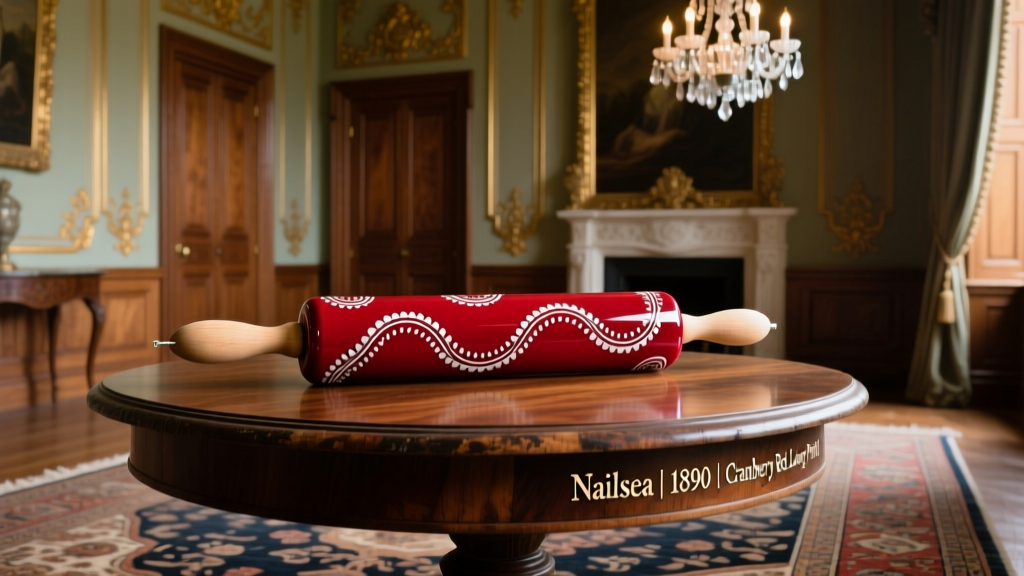
Nailsea Rolling Pin: Cranberry Red & White Loopings with Pontil Mark — A Detailed Examination of the 15¼-Inch Antique Glass Artifact
Chippendale Mahogany Ribbon-Slat Chair with Rush Seat: Anatomy, Provenance, and Restoration Protocol for a 39¼-Inch Antique

The Toy Airplane Black Arrow Jet: A Collector's Guide to the Rico Box 24½-Inch Vintage Model
Lladró Figurine 'At the Circus' No. 5052 (1979–1985): History, Identification, and Restoration Insights
Effanbee Patsy Sleep Eyes Doll: A Collector's Guide to the 13½-Inch Vintage Icon
Royal Bayreuth Creamer with Fish Blue Mark: Identification, Provenance, and Restoration Guidelines
Edwardian Handkerchief Table Games: Central Flower Head Swags and Decorative Craftsmanship, c. 1900