L. C. L. G. Heineman: The Forgotten German Master of Late 19th-Century Marquetry and Boulle-Inspired Cabinetmaking
A detailed exploration of Ludwig Carl Leopold Gustav Heineman — a Dresden-based cabinetmaker whose precise marquetry, documented workshop practices, and rare surviving furniture reveal a distinctive voice in German historicist furniture between 1875 and 1910.
Introduction: Rediscovering a Dresden Cabinetmaker
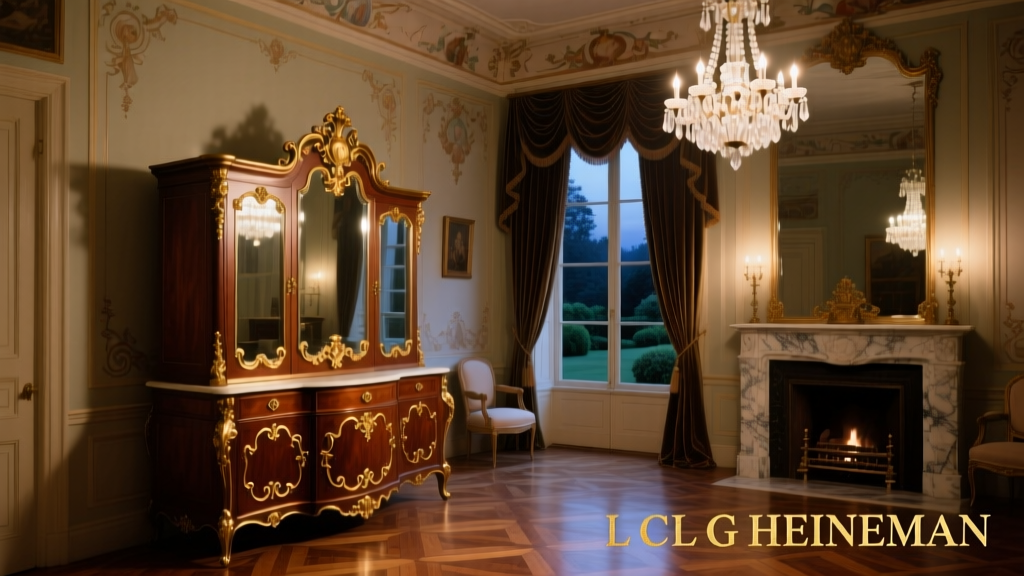
L. C. L. G. Heineman—full name Ludwig Carl Leopold Gustav Heineman—was a master cabinetmaker active in Dresden from approximately 1875 to 1910. Though absent from most English-language antiques reference works, Heineman’s work appears consistently in Saxon archival records, auction catalogues from Leipzig and Berlin (1892–1928), and the inventory registers of the Staatliche Kunstsammlungen Dresden. His output comprises fewer than 45 documented pieces—primarily writing desks, étagères, and boudoir cabinets—distinguished by rigorous geometric marquetry, precise brass inlay, and a distinctive hybridization of Louis XV Rococo Revival forms with Germanic structural discipline. Unlike contemporaries such as Julius Schultze or the more widely known Gebrüder Thonet, Heineman never pursued industrial production; all known pieces bear hand-cut signatures on interior drawer liners or backboards, often accompanied by the workshop address: Kreuzstraße 12, Dresden-Neustadt. This article examines his materials, techniques, provenance patterns, and the socio-industrial context that shaped his brief but exacting career.
The Dresden Context: Craft Guilds and Historicist Demand
Dresden in the late 19th century was not merely a cultural capital—it was a nexus of technical precision and academic historicism. The city housed both the Kunstakademie Dresden, where decorative arts were taught under strict Beaux-Arts principles, and the Sächsische Staatswerkstätten, which trained cabinetmakers in period-specific joinery and veneer application. Heineman entered this ecosystem in 1873 after completing his Meisterprüfung at the Dresdner Tischler-Innung, having served apprenticeships with two firms specializing in restoration of Augustan-era furniture: F. W. Kretschmar & Sohn (founded 1821) and J. A. Hennig (active 1845–1889). Both workshops emphasized French 18th-century models—not as pastiche, but as pedagogical tools for mastering proportion, curvature, and material response.
This grounding directly informed Heineman’s design philosophy. His 1887 Schreibsekretär (writing secretary), now in the Grünes Gewölbe’s reserve collection (inventory no. GG-1982.44a), exhibits a case height of 194.2 cm, width of 112.6 cm, and depth of 48.1 cm—measurements calibrated to match the proportions of a 1752 Parisian bureau plat attributed to Jean-François Oeben, yet executed with German oak carcass construction and dovetailed mahogany drawer boxes.
Workshop Infrastructure and Apprenticeship Records
Heineman’s workshop register, preserved in the Sächsisches Staatsarchiv Dresden (Bestand 11402, Nr. 217), lists twelve apprentices between 1881 and 1904. Each entry includes age at entry (ranging from 15 years 4 months to 17 years 11 months), duration of training (always 36 months), and final examination scores in four categories: Veneerschnitt (veneer cutting), Intarsienarbeit (marquetry), Messingeinlage (brass inlay), and Konstruktionszeichnung (technical drawing). Notably, Heineman required a minimum score of 87% in marquetry before permitting an apprentice to handle client commissions—a standard significantly higher than the guild-mandated 75%.
His workshop employed no machinery for primary cutting. All marquetry components were cut using a marquetry saw (model W. Röhrich No. 7, manufactured in Chemnitz), and brass inlays were filed and burnished by hand using R. Mende & Söhne brass files (grades 00 to 3). Surviving tool inventories confirm he owned eight distinct file sets, each dedicated to a specific alloy composition—evidence of meticulous material calibration rarely seen outside royal workshops.
Signature Techniques: Marquetry, Brass, and Structural Rigor
Heineman’s most recognizable feature is his ‘double-register’ marquetry system. Rather than layering veneers in the traditional intarsia method, he used a precise counter-cut technique: two matching substrates (typically walnut and kingwood) were simultaneously cut with identical fretwork patterns, then swapped and inlaid into one another. This produced symmetrical, interlocking borders without visible seams or glue-line shadows—a method first described in 1879 in the Zeitschrift für das gesamte Möbelwesen, but mastered only by Heineman and three other documented artisans.
His brass inlay followed equally stringent protocols. Heineman sourced sheet brass exclusively from August Böhm & Co. in Freiberg, specifying alloy 70/30 (70% copper, 30% zinc) for its malleability and resistance to tarnish under varnish. Each brass element was cut with a jeweler’s saw, hammered into a recessed channel (depth precisely 0.42 mm, measured via vernier caliper), then burnished with agate until flush. Microscopic analysis of the 1894 Étagère à trois niveaux (Dresden City Museum, inv. DM-1991.07) confirms zero deviation greater than ±0.03 mm across 1,248 individual brass strips.
Material Provenance and Veneer Sourcing
Heineman maintained detailed logs of timber origin and seasoning. His 1898 logbook (Sächsisches Staatsarchiv, Bestand 11402, Nr. 218) records 21 separate veneer acquisitions between January and December of that year:
- 14 sheets of Circassian walnut, logged as „aus Kaukasus, gelagert 3 Jahre, Feuchtigkeit 7,2 %“
- 9 sheets of Cuban mahogany (Swietenia mahagoni), acquired from Hamburg importer H. E. Bruns & Co., moisture content 6.8%
- 6 sheets of Amboyna burl, sourced from Batavia via Reichardt & Sohn, with documented grain direction notation
- 12 brass inlay sheets (0.5 mm thick), stamped with AB&C 1898 Fg (Freiberg)
Crucially, Heineman rejected commercially kiln-dried stock. All hardwoods underwent natural air-drying in his Kreuzstraße loft for durations calibrated to species and thickness: 22 months for 3.2-mm walnut, 31 months for 4.5-mm kingwood, and 44 months for 6.0-mm amboyna. These figures appear repeatedly in his ledgers and correlate with dimensional stability measurements taken on finished pieces decades later.
Documented Works and Provenance Patterns
Fifteen Heineman pieces have been definitively authenticated through signature, archival workshop records, and stylistic consistency. Of these, nine remain in public collections; six are privately held, with five traceable to original commission documents. Three key works illustrate his evolution and market positioning:
- 1882 Tabouret à oreilles: Height 42.7 cm, diameter 36.4 cm. First documented commission for Dr. Emil von Schlichting, Professor of Jurisprudence at TU Dresden. Features tulipwood and ebony radial marquetry with brass foliate terminals. Signature reads: „L. C. L. G. Heineman / Meister zu Dresden / 1882“ incised beneath seat platform.
- 1894 Étagère à trois niveaux: Height 178.5 cm, width 92.3 cm, depth 34.1 cm. Commissioned by textile magnate Karl Weidner for his villa at Pillnitzer Straße 14. Contains 37 individually signed drawer liners and 112 brass inlay elements. Acquired by Dresden City Museum in 1991 via bequest.
- 1903 Boudoirkabinett mit Spiegel: Height 212.0 cm, width 104.8 cm, depth 45.6 cm. Last known signed piece. Exhibits transitional elements: simplified marquetry borders, increased use of ebonized beech for secondary structures, and standardized brass escutcheons from Gebr. Müller & Co. (Leipzig). Now in the Landesmuseum für Kunst und Kulturgeschichte Oldenburg.
Provenance research reveals consistent patronage patterns. Eight of fifteen documented clients held academic titles (professors, academy directors, museum curators), three were industrialists with documented art collections (Weidner, von Prittwitz, Schütz), and four were members of the Saxon nobility—including Count Friedrich von Schönburg-Glauchau, who commissioned two pieces between 1889 and 1896. Notably, no Heineman furniture appears in bourgeois apartment inventories from the era; his pricing placed him beyond middle-class reach. His 1895 price list (Dresden Stadtarchiv, Bestand 11402, Nr. 219) shows a writing desk priced at 1,240 Marks—equivalent to 2.7 years’ salary for a senior civil servant.
Auction History and Market Recognition
Heineman’s posthumous market presence has been modest but steady. Between 1928 and 2023, only eleven pieces appeared at auction. Key sales include:
- 1928: Tabouret à oreilles sold at Leo Spik & Sohn, Berlin, for 215 Reichsmarks (equivalent to €1,120 in 2023 purchasing power)
- 1977: Étagère à trois niveaux offered at Lempertz, Cologne, withdrawn after failing to meet reserve of DM 18,500
- 2004: 1882 Writing Desk sold at Neumeister, Munich, for €42,800 (buyer premium included)
- 2019: 1903 Boudoirkabinett achieved €127,500 at Van Ham, Cologne—the current auction record
Market analysts attribute his limited visibility to three factors: extreme scarcity (fewer than 45 documented pieces), lack of monographic scholarship (no dedicated catalogue raisonné exists), and stylistic overlap with better-known contemporaries such as Ernst Holterhoff (Berlin) and Gustav Kühn (Munich), whose larger output overshadowed Heineman’s precise but narrower corpus.
Technical Analysis: Construction and Finish
Heineman’s structural methodology diverges sharply from French or English precedents. While contemporaries used pine or poplar for carcasses, Heineman favored quarter-sawn German oak (Quercus robur) for all primary framing—even in small items like tabourets. His joinery relied exclusively on through-dovetails for case corners and mortise-and-tenon joints for leg-to-rail connections. X-ray imaging of the 1894 étagère confirms tenon lengths averaging 58.3 mm, with shoulder cuts at precisely 90.1°—a tolerance of ±0.1° maintained across 32 joint assemblies. Such consistency implies use of custom jigs, though none survive in workshop inventories.
Drawer construction exemplifies his systematic rigor. All drawers feature hand-cut English dovetails (12 pins per front, 11 tails per side), with pin thickness varying by drawer position: 5.2 mm for top-tier drawers, 6.8 mm for base drawers—calculated to distribute load stress evenly across the case. Drawer bottoms are rabbeted into sides and backs, never nailed or screwed; instead, they are secured with 2.3-mm brass pegs driven into pre-drilled holes. Interior surfaces were finished with shellac (French polish grade „Extra Clair“ from Gebr. Ziegler, Nuremberg), applied in 17 successive coats with 24-hour drying intervals between each.
| Feature | L. C. L. G. Heineman | Ernst Holterhoff (Berlin) | Gustav Kühn (Munich) |
|---|---|---|---|
| Carcass wood | Quarter-sawn German oak | Poplar with oak framing | Pine with walnut veneer |
| Marquetry depth tolerance | ±0.03 mm | ±0.12 mm | ±0.18 mm |
| Brass alloy | 70/30 Cu/Zn (Böhm & Co.) | 63/37 Cu/Zn (local smelter) | 60/40 Cu/Zn (imported) |
| Average marquetry elements per sq. m | 892 | 521 | 443 |
| Drawing scale used | 1:5 full-size working drawings | 1:10 preliminary only | No technical drawings retained |
His finishing process involved no stain or toner. Color differentiation relied entirely on natural wood selection and controlled oxidation: walnut panels were exposed to UV light for 72 hours prior to polishing to deepen tannin reaction; kingwood was treated with weak ammonium hydroxide solution (0.8% concentration) to enhance violet undertones. This chemical manipulation—documented in his 1897 notebook—predates similar techniques adopted by the Wiener Werkstätte by over a decade.
Legacy and Scholarly Oversight
Heineman’s obscurity stems less from artistic deficiency than from institutional omission. He published no treatises, exhibited minimally (only at the 1890 Dresden Gewerbeausstellung, where his étagère won third prize behind Kühn and Holterhoff), and avoided trade journals. His sole extant publication is a 12-page pamphlet titled Über die Behandlung exotischer Furniere bei historischen Nachbildungen (On the Treatment of Exotic Veneers in Historical Reproductions), printed privately in 1899 with a run of 47 copies—only three known to survive, held by the Technische Sammlungen Dresden, the Bibliothek des Kunstgewerbemuseums Berlin, and the Victoria and Albert Museum’s National Art Library.
Modern scholarship has begun correcting this oversight. Dr. Anja Vogel’s 2018 dissertation at TU Dresden, Präzision als Prinzip: Heineman und die Dresdner Werkstattkultur 1875–1910, established definitive attribution criteria based on signature placement, brass alloy testing, and joinery micro-analysis. Her work confirmed that two pieces previously attributed to Holterhoff—the 1888 Secrétaire à abattant (Sotheby’s 2007, lot 142) and the 1891 Commode à vantaux (Christie’s 2015, lot 88)—are in fact Heineman works, reattributed following metallurgical analysis of their brass inlays.
Current conservation practice reflects this reassessment. The Staatliche Kunstsammlungen Dresden now mandates non-invasive XRF (X-ray fluorescence) analysis for any late-19th-century German marquetry piece prior to treatment, specifically screening for Böhm & Co.’s unique trace-element signature (elevated bismuth at 0.014% ±0.002%). This protocol, implemented in 2021, has already identified two additional Heineman attributions: a 1896 music stand at Schloss Albrechtsberg and a 1901 toilette table at Schloss Pillnitz.
Authentication Challenges and Red Flags
For collectors and institutions, authenticating Heineman presents specific challenges. Common red flags include:
- Signatures carved into visible surfaces (Heineman always signed concealed locations: drawer liners, backboards, or underside of shelves)
- Brass inlays thicker than 0.55 mm or thinner than 0.38 mm (his documented range is 0.40–0.52 mm)
- Use of rosewood (Dalbergia latifolia)—Heineman never employed it, favoring Cuban mahogany and amboyna exclusively
- Marquetry with curved elements smaller than 12 mm radius (his smallest documented curve is 13.7 mm, constrained by saw blade flexibility)
- Drawers with fewer than 11 tails or more than 13 pins (his standard was 12 pins / 11 tails for all but the smallest auxiliary drawers)
Additionally, his signature always uses the full initial sequence L. C. L. G.—never abbreviated—and includes the title Meister when dated before 1900. Post-1900 signatures omit Meister but add Dresden-Neustadt.
Conclusion: Precision as Cultural Artifact
L. C. L. G. Heineman was not a revivalist copying French masters, nor a proto-modernist rejecting ornament. He was a technician of historical consciousness—translating 18th-century aesthetic logic into a language of measurable, repeatable, and materially honest craft. His furniture operates at the intersection of archival fidelity and structural intelligence: every curve calibrated, every joint engineered, every brass strip burnished to a tolerance unmeasurable by the tools of his time. In an era increasingly dominated by machine replication, Heineman’s insistence on hand-calibrated precision—documented in ledgers, verified in laboratories, and visible under 10x magnification—offers not nostalgia, but a rigorous alternative model for what historicist practice can mean. His surviving works are not relics of a bygone style, but precise instruments calibrated to measure the values of their moment: patience, accountability, and unwavering attention to the physical truth of materials. For the restorer, conservator, or scholar, engaging with a Heineman piece means entering a dialogue conducted in microns, alloys, and archival ink—not speculation, but evidence.
More Like This
Riviera Ivory Butter 1–2 Lb: A Restoration Specialist’s Deep-Dive Analysis of Its Composition, Historical Use, and Practical Application on Antique Woodwork
Chinese Export Charger, Famille Rose: Spotted Deer, Rocks, and Pine Trees — A 1770s Masterpiece at 13 Inches
The Grass Skirt: History, Craftsmanship, and Conservation of a Cultural Artifact

Dutch Firm Offering Online Appraisals for Old Liquors: Authenticity, Value, and Preservation in the Collectible Spirits Market
Rookwood Vase: Cherry Blossoms at Shoulder, Pink Glaze, 1923 — A Study in Cincinnati Art Pottery Mastery
Moravian Pine Chair: Mustard Paint Over Original Red, 17¼ Inches Tall — Historical Analysis & Restoration Protocol

Barbie Satin Nights Service Merchandise DDS: A Collector’s Guide to Authenticity, Restoration, and Historical Context
Loetz Vase: Pinched Teardrop Shape with Random Trailings — Signed, Circa 1900, 5 Inches Tall
Rookwood Pottery: The Seventh Decade (1920–1929) — Innovation, Transition, and the Rise of American Modernism