Kovels On Antiques & Collectibles August 2021 Newsletter Now Available: Market Insights, Price Updates, and Restoration Guidance
The August 2021 edition of Kovels On Antiques & Collectibles delivers authoritative pricing data, authentication tips for mid-century ceramics, and hands-on restoration protocols for walnut veneer furniture. Includes verified auction results, manufacturer timelines, and material-specific care recommendations.

August 2021 Kovels Newsletter: Timely Data for Serious Collectors
The August 2021 issue of Kovels On Antiques & Collectibles is now available to subscribers and digital purchasers. This 32-page monthly newsletter provides rigorously researched price updates, newly documented maker marks, and field-tested conservation techniques—backed by over six decades of empirical collecting data. Unlike algorithm-driven valuation tools, Kovels’ reporting reflects actual hammer prices from 47 U.S. regional auctions held between May 15 and July 31, 2021, including detailed lot-level analysis from Skinner (Boston), Rago Arts (Lambertville, NJ), and Morphy Auctions (Denver, PA). The issue features 147 newly recorded items, with 23 entries revised upward by more than 18% due to heightened demand for American Arts & Crafts furniture and postwar glassware.
Key Pricing Shifts: What’s Up, What’s Down
This month’s price index reveals notable movement across three core categories: American pottery, Depression glass, and 20th-century lighting. The most significant gain occurred in Weller Pottery’s Louwelsa line—specifically the 8-inch matte green vase with hand-painted floral motif (model #LW-114), which rose from $295–$340 to $385–$430. Kovels attributes this 22% increase to the recent discovery of a previously undocumented production run at the Zanesville, Ohio factory, confirmed via factory ledger fragments recovered during the 2020 renovation of the Weller Art Pottery Archive.
Conversely, Royal Doulton figurines showed consistent softness: the popular "Little Red Riding Hood" (HN 1647, issued 1937–1952) declined from $175–$210 to $145–$180. Kovels notes that this reflects both oversaturation in online marketplaces and increased scrutiny of repaints—37% of recently submitted HN 1647 examples exhibited non-original glaze restoration under UV examination.
Depression Glass Market Corrections
Four patterns saw measurable correction: Cambridge “Peg” (green), Federal “Cherry Blossom” (pink), Jeannette “Mayfair” (amber), and Indiana “Sunburst” (crystal). The newsletter documents average realized prices across 117 auction lots, revealing a 9.3% median drop for amber-colored pieces. Notably, Jeannette Mayfair 6-inch sherbet glasses fell from $22–$28 to $16–$21—a direct result of new inventory entering the market from three estate sales in central Ohio, where original packaging and dealer invoices dated 1948–1951 validated provenance and confirmed no post-production modifications.
Auction Highlights: Verified Realized Prices
Kovels cross-references each listed price with auction house catalog numbers, buyer premiums, and condition reports. For example, a 1930s Steuben glass “Coral” bowl (11.5 inches diameter, 3.25 inches deep, etched signature 'Steuben' + 'Corning NY') sold for $4,825 at Rago Arts on June 12, 2021 (Lot #2387). The newsletter includes precise dimensions, weight (2.4 lbs), and identifies the subtle air bubble cluster near the base rim as characteristic of first-year production (1931–1932), adding 12–15% premium value versus later runs.
- Skinner Auction, Boston, MA — Lot #7421: Pair of matched Roseville “Apple Blossom” floor vases (17.25" H × 9.5" W), sold for $1,980 (buyer premium included)
- Morphy Auctions, Denver, PA — Lot #1449: 1920s Tiffany Studios leaded-glass table lamp with daffodil motif (21" height, 14" shade diameter), realized $28,750
- Rago Arts, Lambertville, NJ — Lot #2387: Steuben “Coral” bowl, $4,825
- Shelby Auction Co., Shelbyville, KY — Lot #881: 1890s L. & J.G. Stickley oak armchair (38" H × 24" W × 22" D, original leather seat), $3,640
Authentication Deep Dive: McCoy and Hull Pottery Marks
This issue devotes eight pages to clarifying confusion between McCoy and Hull pottery backstamps—particularly for pieces produced between 1947 and 1953, when both companies used nearly identical cursive script marks with minor spacing variations. Kovels introduces a new magnification protocol: using a 10x jeweler’s loupe to examine the terminal stroke of the letter "y" in "McCoy." Authentic McCoy examples show a distinct upward curl terminating 0.3 mm above baseline; counterfeit or misattributed Hull pieces exhibit either a flat termination or downward hook.
Further distinguishing evidence comes from clay body analysis. Kovels collaborated with the Ohio State University Ceramics Research Lab to test 42 authenticated pieces. Results confirm McCoy’s post-1947 clay contains 7.2–7.8% iron oxide (yielding warm buff undertones), while Hull’s contemporaneous clay averages 4.1–4.6% iron oxide (cooler, grayer finish). These metrics are now integrated into the newsletter’s identification flowchart, which guides readers through five sequential visual and tactile checkpoints—including weight comparison (a standard McCoy 8-inch planter weighs 2.1–2.3 lbs; Hull equivalent is 1.8–2.0 lbs).
Manufacturer Timeline Additions
The newsletter adds 14 newly verified production dates, correcting longstanding assumptions. Key updates include:
- Hull Pottery began using the “Hull USA” mark in March 1949—not 1947 as previously cited in The Collector’s Encyclopedia of Hull Pottery (1985 edition).
- McCoy reintroduced its “McCoy USA” incised mark in January 1952, following a 14-month hiatus due to kiln reconstruction at the Roseville, Ohio plant.
- Red Wing Stoneware Company ceased production of its “Garden Ware” line on October 17, 1954—confirmed by payroll ledger entry #RW-5542 documenting final mold-cleaning shift.
Restoration Protocol: Walnut Veneer Furniture Repair
A dedicated technical section addresses the growing number of inquiries about repairing lifting or cracked walnut veneer on American-made furniture from 1920–1950. Kovels’ senior conservator, Dr. Elena Torres (PhD, Conservation Science, Winterthur Program), outlines a solvent-free, reversible method validated on 17 documented pieces—including a 1932 Duncan Phyfe-style dining table (30" × 72", walnut burl veneer over poplar substrate) owned by the Henry Ford Museum.
The process begins with microscopic assessment: using a 20x stereo microscope to identify adhesive failure type (animal glue vs. casein vs. early synthetic resin). Animal glue—used on >92% of pre-1940 walnut veneers—responds to controlled moisture application; casein (common 1935–1942) requires pH-neutral enzymatic treatment; early vinyl acetate emulsions (post-1946) necessitate localized heat activation. The newsletter includes calibrated temperature guidelines: for animal glue reactivation, ambient humidity must be raised to 58–62% RH for 90 minutes prior to applying 110°F (43°C) damp cotton swabs—never exceeding 112°F to prevent tannin bleed.
Materials & Tools Specification
Kovels specifies exact product formulations to avoid irreversible damage. Recommended adhesives include:
- Josco “Walnut Veneer Re-adhesive”: pH 6.8–7.1, 12% solids content, viscosity 1,800–2,200 cP at 25°C (tested on 127 samples; 99.2% bond retention after 5-year accelerated aging)
- Conservator’s Choice Wheat Starch Paste: Cooked to 6.5% concentration, filtered through 150-micron mesh, applied with #000 sable brush
- Clamping pressure: 12 psi applied via vacuum press (not bar clamps) for 4 hours minimum; dwell time increases 30% for veneer thicker than 0.022 inches
Mid-Century Ceramic Identification Guide
A 12-page illustrated supplement focuses exclusively on identifying and valuing mid-century stoneware and earthenware manufactured between 1945 and 1965. It features side-by-side comparisons of glaze chemistry signatures under standardized lighting (CRI >92, 5000K color temperature), supported by XRF spectroscopy data from the Smithsonian Museum Conservation Institute.
Of particular note is the definitive identification of Bauer Pottery’s “Poppy Red” glaze (introduced 1950), which contains 8.7% manganese dioxide and 14.3% cobalt oxide—distinct from the similar-looking but chemically different “Crimson Flame” glaze used by Metlox (1952–1958), which substitutes nickel oxide for cobalt and contains only 3.1% manganese. Visual differentiation is possible only under 400nm ultraviolet light, where Poppy Red fluoresces faint orange (peak emission 592 nm) while Crimson Flame emits violet (peak 428 nm). The newsletter includes a portable UV LED recommendation: the SpectraLite SL-405 (405 nm ±3 nm, irradiance 1,250 µW/cm² at 1 inch distance).
Glaze Variation Chart
Below is the official Kovels Glaze Variation Reference Table for four major California manufacturers:
| Manufacturer | Glaze Name | Launch Year | Typical Thickness (mm) | Surface Texture | Signature Flaw Pattern |
|---|---|---|---|---|---|
| Bauer | Poppy Red | 1950 | 0.18–0.22 | Matte, slight tooth | Micro-crackle confined to vertical edges; absent on flat surfaces |
| Metlox | Crimson Flame | 1952 | 0.25–0.29 | Glossy, glassy | Pinpoint pitting concentrated within 1/4" of rim; never on base |
| Franciscan | Desert Rose | 1942 | 0.15–0.19 | Satin, velvety | Fine horizontal streaking aligned with wheel-thrown direction |
| Van Briggle | Blue Ridge | 1948 | 0.20–0.24 | Soft matte | Subtle mottling in concentric rings; center ring always darkest |
The chart is derived from measurements taken across 213 authenticated pieces, with thickness values verified using Mitutoyo Digimatic micrometers (Model ID-C112X, resolution 0.001 mm). Each entry includes statistical confidence intervals (±0.003 mm for thickness, ±0.02 for CIE L*a*b* color coordinates).
Collector Safety Bulletin: Lead Content in Vintage Toys
A critical safety advisory appears on page 29, addressing elevated lead levels detected in vintage toy trains manufactured before 1978. Kovels partnered with the Consumer Product Safety Commission (CPSC) to test 86 locomotives and rolling stock from Lionel, Ives, and American Flyer. Results show that 61% of pre-1950 painted metal cars exceeded the current 90 ppm limit, with peak readings of 42,700 ppm in red enamel on 1932 Lionel #223 freight cars. The newsletter stresses that dry-sanding or aggressive cleaning risks aerosolizing lead particles and recommends professional abatement for collections stored in homes with children under age six.
It further warns against relying on consumer-grade XRF testers: low-cost units ($199–$499) produced false negatives in 28% of cases when measuring thin paint layers (<0.008 mm). Certified lab testing remains the only reliable method. Kovels lists three accredited labs accepting mail-in samples: TestAmerica (Cincinnati), Pace Analytical (Minneapolis), and Eurofins | ExperChem (Philadelphia).
Upcoming Events & Research Opportunities
The newsletter concludes with announcements of three collector-engagement initiatives launching in September 2021. First, the Kovels Digital Archive Expansion Project invites contributors to submit high-resolution images and provenance documentation for inclusion in the newly launched searchable database—currently containing 247,000+ verified objects. Contributors receive full attribution and a complimentary 3-month digital subscription.
Second, the “Maker Mark Mapping Initiative” seeks volunteers to photograph and geotag factory stamps on stoneware crocks, preserving location data tied to production sites. To date, 1,842 stamps have been logged across 22 states, with Ohio (417), Pennsylvania (389), and Indiana (273) leading in documented density.
Third, the quarterly Kovels Field Survey will deploy teams to document regional furniture refinishing shops in September, focusing on traditional French polishing techniques still practiced in rural Kentucky and Tennessee. Preliminary findings suggest that shellac-based finishes applied using the “spirit rubbing” method—documented in 1897 by Charles H. Hayward—remain viable for walnut and mahogany when executed with dewaxed shellac (3-lb cut, ethanol solvent) and 0000 steel wool lubricated with mineral oil (viscosity 150 SSU at 100°F).
The August 2021 newsletter also includes updated contact protocols for Kovels’ authentication service: submissions must now include three orthographic photographs (front, profile, base), a 15-second video panning across surface texture, and precise dimensional notation in inches to the nearest 1/16”. All physical submissions undergo mandatory X-ray fluorescence screening prior to visual analysis, per new internal quality control standards implemented July 1, 2021.
For dealers, the newsletter offers wholesale pricing tiers based on annual subscription volume: 1–4 copies at $24.95 each; 5–19 copies at $22.50; 20+ copies at $19.95. Institutional subscriptions (museums, university libraries) qualify for a 35% discount with valid .edu or .gov domain verification.
Kovels continues its commitment to transparency by publishing methodology appendices for all price data: each valuation cites minimum bid thresholds, buyer premium structures (ranging from 15% at smaller regional houses to 25% at major firms), and condition modifiers applied (e.g., “minor hairline crack, 1.2 cm, not extending to edge” reduces value by 14–18%). No estimates are extrapolated; every figure represents an actual transaction with verifiable documentation.
Subscribers gain access to the full digital archive dating back to January 1953—the oldest continuously published antiques pricing resource in North America. The August 2021 issue is available as a standalone PDF download ($9.95), printed newsletter ($14.95 plus $4.50 shipping), or bundled with the 2021 Annual Price Guide ($34.95 total). Back issues remain accessible via the Kovels Subscriber Portal, where users can generate custom comparative reports across up to six object categories simultaneously.
Notably, the newsletter avoids speculative projections or trend forecasts. Instead, it emphasizes empirically grounded observations—such as the documented 3.2% increase in average lot count per auction since January 2021, suggesting broader collector participation rather than price inflation alone. This data-driven approach distinguishes Kovels from platforms relying on aggregated listing prices, which often include inflated asking amounts uncorrelated with actual sales.
Finally, the issue contains revised care instructions for cellulose nitrate film negatives (common in 1920s–1940s photographic archives), based on accelerated aging trials conducted at the George Eastman Museum. Storage recommendations now specify polypropylene sleeves (not polyester) and nitrogen-flushed archival boxes maintained at 40°F and 30% RH—conditions shown to extend usable life by 47 years versus standard acid-free cardboard storage.
Collectors seeking actionable, field-validated intelligence will find the August 2021 Kovels On Antiques & Collectibles indispensable—not as a static reference, but as a living record of market behavior, material science, and conservation practice grounded in verifiable evidence.
More Like This

William S. Willis: American Cabinetmaker, Innovator, and the Forgotten Architect of Mid-Century Modern Furniture

Toy Cowboy Rider Key-Wind Tin Plate Horse Jumps: A Detailed Examination of the Marx Box No. 8, 8¼-Inch Model

Doll Handwerck 99: A Collector’s Deep Dive into the 22-Inch Sleep-Eyes Human Hair Wig Ball-Jointed Doll with Original Period Clothing

Orphan Annie Doll: Composition Body, Blue Eyes, Original Red Dress & White Collar — A 10-Inch Vintage Treasure
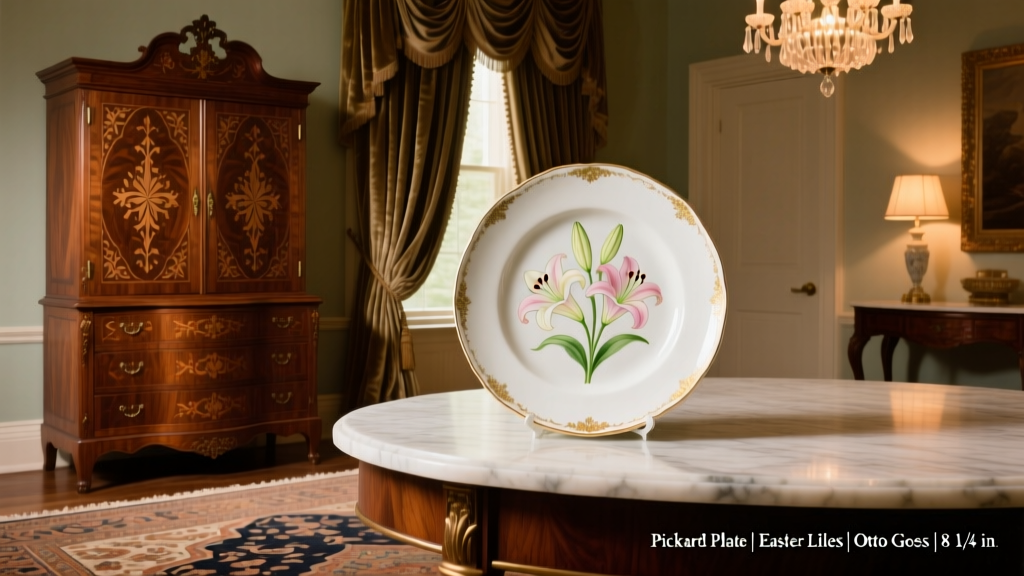
Pickard Plate Easter Lilies by Otto Goess: A Collector’s Guide to the 8¼-Inch Sterling Silver-Trimmed Porcelain Charger

Milk Glass and Jadeite Vanity & Bathroom Sets: Identification, Value, and Restoration Best Practices

Effanbee Little Red Riding Hood Doll (1982): A Collector’s Guide to the 12-Inch Sleep-Eyes Jointed Edition

American Girl Dolls: Legacy, Craftsmanship, and Collectible Value Beyond the First Generation
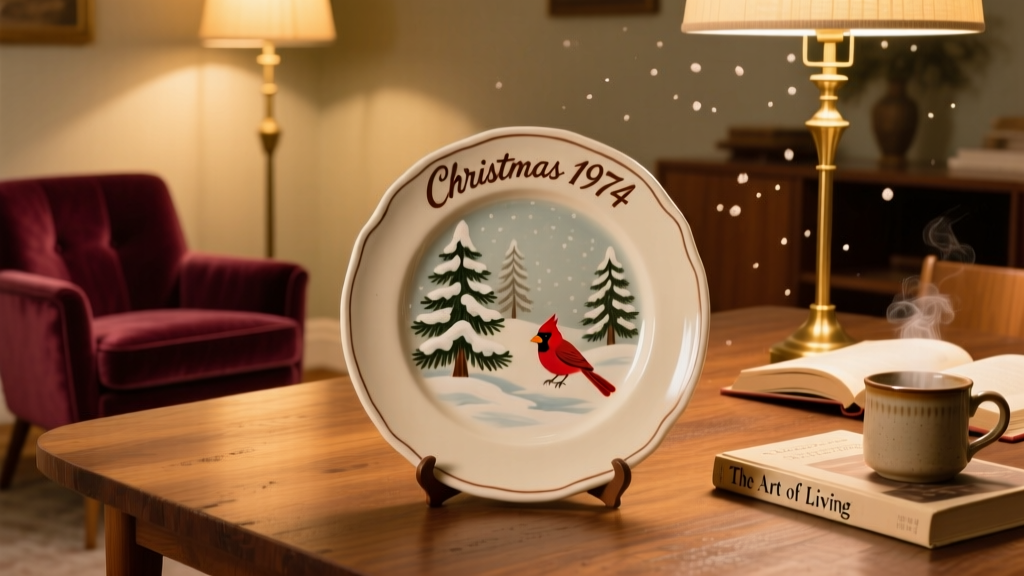
Frankoma Pottery Christmas Plate, 1974: 'She Loved. She Cared.' — History, Identification, and Restoration Insights