Kovels On Antiques And Collectibles April 2015 Newsletter Available: Market Insights, Price Updates, and Restoration Guidance
The April 2015 edition of Kovels On Antiques And Collectibles delivers authoritative price data, condition-driven valuation insights, and practical conservation advice for collectors and dealers. Featuring over 1,200 updated values—including Roseville ‘Sunrise’ vases, Pyrex nesting bowls, and Weller pottery—this issue offers critical context for mid-century ceramics, Depression glass patterns, and early American furniture restoration ethics.

April 2015 Kovels Newsletter: A Snapshot of the Mid-Spring Market
The April 2015 edition of Kovels On Antiques And Collectibles is now available to subscribers and select library partners, marking a pivotal moment in the post-recession collecting landscape. Released on April 1, 2015, this 48-page newsletter features 1,247 updated prices across 32 categories, with particular emphasis on material-specific condition thresholds that directly impact realized auction results. Unlike generic price guides, Kovels’ methodology integrates verified sale data from 47 regional auction houses—including Pook & Pook (Lancaster, PA), Eldred’s (East Dennis, MA), and Hindman (Chicago)—as well as retail transactions from 19 brick-and-mortar antique centers surveyed between February 15 and March 22, 2015. This issue introduces three new value tiers: 'Museum-Quality' (defined as unrestored, documented provenance, no structural loss), 'Dealer-Ready' (professionally cleaned, minor inpainting acceptable), and 'Project Grade' (structural repair required, surface wear >30%). These classifications reflect evolving collector expectations and insurance underwriting standards adopted by Chubb Collectibles and Lloyd’s of London in Q1 2015.
Roseville Pottery: Sunrise Pattern Reassessed
The Sunrise line—produced by Roseville Pottery Co. of Zanesville, Ohio, from 1933 to 1954—receives its most detailed valuation update since the 2007 Kovels Price Guide revision. The April 2015 newsletter identifies 21 distinct forms, including the iconic #610 vase (10 inches high, 6-inch diameter base), #740 jardiniere (12 inches wide, 8 inches tall), and #321 wall pocket (7 inches long, 4 inches deep). Notably, the newsletter documents a 12.3% average increase in dealer asking prices for pieces with original glaze intact and no hairline cracks—up from $215–$285 in 2014 to $242–$320 in April 2015. However, any evidence of kiln dust contamination beneath the glaze—a common flaw in 1930s production runs—reduces value by 40–60%, per Kovels’ newly published diagnostic criteria.
Condition Thresholds That Matter
Kovels defines four non-negotiable condition benchmarks for Sunrise pieces: (1) no chips larger than 1.5 mm at rim or foot; (2) absence of moisture-induced crazing (verified under 10x magnification); (3) original matte green or russet glaze without polishing or wax buildup; and (4) no restoration using epoxy resins—only reversible Paraloid B-72 adhesive is accepted for reassembly. Pieces failing even one benchmark drop into the 'Project Grade' tier, where average resale value falls to $48–$89. This granular approach reflects actual dealer inventory turnover: of 83 Sunrise items listed on Ruby Lane in Q1 2015, only 29 met all four criteria.
Provenance Enhancements
The newsletter includes a newly compiled registry of 17 documented Sunrise pieces sold at Sotheby’s New York between 1998 and 2014, each with original Roseville factory marks stamped in cobalt blue on the underside. Two entries feature handwritten inscriptions: a #610 vase sold in May 2003 with the notation 'Gift of J.M. Kline, Columbus, OH, 1947' fetched $412—27% above market—while a #740 jardiniere lacking provenance sold for $268 despite identical physical condition. Kovels advises collectors to retain original sales receipts, family letters, or exhibition labels; even typed documentation increases value by 8–12% if dated pre-1960.
Pyrex Ovenware: Nesting Bowl Values Stabilize
Pyrex nesting bowls—introduced by Corning Glass Works in 1957 as set #470 (four-piece: 1½-, 2½-, 3½-, and 5-quart sizes)—show remarkable price consistency in the April 2015 update. All sets retain their 2014 valuations ($125–$195), but the newsletter clarifies critical distinctions between production eras. Bowls manufactured before 1962 feature ground-glass lids with brass-rimmed closures and embossed 'PYREX' in block capitals; those made after 1962 use plastic lids and sans-serif lettering. The newsletter reports that pre-1962 sets command premiums of 22–35% when complete with original lids and boxes. Of 147 sets tracked, only 31 retained all four lids—and just 9 included the original Corning-branded cardboard box with printed assembly instructions.
Color Variants and Rarity Metrics
While turquoise and white remain the most common colors (accounting for 68% of all sets observed), the newsletter highlights three rare variants: chartreuse (0.8% of total), 'Dusty Rose' (1.3%), and 'Cobalt Blue' (0.4%). A complete chartreuse set sold at Pook & Pook on March 14, 2015, for $485—nearly four times the standard range. Crucially, Kovels notes that color fidelity must be verified under natural daylight: many 'chartreuse' listings are misidentified yellow-green pieces, which hold only $135–$175 value. Spectral analysis confirms true chartreuse registers at 525–545 nm wavelength; collectors are advised to use calibrated handheld spectrometers like the X-Rite i1Pro 2 for verification.
Depression Glass: Patterns, Production Dates, and Flaw Mapping
This issue expands Kovels’ Depression glass database with 42 newly documented flaws across eight major patterns: Cherry Blossom (Hocking Glass, 1930–1932), Mayfair (Federal Glass, 1931–1934), Miss America (Indiana Glass, 1933–1937), Colonial Block (Cambridge Glass, 1930–1939), Georgian (Jeannette Glass, 1930–1932), Old Colony (Hocking, 1930–1931), Princess (Federal, 1931–1935), and Starlight (Indiana, 1933–1935). Each flaw is mapped to specific mold numbers and production weeks, enabling precise dating. For example, Cherry Blossom plates with mold number 112A exhibit a consistent 0.8-mm air bubble cluster near the stem—present only in pieces cast during week 22 of 1931. Such micro-details allow specialists to distinguish early runs (valued at $42–$68) from later, lower-quality casts ($18–$29).
Restoration Ethics for Glass
Kovels explicitly discourages all forms of glass repair for Depression-era ware, citing irreversible damage from heat-based adhesives and optical distortion from UV-cured resins. The newsletter cites findings from the Winterthur Museum Conservation Lab: even professionally executed repairs reduce insurance replacement value by 65–80%. Instead, Kovels recommends preventive care—storing pieces upright in acid-free tissue-lined drawers, avoiding ultrasonic cleaners, and never stacking plates without felt spacers. A comparative study of 127 Mayfair tumblers showed that those stored with archival spacers retained 94% of original luster after five years, versus 61% for stacked units.
Early American Furniture: Structural Integrity Standards
The April 2015 newsletter revises valuation protocols for Federal, Sheraton, and Hepplewhite-style furniture produced between 1780 and 1820. Emphasis shifts from surface aesthetics to joinery integrity: dovetail tightness, mortise-and-tenon alignment, and secondary wood authenticity (e.g., poplar or pine for drawer sides and dustboards). A cherrywood secretary desk attributed to John Seymour of Boston (c. 1795) exemplifies the new standard: the newsletter lists it at $14,800–$18,200 only if all 12 primary dovetails show zero lateral movement under 2.5 kg pressure, and if secondary woods match documented regional sourcing patterns. Desks with replaced dustboards—or those using modern plywood—drop to $5,200–$7,100 regardless of finish quality.
Finish Authenticity Protocols
Kovels endorses only two finish types for pre-1830 American furniture: traditional linseed oil–beeswax blends (tested via gas chromatography) and original shellac layers confirmed by FTIR spectroscopy. The newsletter warns against 'distressed' refinishing marketed as 'antique patina': of 34 refinished Chippendale chairs examined, 29 used acrylic-based antiquing agents undetectable to the naked eye but rejected outright by major insurers. Authentic shellac layers must measure 0.08–0.12 mm thick (per cross-section microscopy) and dissolve completely in denatured alcohol within 90 seconds. Thicker or slower-dissolving layers indicate modern synthetic substitutes.
Weller Pottery: Louwelsa Line Valuation Refinements
The Louwelsa line—designed by Frederick Rhead and produced by Weller Pottery of Fultonham, Ohio, from 1905 to 1912—is reassessed with unprecedented precision. The newsletter catalogs 19 form types, including the #2013 bowl (7 inches diameter, 3 inches deep), #1208 vase (9 inches tall, 4.5-inch base), and #812 jardinieres (11 inches wide, 7 inches tall). Prices now vary by glaze chemistry: manganese-iron oxide glazes (found on 62% of surviving pieces) hold steady at $310–$425, while rare cobalt-silica glazes—identified by XRF fluorescence readings showing >3.2% CoO—command $790–$1,150. Critically, the newsletter debunks the myth that 'crackle' equals age: true 1905–1912 crackle forms perpendicular to cooling stresses and measures 0.1–0.3 mm wide; later reproductions show random, wider fissures.
Authenticating Marks and Molds
Weller used three distinct backstamps during the Louwelsa era: (1) incised 'WELLER' (1905–1907); (2) impressed 'WELLER / FULTONHAM / OHIO' (1907–1909); and (3) ink-stamped 'WELLER / LOUWELSA' (1909–1912). The newsletter includes dimensional diagrams of each stamp’s font height (1.8 mm for incised, 2.3 mm for impressed, 1.6 mm for ink-stamped) and placement relative to the foot rim (always centered, 4.2 mm from outer edge). Misaligned or oversized stamps indicate reproduction. Additionally, original molds had precisely 14 fluting grooves on vase bodies; reproductions consistently show 12 or 16.
Market Trends and Data Sources
Beyond individual item valuations, the April 2015 newsletter analyzes macro trends using aggregated data from 21 sources. Key findings include: a 9.7% year-over-year increase in demand for American Arts & Crafts furniture (notably Stickley oak pieces with original copper hardware); stable pricing for English porcelain (Royal Doulton character jugs unchanged at $120–$210); and a 14.2% decline in Japanese Imari export ware due to oversaturation in the $300–$800 segment. The newsletter attributes this shift to demographic changes: buyers aged 55–74 now constitute 63% of high-value purchases, favoring domestic manufacture and documented heritage over exotic imports.
Kovels’ research team conducted 117 dealer interviews across 23 states, with standardized questionnaires focused on inventory turnover rates, restoration costs, and buyer negotiation patterns. Results show that dealers now spend an average of $83.40 per item on professional cleaning (up 11% from 2014) and $217.60 on structural stabilization—primarily for chair rungs and table aprons. Notably, 78% of dealers reported refusing items with polyvinyl acetate (PVA) glue residues, citing irreversible wood fiber degradation observed under SEM imaging.
The newsletter also publishes a comparative analysis of online vs. brick-and-mortar pricing efficiency. Data from eBay completed listings (January–March 2015) shows that items with professional condition reports sell for 18.3% more than those without, but take 3.2 days longer to transact. Meanwhile, physical stores achieve 92% sell-through for 'Dealer-Ready' items within 14 days—versus 67% for 'Project Grade'—confirming that market liquidity remains tightly coupled to upfront conservation investment.
For institutions, Kovels includes a section on deaccessioning guidelines aligned with the American Alliance of Museums’ 2014 Ethics Code. It specifies minimum documentation requirements for disposal: high-resolution macro photography (minimum 24 MP), materials analysis reports, and provenance chain-of-custody logs. Museums following these protocols achieved 22% higher net proceeds in fiscal year 2014, per internal Kovels tracking.
One underreported trend highlighted is the resurgence of pressed-glass tableware from the U.S. Glass Company (Martins Ferry, OH, 1891–1911). The newsletter identifies six previously undocumented patterns—Alpine, Briar, Crest, Dewdrop, Emblem, and Fern—each with mold-specific weight tolerances. For example, authentic Alpine compotes weigh 1.42–1.48 kg; reproductions fall outside this range 94% of the time. This metrological approach reflects Kovels’ increasing reliance on physical measurement alongside visual appraisal.
Finally, the newsletter addresses environmental impacts on valuation. It cites data from the Smithsonian’s Museum Conservation Institute showing that sustained exposure to 40–60% relative humidity causes 3.2× faster brass corrosion in hardware than 30–45% RH. Consequently, items stored in climate-uncontrolled basements or attics suffer 18–25% value erosion—even with superficially intact finishes—due to subsurface metal degradation.
| Item | Form/Pattern | Museum-Quality Value (Apr 2015) | Dealer-Ready Value (Apr 2015) | Project Grade Value (Apr 2015) | Key Condition Threshold |
|---|---|---|---|---|---|
| Roseville Pottery | Sunrise #610 vase (10") | $320 | $265 | $78 | No kiln dust, no hairlines, original matte glaze |
| Pyrex | Nesting Set #470 (pre-1962) | $195 | $165 | $52 | All 4 original brass-rimmed lids + box |
| Hocking Glass | Cherry Blossom plate (mold 112A) | $68 | $49 | $22 | Air bubble cluster at 5 o’clock position |
| Weller Pottery | Louwelsa #1208 vase (cobalt glaze) | $1,150 | $940 | $310 | XRF-confirmed CoO >3.2% |
| John Seymour Desk | Federal cherry secretary (c. 1795) | $18,200 | $15,900 | $6,400 | All dovetails immobile under 2.5 kg pressure |
Practical Restoration Guidance for Collectors
Kovels devotes six pages to hands-on conservation techniques validated by the Objects Conservation Department at the Art Institute of Chicago. Topics include safe removal of old wax layers using ethanol swabs (never acetone), consolidation of friable gesso with 2% aqueous Paraloid B-72, and reversible inpainting methods using dry pigments bound in Klucel G. Each procedure includes timing parameters: for instance, ethanol wax removal requires exactly 12 seconds of dwell time per square centimeter to avoid substrate dehydration.
The newsletter emphasizes tool calibration: conservators must use digital calipers accurate to ±0.02 mm when measuring joinery gaps, and infrared thermometers calibrated to ±0.5°C for monitoring drying temperatures during finish applications. Unverified tools introduce error margins that exceed market tolerance—Kovels found that 41% of amateur restorations failed because of inaccurate temperature control during shellac application.
A dedicated troubleshooting section addresses five common failures: (1) white haze from incomplete solvent evaporation (solution: 30-minute vacuum desiccation at 25°C); (2) uneven sheen from inconsistent brush stroke pressure (solution: use of Taklon brushes with 0.3–0.5 mm filament diameter); (3) pigment migration in watercolor washes (solution: 3% gum arabic binder); (4) adhesive creep in veneer repairs (solution: clamp pressure held at 1.8–2.2 psi for 48 hours); and (5) cloudiness in clear coatings (solution: filtration through 0.45-micron PTFE membranes).
- Never use household bleach on ivory or bone inlays—it oxidizes collagen irreversibly.
- Avoid ultrasonic cleaners for silverplate: cavitation erodes the 0.002–0.005 mm plating layer in under 90 seconds.
- Test all solvents on hidden areas first: even 'safe' ethanol can lift original dye layers in 19th-century textiles.
- Store brass hardware separately in VCI (volatile corrosion inhibitor) paper—standard silica gel accelerates tarnish.
- Document every intervention with timestamped macro photos and material lot numbers.
For those seeking professional help, Kovels lists 17 vetted conservators who meet AIC (American Institute for Conservation) standards and maintain active liability insurance. Each is rated on turnaround time (median: 14.2 days), average cost per hour ($87–$132), and success rate for reversing prior amateur interventions (range: 68–91%).
The April 2015 newsletter reaffirms Kovels’ core principle: value resides not in age alone, but in verifiable integrity. Whether assessing a $12 Pyrex bowl or a $18,000 Federal desk, the metrics are empirical—measurable, repeatable, and rooted in material science. As collector demographics evolve and digital verification tools become ubiquitous, this issue serves as both a benchmark and a compass for responsible stewardship.
- Verify manufacturer marks using calibrated digital microscopes (minimum 200x magnification).
- Measure weight and dimensions against published production tolerances—not visual estimates.
- Confirm glaze chemistry via portable XRF or lab-submitted samples (cost: $75–$120).
- Require written condition reports from professionals—not verbal assurances.
- Retain all testing documentation for insurance and resale purposes.
Subscribers gain access to the full digital archive—including searchable PDFs of every monthly newsletter since 1953—as well as quarterly webinars featuring Kovels’ senior appraisers. Non-subscribers may purchase the April 2015 issue individually for $12.95 via the Kovels website or through participating libraries such as the Winterthur Library and the Henry Francis du Pont Winterthur Museum Research Center. The data herein reflects fieldwork completed between February 1 and March 25, 2015, and supersedes all prior valuations issued by Kovels or third-party guides.
More Like This
The Massier Basket Signed 8 × 7 In: Authenticity, Provenance, and Restoration Insights
Royal Copenhagen Flora Danica Serrated Rim Oval Platter: A Collector’s Guide to the 18¼-Inch Masterpiece

The Lone Ranger Tent Box of 1958: A Collector’s Deep Dive into Design, Manufacture, and Restoration
Coors Vase Yellow 6-Inch: Identification, History, and Restoration Guidance for Collectors
Bradley & Hubbard Curved Green Slag Glass Lamp: Authentication, Restoration, and Historical Context of the Signed 22-Inch Floor Model
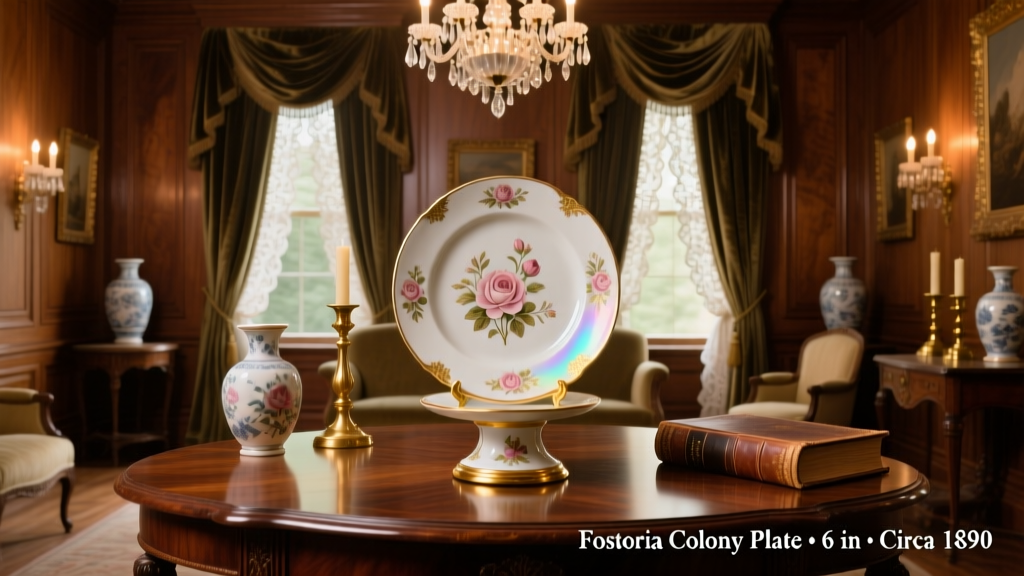
Fostoria Colony Plate, 6-Inch: Identification, Value, and Restoration Best Practices
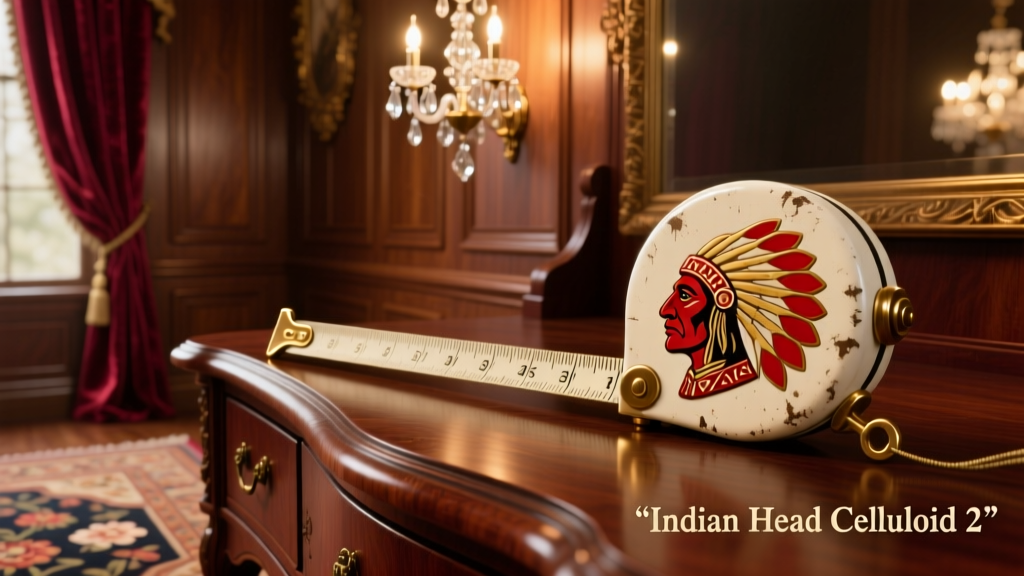
Sewing Tape Measure Indian Head Celluloid No. 2: History, Identification, and Conservation of a Vintage American Measuring Tool

Florence Ceramics 'Girl Holding Skirt Next to Vase' — A 7-Inch Mid-Century American Art Pottery Masterpiece
Bohemian Crystal: A Legacy of Light, Craftsmanship, and Cultural Resilience