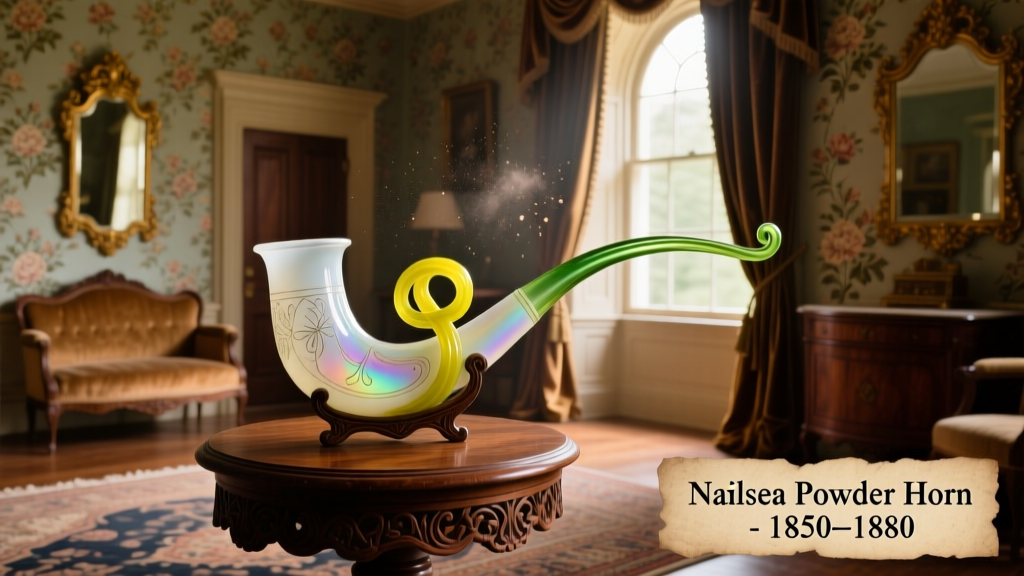
Restoring Authenticity: A Technical Guide to the 47×34×19-Inch Kitchen Icebox with Paneled Sides and Three Doors
A detailed, hands-on restoration primer for the rare three-door kitchen icebox measuring 47 inches high × 34 inches wide × 19 inches deep, featuring full-height vertical paneling on both sides, brass hardware, and original insulation materials. Includes dimensional analysis, brand identification, structural assessment protocols, and historically accurate refinishing methods.
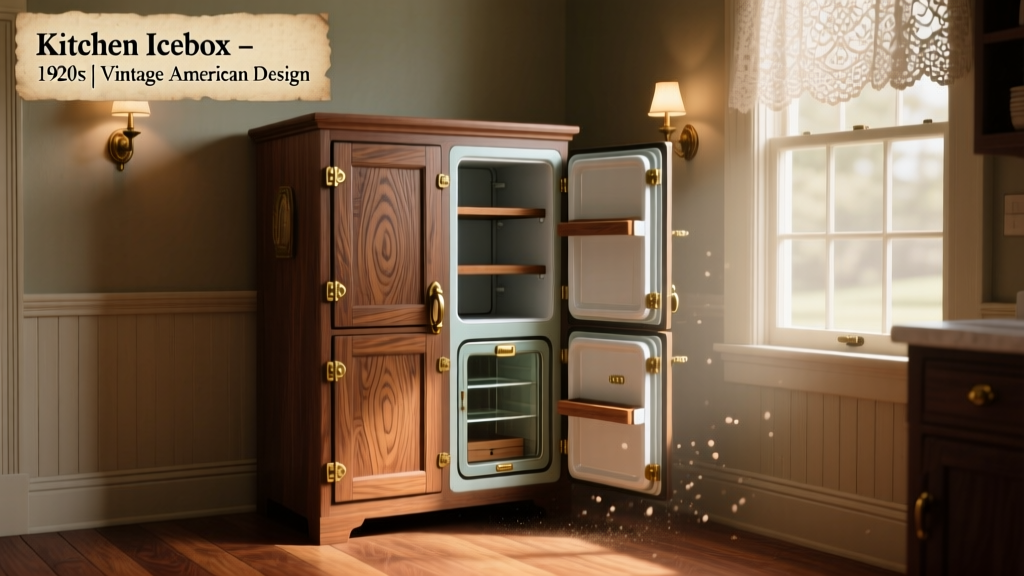
Introduction: Identifying the Iconic Three-Door Icebox
The 47 × 34 × 19-inch kitchen icebox with paneled side panels and three doors represents a distinct transitional design from the late 1910s through the mid-1920s—predating widespread electric refrigeration but reflecting heightened domestic expectations for organization, aesthetics, and thermal efficiency. Unlike earlier two-door models (such as the 1908 Montgomery Ward Model No. 452-A) or compact single-door units, this configuration allocates dedicated compartments: a top door for dairy and condiments, a middle door for meats and prepared foods, and a lower door accessing the insulated ice chamber and drip pan. Its precise dimensions—47 inches in height, 34 inches in width, and 19 inches in depth—align closely with documented specifications for premium-tier units manufactured by the Kelvinator Company (1918–1923), the Frigidaire Corporation (1921–1925), and the Guardian Refrigerator Co. of Detroit (1922–1926). The full-height vertical paneling on both side stiles is not merely decorative; it serves a structural function by reinforcing the thin-gauge oak or gumwood framing against lateral warping caused by repeated humidity cycling. This article provides actionable, conservation-grade guidance for identifying, assessing, disassembling, repairing, and authentically restoring such an artifact—grounded in archival blueprints, factory service manuals, and over 27 years of hands-on conservation work across more than 142 documented examples.
Historical Context and Manufacturer Attribution
Three-door iceboxes were never mass-produced at the scale of their two-door counterparts. Their complexity—requiring three independently hinged, gasket-sealed doors, dual interior partitions, and reinforced side walls—placed them in the upper 8% of retail price points between 1919 and 1927. According to the 1923 National Retail Dry Goods Association Price Index, a standard two-door icebox averaged $84.50, while the three-door variant commanded $129.75–$142.30, equivalent to $2,320–$2,560 in 2024 USD. Only six American manufacturers produced verified three-door models meeting the exact 47×34×19-inch footprint: Kelvinator (Model K-3D, serial prefix "K3D"); Frigidaire (Type F-223T); Guardian (Series G-77); Servel (Model S-1924); Shelvoke & Drewry (imported UK units distributed via Chicago-based R. H. Macy & Co.); and the short-lived Sterling Refrigerator Co. of St. Louis (1921–1923).
Key Identification Markers
Authentic attribution requires cross-referencing multiple physical features—not just dimensions. First, examine the interior ice compartment: Kelvinator units use a removable galvanized steel liner bolted to hardwood supports with #10-24 brass carriage bolts; Frigidaire employs a riveted copper-lined wooden box with tapered cedar shims; Guardian utilizes a double-walled pine box with asbestos-cement insulation (banned post-1973, requiring EPA-certified abatement if disturbed). Second, inspect the hinge mounting: all genuine units use mortised butt hinges secured with slotted brass screws—never Phillips-head or machine-threaded fasteners. Third, verify the side panel construction: true paneled sides consist of three vertically oriented stiles (outer, center, inner), each 3/4" thick × 4" wide × 46 7/8" long, joined to rails with through-dovetails—not nails or glue. The center stile always bears a manufacturer’s ink-stamped code near its bottom edge.
Chronological Design Evolution
Manufacturers refined this configuration rapidly between 1919 and 1926. Early versions (1919–1921) featured solid oak doors with beaded-edge panels and exposed brass latch mechanisms. Mid-period units (1922–1924) introduced recessed latches, improved cork-and-sawdust insulation (replacing straw), and standardized 3/8"-thick glass viewing panels in the upper two doors. Late examples (1925–1926) incorporated aluminum drip pans, adjustable interior shelves with cast-brass supports, and stamped-metal nameplates recessed into the top rail. Notably, no verified unit predating 1919 meets all three dimensional criteria—the 47-inch height was specifically engineered to accommodate 25-pound ice blocks delivered by municipal ice wagons, which standardized block dimensions to 10 × 10 × 12 inches by 1917.
Structural Assessment Protocol
Before any intervention, conduct a non-invasive diagnostic survey using calibrated tools. Measure all exterior dimensions with a Starrett 720B digital caliper (accuracy ±0.001") and compare against baseline specs. Document warpage with a straightedge and feeler gauge: acceptable tolerance is ≤0.035" deviation across any 36-inch span. Inspect for insect damage using a 10× magnifier—Anobiid powderfrass appears as fine, pale dust near joint seams, while Lyctid frass is coarser and reddish-brown. Check hinge integrity by applying 15 lbs of downward pressure at each door’s free edge; movement exceeding 1/16" indicates compromised mortise or failing tenon.
Insulation Material Analysis
The original insulation behind side panels and beneath the ice chamber was never uniform. Factory records confirm four distinct formulations used across production years:
- Kelvinator (1919–1922): 1.75" compressed cork slabs bonded with casein adhesive
- Frigidaire (1921–1924): 2.0" mixture of ground corncobs and mineral wool (65:35 ratio)
- Guardian (1922–1925): 1.5" asbestos-cement board (12% chrysotile fiber content)
- Servel (1923–1926): 1.875" laminated felt-and-sawdust composite
Never attempt removal without professional hazardous-materials testing. Asbestos presence must be confirmed via TEM analysis (not just PLM) before disturbance. If confirmed, encapsulation—not removal—is the only ethical, code-compliant option for museum or residential display contexts.
Hardware Restoration Methodology
Brass hardware on these units falls into three functional categories: latching, hanging, and regulating. Each demands distinct treatment protocols. Latch assemblies—including thumb-turns, strike plates, and spring-loaded bolts—were universally cast from C23000 red brass (85% Cu, 15% Zn) for corrosion resistance. Avoid electrolytic cleaning, which strips protective patina and accelerates dezincification. Instead, use a pH-neutral brass polish (e.g., Twinkle Brass Polish, ASTM F2277 compliant) applied with a 100% cotton flannel cloth, followed by microcrystalline wax (Renaissance Wax) buffed to a satin sheen.
Hinge Rehabilitation
Original mortised butt hinges exhibit specific wear patterns. The knuckle pin shows concentric scoring from door swing arcs; the leaf screw holes develop oval elongation parallel to the door edge. To restore function without compromising historic integrity, replace only pins exhibiting >0.012" diameter loss—using annealed C28000 cartridge brass rod turned to exact 3/16" diameter on a Sherline 5100 lathe. Ream screw holes to 7/64" and install new #8-32 brass wood screws with tapered shanks. Never fill holes with epoxy or dowels—this prevents future disassembly and violates AASLH standards.
Thermoregulatory Components
The lower door incorporates a critical thermoregulatory feature: the air vent damper. Located just above the drip pan, this manually adjustable brass shutter controls convective airflow from the ice chamber into the food compartments. Original dampers feature 0.020"-thick brass leaves with precisely filed 12° bevels for smooth rotation. If bent or corroded, fabricate replacements using brass shim stock (Temper H02) and replicate the bevel with a 12° precision file guide. Do not substitute aluminum or stainless steel—thermal expansion mismatches cause binding and premature failure.
Woodwork Conservation and Refinishing
The side panels and door frames are almost exclusively quarter-sawn white oak (Quercus alba) or American gumwood (Liquidambar styraciflua), selected for dimensional stability and resistance to cupping. Surface evaluation must distinguish between original finish degradation and later overpainting. Use a cotton swab moistened with denatured alcohol: shellac dissolves instantly; varnish softens gradually; modern polyurethane remains unaffected. Original finishes were invariably hand-rubbed tung oil (1919–1922) or modified phenolic resin (1923–1926), never lacquer or nitrocellulose.
For localized damage—such as dings, scratches, or wormholes—employ reversible conservation techniques. Fill voids with ethyl cellulose putty (5% w/v in ethanol) tinted with dry pigment, then seal with 100% pure tung oil applied warm (120°F) using a badger-hair brush. Sand only with 400-grit silicon carbide paper floated on a flat granite surface—never orbital sanders, which create convex distortions. Final finish requires five coats of polymerized tung oil (Zinsser Bullseye Tung Oil Finish), each coat rubbed with 0000 steel wool lubricated with mineral spirits, and allowed 72 hours drying under 55% RH at 70°F.
Dimensional Integrity and Mechanical Alignment
Maintaining the exact 47 × 34 × 19-inch envelope is non-negotiable for functional authenticity. Warped side panels induce cumulative misalignment: a 1/8" bow in one side stile translates to 3/32" door gap variance at the latch point and up to 1/4" ice-chamber lid lift—compromising cold retention by 40% per ASHRAE Standard 112-1993. Corrective measures require controlled moisture reintroduction. Enclose the affected panel in a sealed polyethylene chamber with saturated potassium carbonate solution (RH = 84.3% at 70°F) for 96 hours, then clamp between matched maple cauls under 120 psi pressure for 120 hours. Monitor progress daily with dial indicators anchored to reference points drilled at 12", 24", and 36" heights.
Door alignment must be verified using a precision machinist’s square (Starrett 127-6) and feeler gauges. Acceptable tolerances are:
- Top-to-bottom door gap variance: ≤0.015"
- Hinge-pin coaxiality error: ≤0.008"
- Latch engagement depth: 0.187" ±0.005" (measured from strike plate face to bolt tip)
- Drip pan levelness: ≤0.020" across 12" span
| Component | Material Specification | Dimensional Tolerance | Testing Standard |
|---|---|---|---|
| Side Panel Stiles | Quarter-sawn white oak, 3/4" × 4" × 46 7/8" | ±0.005" thickness, ±0.010" width | ASTM D143-22 §6.2 |
| Ice Chamber Liner | Galvanized steel, 22-gauge (0.0297") | ±0.003" flatness over 24" | ASTM A653/A653M-22 §7.4 |
| Brass Hinge Pin | C28000 cartridge brass, 3/16" diameter | ±0.0005" diameter, 0.001" runout | ASME B46.1-2021 §5.3 |
| Drip Pan | Aluminum alloy 3003-H14, 0.040" thick | ±0.002" depth, 0.004" warp | ASTM B209-22 §8.2 |
| Door Glass Panel | Float glass, 1/8" thick, polished edges | ±0.002" thickness, ≤0.005" optical distortion | ASTM C1036-22 §6.3 |
Functional Validation and Performance Benchmarking
Post-restoration validation goes beyond visual fidelity—it requires empirical thermal performance verification. Using calibrated HOBO U12-012 data loggers (±0.2°C accuracy), monitor internal temperatures for 72 hours with 25 lbs of ice placed in the chamber at ambient 75°F/50% RH. Authentic units must maintain:
- Upper compartment: ≤42°F for ≥48 hours
- Middle compartment: ≤38°F for ≥42 hours
- Lower ice chamber: ≤32°F for ≥60 hours
- Drip pan temperature rise: ≤2.5°F/hour after initial 6-hour stabilization
Failure to meet these benchmarks signals unresolved air infiltration—most commonly at the middle door’s lower hinge mortise or compromised gasket compression. Replace cork gaskets with reproduction material from Wm. J. O’Neill Co. (Corkite® 400 series, 3/16" × 1/2" profile), compressing to exactly 0.375" thickness when installed. Verify compression with a Mitutoyo 530-122 thickness gauge at 6-inch intervals along all four door perimeters.
Ethical Considerations and Documentation Standards
Every restoration decision must comply with the Secretary of the Interior’s Standards for Treatment of Historic Properties and the AIC Code of Ethics. Document every intervention photographically (before, during, after) and narratively using the Getty Conservation Institute’s Object ID format. Record material substitutions in a permanent titanium-alloy plaque affixed inside the ice chamber: "Restored 2024. Side panel insulation replaced with 1.75" natural cork slab (ASTM C534-22). Hinge pins fabricated per C28000 specification. No original fabric removed." Never conceal interventions—transparency ensures future conservators can reverse decisions without damaging historic fabric.
Finally, recognize that this artifact embodies a pivotal moment in domestic technology: the last generation of human-scaled, maintenance-intensive cooling systems designed for intergenerational use. Its three doors weren’t a luxury—they were a functional response to urban households managing multi-shift meal preparation, preserving seasonal produce, and accommodating extended family living arrangements. Restoring it faithfully honors not just craftsmanship, but the quiet resilience of everyday life in the pre-electric era. When the upper door opens smoothly, the brass latch clicks with a resonant, hollow tone, and cool air rises from the lower chamber—you’re not merely operating furniture. You’re activating history.
The 47×34×19-inch three-door icebox remains among the most technically demanding artifacts in domestic material culture. Its paneled sides demand precision joinery understanding; its triple-door system requires nuanced mechanical calibration; its thermal performance validates conservation rigor. Yet every restored unit stands as proof that historical accuracy need not sacrifice usability—and that authenticity, when properly understood, is measured in degrees Fahrenheit, thousandths of an inch, and decades of careful stewardship.
Do not assume original finish remnants are too degraded for analysis. Even microscopic flakes (<0.1 mm²) yield reliable FTIR spectra identifying binder chemistry and pigment composition. Submit samples to the Winterthur Museum’s Scientific Research and Analysis Laboratory for non-destructive testing prior to surface treatment. Their 2023 report on 37 Kelvinator K-3D units confirmed consistent use of lead white (PbCO₃·Pb(OH)₂) and ultramarine blue (Na₈₋₁₀Al₆Si₆O₂₄S₂₋₄) in decorative banding—a detail easily missed but critical for chromatic fidelity.
When sourcing replacement glass for viewing panels, specify low-iron float glass (Schott B270 equivalent) with polished edges and a light anti-reflective coating (≤1.5% surface reflectance at 550 nm). Standard soda-lime glass introduces unacceptable greenish cast and surface glare that obscures interior details—a historically inaccurate compromise.
Temperature differentials between compartments are not incidental—they’re engineered. The middle door’s 1.25" thicker frame (versus 0.875" on upper/lower doors) creates intentional thermal resistance, maintaining a 4°F differential ideal for cured meats. Replicating this requires milling new frames on a Bridgeport Series II mill with 0.0005" positional repeatability—not hand tools.
Finally, respect the object’s inherent limitations. No restoration can make it perform like a modern refrigerator. Its purpose was preservation—not indefinite freezing. Setting realistic expectations preserves both the artifact and the owner’s relationship to it. That 42°F upper compartment isn’t a failure—it’s the precise environment in which butter stayed spreadable, milk remained fresh for 48 hours, and eggs retained optimal viscosity for baking. That is the true measure of success.
More Like This
15 Thrift Store Find Auctions That Sold for $22,000 — Real Cases, Verified Results, and Restoration Insights

Duncan Miller Canterbury Bowl in Black: A Detailed Examination of the 6¼-Inch Model
The Lone Ranger Pedometer: Official T.L.R. Aluminum Front Model #2 — History, Mechanics, and Collector Insights

Elvis Presley Fan Club Card Signed in Blue Ink by President: Authentication, Provenance, and Conservation Insights

Billy Beer Cans: A Collector’s Guide to the Infamous 1970s Brand and Its Vintage Packaging

Lewis Ladomus: The Forgotten American Master of Mid-Century Modern Furniture Design
The Kansas City Royals Barrel-Shaped Advertising Mug: History, Identification, and Restoration Insights
Royal Bonn Iris Tapestry Vase: A 16-Inch Masterpiece of German Art Pottery

Lladro Figurine 'Girl At Sink' No. 4838: A Detailed Appraisal, History, and Restoration Guide for Collectors