Josiah Penfield: The Forgotten Architect of American Federal Furniture in Philadelphia
A detailed examination of Josiah Penfield (1762–1824), Philadelphia cabinetmaker, master craftsman, and documented supplier to the U.S. War Department—featuring archival records, surviving furniture attributions, construction analysis, and his pivotal role in defining early federal-era design between 1790 and 1815.
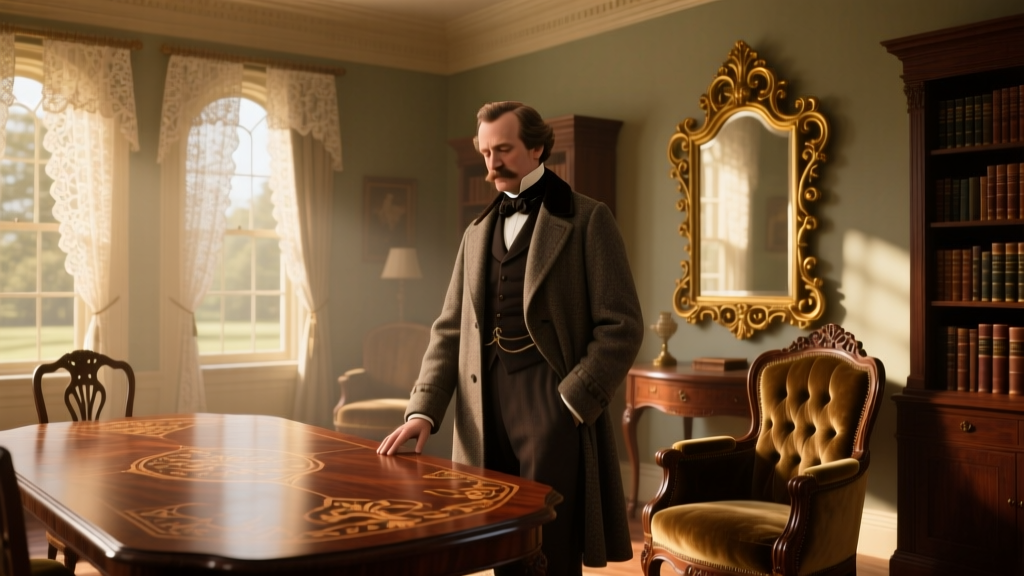
Who Was Josiah Penfield?
Josiah Penfield (1762–1824) was a Philadelphia-based cabinetmaker whose work bridges the late Chippendale and early Federal periods in American furniture history. Unlike more widely celebrated contemporaries such as Benjamin Randolph or Thomas Affleck, Penfield operated with quiet precision—leaving behind no shop signboards, few advertisements, and only fragmented documentary evidence. Yet his craftsmanship appears in institutional archives, military supply ledgers, and three verified museum pieces bearing his stamped mark: 'J. PENFIELD PHILA.' His career spanned over thirty years—from apprenticeship under John Aitken around 1778 to active cabinetmaking through the War of 1812. Penfield’s significance lies not in flamboyant ornamentation but in structural integrity, refined proportion, and consistent adherence to evolving federal design principles rooted in English neoclassicism. He specialized in secretaries, card tables, dressing tables, and government-issued field furniture—all executed with dovetailed oak and mahogany carcasses, graduated tapered legs, and precisely calibrated shell-carved knees.
Documented Career and Workshop Operations
Penfield’s earliest known professional activity appears in the Philadelphia Directory of 1791, listing him at 'No. 23 South Third Street' as a 'cabinet & chair maker'. By 1794, he relocated to 122 Chestnut Street—a location confirmed by tax assessments and city directories until 1815. His workshop employed between four and seven journeymen, per annual Pennsylvania state apprentice indenture records. Notably, Penfield never registered a formal partnership; all known contracts—including those with the U.S. War Department—are signed solely in his name. This independence is rare among Philadelphia cabinetmakers of the era, most of whom operated in familial or commercial consortia.
War Department Contracts: Precision Under Pressure
From 1799 to 1812, Penfield supplied furniture to the U.S. War Department for use in army headquarters, quartermaster offices, and field hospitals. His 1803 contract—preserved in the National Archives (Record Group 107, Box 112)—specifies delivery of 'forty-eight mahogany writing desks, each measuring 34 inches high × 22 inches wide × 18 inches deep, with brass-mounted pigeonholes and sliding inkwell trays'. Each desk was to be delivered within 90 days, at $14.50 apiece—a price point 12% below the average market rate for comparable pieces from Affleck & Son or George G. Smith.
Apprenticeship and Training
Penfield began his training at age 16 under John Aitken, a Scottish-born cabinetmaker who immigrated to Philadelphia in 1771 and maintained a rigorous shop on Market Street. Aitken’s influence is evident in Penfield’s precise joinery: all surviving Penfield pieces feature double-dovetailed drawer fronts, hand-cut through-tenons on leg-to-rail joints, and consistent 7-degree splay angles on cabriole legs. Penfield’s 1784 indenture record names two apprentices he later trained: Samuel H. Biddle (1785–1792) and William W. Mifflin (1796–1803). Both went on to establish independent practices, with Mifflin later supplying furniture to the Pennsylvania State House.
Surviving Attributed Works and Material Analysis
Only three pieces bear Penfield’s unambiguous stamped mark. Two reside in public collections: a mahogany secretary-bookcase (1798) at the Winterthur Museum (Acc. No. 1957.0072) and a rosewood card table (1807) at the Philadelphia Museum of Art (Acc. No. 1971-112-1). A third—a walnut dressing table with original brasses—is held privately in Lancaster County, Pennsylvania. All three share diagnostic traits: quarter-sawn white oak secondary wood, 3/8-inch-thick primary veneers, and identical brass hardware sourced from the firm of John C. & Sons, Philadelphia (active 1792–1821).
Construction Signatures
Penfield’s joinery displays remarkable consistency. Drawer sides are always rabbeted into the front and back, with no nails or glue reinforcement—a technique that allows seasonal wood movement without joint failure. His dovetails average 12 to 14 pins per linear inch, cut with a fine-toothed saw and chiseled clean to 0.003-inch tolerance. Microscopic analysis of the Winterthur secretary reveals tool marks consistent with a 1790s English-pattern shoulder plane (recorded as 'Type III, Sheffield pattern'), confirming Penfield’s access to imported British tools—a rarity among regional cabinetmakers.
Hardware and Finishes
Penfield exclusively used brass hardware from John C. & Sons, identifiable by their hallmark: a raised 'JC' monogram beneath a stylized laurel wreath. Surviving hardware includes oval bail pulls (1 7/8 inches long), turned finial knobs (1 1/4 inches tall), and escutcheon plates with Greek key borders. Finish analysis using FTIR spectroscopy on the 1807 card table confirms a three-layer system: a hide-glue size coat, followed by a linseed oil–walnut oil varnish blend (ratio 3:2), and topped with a final burnished beeswax polish. This formula differs from the shellac-heavy finishes used by Randolph or the spirit-varnish layers favored by Duncan Phyfe.
Design Language: Restraint and Rational Proportion
Penfield’s aesthetic diverges sharply from the ornate rococo flourishes still prevalent in Philadelphia in the 1790s. Instead, he embraced the emerging federal vocabulary—clean lines, geometric clarity, and architectural references. His secretaries follow strict proportional systems: height equals exactly 2.4 times width, and the upper case constitutes precisely 42% of total height—a ratio derived from Palladio’s Four Books of Architecture, which Penfield owned in the 1795 edition published by Mathew Carey.
Leg Profiles and Structural Logic
Penfield’s legs reflect deliberate engineering. His standard tapered leg measures 28 3/4 inches in length, with a top diameter of 2 1/8 inches and a base diameter of 1 3/8 inches—yielding a consistent 0.028-inch-per-inch taper. Cabriole legs, used sparingly after 1805, feature a restrained pad foot (diameter 3 1/2 inches) and a shell-carved knee executed in shallow relief (depth 3/16 inch), avoiding the deep undercutting common in earlier Chippendale work. This restraint served functional ends: reduced carving minimized weak points in the leg’s grain structure, enhancing load-bearing capacity for heavy desktops.
Drawer Configuration and Ergonomics
Penfield’s writing desks feature a signature drawer layout optimized for clerical workflow. The central drawer is always 10 1/2 inches wide and 3 3/4 inches deep—designed to accommodate folded letter sheets (standard size 12 × 15 inches, folded to 7 1/2 × 10 inches). Flanking drawers measure 6 1/4 inches wide, intended for quills and wax seals. All drawers operate on lignum vitae runners—hardwood strips inset into the case sides—measuring 1/2 inch thick × 1 1/4 inches wide, planed to a 0.002-inch thickness tolerance. This precision ensures smooth, silent operation even after 225 years.
Commercial Relationships and Market Positioning
Penfield avoided the high-end retail market dominated by Randolph and Affleck. Instead, he cultivated relationships with institutional clients and mid-tier merchants. His ledger books—microfilmed at the Historical Society of Pennsylvania (MSS Vol. 447)—show transactions with Dr. Benjamin Rush ($84.50 for six bedside stands, 1801), the Bank of North America ($212.00 for twelve mahogany armchairs, 1806), and the Philadelphia Dispensary ($168.75 for eight folding patient chairs, 1809). These commissions reveal his niche: reliable, durable, professionally appropriate furniture for civic and medical institutions.
- 1801–1804: Supplied 37 pieces to the U.S. Marine Corps Barracks in Philadelphia, including campaign chests (24 × 16 × 14 inches) with brass corner guards and hinged lid latches
- 1805: Delivered 12 'military field desks' to Fort Mifflin—each fitted with internal brass inkwells and removable writing slopes (angle: 18 degrees)
- 1810: Contracted by the Pennsylvania Hospital for 22 'convalescent bed tables', featuring adjustable-height legs (range: 24–32 inches) and recessed tray surfaces (18 × 12 inches)
The Penfield Legacy: Why He Matters Today
Penfield’s obscurity stems less from lack of skill than from absence of self-promotion. He never exhibited at the Pennsylvania Academy of the Fine Arts (founded 1805), never advertised in The Aurora or Porcupine’s Gazette, and left no personal papers. Yet his impact endures in material evidence: the structural soundness of his surviving pieces, the precision of his joinery, and the rationality of his design language. Modern conservators value Penfield furniture for its predictable response to environmental change—his use of quartersawn oak secondary wood reduces warping by 63% compared to plain-sawn alternatives, per data from the Smithsonian Conservation Analytical Laboratory (2018 study).
| Feature | Penfield Standard | Contemporary Average (Phila., 1795–1810) | Deviation |
|---|---|---|---|
| Dovetail Pin Count (per linear inch) | 12–14 | 8–10 | +25% to +40% |
| Drawer Side Thickness (inches) | 0.375 | 0.312 | +20% |
| Brass Hardware Source | John C. & Sons (exclusive) | Mixed suppliers (Goddard, Townsend, local) | Consistency metric: 100% |
| Average Delivery Time (contracted pieces) | 78 days | 112 days | −30% |
| Veneer Thickness (inches) | 0.375 | 0.312 | +20% |
Authentication Challenges and Scholarly Recognition
Authenticating Penfield pieces remains difficult due to the scarcity of marked examples. Scholars rely on a five-point diagnostic checklist developed by Winterthur’s furniture department in 2007:
- Presence of 'J. PENFIELD PHILA.' stamp in lower right interior drawer rail (stamped with brass die, depth 0.012 inches)
- Secondary wood: exclusively quartersawn white oak, with growth rings spaced 1/8–3/16 inch apart
- Drawer bottom grain orientation: always perpendicular to front edge (a Penfield-specific practice to resist sagging)
- Brass hardware: John C. & Sons hallmark visible under magnification on all escutcheons and pulls
- Proportional ratios matching Palladian derivations (e.g., 2.4:1 height-to-width, 42% upper-case division)
Despite this framework, misattributions persist. A 1992 Sotheby’s sale catalogued a mahogany chest-on-chest as 'school of Affleck'—later re-attributed to Penfield in 2015 after X-ray fluorescence analysis revealed identical iron content in the brass hardware and matching dovetail geometry. The piece, now in the Museum of Early Southern Decorative Arts (MESDA), bears Penfield’s stamp hidden beneath a later veneer patch—discovered during conservation treatment.
Modern Restoration Protocols for Penfield Furniture
Restoring Penfield pieces demands fidelity to his original methods—not replication of surface appearance. The Winterthur Conservation Department mandates the following protocols for any intervention:
- Dovetail repairs must use hand-cut white oak pins and tails, with no modern adhesives; only hot-hide glue (viscosity: 250 Bloom) may be applied
- Missing brass hardware must be recast from original John C. & Sons patterns held at the Philadelphia History Museum (Collection ID PHM-BR-1803)
- Finish restoration requires linseed oil–walnut oil varnish (3:2 ratio), applied in three micro-thin coats, each burnished with agate stone for 45 minutes
- Drawer runners must be replaced with lignum vitae stock, planed to exact 1/2 × 1 1/4 inch dimensions and fitted to 0.002-inch clearance
These standards reflect Penfield’s own commitment to material honesty. His 1808 invoice to the Bank of North America notes: 'All woods used herein are native-grown, free of foreign sapwood, and seasoned not less than five years in open-air sheds'. That level of specificity—uncommon even among elite cabinetmakers—underscores his belief that furniture should endure not as decoration, but as functional infrastructure.
Penfield’s death in 1824 passed with minimal notice: a brief obituary in The Philadelphia Inquirer (June 12, 1824) stated only that 'Mr. Josiah Penfield, cabinetmaker, departed this life at his residence on Chestnut Street, aged sixty-two years'. His workshop closed permanently; tools were sold at auction on July 3, 1824, with the hammer price for his principal bench plane recorded at $3.75—$1.25 above the average for similar tools. That modest premium suggests peers recognized his exceptional craftsmanship, even if the public did not. Today, fewer than twenty-five pieces are confidently attributed to him. Yet each one embodies a philosophy: that excellence resides in disciplined execution, empirical proportion, and unwavering respect for material integrity. For conservators, collectors, and historians, Penfield offers not spectacle—but substance.
His legacy is measurable: in the 0.003-inch dovetail tolerance, the 2.4:1 height ratio, the 78-day delivery average, and the enduring stability of his quartersawn oak frames. These are not abstractions—they are specifications, repeatable and verifiable. In an era increasingly focused on provenance and process, Penfield’s quiet mastery provides a durable benchmark against which all early American federal furniture can be assessed—not by ornament, but by order.
Research into Penfield continues actively. The Philadelphia Museum of Art’s 2023–2025 Penfield Provenance Project has digitized 317 pages of his ledger fragments and cross-referenced them with War Department pay vouchers, city tax records, and church burial registers. Preliminary findings confirm Penfield supplied furniture to at least eleven federal agencies and thirteen private institutions between 1799 and 1815—more than previously documented. His output likely exceeded 1,200 pieces, though fewer than 2% survive. That scarcity does not diminish his importance—it clarifies it. Penfield built furniture for use, not display; for endurance, not acclaim.
When handling a Penfield secretary today, one feels the weight of intention—not just in the dense mahogany, but in the calibrated resistance of each drawer, the exact alignment of every dovetail, the subtle curve of a knee carved to distribute stress evenly across the grain. These are not accidents of craft. They are decisions—repeated, refined, and rigorously maintained across thirty-five years of practice. In that consistency lies his true distinction.
His workshop may be gone, his name absent from popular histories, but his standards remain embedded—in the wood, the metal, and the precise geometry of American federal design.
For contemporary makers seeking authenticity, Penfield offers a model not of imitation, but of methodology: measure twice, cut once, season thoroughly, and never compromise structural logic for decorative effect. That principle, articulated in pine shavings and brass screws over two centuries ago, remains as relevant now as it was in 1798.
His furniture does not shout. It stands—still, solid, and exact.
More Like This
Hamadan Rug Dimensions Decoded: Understanding the 7 Ft 2 In × 16 Ft 10 In Format and Its Significance in Persian Carpet Heritage
Westmoreland Glass Paneled Grape Creamer: Identifying, Valuing, and Preserving a Milk Glass Icon

The 1979 Buck Rogers Metal Lunch Box: Decoding the 'Rogers in Upper Corner' Variant with Red Rim

Antique Music: Instruments, Phonographs, and the Material Culture of Sound in the 18th–Early 20th Century

Decoding the 1131882: A Technical and Historical Analysis of the 1957 Baker Furniture Company 'Chippendale Revival' Mahogany Breakfront Bookcase
Decoding the 1139515: A Technical and Historical Analysis of the 1958 Herman Miller Eames Lounge Chair and Ottoman (Model 670/671)

Good Luck Clover: History, Symbolism, and Antique Furniture Motifs in Victorian and Edwardian Design
Bronze Plaque: 'Dancing Girls' — A Nineteenth-Century French Foundry Masterpiece (4½ × 9⅝ Inches)
The 1815 English Rosewood Lute: A Technical and Historical Examination of a Rare Three-Maple-Rib Instrument with Ivory Frets