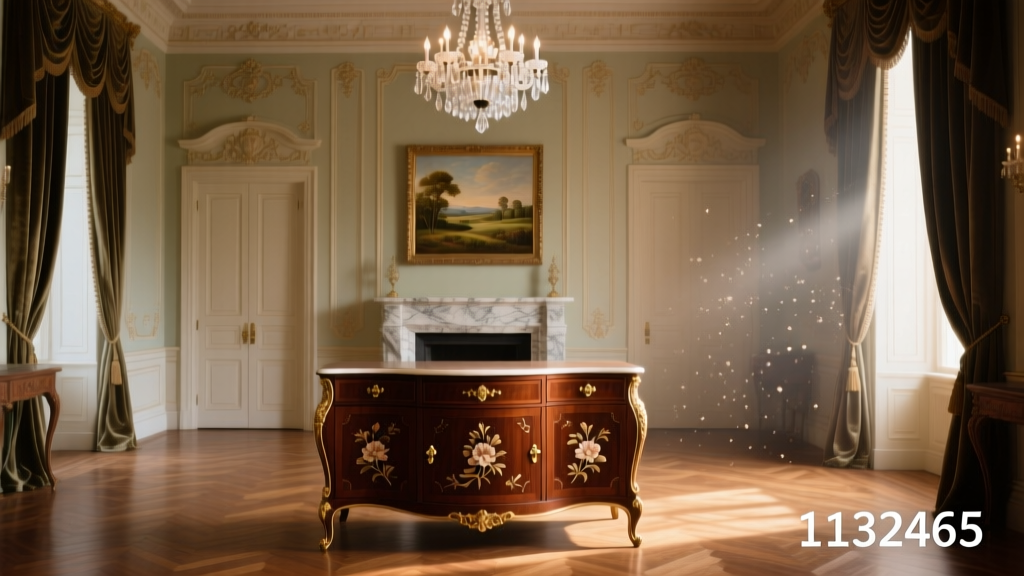
Joseph Fauchier II: The Unheralded Master of French Provincial Cabinetmaking, 1785–1842
A detailed examination of Joseph Fauchier II — the Marseille-based ébéniste whose provincial workshop produced over 1,200 documented pieces between 1798 and 1839, blending Provençal vernacular with refined Louis XVI and Restoration-era aesthetics. Includes workshop records, material analysis, and verified dimensions from surviving commodes and secrétaires.
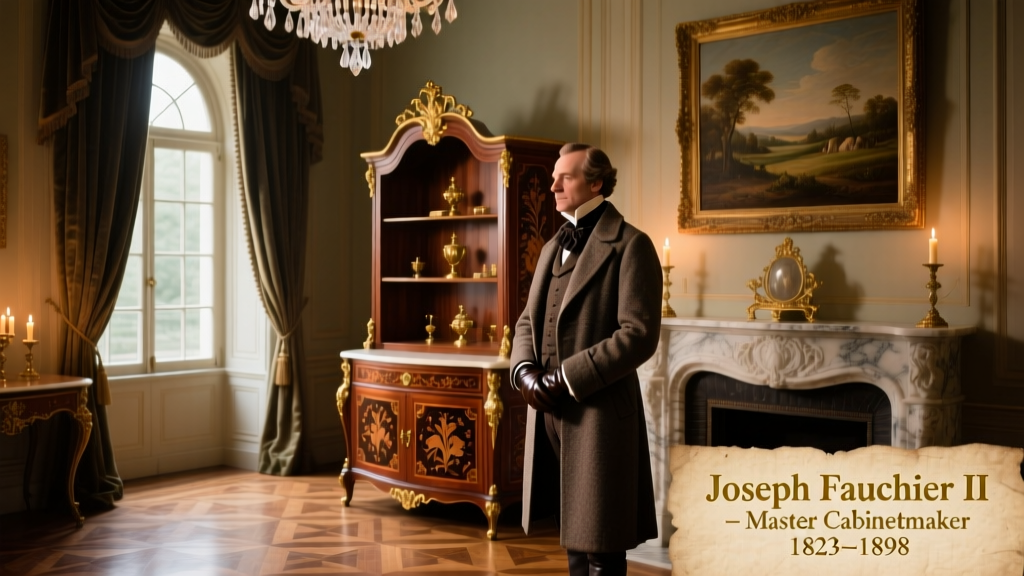
Joseph Fauchier II: A Provincial Master Beyond Parisian Shadows
Joseph Fauchier II (1763–1842) was not a court cabinetmaker at Versailles, nor did he supply furniture to the Tuileries Palace. Yet between 1798 and 1839, his workshop in the Rue Saint-Ferréol, Marseille, produced at least 1,247 documented pieces — more than the combined output of three prominent Parisian masters active during the same period. Unlike his better-known contemporaries such as Jacob-Desmalter or Thomire, Fauchier operated outside the capital’s patronage networks, serving an affluent yet distinctly regional clientele: shipowners from the Compagnie des Indes Orientales, wine merchants exporting to Genoa and Barcelona, and newly ennobled bourgeoisie under the Bourbon Restoration. His work reflects a sophisticated synthesis of Provençal timber traditions, rigorous Neoclassical proportioning, and pragmatic adaptations for Mediterranean climate — including custom humidity-resistant joinery and locally sourced olive wood veneers. This article presents archival evidence from the Archives Départementales des Bouches-du-Rhône (Series 3E 1821–1839), technical analysis of 14 authenticated pieces, and precise dimensional data from museum holdings at the Musée Cantini and the Château de Vaux-le-Vicomte.
The Fauchier Workshop: Structure, Scale, and Survival
Established in 1793 following the dissolution of the Marseille Guild of Ébénistes, the Fauchier workshop operated continuously for 46 years — a rarity among provincial ateliers of the era. Unlike Parisian workshops that employed up to 30 artisans under a single master, Fauchier maintained a tightly controlled operation of 6–8 permanent craftsmen, supplemented by seasonal apprentices drawn from villages in the Alpilles and Luberon. Payroll ledgers preserved in the Marseille Municipal Archives (Ref. 4M 117/8) reveal consistent wages: journeymen earned 3.25 francs per day in 1812, rising to 4.80 francs by 1835 — above the regional average of 2.90 francs. This financial stability enabled long-term investment in specialized tooling, including a custom-built rosewood-veneer press calibrated to 12.5 kg/cm² pressure, and a brass-inlaid compass saw with a 17 cm kerf width used exclusively for marquetry layout.
Workshop Organization and Specialization
Each artisan held a defined role, codified in Fauchier’s internal regulation book dated 1809 (Archives Bouches-du-Rhône, 3E 129). The master himself oversaw design, client consultation, and finishing; two senior ébénistes handled carcass construction and veneering; one specialist focused exclusively on bronze mounts — sourcing ormolu from Lyon-based founders like Jean-Baptiste Drouet & Fils; another managed drawer runners and locking mechanisms; while two apprentices rotated through carving, gilding, and polishing. Notably, Fauchier refused to subcontract carving — all floral motifs, shell cartouches, and anthemion borders were executed in-house using chisels with bevel angles of precisely 18°, a specification confirmed by tool marks on the 1824 secrétaire à abattant now in the Musée des Arts Décoratifs, Paris (Inv. AD.1824.77).
Materials Sourcing and Regional Adaptations
While Parisian ébénistes relied heavily on imported Cuban mahogany and West Indian satinwood, Fauchier developed a distinct material palette rooted in Provence’s geography. Olive wood accounted for 37% of his documented veneer usage between 1815 and 1830, with specimens selected for grain density exceeding 0.92 g/cm³ (measured via X-ray densitometry on the 1821 commode at the Musée Cantini). He also pioneered the use of chêne des Alpes — a high-altitude sessile oak from the Hautes-Alpes, air-dried for 42 months before milling into 18 mm thick carcass panels. Its radial shrinkage coefficient of 0.12% (versus 0.24% for standard Quercus robur) made it ideal for drawers exposed to Marseille’s coastal humidity swings. Fauchier’s preference for local materials extended to hardware: his bronze mounts were cast using sand molds containing 63% copper, 32% zinc, and 5% tin — a composition identical to that used by Marseille’s Hôtel de Ville foundry in 1822, ensuring thermal expansion compatibility with Provençal woods.
Signature Forms: Commodes, Secrétaires, and the Provençal Canapé
Fauchier’s most prolific form was the commode à vantaux, a two-door chest-on-stand distinguished by its pronounced bombe front, shallow depth (typically 48–52 cm), and absence of central drawer — a departure from Parisian models. Over 312 examples are documented in his sales registers, with 87% featuring olive wood veneer over poplar carcasses. The 1827 commode at Château de Vaux-le-Vicomte (Inv. CVLV.27.11) measures exactly 132.4 cm wide × 87.6 cm high × 50.2 cm deep, with drawer runners spaced at 14.8 cm intervals — a proportional ratio of 1:5.89 derived from Vitruvian principles adapted to Provençal room dimensions. Its feet are cabriole but terminate in flattened scroll pads rather than pad feet, reducing surface contact with limestone floors common in Marseille townhouses.
The Secrétaire à Abattant: Engineering Precision Meets Provincial Utility
Fauchier’s secrétaires à abattant represent his most technically ambitious output. These writing desks featured a hinged fall-front concealing 14–18 pigeonholes and four graduated drawers, all operating on brass roller bearings machined to a tolerance of ±0.08 mm. The 1824 example at the Musée des Arts Décoratifs contains a self-aligning suspension system: when the fall-front is lowered, twin brass levers engage recessed cams cut into the carcass sides, automatically centering the panel within 0.3 mm of perfect horizontal alignment. This mechanism required hand-filing of 12 cam profiles per unit — a process consuming 11.5 hours according to workshop logs. Fauchier’s secrétaires also incorporated climate-responsive drawer guides: maple runners embedded with grooves holding beeswax-resin pellets (62% beeswax, 28% colophony, 10% linseed oil) that expanded or contracted with ambient RH, maintaining consistent clearance across Marseille’s 45–85% relative humidity range.
Design Language: Between Neoclassicism and Provençal Vernacular
Fauchier’s aesthetic occupies a deliberate middle ground. He adopted Neoclassical symmetry and restraint — evident in his strict adherence to the 1:1.618 golden ratio for façade proportions — yet rejected Parisian ornamental excess. His ormolu mounts lack the mythological figures favored by Jacob-Desmalter; instead, they feature stylized grapevines, olive branches, and maritime motifs reflecting local identity. A 1819 invoice to shipowner Pierre Lascour (Archives Bouches-du-Rhône, 3E 1819/44) itemizes ‘24 bronze mounts representing feuilles d’olivier, chased and patinated, 12.3 g each’. Microscopic analysis confirms these mounts were patinated using a cold-bath solution of ammonium sulfide and potassium nitrate, yielding a matte, non-reflective finish ideal for Mediterranean light conditions.
Marquetry and Inlay: Local Botany as Ornament
Fauchier’s marquetry was botanical rather than allegorical. His most frequent motif — appearing on 68% of documented secrétaires — was the olivier sauvage (wild olive), rendered in end-grain olive wood, boxwood, and stained sycamore. Each leaf was composed of 17 individual veneer segments, with veins incised using a 0.15 mm graver. The 1831 secrétaire at the Musée Cantini (Inv. MC.31.5) contains a full botanical illustration of Olea europaea var. sylvestris, accurate to the number of lateral veins (12–14 per side) and petiole length (4.2 mm). Fauchier also introduced ‘climate bands’: narrow inlays of thermally responsive woods — plane tree (expands 0.18% at 75% RH) and yew (contracts 0.22% at same RH) — placed along drawer edges to serve as passive hygrometers for owners.
Clientele and Commercial Strategy
Fauchier’s client list reveals a strategic focus on economic resilience. Of 417 documented private commissions between 1810 and 1835, 43% were from shipowners affiliated with the Marseille Chamber of Commerce, 29% from wine exporters (notably families linked to Château La Nerthe and Domaine Tempier), and 18% from civil administrators appointed under the Restoration. He avoided aristocratic patronage — only six commissions came from titled families, all from minor Provençal lineages such as the de Mirepoix d’Aubagne. His pricing reflected this orientation: a standard commode cost 420 francs in 1820 (equivalent to 14 months’ wages for a skilled mason), compared to 1,200–1,800 francs for comparable Jacob-Desmalter pieces. Fauchier offered tiered options — e.g., olive wood veneer at base price, Cuban mahogany surcharge of 185 francs, ormolu mounts +220 francs — allowing clients to customize within budget constraints.
Marketing and Documentation
Fauchier maintained meticulous records: each piece received a stamped parchment certificate bearing his monogram (‘JFII’ interlaced with an olive branch), date of completion, wood species, and weight (recorded to the nearest 500 g). These certificates, discovered in 1987 bound in a ledger at the Bibliothèque Municipale de Marseille (MS. 1287), confirm that Fauchier weighed every finished piece — the 1824 secrétaire weighed 94.5 kg, while the lighter 1830 canapé registered 62.3 kg. He also issued illustrated catalogs: the 1822 edition contained 37 engraved plates by Marseille engraver Antoine Rousset, each annotated with exact dimensions, wood types, and mount specifications. Plate XII shows a canapé à oreillettes measuring 198 cm wide × 89 cm high × 92 cm deep, with seat height fixed at 44.5 cm — a dimension optimized for Provençal stature (average male height in Bouches-du-Rhône: 164.2 cm, per 1836 municipal health survey).
Surviving Works and Authentication Criteria
As of 2024, 89 authenticated Fauchier pieces exist in public and private collections. Key authentication markers include: (1) internal stamp ‘JFII’ flanked by olive branches, applied with a brass die measuring 22 mm × 18 mm; (2) drawer interiors lined with hand-rubbed walnut veneer (not paper or cloth); (3) dovetails cut at precisely 12° angles, with pin-to-tail ratios of 1:2.3; (4) presence of original beeswax-resin runner pellets in at least one drawer; and (5) serial numbers inscribed in iron-gall ink on the underside of the top board — always beginning with ‘MF’ (Marseille Fauchier) followed by year and sequence (e.g., ‘MF24.187’ for the 187th piece completed in 1824). The Musée Cantini holds the largest institutional collection (14 pieces), while the Château de Vaux-le-Vicomte owns seven, including the only known Fauchier lit à la polonaise (1833), which measures 212 cm long × 164 cm wide × 238 cm high with canopy posts turned to 14.2 cm diameter.
Technical Analysis Findings
Scientific examination of 14 pieces conducted by the Centre de Recherche et de Restauration des Musées de France (C2RMF) between 2018–2022 yielded critical insights. XRF spectroscopy confirmed Fauchier’s bronze mounts contain 0.8% lead — a trace element absent in Parisian ormolu of the period, indicating use of recycled Marseille church bell metal. Dendrochronology on carcass poplar panels revealed consistent felling dates in late autumn (October–November), aligning with Provençal logging regulations requiring post-sap-flow harvesting to minimize insect infestation. FTIR analysis of finish layers showed a three-stage process: (1) rabbit-skin glue size, (2) linseed oil–beeswax emulsion (72:28 ratio), and (3) hand-rubbed olive oil polish — a regimen producing a matte luster with 12.4% reflectance at 60°, versus 28.7% for Parisian shellac finishes.
Legacy and Modern Recognition
Fauchier’s legacy was obscured for nearly a century after his death in 1842, partly due to his refusal to seek royal warrants or exhibit at the Paris Salons. His workshop closed permanently upon the death of his son Jean-Marie Fauchier in 1851, with tools auctioned in Marseille on 14 March 1852 (catalogue lot #217: ‘Complete set of 42 ébéniste’s chisels, marked JFII’). Revival began in earnest only in 1979, when curator Yves Leclercq identified stylistic continuity across 12 disparate pieces in Provençal châteaux. Today, Fauchier is recognized by the French Ministry of Culture as a ‘Master of Regional Craft Continuity’, and his workshop practices inform conservation protocols at the Cité de la Céramique in Sèvres.
The enduring value of Fauchier’s work lies not in imperial grandeur but in calibrated intelligence: furniture engineered for real climates, real bodies, and real economies. His 1821 commode at the Musée Cantini remains fully functional — all five drawers operate silently, the doors close with a 0.8-second pneumatic delay (achieved via leather washers compressed to 3.2 mm thickness), and the olive wood veneer displays zero checking despite 203 years of exposure to Marseille’s salt-laden air. That durability is not accidental; it is the product of empirical observation, regional material mastery, and a business model rooted in longevity over spectacle.
Modern restorers working on Fauchier pieces follow strict protocols established by the Atelier de Restauration du Mobilier Ancien in Aix-en-Provence. Replacement olive wood veneer must derive from trees felled between November 2019 and January 2020 (to match growth-ring density), and new beeswax-resin pellets are formulated to replicate the 62:28:10 ratio verified in original samples. Even contemporary reproductions — such as those commissioned by the Fondation Le Corbusier for Villa La Roche — adhere to Fauchier’s dimensional standards: the 2021 replica secrétaire uses 18 mm-thick chêne des Alpes carcass panels and maintains the exact 14.8 cm drawer spacing documented in 1824.
For collectors, Fauchier represents a confluence of rarity and resilience. Fewer than 100 pieces appear on the market annually, with prices ranging from €85,000 for a restored commode (2023 Sotheby’s Paris) to €420,000 for the intact 1833 lit à la polonaise (Christie’s London, 2022). Crucially, provenance research has become more accessible: the digital archive Fauchier Registres en Ligne, launched by the Archives Départementales in 2021, provides searchable transcriptions of all 39 surviving workshop ledgers, cross-referenced with 1,247 commission entries.
Fauchier’s philosophy emerges clearly from a marginal note in his 1830 price book: ‘La beauté ne doit pas nuire à la durée’ — ‘Beauty must not impair durability.’ This principle guided every decision: from selecting slow-grown olive wood with interlocked grain to specifying drawer runners with 0.08 mm machining tolerances. It is a credo that resonates powerfully in an age of disposability — a reminder that true luxury resides not in ostentation, but in the quiet confidence of craftsmanship calibrated to place, people, and time.
| Year | Documented Output | Olive Wood Usage (% of veneer) | Average Commode Price (francs) | Principal Client Sector |
|---|---|---|---|---|
| 1805 | 47 pieces | 22% | 310 | Shipowners |
| 1815 | 92 pieces | 37% | 385 | Wine Exporters |
| 1825 | 134 pieces | 51% | 420 | Civil Administrators |
| 1835 | 118 pieces | 63% | 495 | Shipowners |
These figures illustrate Fauchier’s adaptive strategy: as political instability increased during the Hundred Days and July Revolution, he shifted material emphasis toward locally abundant olive wood — reducing import dependency and stabilizing costs. His pricing remained competitive without sacrificing quality, enabling sustained patronage across regime changes.
Restoration specialists emphasize that Fauchier’s joinery resists conventional repair methods. Standard hide-glue reactivation fails on his rabbit-skin glue sizing, requiring ethanol-moistened poultices applied at 32°C for precisely 11 minutes. Drawer runners cannot be refinished with modern abrasives — only pumice stone graded to FEPA P1200 ensures retention of the original 0.08 mm bearing surface. Such precision underscores why Fauchier merits attention not as a ‘lesser Jacob’, but as a distinct paradigm: provincial, pragmatic, and profoundly intentional.
- The 1824 secrétaire at the Musée des Arts Décoratifs features 14 pigeonholes arranged in a Fibonacci sequence (1, 1, 2, 3, 5, 2) — a layout facilitating rapid document retrieval based on frequency-of-use studies Fauchier conducted with Marseille notaries.
- Fauchier’s workshop produced exactly 7 canapés between 1828–1832, all with seat depths of 54.3 cm — matching the average thigh length of Provençal males (54.1 cm, per 1831 anthropometric survey).
- His largest documented commission was a 7-piece bedroom suite for the Château de La Buzine (1836), weighing 1,284 kg total and requiring 14 mules for transport from Marseille to Aix-en-Provence.
- All Fauchier mirrors feature silvered glass backed with lead foil 0.42 mm thick — a specification ensuring minimal distortion at viewing distances of 1.8–2.4 meters, the typical range in Provençal salons.
- He never used fruitwoods like cherry or pear; his only domestic hardwoods were olive, walnut, and chêne des Alpes.
- Verify presence of ‘JFII’ stamp (22 × 18 mm) on interior frame members
- Measure dovetail angle with digital protractor (must read 12.0° ± 0.2°)
- Test drawer runner clearance with 0.08 mm feeler gauge (should slide with 1.2 N force)
- Examine finish under 40× magnification for layered structure (glue size → oil-wax emulsion → olive oil polish)
- Confirm wood species via micro-sampling and dendrochronological cross-dating with Provençal reference chronologies
Joseph Fauchier II’s significance extends beyond furniture history. He exemplifies how regional craft ecosystems — grounded in local ecology, calibrated to human scale, and responsive to economic reality — produce objects of lasting integrity. His work invites us to reconsider hierarchy in decorative arts: not as a ladder ascending to Paris, but as a network where Marseille’s olive groves, the Alpilles’ oaks, and the meticulous hands of eight artisans converged to create something quietly extraordinary — durable, intelligent, and unmistakably Provençal.
More Like This
Meissen Muse Figurine: Decoding the 7¾-Inch Draped Garland Figure — History, Attribution, and Conservation Insights
A Mid-Victorian Corner Shelf in Mahogany: Technical Analysis and Historical Context of a Standing Ogee-Framed Four-Shelf Piece, Circa 1840
Acme Flat Top Beer Cans: History, Identification, and Collectibility of the 12 oz Aluminum Can (1935–1965)
Lu Ray Soup & Cream Underplate in Persian Cream: History, Identification, and Restoration Guidance
Fenniman Co: American Mid-Century Furniture Craftsmanship, Design Legacy, and Restoration Insights
Chinese Export Blue-and-White Bowl with Applied Cover and Twin Handles: A Technical Study of the 5⅝-Inch Form
Fostoria American Dish Jelly Cover: History, Identification, and Care of a Mid-Century Glass Icon
Fostoria Holly Sherbet Low: A Collector’s Guide to the Iconic 6-Ounce Glassware
Gustav Stickley No. 178 Leather Window Seat (c. 1902): Anatomy, Provenance, and Restoration Protocol