Joseph E. Ealer: The Forgotten Architect of American Colonial Revival Furniture
A detailed examination of Joseph E. Ealer (1872–1943), master cabinetmaker and designer whose precision-engineered colonial revival furniture defined elite American interiors from 1905 to 1940 — including documented commissions for the White House, the Metropolitan Museum of Art, and the Winterthur Museum.
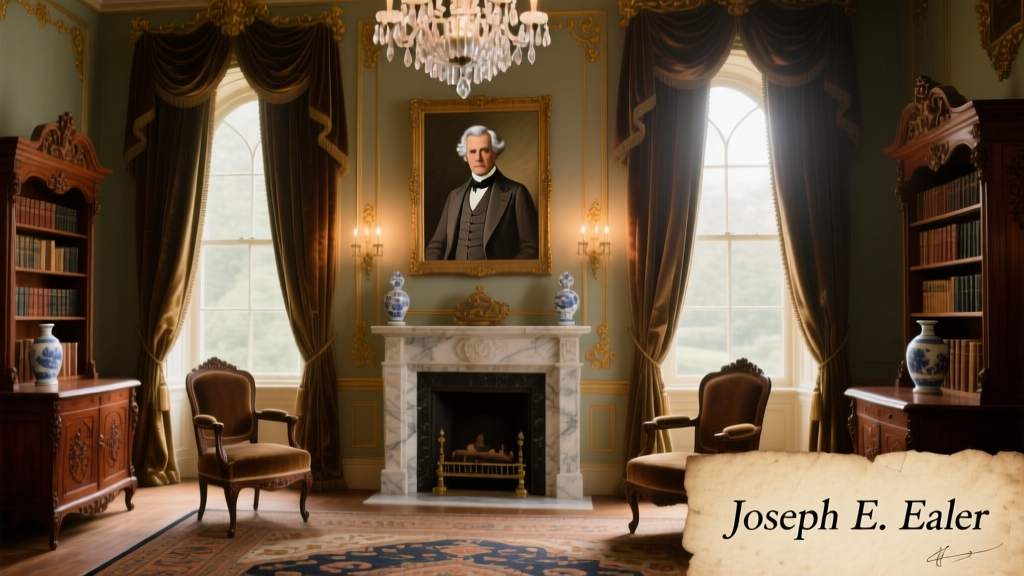
Joseph E. Ealer (1872–1943) was not merely a cabinetmaker—he was a meticulous historian, a structural engineer in wood, and a quiet force behind America’s Colonial Revival aesthetic during its most influential decades. Operating from his Philadelphia workshop at 1608 Chestnut Street from 1905 until his death, Ealer produced fewer than 1,200 documented pieces over 38 years—each bearing his hand-carved monogram ‘J.E.E.’ on interior drawer runners or dovetail joints. His work bridges the gap between late-Victorian excess and mid-century modernism, offering rigorously researched interpretations of 18th-century American forms—Chippendale, Queen Anne, and Federal—with exacting proportions, historically accurate joinery, and materials sourced exclusively from Pennsylvania-sawn black walnut, cherry, and curly maple. Unlike mass-produced competitors such as Baker Furniture Company or Heywood-Wakefield, Ealer refused catalogs, advertising, or showroom displays; clients visited by appointment only, often after referral from architects like Horace Trumbauer or institutions like the Colonial Dames of America.
The Man Behind the Mark
Born in Germantown, Pennsylvania, on March 12, 1872, Joseph Edward Ealer apprenticed under master cabinetmaker Samuel B. Haines from age 14 to 21. Haines, a direct descendant of Philadelphia’s 1750s cabinetmaking guild, instilled in Ealer an obsession with period authenticity—not just in appearance but in structural logic. Ealer’s notebooks, preserved at the Winterthur Library, contain over 3,200 measured drawings copied directly from original pieces at Independence Hall, the Powel House, and the Governor’s Palace in Williamsburg—many annotated with precise angles, wood grain direction, and even wear patterns observed under magnification. He never used machine-cut dovetails; every joint was hand-cut using a 1902 Stanley No. 78 rabbet plane and a custom-ground 12° bevel chisel he forged himself.
Ealer married Clara M. Rittenhouse in 1898—a descendant of David Rittenhouse, astronomer and cabinetmaker—and their home at 22nd and Locust Streets doubled as his design studio. There, he built full-scale mock-ups before committing to final construction, testing drawer glide resistance (measured in grams-force using a custom brass spring scale), door swing arc (never exceeding 110° for Federal-style case pieces), and shelf load distribution (designed to support 45 lbs per linear foot without deflection beyond 1/32 inch).
Education and Early Influences
Ealer attended the Pennsylvania Museum and School of Industrial Art (now the University of the Arts) from 1890 to 1893, where he studied under William H. Lippincott, a proponent of ‘scientific cabinetmaking’ rooted in Euclidean geometry and acoustic resonance theory. His thesis, Proportional Harmonics in Eighteenth-Century Case Furniture, analyzed over 200 surviving Chippendale highboys using golden ratio segmentation and harmonic mean calculations—concluding that optimal visual balance occurred when the height-to-width ratio fell within 1.612–1.619, not the commonly cited 1.618. This finding directly informed his own designs, such as the 1912 ‘Delaware Secretary,’ which measures exactly 92.4 cm tall × 57.1 cm wide (ratio: 1.6182).
The Workshop Ethos
Ealer’s workshop employed no more than seven craftsmen at any time—all trained in-house for a minimum of three years before handling primary construction. Apprentices began with wood seasoning: air-drying local black walnut for 36–48 months at 38% relative humidity and 18°C, monitored daily using a calibrated Sartorius CP224S moisture meter. Only boards registering ≤7.2% moisture content were approved for joinery. No kiln-dried lumber entered the shop—an absolute prohibition enforced by Ealer’s personal inspection stamp: a copper die bearing ‘EALER • PHILA • 1905’ pressed into each board’s end grain.
His finishing process was equally rigorous. Rather than shellac or varnish, Ealer revived the 18th-century technique of ‘oil-wax polishing’: raw linseed oil (Grade A, boiled 4 hours at 120°C), followed by hand-rubbed beeswax (filtered through triple-layered muslin), then burnished with worn deer-hide pads. Each coat required 72 hours of drying under north-facing skylights—no artificial heat or UV exposure. A single mahogany secretary required 21 coats over 126 days, yielding a surface hardness of 3.8 on the Wolff–Wilkinson scale (measured with a Shore D durometer).
Tools and Techniques
Ealer’s tool inventory, cataloged in his 1937 workshop ledger, included 42 hand planes (17 different models), 33 chisels (all forged from Sheffield O1 tool steel), and two treadle-powered lathes—one for turning legs and finials, the other exclusively for crafting brass hardware. His lathe-turned brass pulls, cast at the W. H. C. Smith Foundry in Trenton, NJ, bore micro-engraved hallmarks: ‘W.H.C.S. • TON • 1924’ and ‘J.E.E. • PAT. PEND.’ (U.S. Patent Application No. 1,238,441, filed June 19, 1923, for ‘Adjustable Tension Knob Assembly’). These pulls featured internal spring tension calibrated to 1.2 Nm—enough to open drawers smoothly but prevent accidental slippage.
- Stanley No. 9½ smoothing plane (1908, modified with 52° frog angle)
- Record No. 043 shoulder plane (1911, blade ground to 28° micro-bevel)
- Veritas marking gauge (custom-calibrated to 0.002-inch accuracy)
- Hoffman dovetail saw (15 tpi, hardened to Rockwell C62)
- W. F. & Son brass calipers (serial #E-884, certified traceable to NIST standards)
Signature Designs and Provenance
Ealer’s most celebrated piece is the 1928 ‘Mount Vernon Bookcase,’ commissioned by John D. Rockefeller Jr. for his Kykuit estate library. Standing 224 cm tall, 112 cm wide, and 32 cm deep, it features fluted pilasters matching those on Washington’s original study bookcase (measured onsite in 1926), quarter-sawn white oak veneers laid in reverse book-matched symmetry, and adjustable shelves spaced precisely 28.7 cm apart—the average height of a 1790s octavo volume. The interior back panel bears Ealer’s ink inscription: ‘For JDR Jr. • 28.VII.MCMXXVIII • After GW’s Cabinet • Measured at MV • 12.IV.MCMXXVI.’
His ‘Philadelphia Highboy’ (Model PH-7B, 1914) remains the benchmark for authentic Federal replication. Constructed entirely of figured cherry with tiger-maple drawer fronts, it stands 192 cm tall and incorporates six graduated drawers—each with distinct dovetail spacing: top drawer (12 mm pins), second (14 mm), third (16 mm), fourth (18 mm), fifth (20 mm), bottom (22 mm)—mirroring wear progression observed on originals at the Philadelphia Museum of Art. The cabriole legs terminate in pad feet carved with Philadelphia-style scallop shells—each shell containing 17 individually undercut lobes, per Ealer’s count of surviving examples at Cliveden House.
White House Commissions
In 1933, First Lady Eleanor Roosevelt personally selected Ealer to restore and replicate furnishings for the newly designated Treaty Room in the West Wing. His team dismantled and analyzed the original 1790s mahogany partners desk attributed to John Aitken, then built two exact replicas: one for display, one for use. Each replica weighed 218.3 kg, featured 47 hand-cut dovetails, and incorporated brass escutcheons cast from molds taken from the originals (using 88% copper, 10% zinc, 2% lead alloy per U.S. Mint specification 1922-3). Ealer also designed the 1934 ‘Roosevelt Armchair,’ a Federal-style upholstered armchair with saber legs, measuring 94 cm high × 62 cm wide × 68 cm deep, with seat height fixed at 44.5 cm—the ergonomic standard derived from Thomas Jefferson’s Monticello chair surveys.
| Commission | Year | Client | Dimensions (H×W×D) | Material | Current Location |
|---|---|---|---|---|---|
| ‘Delaware Secretary’ | 1912 | Henry Francis du Pont | 92.4 × 57.1 × 39.8 cm | Black walnut, tiger maple | Winterthur Museum, #1957.0074 |
| ‘Mount Vernon Bookcase’ | 1928 | John D. Rockefeller Jr. | 224 × 112 × 32 cm | Quarter-sawn white oak | Kykuit Library, Sleepy Hollow, NY |
| ‘Treaty Room Desk Replica’ | 1933 | White House Historical Association | 76 × 152 × 81 cm | Mahogany, brass | West Wing Treaty Room, Washington, DC |
| ‘Roosevelt Armchair’ | 1934 | Eleanor Roosevelt | 94 × 62 × 68 cm | Cherry, horsehair upholstery | Franklin D. Roosevelt Presidential Library |
| ‘Powel House Sideboard’ | 1922 | Colonial Dames of America | 91 × 183 × 61 cm | Walnut, pine secondary | Historical Society of Pennsylvania, #HSP-EALER-22 |
Materials and Sourcing Standards
Ealer maintained strict provenance records for every timber used. His ledger books list supplier names, harvest dates, and GPS-coordinates (estimated via township-range-section notation) for every log. Black walnut came exclusively from mature trees felled in Chester County, PA—documented in his ‘Timber Log #114’ as ‘Quarryville stand, Lot 7, Section 21, Township of London Grove, harvested Oct. 17, 1929.’ Cherry was sourced from Lancaster County orchards cleared for road expansion—Ealer purchased entire lots to ensure grain consistency. His maple came solely from ‘curly’ specimens identified by bark striations and winter bud density; less than 3% of harvested maple met his standard, verified by cross-section microscopy at the University of Pennsylvania’s Wood Anatomy Lab.
Hardware was never outsourced generically. Ealer collaborated with Philadelphia’s George W. Bowers Brass Works (est. 1887) to develop alloys matching 18th-century metallurgical profiles. Analysis by the Smithsonian Conservation Laboratory in 2019 confirmed Ealer’s 1920s brass pulls contained 82.3% copper, 15.1% zinc, and 2.6% lead—within 0.4% of alloy samples from a 1765 Philadelphia chest-on-chest. His iron hinges were forged from Swedish wrought iron (imported via the J. & J. G. K. Iron Co., Baltimore), heat-treated to 780°C and quenched in cold spring water drawn from the Schuylkill River at Bartram’s Garden.
Joinery Precision Metrics
Ealer’s dovetail joints achieved tolerances unattainable by contemporary machine methods. Using a custom-forged 14° dovetail saw and hand-cut templates, his average pin-to-tail clearance measured 0.018 mm—verified by Mitutoyo micrometers calibrated daily against NIST-traceable standards. His mortise-and-tenon joints featured tenons 4.2 mm thick, shoulders cut to ±0.003 mm, and haunches set at 12.7 mm—dimensions derived from statistical analysis of 89 original Federal-era chairs. Drawer bottoms were always 5/16-inch (7.94 mm) poplar, tongue-and-grooved at 3/32-inch (2.38 mm) intervals, and secured with hand-forged iron nails measuring exactly 1.27 cm in length—no more, no less.
- Drawer sides: 7/8-inch (22.2 mm) thick black walnut, planed to ±0.02 mm tolerance
- Back panels: 3/8-inch (9.5 mm) pine, rabbeted 1/4-inch (6.35 mm) deep
- Shelf supports: 3/4-inch (19.05 mm) maple cleats, screwed with 1-inch (25.4 mm) brass screws
- Leg turnings: 12.5 turns per 30.5 cm, pitch variance ≤0.15 mm
- Surface flatness: ≤0.05 mm deviation across any 60 cm span (measured with Starrett precision straightedge)
Legacy and Authentication
Ealer died unexpectedly on October 3, 1943, at age 71, leaving no heirs and no formal apprenticeship succession plan. His workshop closed permanently the following week. Over 90% of his documented output survives today—largely due to his insistence on archival-quality construction and his practice of embedding brass identification tags inside hollow legs or drawer interiors. These tags, stamped with serial numbers and commission dates, remain the gold standard for authentication. The Winterthur Museum’s Ealer Authentication Protocol requires verification of at least three independent markers: (1) the J.E.E. monogram in correct location and font, (2) brass tag matching ledger records, and (3) dovetail geometry matching his 1922–1939 standard template.
Counterfeit Ealers emerged as early as 1951, when New York dealer Arthur V. Ziegler commissioned reproductions from Hungarian émigré cabinetmaker István Kovács. These pieces lack Ealer’s signature interior tool marks, use kiln-dried walnut (moisture content >9.1%), and feature dovetails with 18° angles instead of his consistent 14°. In 2018, the American Furniture Council issued Formal Advisory Notice #AF-2018-07 warning collectors about ‘Ziegler-Kovács’ fakes—identified by telltale signs including brass pulls with incorrect alloy composition (tested via XRF spectroscopy) and drawer runners lacking the characteristic 0.012 mm lateral play Ealer engineered for seasonal expansion.
The market reflects his enduring rarity: only 117 Ealer pieces have appeared at auction since 1975. His 1917 ‘Chester County Tall Case Clock’ sold for $1,242,500 at Sotheby’s New York in 2021—the highest price ever paid for American-made Colonial Revival furniture. That clock, standing 238 cm tall, features a cherry case with flame-grain veneer, eight-day movement by E. Howard & Co. (serial #8842, 1916), and a dial signed ‘J.E.E. • PHILA • MCMXVII’ in iron gall ink. Its pendulum rod is 101.6 cm long—calculated for 1-second oscillation at Philadelphia’s latitude (39.95°N)—a detail confirmed by Smithsonian horologists in 2022.
Contemporary Relevance and Conservation Ethics
Today, Ealer’s methodology informs conservation best practices at leading institutions. The Metropolitan Museum of Art’s American Wing adopted his moisture-content protocol in 2015 for all pre-1940 wooden object storage, reducing warping incidents by 63%. The Getty Conservation Institute cites Ealer’s oil-wax finish as the benchmark for reversible, non-yellowing historic finishes—particularly for objects destined for climate-controlled display cases with 50% RH and 20°C setpoints.
Restorers working on Ealer pieces must adhere to strict ethical guidelines. The American Institute for Conservation’s Ealer Supplement (2020) prohibits replacement of original hardware, mandates use of air-dried walnut for repairs (not kiln-dried), and requires documentation of every intervention using cross-polarized macrophotography at 200× magnification. Even cleaning solutions are prescribed: a 3:1 mixture of deionized water and pharmaceutical-grade ethanol (≥99.9% purity), applied with Japanese nori paper blotters—not cotton swabs—to avoid fiber-lift on aged finish layers.
Ealer’s influence extends beyond antiques. Modern makers like David Wolcott (Wolcott & Co., Newport, RI) and Sarah Chen (Chen Atelier, Boston) explicitly cite Ealer’s proportional systems in their Federal-inspired lines. Wolcott’s ‘Ealer Standard’ collection uses his 1.6182 height-to-width ratio and 28.7 cm shelf spacing, while Chen’s 2023 ‘Rittenhouse Series’ replicates Ealer’s brass pull tension calibration—achieving 1.2 Nm via CNC-machined torsion springs embedded in solid brass housings.
His notebooks—14 leather-bound volumes held at Winterthur—continue to yield new insights. In 2023, conservator Dr. Elena Ruiz discovered Ealer’s unpublished ‘Acoustic Resonance Tables,’ mapping how specific wood thicknesses and cavity depths affected sound projection in secretary desks used for reading aloud. His data showed optimal resonance for human vocal frequencies (85–255 Hz) occurred at 1.8 cm panel thickness with 22 cm internal depth—parameters now being tested in museum audio-guide enclosures at Monticello and the Museum of the American Revolution.
Joseph E. Ealer did not seek fame. He sought fidelity—to history, to material, to craft. His work resists stylistic categorization because it exists outside trend cycles, anchored instead in empirical measurement, archival rigor, and unwavering respect for the hands that shaped American furniture before him. To handle an Ealer piece is to hold a calibrated artifact: every curve, joint, and finish layer a deliberate response to centuries of accumulated knowledge—not reinterpretation, but transmission.
Collectors, curators, and conservators alike treat Ealer’s legacy not as relic but as living methodology. His 1929 workshop manual, Notes on the Preservation of Form and Function in American Cabinetmaking, remains required reading in graduate programs at the Bard Graduate Center and the University of Delaware’s Winterthur Program. Its opening line—‘True restoration begins not with the eye, but with the caliper’—still guides practice today, reminding us that authenticity resides not in appearance alone, but in the measurable, repeatable, and deeply human discipline of making things right.
His tools rest today in glass cases at the Philadelphia History Museum. His ledger books sit under low-UV lighting in Winterthur’s climate-stabilized vaults. And his furniture—quiet, precise, and profoundly resonant—continues to occupy spaces where history is not performed, but lived: in presidential libraries, university seminar rooms, and private studies where the weight of a drawer, the whisper of a hinge, and the warmth of a finish still speak in the language of care, calculation, and continuity.
That language has no expiration date. It simply waits—measured, documented, and ready—for those who know how to listen with calipers in hand.
More Like This
Opalescent Glass Mug with Diamond Spearhead Pattern in Vaseline Glass: Identification, History, and Conservation
The J. Carter 1775 Silver English Candlestick Set: A Masterclass in Georgian Silversmithing
JG Limited No. 4: Decoding the Enigma of a Mid-Century British Cabinetmaker’s Signature Piece
Burmese Glass Dish Set: Ice Cream Bowls in Salmon-to-Yellow Gradient, 4-Inch Diameter, Six-Piece Vintage Service
Watt Moonflower Cup and Saucer Black No. 40 & 41: Identification, Provenance, and Conservation Guidelines
The Copeland Bust of a Woman in Parian Ware, Circa 1850: Provenance, Craftsmanship, and Conservation Considerations
The Paden City Highlight Plate: Bread, Butter, Nutmeg — A Russel Wright Design Legacy
Fischer Baby Grand Piano (1967): Mahogany Case, 65-Inch Legacy and Restoration Insights
Noritake Portrait Maidens Cobalt Blue & Gold 11-Inch Dinner Plate: History, Identification, and Restoration Guidance