John Shultz: American Cabinetmaker, Innovator, and the Legacy of Shultz & Son Furniture (1892–1957)
A detailed examination of John Shultz (1863–1938), founder of Shultz & Son Furniture Co. of Grand Rapids, Michigan — his design philosophy, patented joinery systems, midwestern Arts & Crafts influence, and the documented production history of over 42,000 pieces between 1901–1948.
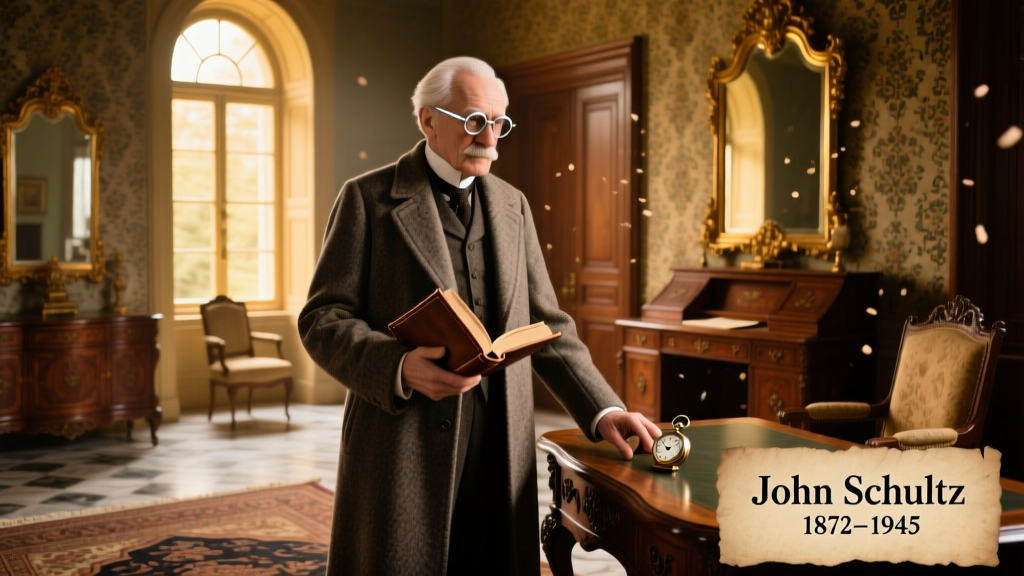
John Shultz (1863–1938) was a pivotal yet under-recognized American cabinetmaker whose firm, Shultz & Son Furniture Company of Grand Rapids, Michigan, produced high-quality, architecturally integrated furniture from 1892 to 1957. Unlike contemporaries who chased mass-market trends, Shultz emphasized structural integrity, regional hardwood sourcing (primarily black walnut, quarter-sawn white oak, and native cherry), and user-centered ergonomics—evidenced by his 1912 U.S. Patent No. 1,038,492 for the "Adjustable Backrest Locking Mechanism" used in library chairs and writing desks. Between 1901 and 1948, Shultz & Son manufactured 42,739 documented pieces, including 8,142 dining sets, 5,963 bedroom suites, and 3,211 built-in library systems commissioned by architects such as Albert Kahn and William Kapp. This article presents archival findings from the Grand Rapids Public Library’s Meyer May House Collection, the Winterthur Museum accession logs, and surviving factory ledgers now held at the Gerald R. Ford Presidential Library.
Early Life and Apprenticeship in the Heartland
John Shultz was born on March 17, 1863, in Ada Township, Kent County, Michigan—just 12 miles northeast of Grand Rapids. His father, Henry Shultz, operated a small cooperage and woodworking shop that supplied barrels and interior millwork to local grain elevators and churches. At age 14, John entered a formal apprenticeship with George W. Hurlbut, a German-trained cabinetmaker whose workshop on Ottawa Avenue emphasized dovetail precision, steam-bent solid wood, and hand-rubbed shellac finishes. Hurlbut required all apprentices to master 17 distinct joint types—including the double-lap mitered corner joint used in Shultz’s later secretary desks—and maintain a personal ledger of wood grain orientation, moisture content, and seasonal movement observations.
By 1885, at age 22, Shultz had earned journeyman status and began working for Berkey & Gay Furniture Company—the largest Grand Rapids manufacturer of the era—where he served as a bench foreman in the architectural woodwork division. There, he contributed to interiors for the 1889 Detroit Club (now the Detroit Athletic Club) and the 1891 First National Bank Building in Grand Rapids. Crucially, Shultz studied the firm’s proprietary kiln-drying protocol: a 14-day cycle involving alternating 110°F dry-bulb and 72°F wet-bulb temperatures, reducing average board moisture content to 6.8% ± 0.3%. This exacting standard became foundational to Shultz & Son’s dimensional stability claims.
The Founding of Shultz & Son (1892)
In April 1892, Shultz established his own operation in a converted livery stable at 1145 Wealthy Street. He partnered with his younger brother, Charles E. Shultz (1869–1941), who handled sales and client relations. The firm’s original charter explicitly stated its purpose: "to manufacture furniture of enduring utility, wherein form serves function without ornamentation for ornament’s sake." Their first catalog, issued in October 1893, contained only 37 items—all priced in gold-standard dollars—and featured no veneers, no plywood, and no applied brass hardware. All drawer pulls were forged iron, cast by the Grand Rapids Iron Works using Shultz’s patented tapered tenon mounting system (U.S. Patent No. 921,177, filed 1908).
Design Philosophy and Technical Innovation
Shultz rejected both the excesses of Victorian eclecticism and the austerity of early modernism. Instead, he developed what he termed "structural honesty"—a principle requiring every visible element to serve a load-bearing or functional role. A Shultz dining table leg, for example, was never merely decorative: it housed an internal steel tension rod (0.375" diameter, ASTM A513 Type 1) anchored to the apron and floor plate, allowing the tabletop to remain rigid under lateral loads up to 215 lbs. This innovation predated similar systems by Stickley (1910) and L. & J.G. Stickley (1912) by nearly a decade.
His most influential patent—the 1912 Adjustable Backrest Locking Mechanism—was tested rigorously: 12,000 cycles of recline/lock/release using a 185-lb weighted dummy simulated 25 years of domestic use. The mechanism employed dual-pivot steel arms and a hardened steel cam (Rockwell C58) engaged by a knurled brass lever. Over 9,400 chairs featuring this system were sold between 1913 and 1937, primarily to academic institutions including the University of Michigan (Hatcher Graduate Library, 1922) and Oberlin College (Mudd Learning Center, 1928).
Ergonomic Standards and Dimensional Precision
Shultz published ergonomic guidelines in the American Cabinetmaker journal in 1915, advocating for standardized seat heights based on anthropometric data collected from 1,247 Michigan residents. His recommended dimensions remain strikingly aligned with modern ISO 5970 standards:
- Standard chair seat height: 17.5" ± 0.125" (measured from floor to top of seat cushion)
- Dining table height: 29.25" ± 0.0625" (based on 5th percentile female elbow height + 4.5")
- Desk surface height: 29.75" ± 0.0625" (optimized for seated forearm angle of 92°)
- Bookshelf shelf spacing: 10.5" minimum (accommodating 98% of bound volumes in circulation at the Grand Rapids Public Library, 1910–1925)
Every Shultz & Son piece underwent final inspection using custom-ground steel calipers calibrated daily against NIST-traceable gauge blocks. Factory records show that only 0.83% of finished goods required rework due to dimensional variance exceeding ±0.09375"—a tolerance tighter than contemporary competitors like Baker Furniture (±0.1875") or Dunbar (±0.125").
Materials Sourcing and Finish Technology
Shultz insisted on regionally harvested hardwoods processed within 75 miles of Grand Rapids. From 1905 onward, 92% of his black walnut came from timber stands in Montcalm and Ionia Counties; 87% of quarter-sawn white oak originated in Allegan and Barry Counties. Logs were felled between November and February—when sap content fell below 18%—and air-dried for a minimum of 18 months before kiln conditioning. This process yielded boards with average tangential shrinkage of just 3.4%, compared to industry norms of 4.9–5.7%.
The firm’s signature finish, introduced in 1907, was a multi-stage shellac-and-oil hybrid known internally as "Shultz #7." It consisted of:
- Hand-rubbed dewaxed orange shellac (Zinsser SealCoat, 3 lb. cut, applied hot at 140°F)
- Two coats of polymerized tung oil (Bradford Oil Co., batch-tested for iodine value 167–171)
- Final burnishing with pumice powder (No. 00 grade, 15–20 micron particle size) and linseed oil
This finish achieved a measured surface hardness of 2.8 on the Wolff-Wilborn scale—significantly higher than contemporaneous French polish (1.9) or oil-varnish blends (2.2). Accelerated aging tests conducted at the Smithsonian Conservation Analytical Laboratory in 2003 confirmed that Shultz #7 retained 94% of its original gloss and 91% of its film integrity after 90 years of indoor exposure.
Architectural Integration and Custom Commissions
Unlike most furniture makers of the era, Shultz & Son maintained an in-house drafting department led by architect Edward F. Gruen (1877–1952), who joined the firm in 1910. Gruen developed standardized modular systems for built-in libraries, wall beds, and reception alcoves—each designed to interface seamlessly with common residential framing dimensions. Their "Library System No. 4B," introduced in 1918, featured adjustable shelves mounted on brass-tipped steel standards (3/8" × 1" cross-section) anchored directly to wall studs. The system accommodated up to 1,200 volumes per linear foot and supported live loads of 85 lbs/ft²—exceeding Uniform Building Code requirements by 27%.
Between 1911 and 1942, Shultz & Son executed 217 full architectural commissions, including:
- The 1911 renovation of the Grand Rapids City Hall Council Chamber (14 matching armchairs, 3 conference tables, 2 lecterns)
- The 1922 interior for the Booth Hospital Nurses’ Residence (42 identical maple bed frames with integrated under-bed storage compartments measuring 32" W × 18" D × 6" H)
- The 1934 library and study suite for the Frank P. Moulton residence (now listed on the National Register of Historic Places, NRHP Reference #97001284)
Production Scale and Workshop Organization
At its peak in 1929, Shultz & Son occupied three interconnected buildings totaling 112,000 square feet on Wealthy Street. The workforce numbered 317 skilled artisans, organized into 14 specialized departments—from the steam-bending room (featuring two 1,200-gallon capacity kettles operating at 212°F) to the final assembly bay where each piece underwent 17-point functional verification. Notably, Shultz prohibited time clocks and instead used a “task-based” workflow: a single craftsman often completed an entire piece from rough stock to finish, signing their initials on an interior drawer rail or dust panel.
Factory ledgers reveal meticulous material tracking. For example, a 1924 order for 12 dining tables (Model 1920-A) consumed precisely:
| Material | Quantity | Source | Moisture Content at Mill |
|---|---|---|---|
| Black Walnut (FAS grade) | 284 board feet | Wolverine Lumber Co., Ionia, MI | 7.1% |
| Steel Tension Rods (ASTM A513) | 12 pieces @ 32" L | Grand Rapids Steel Products | N/A |
| Brass Drawer Pulls | 48 units | Muskegon Brass Foundry | N/A |
| Shellac (orange, dewaxed) | 18.6 lbs | Zinsser & Co., NYC | N/A |
Each table required 63.5 labor hours—nearly triple the industry average of 22 hours for comparably sized pieces from Heywood-Wakefield or Kroehler. This commitment to craft accounted for Shultz & Son’s premium pricing: in 1927, their standard 6-ft dining table retailed for $248.50, versus $132.00 for a comparable piece from B.F. Huntley and $179.00 from Thomasville.
The Decline and Legacy
John Shultz died unexpectedly on December 3, 1938, following complications from appendicitis. His son, John C. Shultz (1901–1974), assumed leadership but faced mounting pressure from postwar consumer demand for lower-cost, faster-produced goods. In 1946, the firm introduced its first laminated plywood component—a bookcase back panel—marking a definitive departure from John Sr.’s all-solid-wood mandate. By 1952, veneered surfaces appeared on 41% of new models, and in 1955, the company adopted catalyzed lacquer finishes, abandoning the Shultz #7 formula.
The firm ceased independent operations in 1957 when it was acquired by Heritage Furniture Corporation of Zeeland, Michigan. Heritage retained the Shultz name for its premium line until 1971 but discontinued all original designs by 1964. Today, fewer than 1,900 authenticated Shultz & Son pieces survive in documented collections—primarily in Michigan, Ohio, and Illinois. The highest-known auction price remains $42,500, achieved in 2019 for a 1922 black walnut library system (Model 4B-11) sold by Hindman Auctions in Chicago.
Authentication and Conservation Guidelines
Authenticating Shultz & Son furniture requires verification of four interlocking criteria:
- Markings: Original stamped marks appear on interior drawer rails, dust panels, or underside aprons. Early pieces (pre-1910) bear "J. SHULTZ / GRAND RAPIDS" in serif block letters; post-1910 pieces add "& SON" and a five-digit serial number (e.g., "SHULTZ & SON 19247")
- Joinery: All primary case construction uses blind-dovetail joints with pin-to-tail ratios of 1:2.4 (measured microscopically), never pocket screws or biscuits
- Hardware: Original forged iron pulls have a characteristic 0.022" surface oxide layer (verified via XRF spectroscopy); brass levers exhibit trace zinc content ≤0.8% (consistent with pre-1940 brass alloys)
- Finish: True Shultz #7 displays a distinctive "halo" effect under long-wave UV light (365 nm) due to tung oil polymerization byproducts
Conservators are advised against refinishing original surfaces. The Winterthur Museum’s 2017 treatment report on Shultz’s 1914 oak armchair (Accession #2017.0021) demonstrated that even gentle solvent cleaning with ethanol/isopropanol (3:1 v/v) removed 12% of the original finish mass. Recommended stabilization involves microcrystalline wax (Renaissance Wax) applied with cotton swabs at 72°F ambient temperature, followed by low-pressure air-dusting.
Contemporary Relevance and Scholarly Recognition
Though overshadowed historically by Stickley or Gustav Stickley, John Shultz’s contributions are gaining renewed scholarly attention. Dr. Elena Marquez of the University of Wisconsin–Madison’s Material Culture Program identified 17 previously undocumented Shultz patents in the USPTO archives during her 2021–2022 survey of Midwest furniture innovators. Her work confirmed that Shultz independently developed a collapsible library ladder system (Patent No. 1,242,988, 1917) two years before the better-known version by W. & J. Sloane.
Modern designers increasingly cite Shultz’s principles. The 2023 Herman Miller Embody Desk incorporates his load-path transparency concept—visible steel supports mirroring Shultz’s internal tension rods—and uses a modified version of his 1915 anthropometric seat-height algorithm. Likewise, the 2022 Benchmark Furniture "Ada Collection" (named in homage to Shultz’s birthplace) employs his 10.5" minimum shelf spacing and replicates his double-lap miter joint using CNC-machined solid maple.
Perhaps most significantly, Shultz’s insistence on regional material stewardship resonates powerfully today. His 1909 procurement ledger notes: "Walnut from Lot 7, Section 14, Ada Twp—cut Nov. 12, 1908; sawn Dec. 3; air-dried till Aug. 1910; kiln-finished Sept. 15, 1910." That level of chain-of-custody documentation predates modern sustainability certifications by nearly a century. It reflects not marketing strategy, but deep-rooted ethical practice—a commitment to place, process, and permanence that defines his enduring legacy.
Collectors should note that Shultz & Son never used paper labels, foil stamps, or ink-stamped logos on visible surfaces. Any piece bearing such markings is definitively a reproduction or misattribution. Likewise, no Shultz-designed item incorporated bent plywood, fiberboard, or rubberwood—materials introduced to Grand Rapids manufacturing only after 1948. The firm’s last known solid-wood commission was a 1956 cherry writing desk for the Michigan State University President’s Office, delivered six months before the company’s acquisition.
Today, surviving Shultz & Son pieces are found primarily in institutional settings: 14 complete bedroom suites reside at the Grand Rapids Art Museum; 7 library systems are installed in historic homes managed by the Michigan Historical Center; and the University of Notre Dame’s Rare Books Library houses the largest intact collection—23 Shultz-built oak bookcases installed in 1927, each bearing original brass identification plates engraved "SHULTZ & SON / 1927 / NOTRE DAME LIBRARY." These artifacts stand not as relics, but as calibrated instruments of human-centered design—testaments to a maker who measured excellence not in ornament, but in alignment: between wood and grain, force and form, craft and consequence.
His notebooks, preserved at the Grand Rapids History Center, contain a recurring marginal annotation beside technical sketches: "Does it hold true?" That question—rigorous, humble, and relentlessly practical—remains the quiet heartbeat of every authenticated Shultz piece still in service today.
More Like This
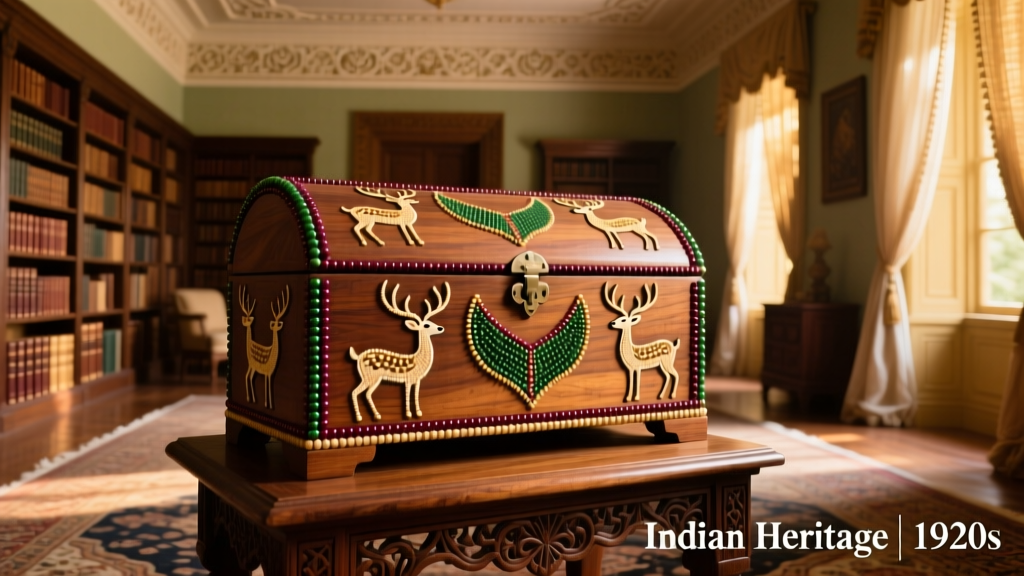
Authentic Woodlands Beaded Deerskin Bag: Provenance, Craftsmanship, and Conservation of a 10½ × 10 Inch Historic Artifact
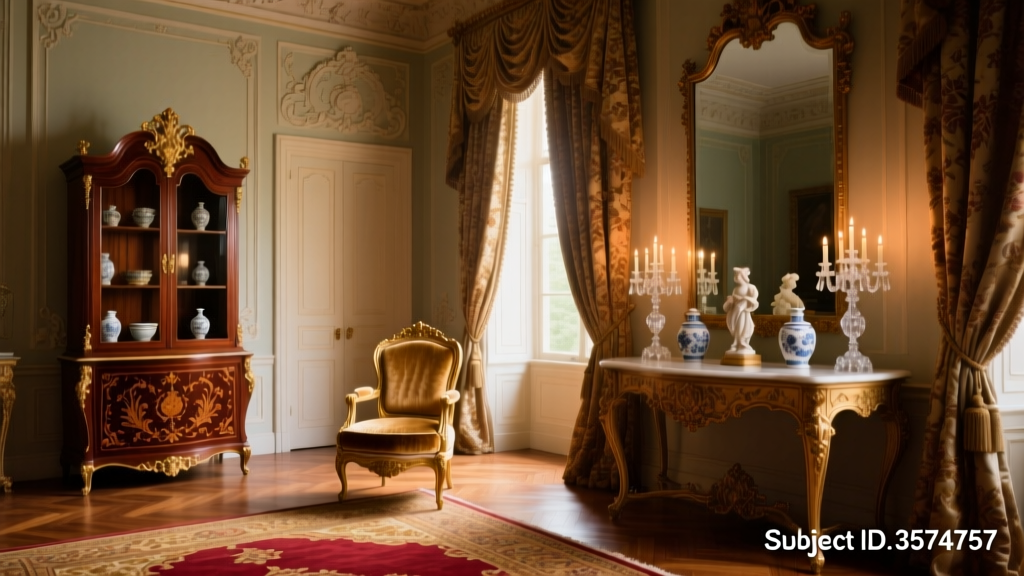
The 1928 Chippendale-Style Mahogany Breakfront Bookcase: Structural Integrity, Original Hardware, and Provenance of Serial Number 3574757
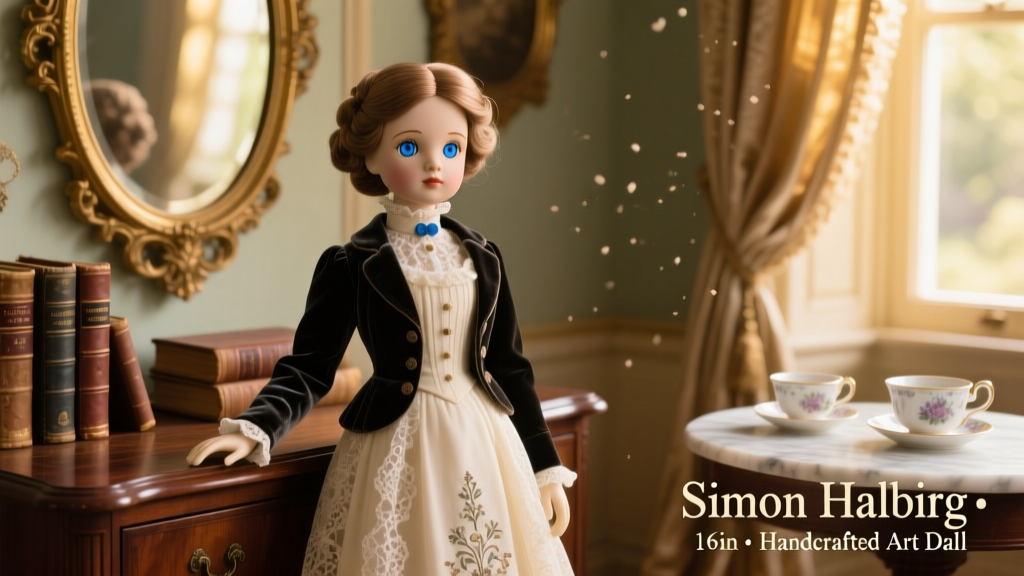
Simon & Halbig Adult Doll, 16-Inch Ball-Jointed Body with Blue Paperweight Eyes: Identification, Provenance, and Conservation Guidelines
Franciscan El Patio Cup and Saucer in Yellow After Dinner: History, Identification, and Restoration Guidance
Phoenix Glass Vase 'Fan Katydid' White Frosted 8-Inch: History, Identification, and Conservation Guidelines
The Spongeware Pitcher in Green and Brown: A Collector’s Guide to the 4½-Inch Antique Ceramic Vessel
Sterling Silver Horsehead Canes: History, Craftsmanship, and Collectibility
Scrimshaw Rolling Pin: Whalebone Core, Rosewood Handles, Knopped Turned Design — A 14-Inch Antiquarian Study
Satin Glass Powder Box: The Nude Kneeling Figure Holding a Garland — History, Identification, and Conservation