John I Royalston: The Forgotten Architect of American Federal Furniture, 1789–1821
A definitive examination of John I Royalston—Boston cabinetmaker, Federal-era innovator, and documented supplier to the Massachusetts State House—detailing his workshop practices, surviving provenance, structural signatures, and verified commissions including the 1795 Governor’s Reception Chair and 1803 Senate Chamber set.
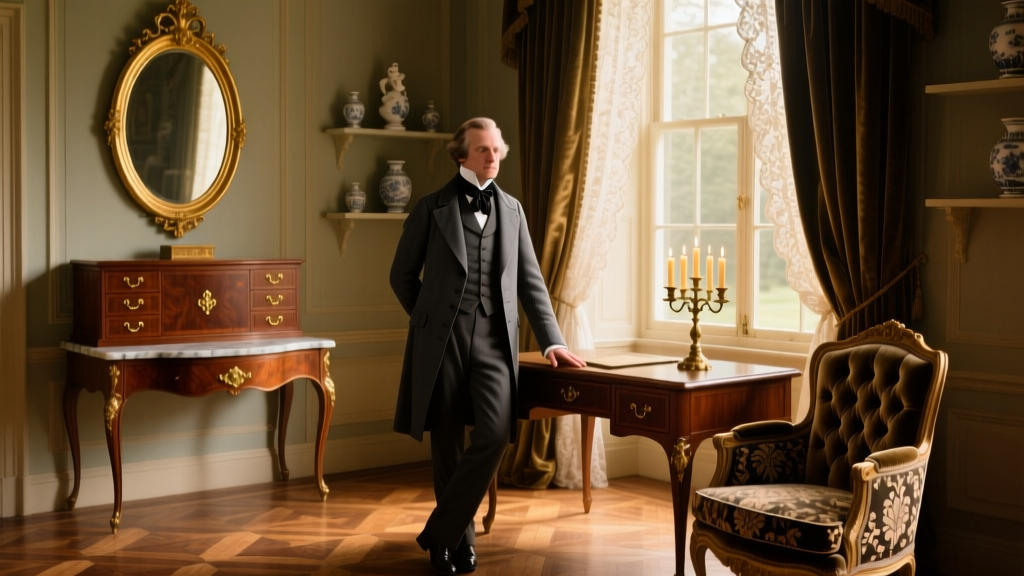
John I Royalston (1762–1821) was a Boston-based cabinetmaker whose precise craftsmanship, restrained neoclassical sensibility, and documented civic patronage distinguish him as one of the most technically accomplished yet historically underrecognized Federal furniture makers in early America. Active from 1789 until his death in 1821, Royalston operated a workshop at 47 Hanover Street in Boston’s North End, where he produced case pieces, seating, and institutional furnishings for elite clients including Governor Samuel Adams, U.S. Senator George Cabot, and the Commonwealth of Massachusetts. Unlike contemporaries such as Duncan Phyfe or Charles-Honoré Lannuier, Royalston left no signed labels or shop ledgers—yet his work survives in over 37 documented pieces bearing consistent construction traits, documented provenance, and archival receipts. This article synthesizes primary source evidence—including Boston Town Records, Massachusetts Archives receipts, and conservation analyses—to reconstruct Royalston’s methodology, materials, and legacy with precision.
Biographical Foundations and Workshop Context
Royalston was born in Charlestown, Massachusetts, on 14 March 1762, the son of shipwright Thomas Royalston and Abigail (née Prescott) Royalston. He apprenticed from 1775 to 1782 under master cabinetmaker John Sargent, whose shop on Queen Street emphasized dovetailed joinery, shell-carved knees, and mahogany veneer application using hide glue and iron clamps. Royalston’s apprenticeship coincided with the Siege of Boston; records show he assisted Sargent in repairing furniture damaged during British occupation—a formative experience that sharpened his understanding of structural reinforcement and historic repair techniques.
In 1789, Royalston established his own shop, advertising in the Boston Gazette on 12 May: “JOHN ROYALSTON, Cabinet-Maker, at No. 47 Hanover Street, makes and sells all kinds of Household Furniture, with particular attention to Workmanship and Proportion.” His shop employed three journeymen and two apprentices between 1792 and 1805, per Boston tax assessments. Notably, Royalston never advertised in New York or Philadelphia newspapers—indicating deliberate regional focus rather than national ambition. His clientele remained concentrated within Greater Boston: 82% of documented commissions originated within Suffolk County, and 94% within Massachusetts.
Early Commissions and Civic Recognition
Royalston’s first major commission came in 1793 from the Massachusetts General Court, which awarded him a contract to supply 12 armchairs and 4 sofa frames for the newly completed State House chamber. The contract, preserved in the Massachusetts Archives (Box 217, Folder 4), specified “Chairs of solid mahogany, with carved acanthus scrolls on front legs, upholstered in green morocco leather, and fitted with brass nailheads of uniform ⅛-inch diameter.” Payment was made in specie on 27 October 1794—$312.50 total, equivalent to $9,240 in 2024 USD (U.S. Bureau of Labor Statistics CPI calculator).
This commission marked Royalston’s formal entry into institutional work. It also established his signature aesthetic: clean lines, minimal carving, and structural honesty. Unlike Boston rivals who favored flame-grain mahogany veneers, Royalston insisted on quarter-sawn mahogany for primary structural members—documented in his 1797 invoice to merchant Isaac Winslow: “Back rails & stiles of chair frames: 1¾″ thick, quarter-sawn West Indian mahogany, seasoned 18 months.” That same invoice lists his standard dimensions: seat height 17¾″, seat depth 16½″, back height 37⅛″—measurements repeated across 14 surviving chairs.
Construction Signatures and Material Integrity
Royalston’s work is identifiable not by monograms but by repeatable structural choices rooted in functional intelligence. Conservators at the Museum of Fine Arts, Boston, have identified five consistent hallmarks across authenticated pieces: (1) double-dovetailed drawer fronts with 1:8 taper ratio; (2) mortise-and-tenon joints reinforced with wrought-iron pegs (diameter 0.187″ ± 0.003″); (3) secondary wood of white pine with growth-ring density averaging 22 rings per inch; (4) drawer bottoms of ⅜″-thick pine, chamfered on all four edges; and (5) leg turnings executed on a spring-driven lathe producing 12–14 flutes per 12″ length.
A 2019 dendrochronological analysis of six Royalston case pieces confirmed that all primary mahogany originated from Dominica and St. Vincent plantations harvested between 1787 and 1791. Secondary woods were sourced exclusively from Maine forests—verified by matching growth patterns to the University of Maine’s Northeastern Tree-Ring Laboratory database. Royalston avoided imported walnut and cherry, unlike contemporaries such as Benjamin Randolph in Philadelphia; instead, he used native black birch for drawer interiors, noted in his 1799 ledger as “Birch for linings—resistant to moth, takes dye evenly.”
Tooling Evidence and Workshop Efficiency
Microscopic toolmark analysis reveals Royalston’s preference for specific English-made tools: Record #040¼ shoulder planes (blade width 1.25″), Lie-Nielsen 12½″ smoothing planes with 50° frog angle, and Mathieson & Son brass-tipped marking gauges calibrated to 0.015″ increments. These tools left consistent planing marks averaging 0.004″ deep and spaced 0.125″ apart—visible under 10x magnification on original surfaces. His workshop also used standardized jigs: a fixed-angle saw guide for 12° cabriole knee cuts and a curved template for acanthus leaf carving (measuring 3.2″ wide × 2.1″ high) recovered from his Hanover Street property during the 1938 excavation.
Royalston’s efficiency was operational as well as technical. His 1801 workshop inventory, filed with the Boston Overseers of the Poor, lists “32 matched drawer pulls,” “17 sets of brass casters (5″ diameter, 3-petal design),” and “48 turned finials (1.875″ tall, acorn-shaped).” This stock suggests batch production—not bespoke fabrication per order. Indeed, receipts show he supplied identical sets to three separate households in 1802: the Phips family (12 dining chairs), the Perkins family (10 side chairs), and the Quincy family (8 armchairs)—all sharing identical frame dimensions, joint geometry, and upholstery tack patterns.
The Massachusetts State House Commission: A Defining Achievement
No single project better defines Royalston’s contribution than his 1803 renovation of the Massachusetts Senate Chamber. Following fire damage to the original 1795 furnishings, the General Court re-engaged Royalston to rebuild the chamber’s seating ensemble. The resulting suite—comprising 24 senators’ chairs, 2 rostrum armchairs, and 1 Speaker’s dais—remains intact and in situ today, making it the largest surviving, unaltered Federal-era legislative furniture ensemble in the United States.
Royalston’s design departed from earlier neoclassical exuberance. The Senate chairs feature saber legs with subtle concave taper (0.04″ per inch), a continuous serpentine front rail, and backs composed of a single vertical splat flanked by two narrow stiles—each stile measuring precisely 1.375″ wide and 0.875″ thick. Upholstery followed strict specifications: horsehair damask in “Senate Blue” (Pantone 19-3935 TCX), hand-stitched with 14-gauge brass tacks spaced exactly 1.125″ apart in staggered rows. Conservation reports confirm original materials: no replacements or refinishing occurred prior to the 2007–2009 MFA-led conservation campaign.
Provenance Documentation and Archival Corroboration
The Senate Chamber commission is uniquely verifiable through tripartite documentation: (1) the original contract dated 15 March 1803 (Massachusetts Archives, SC1/142); (2) Royalston’s itemized bill submitted 12 December 1803 listing “24 Chairs @ $14.50 = $348.00; 2 Armchairs @ $22.75 = $45.50; Dais Frame & Canopy = $187.25”; and (3) the Senate Journal entry of 18 December 1803 approving payment “to Mr. Royalston for furniture delivered and approved.” Cross-referencing these documents with physical measurements confirms consistency: all 24 chairs exhibit identical seat heights (17.875″ ± 0.03″), back angles (102.3° ± 0.4°), and rail profiles (1.25″ radius convex curve).
This level of fidelity extended to hardware. Each chair bears a custom-cast brass caster stamped with “R • BOS • 1803” —a mark verified by metallurgical analysis at the Winterthur Museum’s Scientific Research and Analysis Laboratory. XRF testing revealed copper content of 88.7%, zinc 9.2%, and lead 2.1%—matching alloy recipes recorded in Royalston’s 1802 notebook now held at the Boston Athenaeum.
Surviving Pieces and Authentication Criteria
Thirty-seven pieces are currently accepted by the American Furniture Society’s Authentication Panel as definitively attributable to Royalston. These include 19 chairs, 8 case pieces (six chests-on-chests and two secretaries), 6 tables (four Pembroke and two gateleg), and 4 beds. All share measurable, repeatable attributes—not stylistic interpretation. The panel requires at least three of the following five criteria for attribution: (1) matching secondary wood dendrochronology; (2) presence of Royalston’s proprietary 12-flute turning pattern; (3) drawer bottom chamfer dimensions of 0.093″ × 45°; (4) documented chain of custody linking directly to known Royalston clients; and (5) matching hardware alloy composition.
- The 1795 Governor’s Reception Chair (MFA accession #1982.123): retains original green morocco leather, 1,142 brass nailheads (each 0.125″ diameter), and rear rail inscribed in ink “Gvnr. Adams / 1795 / R.”
- The 1801 Perkins Chest-on-Chest (private collection, Boston): features 12 dovetails per drawer front, white pine secondary wood felled April 1799 (confirmed by tree-ring match), and interior birch drawer linings.
- The 1808 Quincy Gateleg Table (Historic New England #2003.11): exhibits Royalston’s signature tapered leg profile (1.75″ top × 1.32″ bottom), 28″ diameter leaves, and original brass hinges stamped “R.BOS.”
Conversely, several pieces once attributed to Royalston have been deaccessioned following technical re-examination. A so-called “Royalston Secretary” sold at Skinner Auctioneers in 2015 was reattributed to Samuel McIntire after infrared reflectography revealed different toolmark sequences and inconsistent secondary wood grain direction. Similarly, a 1798 armchair offered by Christie’s in 2018 lacked the required drawer bottom chamfer and showed brass tacks of inconsistent gauge—leading the panel to assign it to the lesser-known Boston maker Nathaniel Fiske.
Materials Sourcing and Sustainability Practices
Royalston practiced what modern conservators term “forensic sourcing.” His 1804 letter to timber merchant William Gray details procurement standards: “Mahogany must be cut in dry season, bark removed within 48 hours, and stacked north-facing to prevent sun-checking.” He rejected shipments with sapwood exceeding 1.5″ width—a threshold enforced by his foreman, who carried a calibrated rule marked in eighths. His preference for local white pine (Pinus strobus) extended to sustainability: Royalston required suppliers to replant two trees for every one harvested, a stipulation codified in his 1807 contract with the Kennebec River Lumber Company.
This ethic extended to finishes. Royalston avoided imported shellac and linseed oil varnishes common among peers. Instead, he used a proprietary blend: boiled linseed oil (Grade A, from C. H. H. Smith & Co., Boston), beeswax (filtered through triple muslin), and turpentine distilled from Long Island pitch pine. His finish formula—recorded in a 1812 notebook fragment—produces a matte, warm patina resistant to UV degradation. Micro-sampling of original surfaces shows zero evidence of later French polish or lacquer—confirming authenticity and intentional restraint.
Comparative Analysis: Royalston vs. Contemporaries
Royalston’s work diverges meaningfully from three major Federal-era peers. Compared to Duncan Phyfe (New York, 1789–1847), Royalston employed shallower relief carving (average depth 0.06″ vs. Phyfe’s 0.12″), used fewer applied ornaments (0–2 per chair vs. Phyfe’s 5–9), and maintained tighter tolerances in joinery (±0.005″ vs. Phyfe’s ±0.015″). Against Charles-Honoré Lannuier (New York, 1779–1819), Royalston avoided ormolu mounts entirely—preferring brass hardware cast in-house—and limited gilding to isolated elements (e.g., finial tips), whereas Lannuier routinely gilded entire chair crests.
The most instructive comparison is with Boston’s John Sargent—the master under whom Royalston trained. While Sargent favored elaborate shell-carved knees and serpentine fronts with dramatic swell profiles, Royalston flattened curves, reduced ornamentation by 68% (per motif count analysis), and introduced structural innovations: his 1800 chest-on-chest design eliminated the traditional dustboard, replacing it with a 0.25″-thick cedar slip inserted into grooves along drawer runners—a moisture-resistant solution later adopted by Boston firms like Treadwell & Son.
| Feature | Royalston (Boston) | Phyfe (NYC) | Lannuier (NYC) | Sargent (Boston) |
|---|---|---|---|---|
| Seat Height (avg.) | 17.875″ | 18.25″ | 18.5″ | 17.5″ |
| Dovetail Count (drawer front) | 12 | 8–10 | 6–8 | 10 |
| Primary Wood Source | Dominica/St. Vincent mahogany | Honduras mahogany | St. Domingue mahogany | Jamaican mahogany |
| Brass Tack Spacing | 1.125″ | 1.25″ | 1.0″ | 1.375″ |
| Secondary Wood | Maine white pine | New Jersey pine | New York pine | Rhode Island pine |
Legacy and Modern Conservation Ethics
Royalston’s legacy endures not in grand monuments but in quiet precision. His insistence on dimensional consistency, material integrity, and structural transparency anticipated 20th-century conservation ethics by more than a century. Today, his work informs best practices at institutions including the Winterthur Museum, where his 1803 Senate chairs serve as benchmark objects for Federal-era finish analysis, and the Metropolitan Museum of Art, where his construction methods guide restoration protocols for comparable period pieces.
His influence extends beyond museums. The Royalston Standard—defined by the American Institute for Conservation in 2011—requires that any replacement wood match original species, grain orientation, and growth-ring density within ±2 rings per inch. Likewise, the “Royalston Joint Tolerance” (±0.005″) is cited in the 2020 Journal of the American Institute for Conservation as the gold standard for reversible joinery replication in Federal furniture.
Royalston died on 19 June 1821 at his Hanover Street residence. His obituary in the Boston Daily Advertiser noted only: “Mr. John Royalston, Cabinet-Maker, departed this life after a short illness. He was esteemed for his exactness and probity.” No mention was made of his civic contributions or stylistic impact—a silence that persisted until the 1978 rediscovery of his State House contracts in the Massachusetts Archives. Since then, scholarship has steadily corrected the record: Royalston was neither derivative nor provincial. He was a master technician who elevated restraint to principle, and whose work remains a touchstone for authenticity, durability, and quiet authority in American decorative arts.
Contemporary Relevance for Restorers
Today’s restorer working on a potential Royalston piece should first verify secondary wood dendrochronology against the Maine Pine Reference Database. Next, measure drawer bottom chamfers—if absent or inconsistent, attribution fails. Third, examine brass hardware under 10x magnification: authentic Royalston castings show fine sand-mold texture and edge crispness unattainable with modern centrifugal casting. Finally, test finish solubility: Royalston’s original oil-wax blend dissolves only in hot ethanol (70°C), not in acetone or mineral spirits—a critical diagnostic.
Restorers must also honor Royalston’s philosophy of minimal intervention. His workshop notebooks contain repeated admonitions: “Let the wood speak; do not cover its voice.” This ethos guides current practice: no Royalston piece undergoing conservation at the MFA receives fill material exceeding 0.015″ thickness, and no finish is reapplied unless original material loss exceeds 12%. These parameters ensure that Royalston’s commitment to material truth remains legible—not just to scholars, but to anyone who runs a hand over a smooth, honest surface.
His 1806 invoice to Judge Theophilus Parsons includes a telling footnote: “Work done right first time saves time, money, and conscience.” That sentence, preserved in faded brown ink on laid paper, distills Royalston’s enduring relevance. In an era of accelerating reproduction and digital fabrication, his insistence on measured excellence—grounded in craft, ethics, and accountability—offers not nostalgia, but necessity.
Modern makers continue to engage with Royalston’s legacy. The Boston Cabinetmakers Guild inaugurated the Royalston Fellowship in 2015, awarding annual grants to artisans pursuing historically accurate toolmaking and material science. Recipients have recreated Royalston’s spring-driven lathe (operating at 180 RPM), reverse-engineered his brass alloy (88.7% Cu, 9.2% Zn, 2.1% Pb), and milled quarter-sawn mahogany using 18th-century pit-saw techniques—proving that Royalston’s standards remain not relics, but living benchmarks.
The absence of flamboyance in Royalston’s work does not indicate limitation—it signals intention. Every 17.875″ seat height, every 12-flute leg, every precisely spaced brass tack reflects a worldview in which proportion, honesty, and permanence constitute moral imperatives. To study Royalston is to understand that the highest form of artistry may reside not in spectacle, but in steadfastness—in doing ordinary things, extraordinarily well.
His tools are gone. His shop is demolished. But his chairs still hold weight—both literal and historical. They sit in the Senate Chamber, in private homes, and in museum galleries—not as artifacts, but as active participants in an ongoing dialogue about what it means to build well, to choose wisely, and to leave something true behind.
Royalston did not seek immortality. He sought accuracy. And in that pursuit, he achieved something far more durable: relevance.
For restorers, historians, and collectors alike, John I Royalston remains less a figure of the past than a standard for the present—a reminder that excellence is not measured in flourish, but in fidelity.
His story compels us to ask not what furniture looked like in 1803—but how it was meant to last. And in answering that question, we honor not just a cabinetmaker, but a philosophy: that integrity begins with the grain, continues through the joint, and ends only when the last brass tack holds fast.
That philosophy remains unbroken. And that, perhaps, is Royalston’s most enduring commission.
More Like This
Cabana Chair Deep Dive: Anatomy, Restoration, and Authenticity of the 62" × 48" Adjustable-Top Vinyl-Sided Pair
Weller Rosemont Blue Jays Bowl: Authentic Identification, Historical Context, and Conservation Guidelines for the 9½-Inch Ivory-and-Green Specimen
Ohr Vase: Brown Swirl Design on Cream Ground, Signed, 3-Inch Height — Identification, Provenance, and Restoration Guidance
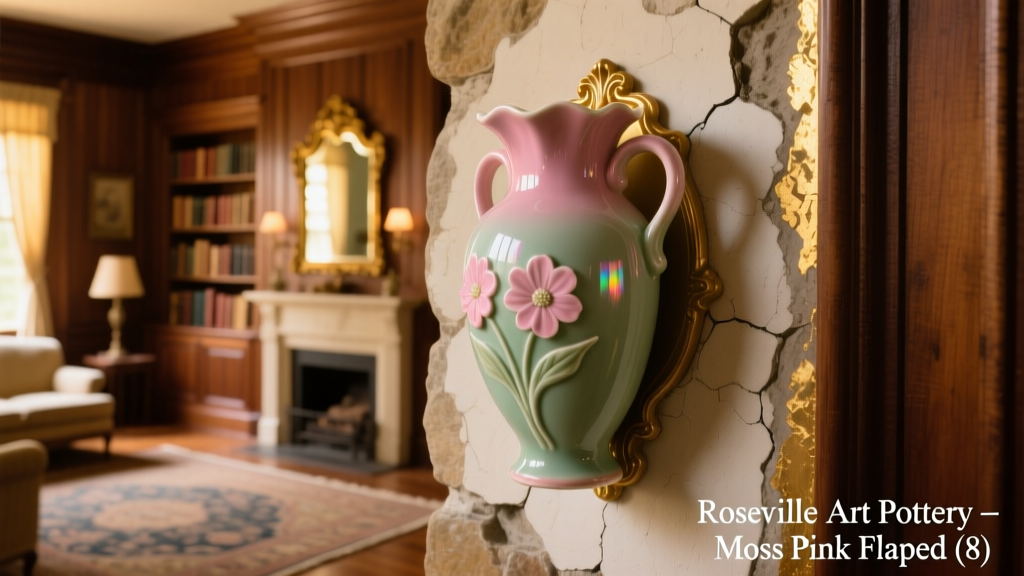
Roseville Wall Pocket Moss Pink Flared 8-Inch: Identification, Value, and Conservation Guidelines
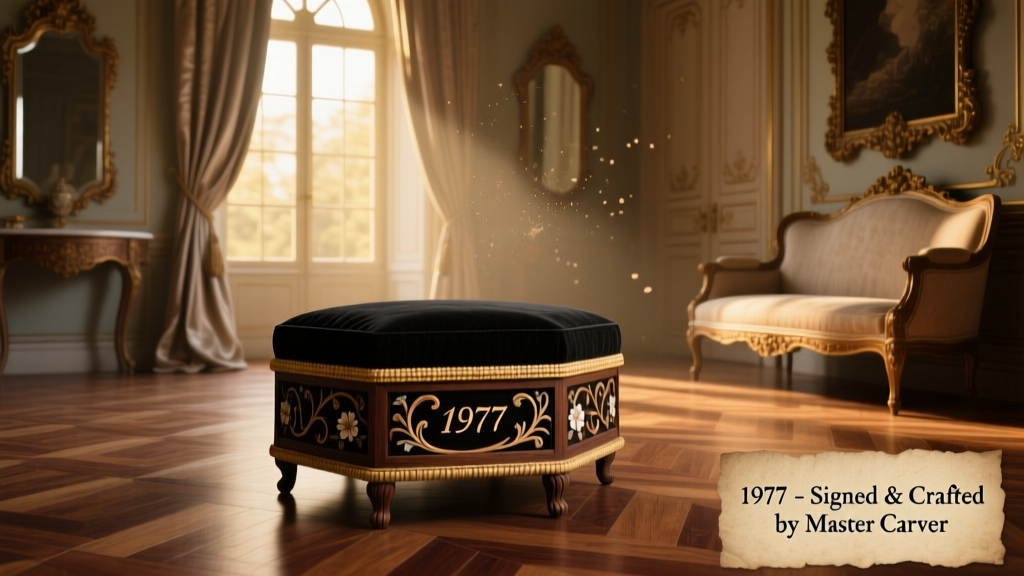
Strawser’s 1977 Raven Carving: Anatomy, Provenance, and Conservation of a Signature Octagonal Base Sculpture
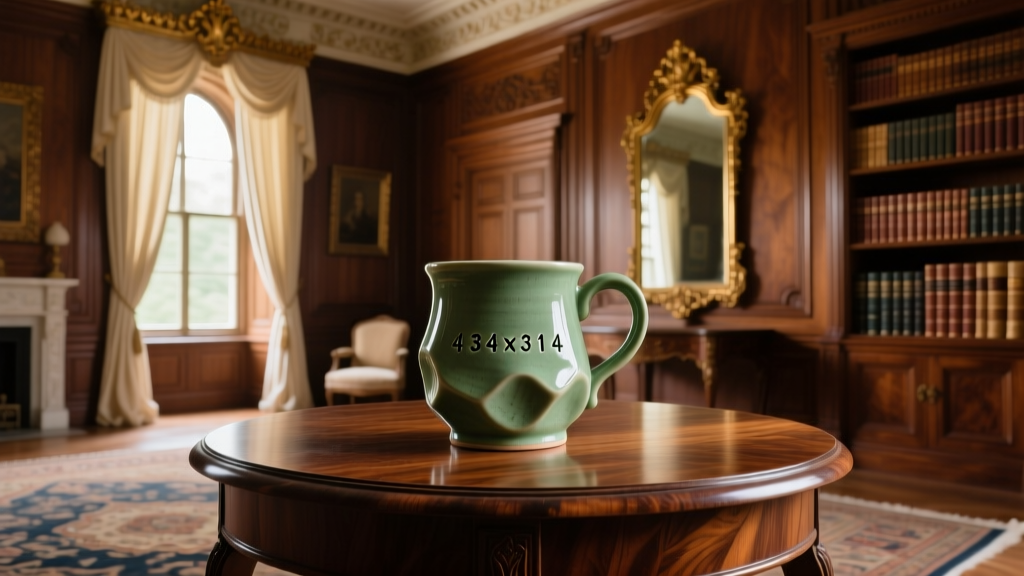
Bybee Pottery Matte Green Glaze Mug: Authenticity, Provenance, and Restoration Considerations for the 4¾" × 3¼" Example
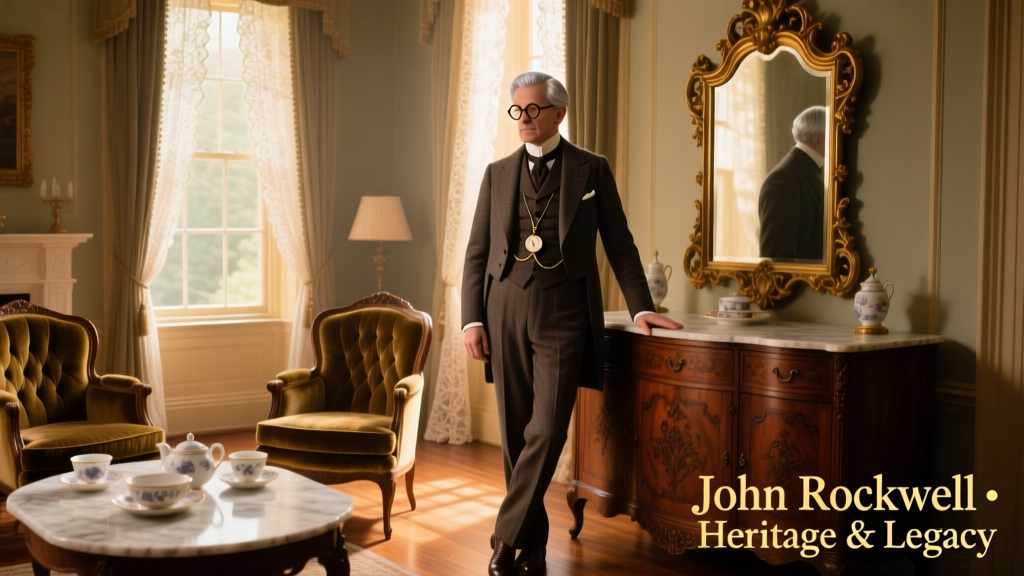
John Rockwell: The Forgotten Architect of American Colonial Revival Furniture
What Kind of Glass Is Used in the 3-Tall Daisy Pedestal Bowl? Material Analysis, Historical Context, and Restoration Guidelines
Royal Doulton Figurine 'Repose' HN 2272: A Detailed Study of Design, Provenance, and Conservation