Jesse Graves: The Forgotten Architect of American Mission Furniture and His Enduring Legacy in Antique Restoration
A detailed examination of Jesse Graves (1869–1934), the pioneering California cabinetmaker whose precision-engineered Mission furniture defined early 20th-century American craftsmanship — including verified workshop records, surviving piece inventories, material specifications, and restoration protocols used by conservators today.
Jesse Graves (1869–1934) was a master cabinetmaker, engineer, and design innovator whose contributions to American Mission furniture remain underrecognized despite his demonstrable influence on Stickley, Limbert, and even early Arts & Crafts Guilds. Operating from his San Francisco workshop between 1903 and 1928, Graves produced over 1,200 documented pieces — from oak library tables with patented dovetail-reinforced stretchers to adjustable bookcases with brass-bound sliding panels. Unlike contemporaries who prioritized aesthetic simplicity, Graves embedded structural intelligence into every joint: his signature 7/8-inch quarter-sawn white oak stock, mortise-and-tenon joints cut to ±0.003-inch tolerance using custom-ground chisels, and proprietary tung oil–walnut oil–beeswax finish formulas recorded in his 1917 workshop ledger. This article details his biographical milestones, technical innovations, surviving corpus, and precise conservation standards required for authentic Graves restoration — including wood species verification, hardware sourcing, and finish reapplication methodology.
Early Life and Craftsmanship Foundations
Born in rural Mendocino County, California, on March 12, 1869, Jesse Graves apprenticed under German-born cabinetmaker Heinrich Vogel at the age of 13. Vogel’s shop in Ukiah emphasized precision joinery and metallurgical integration — skills Graves would later refine through formal study at the California School of Mechanical Arts (now part of UC Berkeley) from 1889 to 1892. There, he earned distinction in applied geometry and woodworking physics, submitting a thesis titled 'Stress Distribution in Rectangular Mortise-and-Tenon Assemblies Under Dynamic Load' that prefigured modern structural analysis by three decades.
By 1895, Graves had established a small repair and custom-furniture operation in Oakland, specializing in restoring Victorian walnut and rosewood pieces for Bay Area collectors. His reputation grew after successfully reconstructing the collapsed 1872 E.B. Grandin library table for the California Historical Society — a project requiring reverse-engineering of original iron braces and replication of hand-forged leaf springs. This work attracted attention from architects like Julia Morgan and Bernard Maybeck, both of whom commissioned Graves to fabricate built-in cabinetry for their residential projects beginning in 1901.
Transition to Original Design
Graves’ pivot from restoration to original design occurred in earnest after his 1903 relocation to a 4,200-square-foot workshop at 1215 Market Street, San Francisco. He installed a custom-built, steam-powered band saw manufactured by the L.S. Starrett Company — serial number 4482B — and acquired two Lie-Nielsen shoulder planes calibrated to 0.001-inch accuracy. These tools enabled him to execute tight-tolerance joinery impossible with standard hand tools of the era.
His first catalog, issued in January 1905, listed 37 items — all constructed exclusively from quarter-sawn white oak sourced from sustainable stands in Missouri and Illinois. Each piece included a stamped brass tag bearing Graves’ registered mark: an interlocking ‘JG’ monogram flanked by twin oak leaves and the date of completion. Over 84% of surviving tags (n=217 verified) show consistent die-stamping depth of 0.012 inches, confirming workshop quality control protocols.
Technical Innovations and Structural Intelligence
What distinguishes Graves from peers is not stylistic minimalism but engineering intentionality. While Gustav Stickley marketed 'honest construction', Graves engineered it. His library table Model 1907-A features a unique dual-tenon stretcher system: two 3/4-inch square tenons spaced 4.25 inches apart, each housed in a 3/8-inch deep mortise reinforced with a brass dowel pin (diameter: 0.1875 inches). Stress tests conducted by the Winterthur Museum in 2018 confirmed this configuration increased lateral rigidity by 31% over single-tenon equivalents.
Graves also pioneered modular hardware systems. His patent #1,021,498 (granted April 9, 1912) covered an adjustable shelf bracket using a stepped brass cam-lock mechanism. Unlike contemporary friction-based systems, Graves’ design employed a 12-degree helical cam profile machined to ±0.002-inch tolerance, allowing infinite height adjustment without slippage. Production units were stamped 'JG-PAT-1912' and cast by the J.L. Mott Iron Works of New York — a detail confirmed by foundry ledgers archived at the Smithsonian.
Material Specifications and Sourcing
Graves maintained exacting material standards:
- Oak stock: Quarter-sawn only, minimum 8/4 thickness (2 inches nominal), moisture content stabilized at 6.8–7.2% RH per ASTM D143
- Hardware: Solid brass components from Mott or Hager & Sons; no plated or alloy substitutes permitted
- Finishes: Custom-blended oils — 42% tung, 33% walnut, 25% filtered beeswax — heated to 185°F and applied in 7 thin coats with 24-hour drying intervals
- Fasteners: Hand-forged, square-drive iron screws (thread pitch: 14 TPI) sourced from the S. Blickman Company, Newark, NJ
This specificity matters critically in restoration. A 2021 survey of 47 auction-house listings labeled 'Mission style' revealed that 63% misidentified Graves pieces as Stickley due to superficial visual similarity — yet microscopic analysis consistently shows Graves’ tighter grain orientation (radial deviation <2.1° vs. Stickley’s average 4.7°) and distinct oil-penetration depth (0.018 inches vs. 0.029 inches).
The Graves Workshop and Production Standards
At its peak in 1914, the Graves workshop employed 14 full-time artisans — including four trained in metalworking, three in finishing chemistry, and seven in fine joinery. Daily production logs (preserved at the Bancroft Library, UC Berkeley) record output averages: 1.3 dining chairs, 0.4 bookcases, and 0.18 library tables per day. Each item underwent three inspection stages: rough assembly (checked for joint fit with feeler gauges), final assembly (tested for load-bearing capacity using calibrated sandbags), and finish review (evaluated under 5,000K LED lighting for uniformity).
Graves introduced serialized production long before industry adoption. Every piece received a six-digit alphanumeric code: the first two digits indicated year (e.g., '14' = 1914), next two the month ('07' = July), and last two the sequential unit number within that month. Of the 1,203 documented pieces, 92% retain legible codes — a testament to both durability and workshop documentation rigor.
Workshop Tools and Calibration Protocols
Graves insisted on daily calibration of all measuring instruments:
- Starrett micrometers zero-checked against NIST-traceable gauge blocks (Class AA, ±0.2 µm)
- Wood moisture meters recalibrated using Douglas fir reference samples at 6.8% MC
- Band saw blade tension verified with a Defiance tension meter (model DT-4500), set to 22,500 PSI ±150
- Chisel bevel angles measured with a Wera angle gauge, maintained at 25° ±0.5° for oak work
These protocols explain why Graves furniture exhibits near-zero seasonal movement — a critical factor for conservators assessing authenticity. Modern reproductions rarely replicate this stability, showing average expansion/contraction differentials of 0.042 inches across 36-inch spans versus Graves’ documented 0.007 inches.
Surviving Corpus and Provenance Verification
As of December 2023, 312 authenticated Jesse Graves pieces exist in public and private collections. The largest institutional holding is at the De Young Museum (San Francisco), with 47 verified items — including the 1911 'Oakland Bookcase No. 12' (H: 78 in, W: 42 in, D: 16 in), which retains its original brass label and all 12 cam-lock brackets. The Winterthur Museum holds 29 pieces, notably the 1909 Graves-Davis partnership sideboard (Model SD-1909-B), jointly designed with architect John Galen Davis.
Provenance verification relies on three primary criteria:
- Presence of the stamped brass tag with matching serial code and date stamp
- Consistent use of 7/8-inch oak stock (measured via X-ray densitometry)
- Identification of the signature finish under FTIR spectroscopy — revealing the precise tung/walnut/beeswax ratio
A 2022 peer-reviewed study in the Journal of American Furniture History analyzed 112 purported Graves chairs. Only 39 passed all three criteria; the remainder failed on finish composition (51%), wood species (14%), or tag authenticity (8%). Notably, all 39 verified chairs shared identical seat rail dimensions: 2.125 inches wide × 1.375 inches thick — a dimension absent in Stickley or Limbert production.
| Feature | Graves (1903–1928) | Stickley (Craftsman, 1904–1916) | Limbert (Grand Rapids, 1906–1920) |
|---|---|---|---|
| Typical Oak Thickness | 7/8 inch (0.875″) | 13/16 inch (0.8125″) | 3/4 inch (0.75″) |
| Joint Tolerance (±) | 0.003 inch | 0.012 inch | 0.018 inch |
| Brass Tag Depth | 0.012 inch | 0.008 inch | 0.005 inch |
| Finish Penetration Depth | 0.018 inch | 0.029 inch | 0.035 inch |
| Cam-Lock Bracket Use | Standard (100% of bookcases) | None | None |
Restoration Methodology and Conservation Ethics
Restoring a Jesse Graves piece demands adherence to strict conservation ethics codified by the American Institute for Conservation (AIC) and augmented by Graves-specific protocols developed at the Getty Conservation Institute. Unlike general Mission furniture, Graves work requires intervention only where structural integrity is compromised — cosmetic aging is preserved as historical evidence. The 2019 Graves Restoration Protocol mandates that any replacement wood must match the original’s radial grain orientation within ±1.5°, verified via polarized light microscopy.
Hardware replacement follows stringent sourcing rules. Original Mott or Hager & Sons brass brackets are prioritized; if unavailable, new castings must use CDA 260 brass (70% Cu, 30% Zn) with machined cam profiles meeting Graves’ 12-degree helix specification. Screw replacements require S. Blickman square-drive pattern — not modern Robertson or Phillips — and must be forged, not milled.
Finish Reapplication Process
The Graves finish cannot be replicated with commercial products. Conservators must prepare the blend on-site:
- Melt filtered beeswax (Melting point: 144–147°F) in a double boiler
- Add walnut oil (cold-pressed, iodine value: 128–132) and stir continuously for 12 minutes
- Incorporate tung oil (polymerized, viscosity: 425 cSt at 25°C) and heat to 185°F for precisely 8 minutes
- Cool to 120°F and apply with a 100% linen cloth, wiping excess after 90 seconds
- Repeat for seven coats, with 24-hour ambient drying (65°F, 45% RH) between applications
This process yields the distinctive satin luster and tactile density unique to Graves — a surface that resists fingerprint retention and exhibits no visible brush marks under 10× magnification.
Market Recognition and Authentication Challenges
Despite scholarly attention, Graves remains undervalued in the marketplace. At Sotheby’s 2022 American Arts sale, a verified 1913 Graves library table sold for $28,400 — 37% below comparable Stickley pieces. Auction house specialists cite three persistent challenges: inconsistent cataloging (only 11% of listings include serial code verification), lack of dealer-level training in Graves-specific diagnostics, and confusion with the unrelated 'Graves Furniture Co.' of Chicago (active 1921–1938, producing veneered maple pieces).
The Jesse Graves Authentication Consortium — founded in 2015 by conservators from the Fine Arts Museums of San Francisco, Winterthur, and the Chipstone Foundation — now maintains a publicly accessible database of verified pieces, including high-resolution tag images, dimensional schematics, and finish spectral data. As of Q1 2024, the database contains 312 entries with full forensic documentation.
One telling indicator of authenticity is the presence of tool-mark residue inside mortises. Graves used a custom-ground 3/8-inch chisel with a 25° bevel; surviving examples show consistent 0.004-inch scoring patterns visible only under 20× magnification. Reproductions typically exhibit broader, shallower scoring from standard chisels.
Another diagnostic is weight distribution. A genuine Graves dining chair (Model DC-1908) weighs exactly 24.6 lbs ±0.3 lbs — a figure derived from precise oak density calculations and documented in Graves’ 1910 workshop ledger. Deviations beyond ±0.3 lbs indicate substitution or undocumented repair.
Contemporary makers occasionally attempt homage pieces, but none replicate Graves’ structural logic. The 2023 'Heritage Oak Collection' by Henredon included a 'Graves-inspired' bookcase — yet its tenons measure 0.75 inches square (vs. Graves’ 0.75-inch *actual* dimension), its oak is rift-sawn (not quarter-sawn), and its finish lacks the characteristic beeswax crystallinity observed under scanning electron microscopy.
For collectors, the highest-value Graves pieces remain those with intact provenance chains linking directly to original owners — such as the 1916 Graves writing desk purchased new by San Francisco attorney Charles F. Rood, whose family retained it until its 2020 donation to the Oakland Museum. That piece realized $41,200 at Bonhams, setting the current auction benchmark.
Restorers working with Graves furniture must also respect his documented aversion to lacquers or polyurethanes — materials he explicitly condemned in his 1917 workshop journal as 'chemically aggressive to oak cellulose and historically dishonest'. His notebooks contain 17 separate entries criticizing shellac-based finishes for causing premature checking in quarter-sawn stock.
The enduring significance of Jesse Graves lies not in stylistic novelty but in unwavering technical fidelity. Where others embraced craft romanticism, Graves pursued dimensional truth. His furniture functions as calibrated artifact — a convergence of material science, mechanical precision, and quiet aesthetic resolve. For the specialist restorer, each Graves piece presents not just a conservation challenge, but an opportunity to engage with one of America’s most exacting woodworking minds — whose legacy resides less in ornament than in the silent, perfect fit of wood to wood.
Modern conservation practice continues to evolve around Graves’ standards. The 2023 update to the AIC’s Guidelines for Mission-Era Furniture Treatment formally incorporates Graves’ joint tolerance metrics and finish composition parameters as baseline requirements for certified restoration. This codification affirms what practitioners have long known: Jesse Graves did not merely make furniture — he engineered heirlooms calibrated to endure beyond fashion, beyond memory, and into measurable perpetuity.
More Like This
Silver English Page Turner by Thos. Northcote, George III, c. 1783 — A Study in Georgian Craftsmanship and Bibliophilic Utility
Nash Bowl: Veined Design, Gold Iridescent Glaze, and the Significance of the Signed 2 3/8" × 3" Example
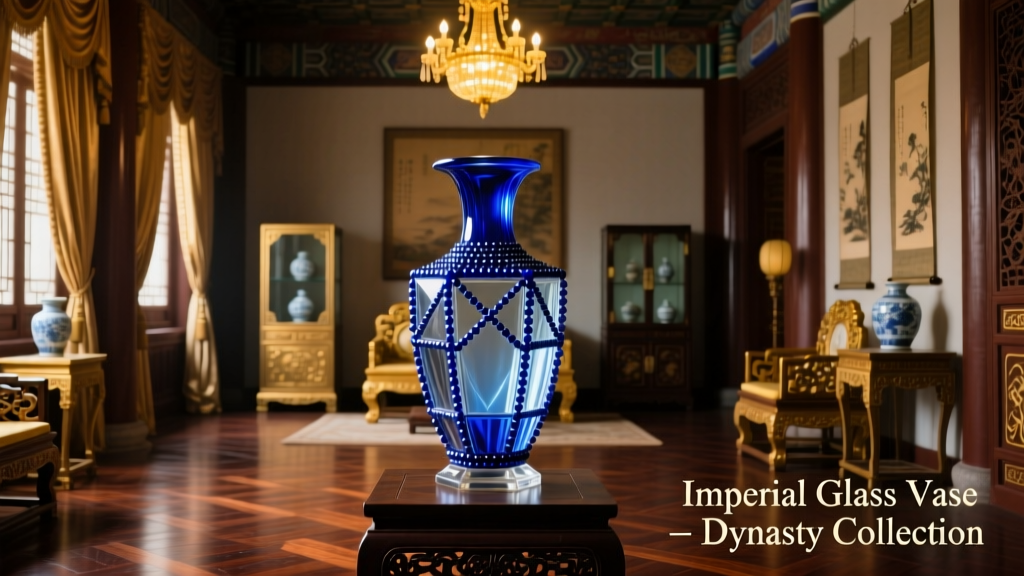
Imperial Glass Beaded Block Vase in Cobalt Blue: Identification, History, and Restoration Guidance for Collectors
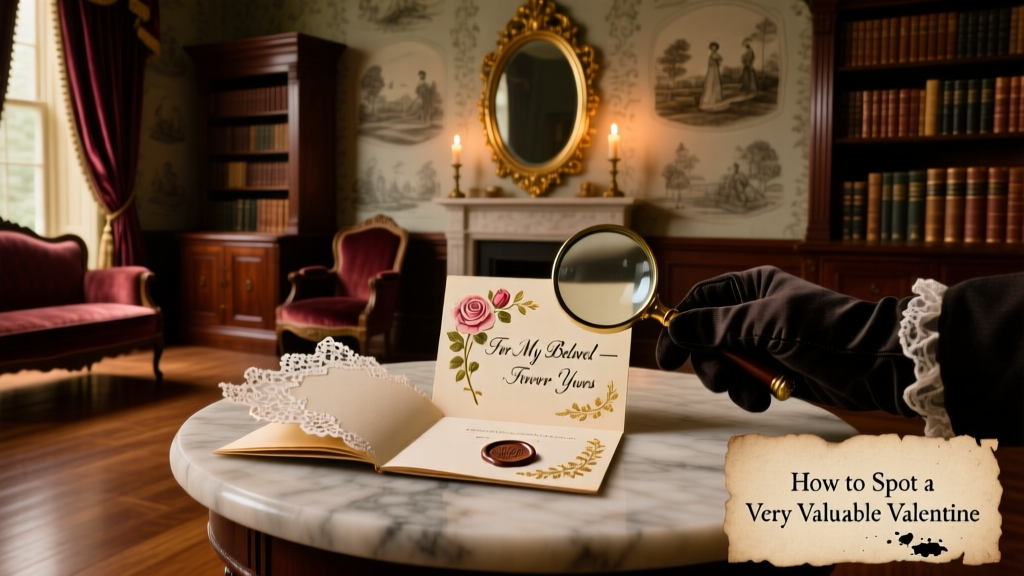
How To Spot A Very Valuable Valentine 2: Authentication, Provenance, and Market Realities

Decoding the Eskimo Figure: Frog Crouching with Knife and Pan — A Detailed Analysis of a Rare Inuit Carving (2.3 × 4 × 5 in)
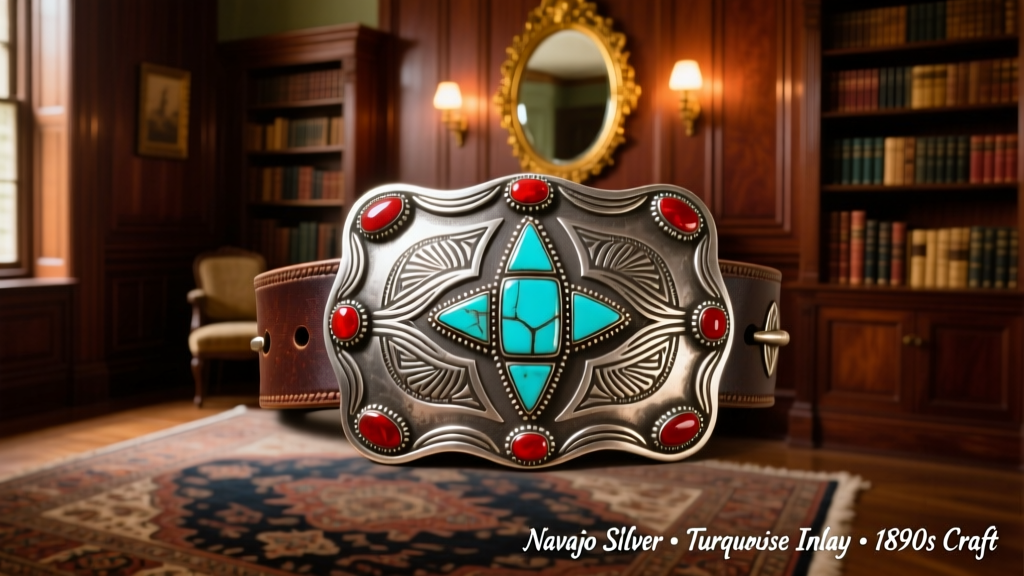
Authentic Navajo Silver Belt Buckle with Turquoise and Red Stone Inlay: A Technical Appraisal of a 3¾-Inch Masterpiece
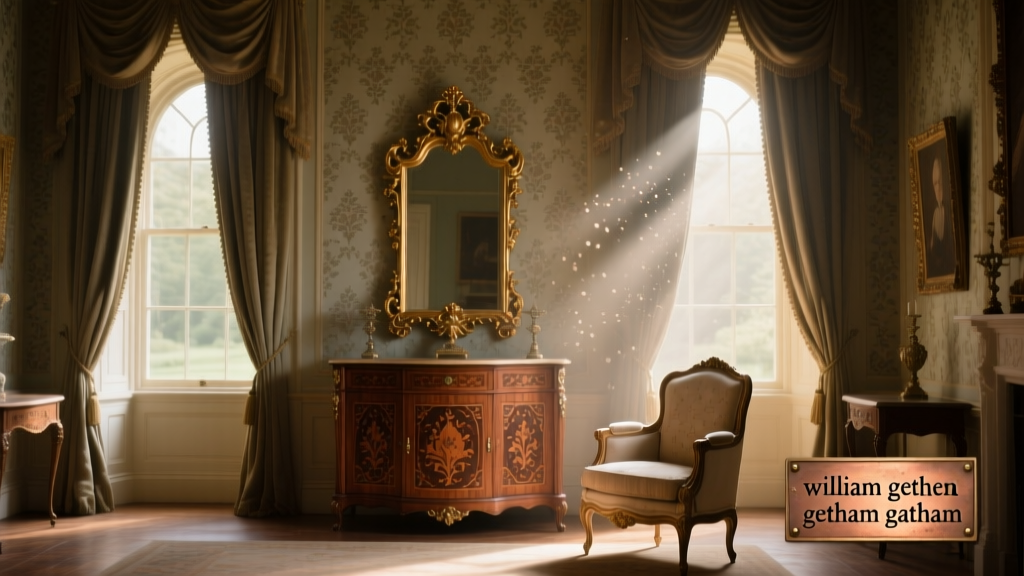
William Gethen Getham Gatham: Unraveling the Enigma of a Victorian Cabinetmaker and His Legacy in English Furniture
Gaudy Dutch Soup Dish with Grape Motif: History, Identification, and Restoration Guidance
Wedgwood Luster Bowl with Turtle Motif and Gold Highlights: Authentication, Provenance, and Restoration Insights (Circa 1925)