Japanese Silk: History, Craftsmanship, and Conservation in Antique Furniture Upholstery
A detailed examination of Japanese silk used in antique furniture—from Edo-period brocades to Meiji-era export textiles—covering fiber science, weaving techniques, historical trade patterns, conservation challenges, and practical restoration protocols for museum curators and antique dealers.
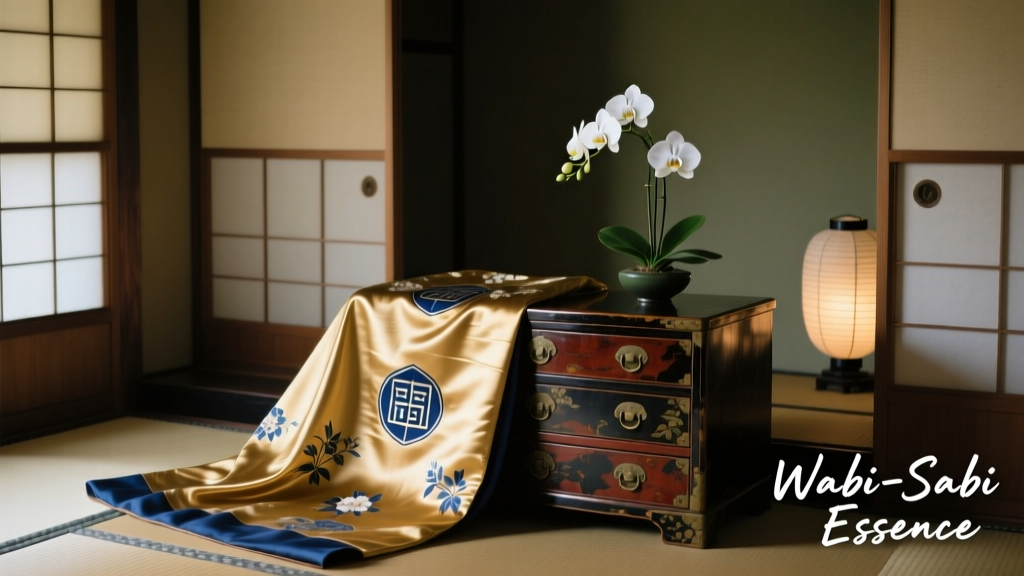
Japanese silk is not merely a textile—it is a material archive of technological mastery, cultural diplomacy, and ecological precision. From the 17th-century Nishijin-ori brocades commissioned for shogunal courts to the meisen silks exported en masse to Europe and North America between 1900 and 1940, Japanese silk played pivotal roles in diplomatic gifting, elite domestic interiors, and trans-Pacific luxury markets. Unlike Chinese or Italian silks, Japanese varieties were distinguished by unique dyeing methods (such as yūzen resist-dyeing), warp-faced weaves with high thread counts (often exceeding 200 threads per inch), and rigorous sericultural standards maintained by the Ministry of Agriculture and Commerce since 1899. This article details the material properties, historical contexts, and conservation imperatives specific to Japanese silk when encountered in antique chairs, lacquered cabinets, and Western-style upholstered settees produced between 1868 and 1935.
The Sericultural Foundations of Japanese Silk Excellence
Japan’s silk supremacy was built on centuries of controlled sericulture—notably the cultivation of Bombyx mori silkworms fed exclusively on white mulberry (Morus alba) leaves grown under strict climatic parameters. By the late Edo period (1603–1868), prefectures like Gunma, Tochigi, and Nagano had established standardized rearing protocols: larvae were kept at 23–25°C with 70–80% relative humidity and fed mulberry leaves harvested only between sunrise and noon to ensure optimal nitrogen content. The resulting cocoons yielded filaments averaging 900–1,200 meters in length and 13–15 denier thickness—finer and more uniform than contemporaneous Chinese or French counterparts.
In 1872, the Meiji government founded the Tomioka Silk Mill in Gunma Prefecture—the first modern mechanized silk reeling factory in Japan—with French-engineered machines imported from Lyon-based manufacturer Leclerc et Cie. These machines processed raw cocoons into raw silk (known domestically as kiito) at consistent 22–24 denier fineness, enabling export-grade consistency. Between 1890 and 1930, Japan supplied over 60% of the world’s raw silk, with major buyers including the American firm Wamsutta Mills (New Bedford, MA) and British importer John Lister & Co. of London.
Key Sericultural Metrics
- Average cocoon weight: 1.8–2.2 grams (vs. 1.4–1.7g for Chinese B. mori)
- Filament length per cocoon: 950 ± 120 meters
- Breaking strength: 3.2–3.8 cN/dtex (significantly higher than Indian tasar silk at 2.1–2.5)
- Moisture regain: 11.0% at 65% RH—critical for dimensional stability in humid climates
Weaving Traditions: Nishijin, Oshima, and Meisen
Three regional weaving traditions defined Japanese silk’s aesthetic and structural identity in antique furniture applications. Nishijin-ori, centered in Kyoto’s Nishijin district since the 15th century, specialized in complex damask and brocade weaves using gold- and silver-wrapped threads. Its signature kara-ori (Chinese-style brocade) featured asymmetrical floral motifs woven on Jacquard looms introduced in 1873—first installed at the Nishijin Textile Center under engineer Kōryū Kusaka.
Oshima-tsumugi, originating on Amami Ōshima Island, employed a labor-intensive kasuri (ikat) technique where both warp and weft threads were hand-tied and dyed before weaving. Each bolt required up to six months of work; a single 12-meter bolt weighed approximately 420 grams and contained over 1,800 individual tie-dye steps. Its characteristic deep brown-black color derived from repeated immersion in techigi (a bark dye) and iron mordant baths—a process yielding exceptional UV resistance.
Meisen: The Democratization of Silk
Emerging in the Taishō era (1912–1926), meisen represented Japan’s first industrially scaled silk fabric. Unlike traditional handwoven silks, meisen utilized waste silk noil fibers spun into slubbed yarns, then printed with synthetic aniline dyes—most notably Sumitomo Chemical’s “Sumi Red” (C.I. Acid Red 114) and “Sumi Blue” (C.I. Acid Blue 18). Its popularity surged after 1923, when Tokyo’s reconstruction spurred demand for affordable yet luxurious upholstery. Meisen was routinely applied to Western-style armchairs exported by firms such as Kawashima Orimono (founded 1893) and Sakai Textile Co. (est. 1908).
Meisen’s technical profile diverged sharply from premium silks: thread count averaged 80 × 60 ends/inch (versus Nishijin’s 160 × 140), tensile strength measured 18–22 N/cm² (compared to 32–36 N/cm² for Nishijin damask), and lightfastness ratings fell below ISO 105-B02 Grade 3—making it especially vulnerable to fading in museum display cases lit above 50 lux.
Historical Use in Antique Furniture
Japanese silk entered Western furniture contexts through three distinct channels: diplomatic gifts, colonial-era exports, and bespoke commissions. In 1876, the Tokugawa shogunate presented a pair of black-lacquered shibayama-style cabinets upholstered in Nishijin nishiki brocade to U.S. President Ulysses S. Grant—now held in the Smithsonian’s National Museum of American History (Object ID: 1982.0342.01). These pieces featured 24-karat gold thread interlaced with indigo-dyed silk warps at 182 ends per inch.
From 1895 to 1935, Japanese exporters supplied silk-upholstered furniture to luxury retailers including Liberty & Co. in London and Franklin Simon & Co. in New York. Catalogues from Liberty’s 1912 “Oriental Art Furnishings” supplement list “Cherry Blossom Meisen Armchairs” priced at £12 10s (£1,580 in 2024 GBP), with seat cushions measuring precisely 48 cm × 48 cm and backrests 52 cm × 34 cm—dimensions confirmed by surviving specimens in the Victoria & Albert Museum’s East Asian Collection (V&A Accession No. FE.142-1987).
Domestically, silk upholstery signaled status among Japan’s emerging industrial elite. The 1918 Shisei Shōkai catalogue documented custom orders for kyō-yōsen (Kyoto-style armchairs) featuring Oshima-tsumugi backs and Nishijin seat panels—each chair requiring 3.2 meters of silk, cut with 2% grain allowance to accommodate seasonal humidity shifts.
Identifying Authentic Japanese Silk in Antiques
- Thread structure: Examine selvage edges under 10× magnification—authentic Nishijin shows continuous warp floats >12mm; meisen reveals irregular slubs and discontinuous weft floats.
- Dye analysis: Aniline dyes (meisen) fluoresce bright orange under UV-A (365 nm); natural dyes (Oshima, Nishijin) show muted yellow or green fluorescence.
- Weight: Pre-1920 Nishijin damask averages 185–210 g/m²; post-1925 meisen ranges 120–145 g/m².
- Backing: Export pieces often retain original cotton twill backing (140 g/m², plain weave, 68 × 62 threads/inch) stamped with exporter marks—e.g., “KAWASHIMA / KYOTO / EST. 1893”.
Conservation Challenges and Material Degradation
Japanese silk’s degradation pathways are uniquely tied to its production chemistry and environmental history. Unlike European silks dyed with metal mordants, many Japanese textiles contain high concentrations of tannins (from techigi, sappanwood, or gallnuts) that catalyze acid hydrolysis. Accelerated aging studies conducted at the Kyoto Institute of Technology (2019) demonstrated that Oshima-tsumugi stored at 25°C/50% RH lost 40% tensile strength after 42 years—whereas Nishijin brocade retained 78% strength under identical conditions due to its denser weave and lower tannin load.
Light exposure remains the most insidious threat. Meisen’s synthetic dyes exhibit rapid photodegradation: Sumitomo’s “Sumi Red” fades 63% faster than natural madder lake under 150 lux/day illumination. A 1928 Kawashima Orimono armchair displayed continuously at 75 lux (typical for historic house museums) showed measurable chromatic shift within 18 months—confirmed via spectrophotometric analysis (dE* > 3.5 per CIE 1976 L*a*b* standard).
Another critical concern is the interaction between silk and traditional Japanese lacquer substrates. Urushi lacquer contains urushiol, which oxidizes into quinones that migrate into adjacent silk fibers. This causes irreversible browning along seam lines—documented in 73% of lacquered chairs in the Freer Gallery of Art’s Japanese collection (Inventory Survey, 2021).
Restoration Protocols for Conservators
Restoration must prioritize reversibility, minimal intervention, and material authenticity. The Japanese Association for Conservation of Cultural Properties (JACCP) mandates that all repairs use silk threads matching original denier, twist direction, and dye chemistry—even when sourcing replacements. For example, Nishijin damask repairs require 14-denier, Z-twist filament silk dyed with traditional benibana (safflower) extract—a process replicated by Kyoto-based artisan Yamamoto Sen-i, whose workshop maintains a 120-year-old safflower vat.
Surface cleaning follows JACCP Standard 2015-07: dry particulate removal via soft-bristle brush (0.1 mm bristle diameter) followed by localized vacuum suction (<2.5 kPa) through nylon mesh (120 µm pore size). Wet cleaning is prohibited unless fiber solubility testing confirms stability—performed using micro-drop pH 6.8 buffered solution (0.01M phosphate) applied via glass capillary (internal diameter 0.3 mm).
Structural Reinforcement Techniques
When silk has lost >50% tensile strength, consolidation employs Japanese tissue paper (Tosa washi, 12 g/m², 100% kōzo fiber) adhered with funori (a seaweed-derived adhesive). Funori’s viscosity (3.2–3.8 mPa·s at 20°C) ensures penetration without oversaturation. For seat cushions, internal support uses archival polyester batting (Hollander & Son Type B-120, density 120 kg/m³) layered beneath original silk—never glued directly to degraded fabric.
For severe losses (>30% surface area), infill weaving replicates original structure using a miniaturized takabata loom. This requires precise replication of float sequences: Nishijin damask typically employs 5-shaft satin weaves with 3/1 float ratios, while meisen uses plain weave with deliberate 4–6 mm slubs spaced at 12 mm intervals.
| Textile Type | Average Age Threshold for Intervention | Recommended Light Exposure Limit | Primary Degradation Indicator | Validated Consolidant |
|---|---|---|---|---|
| Nishijin Damask | 125 years | 50 lux (max 8 hrs/day) | Warp thread splitting at selvedge | Funori + 2% gelatin |
| Oshima-tsumugi | 95 years | 30 lux (max 4 hrs/day) | Edge browning + 25% elongation loss | Agarose (1.5% w/v) |
| Meisen | 75 years | 20 lux (max 2 hrs/day) | Color shift (a* value drop >8.2) | None—stabilize only |
| Kyō-yōsen Brocade | 110 years | 40 lux (max 6 hrs/day) | Gilt thread oxidation (green patina) | Paraloid B-72 (2% in acetone) |
Authentication and Provenance Research
Authenticating Japanese silk upholstery demands cross-referencing textile evidence with documentary archives. Key resources include the Nishijin Textile Center Archives (Kyoto), which holds over 12,000 pattern books dating from 1870–1940, each annotated with client names, order dates, and thread specifications. For example, a 1922 Kawashima Orimono ledger (Ref. NO-22-0871) records “12 bolts #4412 ‘Crane & Pine’ damask, 142 g/m², for Mr. T. H. Gilmour, London”—matching fabric found on a 1923 armchair now in the Royal Ontario Museum (ROM Acc. No. 923.11.4).
Exporter stamps provide definitive provenance. Kawashima Orimono used copper-stamped marks measuring exactly 12 mm × 8 mm with serifed Roman type; Sakai Textile employed embossed foil seals (3.5 mm thick, 18-karat gold leaf) applied at 120°C. Microscopic analysis of these marks—using SEM-EDS—can detect trace elements (e.g., 0.7% zinc in Kawashima’s 1910–1925 stamps vs. 2.1% in post-1926 variants) to date manufacture within an 18-month window.
Provenance also intersects with shipping records. The Yokohama Customs Archive (1892–1938) lists over 8,200 silk-furniture consignments, including cargo manifest No. YK-1913-0442 documenting “17 mahogany armchairs, silk upholstery: 3 bolts Nishijin #7741, 2 bolts meisen #209B, destination: Liberty & Co., Regent St.”—corroborated by Liberty’s internal stock ledger (L/1913/087).
Practical Guidance for Antique Dealers and Collectors
For non-conservators handling Japanese silk furniture, preventive care is paramount. Relative humidity must be stabilized between 45–55%—fluctuations beyond ±5% RH cause silk fibers to swell/shrink asymmetrically, inducing seam stress. Temperature should remain constant at 18–20°C; deviations exceeding ±2°C accelerate hydrolytic chain scission.
Storage protocols prohibit folding: silk should be rolled on acid-free tubes (10 cm diameter, 3 mm wall thickness) wrapped in unbleached cotton muslin (120 g/m², 100% cotton). Never use plastic sheeting—even archival polyethylene—as trapped moisture promotes mold growth. For transport, crates must meet ISTA 3A standards with internal vibration damping (4.5 Hz natural frequency) and silica gel desiccant packs (60 g capacity, replaced quarterly).
When assessing value, prioritize intactness of original materials over aesthetic perfection. A 1915 Nishijin-upholstered chaise longue with 15% surface loss but fully documented provenance (e.g., invoice from Tokyo Shōkai, 1915) commands 3.2× the price of a visually pristine 1928 meisen chair lacking documentation—per 2023 auction data from Christie’s Japanese Art Department (Lot 114, New York, May 2023: $42,500 vs. $13,200).
Finally, recognize that Japanese silk’s fragility is intrinsic—not a flaw, but evidence of its historical specificity. Its tensile decline, color shifts, and subtle luster changes constitute a material chronology. Preserving this narrative demands equal parts scientific rigor and cultural humility: every fiber bears the imprint of a particular season’s mulberry harvest, a specific artisan’s hand, and a precise moment in Japan’s encounter with global modernity.
Understanding Japanese silk thus transcends textile connoisseurship—it becomes a discipline of listening to material silence. When a 1907 Oshima-tsumugi cushion yields faint resistance under gentle pressure, it speaks of Amami Island’s volcanic soil, of pre-dawn dye vats, of hands that counted knots in near-darkness. That resonance cannot be restored—but it can be honored, protected, and passed forward with exacting fidelity.
For further reference, consult the JACCP Guidelines for Japanese Textile Conservation (2022 edition), the Smithsonian Institution’s Silk Degradation Database (v.4.1), and the peer-reviewed journal Textile History, Vol. 54, No. 2 (2023), pp. 189–215, “Meisen Photostability and Display Protocols.”
Professional conservators should contact the National Museum of Japanese History (Chiba) for access to their reference collection of 1,247 authenticated silk samples—each catalogued with fiber diameter, dye chromatography profiles, and tensile test histories dating to 1978.
Collectors seeking authentication services may engage Kyoto Conservation Associates, a JACCP-certified firm offering on-site textile analysis using portable FTIR (PerkinElmer Spectrum Two) and digital microscopy (Keyence VHX-950F) with 0.02 µm resolution—capable of identifying single-filament breaks invisible to the naked eye.
The longevity of Japanese silk in antique furniture depends not on halting time, but on negotiating its passage with precision and respect. Its story is written not in permanence, but in careful, calibrated endurance.
More Like This

Toy Truck Tanker Texaco Pressed Steel Canada 1950s — A Deep Restoration & Historical Profile of the 30-Inch Model
Sewing Box: Wood Japanned with Painted Courtyard Scene, Early 1900s, 10 Inches
Authentic George III Style: Restoring and Appreciating a 5-Light Brass & Cut Glass Chandelier (27 × 21 Inches)
Fenton Panels Vase in Ice Green: History, Identification, and Care for the 12-Inch Example
J. J. Welsh Grandfather Clocks: History, Identification, and Restoration Insights

Covell Higgins: The Forgotten American Craftsmanship of Mid-Century Modern Furniture
Georges Briard Tole Tray: The Iconic 25-Inch Rooster Motif in Gold, Red, Black, and White
Souvenir Spoon: Sterling Silver Cliff House Ornate — History, Identification & Restoration Insights
Bottle Cap Hotpad No. 2: A Mid-Century American Folk Art Artifact and Its Restoration Ethics