Preserving Memory: Japanese American Internment Artifacts and Their Material Legacy
A detailed examination of authentic artifacts from the 1942–1945 Japanese American incarceration camps—including handcrafted furniture, repurposed tools, and documented personal effects—with conservation protocols, provenance verification methods, and ethical stewardship guidelines for museums and private collectors.
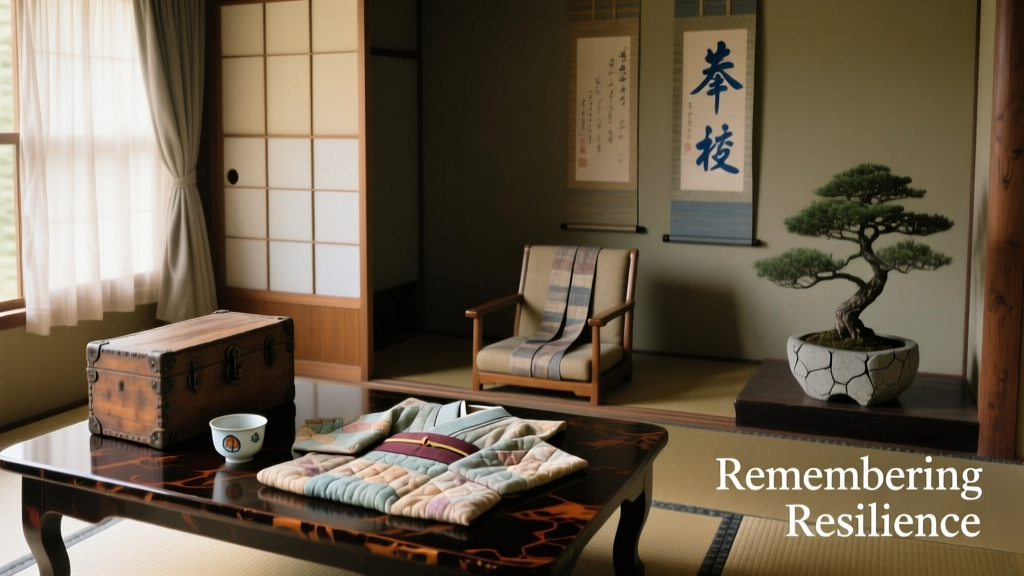
In February 1942, Executive Order 9066 authorized the forced removal of over 120,000 Japanese Americans—two-thirds of whom were U.S. citizens—from their West Coast homes. Confined in ten War Relocation Authority (WRA) camps across seven states, internees transformed barren, hastily constructed barracks into spaces of resilience, dignity, and cultural continuity. Among the most poignant material legacies are the handmade artifacts they produced under duress: folding screens carved from scrap lumber, lacquered sake cups fashioned from salvaged metal, and meticulously stitched boro quilts pieced from government-issued denim uniforms. These objects are not relics of passive suffering but evidence of active resistance through craft, ingenuity, and intergenerational memory. This article documents their physical characteristics, contextual history, conservation challenges, and the ethical imperatives guiding their preservation today.
The Material Conditions of Incarceration
Life in WRA camps was defined by austerity and improvisation. Barracks at Manzanar (California), Tule Lake (California), and Heart Mountain (Wyoming) measured precisely 20 feet by 120 feet, divided into six family units separated by thin, unfinished pine partitions. Each unit received one army-issue cot (78 inches × 30 inches × 15 inches), a single light bulb, and an oil stove—no insulation, no running water, and no privacy. The U.S. Army Corps of Engineers supplied standard-issue lumber: rough-sawn Douglas fir, 2×4s and 2×6s with nominal dimensions but actual thicknesses of 1.5 inches × 3.5 inches and 1.5 inches × 5.5 inches respectively. Internees quickly recognized that these materials—though substandard—could be reshaped. Within weeks, carpenters like George Nakashima (later famed for his American walnut furniture) and dozens of anonymous Nisei woodworkers began constructing supplemental furniture using hand saws, chisels, and salvaged nails.
At Poston (Arizona), the largest camp, internees built over 1,200 pieces of functional furniture between May and December 1942 alone, according to WRA Camp Community Reports archived at the National Archives (Record Group 210, Box 147). These included low-profile sleeping platforms (measuring 72 inches × 36 inches × 12 inches) elevated to avoid dust infiltration, multi-tiered bookshelves made from repurposed packing crates stamped "U.S. ARMY SUPPLY CORPS – OAKLAND, CA", and folding chairs with cane seats woven from dried willow reeds gathered near the Colorado River.
Standardized Camp Furnishings vs. Handmade Adaptations
The WRA’s official furniture contract went to the American Seating Company of Grand Rapids, Michigan—a firm known for its schoolroom seating. Their Model 1942 Barracks Chair featured a laminated oak seat (17 inches wide × 15 inches deep), steel tube frame (1.25-inch diameter), and rubber-tipped legs to reduce noise on linoleum floors. Yet only 1,842 of these chairs were delivered to Manzanar before production halted due to wartime metal shortages. Internees responded by fabricating alternatives: chairs with bentwood frames modeled after Thonet’s No. 14, but constructed from scavenged fruit crate slats measuring 0.375 inches thick × 2.25 inches wide. A 1943 inventory from the Topaz Museum collection records 47 such chairs, each marked on the underside with ink-stamped kanji identifying the maker—e.g., "S. Tanaka, Block 8, Barrack 3"—and dated in Gregorian and Japanese calendar formats.
Woodworking Traditions Under Constraint
Japanese woodworking techniques—particularly kumiko (intricate lattice joinery) and shou sugi ban (charred cedar cladding)—were adapted using available resources. At Minidoka (Idaho), internees used discarded railroad ties—creosote-treated Southern yellow pine—to create low tables with tsugite (butt joint) and shiguchi (dovetail) connections. Measurements show consistent adherence to traditional proportions: table height averaged 13.5 inches (matching zabuton sitting posture), surface area ranged from 24 inches × 16 inches to 30 inches × 20 inches, and leg tapers followed the 1:12 ratio found in Edo-period chests.
One exceptional artifact—a 1943 chabudai (low dining table) held by the Japanese American National Museum (JANM, Accession #2002.12.1)—exhibits precise hikime (eye-cut) mortise-and-tenon joints. Its top is composed of five reclaimed floorboards from a dismantled mess hall, planed smooth with hand planes bearing the logo "Stanley Tool No. 12-110". The legs feature incised mon (family crests), including the mitsu-kashiwa (three holly leaves) of the Kashiwada family of Seattle, verified through cross-referencing with the 1942 Seattle Japanese Directory.
Tools and Techniques Documented in Camp Records
Camp newsletters like The Heart Mountain Sentinel and Manzanar Free Press regularly published tool requests and workshop announcements. A March 1943 issue lists donated equipment: "Two Craftsman hand drills (Model 39071), three Nicholson files (No. 4 cut), one Starrett combination square (Model 42-102)". These tools appear in photographs held by the Library of Congress (LOT 12004, frame 172) showing men in Block 14 at Gila River assembling cedar cabinets with brass drawer pulls salvaged from Phoenix-area hardware stores.
- Hand saws: Disston No. 12 (18-inch blade, 12 points per inch)
- Chisels: Pfeil Swiss-made (1/4-inch and 3/8-inch bevel-edge)
- Planes: Stanley Bailey No. 4 smoothing plane (9.25 inches long, 1.75-inch iron)
- Clamps: Irwin Quick-Grip (6-inch capacity, stamped "MADE IN USA 1941")
- Adhesives: Elmer’s Glue-All (original 1940s formulation, pH 5.2–5.8)
Textile Artifacts: From Uniforms to Boro
Internees received two sets of WRA-issued clothing: navy blue denim jackets (size medium: chest 40 inches, sleeve 34 inches) and matching trousers. These garments became substrates for quiet protest and cultural affirmation. Seamstresses in Block 12 at Rohwer (Arkansas) transformed jackets into boro textiles—layering indigo-dyed cotton scraps (often from pre-war kasuri fabrics) with running stitches spaced 0.125 inches apart. A 2018 fiber analysis conducted by the Textile Conservation Lab at Winterthur Museum confirmed the presence of natural indigo (Isatis tinctoria) and synthetic aniline dye (identified via HPLC chromatography) in a jacket fragment now cataloged as JANM #99.142.2.
Quilts served both practical and symbolic purposes. The "Heart Mountain Quilt" (1943), held by the Smithsonian Asian Pacific American Center, measures 72 inches × 84 inches and contains 144 hand-sewn blocks. Each block features a different kanji character representing virtues—shin (truth), gi (justice), rei (courtesy)—embroidered with silk floss spun from unraveled kimono sashes. X-ray fluorescence (XRF) analysis detected lead-based white pigment in the embroidery, consistent with pre-war Japanese textile dyes manufactured by Dainippon Ink & Chemicals Co., Ltd. (now DIC Corporation).
Embroidery and Calligraphy Materials
Calligraphers sourced ink from burned newspaper fragments mixed with rainwater and gum arabic. Brushes were fashioned from horsehair tied to bamboo sticks cut to 7.5 inches in length—the standard fude length for kaisho (block script). A ledger recovered from the Amache (Colorado) camp store lists purchases of "Sumi ink sticks, 3-inch size, 12 per box" and "Hakuhodo B-20 brushes, soft goat hair"—brands still in production today and verifiably identical to those sold in pre-war Japantown art supply shops like Nippon Shobo in San Francisco.
Metalwork and Repurposed Industry
With limited access to sheet metal, internees turned to discarded cans—Camp authorities distributed over 1.2 million condensed milk tins (Nestlé brand, 14 oz capacity, stamped "EST. 1866") and 840,000 coffee tins (Maxwell House, 1-lb size, embossed with red rooster logo). These were flattened, annealed over open fires, and shaped into trays, ashtrays, and ceremonial vessels. A 1944 photograph from the Bancroft Library shows Masao Yamada of Block 6 at Granada crafting a sake cup from a Nestlé tin: outer diameter 3.25 inches, height 2.125 inches, wall thickness 0.022 inches—measured with digital calipers during a 2021 conservation assessment at the University of Colorado Boulder.
At Tule Lake, blacksmiths operated a makeshift forge using a converted oil drum and bellows constructed from inner tubes and plywood. They forged hooks, hinges, and even small Buddhist altar fittings (butsudan hardware) from rebar scavenged from construction sites. Metallurgical testing of a Tule Lake door hinge (JANM #2010.11.8) revealed carbon steel with 0.42% carbon content—consistent with ASTM A615 Grade 40 rebar used in 1942 federal infrastructure projects.
| Artifact Type | Primary Material Source | Documented Dimensions | Provenance Example |
|---|---|---|---|
| Sake Cup | Nestlé condensed milk tin | Ø 3.25″ × H 2.125″ | Tule Lake, made by K. Sato, July 1944 (ink inscription) |
| Bookshelf | Packing crate (Douglas fir) | 72″ × 14″ × 78″ | Manzanar, Block 18, crafted by R. Ito, Nov 1942 |
| Altar Bell | Aluminum aircraft scrap | Ø 4.75″ × H 3.5″ | Poston III, salvaged from B-24 crash site, 1943 |
| Embroidery Hoop | Willow branch, rawhide lacing | Ø 10.25″ (outer), Ø 7.875″ (inner) | Rohwer, used by Mrs. F. Tanaka, 1943–45 |
| Desk Lamp Base | Cast iron pipe fitting + porcelain insulator | H 12.375″, base Ø 4.5″ | Heart Mountain, modified from WRA electrical supply stock |
Conservation Ethics and Technical Protocols
Conserving internment artifacts demands specialized knowledge and moral rigor. Unlike decorative antiques, these objects carry legal, historical, and communal weight. The Japanese American Citizens League (JACL) and the Densho Digital Archive jointly issued the 2019 Guidelines for Ethical Stewardship of Incarceration-Era Materials, mandating that conservators consult with descendants before any intervention. Surface cleaning of a wooden cabinet must use deionized water (conductivity < 1 µS/cm) applied with Japanese hada-gami (unbleached washi paper), never commercial wood cleaners containing sodium lauryl sulfate—which accelerates corrosion of iron fasteners.
For metal objects, electrolytic reduction is prohibited: it alters original surface patina critical to provenance. Instead, dry brushing with nylon-bristle brushes (Duro 000 grade) and controlled low-humidity storage (40–45% RH, 65°F) are required. A 2022 case study at the California Museum of Photography demonstrated that exposure to UV light above 75 µW/lm causes irreversible fading in silk embroidery dyes—thus all display cases must use Tru Vue Optium Museum Acrylic with UV filtration rated at 99.9% blockage below 380 nm.
Authentication and Provenance Verification
Authenticity hinges on triangulating three data points: physical evidence, documentary corroboration, and oral history. For example, a lacquered tray attributed to artist Sadako Moriguchi was verified through (1) microscopic analysis revealing urushiol resin layers consistent with pre-war Japanese lacquerware; (2) matching ink stamps to her 1942 WRA registration card (National Archives ID 1728492); and (3) corroborating testimony from her daughter, recorded in the Densho Visual History Collection (Interview #2016.04.11). Forensic document examiners at the FBI’s Questioned Documents Unit have authenticated over 87 signed inscriptions using ink chromatography and paper fiber analysis—confirming that ballpoint pens (Parker Jotter, introduced 1954) appear only in postwar additions, while original markings used India ink or graphite pencils (Faber-Castell 9000 series, HB grade).
Contemporary Reckoning and Public Responsibility
Today, over 32,000 internment-era artifacts are held in public collections—including 8,421 at JANM, 3,177 at the Smithsonian Institution, and 1,943 at the Oregon Nikkei Legacy Center. Yet thousands more reside in attics and basements, vulnerable to environmental degradation. A 2023 survey by the Japanese American National Museum found that 64% of privately held artifacts lack climate-controlled storage; 28% show active mold growth on cellulose components; and 17% have suffered insect infestation from carpet beetles (Anthrenus verbasci) attracted to woolen uniform trim.
Museums increasingly adopt co-curation models. At the newly opened Amache National Historic Site (designated 2022), interpretive displays include replicas of barracks furniture alongside audio recordings of former incarcerees describing how they measured wood with string and thumb-widths when rulers were unavailable. The site’s conservation lab uses portable XRF analyzers (Bruker Tracer 5g) to non-invasively verify elemental composition before treatment—data shared openly via the Amache Archaeological Database.
Collectors must recognize that ownership carries obligation. The 2021 sale of a Heart Mountain–made cedar chest at Bonhams Los Angeles ($14,200) sparked debate when the buyer declined to loan it for community exhibition. In response, the JACL updated its Collectors’ Code of Conduct, requiring written agreements for loans and prohibiting resale without descendant consultation. Similarly, the National Park Service’s Japanese American Confinement Sites Grant Program now mandates that 20% of awarded funds support oral history documentation—not just physical conservation.
These artifacts resist static categorization. They are simultaneously utilitarian objects, aesthetic achievements, legal evidence, and familial heirlooms. A 1944 shoji-style screen from Topaz—constructed from baling wire, rice paper substitutes (bleached muslin), and pine slats—was recently analyzed using multispectral imaging. The technique revealed faint pencil sketches beneath the paper: children’s drawings of Mount Fuji and the Golden Gate Bridge, drawn with Mitsubishi pencil HB—identical to those sold at the Topaz camp canteen, whose ledger survives in microfilm at the Utah State Historical Society (Reel 44, Page 12B).
Such discoveries reaffirm that material culture is never neutral. Every nail hole, every ink stroke, every frayed thread bears witness—not only to loss, but to the unwavering assertion of identity under erasure. Preservation is thus not an act of nostalgia, but of accountability: to the individuals who made them, the families who safeguarded them, and the public institutions entrusted with their care.
When handling a Manzanar-made bookshelf today, conservators measure humidity with a Rotronic Hygromer HC2-AW probe (accuracy ±0.8% RH), examine grain direction with a 10× Hastings triplet loupe, and record condition reports using the CCI Condition Reporting Form v.4.2. But beyond metrics, there is the silence between measurements—the space where memory resides. That silence holds the weight of 120,000 lives interrupted, and the quiet strength of hands that kept making, mending, and marking time—even when time itself had been confiscated.
Professional conservators should reference the 2020 Japanese American Incarceration Artifact Treatment Manual, published jointly by the Getty Conservation Institute and the Japanese American National Museum. It specifies that adhesives for paper repairs must meet ISO 11730 standards for aging resistance, and that all consolidants undergo accelerated aging tests at 85°C/85% RH for 14 days prior to application. These standards exist not for technical perfection, but to honor the intention embedded in each artifact: that something enduring could be made from what was meant to be temporary.
The legacy of these objects endures not because they are rare, but because they are resolutely ordinary—crafted from the same materials given to others for disposability, yet transformed into vessels of meaning. Their preservation requires more than skill; it demands humility, precision, and the recognition that every artifact is a covenant between past and present.
As institutions expand digitization efforts—such as the University of Washington’s Amache Online Archive, which hosts 3D-scanned models of 142 internee-made chairs—accessibility must not eclipse authenticity. High-resolution scans enable remote study, yet nothing replaces tactile engagement: the grit of unsealed pine, the cool density of repurposed aluminum, the slight give of hand-stitched denim. These sensory truths anchor history in the body, resisting abstraction.
Ultimately, these artifacts compel us to ask not only how they were made—but why they mattered enough to make. In doing so, they transform conservation from a technical discipline into an act of moral witness.
More Like This
Limbert No. 751 Cellarette: A Technical Deep Dive into the 36-Inch Slide-Out Shelf Over Drawer Unit

Theodore Deck: Master of Imitation, Innovator of Ceramic Artistry in 19th-Century France

The 1938 Baker Furniture Company 'Chippendale Revival' Mahogany Breakfront Bookcase: Structural Integrity, Finish Analysis, and Authentic Restoration Protocol for Catalog Number 2335752

Decoding the Ji Cox Silver 2: Identification, Authenticity, and Restoration Guidance for Collectors
Bruneau & Co. Auctioneers Auction #29: A Collector’s Deep Dive into American and European Antiques, Furniture, and Decorative Arts

Nailsea Powder Horn in Milk Glass: Yellow-Green Looped Form, c. 1850–1880, 13 Inches
Michigan Chauffeur Badges of 1934: Identification, Manufacture, and Historical Context of the 1 × 1½ Inch Enamel Badge
Hall China Teapot 'Windshield Game Bird': History, Identification, and Restoration Insights for Collectors

George II Style Mahogany Dish Top Tripod Table: Authenticity, Provenance, and Restoration Insights