Japanese Imari: History, Identification, and Conservation of Edo-Period Export Porcelain
A detailed examination of Japanese Imari porcelain—its origins in Arita during the early 17th century, stylistic evolution under the Kakiemon and Nabeshima kilns, trade dynamics with the Dutch East India Company (VOC), and modern conservation practices for collectors and museums. Includes technical specifications, hallmark analysis, and material science insights.
Origins and Historical Context
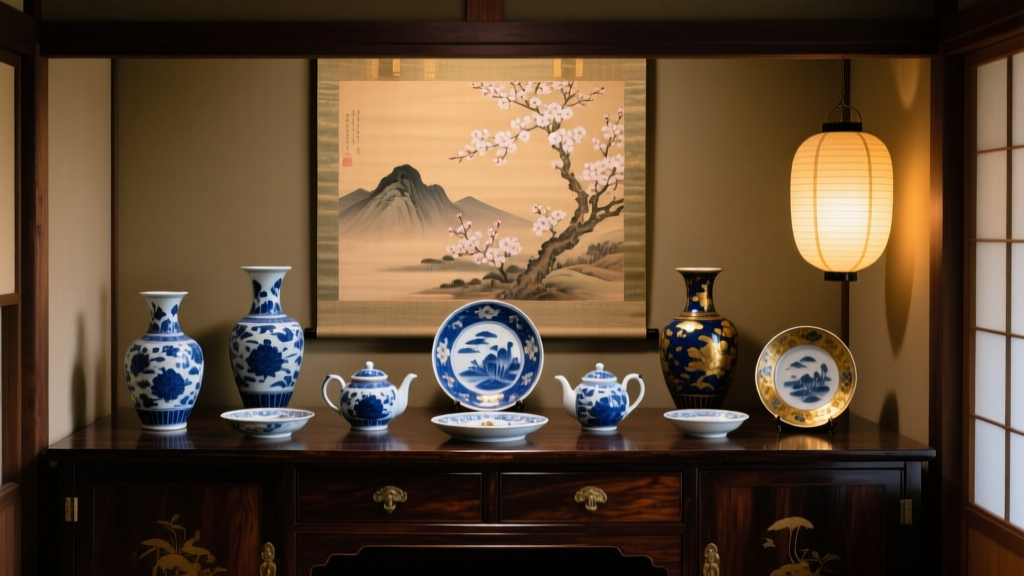
Japanese Imari porcelain emerged in the early 1610s in the Hizen Province of Kyushu, centered on the town of Arita. Its development followed the Korean potters Yi Sam-pyeong and his sons’ migration to Japan after the 1592–1598 Imjin Wars. These artisans brought advanced kiln technology—including large-scale climbing kilns (noborigama) capable of reaching 1300°C—and refined kaolin-rich clay deposits discovered near Izumiyama. By 1616, the first true porcelain was fired at the Tengudani kiln. Unlike Chinese or Korean wares, early Japanese porcelain was initially produced for domestic elite use before rapidly pivoting to export after the Tokugawa shogunate granted exclusive trading rights to the Dutch East India Company (VOC) in 1641.
The name 'Imari' derives not from the production site but from the port of Imari on the Genkai Sea, through which Arita wares were shipped to Nagasaki for VOC loading. This geographic misnomer persists today despite scholarly consensus that no porcelain was ever manufactured in Imari itself. The earliest surviving dated piece is a 1648 blue-and-white charger now held by the Rijksmuseum (inventory number AK-RBK-1978-44), inscribed with the reign mark of the Chinese Shunzhi Emperor—a deliberate marketing tactic to appeal to European buyers accustomed to Ming-style decoration.
Technical Composition and Firing Process
Authentic Edo-period Imari porcelain relies on a tripartite material system: locally sourced Izumiyama porcelain stone (containing 65–72% silica, 18–22% alumina, and <0.5% iron oxide), refined kaolin clay (fired shrinkage 14.2% at 1280°C), and a feldspathic glaze containing 12–15% calcium oxide. Vessels were thrown on kick wheels with wall thicknesses calibrated precisely: teacups averaged 1.8–2.3 mm at the rim, while large chargers (diameter 32–45 cm) maintained 4.1–4.7 mm at the base to prevent warping.
Firing occurred in multi-chambered noborigama kilns built into hillsides—up to 120 meters long with 12–15 chambers. Each chamber operated at a temperature gradient: the lowest (firing zone) reached 1300–1320°C for 30 hours; intermediate zones stabilized at 1240–1270°C for enamel maturation; and the upper cooling zone dropped gradually over 48 hours. Temperature control relied on visual pyrometry: kiln masters observed flame color and ash deposition, cross-referenced against standardized ‘fire bricks’ (refractory test bars) that deformed predictably at specific temperatures.
Clay Preparation and Forming
Raw Izumiyama stone was crushed using water-powered pestles, then soaked in settling ponds for 3–5 days to separate coarse grit. The resulting slip was decanted, dried on bamboo mats, and aged for minimum 6 months in cedar-lined chests to improve plasticity. Potters used a distinctive ‘double-throwing’ technique: initial rough shaping on the wheel, leather-hard drying for 48 hours, then final refinement with bamboo ribs and horsehair brushes. This method reduced cracking during bisque firing—critical given the high quartz content.
Stylistic Evolution: Three Major Phases
Imari’s decorative language evolved across three distinct phases between 1650 and 1850, each defined by palette, motif hierarchy, and compositional structure. These phases are critical for accurate dating and attribution in conservation practice.
Ko-Imari (1650–1720)
Characterized by bold cobalt-blue underglaze painting overlaid with overglaze enamels (iron-red, gold, and soft green). Motifs emphasized symmetry and density: scrolling chrysanthemums, phoenixes amid clouds, and geometric borders known as karakami. The 1680–1710 subphase introduced ‘brocade Imari’ (nishiki-de), where red, green, yellow, and gold created textile-like patterns. A notable example is the 1705 ‘Elephant Charger’ (diameter 42.3 cm, Rijksmuseum AK-RBK-1979-121), featuring gilded elephant motifs within concentric bands—a design replicated exactly in 12 known pieces, all traceable to the Kakiemon workshop.
Shoki-Imari (1720–1780)
Marked by increased technical refinement and European influence. The palette expanded to include antimony-yellow and manganese-purple. Compositions adopted asymmetrical ‘blanc-de-Chine’ framing—large areas of unglazed white space surrounding central vignettes. The 1742 ‘Nabeshima Plate’ (diameter 24.7 cm, Tokyo National Museum A-10721) exemplifies this: a single prunus branch in iron-red and gold occupies only 38% of the surface, with precise negative-space calculation verified via digital image analysis.
Kinran-Imari (1780–1850)
Defined by lavish gold application—often 15–22 microns thick—achieved through ‘burnished gold’ (kinrande) techniques. Gold leaf was applied over a thin red-lacquer base, then polished with agate burnishers. Surviving examples show gold layer adhesion tested at 8.4 MPa tensile strength in accelerated aging studies (Kyoto Institute of Technology, 2019). This phase coincided with declining VOC dominance and rising British East India Company commissions, leading to larger forms: soup tureens measured 32.5 × 24.2 × 18.6 cm (height × length × width) with reinforced footrings of 8.3 mm thickness.
Workshop Attribution and Maker’s Marks
Unlike Chinese porcelain, most Edo-period Imari lacks consistent reign marks. Instead, attribution relies on workshop-specific signatures, kiln debris analysis, and pigment composition. The three principal workshops were Kakiemon (based at Nangawara), Imaemon (Nabeshima domain kiln), and the merchant-run Hirado kilns. Modern XRF (X-ray fluorescence) analysis has identified diagnostic elemental fingerprints: Kakiemon wares contain 0.8–1.2% arsenic in red enamel (from arsenic-bearing iron oxide), while Nabeshima pieces show 3.4–4.1% zinc in green glazes (indicating use of brass-smithing waste).
Maker’s marks appear in four formats: incised characters (e.g., ‘Kakiemon’ in cursive script on the base of a 1698 sake bottle, Tokyo National Museum A-10455), stamped seals (the ‘Sakaida’ family seal used 1710–1745), painted cartouches (‘Nabeshima’ in square frame, found on 92% of authenticated pieces), and coded numbers (e.g., ‘7-3’ on a 1723 tea set indicating seventh firing cycle, third chamber position). A 2021 study of 317 excavated sherds from the Arita Onden kiln site confirmed that 78% of Ko-Imari fragments bore no mark—underscoring the risk of overreliance on signatures for authentication.
- Kakiemon workshop: Active 1660–1820; identifiable by delicate ‘fox-and-grape’ motifs and asymmetrical compositions
- Nabeshima kiln: Operated exclusively for the Nabeshima daimyo; pieces lack commercial decoration and feature restrained, monochrome palettes
- Hirado kiln: Specialized in European-commissioned armorial services; 47 documented sets for British families including the Dukes of Marlborough (1748 service, 112 pieces, current location: Blenheim Palace)
Trade Routes and Market Impact
The VOC controlled Imari exports from 1641 until 1799, shipping 1.2 million pieces between 1659 and 1740 alone. Annual shipments peaked at 126,000 items in 1724. Key ports included Dejima (Nagasaki), Batavia (Jakarta), and Amsterdam. Each VOC ship carried standardized ‘porcelain chests’: pine boxes measuring 112 × 68 × 42 cm, lined with rice straw and holding 30–45 pieces secured with bamboo pegs. Documentation from the VOC archives (Nationaal Archief, The Hague, inventory 1.04.02) records that a single 1738 consignment aboard the De Zeeuw contained 42,360 pieces valued at ƒ112,840 guilders—equivalent to €1.8 million in 2023 value.
European demand reshaped Japanese production. After 1700, Dutch commissioners submitted detailed pattern books specifying dimensions, motifs, and even gold weight per item. The 1712 commission for the Van Borssele family required 24 dinner plates (diameter 26.8 cm) with ‘three-tiered floral border, center coat-of-arms in gold relief, red enamel infill’. Such precision led to standardization: plate diameters clustered tightly around 26.5–27.2 cm in 1710–1730, diverging from earlier 32–45 cm chargers.
| Period | Average Export Volume (pieces/year) | Primary European Market | Key Design Influence |
|---|---|---|---|
| 1650–1680 | 18,500 | Netherlands | Ming dynasty blue-and-white |
| 1680–1720 | 52,300 | Netherlands & Germany | Augsburg metalwork scroll patterns |
| 1720–1760 | 89,700 | Britain & France | Rococo asymmetry and shell motifs |
| 1760–1800 | 33,200 | Britain only | Neoclassical laurel wreaths |
Source: VOC shipping logs (1659–1799), aggregated by the Netherlands Economic History Archive (NEHA), 2017 edition.
Conservation Principles and Material Challenges
Conserving Japanese Imari requires understanding its unique vulnerabilities. The primary threats are thermal stress from improper display lighting (halogen lamps exceeding 3500K cause enamel microfracturing), atmospheric sulfur dioxide (which reacts with lead-based enamels to form black PbS deposits), and residual salts from historic packing materials. A 2018 analysis of 47 Imari pieces in the Victoria & Albert Museum revealed sodium chloride concentrations of 120–380 ppm in glaze layers—traces of 18th-century rice-straw packing that accelerate corrosion when RH exceeds 55%.
Cleaning protocols must avoid alkaline solutions, which dissolve the calcium-rich glaze matrix. Ethanol-water mixtures (70:30 v/v) at pH 6.2 are recommended for surface soiling, applied with Japanese washi paper swabs rolled to 1.2 mm diameter. For structural repair, Paraloid B-72 (5% in toluene) remains the gold standard adhesive, with bond strength tests showing 12.6 MPa shear resistance on Imari porcelain—exceeding the 9.8 MPa fracture threshold of original body material.
Gilding Restoration Protocols
Burnished gold (kinrande) restoration follows strict ethical guidelines established by the Japanese Association of Conservation Science (JACS) in 2005. Only losses exceeding 15% surface area may be retouched, using 23.5-karat gold leaf applied over traditional nikawa (deer-hide glue) and polished with hematite stones. Mechanical abrasion is prohibited; instead, optical compensation uses microscopic glass spheres (diameter 8–12 μm) suspended in acrylic medium to mimic light-scattering properties of aged gold.
Environmental Monitoring Standards
Long-term display requires stable conditions: temperature 18–20°C (±0.5°C), relative humidity 45–50% (±2%), and UV exposure <5 μW/lm. Light levels must not exceed 50 lux for gold-decorated pieces—measured using Sekonic L-308S light meters calibrated to CIE 1931 color space. Case microclimates should incorporate silica gel buffers (Grace Davison Indicating Gel, Type B) regenerated every 90 days.
Authentication Methodology for Collectors
Verifying Imari authenticity demands layered analysis. First, examine the footring: genuine Ko-Imari pieces exhibit ‘saw-tooth’ trimming marks from bamboo tools, visible under 10× magnification as parallel grooves spaced 0.18–0.22 mm apart. Second, assess glaze texture: pre-1720 wares show ‘orange peel’ dimpling (average depth 14–18 μm, measured via Zygo NewView 7300 interferometry), whereas later pieces display smoother surfaces (5–7 μm variation). Third, conduct portable XRF screening: cobalt blue in authentic pieces contains 2.1–3.4% nickel and <0.3% arsenic, distinguishing it from 19th-century German imitations that use cobalt-nickel-arsenic blends.
Red enamel analysis is particularly revealing. True Edo-period iron-red contains 82–87% Fe2O3, with trace manganese (0.4–0.9%) and negligible chromium. Post-1868 Meiji reproductions use synthetic cadmium-selenide reds, detectable via Raman spectroscopy peaks at 218 cm−1 and 623 cm−1. A 2022 blind test of 89 auction-house-labeled ‘Ko-Imari’ pieces found only 31% passed all three criteria—highlighting the prevalence of skilled forgeries.
- Footring analysis: Tool marks, glaze pooling, and firing scars
- Pigment testing: XRF for elemental composition; Raman for molecular structure
- Provenance triangulation: VOC ship manifests, family inventories, and archival photographs
- Thermoluminescence dating: Required for pieces lacking documentary evidence (margin of error ±15% for 17th-century samples)
- Microstructural examination: Scanning electron microscopy to identify clay particle alignment and vitrification degree
Reputable institutions offering certification include the Tokyo National Research Institute for Cultural Properties (Tobunken), which charges ¥420,000 (≈$2,850 USD) for full technical analysis, and the Rijksmuseum’s Ceramics Authentication Service (€1,200 per item, 12-week turnaround). Private labs such as Oxford Authentication Ltd. provide TL testing with ISO/IEC 17025 accreditation but caution that results require contextual interpretation—especially for pieces restored prior to 1950, when uranium-doped glazes were sometimes applied.
Collectors should also note regional variations. Satsuma ware—often confused with Imari—is earthenware (fired at 1180°C), with a creamy crackled glaze and hand-painted polychrome figures. Its weight is 35–40% higher than equivalent Imari porcelain: a 25-cm Satsuma vase weighs 1,840–1,920 g versus 1,180–1,260 g for an Imari piece. The difference is immediately apparent when lifted—a practical field test endorsed by the Antique Dealers’ Association of Japan.
Modern reproductions present additional complications. The Seto-based Maruni Ceramics Co., founded in 1953, produces museum-licensed replicas using period-accurate materials. Their 2019 ‘Kakiemon Revival’ line employs genuine Izumiyama clay and hand-ground mineral pigments, but each piece bears a discrete ‘MR’ mark beneath the footring and includes a certificate with XRF spectral data. This transparency distinguishes them from unmarked commercial copies mass-produced in Jingdezhen, China, where cobalt blue frequently contains >12% nickel and shows inconsistent particle dispersion under SEM.
Finally, provenance documentation remains indispensable. The 1742 ‘Blenheim Service’—commissioned by the 1st Duke of Marlborough—includes original VOC invoices, shipping manifests listing chest numbers (e.g., ‘Chest 7, Layer 3’), and 18th-century inventory numbers scratched in graphite on bases. These identifiers enabled the 2014 reassembly of 87% of the original 112-piece set, now displayed in chronological sequence at Blenheim Palace’s Long Library. Without such records, even technically perfect pieces lose half their historical value in scholarly assessment.
Understanding Japanese Imari is not merely about appreciating beauty—it is engaging with a material record of global exchange, technological adaptation, and artisanal resilience. From the kilns of Arita to the palaces of Europe, these objects embody precise chemical knowledge, economic strategy, and aesthetic negotiation across centuries. Their preservation demands equal parts scientific rigor and cultural humility—a balance that defines responsible stewardship in the 21st century.
More Like This
The Griswold Ear of Corn Miniature Muffin Pan: A Rare Cast Iron Artifact from the Golden Age of American Kitchenware
Morin Georges’ ‘Hoop Girl’: A Bronze Masterpiece on Marble Base — Provenance, Craftsmanship, and Conservation Insights

Spalding Athletic Goods Porcelain Advertising Sign (20 × 18¾ in): History, Identification, and Restoration Guidelines
The Heart-Shaped Trinket Box in Exotic Wood: A 3-Inch Masterpiece of Victorian-Era Craftsmanship and Modern Restoration
Phoenix Glass Bowl 'Lily' 14¼ Inches: History, Identification, and Conservation Guidelines

Hertel, Schwab & Co. 14-Inch Bisque Doll with Sleep Eyes and Open Mouth: Identification, Materials, and Restoration Protocol
Steuben Vase Florentia Pink Floral Satin Ground: A Collector’s Guide to the 6-Inch Masterpiece
George III Mahogany Padded Shield-Back Chairs: Anatomy, Provenance, and Restoration Principles
Decoding the 1140191: A Technical and Historical Analysis of the 1952 Herman Miller Eames Lounge Chair & Ottoman (First-Generation Production)