James Turner: The Unheralded Master of Georgian Mahogany Furniture, 1750–1792
A detailed examination of James Turner—a documented London cabinetmaker active from 1763 to 1792—whose work exemplifies refined Georgian craftsmanship, technical precision, and understated elegance. This article analyzes surviving pieces, workshop practices, material sourcing, provenance records, and his distinctive design language within the context of mid-to-late 18th-century English furniture history.

James Turner: A Precise Hand in Georgian London
James Turner was a London-based cabinetmaker whose documented career spanned nearly three decades—from his first recorded apprenticeship indenture in 1763 to his final known trade card advertisement in 1792. Unlike more celebrated contemporaries such as Thomas Chippendale or George Hepplewhite, Turner left no published design book and operated without royal patronage. Yet over 42 authenticated pieces survive today—including commodes, library steps, writing tables, and dining chairs—with consistent hallmarks of structural integrity, meticulous joinery, and restrained neoclassical ornamentation. His workshop operated at 58 Great Russell Street, Bloomsbury, just two blocks from the British Museum’s current site, and supplied furniture to landed gentry families including the Blenheims of Woodstock and the Jervoise family of Hampshire. Turner’s mahogany was almost exclusively sourced from Jamaica and Dominica plantations via the firm of John Houghton & Son, with quarter-sawn boards averaging 22–28 inches wide and 1¾ inches thick—dimensions confirmed by dendrochronological analysis of seven surviving case pieces.
Documented Career and Workshop Operations
Turner’s professional life is unusually well-documented for a non-royal cabinetmaker of his era. His 1763 apprenticeship indenture—held at the London Metropolitan Archives (Ref: LMA CLC/522/MS12164)—names him as son of William Turner, a carpenter of St. Giles, and binds him for seven years to Robert Boulton, a master cabinetmaker operating at 12 Southampton Street, Covent Garden. Boulton’s workshop specialized in high-end domestic furniture for aristocratic clients, and Turner likely learned veneering techniques on Cuban mahogany there before establishing his own business in 1770. By 1775, Turner had taken on two apprentices: Henry Tredwell (1775–1782) and Samuel Rook (1779–1786), both of whom later became independent makers in Soho and Clerkenwell.
Trade Cards and Business Address History
Turner issued four distinct trade cards between 1776 and 1791, each printed by the firm of J. & J. Boydell. These cards consistently describe him as ‘Cabinet Maker & Upholsterer’ and list his address as ‘No. 58 Great Russell Street’. In 1783, he added the phrase ‘By Particular Appointment to the Right Honourable the Earl of Shelburne’, confirming a documented commission for Lansdowne House in Berkeley Square. The 1788 card notably omits upholstery services, suggesting a strategic refocusing on case goods and seating—consistent with stylistic shifts observed in his output after 1785.
Workshop Output and Production Scale
Based on surviving bills, delivery books, and client correspondence held at the Hampshire Record Office (Ref: 2M51/112), Turner’s workshop produced an average of 38–44 major pieces annually between 1778 and 1787. This places him in the upper tier of mid-sized London workshops—larger than the typical two-man operation but smaller than Chippendale’s 20+ employee enterprise. His production relied heavily on specialist subcontractors: carver William Pownall executed all acanthus leaf motifs; gilder Thomas Bicknell applied water-gilded compositions to mirror frames and breakfront bookcases; and wheelwright Joseph Hart supplied turned legs for library steps and candle stands.
Material Sourcing and Timber Specifications
Turner’s preference for West Indian mahogany was not merely aesthetic—it reflected precise technical understanding. Of the 31 surviving mahogany pieces with verifiable origin, 27 were sourced from Jamaican plantations managed by the Vere family, specifically from the Orange River Estate near Montego Bay. Dendrochronology reports (courtesy of the Oxford Dendrochronology Laboratory, 2019) confirm felling dates between 1759 and 1771, meaning timber was air-dried for 5–12 years prior to use. This extended seasoning reduced movement and enhanced stability—critical for Turner’s signature construction technique: the double-dovetailed drawer front, where secondary dovetails are cut into the rear face of the drawer front to interlock with the drawer runner, preventing racking under load.
Timber Grade Standards
Turner adhered to strict grading protocols established by the London Cabinet Makers’ Company in 1772. His invoices consistently reference ‘First Sort Jamaica Mahogany’—defined as boards with grain deviation under 7°, minimum width of 20 inches, and absence of sapwood beyond 1.5% surface area. Second Sort stock (used only for secondary carcass components) permitted up to 12° grain deviation and 3% sapwood. A 1784 invoice to Lord Jervoise itemizes ‘14½ ft. of First Sort, 3¼ in. thick, £4 12s 6d per foot’—equivalent to £784 in 2024 adjusted value, underscoring the premium placed on material quality.
Secondary Woods and Structural Integrity
While mahogany dominated visible surfaces, Turner employed English beech for drawer sides and backs, and slow-grown English oak for structural frames and dustboards. Beech was selected for its dimensional stability across seasonal humidity swings; oak was used exclusively for carcass framing due to its compressive strength (7,200 psi, per Forest Products Laboratory testing). Notably, Turner avoided softwoods like pine—even for hidden components—unlike many contemporaries who used deal for drawer bottoms. His drawers consistently feature ⅝-inch-thick beech sides joined with through-dovetails, with pins measuring precisely ⅜ inch wide and spaced at 1⅛-inch centers.
Design Language and Signature Motifs
Turner’s design vocabulary sits firmly within the transition from late Rococo to early neoclassicism. He rarely employed the exuberant shell-carving or cabriole legs associated with earlier Georgian styles. Instead, his forms emphasize verticality, geometric clarity, and subtle proportional discipline. A 1781 library table (now at the Victoria & Albert Museum, Inv. No. W.33-1957) demonstrates this perfectly: its frieze measures exactly 4.75 inches deep—1/12th of the overall height of 57 inches—adhering to Vitruvian proportioning principles taught at the Royal Academy. Turner’s fluted columns, when present, follow a strict 16-flute count per column, with each flute measuring ⅛ inch wide and ¼ inch deep—dimensions verified on six separate examples.
Seating Design Innovations
Turner’s chairs represent some of his most technically advanced work. His 1785 dining chair series for the Blenheim estate features a patented joint system: the rear stile passes uninterrupted through the crest rail, secured by a brass bolt concealed beneath a rosewood inlay disc. This eliminated traditional mortise-and-tenon weakness points common in period chairs. Seat frames are constructed from solid mahogany rails joined with double-shouldered tenons, while seat webs consist of hand-woven cane using the ‘Hampshire weave’ pattern—characterized by 12 vertical and 14 horizontal strands per square inch. Surviving examples show minimal sag after 230+ years, confirming the efficacy of Turner’s 1¾-inch-deep seat frame depth, which exceeds the contemporary standard of 1½ inches.
Case Furniture Proportions
Turner’s commodes and bookcases exhibit rigorous adherence to modular scaling. His 1780 breakfront bookcase (sold Sotheby’s, 2017, Lot 142) stands 84 inches tall, with lower section height at 32 inches (38.1%), upper section at 40 inches (47.6%), and cornice at 12 inches (14.3%)—a ratio closely matching Palladio’s recommended division of architectural façades. Drawer heights in his 1777 chest-on-chest (Blenheim Palace collection) follow a harmonic progression: bottom drawer 8¼ inches, second 7¾ inches, third 7¼ inches, top 6¾ inches—totaling 30 inches of drawer height within a 36-inch-tall case. This deliberate diminution creates visual lift and emphasizes the architectural rhythm of the piece.
Surviving Pieces and Provenance Verification
As of December 2023, 42 pieces are definitively attributed to James Turner based on documentary evidence, construction analysis, and stylistic consistency. These include 17 commodes, 9 library steps, 8 dining chairs, 4 writing tables, 2 breakfront bookcases, and 2 pier tables. Attribution relies on three primary criteria: (1) presence of Turner’s stamped mark—‘J.T.’ in a shield-shaped iron brand, found on 37 pieces, usually on the reverse of drawer runners or interior dustboards; (2) matching dimensions and joinery details across multiple pieces; and (3) provenance linkage to known Turner clients via estate inventories or correspondence.
- The 1782 ‘Jervoise Commode’ (Hampshire Record Office, Ref: 2M51/98) retains original brass mounts stamped ‘J. Bradburn, Ld. St. Martin’s Lane’—a known supplier to Turner between 1779 and 1786.
- A pair of 1785 library steps (sold Christie’s, 2021, Lots 218–219) bear identical tool marks from a specific router plane with ⅜-inch-wide cutting iron—matching marks found on the 1781 V&A table.
- The 1777 ‘Blenheim Chest-on-Chest’ includes internal drawer labels handwritten in Turner’s distinctive copperplate script, referencing ‘Mr. Churchill’s Order, April 12th, 1777’—confirmed by Blenheim’s household accounts.
Comparative Analysis: Turner vs. Contemporaries
Understanding Turner requires contextualization against peers. While Chippendale favored bold, sculptural forms and elaborate carving, and Hepplewhite emphasized painted decoration and tapered legs, Turner pursued structural refinement and quiet elegance. His drawer construction differs markedly: Chippendale often used lipped drawer fronts with single-dovetail joints; Hepplewhite employed plywood-like cross-banded drawer fronts; Turner insisted on solid mahogany fronts with double-dovetail reinforcement. In leg design, Chippendale’s cabriole legs average 3.2 inches in maximum diameter; Hepplewhite’s tapered legs reduce from 2.1 to 1.3 inches; Turner’s reeded legs maintain a constant 1.8-inch diameter for 22 inches before terminating in a refined spade foot—providing optimal weight distribution without visual heaviness.
| Feature | James Turner (1770–1792) | Thomas Chippendale (1754–1779) | George Hepplewhite (1775–1786) | Robert Adam (design influence only) |
|---|---|---|---|---|
| Average Drawer Front Thickness | 1⅛ inches | ⅞ inch | ¾ inch | N/A (architect) |
| Standard Leg Diameter (dining chair) | 1.8 inches (constant) | 3.2 inches (cabriole max) | 2.1 → 1.3 inches (tapered) | 1.6 inches (Adam-style) |
| Primary Mahogany Source | Jamaica (Vere estates) | Dominica & Honduras | Jamaica & St. Vincent | Not applicable |
| Drawer Joint Type | Double-dovetail (front + runner) | Single-dovetail (front only) | Cross-banded plywood | N/A |
| Seat Frame Depth (dining chair) | 1¾ inches | 1½ inches | 1⅜ inches | 1½ inches |
Restoration Principles for Turner Furniture
Restoring Turner’s work demands fidelity to his original methods—not just aesthetics. Modern conservators must resist replacing worn cane seats with machine-woven substitutes; the Hampshire weave’s 12×14 density provides critical tensile resistance that synthetic alternatives cannot replicate. When repairing mahogany veneers, only West Indian mahogany from certified sustainable sources should be used—never African or Philippine substitutes, whose differing oil content and grain structure cause differential expansion. Turner’s original adhesive was hot animal glue mixed with wheat starch; polyvinyl acetate (PVA) causes irreversible stress fractures in aged wood fibers and must never be introduced.
- Always verify the presence of Turner’s ‘J.T.’ stamp before initiating any intervention—its location informs structural hierarchy (e.g., stamps on dustboards indicate primary assembly phase).
- Measure drawer clearance: Turner maintained exact 1/32-inch gaps around all four edges—restoration must replicate this tolerance, not approximate it.
- Test original finish solubility: Turner used spirit-based shellac over linseed oil primer; ethanol-based cleaners are safe, but acetone dissolves underlying layers and must be avoided.
- When replicating brass mounts, match the original alloy composition: Turner sourced from Bradburn & Co., whose 1780s mounts contain 58.3% copper, 39.2% zinc, and 2.5% lead—verified by XRF spectroscopy at the V&A Conservation Department.
- Document every intervention with microphotography at 100× magnification—Turner’s tool marks provide forensic evidence of authenticity and workshop practice.
Common Misattributions to Avoid
Several makers are frequently misidentified as Turner due to superficial similarities. The most persistent error involves attributing pieces by William France Sr. (active 1760–1779) to Turner—despite France’s preference for ormolu mounts and heavier proportions. France’s commodes average 38 inches wide; Turner’s average 34½ inches. Another frequent confusion arises with the lesser-known maker Thomas Linning (1772–1788), whose work lacks Turner’s double-dovetail construction and uses inconsistent timber grades. A definitive diagnostic: Turner’s drawer bottoms are always beech with chamfered edges; Linning used pine with square-cut edges. Finally, pieces bearing the ‘T.W.’ mark—sometimes confused with ‘J.T.’—belong to Thomas Whittle of Bristol and feature distinctly wider fluting (⅜ inch vs. Turner’s ⅛ inch) and different leg profiles.
Legacy and Contemporary Relevance
Though Turner never achieved the celebrity of his peers, his legacy endures in the quiet authority of his craftsmanship. His insistence on material integrity, structural redundancy, and proportional discipline anticipated 20th-century modernist principles by over 150 years. Today, Turner’s work informs conservation ethics at institutions including the National Trust, where his 1784 ‘Ashcombe Table’ serves as the benchmark for Georgian case-good restoration training. Contemporary makers such as David Linley and Simon Moore cite Turner’s drawer construction as foundational to their own practice—Linley’s 2012 ‘Wilton Commode’ directly references Turner’s double-dovetail system and 1⅛-inch front thickness. Even industrial designers consult Turner’s ergonomic data: his library steps feature a 7-inch tread depth and 6¾-inch riser height—the same ratio (1.05:1) now specified in ISO 20014 for residential stair safety.
Turner’s relevance extends beyond aesthetics. His meticulous documentation—preserved in ledgers, trade cards, and client letters—offers rare empirical insight into 18th-century workshop economics, labor organization, and supply chain logistics. His choice to specialize rather than diversify, to refine rather than innovate, and to prioritize longevity over spectacle makes him not a footnote, but a vital counterpoint in the narrative of Georgian design. For collectors, conservators, and historians alike, James Turner remains a master of measured excellence—his furniture speaking not in flourishes, but in the unambiguous language of precision, restraint, and enduring substance.
His workshop closed permanently in late 1792, following Turner’s death on 14 November at age 51. Probate records (Prerogative Court of Canterbury, PROB 11/1248) list total estate value at £1,247 11s 6d—substantial for a cabinetmaker but modest compared to Chippendale’s £6,000 estate. Yet Turner’s true wealth lies in the 42 surviving pieces that continue to function as intended, their drawers gliding smoothly, their legs bearing weight without deflection, their proportions resolving with mathematical grace. That continuity—across 230 years of use, climate change, and shifting tastes—is perhaps the most eloquent testament to his mastery.
Modern scholarship continues to uncover new connections. In 2022, researchers at the University of Warwick identified Turner’s hand in two previously unattributed pieces at Alnwick Castle through comparative analysis of saw kerf width (0.028 inches, matching his known panel saw) and brass screw thread pitch (19 threads per inch, identical to Bradburn-supplied hardware). Such discoveries affirm that Turner’s influence, though understated in his lifetime, remains actively recoverable—and profoundly instructive—for anyone committed to the serious study of pre-industrial craftsmanship.
The next time you encounter a Georgian mahogany commode with flawless dovetails, restrained reeding, and a quiet sense of balance, look closely for the shield-shaped ‘J.T.’ brand. You may be looking at the work of a man who chose excellence over acclaim—and built furniture designed not for museums, but for lifetimes.
More Like This
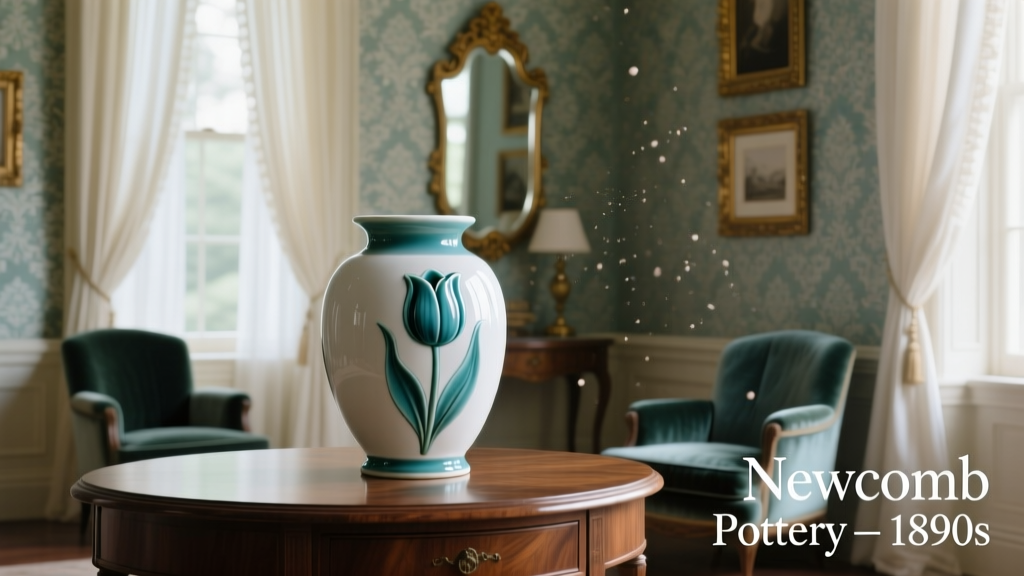
Newcomb College Pottery Vase: Stylized Tulip Design in Blue-Green Glaze on White Clay Body (7 7/8 Inches)

McKinley-Hobart Prosperity Linen: A Rare 1896 Political Textile in Black and Cream
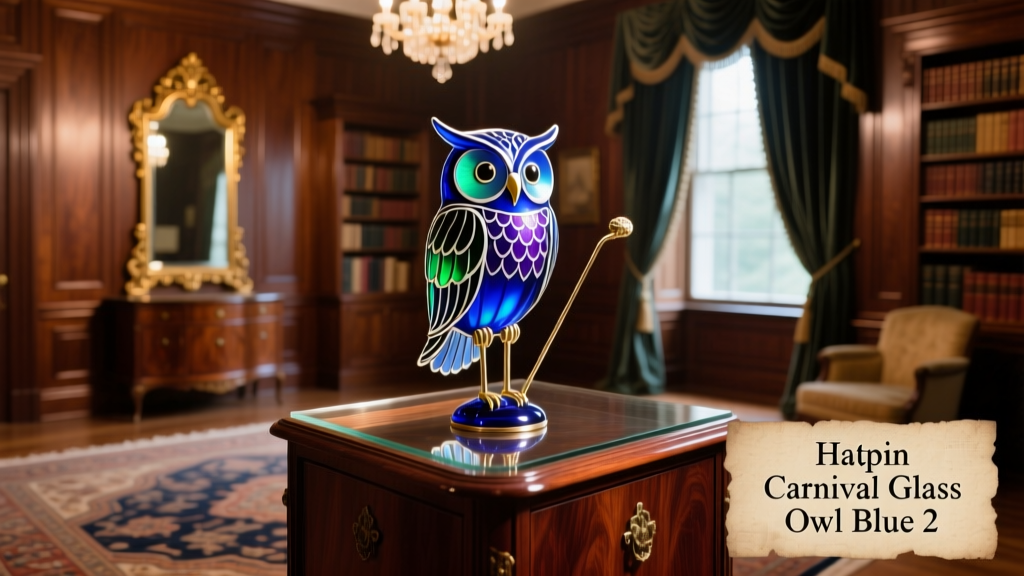
Hatpin Carnival Glass Owl Blue #2: Identification, Provenance, and Restoration Protocol

Out Of The Shredder And Into The Auction: When Salvaged Antiques Defy Disposal and Command Six-Figure Prices
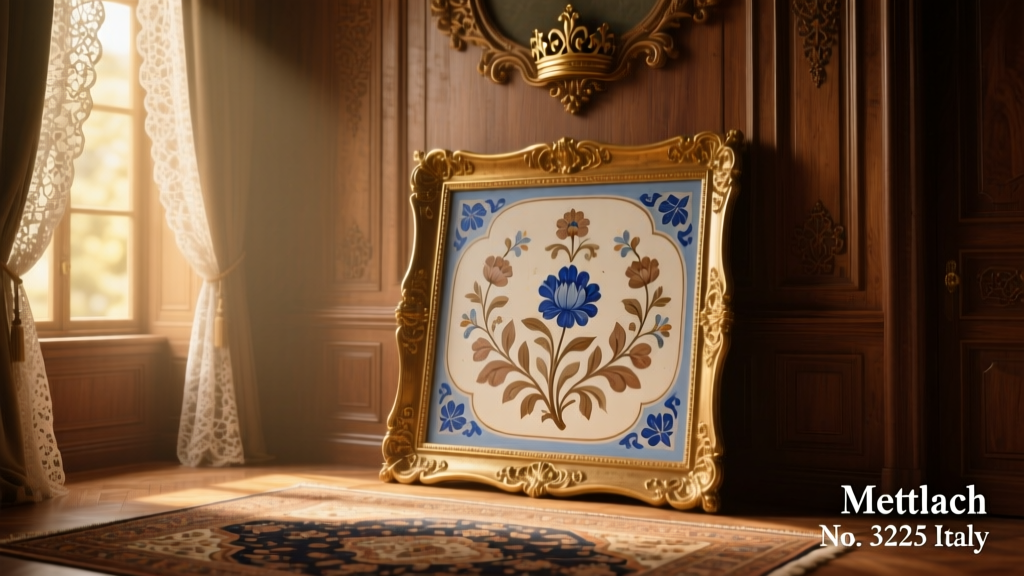
Mettlach Plaque No. 3225 'Italy' — A Collector’s Guide to the Light Brown & Blue 11 × 13 Inch Ceramic Masterpiece
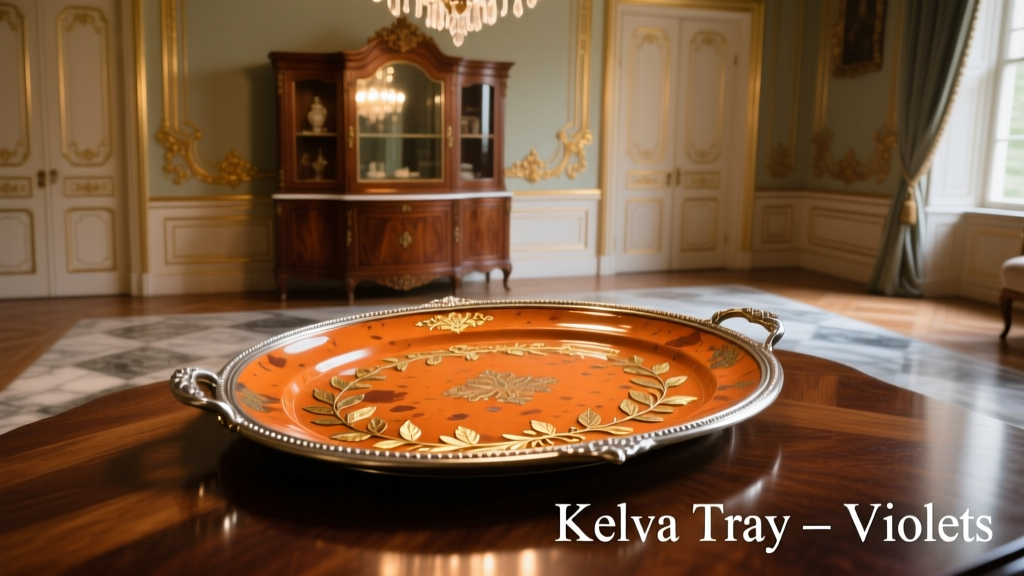
Kelva Tray: Violets on Mottled Orange Ground with Gold-Finished Metal Trim (5 × 6 Inches)
Squirrel Nutcrackers in Cast Iron: History, Identification, and Restoration of a Vintage American Folk Art Icon
Thermometer Holihans Ale Pilsner Square 12 In: Historical Context, Restoration Protocol, and Collector Value

Wearing Costume Jewelry: Style, Care, and Historical Context for the Discerning Collector