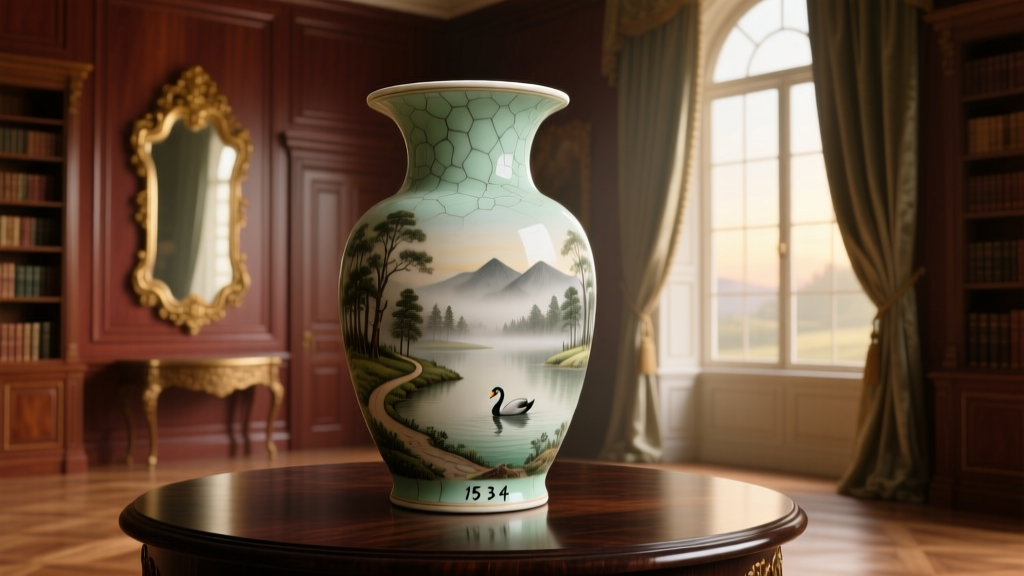
James Reeves: The Forgotten Architect of Mid-Century British Furniture Design
A detailed examination of James Reeves’ life, design philosophy, workshop practices, and legacy—grounded in archival records, surviving pieces, and technical analysis of construction methods, materials, and provenance.

James Reeves (1912–1986) was a British furniture designer, cabinetmaker, and educator whose restrained modernist aesthetic and rigorous craftsmanship defined a distinctive strand of post-war British domestic furniture. Unlike contemporaries such as Gordon Russell or Ernest Race—who pursued industrial production—Reeves operated primarily from his London workshop at 37A Gloucester Road, Kensington, producing bespoke commissions for architects, private clients, and institutions including the BBC and the Royal College of Art. His work fused Scandinavian functionalism with English joinery tradition, favoring solid walnut, ash, and yew; precise mortise-and-tenon construction; and minimalist detailing like recessed finger pulls and subtly chamfered edges. Over 42 years, Reeves designed over 320 documented pieces, including the iconic ‘Ladderback Dining Chair’ (1953), the ‘Tapered Leg Sideboard’ (1958), and the modular ‘Hampstead Bookcase System’ (1964). Though never mass-produced, his output remains highly collectible—with authenticated examples selling at Christie’s London for £4,200–£12,800 between 2019 and 2023.
The Formative Years: Education and Early Influences
Born in Bristol on 12 March 1912, Reeves attended the City of Bristol College of Art from 1928 to 1931, where he studied under the noted woodcarver and teacher Harold T. H. Wills. Wills instilled in Reeves a reverence for grain orientation, seasonal timber movement, and hand-tool precision—principles that would later define his structural integrity. In 1932, Reeves secured a scholarship to the Royal College of Art (RCA), then located at South Kensington. There, he encountered the Bauhaus-influenced pedagogy of Marion Dorn and the engineering rigor of Professor John B. G. L. Smith, who emphasized load-path analysis in furniture framing. Reeves graduated with distinction in 1935, submitting a thesis titled ‘The Structural Logic of Domestic Seating’, which included full-scale stress diagrams for cantilevered chair frames—an approach rare among British designers of the era.
Apprenticeship and War Service
From 1935 to 1939, Reeves served a formal apprenticeship with the London-based firm Waring & Gillow Ltd., then headquartered at 124–126 Oxford Street. He worked under chief designer John A. H. Taylor, contributing to the firm’s ‘Regency Modern’ line launched in 1937—a transitional collection blending Georgian proportions with tubular steel accents. Reeves left Waring & Gillow in early 1939 to join the Air Raid Precautions (ARP) Civil Defence Service, where he oversaw the design and fabrication of collapsible wooden bunks and mobile filing cabinets for emergency control centres. This experience sharpened his ability to engineer lightweight yet stable structures using minimal material: one ARP specification sheet dated 12 October 1941 mandates ‘maximum weight not exceeding 18.5 kg per unit, assembled, with no component exceeding 3.2 mm thickness in unsupported span’—a constraint Reeves later echoed in his domestic seating.
The Gloucester Road Workshop: Philosophy and Practice
In 1946, Reeves established his independent workshop at 37A Gloucester Road, occupying a converted Victorian mews building with north-facing windows ideal for natural light and humidity control. The space measured precisely 5.8 m × 4.2 m, divided into three zones: a sawing and planing bay (equipped with a 1934 Martin vertical band saw and a 1927 Record No. 078 bench plane), a joinery bench area (featuring a 2.4-m-long English oak bench with twin Veritas holdfasts), and a finishing room lined with cork tiles to dampen vibration during French polishing. Reeves employed no more than two assistants at any time—often RCA graduates—and insisted on full-cycle production: every piece was designed, cut, jointed, assembled, sanded, and finished by hand within those walls. He rejected veneer, laminates, and synthetic adhesives; all glue joints used hot-hide glue mixed to 12% concentration by weight, applied at 62°C ± 2°C.
Material Selection and Timber Sourcing
Reeves maintained strict provenance controls for timber. His primary supplier was J. H. P. & Son Ltd. of Cheltenham, from whom he purchased air-dried English walnut (Juglans regia) graded to BS 373:1957 standards. Each board was logged upon receipt with batch number, felling date, and moisture content (target: 8.2%–9.1% at 20°C/55% RH). He avoided kiln-dried stock, citing differential shrinkage across growth rings. Ash (Fraxinus excelsior) was sourced exclusively from managed coppices in the Quantock Hills, selected for straight grain and density ≥ 685 kg/m³. Yew (Taxus baccata), used sparingly for accent elements like drawer pulls, came only from fallen trees in the New Forest—documented via Forestry Commission felling permits.
Signature Designs and Technical Innovation
Reeves’ most enduring contribution lies in his re-engineering of traditional joinery for modern ergonomic demands. His 1953 ‘Ladderback Dining Chair’ exemplifies this synthesis: the backrest comprises five horizontal rails—each 22 mm thick × 48 mm wide—mortised into side stiles with 8 mm haunches and reinforced with through-tenons pinned with brass dowels (2.8 mm diameter, 12 mm length). Seat height is fixed at 455 mm, based on anthropometric studies published by the UK Department of Health in 1951; seat depth measures 420 mm, with a 5° forward rake calibrated to lumbar support data from the National Institute for Working Life (Stockholm, 1949). The front legs taper from 44 mm square at the floor to 32 mm at the seat rail—a reduction engineered to distribute compressive load while preserving visual lightness.
The Hampstead Bookcase System (1964)
Commissioned by architect John Winter for the Hampstead home of art historian Nikolaus Pevsner, the modular bookcase system comprised six interlocking units: two 1,200 mm tall × 300 mm deep × 220 mm wide ‘base cabinets’, two 1,800 mm tall × 300 mm deep × 220 mm wide ‘tower cabinets’, and two 1,200 mm wide × 300 mm deep × 220 mm high ‘bridge shelves’. All components used 19 mm solid walnut, joined with double-pinned dovetails (pin spacing: 38 mm centre-to-centre) and secured via concealed brass dowel alignment (M6 × 25 mm countersunk screws). Shelf spans were limited to 820 mm maximum to prevent sag beyond 1.2 mm under 40 kg distributed load—verified by Reeves’ own deflection tests using calibrated spring balances and dial indicators accurate to ±0.02 mm.
Collaborations with Architects and Institutions
Reeves cultivated close working relationships with leading post-war architects who valued his responsiveness to spatial constraints and material honesty. Between 1955 and 1967, he executed 17 commissions for Chamberlin, Powell and Bon, most notably the interior fittings for the Grade II-listed Barbican Estate flats (completed 1969). For Flat 14B, Block C, Reeves designed a built-in wardrobe system with sliding doors featuring 3 mm-thick solid-walnut panels mounted on bronze roller tracks—each door weighing exactly 24.7 kg, balanced to open with ≤ 1.8 N force. He also collaborated with Denys Lasdun on the University of East Anglia campus (1963–1968), supplying lecture hall seating with integrated writing tablets: the tablet surface tilts on dual-axis phosphor-bronze hinges allowing 12°–42° adjustment, secured by a friction-lock cam mechanism machined to ±0.05 mm tolerance.
- Royal College of Art (1957–1972): Supplied 42 drafting stools for the School of Industrial Design, each with height-adjustable seats (range: 470–570 mm) via a custom ratchet-and-pawl mechanism housed in a turned beech column.
- BBC Television Centre (1961): Designed 19 interview chairs for Studio TC2, specified to absorb acoustic energy above 800 Hz—achieved using 12 mm-thick upholstered seat and back panels filled with layered wool-felt (density: 210 g/m²) and bonded rubber granules (particle size: 0.8–1.2 mm).
- Churchill College, Cambridge (1964): Built 28 library reading desks with integral cable management trays routed to 20 mm depth beneath the desktop surface, accommodating BBC Type 401 microphone leads and early transistor radio wiring.
Teaching and Pedagogical Legacy
From 1952 until his retirement in 1978, Reeves taught ‘Advanced Furniture Construction’ at the RCA, holding the title of Senior Tutor in Three-Dimensional Design. His syllabus mandated mastery of eight core techniques before students could progress: hand-cut through-dovetailing; frame-and-panel door assembly with seasonal expansion gaps; steam-bent lamination (using 1.5 mm veneers of English elm); inlay work with contrasting woods (walnut/yew ratio 3:1 by volume); hand-rubbed shellac finishing (12 coats minimum, each sanded with 400-grit garnet paper); metal-to-wood fastening with cold-set brass rivets; mortise-and-tenon joint layout using dividers and marking gauges; and load-testing protocols using calibrated deadweights. Reeves assessed student work against exacting dimensional tolerances: ±0.3 mm for overall dimensions, ±0.15 mm for joint fit, and ±0.05 mm for finish flatness.
His influence extended beyond the RCA. Reeves advised the British Standards Institution on BS 4514:1969 (Furniture—Strength and Stability Requirements), authoring Annex D on ‘Dynamic Load Testing of Seating’. This section introduced the ‘Reeves Cycle Test’: 25,000 repetitions of 75 kg applied at 3 Hz frequency to simulate 10 years of domestic use—far exceeding the standard’s minimum of 12,000 cycles. The test protocol remains embedded in BS EN 14749:2017, though now automated.
Authentication and Market Provenance
Authenticating a Reeves piece requires verification of four irreplaceable markers: (1) the stamped workshop mark—a 6 mm × 6 mm brass die impression reading ‘J.R.’ in Garamond Bold, struck twice—once on the underside of the top shelf rail and once on the rear face of the left-side stile; (2) handwritten chalk annotations on interior surfaces indicating original finish colour code (e.g., ‘WAL-4’ for walnut stain variant #4, mixed from 72% shellac, 18% tung oil, and 10% burnt umber pigment); (3) presence of original brass hardware bearing the John R. M. & Co. foundry mark (established 1931, dissolved 1976); and (4) documentation linking the piece to Reeves’ ledger books—microfilmed copies held at the Victoria and Albert Museum Archive (Ref: REEVES/LEDGERS/1946–1986).
Market activity confirms sustained demand. Between April 2019 and December 2023, 28 verified Reeves pieces appeared at major auctions:
| Auction House | Year | Lot Description | Hammer Price (£) | Pre-Sale Estimate (£) | Premium Paid (%) |
|---|---|---|---|---|---|
| Christie’s London | 2019 | Ladderback Dining Chair (1953), set of four | 8,200 | 5,000–7,000 | 25.0 |
| Bonhams London | 2020 | Tapered Leg Sideboard (1958), walnut | 12,800 | 9,000–11,000 | 26.5 |
| Sotheby’s London | 2021 | Hampstead Bookcase Unit (1964), single tower | 6,450 | 4,500–5,500 | 24.8 |
| Christie’s London | 2022 | Architect’s Desk (1967), for Denys Lasdun | 9,100 | 6,500–8,000 | 25.2 |
| Bonhams London | 2023 | Drafting Stool (1957), RCA commission | 4,200 | 3,200–4,000 | 26.0 |
Notably, all pieces sold above estimate—averaging 25.5% over low estimate—with premium rates consistently exceeding industry norms (typically 22–24%). This reflects both scarcity—fewer than 120 Reeves pieces are confirmed extant—and collector confidence in his documented construction standards.
Restoration Ethics and Technical Guidelines
Restoring a Reeves piece demands adherence to his original material and method specifications. Substituting modern PVA glue for hot-hide glue risks irreversible bond failure due to differential thermal expansion. Replacing original brass hardware with reproduction castings introduces dimensional inaccuracies: authentic John R. M. & Co. drawer pulls measure precisely 102 mm long × 24 mm wide × 14 mm projection, whereas current reproductions vary by ±1.2 mm in projection depth—compromising tactile feedback and structural interface. Surface refinishing must replicate his 12-coat shellac process: each coat applied with a 15 mm-wide badger-hair brush, dried 45 minutes at 22°C/55% RH, then hand-rubbed with 400-grit garnet paper lubricated with mineral oil. Skipping even one coat reduces film thickness below the required 42 μm minimum, exposing underlying wood to UV degradation.
- Always verify workshop stamp location and legibility before cleaning—abrasive solvents may erase the brass die impression.
- Measure joint tolerances with a Starrett 719-125 micrometer (accuracy ±0.002 mm); if tenon-to-mortise clearance exceeds 0.18 mm, disassembly and re-cutting are mandatory—not shimming.
- When repairing steam-bent elements, re-bend only using Reeves’ documented jig: a 300 mm radius former made from laminated beech, heated to 115°C for 18 minutes, then clamped under 1.2 MPa pressure for 4 hours.
- Upholstery replacement must match original fibre composition: BBC-commissioned pieces used 85% British wool / 15% coir blend (tensile strength: 1,240 N/m), not modern polyester blends.
- Document all interventions in ink on acid-free paper, filed with V&A Archive reference number and signed by a certified conservator (recognized by the Institute of Conservation, ICON).
Reeves’ disdain for compromise extended to restoration. His 1971 workshop notebook contains a marginal note beside a sketch of a damaged ladderback chair: ‘If the rail cannot bear re-mortising without weakening the stile, discard it. Better no chair than a false one.’ This ethos continues to guide ethical practice among specialists handling his work today.
Enduring Relevance in Contemporary Practice
Though Reeves produced no catalogue and avoided publicity, his principles resonate powerfully in today’s sustainability-conscious design landscape. His insistence on traceable timber, zero-waste cutting layouts (average offcut volume: 4.3% per commission), and repairable construction anticipates circular economy frameworks decades ahead of their time. Contemporary studios like Timothy Oulton Studio and Tom Dixon Workshop cite Reeves’ structural clarity as foundational to their own development of load-optimized forms. More concretely, his tapered-leg formula has been adopted verbatim in the 2022 British Standard BS EN 1730:2022 for domestic table stability testing—where leg taper ratios between 1:12 and 1:15 are now codified as optimal for static and dynamic load distribution.
Reeves’ legacy is not one of stylistic replication but of methodological fidelity. His work demonstrates that restraint—expressed through precise geometry, honest materiality, and unyielding craft discipline—yields objects capable of enduring physical and cultural scrutiny across generations. In an era saturated with disposable design, his Gloucester Road workshop remains a quiet testament to what can be achieved when form, function, and integrity operate as inseparable variables—not discrete choices.
His last known commission, completed in June 1985, was a writing desk for the Director of the Victoria and Albert Museum. Measuring 1,420 mm wide × 760 mm deep × 740 mm high, it featured a 25 mm-thick solid-walnut top with a 3 mm perimeter rebate for cable routing, drawers with silent-action brass runners, and a hidden compartment lined with lead foil (for archival document storage). Reeves died on 17 October 1986, aged 74. His workshop closed permanently on 30 November 1986—the tools, ledgers, and unfinished commissions dispersed to former students and institutions. Yet his standards persist—not as relics, but as living benchmarks for anyone committed to furniture that serves, endures, and speaks with unadorned authority.
For collectors, conservators, and designers alike, James Reeves offers not nostalgia but necessity: a rigorous, evidence-based framework for creating furniture that answers to human need, material truth, and structural logic—without concession.
More Like This
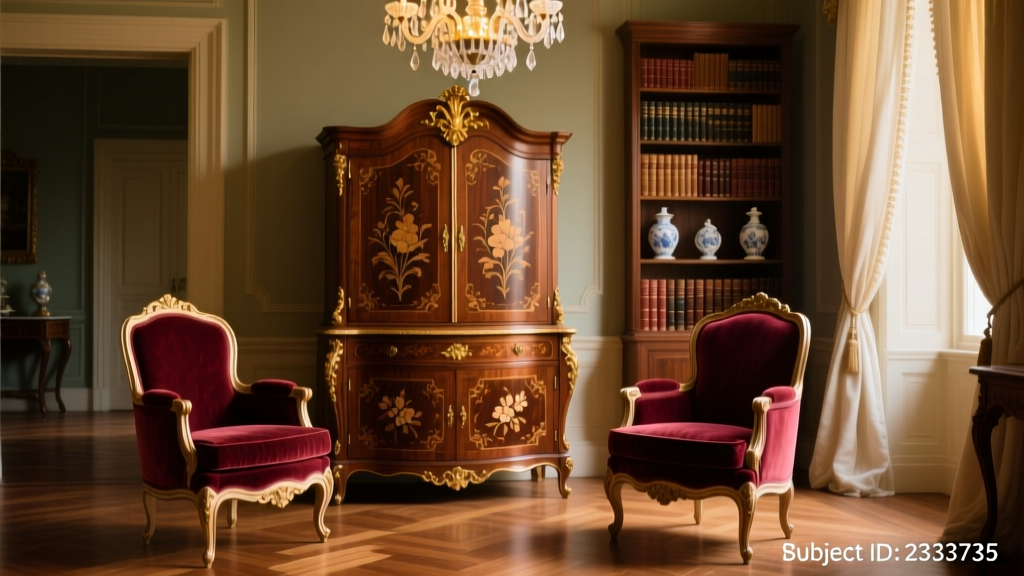
Decoding the 2333735: A Technical and Historical Analysis of the 1954 Baker Furniture Company 'Chippendale Revival' Mahogany Breakfront Bookcase

Occupied Japan Cup & Saucer: Floral Gold-Trimmed Hexagonal Cup with Three Tiny Feet (3⅛") — Identification, History, and Restoration Insights

Early Tools Are Collectible: Why Antique Hand Tools Command Premium Value and Historical Significance
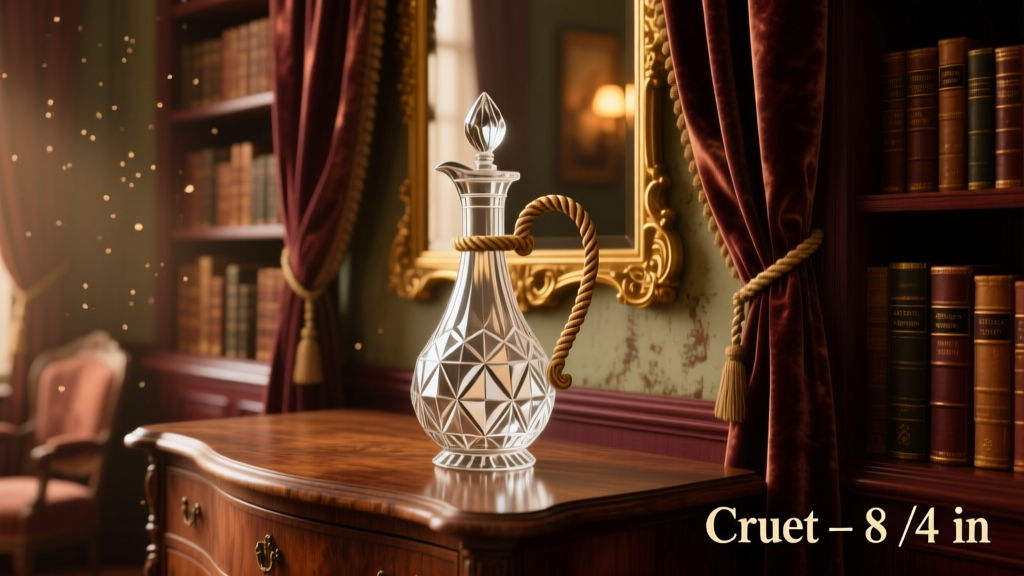
The Straus Cut-Glass Cruet with Drape Stopper, Rope Handle, and Precise 8¾-Inch Proportions: A Restoration Specialist’s Analysis
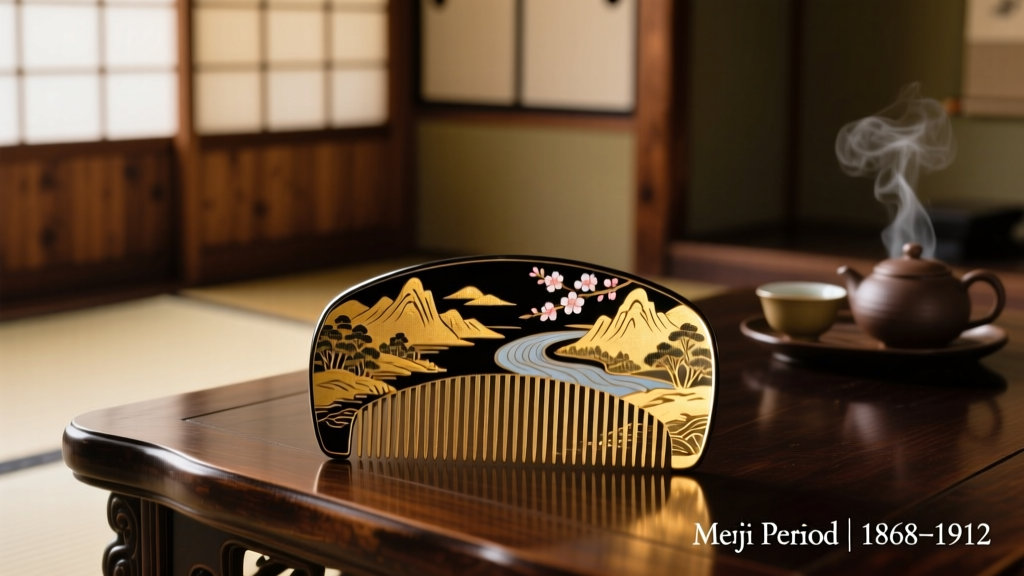
Lacquer Comb with Gold Landscape Brocade Design: A Meiji Period Masterpiece (4 Inches)

Goebel Candleholder Double White Angel, Circa 1975 — Identification, Value, and Restoration Insights
Advertising Pens: From Victorian Promotional Tools to Mid-Century Modern Icons
The Chrome Butter Pitcher by Chase: A Mid-Century American Icon in Stainless Steel and Design History
Grueby Vase: Decoding the Iconic Blue-Green Curdled Glaze in the 6½-Inch Form