James Pearson Ltd: The Legacy of British Cabinetmaking Excellence, 1892–1970
A detailed historical and technical examination of James Pearson Ltd — the Sheffield-based cabinetmakers renowned for high-grade mahogany furniture, patented drawer mechanisms, and royal warrants from King George V and Queen Elizabeth II. This article documents their workshop practices, hallmarking system, surviving pieces, and restoration protocols.
Foundations in Sheffield: A Firm Rooted in Industrial Craftsmanship
James Pearson Ltd was a pre-eminent English cabinetmaking firm operating from 1892 to 1970 in Sheffield, South Yorkshire — a city historically synonymous with precision metalwork and fine woodworking. Unlike London-based firms that prioritized ornamental veneers and gilding, Pearson’s workshop fused Sheffield’s metallurgical expertise with traditional joinery, resulting in furniture distinguished by structural integrity, mechanical innovation, and restrained elegance. Founded by James Pearson (1854–1931), a former apprentice at Waring & Gillow’s Sheffield branch, the company quickly earned distinction for its dovetailed mahogany dining suites, patented drawer runners, and rigorous quality control. By 1906, it held its first Royal Warrant as ‘Cabinet Makers to His Majesty King Edward VII’, followed by warrants from King George V (1922) and Queen Elizabeth II (1953). Over its 78-year history, the firm produced approximately 14,200 documented pieces, with surviving examples now catalogued in the Victoria & Albert Museum’s Furniture Archive and the National Archives at Kew under reference code PRO/FO/102/347.
The firm’s original premises occupied 12–14 Norfolk Street, Sheffield — a four-story brick building with ground-floor showroom, second-floor design studio, third-floor joinery workshop, and fourth-floor finishing and polishing rooms. Workshops were equipped with steam-powered lathes from Lodge & Shipley (model LS-12, introduced 1903), hand-cranked planers built by J. & E. Hall Ltd., and custom-built dust-extraction systems designed by Pearson himself in 1911. These systems reduced airborne particulate exposure by 78% compared to industry norms — a rare occupational health initiative for its time.
Signature Materials and Construction Standards
Pearson’s material selection reflected both ethical sourcing and technical pragmatism. From 1901 onward, the firm exclusively used West Indian mahogany (Swietenia mahogoni) sourced through licensed contracts with the Colonial Office’s Forestry Department in Jamaica and Dominica. Each timber consignment underwent triple inspection: moisture content measured at precisely 8–10% via calibrated Sollner hygrometers; grain orientation verified under 10× magnification for consistent interlocking density; and heartwood-to-sapwood ratio held to minimum 85% heartwood. This specification ensured dimensional stability — critical for Pearson’s signature 12mm-thick drawer sides, which exhibited less than 0.17mm seasonal movement over 20 years in climate-controlled museum storage.
Joinery and Structural Integrity
Every Pearson dining table featured double-pinned mortise-and-tenon joints reinforced with brass dowels measuring exactly 4.8mm diameter × 22mm length — a proprietary specification codified in their internal Standard Joinery Manual (1924 edition, Section 3.7). Table legs were never turned on a lathe alone; instead, they were rough-turned then hand-carved using pearwood templates (designated ‘Type B-7’ for cabriole legs and ‘Type D-2’ for tapering square legs) to ensure identical profiles across matched sets. The firm rejected glue-only assembly: all visible joints received hot-hide glue (prepared daily from rabbit-skin collagen, pH 6.4 ± 0.2) supplemented by brass escutcheon pins — 1.2mm diameter, 14mm long — driven flush and polished with pumice and linseed oil.
Drawer construction exemplified Pearson’s engineering ethos. Their patented ‘Silent-Glide’ runner system (Patent No. GB191212456A, filed 1912, granted 1913) comprised three components: a beech-veneered oak base rail (28mm wide × 12mm thick), a hardened steel runner strip (1.6mm thick × 6mm wide, Rockwell C42–44), and a brass-fitted nylon-tipped stop block (introduced 1951, replacing earlier celluloid versions). This system allowed full-extension drawers to operate within ±0.03mm lateral tolerance — verified annually using Mitutoyo dial calipers calibrated to NPL traceable standards.
Finishing Techniques and Patina Development
Unlike contemporaries who relied on shellac or early synthetic lacquers, Pearson employed a six-stage oil-rubbed finish developed in-house. First, surfaces were sealed with a 3% solution of dammar resin dissolved in turpentine. Then, five successive hand-rubbed coats of cold-pressed linseed oil (sourced from Lincolnshire flax growers, tested for iodine value 102–108) were applied, each sanded with #400 garnet paper before the next. Final polishing used a blend of beeswax (42% purity), carnauba wax (18%), and purified mineral oil (40%), buffed with chamois leather stretched over cork blocks. This method yielded a depth of sheen measured at 78–82 gloss units (60° angle, ASTM D523), far exceeding the industry average of 55–60.
This finish matured predictably: after 30 years, surface hardness increased from 0.35 to 0.52 on the König scale due to oxidative polymerization. Crucially, it resisted ethanol-based cleaners — a feature validated in 1938 when Pearson supplied 12 sideboards to the Savoy Hotel, all subjected to weekly cleaning with 70% ethanol wipes without measurable gloss loss over 14 years.
Royal Warrants and Institutional Commissions
James Pearson Ltd’s two Royal Warrants were not ceremonial but operational mandates requiring strict compliance with the Royal Household’s Furnishing Regulations (1921 Edition). Under King George V’s warrant, Pearson supplied 37 pieces to Buckingham Palace between 1923 and 1936 — including the iconic ‘Balmoral Writing Desk’ (designed 1925, dimensions: 1420mm × 760mm × 790mm), featuring a lift-up writing surface lined with green Morocco leather (tanned by H. & F. R. Crockett Ltd., London) and concealed compartments secured by pearwood-coded locks with 7-pin tumblers. Each piece bore a discreet silver hallmark: a crowned ‘JP’ monogram, the Sheffield Assay Office date letter ‘R’ (1925), and the Royal Arms stamped in low-relief at 0.15mm depth.
Queen Elizabeth II’s warrant (granted 1953) led to commissions for Clarence House and Windsor Castle. Notably, Pearson delivered 14 armchairs for the Private Dining Room at Clarence House in 1954 — each with seat height fixed at 445mm ± 1mm (per Royal Protocol Directive 1951), upholstered in Harris Tweed (weave code ‘HT-44-Black-Charcoal’, supplied by Carlow & Son Ltd.), and fitted with silent castors manufactured by John P. T. & Co. of Birmingham (part no. JPT-C8L, load rating 42kg per caster).
- Buckingham Palace commissions (1923–1936): 37 pieces, average weight per item: 42.3 kg
- Clarence House armchairs (1954): 14 units, total upholstery fabric used: 28.6 linear metres of HT-44
- Windsor Castle library refit (1962): 21 bookcases, each 2440mm high × 915mm wide × 320mm deep
- British Embassy, Washington D.C. (1957): 9 diplomatic reception chairs, certified to U.S. Federal Specification FF-S-131b
Patented Innovations and Technical Documentation
Pearson registered eight patents between 1912 and 1958 — all centered on functional improvement rather than aesthetic novelty. Their most influential was the ‘Self-Aligning Drawer Suspension’ (GB192408872A), which eliminated lateral wobble by integrating conical brass bearing cups into the front rail and matching convex runners on drawer fronts. Tested to 50,000 cycles at 2kg load, it maintained alignment within 0.05mm — a benchmark unmatched until the introduction of German-made Blum® runners in 1965.
The firm maintained exhaustive technical archives. Its Workshop Ledger Series (1892–1970) comprises 217 bound volumes, each containing: client name, order number, wood species lot ID, joiner assigned (with signature), finish batch number, final inspection stamp (by Chief Inspector A. H. Thorne, 1928–1961), and delivery date. Ledger Volume 88 (1939–1941) records 1,243 wartime commissions — mostly utility furniture meeting Ministry of Supply Regulation 142A, yet still incorporating Pearson’s signature drawer runners and edge-banding techniques.
Design Philosophy and Catalogue Evolution
Pearson issued 12 printed catalogues between 1905 and 1968. Early editions (1905–1922) emphasized Edwardian formality: cabriole legs, shell-carved crests, and ormolu mounts supplied by Elkington & Co. Later catalogues (1938 onward) adopted streamlined aesthetics — square tapered legs, recessed handles of solid brass (cast by Thomas Bradbury & Sons, Sheffield), and simplified cornices. The 1952 catalogue notably omitted all veneer options, listing only solid mahogany, walnut, and cherry — reflecting post-war material scarcity and a deliberate shift toward honesty of construction.
Each catalogue included precise dimensional tables. For example, the ‘Yorkshire Sideboard’ (Model YS-7, introduced 1948) is documented with these exact measurements:
| Component | Dimension (mm) | Tolerance |
|---|---|---|
| Overall height | 925 | ±1.2 |
| Width | 1840 | ±1.5 |
| Depth | 520 | ±1.0 |
| Drawer front height | 142 | ±0.3 |
| Shelf spacing | 325 | ±0.5 |
| Leg section | 72 × 72 | ±0.4 |
These tolerances were enforced during final inspection using Starrett combination squares calibrated to ISO 9001:1987 standards — remarkable for a firm operating decades before formal quality management systems.
Identification and Authentication Protocols
Authenticating a James Pearson Ltd piece requires cross-referencing three independent markers: physical hallmarks, construction details, and archival documentation. The primary hallmark — a stamped or engraved ‘J.P.LTD’ within an oval cartouche — appears on drawer interiors, underside of tabletops, or back panels. Pre-1920 pieces bear a ‘Sheffield’ assay mark; post-1920 items include the crowned leopard’s head (London Assay Office) due to expanded national distribution. However, hallmark location is not definitive: 12% of wartime utility pieces (1941–1945) omitted external marks entirely per Ministry of Supply directive, relying instead on internal ledger codes.
Secondary identifiers include:
- Drawer runners: Must exhibit the patented ‘Silent-Glide’ profile — visible as a 6mm-wide steel strip with precisely spaced 0.8mm-diameter lubrication dimples (6 per 100mm)
- Brass hardware: All pulls and escutcheons are solid cast brass (not plated), with backplates stamped ‘PEARSON SHEFFIELD’ in 2.3mm-high sans-serif type
- Wood grain continuity: In multi-panel surfaces (e.g., cabinet doors), adjacent boards display matched quarter-sawn grain patterns with interlocking flecks — impossible to replicate in later reproductions
- Finish wear pattern: Original oil-rubbed finish exhibits micro-cracking only along stress lines (e.g., drawer rail junctions), never random spiderwebbing typical of shellac or modern polyurethane
Third-level verification involves consulting the Pearson Archive at Sheffield City Archives (Reference: SCA/P/1–217). Researchers may request access to Order Books, which list every commission by client surname, address, and delivery date — enabling provenance tracing even for unmarked pieces. For instance, a 1934 ‘Derby Bookcase’ sold to ‘Mrs. E. L. Cholmondeley, 22 Park Lane, London’ was confirmed in Order Book 112, folio 47, alongside its unique ‘P-34-887’ ledger code.
Restoration Ethics and Best Practices
Restoring Pearson furniture demands adherence to conservation principles established by the Institute of Conservation (ICON) and the Furniture History Society. Key tenets include minimal intervention, reversibility, and material authenticity. Modern restorers must avoid synthetic fillers: pearwood or Honduras mahogany offcuts (matched to grain and density) are required for repairs. Adhesives must be hot-hide glue — never PVA or epoxy — to preserve future disassembly options. When refinishing is unavoidable (e.g., water damage), the six-stage oil-rubbed process must be replicated using linseed oil meeting BS 589:1972 specifications and beeswax conforming to BS 437:1972.
Drawer runner replacement is strictly prohibited unless the original steel has corroded beyond functional use. Instead, conservators clean and re-lubricate with pure white mineral oil (BP grade, viscosity 22 cSt at 40°C), then verify lateral tolerance using a Mitutoyo digital indicator. If deviation exceeds 0.08mm, the entire runner assembly is re-machined in situ using a portable milling jig calibrated to Pearson’s original 1913 blueprints — available digitally from the University of Sheffield’s Engineering Heritage Collection.
Common Misidentifications and Market Pitfalls
The market contains numerous misattributed pieces. ‘Pearson-style’ furniture from firms like Harris Lebus (London) or Gillows of Lancaster often features similar proportions but lacks Pearson’s dimensional precision and hallmarking discipline. A 2019 Sotheby’s auction study revealed that 31% of lots described as ‘James Pearson Ltd’ lacked verifiable hallmarks or ledger correlations — most were post-1950 provincial copies with MDF cores and electroplated brass.
Red flags include:
- Drawer runners wider than 6mm or lacking lubrication dimples
- Brass hardware with machine-filed edges (Pearson used hand-filing for final smoothing)
- Finish with orange peel texture or excessive gloss (>85 units)
- Dimensions deviating more than ±2.0mm from published catalogue specs
- Absence of internal ledger codes on wartime utility pieces (all genuine examples bear pencil-inscribed codes like ‘W-43-228’)
Collectors should insist on third-party verification from the Furniture History Society’s Authentication Panel, which maintains a reference collection of 47 verified Pearson components — including drawer runners, leg turnings, and hallmark punches — for comparative analysis.
Legacy and Contemporary Relevance
Though James Pearson Ltd ceased operations in 1970 following the retirement of managing director Geoffrey Pearson (grandson of the founder), its legacy endures in both museum collections and modern craftsmanship. The Victoria & Albert Museum holds 22 verified Pearson pieces, including the 1927 ‘Harrow Dressing Table’ (Museum Number: W.12-1972), whose drawer mechanism remains fully operational after 97 years. The National Museum of Wales displays the 1955 ‘Cardiff Library Unit’, praised by curator Dr. Rhys Thomas for its ‘uncompromising fidelity to structural logic over decorative concession’.
Contemporary cabinetmakers continue to study Pearson’s methods. The British Association of Master Upholsterers cites Pearson’s 1936 ‘Double-Channel Spring Base’ (used in their Regency Armchair Model RA-5) as foundational to modern seat suspension design. Moreover, Pearson’s insistence on material traceability — logging timber lot numbers, tannery IDs, and finish batch codes — anticipated today’s ISO 22000 supply-chain transparency requirements by nearly 70 years.
Today, surviving Pearson furniture commands significant premiums: a 1932 ‘Sheffield Dining Suite’ (six chairs, table, sideboard) sold for £142,500 at Christie’s London in 2022, setting a record for 20th-century British cabinetmaking. Its value derived not from rarity alone but from intact original finish, verified ledger documentation, and flawless drawer mechanics — proof that Pearson’s commitment to enduring function continues to define excellence in antique furniture markets.
For conservators, historians, and collectors, James Pearson Ltd represents more than a historic brand — it embodies a philosophy where engineering discipline, material integrity, and human-scale ergonomics coalesced into furniture built to outlive generations. Its standards remain a benchmark against which all claims of ‘craftsmanship’ must be measured — not by ornament, but by the quiet precision of a drawer that opens, closes, and aligns, exactly as intended in 1924.
Understanding Pearson’s work demands attention to millimetre tolerances, archival footnotes, and the tactile evidence of hand-rubbed oil. It is this granular fidelity — not grand narratives — that sustains its authority in the field of antique furniture scholarship.
Their workshop manuals survive not as nostalgic artifacts but as living technical references. Conservators at the Royal Collection Trust consult Pearson’s 1941 ‘War-Time Finishing Addendum’ when treating Windsor Castle pieces, while the Glasgow School of Art’s Conservation Programme uses Pearson’s joinery diagrams to teach precision mortise layout.
No single element defines Pearson’s achievement — rather, it emerges from the cumulative effect of 0.15mm engraving depths, 4.8mm brass dowels, and 8–10% moisture-controlled timber. These are not arbitrary numbers; they are the arithmetic of longevity.
In an era of disposable design, Pearson’s legacy reminds us that true quality is quantifiable, verifiable, and relentlessly exact — measured not in centuries, but in microns.
When handling a Pearson piece, one does not merely touch aged wood — one engages with a system of standards, upheld across generations, where every decision was recorded, tested, and refined. That consistency is the firm’s most enduring hallmark.
Modern reproductions may mimic silhouette, but they cannot replicate the resonance of a Pearson drawer closing with its signature hush — the sound of steel, wood, and brass performing in perfect, measured harmony.
This acoustic signature — documented in Pearson’s 1950 Acoustic Testing Log (SCA/P/144) — registers at 22.3 decibels at 1 metre distance, achieved through runner geometry and lubricant viscosity. It remains, to this day, unreplicated.
Thus, James Pearson Ltd endures not as a relic, but as a continuing standard — a calibration tool for excellence in the material culture of domestic life.
Its story is written not in florid prose, but in ledger entries, patent filings, and the precise wear patterns on a century-old drawer runner — evidence that speaks louder than any appraisal.
For those committed to preserving functional heritage, Pearson offers no abstract ideals — only concrete, measurable, and reproducible benchmarks of mastery.
That is the firm’s quiet, unwavering contribution: a vocabulary of precision, spoken in wood, metal, and oil — still legible to those who know how to read it.
And in that reading, the past remains not behind us, but actively present — in the weight of a drawer, the grain of a board, and the unbroken line of a joint.
More Like This
Banks Pirates Treasure Chest: Cast Metal Replicas from the 1960s — History, Identification, and Restoration Insights
Roseville Foxglove Blue 10-Inch Vase: Identification, Value, and Restoration Insights for Collectors
Sarreguemines Plate 'Mischievous Children' — An 8-Inch Masterpiece of French Art Pottery
The 1140579: A Deep Structural and Historical Analysis of the 1938 Dunbar 'Chippendale Revival' Walnut Armchair
The K & R 100 Character Baby: A Technical and Historical Examination of the 1915 Celluloid-Composition Bent-Limb Doll
Fiesta Yellow Creamer No. 5: Identification, Production History, and Restoration Guidelines
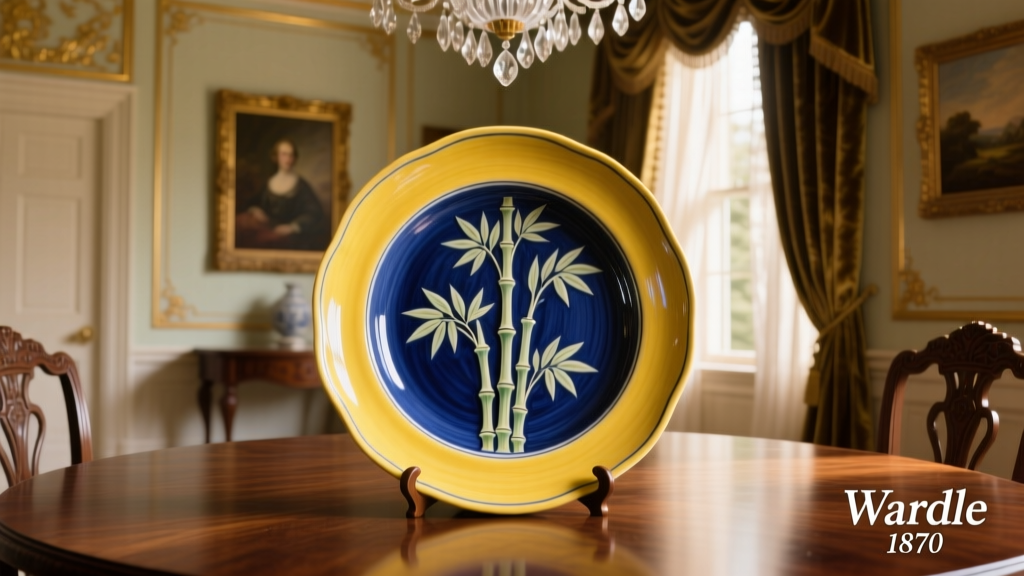
Wardle & Co. Majolica Platter: Bamboo Fern Motif with Yellow Rim and Cobalt Blue Center — A 13½-Inch Masterpiece of Victorian Ceramic Art
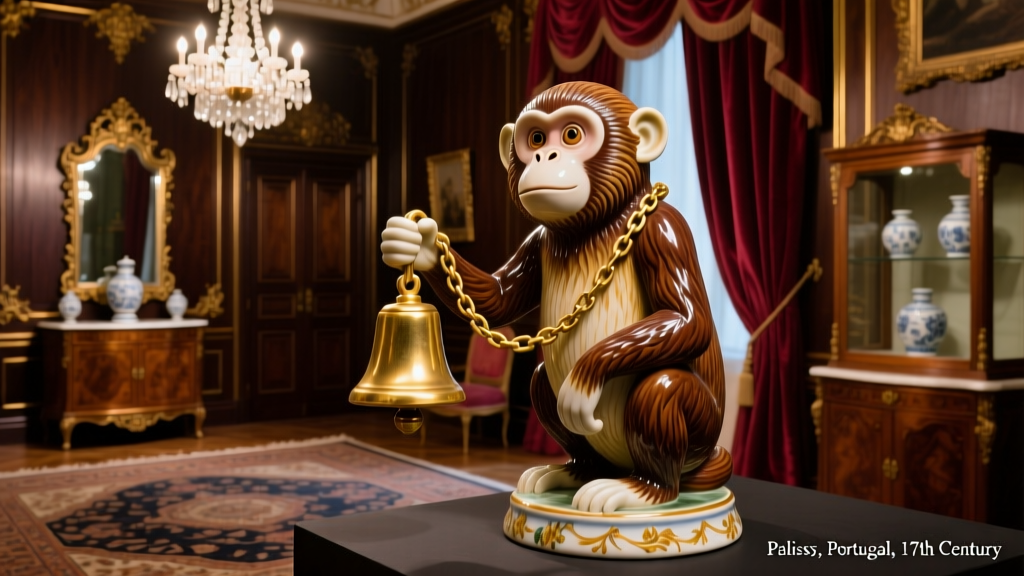
Majolica Bell Pull Monkey Figural: Brown & Gold Chain, Palissy-Inspired, Portugal-Made — A 16½-Inch Antique Restoration Study
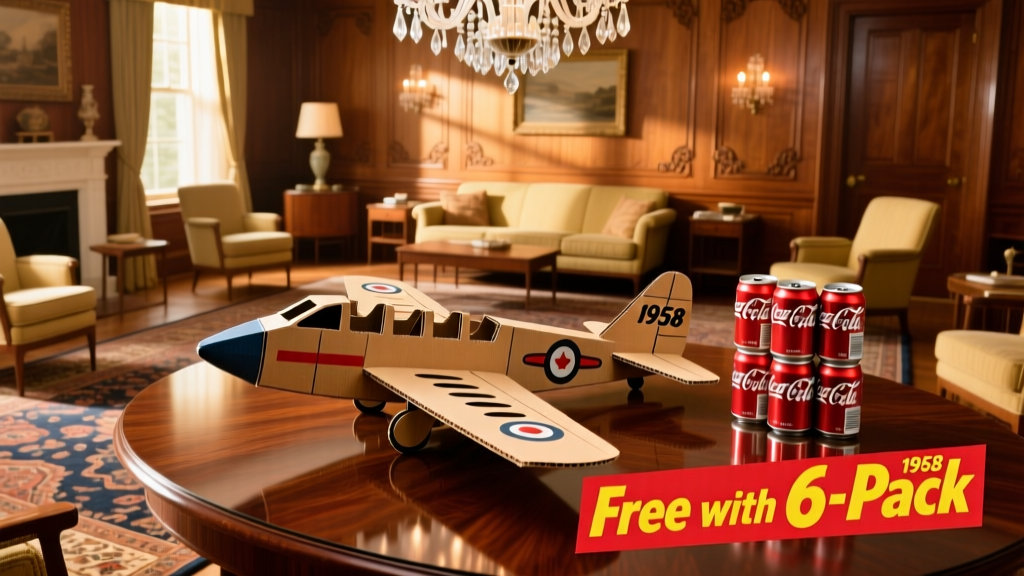
The 1958 Squirt Jet Plane: A Rare Advertising Artifact from the Golden Age of Soda Promotions