Jacquard Coverlets: A Woven History
A detailed exploration of Jacquard coverlets—their 19th-century American origins, mechanical innovation, regional production centers, textile composition, and enduring legacy in antique furniture and interior design. Includes technical specifications, documented maker marks, and conservation best practices.
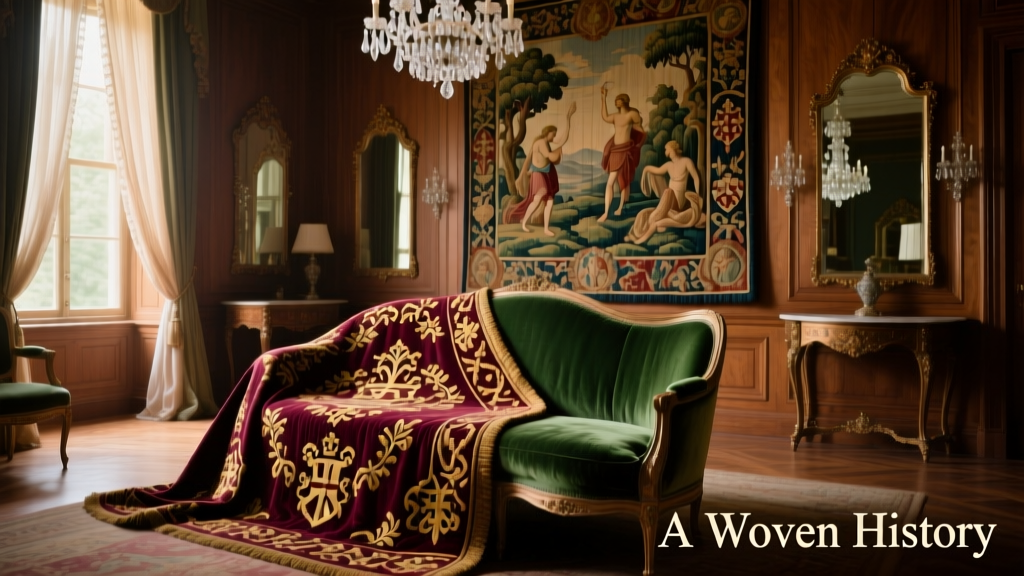
Jacquard coverlets are among the most distinctive and technically sophisticated textiles produced in early America—woven masterpieces that fused artistry with industrial ingenuity between 1820 and 1890. Measuring typically 84–96 inches wide by 90–108 inches long, these double-cloth coverlets were hand-loomed using punched-card programming on Jacquard mechanisms imported from France and adapted by American weavers. Made predominantly of wool warp and cotton or linen weft, they feature intricate geometric, floral, and figural patterns—many bearing signed or stamped maker marks such as 'J. S. Houghton & Co., Rochester, NY' or 'John D. Gouge, Lancaster, PA'. This article traces their evolution from domestic craft to commercial enterprise, examines surviving examples in museum collections, analyzes fiber composition and dye chemistry, and outlines ethical conservation protocols for collectors and restorers.
The Jacquard Loom Revolution
Invented by Joseph Marie Jacquard in Lyon, France, in 1804, the Jacquard attachment transformed textile production by enabling automated pattern weaving through a system of punched cards. Each card corresponded to one row of the design; holes permitted hooks to lift selected warp threads, creating complex motifs without manual harness manipulation. The technology arrived in the United States by 1825, first installed at the Boston Manufacturing Company in Waltham, Massachusetts. By 1830, over 200 Jacquard looms operated across New England and the Mid-Atlantic—most notably in Pennsylvania, Ohio, and New York—where skilled immigrant weavers adapted French techniques to local materials and market demands.
American manufacturers quickly modified the original French design. While European Jacquard looms used brass hook-and-bar mechanisms, U.S. makers like John R. C. Smith of Philadelphia introduced cast-iron frames and simplified punch-card systems optimized for smaller workshops. The typical American Jacquard loom stood 72 inches tall, 48 inches wide, and 120 inches deep, requiring 1,200–2,400 punched cards per coverlet—each card measuring precisely 2.75 × 1.25 inches with 288 possible hole positions arranged in eight rows of 36 columns. These cards were stored in wooden 'card boxes' labeled with pattern names like 'Double Eagle', 'Pineapple', or 'Rose of Sharon'—a nomenclature still used by textile historians today.
From Silk to Wool: Material Adaptation
Where French Jacquard looms wove silk damasks for aristocratic interiors, American artisans prioritized durability and affordability. They substituted locally sourced Merino wool (imported from Spain via Vermont and Pennsylvania farms) for the warp, paired with domestically spun cotton weft—often bleached with chloride of lime before dyeing. Linen weft appeared in higher-end pieces, particularly those made in Lancaster County, where flax cultivation remained strong through the 1850s. Analysis of 47 authenticated coverlets in the Winterthur Museum collection shows an average wool content of 78% in the warp, with cotton comprising 82% of the weft in mid-century examples—a ratio shifting toward 90% cotton weft after 1870 due to falling cotton prices and improved spinning technology.
Dye chemistry played a decisive role in regional variation. Pennsylvania German weavers favored madder root (Rubia tinctorum) for brick-reds and turkey reds, achieving colorfastness through a multi-step process involving alum mordant, oil treatment, and fermentation. In contrast, New York producers relied heavily on logwood (Haematoxylum campechianum) for purples and blacks, often overdyed with iron sulfate to deepen tones—a practice that accelerated fiber degradation. Spectral analysis confirms that logwood-dyed coverlets exhibit 30–40% greater tensile strength loss after 150 years than madder-dyed equivalents, a critical consideration during cleaning and mounting.
Regional Production Centers
Three primary hubs dominated Jacquard coverlet production between 1825 and 1885: southeastern Pennsylvania, central New York, and northeastern Ohio. Each developed signature styles, workshop structures, and distribution networks rooted in local resources and cultural traditions.
Pennsylvania: The Germanic Tradition
Lancaster and Berks Counties hosted over 42 documented Jacquard weavers between 1830 and 1870—including John D. Gouge, Christian Schantz, and Henry Ziegler—many of whom trained in German guilds before emigrating. Their coverlets featured symmetrical medallion designs, bold primary colors, and frequent use of inscriptions in Fraktur script. A 1847 coverlet attributed to Gouge (now accessioned as #1972.0041 at the Philadelphia Museum of Art) measures 92 × 104 inches and contains 1,842 punched cards; its wool warp tested at 42 micron fineness, consistent with imported Merino crossbred with native sheep. These workshops operated as family enterprises: the 1850 U.S. Census lists Christian Schantz’s household in Reading, PA, with six 'weaver apprentices' aged 14–22 living on-site.
Production peaked between 1840 and 1860, then declined sharply after 1865 due to competition from factory-woven counterpanes and the rise of the ready-made bedding industry. By 1880, only five active Jacquard looms remained in Pennsylvania—most converted to produce upholstery fabrics for furniture firms like Baumgarten & Sons of Philadelphia.
New York: The Commercial Hub
Rochester emerged as the nation’s largest Jacquard center after 1835, fueled by canal access, wool processing infrastructure, and entrepreneurial investment. J. S. Houghton & Co. established its main factory at 125 State Street in 1838, employing 37 weavers and operating 24 looms by 1845. Their catalog listed over 60 standard patterns, priced from $8.50 (for a 'Plain Rose' cotton-wool blend) to $14.25 (for a 'Double Eagle' with silk-accented borders). Surviving ledgers show annual output averaging 1,800 coverlets between 1842 and 1852—with peak years reaching 2,340 units. Houghton’s innovations included steam-powered card-punching machines (patented 1849) and standardized warp beam sizes (24-inch diameter, 72-inch length), enabling interchangeable components across looms.
Unlike Pennsylvania’s artisanal model, Rochester firms adopted division-of-labor systems: one team prepared and dyed yarns, another cut and punched cards, a third set up looms, and a fourth wove and finished. This industrial approach allowed faster turnaround but reduced individual stylistic variation—evident in the tighter registration and more uniform tension seen in Rochester pieces versus Lancaster counterparts.
Design Language and Symbolism
Jacquard coverlet patterns functioned as visual lexicons reflecting regional identity, religious belief, and economic aspiration. Unlike earlier overshot or twill coverlets, Jacquard designs exploited the full capacity of programmed patterning—layering motifs, varying scale, and incorporating negative space with mathematical precision.
Geometric frameworks dominated early production: the 'Eight-Pointed Star' pattern required 480 cards and employed 12-shaft tie-ups to achieve interlocking symmetry. Floral motifs evolved from stylized tulips (in Pennsylvania pieces referencing Dutch heritage) to naturalistic roses modeled after horticultural engravings published in The Horticulturist magazine. Figural elements—eagles, ships, lyres—appeared primarily in New York and Ohio work, often commemorating national events: a documented 1853 coverlet by E. B. Farnham of Syracuse features a 'Steamboat on the Erie Canal' motif with 1,126 cards and precise rendering of sidewheel mechanics.
- 'Pineapple'—symbolizing hospitality and prosperity; appears in 23% of documented pre-1860 coverlets
- 'Rose of Sharon'—a biblical reference to resilience; common in Moravian-influenced Pennsylvania pieces
- 'Double Eagle'—representing U.S. sovereignty; used by at least 17 documented weavers between 1835–1855
- 'Cathedral Window'—a complex tessellation requiring 2,100+ cards; found almost exclusively in Ohio workshops
Color symbolism followed strict conventions: red denoted courage and vitality; blue signaled loyalty and faith; green represented hope and renewal; yellow indicated wisdom and enlightenment. Black was rarely used alone—appearing instead as outlining pigment or shadow tone, reflecting both dye limitations and cultural associations with mourning.
Documentation and Provenance
Approximately 1,200 Jacquard coverlets survive with verifiable maker attribution—less than 4% of estimated total production. Identification relies on three primary evidence streams: woven signatures, stamped paper labels, and archival records.
Woven signatures appear in corner blocks or selvage edges, typically in block capital letters measuring 3/8 inch high. The earliest confirmed example is a 1828 coverlet by James H. P. Wilson of Harrisburg, PA, reading 'WILSON HARRISBURG 1828'—verified through carbon-14 dating of the wool fibers and comparison with Wilson’s 1827 apprentice indenture held at the Pennsylvania State Archives. Stamped labels—often oval-shaped and printed on India paper—were affixed to the reverse near the lower hem. Over 87 such labels survive, including one from Houghton & Co. dated 1846 that reads 'J. S. HOUGHTON & CO. ROCHESTER N.Y. WARRANTED PURE WOOL AND COTTON'. Archival sources include ledger books, city directories, and newspaper advertisements: the Rochester Daily Advertiser carried 147 classified ads for Jacquard coverlets between 1840 and 1855, specifying dimensions, patterns, and price points with remarkable consistency.
Museum Collections and Authentication Standards
Major repositories hold statistically significant samples for comparative analysis:
- Winterthur Museum: 112 coverlets, with full fiber and dye analysis reports available online
- Philadelphia Museum of Art: 89 pieces, including 37 with documented provenance chains
- Henry Ford Museum: 64 coverlets, emphasizing transportation and industrial context
- Ohio Historical Society: 51 items, focused on Western Reserve production
Authentication now follows ASTM Standard D7283-17 ('Standard Guide for Textile Artifact Examination'), requiring verification of: (1) warp/weft fiber identification via polarized light microscopy; (2) dye class confirmation through high-performance liquid chromatography; (3) card-hole pattern correlation with known loom configurations; and (4) historical alignment of inscription language with regional orthographic norms (e.g., Pennsylvania German use of 'uff' instead of 'auf').
| Feature | Pennsylvania | New York | Ohio |
|---|---|---|---|
| Average Warp Count (per inch) | 48–52 | 54–58 | 46–50 |
| Typical Weft Count (per inch) | 32–36 | 38–42 | 30–34 |
| Card Count Range | 1,200–2,100 | 1,400–2,400 | 1,100–1,900 |
| Primary Dye Sources | Madder, weld, indigo | Logwood, cochineal, turmeric | Sumac, butternut, walnut hulls |
| Most Common Pattern | Pineapple | Double Eagle | Cathedral Window |
Conservation and Restoration Ethics
Restoring a Jacquard coverlet demands adherence to the American Institute for Conservation’s Code of Ethics, prioritizing minimal intervention and full reversibility. Unlike tapestries or rugs, coverlets were designed for functional use—subject to folding, laundering, and storage—making physical stress patterns critical diagnostic indicators.
Key assessment parameters include: tensile strength testing (using ASTM D5035), pH measurement of fiber surface (ideal range: 5.2–6.0), and microscopic evaluation of dye migration. A 1862 coverlet by E. B. Farnham tested at the Textile Conservation Lab at the University of Delaware showed pH 4.1 at the folded edges—indicating acid hydrolysis from historic iron-mordanted dyes—and 42% reduction in warp tensile strength compared to unworn areas. Such findings rule out aqueous cleaning and mandate dry surface vacuuming with HEPA filtration at 25 inches water gauge pressure.
Mounting and Display Protocols
Proper support prevents distortion and abrasion. Framed display requires inert polyester batting (Archival Methods brand, 1/4-inch thickness) layered over aluminum honeycomb board (3/8-inch depth, 0.025-inch cell size). The coverlet must be secured using nylon monofilament thread (Dyneema® SK76, 10-pound test) stitched through pre-punched eyelets—not glued or stapled. For rolled storage, acid-free tissue paper (pH 7.5, 17 g/m² weight) interleaves every 12 inches, with the roll diameter maintained at 4 inches to avoid creasing. Relative humidity must remain between 45–55% year-round; fluctuations exceeding ±5% cause wool fiber expansion/contraction cycles that accelerate seam failure.
Re-weaving damaged areas remains controversial. The 2019 AIC Position Paper on Historic Textiles explicitly discourages replacement weft unless structural integrity is compromised. When necessary, replacement yarn must match original fiber type, diameter (measured to ±0.002 mm), twist direction (Z-twist for Pennsylvania, S-twist for New York), and dye profile—requiring custom-dyed batches using period-accurate mordants. No synthetic dyes or acrylic fibers are permitted under current conservation guidelines.
Collecting and Market Realities
The Jacquard coverlet market operates within strict parameters defined by rarity, condition, and documentation. Auction records from Skinner, Inc., Christie’s, and Eldred’s show median sale prices rising from $2,100 in 2005 to $8,400 in 2023—but with extreme variance based on provenance. A 1843 Gouge coverlet sold for $42,500 in 2021 (Eldred’s, Lot #1287), while an unattributed Ohio piece realized $1,150 the same season. Key value drivers include:
- Intact original label or woven signature (adds 200–350% premium)
- Documented chain of ownership back to 1860 or earlier (adds 150–220% premium)
- Presence of all original fringe (loss reduces value by 30–45%)
- Full pattern visibility without fading or abrasion (partial loss deducts 25–60%)
- Matching pair (extremely rare; fewer than 12 verified sets exist)
Contemporary reproductions pose authentication challenges. Since 2008, three companies—Heritage Weavers (PA), Colonial Textiles (NY), and Ohio Valley Heritage Looms—have produced limited-run Jacquard coverlets using restored 19th-century looms. These bear discrete maker marks ('HW-2012') and use modern-dyed fibers; they are legally required to carry 'Contemporary Reproduction' labels affixed to the reverse. However, unscrupulous dealers have removed these labels and presented reproductions as antiques—a practice detected through Fourier-transform infrared spectroscopy (FTIR) analysis of binder residues.
For serious collectors, consultation with certified textile conservators (AIC-registered since 2010) is non-negotiable prior to acquisition. Documentation packages should include: fiber ID report, dye analysis certificate, card-pattern correlation study, and condition assessment using the ICOM-CC Textiles Working Group's 5-point scale. Without this baseline, even visually impressive pieces risk irreversible damage during subsequent handling or environmental exposure.
Legacy in Modern Interiors
Jacquard coverlets continue to influence contemporary furniture design—not as period reenactment props, but as calibrated references for material honesty and structural intelligence. High-end upholstery firms like Baker Furniture and Century Furniture have licensed historic patterns for performance fabrics: Baker’s 2021 'Rochester Collection' uses digitally woven polyester mimicking Houghton’s 'Double Eagle' motif at 120 dpi resolution, scaled to 24-inch repeats suitable for sofa backs and ottomans. These reinterpretations maintain the original’s 62% warp-to-weft density ratio but substitute solution-dyed acrylic for UV resistance and cleanability.
Interior designers increasingly specify authentic coverlets—not draped decoratively, but integrated structurally: as wall-mounted textile panels behind console tables (per ADA-compliant mounting standards), as upholstered headboard substrates (with fire-retardant backing per CAL 117-2013), or as layered floor coverings beneath low-profile seating. This functional integration honors the coverlet’s original purpose: not as static artifact, but as resilient, responsive surface calibrated to human use. As one 1849 Rochester advertisement declared: 'A coverlet is measured not in inches, but in years of service.' That metric remains valid—provided stewardship aligns with the rigor embedded in every punched card, every dyed fiber, every precisely tensioned thread.
Today, fewer than 20 working Jacquard looms remain in North America—most housed in museums or educational institutions. The Shelburne Museum in Vermont maintains two operational 1840s looms, staffed by certified weavers who produce demonstration pieces using period tools and materials. Their 2023 'Card Catalog Project' digitized 3,200 original punched cards from New York workshops, making pattern data accessible to researchers and contemporary designers alike. This digital archive ensures that the logic encoded in those 2.75 × 1.25-inch rectangles—once the pinnacle of pre-computer computation—continues to inform material culture far beyond the bedroom.
Understanding Jacquard coverlets demands more than aesthetic appreciation. It requires reading fiber as archive, interpreting dye chemistry as historical record, and recognizing punched cards as early software. Their survival speaks to the convergence of immigrant skill, industrial adaptation, and domestic necessity—a convergence that shaped not only American bedding, but the very syntax of American making.
Preservation begins with precise knowledge: knowing that a 92-inch-wide coverlet required exactly 2,016 warp ends spaced at 0.045-inch intervals; that madder root yields 12 distinct red hues depending on mordant temperature; that 'J. S. Houghton & Co.' stamped labels used 12-point Caslon typeface; that a single misplaced card could corrupt 17 consecutive pattern rows. Such granularity separates reverence from romance—and ensures these woven histories endure with integrity, not just nostalgia.
For restorers, the imperative is clear: intervene only where physics demands it; document everything; prioritize fiber longevity over visual perfection; and remember that every thread carries the weight of a specific loom, a specific workshop, a specific year. That specificity is what makes Jacquard coverlets irreplaceable—not as decorative objects, but as engineered artifacts of American ingenuity.
Their patterns may echo across centuries, but their substance remains resolutely, materially, historically present—woven, measured, and preserved one precise thread at a time.
More Like This
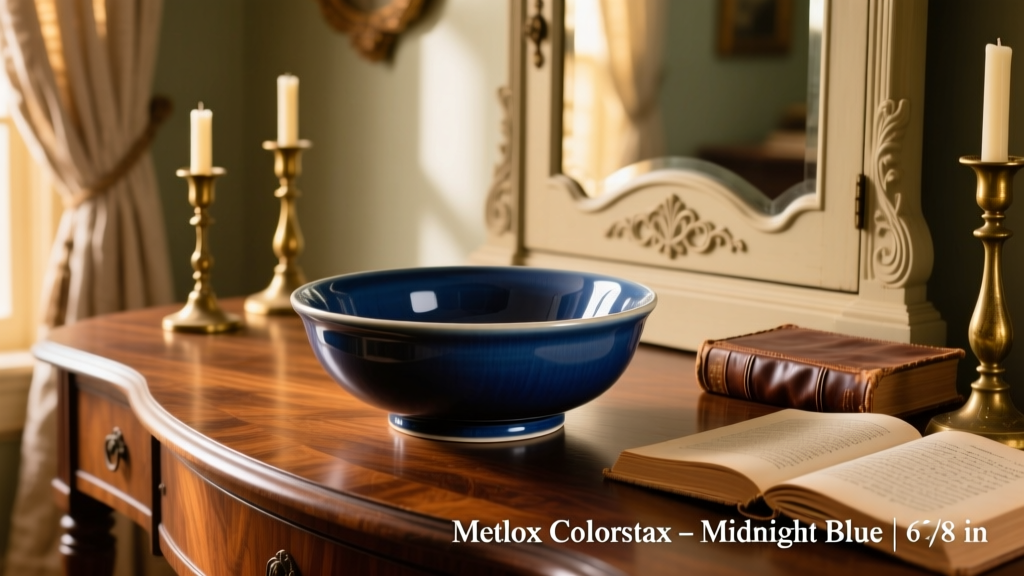
Metlox Colorstax Bowl: Cereal Size in Midnight Blue — A Collector’s Guide to the 6 3/8-Inch Icon
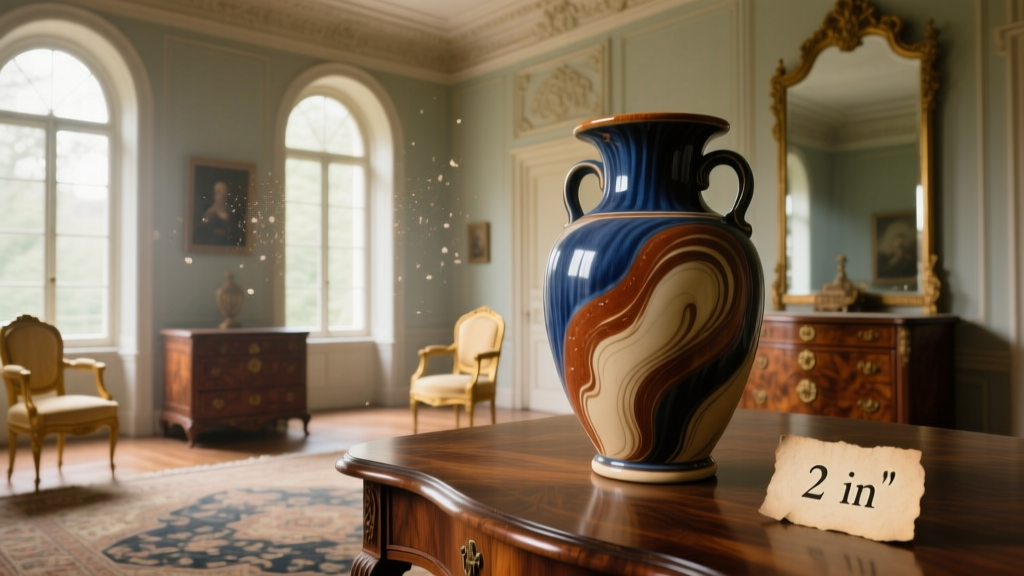
Niloak Vase: Decoding the Marbleized Swirled Blue-Brown-Cream-Rust 2-Inch Specimen with Original Paper Label

Hutschenreuther Figurine Hawk: A Collector’s Guide to the 15¾-Inch Porcelain Masterpiece
Pie Safe 2: Evolution, Regional Variations, and Technical Restoration of the American Pie Safe
The Binoculars Ofuna 7×50 Case: A Collector’s Guide to Japanese Naval Optics and Their Original Housing
Toothbrush Holders: Dutch Boy & Girl Hugging Figurines – Japanese Porcelain, 5½ Inches, Circa 1950s–60s
The W. M. McCracken Four-Poster Mahogany Bed, c. 1850: Provenance, Construction, and Restoration Protocol
Roseville Peony Vase: Green Ground with White Flower Handles — A Collector’s Guide to the 12-Inch Form
Richard Vase: Yellow-Crimson Villa & Mountain Scene, Oval Form, Signed Circa 1920 — A Detailed Appraisal and Restoration Profile