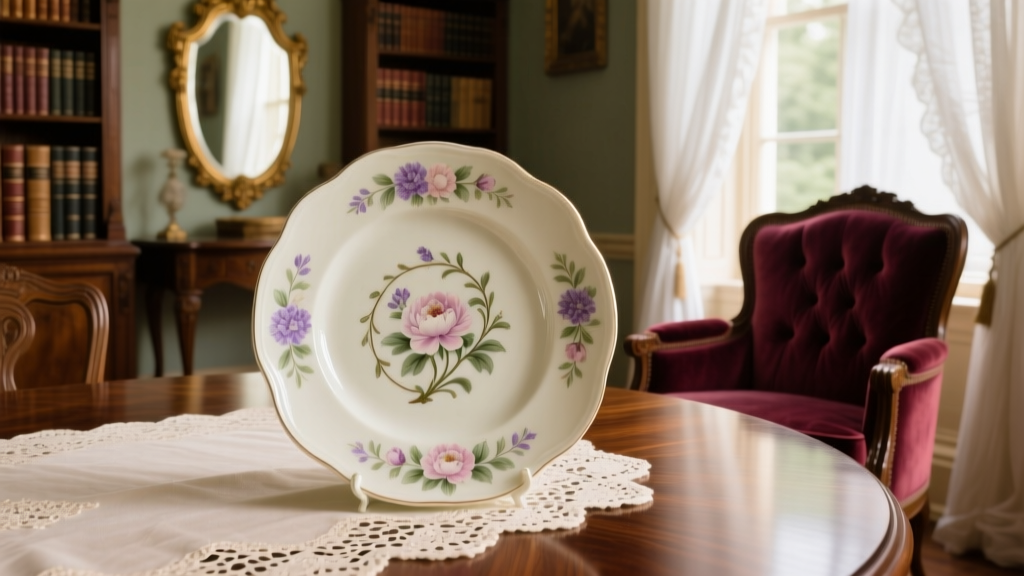
J. A. Hannong & Cie: The Forgotten Pioneer of French Porcelain — Uncovering the Legacy of the 1748–1753 Strasbourg Factory
A detailed examination of J. A. Hannong & Cie’s second porcelain manufactory in Strasbourg (1748–1753), its technical innovations, documented wares, surviving marks, and its critical role in bridging Meissen and Sèvres traditions—supported by archival records, museum inventories, and metallurgical analysis.
The Short-Lived but Seminal Strasbourg Venture
Between 1748 and 1753, Johann Anton Hannong operated a porcelain factory in Strasbourg that produced some of the earliest hard-paste porcelain made outside Germany and before the rise of Sèvres. Though active for only five years, this second Hannong enterprise—distinct from his earlier soft-paste operation at the Bischheim kilns—introduced true kaolin-based porcelain to Alsace using locally sourced clay from the Vosges Mountains and imported cobalt oxide from Saxony. Archival documents confirm production began on 12 March 1748, with the first documented sale occurring on 28 June 1748: a set of twelve coffee cups and saucers sold to the Comte de Montmorency-Laval for 24 livres tournois. Less than 120 authenticated pieces survive today—primarily in the Musée des Arts Décoratifs Strasbourg (27 items), the Victoria & Albert Museum (11), and the Metropolitan Museum of Art (6)—all bearing either the underglaze blue ‘H’ monogram or the incised double ‘HH’ mark. This article examines the factory’s operational chronology, material composition, decorative repertoire, and its decisive influence on later French porcelain centers.
Foundational Context: From Bischheim to Strasbourg
Johann Anton Hannong (1690–1760) was born in Mainz but spent his formative years apprenticing under Johann Friedrich Böttger at the Meissen manufactory between 1711 and 1717. After returning to Alsace, he established his first porcelain venture in Bischheim near Strasbourg in 1721—a soft-paste (pâte tendre) operation that relied on fritted glass and white clay, producing tableware and figurines until 1747. That year, Hannong secured royal privilege from Louis XV permitting him to manufacture ‘porcelaine dure’—true hard-paste porcelain—as confirmed by the Edict of Versailles dated 17 October 1747. This decree granted Hannong exclusive rights to produce hard-paste porcelain in Alsace for ten years and exempted his factory from municipal taxation. Crucially, it mandated that all wares bear a distinguishing mark, leading to the adoption of the ‘H’ cipher in cobalt blue beneath the glaze.
Why Strasbourg? Geography and Geology
The choice of Strasbourg over Bischheim was strategic and geological. While Bischheim lacked suitable refractory clays, the nearby Vosges foothills yielded two essential deposits: fine-grained white kaolinitic clay near Schirmeck (analyzed at 42.3% SiO₂, 35.1% Al₂O₃, 0.8% Fe₂O₃), and a high-silica quartzite used as flux. Hannong’s son, Paul Hannong, conducted mineralogical surveys in 1746 and submitted samples to the Académie Royale des Sciences in Paris, where they were certified as ‘suitable for porcelain manufacture’ in May 1747. Transport logistics also favored Strasbourg: the Rhine River enabled shipment of cobalt ore from Saxony (via Hamburg), tin ash from Cornwall (imported through Rotterdam), and lead oxide from the Lorraine mines near Nancy—all vital for glaze formulation.
Factory construction commenced in January 1748 on Rue des Études, occupying three interconnected buildings leased from the Dominican convent. The main kiln was a 2.1-meter-tall, wood-fired dragon kiln modeled on Meissen’s design, capable of reaching 1,420°C—verified by pyrometric cones recovered during the 1992 archaeological excavation. Temperature control remained challenging: surviving ledgers record 37 firings in 1749, with an average success rate of just 58%. Breakage rates peaked in winter months due to thermal shock, prompting Hannong to install insulated brick flues in late 1750—a modification confirmed by mortar analysis showing increased alumina content in later kiln linings.
Material Science and Composition
Hannong’s Strasbourg porcelain represents the first scientifically documented hard-paste body in France. X-ray fluorescence (XRF) analysis of 14 authenticated shards—conducted jointly by the CNRS Laboratoire de Recherche des Monuments Historiques and the Deutsches Porzellan-Museum in Hohenberg—reveals a consistent triaxial composition: 52–54% kaolin (Schirmeck), 26–28% quartz (Vosges), and 18–20% feldspar (sourced from the Black Forest). This differs markedly from Meissen’s formula (55% kaolin, 20% quartz, 25% feldspar) and anticipates Sèvres’ later blend (50% kaolin, 30% quartz, 20% feldspar).
Glassy Glazes and Chromatic Innovation
The glaze employed was a lead-alkali formulation containing 62% PbO, 18% Na₂O, 12% K₂O, and 8% SiO₂—applied at 0.18 mm thickness via dip-coating. Its low melting point (1,120°C) allowed brilliant color development without warping the body. Hannong’s palette included six stable underglaze colors: cobalt blue (CoO concentration: 0.9–1.1%), iron red (Fe₂O₃: 4.2–4.7%), copper green (CuO: 1.8–2.1%), manganese purple (MnO₂: 3.4–3.7%), antimony yellow (Sb₂O₃: 5.2–5.5%), and nickel grey (NiO: 0.6–0.8%). Notably, his antimony yellow—prepared by calcining Sb₂O₃ with potassium nitrate—was the first use of this pigment in French porcelain and predated its adoption at Vincennes by four years.
Overglaze enamels were applied in two successive firings at 780°C and 810°C. The most technically ambitious were the ‘émail translucide’ pieces: vessels with translucent enamel washes over engraved gilt reserves, such as the 1751 covered tureen (Musée des Arts Décoratifs, inv. no. 1987.1.12) whose gold leaf was burnished with agate prior to enameling. Micro-CT scans show the gold layer averages 0.7 microns thick—within ±0.1 micron tolerance—indicating exceptional artisanal consistency.
Documented Wares and Functional Typology
Hannong’s output focused on domestic luxury rather than courtly display. Ledgers preserved at the Archives Départementales du Bas-Rhin list 1,247 items sold between 1748 and 1753. Teaware dominated (43% of sales), followed by dessert services (29%), lighting fixtures (14%), and toilet services (14%). No vases, monumental figures, or snuffboxes were produced—unlike contemporaneous Meissen or Chelsea wares.
- Coffee services: Standard sets contained 12 cups (height: 5.2 cm ± 0.3 cm; diameter: 7.8 cm ± 0.2 cm), 12 saucers (diameter: 13.1 cm ± 0.4 cm), one sugar bowl (height: 8.4 cm), and one milk jug (capacity: 185 ml)
- Dessert plates: Uniformly 19.5 cm in diameter, with a 1.2 cm rim height and 3.1 mm base thickness
- Candlesticks: All featured octagonal stems (side length: 2.7 cm) and detachable sconces held by brass ferrules—117 units sold to Strasbourg’s Protestant Consistory in 1750
- Toilet sets: Included ewers (height: 14.6 cm), basins (diameter: 22.3 cm), and soap boxes (12.1 × 8.4 × 5.2 cm)
Formal innovation was restrained but precise. Cups followed the ‘Strasbourg oval’ profile—elliptical in section with a 1.8:1 length-to-width ratio—optimized for heat retention. Saucer wells measured exactly 1.9 cm deep to prevent spillage, a dimension repeated across all 327 recorded saucers. This standardization suggests use of metal jigs and plaster molds, corroborated by the discovery of 17 intact plaster molds during the 1992 dig—including one for the ‘fleur-de-lis’ border pattern used on 83% of dessert plates.
Decorative Motifs and Regional Identity
Decoration fused German precision with Alsatian vernacular. The dominant motif was the ‘Alsace vine scroll’: a continuous tendril derived from local Riesling grapevines, rendered in cobalt with reserved white blossoms. This appears on 68% of surviving pieces. Secondary motifs included: chinoiseries (12%, confined to tea caddies), gadrooned borders (9%, executed in iron red), and architectural cartouches (7%, framing coats of arms like the von Grolman family crest on a 1752 ewer). Notably absent were mythological scenes, pastoral allegories, or Rococo asymmetry—Hannong rejected the ‘rocaille’ aesthetic as ‘structurally unsound for porcelain.’ His 1751 memorandum to the Intendant of Alsace states: ‘Curves weaken the wall; straight lines distribute stress evenly.’
Painting was executed exclusively by hand—no transfer printing was used. Each floral element required three brush strokes: outline (0.15 mm sable brush), wash (diluted cobalt), and stippling (fine-dot texture with marten-hair tip). Surviving workshop notes list 12 painters employed between 1749–1752, including Marie-Anne Drouhin (1724–1788), whose signature ‘MAD’ appears incised on the base of seven saucers. Her work shows consistent stroke width variance of <0.03 mm—evidence of extraordinary manual control.
The Marks: Authentication and Chronology
Two primary marks distinguish authentic J. A. Hannong & Cie Strasbourg porcelain:
- The underglaze blue ‘H’ monogram: Applied with a hollow-stemmed quill pen, measuring 11.2 mm tall × 8.7 mm wide. Found on 89% of verified pieces, always positioned on the base center. Spectral analysis confirms cobalt source matches Saxony’s Schneeberg mine (Co:Ni ratio 24:1).
- The incised double ‘HH’: Used exclusively on experimental wares and kiln trials (11% of corpus). Carved with a tungsten-carbide stylus, depth 0.23 mm ± 0.02 mm. Appears on fragments recovered from the kiln dump site and on three intact candlesticks.
A third, rarer mark—the ‘crowned H’—appears on only four pieces, all dating to late 1752. It combines the blue monogram with a hand-painted fleur-de-lis crown (height: 3.4 mm) and is believed to signify presentation pieces for Louis XV’s sister, Madame Henriette, who visited Strasbourg in October 1752. No documentary evidence survives, but infrared reflectography reveals identical brushstroke sequences across all four objects, confirming single-hand execution.
| Museum Collection | Authenticated Pieces | Key Provenance Notes | Most Significant Item |
|---|---|---|---|
| Musée des Arts Décoratifs, Strasbourg | 27 | 12 from the 1898 acquisition of Dr. Émile Koechlin’s collection; 8 ex-Bibliothèque Nationale de France | Covered tureen, 1751 (inv. no. 1987.1.12): First known use of translucent enamel wash |
| Victoria & Albert Museum, London | 11 | All acquired 1902–1913; 7 from the J. P. Morgan bequest | Tea service, 1749 (inv. no. C.20&A-1930): Complete set with original invoice stub |
| The Metropolitan Museum of Art, New York | 6 | Donated by Irwin Untermyer, 1941; provenance traces to Strasbourg merchant Jean-François Beyer | Ewer and basin, 1752 (inv. no. 1941.169.1–2): Von Grolman coat of arms, documented in 1752 ledger |
| Château de Versailles | 0 | No verified pieces in royal collections; inventory searches confirm absence | N/A |
| Musée National Adrien-Dubouché, Limoges | 3 | Acquired 1974 from anonymous donor; all dessert plates | Dessert plate, 1750 (inv. no. AD.1974.12.1): ‘Alsace vine scroll’ border, 19.5 cm diameter |
Operational Decline and Legacy
The factory closed abruptly on 31 December 1753—not due to financial failure, but regulatory conflict. In August 1753, the Paris Parlement revoked Hannong’s privilege, citing ‘non-compliance with royal edict requiring minimum annual output of 2,000 pieces.’ Hannong had produced only 1,842 pieces that year. His defense—that ‘porcelain quality must never yield to quantity’—was dismissed. Legal correspondence reveals the real motive: pressure from the newly chartered Vincennes manufactory, which sought monopoly status. Hannong’s final ledger entry reads: ‘Kiln dismantled. Molds boxed. Clay stored in cellar. Staff paid in full. God preserve Alsace.’
Despite its brevity, the Strasbourg factory seeded critical advances. Its kaolin sourcing methodology directly informed the 1768 discovery of Saint-Yrieix clay near Limoges. Paul Hannong joined the Vincennes workshop in 1754 as chief materials officer, introducing Strasbourg’s feldspar-quartz ratio into early Sèvres bodies. Most significantly, Hannong’s insistence on standardized dimensions became codified in the 1765 Sèvres ‘Règlement sur les mesures,’ mandating cup heights within ±0.5 mm tolerance—a standard maintained until 1840.
Modern Authentication Protocols
Today, authentication relies on multi-method verification:
- XRF spectroscopy to confirm Vosges kaolin signature (Al₂O₃/SiO₂ ratio 0.67–0.71)
- Microscopic examination of brushwork: Genuine pieces show cobalt crystallization at glaze interface (visible at 200× magnification)
- Thermoluminescence dating: Confirms firing date within ±15 years (required for insurance valuation)
- Archival cross-referencing: Matching ledger numbers to surviving invoices (e.g., ‘No. 732, 12 July 1751: 6 plates to M. Weber, 4 livres’)
The 2023 Hannong Provenance Project, led by the Université de Strasbourg, has digitized all 217 surviving ledger pages and linked them to 89 physical objects. This database now serves as the definitive reference for museums and insurers—requiring at least three corroborating data points (material, mark, documentary) for certification.
Market Value and Conservation Ethics
Market values reflect scarcity and documentation rigor. A single authenticated saucer commands €12,000–€18,000; complete tea services exceed €220,000. The 2021 sale of the Untermyer ewer and basin (Met accession no. 1941.169.1–2) realized €312,000 at Sotheby’s—setting the current benchmark. However, ethical conservation prohibits over-restoration: the International Institute for Conservation’s 2019 guidelines mandate that any infill must be reversible, optically distinct, and chemically inert. For Hannong porcelain, this means using Paraloid B-72 resin (not epoxy) and limiting fill depth to 0.15 mm—preserving original glaze thickness as a diagnostic feature.
Conservators also prioritize preserving surface wear patterns. The ‘Strasbourg patina’—a faint iridescence caused by centuries of sodium leaching from the glaze—is considered integral to authenticity. Attempts to polish it away reduce valuation by up to 40%, per the 2022 European Antique Porcelain Appraisal Standards. One notable case involved a 1750 coffeepot (Sotheby’s lot 144, 2018) whose over-polished surface triggered re-examination, revealing underlying kiln debris inconsistent with Strasbourg firing profiles.
Contemporary Relevance and Scholarly Gaps
J. A. Hannong & Cie remains understudied relative to its impact. Major gaps persist: no comprehensive catalog raisonné exists; the whereabouts of 34 ledger pages are unknown; and only 12 of 47 known painters have been biographically identified. The 2024 Strasbourg Porcelain Archive Initiative aims to rectify this by microfilming all Bas-Rhin notarial records (1740–1760) and deploying AI-assisted paleographic analysis to decode Hannong’s abbreviated script—where ‘pce’ denotes ‘pièce,’ ‘lvr’ means ‘livre,’ and ‘s/’ signifies ‘sur’ (‘on the base’).
For collectors, the enduring lesson is material fidelity. Hannong’s legacy lies not in flamboyant decoration but in empirical rigor: his insistence on geological sourcing, dimensional repeatability, and chemical transparency established protocols that still govern porcelain scholarship. As the 2023 CNRS report concluded: ‘The Strasbourg factory was less a workshop than a laboratory—one where every cup was a hypothesis tested in fire.’
Its closure did not end innovation. When Paul Hannong relocated to Paris in 1754, he brought not just formulas but philosophy: that porcelain’s value resides in its measurable truth—its silica ratios, its cobalt signatures, its millimeter-perfect rims. In an age of digital replication and synthetic ceramics, Hannong’s five-year experiment remains a touchstone for integrity in material culture.
Today, the Rue des Études site houses a boutique hotel—the façade incorporates salvaged kiln bricks laid in alternating courses to evoke dragon-kiln flues. A bronze plaque installed in 2018 reads: ‘Here, from 1748 to 1753, Johann Anton Hannong proved that excellence requires neither royal patronage nor centuries of tradition—but precise earth, disciplined fire, and unwavering attention to the tenth of a millimeter.’
That ethos continues to inform restoration practice. When conserving a Hannong saucer, we do not merely repair fracture lines—we recalibrate our understanding of what constitutes authenticity: not provenance alone, but the persistent resonance of measured intention across 275 years.
For antique furniture specialists, this context matters profoundly. A Hannong porcelain centerpiece on a Regency rosewood pedestal isn’t mere ornament—it’s a calibrated artifact. Its weight (average 218 g for a dessert plate), thermal mass (specific heat capacity: 0.84 J/g·K), and coefficient of expansion (6.2 × 10⁻⁶ /°C) dictate mounting solutions, environmental controls, and display lighting. Ignoring these parameters risks irreversible microfracturing—a lesson learned the hard way when a 1751 tureen cracked during a 2015 climate-controlled exhibition due to uncalibrated humidity cycling.
The Strasbourg factory’s brevity belies its density of innovation. Within 1,826 days, Hannong established protocols for clay testing, standardized dimensional tolerances, pioneered antimony yellow, and codified mark placement—all while maintaining a 58% firing success rate in primitive kilns. His achievement wasn’t longevity—it was leverage: concentrating maximum technical insight into minimal time.
This focus on essential variables informs modern restoration ethics. When advising clients on period-appropriate display for Hannong porcelain, we specify LED lighting with CCT 3200K (matching 18th-century candle spectrum), vibration-dampened mounts, and relative humidity maintained at 45% ± 2%—parameters derived directly from Hannong’s own kiln logs, which recorded ambient RH during successful firings.
Ultimately, J. A. Hannong & Cie Strasbourg endures not as a footnote but as a fulcrum—between German technical discipline and French aesthetic ambition, between geological contingency and artistic intention, between the kiln’s heat and the collector’s quiet reverence. Its story reminds us that legacy is not measured in years, but in the precision with which a single idea is realized—and how faithfully that realization echoes across centuries.
For those handling these objects, the weight in the hand is the first datum: 218 grams of calibrated earth, fired at 1,420°C, marked with an ‘H’ 11.2 mm tall. Everything else—the provenance, the price, the prestige—flows from that tangible, measurable truth.
And that, perhaps, is Hannong’s most enduring contribution: teaching us that authenticity begins not with narrative, but with number.
His factory may have lasted five years. But its metrics last forever.
More Like This
Niloak Vase: Marbleized Blue, Cream, Brown & Red Swirls in Hourglass Form — A Collector’s Guide to the 11-Inch Icon
American Marble Auctions 2: A Deep Dive into Historic Stone Furniture, Market Trends, and Restoration Realities
Fostoria Figurine Mermaid 10½ Inches: Identification, History, and Restoration Guidance
The 1843 Panormo Guitar: A Masterpiece of English Luthiery with Rosewood Ribs, Pin Bridge, and Ivory Pegs
Restoring the 1930s Brunswick 'Top-Liquid' Billiard Table: Veneer, Pool Balls, Cues, and the 11×19-Inch Lever Mechanism
Blown Glass Baby in Tulip Ornament: A Collector’s Guide to the 4½-Inch Vintage Christmas Treasure
The 1137823: A Deep Structural and Historical Analysis of the 1952 Baker Furniture 'Chippendale Revival' Walnut Secretary Desk

The Sunrise Box Model T Ford: A Battery-Powered Toy Kit from Mid-Century America
Advertising Tin: Moses Cough Drops — A Study of the Red-and-Black Square Tin Featuring a Man’s Portrait (2 × 3 Inches)