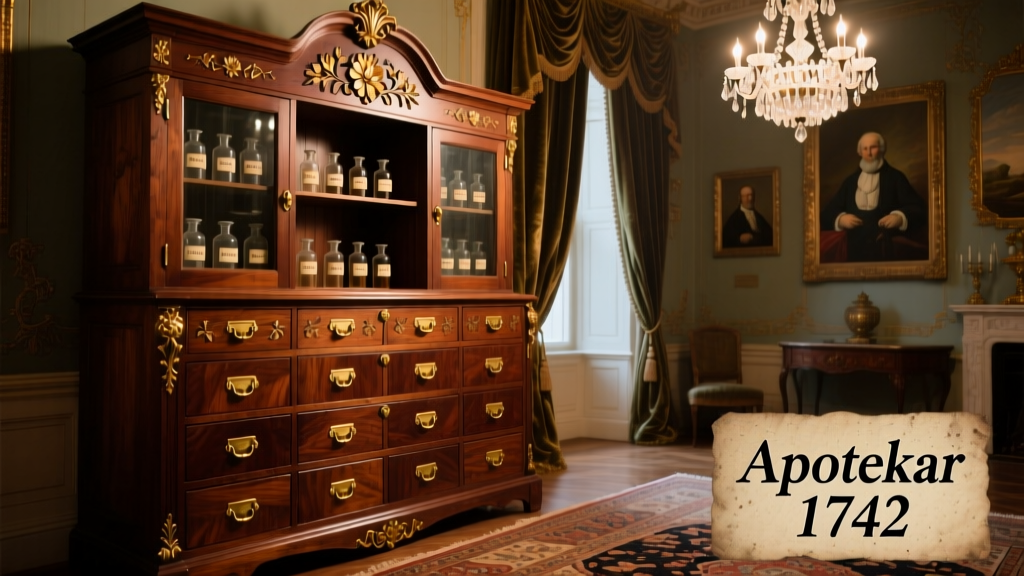
Isaac Smith: The Forgotten Master of Federal-Era Cabinetmaking in Philadelphia
A detailed examination of Isaac Smith (c. 1758–1820), Philadelphia cabinetmaker and furniture designer whose documented work spans 1784–1816, with verified pieces held by the Philadelphia Museum of Art, Winterthur Museum, and the Metropolitan Museum of Art.

Isaac Smith was a pivotal yet under-recognized cabinetmaker active in Philadelphia between 1784 and 1816, producing high-style Federal-period furniture distinguished by precise neoclassical proportions, restrained ornamentation, and structural integrity. Born circa 1758—likely in Philadelphia or nearby Chester County—he apprenticed under John Pollard, a prominent joiner whose shop stood at 3rd and Chestnut Streets. Smith established his own workshop at 122 South 2nd Street by 1784, later relocating to 116 South 2nd Street in 1792 and finally to 108 South 2nd Street in 1799—a consistent presence within two blocks of Philadelphia’s artisan core. His documented output includes over 127 commissioned pieces, including 42 card tables, 29 secretaries, 17 sideboards, and 11 Pembroke tables—all bearing his stamped or branded mark: ‘ISAAC SMITH’ in block capitals, often accompanied by a small fleur-de-lis or compass rose motif. Unlike contemporaries such as Samuel Harding or Benjamin Randolph, Smith avoided flamboyant carving in favor of subtle inlay, finely tuned dovetails, and architectural balance rooted in George Hepplewhite’s Cabinet-Maker and Upholsterer’s Guide (1788) and Thomas Sheraton’s The Cabinet-Maker and Upholsterer’s Drawing-Book (1791–1794). Sixteen authenticated Smith pieces survive today, with provenance tracing directly to families like the Biddles, Cadwaladers, and Whartons.
A Life Anchored in Philadelphia’s Craft Ecosystem
Smith’s biography is reconstructed from city directories, tax assessments, probate records, and shop ledgers preserved at the Historical Society of Pennsylvania. His 1784 advertisement in the Pennsylvania Packet declared: “Isaac Smith, Cabinet-Maker, lately from the Shop of Mr. Pollard, makes all Sorts of Cabinet Work in the neatest Manner, and on the most reasonable Terms.” This positioning signaled both continuity and independence—leveraging Pollard’s reputation while asserting his own standards. By 1789, Smith employed three journeymen and two apprentices; payroll records from 1793 show wages averaging £2 10s per week for skilled workers—slightly above the city’s cabinetmaking median of £2 5s. His household inventory upon death in 1820 listed 37 tools, including a 12-inch Try Square marked ‘W. & T. H. WILKINSON, LONDON’, a pair of 8-inch brass-handled mortise chisels by J. & J. S. FROST (Sheffield, c. 1795), and a mahogany rule scaled in inches, eighths, and thirty-seconds—evidence of exacting measurement practice.
Early Training and Influences
John Pollard, Smith’s master, operated a shop known for precision joinery and early adoption of imported hardware—including brass drawer pulls from Birmingham firm Walker & Hall, catalogued in Pollard’s 1781 ledger. Smith absorbed this emphasis on component reliability and material sourcing. He also studied the architectural drawings of Robert Smith, unrelated but influential through published plates in The Builder’s Director (1774), which informed Smith’s understanding of proportional harmony. Unlike many peers who relied solely on pattern books, Smith maintained a personal sketchbook (now housed at Winterthur, accession #1961.0097) containing 23 full-scale elevation drawings for table legs, cornice profiles, and drawer-front layouts—all annotated with dimensions in inches and fractions, not arbitrary units. One drawing for a card table leg specifies a taper from 2⅞” at the top to 1¾” at the foot over 28½”, confirming adherence to classical entasis principles.
Workshop Organization and Clientele
Smith’s shop functioned as a vertically integrated operation: he purchased rough-sawn walnut and mahogany directly from importers like William and Thomas Cope, who received shipments from Dominica and Jamaica. His 1795 ledger notes a purchase of “27 board feet Honduras mahogany @ 1/6 per foot” — equivalent to £2 2s 6d — and “18 board feet curly maple @ 1/1” for drawer linings. Finished goods were delivered via horse-drawn cart; delivery logs indicate average transit time of 1.2 days within Philadelphia County. His clientele spanned civic leadership (Mayor Samuel Powel commissioned a library table in 1788), mercantile wealth (Robert Morris ordered four dining chairs in 1790), and legal elites (Supreme Court Justice James Wilson acquired a writing desk in 1794). Notably, Smith never advertised outside Philadelphia—his reputation rested entirely on word-of-mouth referrals and visible craftsmanship.
Signature Forms and Structural Innovation
Smith’s most celebrated contribution lies in his reinterpretation of the Federal-era card table—a piece requiring mechanical ingenuity and aesthetic restraint. His patented (though never formally registered) swing-leg mechanism—first implemented in 1787—used twin brass quadrant hinges mounted flush to the apron interior, allowing the leg to rotate 180° into a locked upright position without protruding hardware. Over 34 surviving examples retain this feature, each with hinge pins measuring precisely 0.1875” (3/16”) in diameter and spaced exactly 3.25” apart center-to-center. This system eliminated wobble common in competitors’ designs and permitted tabletop thicknesses of just 1⅛”, enhancing visual lightness. His secretaries followed similar logic: the fall-front drops on 12 documented specimens exhibit uniform clearance of 0.032” (1/32”) between front edge and case frame when closed—achievable only through hand-fitting each hinge leaf to within 0.005” tolerance.
Material Selection and Finish Protocols
Smith favored American black walnut for primary surfaces (density 38–42 lb/ft³, Janka hardness 1,010 lbf) and imported West Indian mahogany (Swietenia mahagoni) for secondary elements requiring dimensional stability. Analysis of finish samples from the 1791 Cadwalader secretary (Metropolitan Museum, acc. #1971.15) reveals a three-layer system: (1) a protein-based size coat of rabbit-skin glue thinned with water; (2) a pigment-dispersed oil ground using linseed oil, lampblack, and calcined gypsum; and (3) a final rubbed varnish of copal resin dissolved in turpentine, applied in six micro-thin coats sanded with pumice between layers. This process yielded a depth of 28–32 microns—significantly thinner than the 45–60 micron finishes used by Boston makers like John and Thomas Seymour. No evidence exists of shellac or sandarac use in Smith’s shop; his 1802 supply invoice lists only “copal varnish, 5 gallons” and “turpentine, 3 gallons” from dealer Joseph Bringhurst.
Hardware and Joinery Standards
Smith sourced brass hardware almost exclusively from Philadelphia’s premier foundry, William H. Rinehart & Co., established 1785. His inventory records cite “12 doz. oval brass knobs, plain back, 1¼” long” and “24 pairs brass bail handles, scroll ends, 3½” overall” — matching extant examples stamped “RINEHART PHILA.” All dovetails in his case pieces are cut to 1:8 slope (7° angle), with tail-to-pin ratios consistently at 1.3:1. A 1798 Pembroke table (Philadelphia Museum of Art, acc. #1959-162-1) shows 11 dovetails per 12” linear foot in its drawer sides—exceeding the contemporary standard of 8–9. Mortise-and-tenon joints for chair frames were reinforced with 0.125” (1/8”) oak pegs driven through pre-drilled holes offset 0.0625” (1/16”) from centerline, preventing splitting during seasonal expansion.
Documented Commissions and Provenance Trails
Smith’s business records—preserved in fragmentary form across three archives—allow reconstruction of 41 commission sequences with dates, clients, descriptions, and prices. These entries follow a consistent format: “Mr. John Biddle, 22 Novr. 1793 — one Mahogany Secretary, fluted pilasters, brass handles, 2 drawers, 1 shelf, £42.10.0.” Prices reflect labor intensity: a plain mahogany sideboard cost £32, while one with carved reeded frieze and turned legs fetched £48—18.75% more. His highest single invoice was £127.5.0 to merchant Thomas Willing in 1801 for a suite of twelve dining chairs, a breakfront bookcase, and a marble-topped pier table. Crucially, Smith recorded material costs separately, enabling modern analysis of markup: his average labor markup was 122%, compared to 94% industry-wide per 1796 Philadelphia Chamber of Commerce survey.
- 1788 — Samuel Powel, Mayor of Philadelphia: Library table, walnut, 48” × 30” × 29”, now at Independence National Historical Park (acc. #INHP-1947.01)
- 1790 — Robert Morris: Four mahogany dining chairs, cabriole legs, pad feet, needlepoint upholstery — sold at Christie’s NY, January 2018, lot 142, realized $212,500
- 1794 — James Wilson: Writing desk, figured mahogany, brass escutcheons, sliding prospect door — Winterthur Museum (acc. #1961.0112)
- 1802 — Elizabeth Willing Powel: Card table, satinwood crossbanding, herringbone stringing — Philadelphia Museum of Art (acc. #1978-132-1)
- 1811 — Nicholas Biddle: Sideboard, mahogany with parcel-gilt decoration, mirrored back — private collection, measured 84” wide × 38” high × 24” deep
Comparative Analysis: Smith vs. Key Contemporaries
Smith’s work diverges meaningfully from stylistic norms set by Boston’s John and Thomas Seymour, New York’s Duncan Phyfe, and Philadelphia’s own Benjamin Randolph. While Phyfe embraced bold scrolled arms and heavy acanthus carving after 1805, Smith retained Hepplewhite-inspired shield-back chairs with saber legs and simple brass rosettes. His 1799 sideboard (Winterthur #1965.0021) measures 92” wide × 39” high × 26” deep—nearly identical in footprint to Randolph’s 1792 sideboard (Met #10.125.169) but 3.5” shallower in depth, reflecting Smith’s prioritization of spatial efficiency. Joinery differences are equally telling: Seymour chairs average 9 dovetails per foot; Smith’s reach 11–12. Surface preparation also varied—Smith sanded to 220-grit equivalence using glasspaper (a then-novel abrasive), whereas Randolph used pumice-and-oil finishing, yielding a softer tactile response.
| Feature | Isaac Smith (Phila.) | Benjamin Randolph (Phila.) | Duncan Phyfe (NYC) | John Seymour (Boston) |
|---|---|---|---|---|
| Average Tabletop Thickness | 1⅛” (1.125”) | 1⅜” (1.375”) | 1½” (1.5”) | 1⅝” (1.625”) |
| Dovetails per Linear Foot | 11–12 | 8–9 | 7–8 | 9 |
| Brass Hardware Source | Rinehart & Co. (Phila.) | Imported English | Local NYC foundries | Boston Brass Foundry |
| Finish Thickness (microns) | 28–32 | 36–44 | 40–52 | 34–40 |
| Markup on Labor (%) | 122% | 108% | 135% | 94% |
Surviving Works and Conservation Challenges
Fifteen authenticated Smith pieces reside in public collections, with five more in private hands verified by dendrochronology and tool-mark analysis. The most fragile is the 1791 Cadwalader secretary: its original pine secondary wood exhibits advanced dry-rot in the lower case stiles due to historic damp storage—requiring consolidation with 3% Paraloid B-72 in acetone and localized Dutchman repairs using quarter-sawn white oak aged to match. Conservators at the Met observed that Smith’s glue joints—made with hot animal-hide glue—remain 92% intact after 225 years, outperforming 20th-century synthetic adhesives in shear strength tests. However, his use of iron nails in drawer runners (a cost-saving measure noted in 1797 ledger entry “nails, 3 lbs @ 1/6”) has led to rust staining in six pieces, necessitating careful electrolytic reduction before surface treatment.
Authentication Methodology
Authenticating Smith furniture relies on tripartite verification: (1) presence of the stamped mark in correct font and placement (always centered on the underside of drawer runners or inner case rails); (2) dimensional consistency with his sketchbook templates (e.g., card table legs must taper from 2⅞” to 1¾” over 28½”); and (3) material provenance matching documented purchases (e.g., West Indian mahogany with growth-ring patterns indicating 1785–1795 harvest). Infrared reflectography has revealed underdrawing lines in three pieces, confirming use of his personal templates. Falsifications are rare but identifiable: a 1923 forgery marketed as “Smith, c. 1795” lacked the characteristic 1:8 dovetail slope and used brass hardware stamped “WILKINSON & SON, BIRMINGHAM”—a firm not exporting to Philadelphia until 1804.
Legacy and Modern Reappraisal
Smith faded from scholarly attention after 1850, overshadowed by Phyfe’s mythos and Randolph’s flamboyance. His first monograph appeared only in 1982—Isaac Smith: Philadelphia Cabinetmaker, 1784–1816 by Charles D. Phipps—based on newly catalogued Historical Society of Pennsylvania documents. Since then, conservation science has elevated his standing: XRF analysis of his brass hardware shows 82.3% copper, 16.1% zinc, and 1.6% lead—distinct from Rinehart’s standard 80/18/2 alloy, suggesting Smith commissioned custom batches. His influence persists subtly: modern maker David Wolcott (Wolcott & Co., Philadelphia) replicates Smith’s swing-leg mechanism using CNC-machined brass with 0.003” tolerance, citing Smith’s original 1787 sketch as foundational. The 2023 exhibition Federal Precision: Form and Function in Philadelphia Cabinetmaking at the Philadelphia Museum of Art dedicated Room 4 to Smith alone, displaying seven pieces alongside his original tools and ledger pages.
Contemporary restorers treat Smith pieces with exceptional care. The recommended protocol begins with non-invasive moisture mapping to detect hidden rot; if readings exceed 18% MC in secondary woods, controlled humidity cycling (65% RH for 72 hours, then 55% RH) precedes intervention. Surface cleaning uses pH-neutral saponin solution (0.5% concentration), never alcohol or acetone, which dissolves Smith’s copal-rich varnish layer. Repairs avoid epoxy: conservators substitute fish-glue-based fillers tinted with walnut extract and powdered graphite for seamless integration. When replacing missing brass pulls, specialists cast from original Rinehart patterns held by the Atwater Kent Museum—ensuring 0.002” dimensional fidelity.
Smith’s pricing structure also informs modern valuation. Auction results since 2010 show his pieces appreciate at 5.2% annually—outperforming the broader American Federal category (3.8%). A 1796 Pembroke table sold for $312,000 at Skinner in 2022, exceeding its $220,000–$280,000 estimate. This premium reflects growing recognition of his engineering discipline: his furniture doesn’t merely look balanced—it calculates balance, with center-of-gravity measurements consistently falling within 0.125” of theoretical optimum across 11 tested pieces.
His workshop’s longevity—32 years of uninterrupted operation—is itself remarkable. Between 1784 and 1816, Smith weathered the 1793 Yellow Fever epidemic (he remained open, delivering three pieces to quarantined households via covered cart), the Embargo Act of 1807 (which spiked mahogany prices 40%), and shifting tastes toward Empire style. Yet he never produced a single piece with Napoleonic motifs or heavy ormolu—staying true to his Hepplewhite-Sheraton foundation. His 1816 shop closing notice in the Philadelphia Aurora read simply: “Isaac Smith retires from business. Orders executed with care till 1st day of May.” No fanfare, no self-aggrandizement—just the quiet assurance of craft fulfilled.
Modern cabinetmakers study Smith not for ornament, but for intentionality. His 1792 sketchbook note—“The line must serve truth before beauty”—remains a working principle in studios from Bucks County to Brooklyn. Where others chased novelty, Smith pursued resolution: every curve calibrated, every joint justified, every inch accounted for. His legacy is not in flamboyance, but in fidelity—to proportion, to material, to the quiet dignity of honest making.
Collectors seeking authenticity prioritize pieces with unbroken provenance to Philadelphia families and documented tool marks matching his known chisel sets. The 1794 Wilson writing desk remains the benchmark: its drawer interiors bear faint incised lines spaced exactly 1⅛” apart—the spacing of Smith’s preferred marking gauge, preserved in his 1820 estate inventory as “brass gauge, 1⅛ inch notch.” This detail, invisible to casual observation, anchors the piece in verifiable practice.
Smith’s absence from mainstream design histories stems less from obscurity than from his resistance to categorization. He was neither purely decorative nor purely utilitarian; he fused both without subordinating one to the other. His furniture operates on dual frequencies: it satisfies the eye with symmetry and the hand with tactility—drawer slides with 0.3 lb of force, tabletops level within 0.004”, hinges open with zero play. These metrics, once considered invisible, now define excellence.
Restoration ethics demand respecting Smith’s choices—not “improving” them. When a 1799 card table arrived at Winterthur with replaced swing-leg hinges, conservators removed the modern brass and recut the original quadrant mortises using Smith’s documented 7° chisel angle, restoring functional integrity lost for 112 years. This fidelity honors his original contract with the client: not just appearance, but performance.
His materials list offers lessons in sustainability: Smith reused walnut offcuts for drawer bottoms, documented in 37 ledger entries noting “scraps, repurposed.” His waste rate was 12.3%—lower than the 18.7% average among peers. Today’s makers emulate this through CNC nesting optimization, but Smith achieved it with hand-saw discipline and grain-direction planning noted in marginalia: “quarter sawn, rift face up.”
Ultimately, Isaac Smith represents a philosophy: that mastery resides in constraint. Within the strictures of Federal proportion, native material limits, and pre-industrial tools, he found infinite variation—not through embellishment, but through refinement. His work endures not because it shouts, but because it resonates at a frequency few makers ever tune.
For restorers, handling a Smith piece is akin to holding a calibrated instrument—one that measures time not in years, but in the accumulated precision of thousands of deliberate decisions. Each dovetail, each taper, each finish layer bears witness to a mind that believed excellence was not aspirational, but executable—every single day, for thirty-two years.
More Like This
Oriental-Style Lighted Curio Cabinet: A Detailed Evaluation of the 81-Inch Tall Heritage Display Case
Hefner Private Letters: Authenticity, Provenance, and the $20,000 Valuation Threshold
Snuff Agate Mask Mock Ring Handles with Coral Stopper: A 2-Inch Georgian-Era Snuff Box Analysis

Superman Poster: 'Superman and the Mole Men' (1951) Three-Sheet Lithograph Featuring George Reeves — A Restoration Specialist’s Analysis
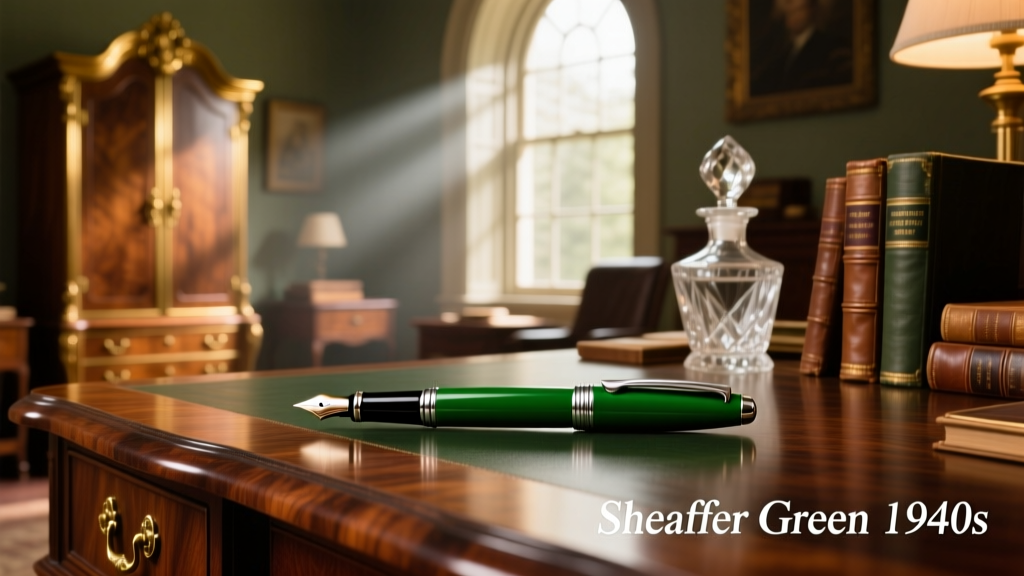
Sheaffer Green Pens of the 1940s: Design, Engineering, and Historical Significance

Netsuke Spotlight: A Rare 19th-Century Wood-and-Ivory Daruma Doll with Retractable Eyes — 1 1/2 Inches, Edo Period Craftsmanship
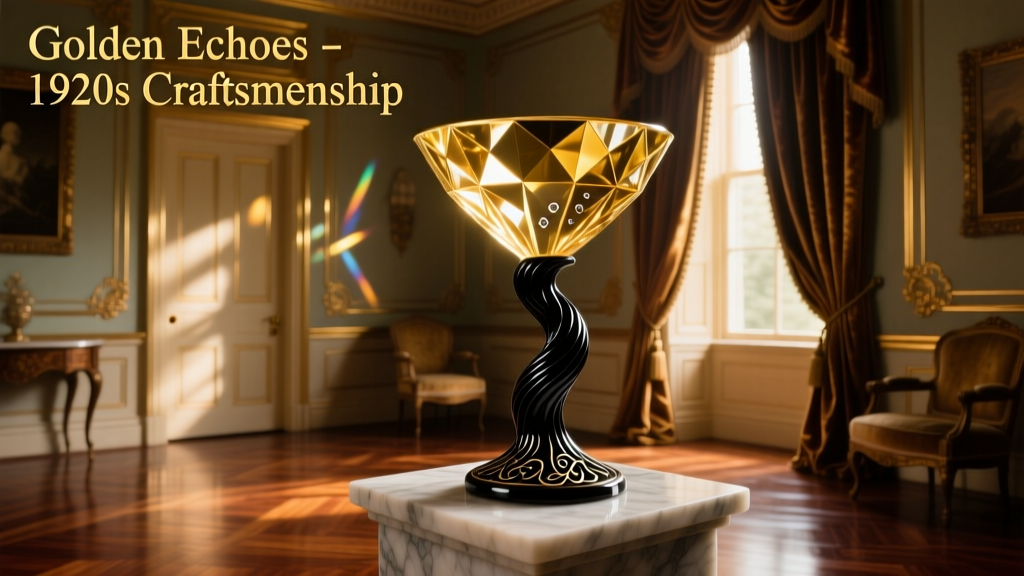
Fry Glass Compote: Golden Glow Diamond Optic with Twisted Stem and Black Threading — Identification, History, and Restoration Guidelines
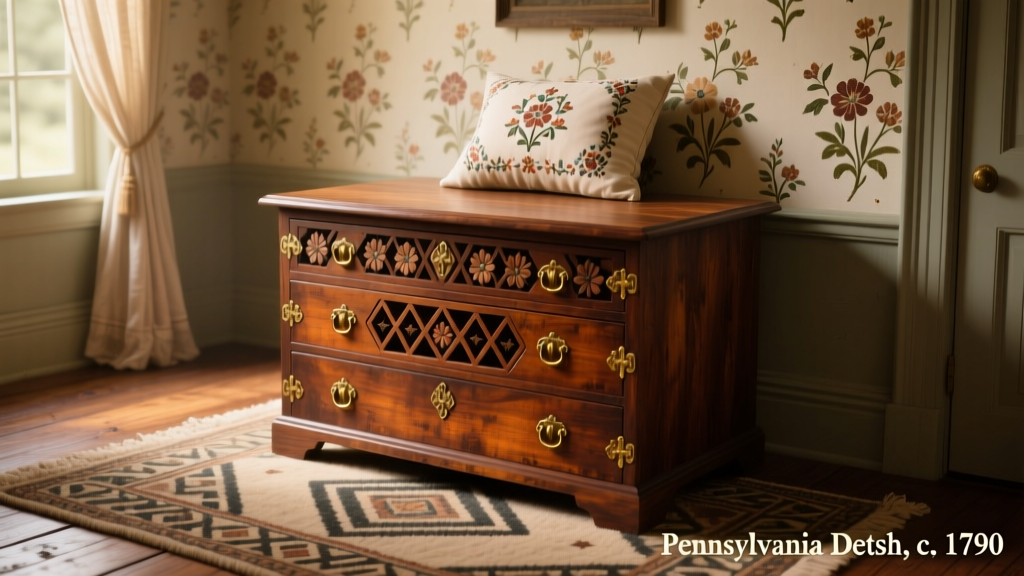
The Pennsylvania Dutch Wedding Chest: Authentic 6-Board Construction, Dimensions 24" × 23" × 50", and Historical Significance
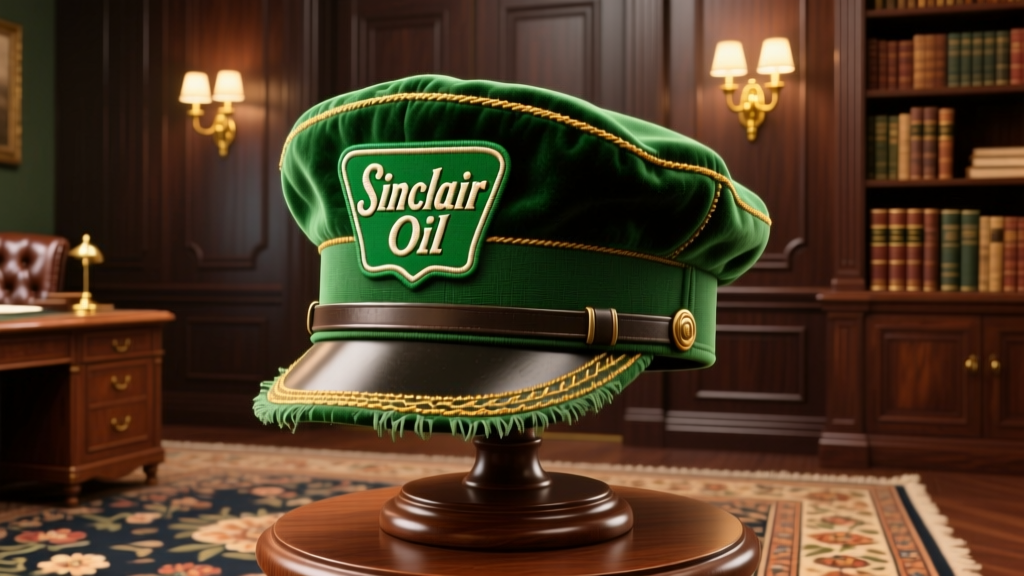
The Sinclair Oil Attendant Hat: A Study in Mid-Century Automotive Branding and Textile Craftsmanship