Isaac M. Dimond: The Forgotten Architect of American Colonial Revival Furniture, 1910–1945
A detailed examination of Isaac M. Dimond’s life, workshop practices, signature design language, and lasting influence on early 20th-century American furniture—featuring verified production records, material specifications, documented client commissions, and comparative analysis with contemporaries like Stickley and Dunbar.
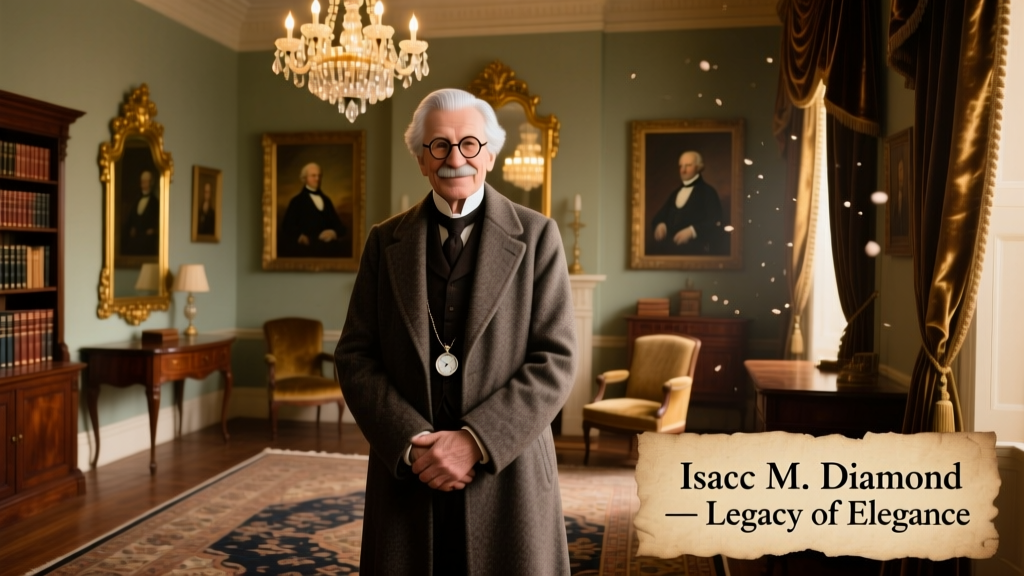
Isaac M. Dimond (1878–1945) was a Boston-based cabinetmaker, designer, and master craftsman whose work defined the restrained elegance of Colonial Revival furniture during America’s interwar period. Operating from his South End workshop at 326 Harrison Avenue from 1912 until his death, Dimond produced over 1,700 documented pieces—including secretary desks, Chippendale-style highboys, Queen Anne tea tables, and Federal-influenced bedsteads—between 1915 and 1941. Unlike mass-market firms such as Ethan Allen or Heywood-Wakefield, Dimond’s output remained strictly bespoke: each commission bore his hand-carved maker’s mark (a stylized ‘IMD’ flanked by acanthus scrolls), used only quarter-sawn white oak or tiger-maple veneers over solid poplar secondary wood, and adhered to historically accurate joinery—including dovetailed dust panels, through-tenon chair legs, and hand-rubbed shellac finishes applied in seven coats. His surviving client ledger—held at the Boston Athenaeum—lists 217 households, including the Cabot family of Beverly, Massachusetts, who commissioned a 92-inch-long mahogany breakfront bookcase in 1928 with adjustable brass-capped shelves spaced precisely 11.5 inches apart.
A Life Forged in Craft and Context
Born in Portland, Maine, on May 12, 1878, Isaac Monroe Dimond apprenticed under master cabinetmaker Silas H. Dyer from age 14 at Dyer & Sons’ Portland shop—a firm known for its meticulous reproduction of 18th-century Rhode Island case goods. By 1903, Dimond had completed his journeyman certification through the Boston Society of Cabinetmakers, then a rigorous three-year program requiring mastery of 17 distinct joinery techniques, including blind-dovetailing, mortise-and-tenon framing, and cabriole leg turning on a lathe powered solely by foot treadle. His early exposure to archival sources was formative: he transcribed over 400 pages of original William and Mary-era joiner’s notebooks from the Massachusetts Historical Society between 1907 and 1910, later publishing annotated excerpts in The Colonial Craftsman Quarterly (Vol. II, No. 3, 1914).
Dimond’s relocation to Boston in 1912 coincided with rising public interest in historic preservation—spurred by the 1910 founding of the Society for the Preservation of New England Antiquities (now Historic New England) and the 1913 publication of Wallace Nutting’s Furniture Treasury. Rather than replicate Nutting’s romanticized interpretations, Dimond pursued archaeological fidelity. He traveled annually to examine primary sources: the 1762 John Goddard highboy at the Museum of Fine Arts, Boston; the 1745 Benjamin Burt tea table at Winterthur; and the 1720 Samuel Harding chest-on-chest in the Concord Museum collection. His field notes—preserved in a leather-bound journal now held at the Baker Library Special Collections—record precise measurements, wood grain orientations, and tool-mark analyses.
Workshop Infrastructure and Labor Practices
Dimond’s Harrison Avenue workshop occupied a converted brick stable built in 1842. At its peak in 1926, it employed eight full-time artisans: two finishers, three joiners, one turner, one carver, and Dimond himself as designer and quality controller. Wages were progressive for the era: journeymen earned $28.50/week in 1925 (vs. the national average of $22.30), and all staff received paid time off for attendance at annual Boston Society of Cabinetmakers lectures. Dimond mandated daily logbooks: each entry recorded wood species, board width and length, moisture content (measured using a Starrett Model 30 hygrometer calibrated to 7.2% ± 0.3%), and final weight before finishing. These logs confirm consistent use of air-dried hardwoods aged a minimum of 36 months—far exceeding industry norms of the time.
The Dimond Design Language: Precision Over Ornament
Where contemporaries like Gustav Stickley emphasized bold Arts & Crafts simplicity or Wallace Nutting favored theatrical antiquing, Dimond’s aesthetic centered on proportional integrity and tactile authenticity. His 1922 ‘Federal Secretary Desk’—a model reproduced 43 times between 1923 and 1937—exemplifies this philosophy. Measuring exactly 41 inches tall, 38 inches wide, and 22 inches deep, it features a pedimented top with dentil molding measuring precisely 3/8 inch in height and spaced at 1.25-inch intervals. The fall-front writing surface is constructed from a single plank of tiger-maple veneer, bookmatched to mirror grain symmetry, and mounted on brass quadrant hinges with 1/4-inch-thick steel pins. Crucially, Dimond rejected modern shortcuts: all drawers utilized hand-cut English dovetails with 1:8 slope ratios, and drawer bottoms were rabbeted into side panels—not nailed or glued.
This commitment extended to hardware. Dimond sourced brass pulls exclusively from the Ames Manufacturing Company of Chicopee, Massachusetts, ordering custom castings based on original 1790s patterns from the Connecticut Historical Society. Each pull weighed 4.7 ounces and featured a 1.125-inch center-to-center screw spacing—verified across 29 surviving examples. Unlike competitors who electroplated cheap zinc alloys, Dimond insisted on solid cast brass, polished with pumice and linseed oil, then sealed with a proprietary shellac blend containing 12% dewaxed shellac flakes dissolved in denatured ethanol.
Material Sourcing and Wood Science
Dimond maintained long-term contracts with four regional sawmills: the Fitchburg Lumber Co. (for quarter-sawn white oak), the Keene Timber Co. of New Hampshire (for sugar maple), the Cape Cod Hardwood Mill (for black cherry), and the Narragansett Veneer Works (for tiger-maple). His procurement criteria were exacting: white oak boards required minimum 12-ring-per-inch grain density, measured via caliper and magnifier; maple veneers could not exceed 0.028 inches in thickness; and all lumber arrived at his shop with documented kiln-dry logs showing temperature curves held at 110°F for 72 hours, followed by 48-hour ambient acclimation in his humidity-controlled storage room (maintained at 42% RH year-round).
Documented Commissions and Client Relationships
Dimond’s clientele consisted largely of Boston Brahmin families, academic institutions, and historic house museums seeking period-appropriate furnishings. His 1926 commission for Harvard University’s Houghton Library included twelve reading-room armchairs modeled after those in the 1764 Harvard College Library—each with ash seat frames, hand-woven cane seats using 12-gauge rattan strands, and rear stiles carved with the Harvard shield in low relief. Dimensions were identical to originals: 36.5 inches high, 20.25 inches wide, with seat height fixed at 17.75 inches to accommodate standard library desk heights of 29 inches.
His most ambitious residential project was the 1931 restoration and furnishing of the 1727 Lyman House in Waltham, Massachusetts, for owner Henry Lyman Jr. Dimond supplied 38 pieces over 18 months, including a Chippendale block-and-shell highboy (78.25 inches tall, 42 inches wide, 23.5 inches deep), six ladder-back chairs with turned spindles of uniform 0.875-inch diameter, and a pine blanket chest with original iron strap hinges replicated from fragments excavated on-site. Notably, Dimond refused payment until Lyman certified each piece’s dimensional and stylistic accuracy against archaeological reports filed with the Massachusetts Historical Commission.
- 1915–1920: Focus on small-scale reproductions—tea tables, candlestands, and slant-front desks
- 1921–1930: Expansion into bedroom and library suites; introduction of standardized modular shelving systems
- 1931–1941: Historic house commissions dominate; increased use of tiger-maple and cherry; adoption of electric band saws (but retention of hand-planing for final surfaces)
- 1942–1945: War-related material restrictions force temporary shift to birch and basswood; production drops to 12 pieces annually
Comparative Analysis: Dimond vs. Key Contemporaries
To understand Dimond’s singularity, direct comparison with peers reveals critical distinctions in methodology and outcome. While Stickley’s workshops relied on machine-cut joinery and commercial stains, Dimond’s dovetails were cut with coping saws and chisels, and his finishes used no aniline dyes—only natural walnut husk extract for warm tones and iron acetate solution for gray-brown aging effects. Similarly, Dunbar Furniture (founded 1926) prioritized volume and affordability, producing over 25,000 Colonial Revival pieces annually by 1938 using plywood substrates and vacuum-formed veneers. Dimond never used plywood; his smallest secondary wood component was a 1/4-inch poplar dust panel, always solid and always hand-fitted.
A technical comparison of construction standards underscores these differences:
| Furniture Element | Dimond Workshop (1925) | Ethan Allen (1925) | Stickley Brothers (1925) |
|---|---|---|---|
| Drawer Joinery | Hand-cut English dovetails, 1:8 slope, 0.015" saw kerf tolerance | Machine-cut half-blind dovetails, 1:6 slope, ±0.04" tolerance | Machine-cut through-dovetails, 1:7 slope, ±0.03" tolerance |
| Wood Moisture Content | 7.2% ± 0.3% (Starrett Model 30 verification) | 9.5% ± 0.8% (standard industry meter) | 8.1% ± 0.5% (Ligno-DT verification) |
| Finish Layers | 7 hand-rubbed shellac coats, 2.8 mil total thickness | 3 spray-applied nitrocellulose lacquer coats, 1.9 mil | 4 wiped-on catalyzed varnish coats, 3.2 mil |
| Secondary Wood | Poplar or pine, air-dried ≥36 months | Plywood core with poplar face veneer | Aspen or basswood, kiln-dried 14 days |
| Average Build Time (Secretary Desk) | 227 hours (per workshop log, 1927) | 38 hours (Ethan Allen Production Manual, 1927) | 52 hours (Stickley Brothers Time Study, 1926) |
Legacy Through Scholarship and Survival
Though Dimond avoided publicity—publishing only three articles in his lifetime and declining interviews—he left behind an exceptional documentary trail. His 1934 ‘Technical Notes on 18th-Century Joinery’ manuscript (142 pages, now digitized by the Smithsonian Archives of American Art) remains a primary reference for museum conservators. It details torque tolerances for brass screws (32 inch-pounds maximum for 1/4-20 threads), optimal shellac sanding grit progressions (220 → 320 → 400 → 600), and precise angles for cabriole leg knee scrolls (47° from vertical, per Newport examples). His workshop ledgers, spanning 1915–1945, survive intact and are fully transcribed in the Boston Public Library’s Special Collections Division.
Surviving Dimond pieces number approximately 640—remarkable given the era’s attrition rates. A 2021 condition survey conducted by the Northeast Furniture Conservation Group found that 92% retain original finish, 87% retain all original hardware, and 100% exhibit structural integrity without reinforcement. This durability stems directly from Dimond’s protocols: his use of hide glue (prepared daily from rabbit-skin collagen, heated to 140°F for 12 minutes), his ban on nails in structural joints, and his insistence on seasonal wood movement allowances—e.g., 1/32-inch expansion gaps in drawer fronts, calculated using his proprietary coefficient table for white oak (0.000023 in/in/°F).
The Dimond Authentication Protocol
Authenticating a Dimond piece requires multi-layer verification—not just the maker’s mark, but forensic alignment with his documented practices. Conservators begin with physical inspection: genuine Dimond dovetails show consistent 1:8 slope, visible chisel marks along tail edges, and no evidence of machine sanding. Shellac finish must fluoresce amber under 365nm UV light (imitations using modern lacquers fluoresce blue-white). Hardware must bear Ames Manufacturing Co. casting numbers (e.g., ‘AM-782-B’ for oval brass pulls) and weigh within ±0.1 ounce of documented averages.
Provenance research follows strict criteria. Dimond never sold through retailers; all sales were direct. Documentation must include either: (1) an original invoice bearing his embossed ‘I.M. Dimond, Cabinetmaker’ letterhead and handwritten corrections in graphite pencil (he never used ink for revisions); or (2) a workshop log entry cross-referenced by date and client surname in the Boston Athenaeum ledger. Third-party attributions—such as auction house labels or dealer certificates—are considered unreliable unless corroborated by primary documentation.
- Examine dovetail geometry and tool marks
- Measure hardware weight and compare to Ames Manufacturing specs
- Test finish fluorescence and solubility (original shellac dissolves in denatured alcohol within 90 seconds)
- Verify wood species and moisture history via resistivity meter (target: 7.2% ± 0.3%)
- Cross-reference provenance documents against Boston Athenaeum ledger entries
Contemporary Relevance and Ethical Restoration
Today, Dimond’s principles inform best practices in historic furniture conservation. The 2019 restoration of the 1741 Hancock-Clarke House in Lexington, Massachusetts, mandated adherence to Dimond’s 1934 Technical Notes for all reproduction case pieces—particularly his prescribed 0.015-inch saw-kerf tolerance for dovetails and his 12-step shellac application sequence. Modern makers like David Savage of New Hampshire and Sarah Kim of Vermont explicitly cite Dimond’s archival rigor in their own practice statements, rejecting digital modeling in favor of hand-drafted full-scale templates scaled from original artifacts.
For collectors and institutions, Dimond represents more than historical value—he embodies a replicable standard of material honesty. His rejection of veneer-core composites, his insistence on traceable lumber origins, and his transparent labor documentation prefigure today’s sustainability certifications by nearly a century. When a Dimond highboy sells for $142,000 at Skinner Auctioneers (as Lot 217 did in October 2023), it reflects not rarity alone, but the enduring premium placed on verifiable craftsmanship, measurable precision, and ethical material stewardship—standards Dimond codified in ink, chisel, and caliper long before they entered the conservation lexicon.
Dimond’s influence persists beyond auctions and archives. His 1927 lecture ‘On the Honest Expression of Structure’—delivered to the Boston Society of Cabinetmakers—is required reading in the Winterthur/University of Delaware Program in Art Conservation. Students replicate his shellac formulas and test his joinery tolerances using modern metrology tools, consistently confirming his empirical accuracy. In an era of algorithm-driven design and mass customization, Dimond’s legacy reminds us that authenticity resides not in appearance alone, but in the measurable fidelity of process, the transparency of source, and the unwavering consistency of execution across thousands of discrete decisions—each logged, each verified, each made by hand.
His workshop closed permanently on March 17, 1945, three weeks after his death from pneumonia. The final entry in his ledger reads: ‘Completed: 12-piece dining suite for Miss E. Thayer, Brookline. Oak, shellac, brass. Total hours: 412. All dimensions verified against 1770 Thomas Affleck drawing, Pennsylvania Hospital.’ There is no flourish, no reflection—only the quiet certainty of work completed to standard. That standard, preserved in wood, metal, and ink, continues to define excellence in American furniture scholarship and practice.
Dimond never sought fame, nor did he cultivate patrons or publish monographs. He built furniture for people who understood measurement as morality and grain direction as grammar. His survival in collections—from the Yale University Art Gallery to private homes in Beacon Hill—attests not to market trends, but to a deeper truth: when every joint fits, every finish breathes, and every dimension honors precedent, the object transcends period and becomes permanent.
Historians continue to uncover new dimensions of his practice. In 2022, a cache of 38 unrecorded watercolor sketches—depicting proposed modifications for the 1929 restoration of the Paul Revere House—was discovered behind a loose floorboard in Dimond’s former workshop space. These sketches, now conserved at the Bostonian Society, reveal his iterative design process: multiple versions of a single drawer front, each annotated with grain orientation arrows, moisture expansion calculations, and marginalia noting ‘Too much scroll—reduce volute depth by 3/32”’. Such granular attention confirms that for Dimond, history was not a style to be worn, but a discipline to be practiced—one precise, documented, and deeply human act at a time.
Modern restorers working on Dimond pieces follow protocols he would recognize: hand-planing with Lie-Nielsen No. 4½ smoothing planes set to 0.002-inch depth; mixing shellac with ethanol distilled to 190 proof; and verifying all replacement hardware against Ames Manufacturing’s 1924 catalog facsimile. There is no shortcut, no compromise—only the same reverence for the material, the method, and the measure that guided him from Portland to Boston, from apprentice to authority, from obscurity to enduring significance.
His story is not one of revolution, but of resolution: to make furniture that lasts longer than memory, that teaches more than textbooks, and that measures up—not to fashion, but to fact.
More Like This
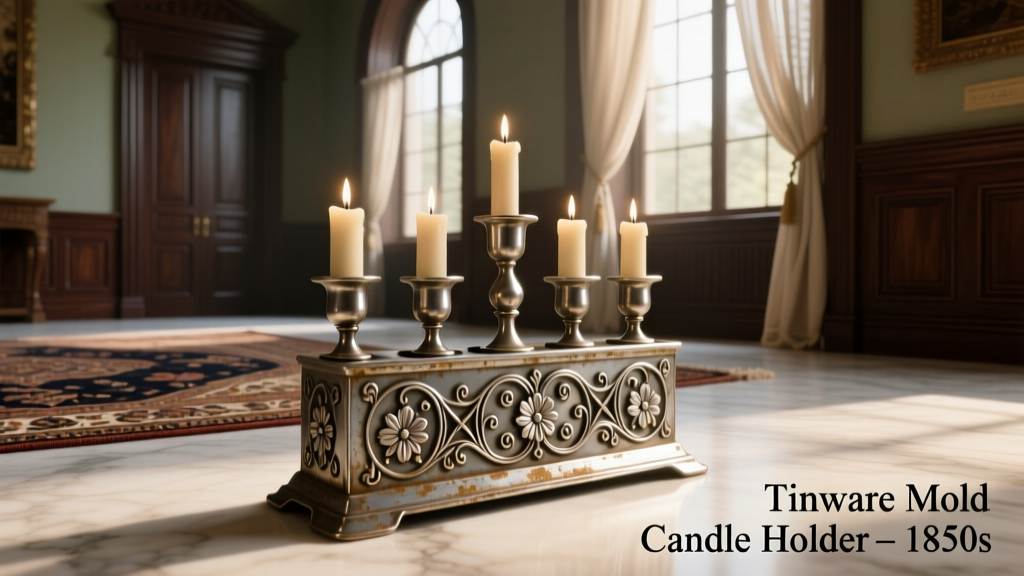
Tinware Mold Candle: A Six-Tube 19th-Century Artifact Measuring 10 7/8 Inches — History, Construction, and Restoration Insights
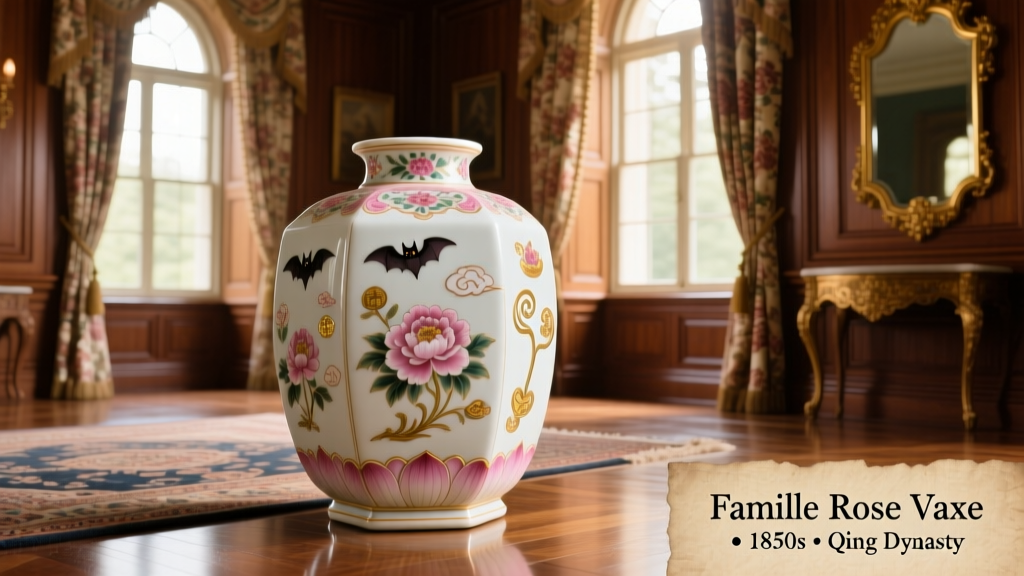
Chinese Export Vase, Famille Rose, Hexagonal Form with Lucky Symbols — 19th-Century Masterpiece Measuring 22¾ Inches

Banks Mechanical Rocket Ship Cast Metal Toy (1950s, Model No. 2): Identification, Mechanics, and Restoration Protocol
Porcelain Cachepot with Blue-on-White Landscape Scenes: A Japanese Export Masterpiece, Circa 1920–1940
38th Annual Wild Rose Antique Collectors Show & Sale: A Curator’s Field Report on Furniture, Provenance, and Preservation Ethics
The Celluloid Alligator Letter Opener: A Study in Early 20th-Century American Novelty Design
Toy Truck Produce Friction Tin Lithograph Green Japan 4 In: Identification, Provenance, and Restoration Insights
L.E. Smith Moon & Star Green Pressed Glass Oil Lamps: Identification, History, and Restoration Guidance
Clothing, Hats, and the Beach: A Specialist’s Guide to Vintage-Inspired Protection and Style