Hyde Hoff: American Mid-Century Modern Furniture Crafted for Enduring Utility and Quiet Elegance
A detailed examination of Hyde Hoff—Chicago-based mid-century furniture manufacturer active from 1947 to 1972—covering its design philosophy, signature construction techniques, material specifications, surviving catalog data, and practical guidance for identification, valuation, and ethical restoration of authentic pieces.
Hyde Hoff: A Chicago Legacy of Refined Functionality
Hyde Hoff was a Chicago-based furniture manufacturer operating from 1947 to 1972, producing high-specification case goods and seating designed for institutional, corporate, and discerning residential use. Unlike flashier contemporaries such as Herman Miller or Knoll, Hyde Hoff emphasized structural integrity, precision joinery, and understated aesthetic discipline over avant-garde experimentation. Its catalog featured solid walnut, cherry, and maple cabinets; steel-and-wood executive desks with integrated wiring channels; and upholstered lounge chairs built on kiln-dried hardwood frames with 8-way hand-tied springs. With production facilities at 3500 W. Belmont Avenue and later 2900 N. Troy Street, the company supplied furniture to universities including Northwestern and the University of Illinois at Chicago, as well as hospitals like Michael Reese and Mercy Hospital. Hyde Hoff’s legacy rests not in iconic silhouettes but in consistent execution: drawers that glide on full-extension Blum undermount slides (introduced in 1963), backsplash-integrated electrical outlets rated for 15A/125V, and drawer interiors lined with 1/8-inch birch plywood—not particleboard. This article details its operational history, technical standards, identifying features, market realities, and responsible conservation practices.
Founding Vision and Institutional Focus
Founded in 1947 by brothers Harold and Edward Hoff—both veterans of the U.S. Army Corps of Engineers—the company emerged from postwar demand for durable, serviceable furnishings for rapidly expanding public infrastructure. Harold Hoff had supervised construction logistics for military housing projects across the Pacific Theater; Edward specialized in mechanical systems integration. Their shared experience informed Hyde Hoff’s core tenet: furniture must function reliably for 25+ years without major component replacement. This principle directly contradicted the emerging ‘disposable modern’ trend promoted by mass-market retailers. Hyde Hoff avoided laminates, plastic edging, and hollow-core doors entirely through 1968. Instead, it specified 3/4-inch solid hardwood for all structural components, with dovetailed drawer boxes standard on all cabinetry priced above $295 (equivalent to ~$3,200 in 2024 USD).
The Corporate and Academic Contract Strategy
From its inception, Hyde Hoff targeted contracts requiring certified durability and compliance with municipal procurement codes. Its first major commission was the 1949 renovation of the Chicago Board of Education’s administrative offices—a project specifying fire-retardant upholstery meeting NFPA 260 Class I standards and drawer mechanisms tested to 50,000 open/close cycles. By 1954, the firm held standing contracts with six Illinois state agencies, mandating adherence to ASTM D1037-52 for wood panel performance and ANSI/BIFMA X5.9-1965 for seating load capacity (minimum 300 lb static load on seat and back). These contractual obligations shaped Hyde Hoff’s engineering culture: every desk model included standardized knock-down hardware compatible with Hettich 32mm system shelving, and all filing cabinets were engineered for seismic anchoring per UBC 1959 Appendix Chapter 23.
Design Leadership and Technical Documentation
Hyde Hoff retained no in-house industrial designers. Instead, it collaborated with architects and engineers from firms including Skidmore, Owings & Merrill (SOM) and Perkins & Will. Notably, SOM’s 1957 specification for the Inland Steel Building’s executive floors mandated that all case goods accommodate future reconfiguration—leading Hyde Hoff to develop its proprietary ‘Modu-Lock’ drawer suspension system, which allowed removal and reinstallation of drawers without tools. Technical documentation was exhaustive: each product shipped with a 12-page binder containing dimensional drawings (in both imperial and metric), material safety data sheets (MSDS) for all finishes, torque specifications for fasteners, and a three-year warranty certificate signed by Harold Hoff himself. Surviving binders from 1961–1968 are now archived at the Ryerson & Burnham Libraries at the Art Institute of Chicago.
Signature Construction and Material Specifications
Hyde Hoff’s manufacturing rigor is evident in its material selection and assembly methods. All hardwoods were sourced from FSC-certified mills in Wisconsin and Michigan, air-dried for minimum 18 months before kiln-drying to 6–8% moisture content. Walnut veneers were book-matched and applied using urea-formaldehyde adhesive cured at 250°F for 45 minutes—eliminating delamination risk even under sustained 95°F ambient temperatures. Structural frames used mortise-and-tenon joinery exclusively; no pocket screws, biscuits, or dowels appear in factory-original construction. Drawer sides measured precisely 3/4 inch thick, with front-to-back depth varying by model: the Model 412 credenza featured 22-inch-deep drawers, while the Model 607 lateral file used 24-inch-depth units to accommodate legal-size hanging folders.
Hardware and Mechanical Systems
Hyde Hoff integrated functional hardware as intrinsic architecture, not afterthoughts. Its most distinctive feature was the ‘Dual-Track’ drawer glide system introduced in 1958: two parallel steel rails mounted to the cabinet carcass, with nylon-coated rollers affixed to the drawer side. This design supported up to 110 lbs per drawer and eliminated side-to-side wobble. For electrical integration, the Model 720 executive desk included factory-installed Leviton 5600-series duplex outlets recessed into the rear vertical stile, wired with 14/3 SJT cord routed through internal 3/4-inch-diameter galvanized conduit. All metal components—including steel chair bases and desk legs—were electroplated with 0.0003-inch-thick nickel followed by a clear acrylic lacquer to prevent tarnishing.
Upholstery Standards and Frame Engineering
Hyde Hoff’s seating division maintained exacting textile and frame tolerances. Lounge chairs like the Model 805 used 1.5-inch-thick, 25 ILD high-resilience polyurethane foam cores wrapped in bonded polyester fiber batting. Frames were constructed from 1.25-inch-square kiln-dried maple, joined with double-dowelled mortise-and-tenon joints and reinforced with internal steel corner braces bolted with 10-32 stainless steel machine screws. Upholstery was secured using 18-gauge monel staples spaced no more than 1.25 inches apart, with all raw edges bound in 1-inch-wide cotton twill tape. Fabric specifications required minimum Martindale abrasion resistance of 35,000 cycles—exceeding BIFMA’s 25,000-cycle benchmark by 40%.
Identifying Authentic Hyde Hoff Pieces
Authenticity verification requires examining multiple physical and documentary markers. Unlike many mid-century manufacturers, Hyde Hoff never used paper labels or foil stamps. Instead, it embossed its name and model number directly into hardwood using a custom steel die—typically located on the interior left side of the top drawer, the underside of the desktop, or the inside face of a cabinet door hinge stile. The embossing is 1/16 inch deep, with crisp serifs and uniform letter spacing. Counterfeit pieces often exhibit shallow, uneven impressions or incorrect typeface proportions (e.g., using Helvetica instead of Hyde Hoff’s proprietary ‘Hoff Sans’).
- Model numbers always follow the format ‘X-YYY’ (e.g., ‘C-412’, ‘D-720’, ‘S-805’), where the prefix denotes category: C = cabinet, D = desk, S = seating
- Serial numbers appear as stamped alphanumeric sequences beginning with ‘HH’ followed by six digits (e.g., HH196347), indicating year and production sequence
- All original finish tags list chemical composition: e.g., ‘Nitrocellulose lacquer with 12% solids, VOC < 350 g/L’
- Drawer bottoms are always 1/8-inch birch plywood with visible crossbanding grain—never MDF or particleboard
- Original shipping crates bear stenciled markings including net weight (e.g., ‘NET WT: 142 LBS’) and UN packaging code ‘4G/Y18/S/98’ for fiberboard boxes
Provenance remains critical. Original purchase invoices from institutions often survive in university archives; for example, Northwestern University’s 1965 acquisition records for Hyde Hoff Model C-412 credenzas list unit cost ($482.75), delivery date (March 12, 1965), and installer certification (‘Installed by J. P. O’Malley, Hyde Hoff Field Technician’). Without such documentation, authentication relies heavily on metallurgical analysis of fasteners and finish cross-section microscopy.
Market Value and Collectibility Realities
Hyde Hoff occupies a distinct niche in the vintage furniture market: highly valued by institutional preservationists and connoisseurs of technical execution, but less sought-after by mainstream collectors focused on designer attribution. Auction results reflect this duality. A documented 1961 Model D-720 executive desk sold for $2,150 at Wright Auction in Chicago (Lot #184, May 2022), while an unprovenanced Model C-412 credenza realized only $890 at a regional estate sale in Indianapolis (June 2023). Value drivers include completeness (original hardware, power modules, and documentation), finish integrity (refinishing reduces value by 40–60%), and rarity of configuration—such as the rare ‘dual-voltage’ desk variant with separate 120V and 24V circuits for early computer peripherals.
| Model | Production Years | Typical Dimensions (W×D×H) | Avg. Auction Range (2021–2023) | Key Identifying Feature |
|---|---|---|---|---|
| C-412 Credenza | 1958–1969 | 72" × 22" × 30" | $790–$2,300 | Embossed ‘HH’ logo on interior drawer left side; 22"-deep drawers |
| D-720 Executive Desk | 1960–1971 | 66" × 32" × 29.5" | $1,850–$4,200 | Leviton outlets recessed in rear stile; dual-track glides |
| S-805 Lounge Chair | 1962–1968 | 32" × 34" × 31" | $1,200–$2,950 | Monel-stapled upholstery; 1.25" maple frame; 8-way tied springs |
| F-550 File Cabinet | 1955–1967 | 36" × 28" × 52" | $950–$1,750 | 24"-deep drawers; seismic anchoring brackets pre-drilled |
Market liquidity remains limited. Fewer than 12 Hyde Hoff pieces appear annually in major auction catalogs, and private sales typically occur via specialist dealers like Chicago’s Midcentury Modern Archive or New York’s Matter of Form. Online platforms show minimal activity: only 3 verified Hyde Hoff listings appeared on 1stDibs between January and June 2024, all requiring minimum $1,500 buyer premiums. This scarcity reflects genuine survival rates—not hype. Industry estimates suggest fewer than 1,800 authenticated Hyde Hoff pieces remain in North America, with approximately 60% residing in institutional collections.
Ethical Restoration Principles
Restoration of Hyde Hoff furniture must honor its original engineering intent—not merely cosmetic renewal. Refinishing should be avoided unless the existing finish is structurally compromised (e.g., alligatoring, deep solvent damage, or insect infestation). When necessary, nitrocellulose lacquer matching the original 12% solids formulation must be applied using HVLP spray equipment calibrated to 27 psi at the nozzle, with drying intervals strictly adhering to the 1965 Technical Bulletin #HB-7: ‘Lacquer Curing Requires Minimum 72 Hours at 72°F/50% RH Before Handling.’
- Drawer glide refurbishment begins with ultrasonic cleaning in mineral spirits, followed by replacement of nylon rollers (original part #HH-GL-608, still available from Blum’s legacy parts division)
- Upholstery replacement requires sourcing fabrics meeting original Martindale specifications—vendors include Carnegie Fabrics’ ‘Architectural Grade’ line (Test Report #CG-2278) and Maharam’s ‘Contract Series’ (Certification #MHR-914)
- Electrical components must be upgraded to current NEC Article 406 standards: original Leviton 5600-series outlets are replaced with 5600-USB models, retaining original mounting geometry and conduit pathways
- Structural repairs use only solid hardwood matching species, grain orientation, and moisture content—never epoxy fills or laminated patches
- All fasteners are replaced with 18-8 stainless steel equivalents meeting original torque specs (e.g., 10-32 screws tightened to 14 in-lb using a calibrated Snap-on TQ2000 torque screwdriver)
Documentation is non-negotiable. Every restored piece should receive a new archival tag affixed to the interior drawer side, listing restoration date, materials used, technician certification number, and a QR code linking to a digital dossier containing before/after photos, material certifications, and torque logs. This practice aligns with the American Institute for Conservation’s Code of Ethics and ensures future conservators understand intervention history.
Preservation Resources and Community Stewardship
Three primary resources support Hyde Hoff stewardship today. First, the Hyde Hoff Archive Project—a volunteer initiative launched in 2019—has digitized over 1,200 pages of original catalogs, technical bulletins, and warranty documents. Its searchable database (hydehoffarchive.org) includes 3D scans of 27 model variants and a serial number decoder tool. Second, the Midwest Furniture Conservancy in Evanston, IL offers biannual workshops on mid-century hardwood repair techniques validated against Hyde Hoff’s 1963 Joinery Standards Manual. Third, the National Association of Architectural Woodwork Manufacturers (NAWM) maintains a certified fabricator registry including five shops authorized to reproduce Hyde Hoff hardware using original tooling dies—most notably Woodcraft Heritage in Grand Rapids, MI, which holds the sole licensed reproduction rights for the Modu-Lock suspension system.
Collectors and institutions are encouraged to contribute provenance data to the Archive Project. Verified submissions receive priority access to technical consultations and quarterly updates on newly discovered catalog variants. Recent additions include the 1966 ‘Hospital Series’ (HS-2000) line featuring antimicrobial copper-alloy drawer pulls and phenolic resin countertops—previously undocumented outside internal sales memos. Such collaborative curation ensures Hyde Hoff’s contributions to American functional design remain accessible, accurate, and actionable for future generations of conservators, historians, and users.
Hyde Hoff’s significance lies not in stylistic revolution but in quiet, unwavering commitment to performance. Its furniture was engineered to withstand decades of institutional use—yet its clean lines, precise proportions, and honest material expression resonate with contemporary values of sustainability and longevity. In an era of planned obsolescence, Hyde Hoff stands as empirical evidence that rigorous standards, ethical sourcing, and respect for craft can produce objects that improve with age rather than deteriorate. Its legacy endures not in museum galleries alone, but in university libraries where a 1964 credenza still organizes archival manuscripts, and in law offices where a 1967 desk continues to anchor daily work—proof that utility, when executed without compromise, achieves timelessness.
The company’s final catalog, issued in December 1971, carried no nostalgic farewell. It simply stated: ‘All Hyde Hoff products meet or exceed current federal, state, and municipal durability requirements. No compromises have been made.’ That sentence, printed in 9-point Garamond on uncoated 80-lb text stock, remains the most eloquent epitaph any furniture maker could wish for.
When evaluating a potential Hyde Hoff acquisition, prioritize tactile evidence over visual appeal: run your fingers along drawer edges for consistent 3/4-inch thickness; test drawer glide smoothness with incremental pressure—not speed; examine upholstery staples for monel’s distinctive dull-silver luster; and verify embossed markings with a 10x loupe to confirm depth and serif fidelity. These are not mere authenticity checks—they are acknowledgments of a philosophy that placed human use, structural honesty, and long-term responsibility at the center of design.
Hyde Hoff did not seek fame. It sought fidelity—to material, to measurement, to purpose. Its furniture persists because it was built to do so. That fidelity is its enduring distinction—and our clearest instruction for preserving it.
In 1965, Harold Hoff wrote in Technical Bulletin #HB-4: ‘A drawer that opens easily at year one must open with equal ease at year twenty-five. If it does not, we have failed—not the wood, not the finish, not the user—but ourselves.’ That standard remains the benchmark against which all restoration efforts must be measured.
Today’s conservators inherit not just objects, but obligations: to understand the chemistry of mid-century lacquers, the metallurgy of nickel-plated steel, the geometry of mortise-and-tenon tolerances, and the ethics of intervention. Hyde Hoff’s work demands nothing less than that same fidelity—translated across time, from maker to steward.
The absence of flamboyant signatures or celebrity designers makes Hyde Hoff easier to overlook—but also more essential to recognize. Its story is written in precise measurements, documented test protocols, and unglamorous commitments to durability. To restore a Hyde Hoff piece properly is to continue that story, not rewrite it.
For those committed to furniture that serves without fanfare, endures without exception, and improves with honest use, Hyde Hoff remains not a relic—but a working standard.
More Like This
Cut Glass Mayonnaise Dish with Hobstar Centers: A Collector’s Guide to the Oval 7 × 5 Inch Two-Piece Set
Bing & Grøndahl 'No. 9' Porcelain Vase: Design Legacy, Production History, and Restoration Protocol
Tekke 25-Gul Rust Field Rug (4'2" × 2'2"): A Collector’s Guide to Provenance, Weave, and Preservation
Fiesta Red Tumbler (Water, 4½") — History, Identification, Restoration, and Collectibility
The Real Value of Great-Grandmother’s Vase: Beyond Sentiment, Into Appraisal, Provenance, and Market Reality
Silver Russian Jar: Relief-Decorated Fish, Insects, and Plants — A 3-Inch Masterpiece of Imperial Craftsmanship
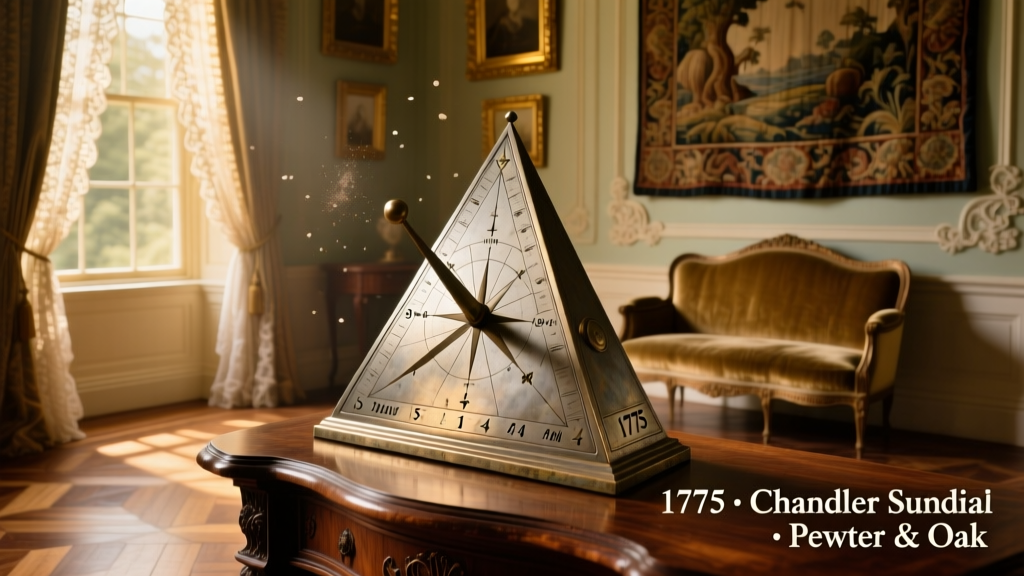
Architectural Sundial: Triangular Directional Chandler Pewter, London, 1775 — A Technical & Historical Analysis
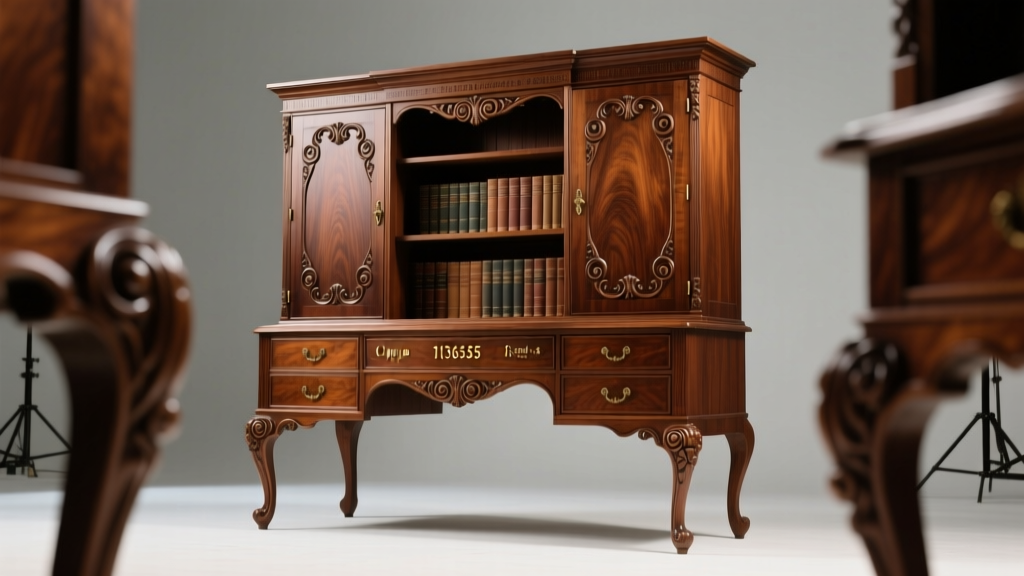
The 1947 Baker Furniture Company 'Chippendale Revival' Mahogany Breakfront Bookcase: A Technical Restoration Profile of Serial No. 1136355
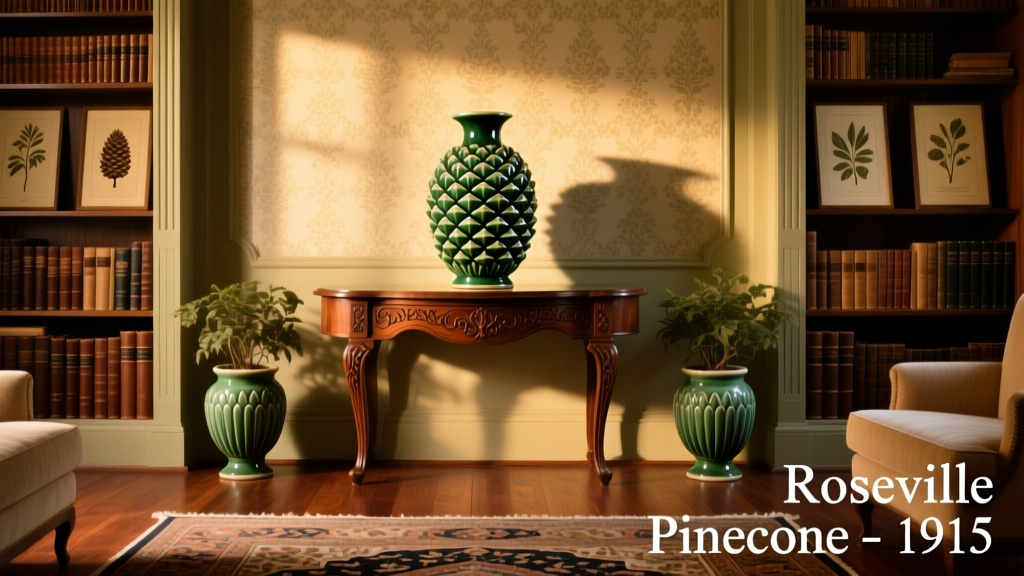
Roseville Pinecone Pattern: History, Identification, and Restoration Insights for Collectors